UNION, N.J. — April 24, 2020 — Bed Bath & Beyond Inc. today announced a further update to its COVID-19 response.
On April 2, 2020, the company extended the temporary closure of all its retail banner stores across the United States and Canada, other than buybuy BABY and Harmon Face Values stores, until May 2, 2020. Based on the latest guidance from federal, state and local government and health authorities, and in the interest of the health and safety of its customers and associates, Bed Bath & Beyond is further extending the temporary closure of these stores until at least May 16, 2020. At the same time, the company is expanding the network of locations customers can Buy-Online-Pick-Up-In-Store (BOPIS), or enjoy contactless, curbside pick-up.
Bed Bath & Beyond is rapidly evolving to meet the changing needs of its customers during this time. The company has converted approximately 25 percent of its stores across the United States and Canada into regional fulfillment centers, almost doubling its digital fulfillment capacity, to support a significant rise in online sales. It has also commenced curbside pick-up at its Harmon stores, and introduced BOPIS and curbside pick-up at all buybuy BABY stores and Bed Bath & Beyond stores in Canada. In line with changing guidance, the company will now extend BOPIS and contactless, curbside delivery services to customers at certain Bed Bath & Beyond stores in the US, starting with a number of stores across Florida and Texas, subject to state and local regulations.
To support the enhanced regional fulfilment network and accelerate the introduction of new services for customers, the company has been able to bring several hundred associates back from furlough. In addition, hundreds more new positions have been created in the company’s e-commerce distribution centers to meet the increased demand across digital channels, where sales have grown by more than 85 percent for the month of April to-date.
Mark Tritton, president and CEO, said: “We’re prioritizing the health and safety of our people, customers and communities by extending the temporary closure of most of our stores at this moment. This is a fluid situation, so as well as serving our loyal customers online in their homes, we will also expand the number of locations where customers can buy online and pick up at store, or simply drive up and enjoy contactless, curbside pick-up, in line with local, state and federal guidance.
“I want to thank our team for their dedication and service as we do what we can to make it easy for our customers to feel at home during this difficult time.”
In conjunction with the decision to further extend temporary store closures, Bed Bath & Beyond will also extend the furlough of the majority of store associates and a portion of corporate associates until at least May 16, 2020. The company will continue to pay 100 percent of the cost of healthcare premiums for all furloughed associates who currently participate in the company’s health plan, until further notice. The company will also continue to temporarily reduce salaries by 30 percent across the executive team, including the president and CEO. At the same time, as previously announced, the Chairman of the Board and all other independent directors will continue to forgo 30 percent of their quarterly cash compensation.
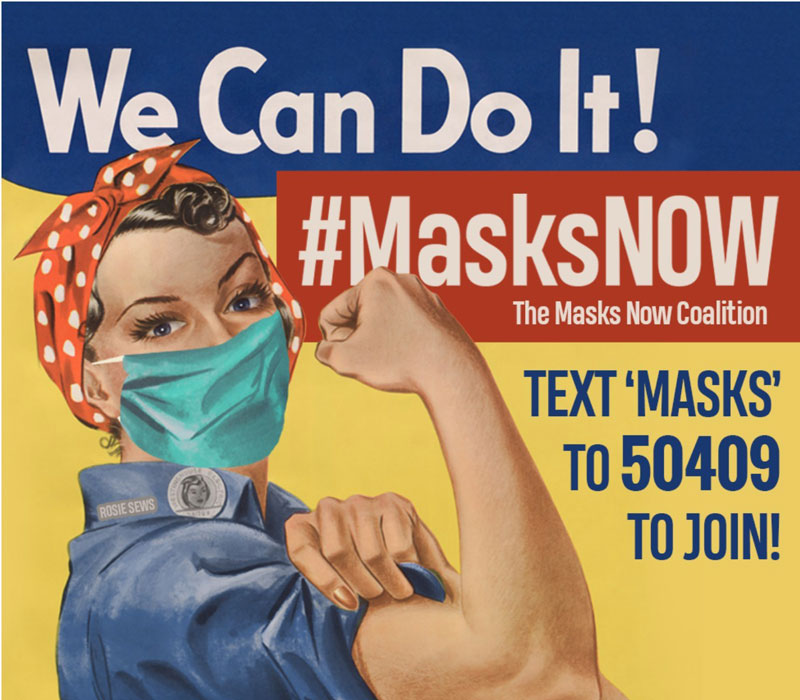
WASHINGTON — April 24, 2020 — The Masks Now Coalition is pleased to announce the first mask design that is fully compliant with all Centers for Disease Control (CDC) guidelines for people who can sew, and those who can’t. Their free pattern is available to the public by texting masks to 50409, which is also how volunteers can join the coalition.
The CDC says every person in America should wear a cloth mask or face-covering in public to combat the spread of COVID-19. The Masks Now Coalition’s standard, three-layer design mask has met all CDC facemask guidelines and FDA enforcement regulations for non-medical masks.
The Masks Now Coalition is an unprecedented grassroots effort to recruit sewists and non-sewists alike to make masks and distribute them to the facilities who need them —retirement homes, prisons, hospitals, banks, grocery stores, and other essential businesses.
More than 1,000 facilities including 220 hospitals have already requested over 300,000 handmade masks from the Masks Now Coalition. The Coalition’s strength is its 10,000+ volunteers and over 100 lead organizers in all 50 states and the District of Columbia and Puerto Rico who are supported by the state and regional leads. A steering committee manages the bottom-up effort. Francey Lim Youngberg, a former senior Obama appointee, is the national lead organizer.
Through the widespread use of cloth masks by the patients, essential workers, public servants, and the general public, our precious medical-grade N95 and surgical masks can be freed up for the doctors, nurses, and other irreplaceable healthcare professionals. A recent study by a group of Yale University economists and public health experts estimates the “benefits of each additional cloth mask worn by the public are conservatively in the $3,000-$6,000 range,” due to the impact in decreasing the spread of infection. (Source: bit.ly/YaleMaskStudy)
“Our country’s doctors and nurses are fighting on the frontlines against the coronavirus pandemic and each American can support their effort,” says Youngberg. “The more masks we make, the more we protect them. That’s why we need to mask up to protect us all.”
Anyone can join The Masks Now Coalition volunteer sewist or distributor or download a personal pattern for free by texting the word ‘masks’ to 50409.
ALEXANDRIA, Va. — April 24, 2020 — Faultless Healthcare Linen of Kanas City, Mo. has recently qualified for renewal of the Hygienically Clean Healthcare certification. The recertification reflects their continued commitment to best management practices (BMPs) in laundering as verified by on-site inspection and its capability to produce hygienically clean textiles as quantified by ongoing microbial testing.
The Hygienically Clean Healthcare certification confirms the organization’s continuing dedication to infection prevention, compliance with recognized industry standards and processing healthcare textiles using BMPs as described in its quality assurance documentation, a focal point for Hygienically Clean inspectors’ evaluation. The independent, third-party inspection must also confirm essential evidence that:
Employees are properly trained and protected;
Managers understand regulatory requirements;
OSHA-compliant; and
Physical plant operates effectively.
To achieve certification initially, laundries pass three rounds of outcome-based microbial testing, indicating that their processes are producing Hygienically Clean Healthcare textiles and diminished presence of yeast, mold and harmful bacteria. They also must pass a facility inspection. To maintain their certification, they must pass quarterly testing to ensure that as laundry conditions change, such as water quality, textile fabric composition and wash chemistry, laundered product quality is consistently maintained. Re-inspection occurs every two to three years.
This process eliminates subjectivity by focusing on outcomes and results that verify textiles cleaned in these facilities meet appropriate hygienically clean standards and BMPs for hospitals, surgery centers, medical offices, nursing homes and other medical facilities.
Hygienically Clean Healthcare certification acknowledges laundries’ effectiveness in protecting healthcare operations by verifying quality control procedures in linen, uniform and facility services operations related to the handling of textiles containing blood and other potentially infectious materials.
Certified laundries use processes, chemicals and BMPs acknowledged by the federal Centers for Disease Control and Prevention (CDC), Centers for Medicare and Medicaid Services, Association for the Advancement of Medical Instrumentation, American National Standards Institute and others. Introduced in 2012, Hygienically Clean Healthcare brought to North America the international cleanliness standards for healthcare linens and garments used worldwide by the Certification Association for Professional Textile Services and the European Committee for Standardization.
Objective experts in epidemiology, infection control, nursing and other healthcare professions work with Hygienically Clean launderers to ensure the certification continues to enforce the highest standards for producing clean healthcare textiles.
“Congratulations to Faultless Healthcare Linen on their recertification,” said Joseph Ricci, TRSA president and CEO. “This achievement proves their commitment to infection prevention and that their laundry takes every step possible to prevent human illness.”
Faultless also holds the TRSA Clean Green Certification, certifying the company’s commitment to practicing environmental stewardship on a companywide basis.
WAKAYAMA, Japan — April 24, 2020 — In light of the worldwide shortage of surgical masks due to the continuing spread of the COVID-19 coronavirus infection, flat knitting solutions provider Shima Seiki Mfg. Ltd., Wakayama, Japan has released knitting data for nine more versions of knitted masks to be produced on a variety of its computerized knitting machines. These are in addition to the various mask data the company has been releasing by the company since March 19, bringing the total number of versions of the masks to 19.
Data released this time consists of cotton masks to be produced on both WHoLEGARMEnT® knitting machines as well as conventional shaping machines. one type of WHoLEGARMEnT® mask data is meant for production on SWG041n2, SWG061n2 and SWG091n2, as well as on the rest of Shima Seiki’s compact WHoLEGARMEnT® knitting machines also known as “WHoLEGARMEnT® Mini” machines that are suited to production of small accessory items, in 15 gauge. Another type of WHoLEGARMEnT® mask data is meant for production on the MACH2XS series flagship WHoLEGARMEnT® knitting machines featuring four needle beds, in 15L. Shaped knit mask data is meant for production on SVR093SP as well as the rest of Shima Seiki’s computerized knitting machine lineup equipped with the moveable sinker system, in 14 gauge. Users with machines that match the above criteria can download the mask data from the Shima Seiki Users’ Site, an archive featuring more than 10,000 knit samples for use by Shima Seiki customers. By releasing mask data for a range of different machines, the company aims to alleviate the shortage of masks as much as it can by allowing production of masks by as many of its customers as possible. With this release smaller sizes for children have now become available as well, in three sizes.
Each of the masks whose data is released this time is a 3D form-fitted mask providing superior fit and comfort. Integral ear straps that are knitted along with the mask portion reduces stress on the ears, and require no further sewing for quick response production. A filter-pouch is knitted-in for inserting commercially available virus filters and other filtration fabrics. Holes are also knitted-in for insertion of wires that provide further adjustment for improved fit.
Knitted cotton masks can be washed and reused repeatedly. It should be noted however that unlike common nonwoven surgical masks, knit masks do not have virus- and pollen-filtration functionality. Their main use is for prevention of spray from coughing and sneezing, and for reducing exposure to allergens.
Download location: SHIMA SEIKI Users’ Site www.shimaseiki.com/user/samplesearch/
Many spinners are still working at least part-time schedules, despite the social distancing and shelter-in-place regulations mandated by some states and municipalities.
The level of business these spinners are experiencing depends largely on the types of yarns they are producing. “Obviously, there is tremendous demand for products that support the medical community and essential workers,” said one industry expert. “Those who have a presence in supplying the fabricators that make these types of products tend to be busier than others. Those who still dabble in commodity products are not likely quite so busy.”
Parkdale is one of those companies that has the resources to weather the current economic environment. The company has turned its considerable resources toward helping front-line medical worker stay safe while combatting the virus.
A Parkdale Mills subsidiary, U.S. Cotton has joined in an effort with the Food & Drug Administration (FDA), the Gates Foundation, UnitedHealth Group and Quantigen to ramp up production of spun synthetic swabs to help the country’s frontline health care workers who administer COVID-19 tests. U.S. Cotton has developed a fully synthetic, polyester-based Q-tip-type swab that can be used in coronavirus diagnostic testing. The U.S. Food and Drug Administration just announced that these synthetic swabs — with a design similar to Q-tips — could be used to test patients for the coronavirus.
A company release details how U.S. Cotton plans to leverage its large-scale manufacturing capacity to rapidly increase production of large quantities of the polyester swabs, which are in short supply for testing kits across the country.
The FDA has determined that spun synthetic swabs can be used in COVID-19 testing based on the results from a clinical investigation. John Nims, president of U.S. Cotton, said: “We stand ready to serve in this important fight and want to do all we can to help deploy these testing kit swabs for the American people. We greatly appreciate the collaborative efforts with the UnitedHealth Group, Quantigen, and the Gates Foundation to help support these necessary clinical studies to help advance this critically needed product to market.”
Companies Anticipate Post-Pandemic Boom
With few exceptions, the faces of the industry are turned hopefully to the post-pandemic future. “It seems almost certain that there will be a production boom,” said one executive. “With many manufacturers closed and others working reduced schedules, we anticipate there is going be very high demand for products after this is over.”
Added a business analyst who follows manufacturing: “From textiles to automotive, companies expect to have to scramble to keep pace with the demands of a newly invigorated economy — whenever that happens.” For some companies, however, the longer consumers are cautioned to stay at home, the poorer the prospects become for their long-term survival.
“Large companies — especially those that are multinational — have the resources to remain viable during this crisis and resume operations with only minimal-to-moderate damage to their businesses,” said a manufacturing consultant. “Smaller companies are likely to struggle much more, and many of them may not survive. This is not currently playing out to a large degree in the manufacturing sector, but many small companies in service industries — take Mom & Pop restaurants, for instance — are shutting doors forever. It becomes more and more obvious that, if we don’t get back to a stable economy relatively quickly, we are going to see the same thing happen to other sectors of the economy, especially manufacturing.”
Insights about the expected impact of COVID-19 on manufacturers have been derived from a number of recent studies. For example, a survey by the Institute for Supply Management (ISM) reveals that more than 80 percent of manufacturers say they believe their organizations will experience some impact because of COVID-19 disruptions. Of those, 16 percent have indicated they are adjusting revenue targets downward by an average of 5.6 percent.
“The story the data tells is that companies are faced with a lengthy recovery to normal operations in the wake of the virus outbreak,” Thomas W. Derry, CEO of ISM, said in a recent news release. “For a majority of U.S. businesses, lead times have doubled, and that shortage is compounded by the shortage of air and ocean freight options to move product — even if they can get orders filled.”
And, according to a recent survey by the National Association of Manufacturers, the COVID-19 pandemic has already impacted many manufacturers. About 80 percent of manufacturers who responded to that survey said they expect the pandemic to financially impact their businesses.
Manufacturers are vulnerable for two primary reasons: Many manufacturing jobs are on-site and cannot be carried out remotely, and the slowing economy is likely to reduce demand for industrial products. As a result, some manufacturers have temporarily suspended operations, and many are mulling through layoff strategies.
“Layoffs are sometimes necessary just to remain financially viable,” said one spinner. “But they are also something we have to consider very carefully. We already have some difficulty in attracting qualified job applicants, and the last thing we want to do is to lose skilled talent to other industries.”
As one analyst put it: “All-in-all, the sooner this is over, the better it will be for everyone. Just keep your fingers crossed.”
Raw material costs decline
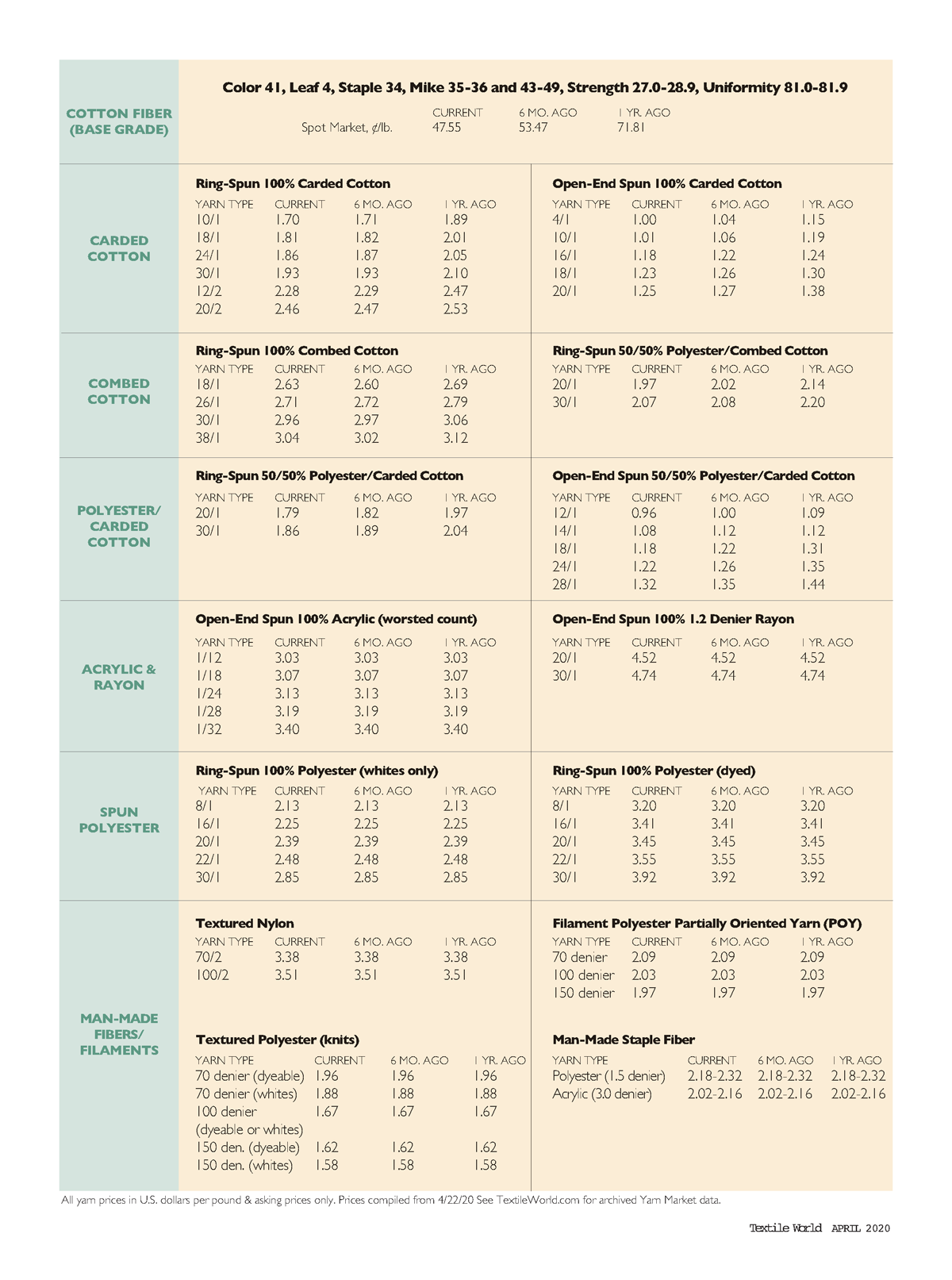
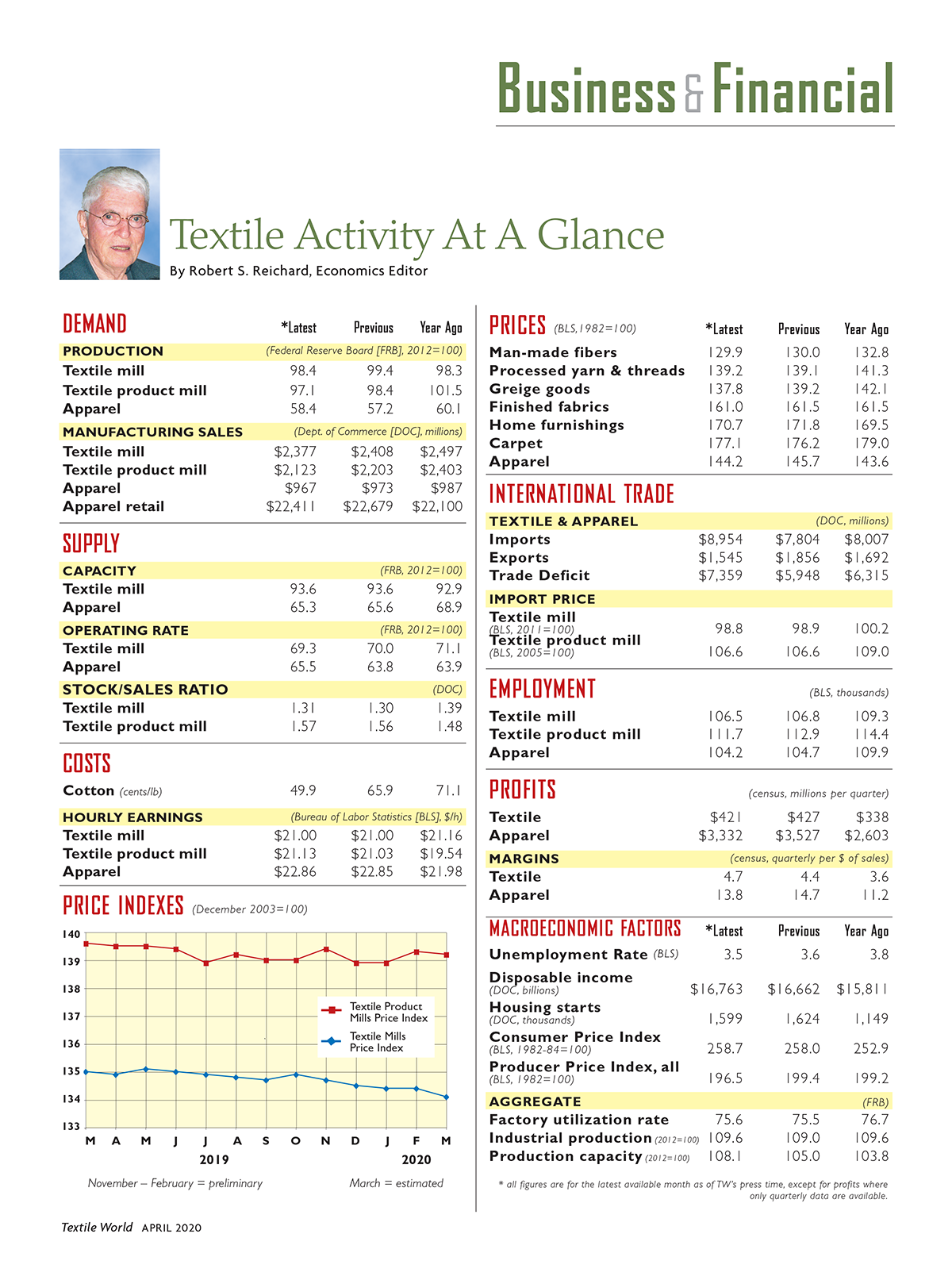
As spinners struggle to manage in such a difficult environment, they are finding at least some financial respite from drastically reduced raw materials costs. The bottom has fallen out of the oil market, and the price of cotton has dropped precipitously over the past few weeks. For example, the price of Brent crude oil dropped to a two-decade low of $15.98 a barrel in trading on April 22. Compare that to the $46.92 price per barrel for the same oil in July 2016. Also, the price of base-quality cotton in the seven designated markets measured by the USDA fell to 47.55 cents for the week ended April 16. This compares to 72.61 cents for the same period a year ago. Demand for cotton was moderately lower from the same period a year ago, dropping from 27,298 spot transactions in late April 2018 to 22,698 this year.
What industry professionals need to know about fit versus size
TW Special Report
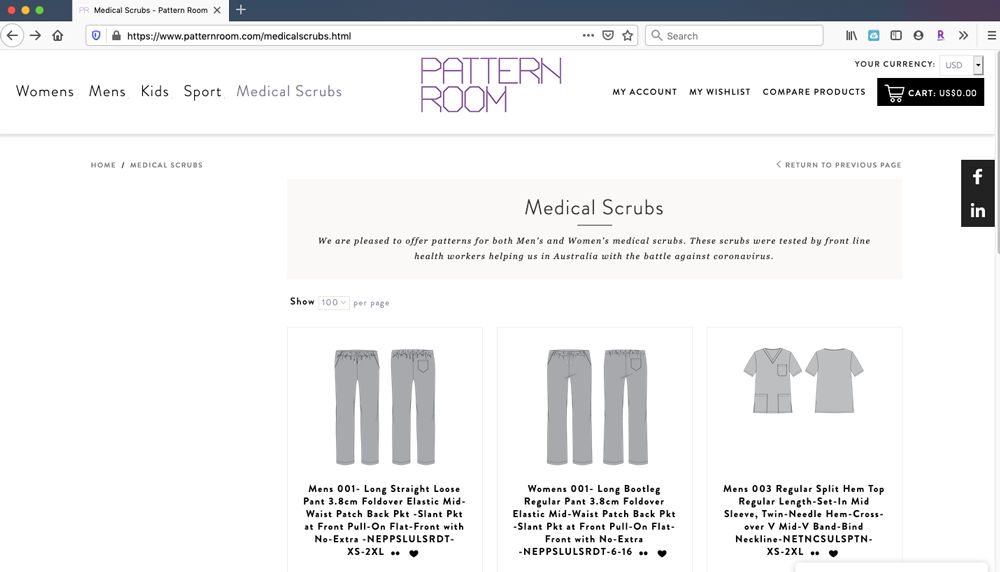
According to Pattern Room, an extensive online digital pattern library, the most common question asked by prospective clients is what the critical difference between “size” and “fit” is and how to ensure consistency is maintained across apparel offering.
“Pattern Room’s overall mission is to provide a service to the industry that helps to identify and eliminate poor fitting garments from product catalogs,” said Julia Van Der Sommen, founder of Pattern Room.
“We’ve found that during extensive conversations with sportswear and fashion design companies, a lot of time is spent iterating that size and fit are two completely different concepts of measurement, which very rarely go hand in hand.”
While “size” is defined by classes, typically numbered or lettered, into which garments are divided according to how small or large they are, “fit” constitutes the way an article of clothing hangs or molds to the wearer’s body shape and is generally categorized by six distinctly different terminologies:
Compression fit – Compression fit largely caters to elite athletes wanting to mitigate or eliminate any drag or resistance from sporting attire. Proper compression fit wears like a second skin, with muscle definition visible through garment material.
Tight fit – Tight fit is preferred by most amateur athletes. It’s snug enough to minimise excess material getting in the way of performance, but not so tight movement or agility is affected. This fit still highlights some body tone, but it is much less specified than compression fit.
Slim fit – Across both the sportswear and fashion industry more broadly, slim fit is understood to be the fit that defines and outlines shape by accentuating features but also keeping the mystery alive. Usually we find that sporting enthusiasts and weekend warriors usually gravitate to this fit first.
Regular fit — Regular fit is the vanilla ice cream of fits; it’s true, trusted and dependable. Predictably comfortable, regular fit is your “every day” t-shirt or pair of pants. Whether they’re worn walking down the street or to a backyard barbecue (once we’re allowed to have social gatherings again!), you always know what you’re going to get from regular fit.
Loose fit – Loose fit is the near ultimate relaxation fit. There is very little garment structure at all and wearers feel no restrictions from material. Loose fit lives on the couch at home or on long-haul flights when comfort is king.
Oversized fit – Oversized fit is the ultimate relaxed fit. Very loose fitting, the garments have no shape against the body, meaning no restriction at all. This is the fit which is often used in streetwear, where shape gives way to form.
When considering fit versus size, the key for understanding is that a person will be able to wear the same size (e.g. large) in each of the six fits.
However, each will provide a different shape to the wearer (the fit), for different purposes and the sleeve length, the collar, the hem length, etc. will all be reflective of the size.
For more information about fits, visit www.patternroom.com
CAMBRIDGE, England — April 24, 2020 — Members of Xaar’s senior leadership team have bought shares in the business to underline their commitment and confidence in its new strategy.
John Mills, CEO, Ian Tichias, CFO and Andrew Herbert, chairman, have all invested in the company, buying 275,000 Xaar shares between them. The significant investment follows the announcement of Xaar’s full year results yesterday for the 12 months ending 31 December 2019.
Mills said: “2019 was a difficult year for the group as a result of the performance of the Printhead business and decision to end investment in Thin Film.
“However, we entered 2020 with confidence in the long-term future of the business and a revised strategy, product roadmap and strong balance sheet to deliver improved business performance and a return to profitability.
“Clearly, the recent events with the rise of the COVID-19 pandemic mean it is impossible to determine the effect on Xaar’s 2020 results; however we are yet to see a significant impact on customer demand.
“We have all the fundamentals in place to continue to execute our strategy and return Xaar to profitability. Our share investment is a clear demonstration of our belief in the long-term performance of the business and the confidence that we have in delivering sustainable growth.”
The term Denim is a contraction of “de Nîmes”, the city in France where Serge de Nîmes created the tissue made originally of a mixture of wool and silk. Since the beginning of the 19th Century, Denim is known as a strong fabric made of cotton. More than 50 percent of denim is actually produced in China, India, Turkey, Pakistan and Bangladesh1.
The denim yarn is made of cotton and dyed with synthetic indigo dyes. Indigo is one of the most famous and oldest dyes used for textile dyeing, originally extracted from plants. A pair of blue jean trousers requires 3 to 15 g of indigo.
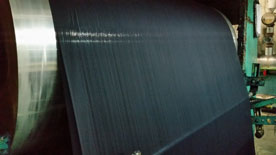
To dye the yarn, it is necessary to dip the yarn in several consequential baths of dyes. In between, the yarn with the dye undergoes an oxidation process. The more dye baths, the deeper the color of the indigo2.
Slusher dying machine
Meanwhile Denim is used to realize pants, skirts, shirts, vests and many more. The numbers of colors used in the production process are endless and it is almost impossible to distinguish the colors without the use of a color measuring instrument. Such instruments can be used to check the final color of the tissue but at that stage, it is almost too late, as the Denim will be ready to be transformed into clothing. The most efficient way is to measure the color during the production process. As soon as a color drift is “observed” with the color measuring instrument, a color correction can be induced.
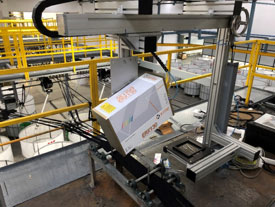
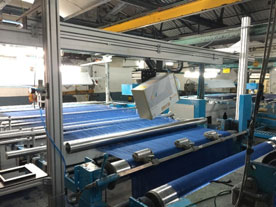
Actually there are several places where color of denim can be measured during the production process. Depending of the dying machine, the color is measured for example directly on the rope of rope dying machines, which has proven to be very efficient. Naturally, the color can be measured on slasher dying machines as well. In this case, the yarns are dyed continuously, side by side and allow immediate reaction if color drifts away of specification.
Color Measuring Instrument placed on a scanner with ERX130
The color measuring systems have to measure contactless3. Moreover, they have to fulfill a series of unconditional and proven parameters for best results such as:
The light source of the instrument has to be a flashed Xenon light because the visible spectrum of the Xe-light is similar to the visible spectrum of the sun light, flashed Xe-light to avoid any influence of parasite light.
The optical resolution shall be as high as possible. With a resolution of 1 nm the obtained results have proven to be significant and useful.
The instrument shall have no movable parts and be made to measure in harsh environmental production conditions. This is an important aspect, as the producers want reliable color measuring systems, operating 365 days per year without unplanned interruption
The entire production and not just samples taken out of the production once every shift, has to be measured. Only if the color of the entire production is measured, a color drift can be detected and corrected. This will avoid producing waste; this will allow using the production machine to produce only sellable Denim in accordance with the customer’s specification. As a result, the production site will save considerably amounts.
The measured color values shall be saved in a Data base, in order to document the complete productions. At any time it must be possible to retrieve past production data, to be able to compare various productions and if necessary prove the color is right.
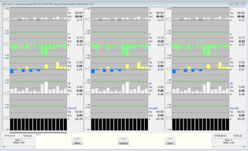
On a Slusher Machine, the Color measuring instrument shall be able to move in cross direction, either manually or motorized, to allow a precise positioning of the instrument wherever it shall measure. A visualization of the results shall be easily possible on a screen.
Screen showing the results Left – Middle – Right of fabric
Innovative advanced textiles can improve customer products at a competitive cost, while contributing superior properties.
New materials increase part functionality, utility and product differentiation
By Joe Melcher, Patty Berghardt and Shawn Benfield, Bally Ribbon Mills
The advanced technical textile industry uses science, information technology, and specialized materials to provide material solutions to a broad range of niche markets. The industry distinguishes itself from the standard textile industry by its adoption of new ideas and processes to create materials to meet specific requirements. Used primarily for performance, structure, and strength, innovative advanced textiles can improve customer products at a competitive cost, while contributing superior properties.
Advanced textiles experiencing fast growth
According to the Industrial Fabrics Association International (IFAI), a trade association representing the international specialty fabrics marketplace, the overall growth for advanced textiles is estimated to be about 9 percent and is currently valued at $71 billion. The protective textiles contribution to this sector is 6 percent, while other important contributors include high performance clothing, composites, coated textiles, and smart textiles. [1]
A general trend is the use of high tech/specialty fibers with properties designed to bring added value and increased performance to the end use application. These typically include fabrics made with aramids and meta-aramids (Kevlar®, Nomex®), graphite, Vectran™, Teflon™, Dyneema® and Spectra®, as well as composites or other specialty fibers.
Bally Ribbon Mills (BRM) has found that customers are looking to use advanced textiles to differentiate themselves from their competitors. They want to make their product last longer, or make it lighter, or imbue it with other characteristics that give them an advantage. In the personal protection arena, advanced textiles are being used to make products stronger. For example, one BRM customer wanted to eliminate elongation in a belt used in a manufacturing process. By adding low elongation para-aramid and UHMWPE fibers to the existing substrate, the belt was able to maintain its integrity much longer and stay in service 10 times longer than the prior version.
The push in recent years has been toward fabrics that are lighter and stronger and let users do more with less. While advanced textiles can be found in a wide variety of applications, sectors that support quality of life would — or should — use the most advanced technical textiles. This may include medical applications, along with some industrial, and military — like parachutes. The properties they are looking for vary by industry. Some continue to seek out stronger and lighter fabrics, while the medical industry is looking for materials that are less invasive and promote faster healing.
It should be noted that other markets are also looking for innovation and advancements, even on products that have been on the market for decades. Just because an item has been used for a long time does not mean it cannot benefit from a design review. For example, BRM has done design work for dog collars to make them stronger. In advanced design, customers want to differentiate themselves from a million other companies making dog products (and baby products!) Another good example of the use of advanced fibers in long-established products is sun awnings, where manufacturers are developing new methods to weave fibers that wear better and can last 50 years instead of 10. Wherever manufacturers are seeking an edge, advanced textiles have a role to play.
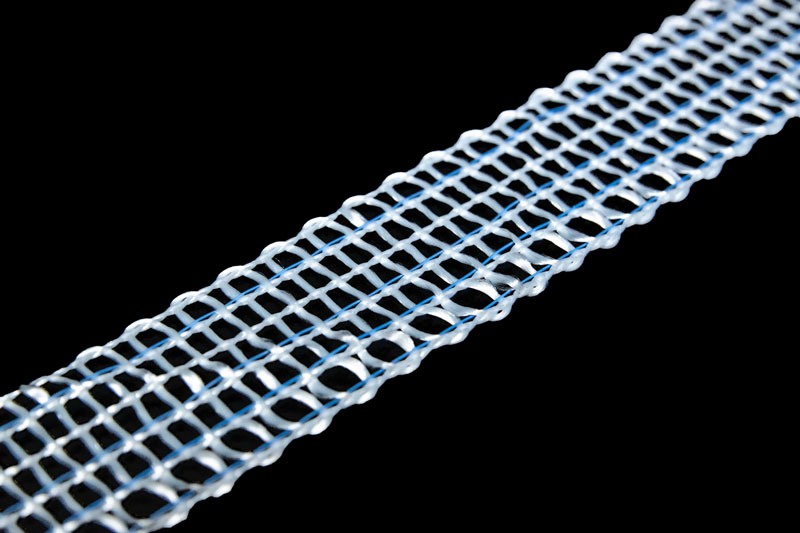
E-WEBBINGS enable electronic transmission of data, sensations and power
Tips For Customers Looking For Advanced Or Technical Textiles For Unique Applications
Those looking for an advanced or technical textile should begin by discussing the application, the specific material properties they are looking for, the material specifications, and any special requirements, certifications, and testing requirements.
At BRM, we begin by advising customers of our capabilities and experience in weaving two-dimensional and three-dimensional designs and discussing the company’s quality management system and its effectiveness in meeting customer specific requirements. We request a sample from the customer if one is available, and then work with our R&D group to provide examples of materials we have already woven that can be tweaked to meet the customer’s requirements.
BRM gathers as much information as possible on the application, the location within the product that the material will be placed, and any properties the customer is specifically trying to address. Typical information gathered from customers includes:
Application details;
Width;
Tensile strength;
Elongation;
Color;
Quantity; and
Special requirements including flammability, conductivity, moisture, and abrasion resistance.
Where the customer knows the application but is not familiar with textiles, BRM application experts help determine required properties and the most appropriate weave pattern. A back and forth approach is used to tweak products to improve existing designs that will help the team arrive at the optimal webbing. Then, manufacturing experts conduct small sample runs, which are tested in the BRM textile lab. For all materials, BRM tracks raw material testing. Customers then use the tested material to manufacture their products.
Fabrics may also have to meet a variety of safety standards/specifications and certifications, which include ISO9001, AS9100, ISO13485, ISO14000, NFPA, ASTM, ANSI, *UL, and CSA. BRM continuously monitors these standards and has established accurate and streamlined in-house systems to support required testing and tracking – from raw material to finished parts. Test reports and certifications are provided according to the particular specification or the customer’s requirements. Providing simple and timely documentation and test reports is critical, especially for lifesaving products like parachutes, where documentation is required so any errors can be followed back to the yarn manufacturer.
TPCM fabrics can produce lighter-weight, quality parts at reduced materials and labor costs, with reduced process complexity and bills of material.
Unique Advanced/Technical Textiles
Working with companies that include NASA, Tier 1 Defense suppliers, as well as directly with the Department of Defense (Army, Air Force), BRM has developed advanced textiles used in parachutes, safety harnesses, personal protective equipment, and chemically resistant webbing. With a Class 8 Clean Room and multiple loom styles (shuttle, needle, jacquard, rapier), BRM can scale up from prototype to full-scale production.
E-WEBBINGS enable electronic transmission of data, sensations and power.
Examples of the newest advanced textiles include:
E-WEBBINGS®: Woven narrow-fabrics that are conductive, enabling the electronic transmission of data, sensations (light, noise, vibrations, heat), and power that can be stored or used to actuate/transform objects. These unique conductive fibers can be woven in conjunction with other fibers and can be used in embedded sensors in both wearable and integral technology, including the Internet of Things
One new project currently in development utilizes advanced conducting/sensing technology that is composed of a sophisticated weaving process to comingle fiber-optic filaments with high-performance, structural materials. Optical “carriers” are the structured output of the weaving process, which serve as component parts in the eventual construction of assemblies that can capture and transmit information to downstream computing technology. The optical technology can take corrective action based on improved monitoring capability and assist in the optimization of manufacturing processes and the integration of non-destructive inspection tools.
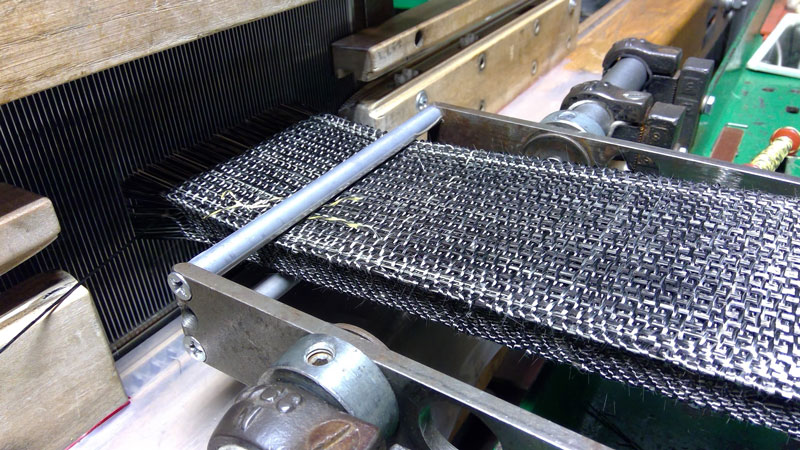
TPCM™ woven thermoplastic localized reinforcements: These thermoplastic composite materials are 2-D or 3D-woven, thermoplastic structures for incorporation into composite parts produced within varied, continually-evolving molding processes. The woven structural shapes are used in hybrid composite structures used in numerous industries, including aerospace/aviation, automotive/transportation, defense, architecture/infrastructure, marine, and sports/recreation.
TPCM fabrics are comprised of structural and matrix/resin fibers oriented to maximize X, Y and/or Z directional properties. They can produce lighter-weight, quality parts at reduced materials and labor costs, with reduced process complexity and bills of material. Potential fiber combinations include a varied mix of structural yarns (fiberglass, carbon, aramid) and matrix/resin yarns (such as PE, PA6, PEI, PPS and PEEK). TPCM in a customized and engineered weave design, provides localized reinforcement where superior properties are required.
TPCM fabrics are being advanced as part of a collaborative development effort in which BRM is teaming with suppliers and downstream fabricators. One partner is Concordia Fibers, Coventry, R.I., which supplies Comingled Yarns for the project. Its technology produces a better mix of structural and matrix yarns, which in turn improves the properties of the woven structures. Customers purchasing this type of fabric are working with expert knowledge provided by the complete supply chain, including the entire process and product development process. This is the most forward-looking way to work with suppliers to ensure product success.
TPCM fabrics can produce lighter-weight, quality parts at reduced materials and labor costs, with reduced process complexity and bills of material.
Benefits Of Advanced Textiles
Advanced textiles can increase a part’s functionality, utility and product differentiation, at a competitive net cost, while contributing superior properties such as lighter weight, specific strength, durability, stability, abrasion resistance, and sustainability. BRM’s unique ability to produce advanced technical textiles through innovation, experience, design, research, development, quality, technological advancements and customer service separates it from the competition.
Reference
[1] Growth meets change in protective textiles, Innovating and commercializing to participate in future opportunities, by Seshadri Ramkumar, Advanced Textiles Source, May 20th, 2019, https://advancedtextilessource.com/2019/05/20/growth-and-change-in-protective-textiles-innovating-and-commercializing-to-participate-in-future-opportunities/, retrieved 10/25/19.
Editor’s Note: Joe Melcher, Patty Berghardt and Shawn Benfield work in business development for Bally Ribbon Mills, Bally, Pa.