Textiles & The Coronavirus (SARS-CoV-2)*

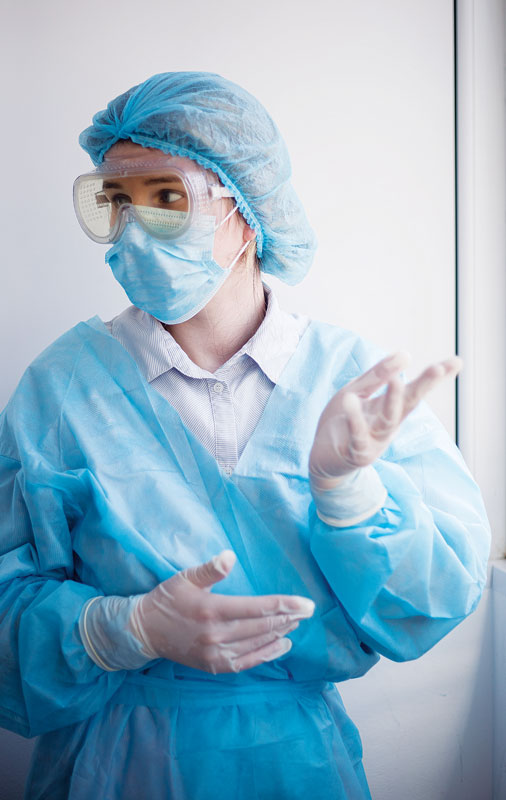
Personal protective equipment (PPE) is a term used for workplace protective equipment that is regulated by OSHA and other agencies. Image: EVG Photos/Pexels.

Understanding the regulations and critical characteristics of personal protective equipment (PPE)

By Dr. Davis Lee; Dr. Erin Kirkpatrick; Dr. A. Sydney Gladman; Dr. Emily Fitzharris; Michael Posson, M.P.H., CIH; and Dr. Mark Roberts1

Textiles have long been used in protective coverings2, including gowns, coveralls, caps, and face coverings. In recent months, there has been much interest and activity from the healthcare industry, broader workforce, and general public regarding the use of protective coverings to reduce the risk of infection by the novel coronavirus (SARS-CoV-2). Consequently, there has been a sharp increase in demand for these products.

In addition to regular use of personal protective equipment (PPE) in healthcare and occupational settings, this increased demand results from the Atlanta-based Centers for Disease Control’s (CDC’s) recommendation that the public wear “simple cloth face coverings to slow the spread of the virus and help people who may have the virus and do not know it from transmitting it to others.”3 These face coverings are loosely defined as “simple cloth face coverings fashioned from household items or made at home from common materials at low cost.”3 By recommending the use of simple do-it-yourself (DIY) face coverings for the general public, has the COVID-19 pandemic created a unique opportunity for the textile industry to respond to the public need?

This article explores the regulations associated with PPE, surgical masks and unregulated protective face coverings. The specific regulatory definition of PPE, the performance standards and regulations that need to be met, and the pragmatic considerations related to fabric construction and end-use performance will be discussed. The information collected for this article is based on scientific and open sourced literature available at the time of this writing.
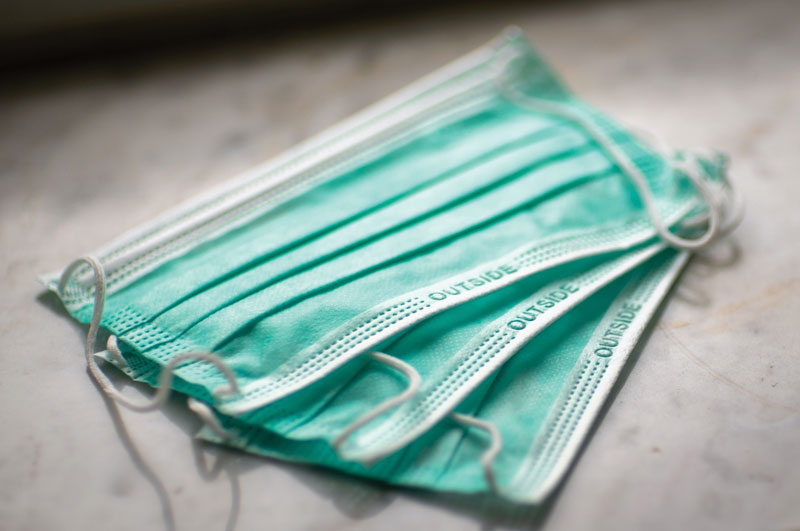
Surgical face masks typically
are made using nonwoven materials. Image: Mika Braumeister/
Unsplash.

Understanding The Regulatory Complexities Of PPE: Who Makes The Rules?

PPE has become a household term, but regulatory complexities and associated performance requirements are not commonly understood. In fact, PPE is a specific term regarding workplace protective equipment that is regulated and enforced by the Occupational Safety and Health Administration (OSHA) and other agencies. OSHA defines PPE as “equipment worn to minimize exposure to hazards that cause serious workplace injuries and illnesses.”4 Especially within the context of disease transmission, it is important to note that PPE is designed to protect the wearer, not necessarily others who may come into close proximity to the wearer.

Much of the discussion regarding protective coverings as it concerns the current COVID-19 pandemic is focused on protective face coverings. Along with OSHA, the United States Food and Drug Administration (FDA) and National Institute for Occupational Safety and Health (NIOSH) have been involved in providing guidance for protective coverings. While collaborative, the respective roles of these agencies are different. The scope of the FDA’s authority includes regulatory oversight of medical devices.5 NIOSH, on the other hand, is a research agency attached to the CDC “focused on the study of worker safety and health, and empowering employers and workers to create safe and healthy workplaces.”6 NIOSH also is under the jurisdiction of OSHA, and is the certifying agency for respiratory protection in workplaces in the United States.
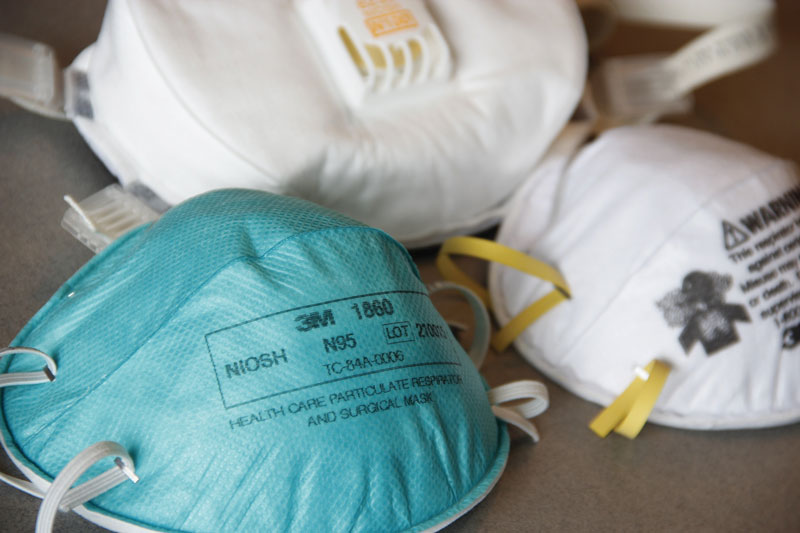
A variety of N95
respirator masks
Image: CDC/Pexels

What Are The Regulations?

PPE has very specific regulatory meaning. With regards to protective face coverings, there is a clear regulatory difference between PPE used in an occupational or healthcare setting — for example N95 respirators or surgical masks — and face coverings that may be used by the general public such as DIY face coverings as described by the CDC.3 For example:

  • Properly fitted N95 respirators for industrial use are capable of filtering out at least 95 percent of 0.3 micron size particles.7,8,9,10 In the United States, PPE such as N95 respirators carry labels that designate the approval level — N95 — and approval by NIOSH under 42 CFR Part 84. NIOSH and the approved use — N95, for example — will be printed directly on the mask, and the packaging will be accompanied by information regarding OSHA compliance requirements and workplace hazards. In this case the employer is responsible for assuring that PPE is prescribed in accordance with the appropriate specifications, laws and regulations.
  • Surgical masks for medical use are cleared by the FDA as a medical device but may or may not have NIOSH labeling or certification, depending on the product class and code.8,9,11 Surgical masks differ from respirators in their indications for use. Specifically, the respirators are intended to filter small particles and bio-aerosols, whereas surgical masks are typically designed to fit the face more loosely and serve to act as a barrier to the transfer of large droplets of saliva and/or mucus.12,13
  • Face coverings for general public use as defined by the CDC do not currently have a regulatory mandate, and are not required to adhere to any governmental specifications or regulations.14 Likewise, protective face coverings colloquially referred to as “surgical masks” that are for general public use and intended for a non-medical purpose are not required to meet governmental specifications or regulations. Protective face coverings used in this context are not technically considered PPE.8,9,15

Regardless of the type of protective covering chosen, it should always be used in conjunction with appropriate and basic hygiene practices, such as properly donning and doffing coverings or PPE, and then washing one’s hands.16,17

What Are The Performance Standards?

If a respirator is to be used in a workplace as a PPE device under OSHA rule, it must go through a NIOSH certification process dictated in 42 CFR 84.18 There are also other performance requirements or industry standards associated with different types of PPE, for example ANSI/ISEA Z87.1,19 ANSI/ASSE Z88.2,20 and ASTM F2100.21 All of these are standards associated with the finished product. On the other hand, DIY face coverings, such as those recommended by the CDC, are not required to be tested under any government performance standards regarding filtration or personal protection.22 Thus, there is an opportunity for the textile industry to characterize typical functional properties and potentially develop minimum performance specifications based on current regulatory requirements of face coverings.

In addition to the product characteristics, a critical factor to consider with respirators and face covering performance is the fit to the user’s face. Airflow will follow the path of least resistance. If the covering does not tightly contour the face, air will leak through gaps between the face and seal, reducing filtration effectiveness. In this respect, there is a critical distinction between respirators — which are regulated under OSHA — and face coverings, which are recommended by the CDC for the general public. For example, N95 respirators used in medical or occupational settings are required to be fit-tested to ensure the individual fit and filtration efficiency for the user. Further, the user is required, as facilitated by the employer to undergo medical examination, training, and other requirements to assure that they are able to wear a respirator during the course of their employment. In contrast, since general protective face coverings may fit the user’s face more loosely, filtration performance of the textile material may be reduced.22
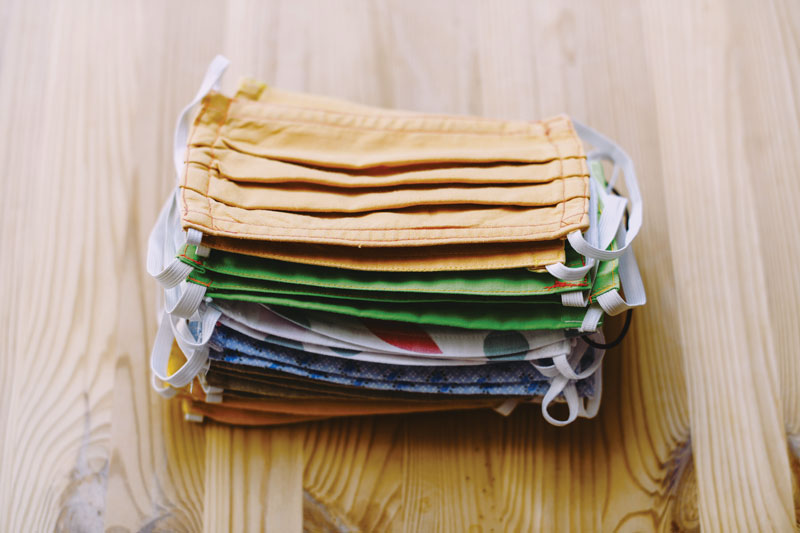
Home sewn and DIY face coverings — made using cotton pillow cases, cotton quilting fabrics, and knit T-shirts, among other materials — have been shown to offer more protection from viruses than no face covering at all. Image: Vera Davidova/Unsplash

Use Of Textiles In Protective Coverings

It is generally understood that different protective coverings provide different levels of protection for the wearer and those around them. In these protective coverings, textile products are popular material choices because they simultaneously provide comfort and protection. For example, face masks and surgical masks used as PPE are typically constructed from nonwoven fabrics using fibers such as polypropylene, polyester and rayon.23 However, conventional knit or woven fabrics also are used for certain protective coverings. A variety of fiber and fabric options are available for DIY face coverings.

A review of the literature shows that many researchers have evaluated the utility and function of N95 respirators, surgical masks, and DIY face coverings. One study that evaluated the filtering efficiency of DIY face coverings and surgical masks for particles less than 10 microns found that the filtering efficiency of DIY face coverings ranged from approximately 60 to 80 percent, depending on the fabric characteristics, as compared to greater than 90 percent efficiency for the surgical masks, indicating that face coverings provide some level of protection for the general population.24 Studies have found that face coverings “reduced emitted particles (leakage) by 1/5, surgical masks reduced it by 1/2, and N95-equivalent masks reduced it by 2/3” for particles 0.02-1.0 microns in size.25

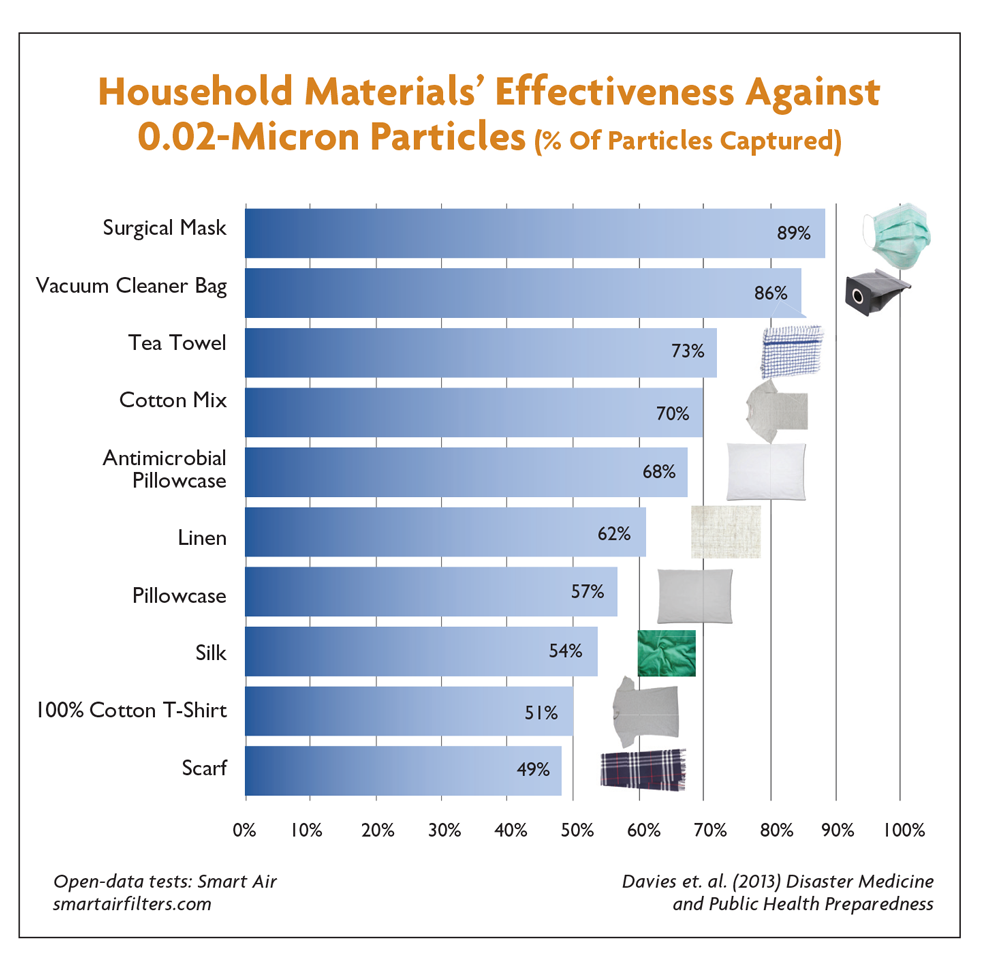
Another study that examined DIY face coverings produced from readily available fabric types provides useful guidance regarding construction characteristics. Davies, Anna, et al, evaluated the filtration efficiency of a variety of household materials, including a cotton T-shirt, scarf, tea towel, and vacuum cleaner bags, against two microorganisms chosen to be representative of the influenza virus and published the results in the paper “Testing the efficacy of homemade masks: would they protect in an influenza pandemic?”26

The study showed the pillowcase and 100-percent cotton T-shirt to be the most suitable household materials for constructing DIY masks. Moreover, the doubling of fabric layers did not significantly increase the filtration efficiency but did negatively affect breathability. The filtration of these DIY face coverings was also compared to surgical masks. While the DIY face coverings were better than controls — no face covering — the improved filtration efficiency from surgical masks was three times that of DIY masks for blocking the transmission of microorganisms via coughing.

Understanding Fabric Characteristics For Protective Face Coverings

Existing literature provides guidance on how fabric characteristics impact protective face covering performance. For example, researchers have shown that DIY cloth face coverings can have varied pore sizes, shapes, and distributions.24 These studies support the general understanding that fabrics with larger pore sizes provide a lower level of filtering efficiency.24

In addition to pore size, the number of available pores can be affected by a number of fabric, yarn and fiber characteristics. In general, fabric modifications that increase the number of pores, while making them smaller should improve filtration performance. For instance, simply by increasing the thread count of a fabric, the spaces between yarns — fabric interstices — will be increased in number while made smaller in size. This should improve filtration efficiency. However, breathability may be negatively impacted as seen in the study above,26 where an effective increase in fabric interstices is achieved by doubling the fabric layers.

Fiber type, size and shape will also affect the number and size of available pores. Smaller fibers and irregularly shaped fibers — cotton or trilobal man-made fibers, for example — will provide added surface area. With any of these modifications, breathability and comfort must also be considered.
Fabric Characteristics May Be Impacted By Re-Wearing, Laundering And Disinfecting

Filtering efficiency of face coverings may be adversely affected by re-wearing and laundering, as well as by repeated fit adjustment. Researchers have found that washing, drying, and/or stretching of cloth face coverings may influence the pore characteristics and subsequent filtering efficiency.24

Because of the current shortage of N95 respirators, researchers have investigated the potential for disinfecting and reuse, despite general guidelines which do not support reuse of such equipment in normal circumstances.28,29 Scientists have identified that certain disinfecting methods such as autoclaving, >70% alcohol, chlorine-based disinfectants, and high temperature dry heat treatments at 165°C, reduce the filtration efficiency of N95 respirators. Instead, disinfection methods such as dry heat at 70°C, boiling water vapor, vaporous hydrogen peroxide, and ultraviolet light treatments appear more promising to maintain function in emergency circumstances associated with equipment shortages.29.30

Opportunity To Define New Standards

Although PPE has entered the common language, the associated regulatory definitions are not well understood. Navigating the regulatory requirements for PPE can a be daunting and time-consuming undertaking. But even with these challenges, there is opportunity for the textile community to participate in defining new standards and specifications for face coverings. PPE and surgical masks have specific performance and regulatory requirements that are overseen by governmental entities or other certifying agencies. On the other hand, DIY face coverings that are currently recommended by the CDC do not have performance requirements and are not regulated. Recent publications provide useful information on the important aspects of fabric construction and filtration performance for face coverings. They show that fiber type, fiber geometry and fabric construction play an important role in performance and comfort, and that there is an opportunity to systematically describe textile characteristics that make this possible.


References:

* SARS-CoV-2 is the name that the World Health Organization has given to the virus that causes the COVID-19 disease. See https://www.who.int/emergencies/diseases/novel-coronavirus-2019/technical-guidance/naming-the-coronavirus-disease-(covid-2019)-and-the-virus-that-causes-it

1 The authors are consultants in the Polymer Science and Health Science practices at Exponent, Inc., a science and engineering consulting firm. This publication was authored by employees of Exponent, Inc. No portion of this publication has been funded or paid for by external sources.

2 For the purposes of this article, “protective coverings” means textiles that cover a portion of the user’s body that may reduce the risk of transmitting or contracting and infection from SARS-CoV-2 or other infectious agents. This includes Personal Protective Equipment (PPE) regulated by governmental agencies in workplaces and general coverings (e.g., face coverings) recommended by other agencies, such as the CDC. PPE use and effectiveness as it is associated with SARS-CoV-2 transmission is still under study in the scientific community.

3 “Recommendation Regarding the Use of Cloth Face Coverings, Especially in Areas of Significant Community-Based Transmission” Centers for Disease Control and Prevention, reviewed 3 April 2020, www.cdc.gov/coronavirus/2019-ncov/prevent-getting-sick/cloth-face-cover.html. Accessed 21 April 2020.

4 https://www.osha.gov/SLTC/personalprotectiveequipment/

5 https://www.fda.gov/about-fda/fda-basics/what-does-fda-regulate

6 https://www.cdc.gov/niosh/about/default.html

7 N95 respirators rely upon complex polymeric fiber arrangement, static charge, and a tight custom fit to the wearer.

8 “Surgical N95 vs. Standard N95 – Which to Consider?” 3M Personal Safety Division Technical Bulletin, Revision 2, March 2020. multimedia.3m.com/mws/media/1794572O/surgical-n95-vs-standard-n95-which-to-consider.pdf. Accessed 29 April 2020.

9 “Key Differences Between Respirators and Masks” 3M Personal Safety Division, April 2014. multimedia.3m.com/mws/media/956213O/differences-between-respirators-and-masks.pdf?fn=Respirator%20vs%20Surgical%20Mask%20flye. Accessed 29 April 2020.

10 “Infection Prevention Solutions – Face Masks and Respirators” 3M Healthcare. multimedia.3m.com/mws/media/312703O/masks-and-respirators-tri-fold-brochure-eng.pdf. Accessed 29 April 2020

11 “Content Details 21 CFR 878.4040 – Surgical apparel” U.S Government Publishing Office, www.govinfo.gov/app/details/CFR-2004-title21-vol8/CFR-2004-title21-vol8-sec878-4040/summary. Accessed 29 April 2020

12 “A Comparison of Surgical Masks, Surgical N95 Respirators, and Industrial N95 Respirators” Occupational Health and Safety, 1 May 2014, ohsonline.com/articles/2014/05/01/comparison-respiratory.aspx. Accessed 20 April 2020

13 Desai, Angela and Mehrotra, Preeti. “Medical Masks.” JAMA Network, 4 March 2020. 10.1001/jama.2020.2331. Accessed 14 April 2020

14 https://www.osha.gov/SLTC/personalprotectiveequipment/standards.html

15 Enforcement Policy for Face Masks and Respirators During the Coronavirus Disease (COVID-19) Public Health Emergency (Revised), April 2020.

16 “Personal Protective Equipment for Infection Control” U.S. Food & Drug Administration, 10 February 2020, www.fda.gov/medical-devices/general-hospital-devices-and-supplies/personal-protective-equipment-infection-control. Accessed 29 April 2020.

17 bin‐Reza, Faisal, et al. “The use of masks and respirators to prevent transmission of influenza: a systematic review of the scientific evidence.” Influenza and other respiratory viruses 6.4 (2012): 257-267.

18 https://www.cdc.gov/niosh/npptl/topics/respirators/pt84abs2.html

19 ANSI/ISEA Z87.1-2015, American National Standard For Occupational And Educational Personal Eye And Face Protection Devices.

20 ANSI/ASSP Z88.2-2015, Practices For Respiratory Protection.

21 ASTM F2100-19, Standard Specification for Performance of Materials Used in Medical Face Masks.

22 Jansen, K. “Why the best material for a homemade coronavirus face mask is hard to identify?” Chemical & Engineering News April 2020. Available at: https://cen.acs.org/biological-chemistry/infectious-disease/best-material-homemade-coronavirus-face/98/web/2020/04

23 Qin, Yimin, ed. Medical textile materials. Woodhead Publishing, 2015.

24 Neupane, Bhanu Bhakta, et al. “Optical microscopic study of surface morphology and filtering efficiency of face masks.” PeerJ 7 (2019): e7142.

25 National Academies of Sciences, Engineering, and Medicine. “Rapid Expert Consultation on the Effectiveness of Fabric Masks for the COVID-19 Pandemic.” The National Academies Press (2020) 10.17226/25776.

26 Davies, Anna, et al. “Testing the efficacy of homemade masks: would they protect in an influenza pandemic?” Disaster medicine and public health preparedness 7.4 (2013): 413-418.

27 Neupane, Bhanu Bhakta, et al. “Optical microscopic study of surface morphology and filtering efficiency of face masks.” PeerJ 7 (2019): e7142.

28 “Enforcement Policy for Sterilizers, Disinfectant Devices, and Air Purifiers During the Coronavirus Disease 2019 (COVID-19) Public Health Emergency. Guidance for Industry and Food and Drug Administration Staff” U.S. Food & Drug Administration, March 2020.

29 “Decontamination and Reuse of Filtering Facepiece Respirators.” Centers for Disease Control and Prevention, reviewed 9 April 2020. www.cdc.gov/coronavirus/2019-ncov/hcp/ppe-strategy/decontamination-reuse-respirators.html. Accessed 29 April 2020

30 Price, Amy and Chu, Larry. “What are good ways to address the shortage of face masks by anesthesiologists?” Stanford Medicine via Learnly (March 2020)


Editor’s Note: Dr. Davis Lee is senior managing scientist, Dr. Erin Kirkpatrick is managing scientist, Dr. A. Sydney Gladman is manager, and Dr. Emily Fitzharris is associate in the Polymer Science & Materials Chemistry practice of Exponent Inc. — a multi-disciplinary engineering and scientific consulting firm. Michael Posson is senior managing scientist and Dr. Mark Roberts is principal scientist at Exponent’s Health Sciences practice.


May/June 2020

Sattler USA: Outdoor Performance Fabrics-Focused

Sattler’s Outdura® brand offers
100-percent solution-dyed acrylic
upholstery fabrics for outdoor use.

Sattler Corp. is a family business focused on strengthening its awning, marine and casual furniture industry positions.

By Jim Kaufmann, Contributing Editor

The term family business is often embellished or misused in today’s business climate. However, when one refers to the Sattler Group, a global manufacturer of technical and performance textiles, the term family business is definitely spot on. Sattler, originally founded in 1875 as a trading company, has evolved greatly over its 145-year-history and yet remains the epitome of a family owned business. Headquartered in Austria, Sattler is now led by the fifth generation of the founding family and a family mentality is pervasive throughout the various branches of its organization.

“Sattler is family run and family oriented from the top down,” said Uli Tombuelt, CEO of Sattler Corp., who joined the company in 2019. “It’s really important to the ownership that this remain a family business and a good place to work,” he said. “A lot of our employees throughout the organization are second, third or higher generation. Thirty to 40 years working here is common for many employees. You hear family business a lot at many places, but we actually in fact live it here and remain true to the Sattler family’s heritage.”

The former Hudson Cotton Mills building, a 116-year-old facility in Hudson, N.C.,
is home to Sattler Corp.’s headquarters.

Company Heritage

Sattler Corp., (Sattler-USA) — the U.S. division of the Sattler Group — is located in the original Hudson Cotton Mills building in Hudson, N.C. In 1968, the Shuford family purchased Hudson Cotton Mills Corp. and renamed it Shuford Mills. Given the lengthy and strong relationship already established between Hudson Cotton Mills, which was founded in 1904 and the town of Hudson, the Shuford family decided to maintain and invest further in the Hudson manufacturing location. Through the late 1990s, Shuford transitioned its focus towards man-made fiber fabrics and away from cottons for outdoor uses. This led the company to specialize in solution-dyed acrylics for awnings, marine and casual furniture applications, and the Outdura® brand was born. Shuford’s strategic change in product focus and the growing success of the Outdura brand as a line of performance fabrics helped to ensure the continued operation of the Hudson location throughout the textile industry’s more turbulent years.

Fast forward to the late 2000s when the Shuford family began fielding and evaluating opportunities specific to the future of the Outdura brand and its Hudson manufacturing facility. The Shuford family was introduced to members of the Sattler Group with its family business mentality. A synergy was found, and in 2010, Sattler purchased the Shuford Mills operations and its Outdura brand.

According to Tombuelt, it was a perfect match. Both organizations “cared strongly about family, resulting in one of the stipulations of the sale stating that the Hudson plant would continue to operate in its current location so that employee lives would not be interrupted and the town of Hudson would not be negatively impacted,” Tombuelt said. “Since the acquisition, Sattler has kept that promise by establishing Hudson as the group’s U.S. headquarters, making numerous investments in the facility while expanding the Outdura brand and creating other product offerings.

“This building is 116-years-old and registered with the National Register of Historic Places,” noted Tombuelt. “Given the company’s long relationship with the town of Hudson, we’ve been able to acquire the additional space we needed to grow. We now have 170,000-square-feet of space on campus here in Hudson, with room to grow further and accommodate any future needs.

Solution-Dyed Outdura®

The Outdura brand now constitutes a family of upholstery fabrics made from 100-percent solution-dyed acrylic — all of which are “Made in the USA.” This is significant to Tombuelt because: “roughly 80 percent of our outdoor customers still manufacture in the United States.” The acrylic fiber used for Sattler-USA’s Outdura fabric is sourced exclusively from Europe. The fiber is then spun into yarn and woven into Outdura fabrics at Sattler-USA’s Hudson facility.

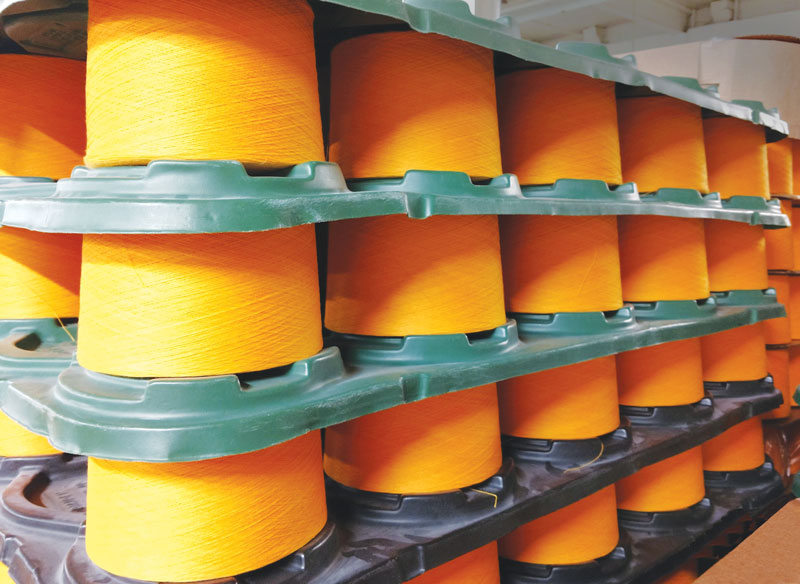
Orange is one of Sattler’s exclusive solution-dyed acrylic color options.

Solution-dyed acrylic fabrics were originally developed as a replacement for cotton awning fabrics because of their higher levels of functionality and durability. According to Tombuelt, Outdura’s applications have expanded to include marine and casual furniture applications as well because of their similar performance and quality requirements. Solution-dyed acrylics are well suited for each of these markets because of their design capabilities, variety of colors, consistency, clean look and inherent performance characteristics.

“Outdura has become a well-known brand, with unsurpassed quality in the United States and our fabrics meet Oeko-Tex® Standard 100 requirements,” Tombuelt said. “We’re ISO 9001-2015 and ISO 14001 certified, and our quality systems allow for traceability and reliability. Our customers like the fact that they can buy a roll of a particular fabric SKU [stock keeping unit] today, another in six months, a year or more from now, and it will look and feel the same. The consistency is there. Our consistency of quality and color between lots is very high.

“We believe there’s room to grow in these markets,” Tombuelt added. “So, we want to focus on and strengthen our brands as well as Sattler-USA’s position through our product offerings, quality and customer responsiveness. And, while we don’t have any immediate plans to open other locations in the United States, we do plan to implement additional enhanced services intended to increase our presence throughout the industry.”

Though a few select distributors are employed in strategic markets, Sattler also sells directly to its customers because, according to Tombuelt, “going through too many distributors can be a disadvantage.” He feels that selling direct to customers provides Sattler the opportunity to provide customers better overall service by eliminating any added layers of communication.

“The outdoor furniture industry is well connected and like a big family,” Tombuelt said. “We all know each other pretty well. Events tend to take on a family reunion-like atmosphere. When you go to a show, you see lots of familiar faces. We use these opportunities to build stronger customer relationships that improve communication channels at all levels. We want that direct, immediate feedback because of its accuracy and timeliness. Even if we don’t like what we hear, it helps us to improve our business and create even more relevant product offerings.”

Cut Program Offers Flexibility

Original equipment manufacturers, cushion manufacturers, upholstery and canvas shops, as well as jobbers, are viewed as Sattler-USA’s prime targets — where there are good opportunities according to Tombuelt. “We do believe our future success is directly tied to under-appreciated segments and we are improving our business model to make Sattler-USA more viable and a value-add for them,” Tombuelt said. As a result, Sattler-USA is increasing its customer service focus and improving its “Cut Program” offerings which are also based out of the Hudson location.

Using the Cut Program, a customer may purchase practically any fabric directly from Sattler’s roughly 450 SKUs. This enables big and small customers alike to get samples and/or purchase amounts varying from 1 yard up to a full roll of fabric directly from the manufacturer. “This is a crucial part of our business going forward,” Tombuelt offered. “We can send the customer 5 or 10 yards as needed for a particular application, or of course, we can also send a truckload tomorrow.”

In addition, Sattler-USA recently became a brand partner on Material Bank — an online marketplace for the architecture and design industry. Material Bank recently completed uploading all of Sattler’s cut program SKUs to its website. “So, a designer can now go to Material Bank’s website, search for Sattler fabrics, select one or more and get a sample delivered in 24 hours,” Tombuelt noted.

It’s rare and refreshing to find this type and level of service directly from a manufacturer, but as Tombuelt indicated: “We do believe that responsiveness is certainly one element that separates Sattler-USA from other companies. In addition to the current SKUs in our cut program, if a project requires a specific design, an order of 60 yards, our standard roll length, we can make that happen in a short period of time!”

In-House Design Capabilities Offer Fresh Design Options

Having an inside design team, as well as more than 140 colors and styles of yarn to choose from with more options arriving all the time, is beneficial to Sattler-USA and its customers. In addition, close partnerships with yarn suppliers allows Sattler-USA to not only react quickly to market trends, but also create new trends themselves.

“All of our designs are done in-house,” Tombuelt said. “We have yearly lines, but generally, a three to four-year lifecycle on a design or product line is common, maybe six to seven years on a really good one. Our customers don’t really want to see the same designs year after year, over and over. So, one of our biggest strengths is that with our modern equipment and an integrated design team, we can react quickly and turn custom or new designs into fabric. For us, this is rather simple and easily done. Currently, roughly 90 percent of our product offerings are from stock, the remainder being custom orders, but we’re beginning to see shorter product design life cycles that mimic fashion industry cycle trends and we will be prepared for that as well.”

Tombuelt sees changes in the industry as being incremental, but acknowledges that customers are expecting greater and greater levels of performance. “Take the outdoor furniture market for example,” he said. “The designs originally created for outdoor markets, historically dominated by solution-dyed acrylics, are now being used for inside markets. And there is a trend to create a second living room outside with the desire that the space to be functional for all seasons — so there’s lots of movement both ways. Companies traditionally focused on the ‘inside world’ are pushing into the ‘outside world’ and vice versa. New manufacturers are entering the industry as well. Sattler is looking at these trends as opportunities, but our customers will ultimately dictate our future direction.”

Increased Performance Expectations

New technologies based on polyester and olefins are beginning to push into the space as performance expectations continue to increase. “There is a natural push for performance stories throughout this industry,” commented Tombuelt, “And Sattler is in a strong position to provide the story lines.” In addition to the inherent desirable properties of the solution-dyed acrylic, Sattler-USA has formed a partnership with Crypton LLC, a company with manufacturing in Kings Mountain, N.C., to apply technical backings and enhancements to the fabrics. Treatments include odor and stain release properties, water repellency and if necessary, flame retardancy. Crypton’s proprietary chemistries also can meet the International Maritime Organization’s requirements with a focus on performance and sustainability without compromising the look, touch and physical performance of the base fabric.

Sattler-USA offers several product lines and technologies in addition to the Outdura brand. The Sattler 745 Evolution product line — a flame retardant, polyvinyl chloride (PVC) coated fabric — specifically designed for North American commercial grade awnings, canopies and passageway markets, was introduced at the IFAI Expo 2019. According to Tombuelt: “The fabric is produced in Austria in our state-of-the-art facilities and will be distributed exclusively by three distribution partners — Keystone, Bainbridge and Veteran. We plan to build on the success of this novel product and introduce more PVC coated products here in the United States.”

The Outdura Ovation 3 line remains a strong brand for Sattler. A new line to be introduced soon, Modern Textures, incorporates, for example, a domestically produced bouclé yarn to create a unique look and texture. “We’re always looking for new lines, new designs and looking forward,” Tombuelt stated. “As a whole, the industry is pretty strong and we need to continue taking advantage of fiber, yarn and manufacturing developments to create differentiated and diverse lines going forward so we don’t get caught always producing the same fabric designs or just solids with some structure. This approach will help us to continue improving our responsiveness and customer service, while focusing on strengthening our positions in the awning, marine and casual furnishings markets.”

Tombuelt assures Sattler will improve its responsiveness to strengthen its position while remaining true to its well-established and genuine family business values.

May/June 2020
Wrangler Meets Water Savings Goal Ahead Of Schedule

Greensboro, N.C.-based Wrangler® reports its manufacturing facilities have saved more than 7 billion liters of water during the production of denim items. The total amount of water saved is equivalent to the daily drinking needs of almost 4 billion people, and the savings have exceeded the company’s goal of saving 5.5 billion liters by the end of 2020. Since 2008, the company has increased water efficiency and recycling efforts in its denim processes. Using sequential batch reactors, microfiltration and reverse osmosis techniques, Wrangler’s plant in Torreon, Mexico, regularly recycles up to 85 percent of the water it uses. Other facilities are able to reduce water use by merging or removing finishing steps, and also using enhanced enzyme technologies. In addition to conserving water, the company reports the water it returns to local communities is cleaner than the water it took for its operations.

“As we look to the future of water conservation at Wrangler, our approach will expand beyond internal manufacturing to push our production partners to further prioritize water savings and treatment,” said Roain Atwood, senior director of Global Sustainable Business.

May/June 2020
ReCircled Helps Brands Move To Circular Model

Denver-based ReCircled has opened two plants — one in Cozad, Neb., and a second in Prato, Italy — to handle fashion merchandise for global fashion brands that has been returned, is damaged or preowned. The start-up aims to offer the infrastructure fashion brands need to move from a linear business model to a circular model. ReCircled will sort the garments into usable and unusable lots. The unusable items will then be sorted for fiber recycling. Usable items will cleaned using waterless carbon dioxide cleaning techniques and repairs will be made before items are photographed for resale. ReCircled also will build e-commerce sites for each brand that can be integrated into the brands’ own web platforms, or operate as a stand-alone site.

“Our proprietary process for sorting, cleaning and repairing garments and accessories, and our unique e-commerce platform allows brands to keep items at their highest value — a core strategy of sustainability,” said Scott Kuhlman, cofounder, ReCircled.

May/June 2020
Toray Industries Introduces Kudos™ XT DWR

Tokyo-based Toray Industries Inc. has introduced Kudos™ XT, a durable water repellent (DWR) treatment designed to hold up against abrasion and continued machine washing. Kudos XT is available in both perfluorocarbon (PFC)-free and C6 versions. Toray reports the DWR will not break down over time and allow a treated garment to “wet out” even under heavy rain conditions.

Both versions of the treatment maintain over 80 points in the JIS L 1092 Bundesmann Rain Test after 50 wash cycles, and exceed 80 points in the JIS L 1092 Spray Test after 100 wash cycles. The finish is suitable for outdoor, snowsports, athleisure, sportswear and work uniform applications.

May/June 2020

Pitt Researchers Engineer Virus-Repelling Coating

Researchers from the University of Pittsburgh (Pitt) Swanson School of Engineering in the LAMP Lab have developed a textile coating that can repel liquids, including blood and saliva, and also prevents viruses from adhering to the surface. According to the researchers, testing showed the coating remains just as effective after tens of ultrasonic washings, thousands of rotations with a scrubbing pad and even after scraping with a sharp razor blade.

Initially, the coating was tested against human adenovirus types 4 and 7. The next step for researchers is to test how effective the coating is against betacoronaviruses, such as the virus that causes COVID-19.

“We want to push the boundary on what is possible with these types of surfaces, and especially given the current pandemic, we knew it’d be important to test against viruses,” said Anthony Galante, a Ph.D. student in industrial engineering and lead author of the paper.

“If the treated fabric would repel betacoronaviruses, and in particular SARS-CoV-2, this could have a huge impact for healthcare workers and even the general public if PPE, scrubs, or even clothing could be made from protein, blood-, bacteria-, and virus-repelling fabrics,” said Eric Romanowski, research director at Pitt’s Charles T. Campbell Microbiology Laboratory.

The team’s paper, “Superhemophobic and Antivirofouling Coating for Mechanically Durable and Wash-Stable Medical Textiles,” was published in the journal ACS Applied Materials and Surfaces.

May/June 2020
Innovations In Knitting

Shima Seiki’s WholeGarment knitting enables functional yarns to be incorporated seamlessly into smart garments and wearable technology

Upgrades, automation and technology integration were just some of the advances in the knitting arena at ITMA 2019.

By Dr. Andre West, Technical Editor

ITMA 2019 was not as groundbreaking for knitting equipment as past years where there were new machines at every booth. This ITMA, however, was more focused on upgrades, add-ons, partnerships, technology integration, automation, sustainability and digital 3D integration. So even though it was not a show full of groundbreaking machine developments, ITMA 2019 was full of ideas and positivity on how the knitting industry is moving forward and how collaborations are formed. This article looks at different knitting machine configurations, which from the author’s perspective are worth reflecting on; flat knitting, circular knitting for body-mapped garments, knitted shoes and warp knitting, with an emphasis on this year’s ITMA innovations presented by each company and is not in any way a recommendation or a comparative study.

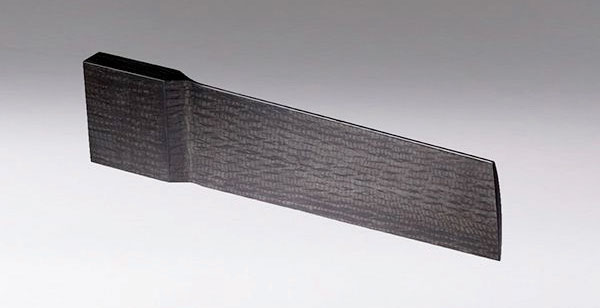
A knitted carbon fiber reinforced plastic turbine blade for jet engine knit on Shima Seiki equipment. The part was developed jointly by Ryukoku University and I.S.T. Corp. with cooperation from JAXA.

Flat Knitting

Japan-based Shima Seiki Mfg. Ltd. unveiled its “KNITify the World — Smart Solutions in Textiles” theme during ITMA, which illustrated the flexibility of Shima Seiki products to cater to various industry sectors in addition to the traditional customer base in the apparel industry. Its approach was to propose knitting as an alternative manufacturing solution for non-fashion related industries.

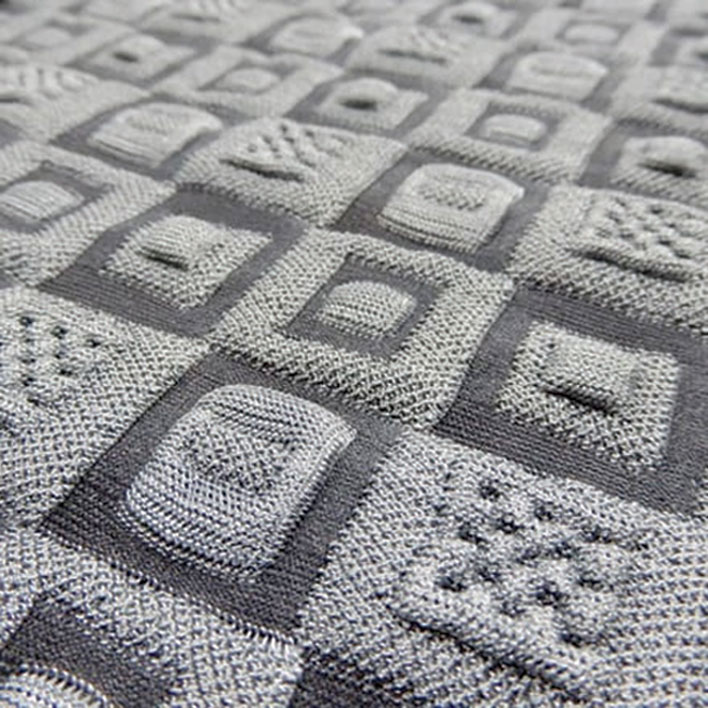
Knits have inherent stretch and compression characteristics, which can be utilized in a variety of industries. New knitting techniques, such as inlay, are made possible with special loop pressers featured on Shima Seiki’s updated N.SVR-SP series machine adding further value to knitting and has gained particular attention for its ability to produce hybrid knit-weave fabrics that allow insertion of technical yarns — including carbon fiber, monofilament and even metallic conductive yarns — previously considered incompatible with knit constructions.

Shima Seiki’s I-Plating technology offers inverse-plating capability in which different yarns can be shown alternately on the fabric surface for a jacquard-like effect in plain jersey stitch.

One of the other add-ons paired with Shima Seiki machines is a Yarn Unwinding Device for spools of technical yarn to ease yarn feeding for such difficult-to-handle materials. This technology makes it possible for knitted technology to enter markets that previously were off limits, such as sport accessories, shoes, and wearable and industrial applications for medical automotive and aeronautical industries. In addition, the new I-Plating option can alternate yarn colors in any pattern, producing jacquard-like designs using a plain jersey stitch. This I-Plating technique can be performed within the same course and for individual needles.

Muffler cover comprising heat-insulating material produced using Shima Seiki’s WHOLEGARMENT technology, which makes it possible to knit 3D constructions that fit all shapes.

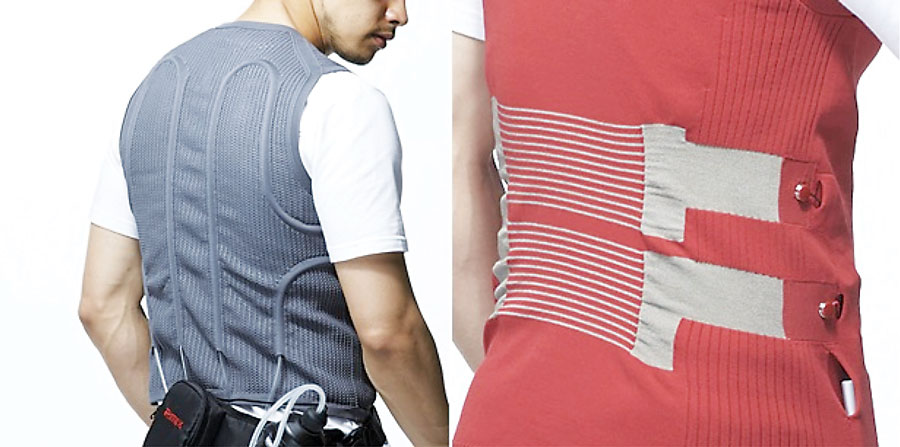
Shima Seiki WHOLEGARMENT® knitting machines moved forward slightly with some add-ons for shaped knitting, expanding that potential to three dimensions. WholeGarment knitting is capable of producing knitted items in their entirety on the machine and allows 3D preforms and tubing to be produced without sewing. Elimination of sewing allows for faster turnaround and high potential for on-demand knitting. The seam-free nature also ensures continuity of the fabric, allowing functional yarns such as those made from conductive fibers to wrap around the entire body without interruption for applications in smart garments and wearable technology. Three-dimensional knitting provides fit, comfort, lightness, and mobility — the key factors that make seam-free so attractive. Three WholeGarment machines were on display, including the new MACH2VS machine making its debut at ITMA, which is a two-bed half gauge machine.

Top left: Shima Seiki’s 3D knitting technology provides fit, comfort, lightness, and mobility for wearable technology.
Shima Seiki’s MACH2XS and MACH2X present a technological breakthrough in modern computerized flat knitting, in its 4-needlebed configuration featuring 2 extra beds on top of a conventional V-bed. This set-up allows unprecedented capabilities in knit and transfer, significantly expanding design and patterning capability in WHOLEGARMENT production.

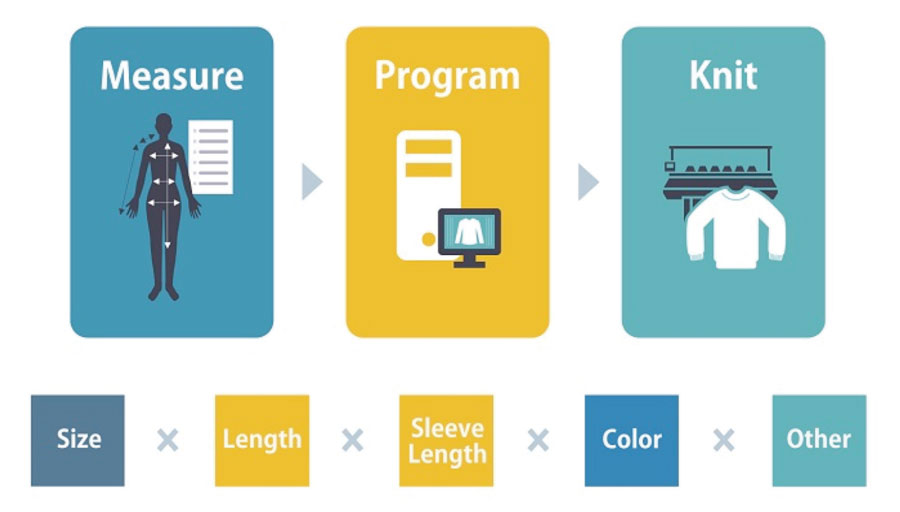
The benefits of WholeGarment knitting was further showcased in its ultimate form in the MADE2FIT area of the Shima Seiki booth, where the company was demonstrating mass-customization. The concept begins by scanning a body using a smartphone app, then sending that data to a server that automatically adjusts preloaded data categories including size, length, sleeve length and color, and then knits the garment on the MACH2XS103 WholeGarment knitting machine.


3D knitting forms the basis for Shima Seiki’s MADE2FIT concept.

Yarnbank by Shima Seiki is a most exciting idea seen at ITMA. It is a first-of-its-kind free-of-charge website for searching and downloading digital yarn data that can be used for virtual sampling on the SDS-ONE APEX series 3D design system. Downloading yarn data reduces the need for scanning yarns manually and improves the accuracy of simulations and efficiency of product planning. Yarnbank allows the entire supply chain from yarn companies and apparel companies to knit manufacturers to connect digitally. Yarnbank also provides a brand-new channel for sales promotion for yarn companies. At ITMA, Shima Seiki displayed digital yarn collections from Yarns & Colors, iafil, Toyoboshi, Tollegno 1900, Hasegawa, UPW, Xinno, Recover, Regal, Xinao, and Novetex.

Functional aspects such as breathability, stretch and a seamless feel have to be combined with trend setting designs. A variety of STOLL flat knitting options can be applied to sports apparel to meet the functional and aesthetic requirements.

Germany-based H. Stoll AG & Co. KG introduced its new knitelligence machine generation at ITMA 2019, which is tailored to the specific needs of the digital world, facilitating work through process automation, more transparency, shorter response times, shorter production cycles and higher productivity.

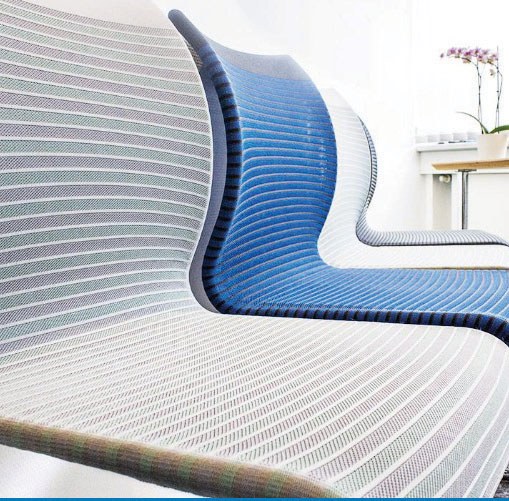
Covering fabrics and upholstery material can be knitted with woven optics and structure effects. Transparent mesh structures provide breathability. Surfaces can be designed with arbitrary combinations of structures to integrate functional and design requirements in one knitting process.

The most futuristic of knitting and wearables was shown undercover. Stoll-knitrobotic visitors had the opportunity to take a picture of themselves or create a graphic within the Adobe® Photoshop® plugin STOLL-artwork® to interact with Stoll technology first-hand. As a key feature during the showcase, a plastic stripe was inserted within a fabric during the knitting process. Without manual intervention, the STOLL-knitrobotic® gripping arm removed this strip from a magazine integrated into the machine and inserted it precisely between the needle beds.

STOLL flat knitting technology realizes sophisticated flat knitted fabrics designed for various shapes and frames. Partial control of the fabric’s stability by inlaid threads over the plane and in shaped areas gives various opportunities for textile supports.
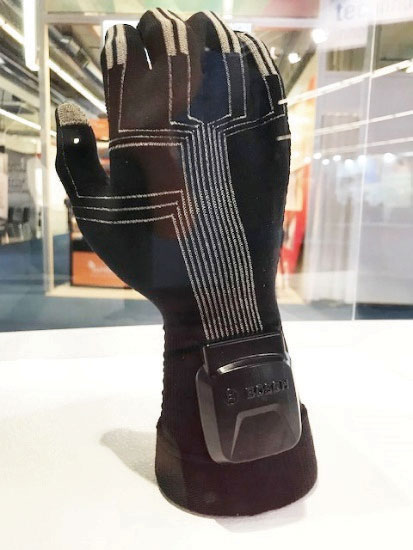
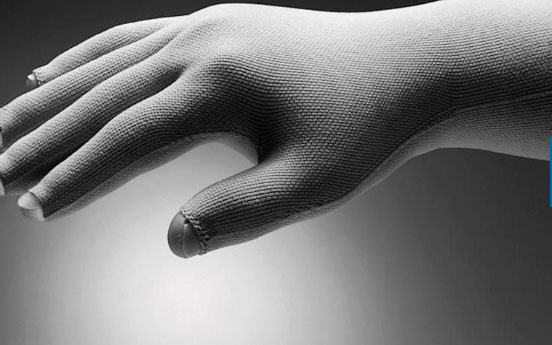
A knitted augmented and virtual reality sensor glove from Stoll.

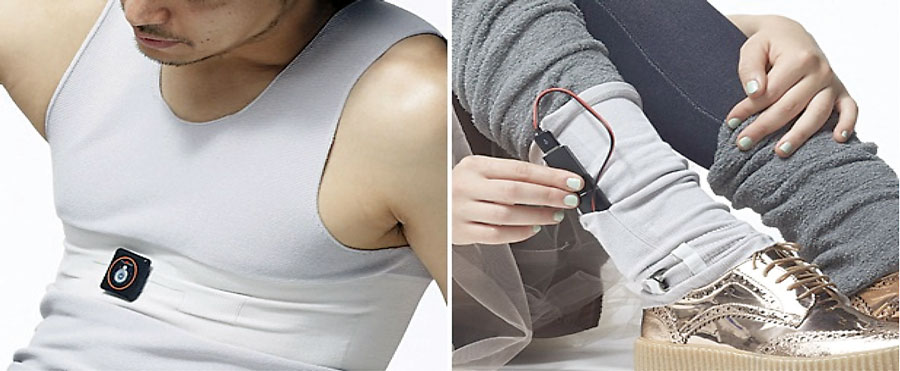
Another application on display was a knitted sensor glove developed in cooperation with Germany-based BOSCH GmbH. The glove was made using conductive yarns to provide sensory and control functions on all fingers. This design gives wearers the ability to interface with machines, control movement in augmented and virtual reality applications, and gain rehabilitative healthcare capabilities.

Italy-based Stoll Italia also presented a new app solution for knit-and-wear — developed in cooperation with Fision — which makes it possible to scan visitors and transfer their body measurements into Stoll’s M1plus® pattern software to develop a ready-to-knit, customized garment.

Stoll’s ADF 830-24 ki W Robotic Arm

Stoll’s machine with all the features is the ADF 830-24 ki W knit&wear, which offers even greater flexibility in coloring and patterning and improved productivity. The key features include reverse plating, Ikat plating, selective plating and intarsia plating. In addition to weft insertion, which gives fabrics a woven like appearance, the ADF 830-24 ki W knit&wear also offers intarsia technique within the knit&wear range.

Textile Computing™ is a collaborative company between Ontario-based Myant Inc. and Stoll. The goal is to bring knitted sensors and actuators into everyday textiles, giving them the ability to sense and react to the human body. This continuous bidirectional interface to the human operating system will empower humanity to transform its capabilities and performance, help people proactively manage health and deliver treatment, and allow people to build better connections with themselves and people around them.

Some of the features STOLL and Myant wish to incorporate into garments produced as a result of their collaboration.

TT e-text is the newest cluster of technical textiles created by Stoll and Myant. TT e-tex represents the new industry of Textile Computing, textile products embedded with technologies that sense, activate, and adapt while generating and transmitting unique insights and personalized feedback. Textile Computing is the foundation that will ensure the company stays competitive throughout the Industry 4.0 future.


Taiwan-based Pailung Machinery Mill Co. Ltd. is known primarily for its circular knitting machinery but is also a manufacturer of flat machines. One of its latest flat machines is the specialized flat spacer machine ISP203. Spacer fabrics have played a revolutionary role in the fabric industry in recent years, and this machine is capable of creating sculpted spacer fabrics. The ISP203 can knit a single piece of spacer fabric with various thicknesses, offering an alternative fabric style for padded bras and other apparel.

Circular Knitting

Vanguard PaiLung — based in Monroe, N.C., and a division of Pailung Machinery Mill — is one of the largest circular knitting machine manufacturers in the world and the only remaining creator of large-diameter circular knitting machines in North America. The company specializes in body-size knitting with more than 10,000 machines installed at knitting companies around the world, especially in Central America. Managing the data and production from these machines is cumbersome, time consuming and prone to error. All new at ITMA 2019 was its MES — Manufacturing Execution System — a knit monitoring system (KMS) built to schedule, monitor and manage a knitting room. At the office or on the go, the KMS can be accessed from anywhere, giving complete control of the knitting plant no matter where the operator is located. The system even alerts an operator when parts need to be replaced.

Other new Vanguard Pailung developments include the KDFPS-HW Knitted 3-Layer High Pile machine and the KRTDC J6 Segue Jacquard machine.

As the name suggests, the KDFPS-HW knitted 3-layer high-pile technology simultaneously knits three layers on a single machine, completely avoiding the laborious process of producing the laminated 3-layer high pile, which reduces production time by 60 percent, according to the company. At the same time, Vanguard Pailung reports the KDFPS-HW solves the 2-layer high-pile loss issue, both accelerating production and improving fabric quality.

Equipped with state-of-the-art technology that releases yarn as needed, rather than all at once, the KRTDCJ6 can knit up to eight different types of yarn in varying colors, materials, and denier values, without thickening the knit. The Segue Jacquard knits vibrant patterns that last longer than printed designs and can create knits with embossed patterns.

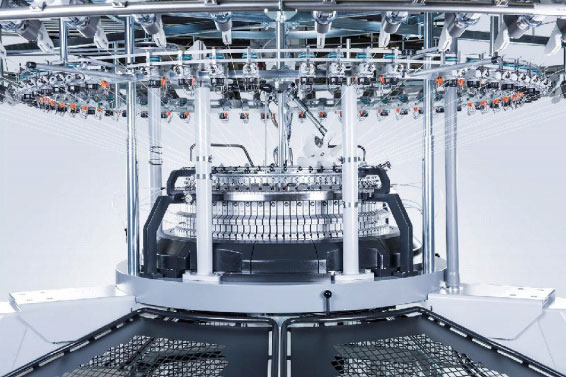
The MJ 3.2 E is Mayer & Cie.’s new flagship for single jersey electronic jacquard.

Germany-based Mayer & Cie. GmbH & Co. KG exhibited five machines, four of which focused on producing sport fabrics. The MJ 3.2 E is an electronic single jersey machine that specializes in mesh and body mapping structures. The new flagship machine is based on a 3-in-1 body mapping structured mesh — a net-like hole pattern — which is in demand in the sporting market segment and for athleisurewear and is currently a key growth driver for circular knits. A finer basic thread, usually a monofilament yarn, is responsible for the hole structure, while the thicker plating thread — cotton, for example — provides the requisite thick areas. Mesh structures require one-sided plating, and the basic thread is invisible in the finished fabric. Mesh can serve as both a fashion and a functional element, by ensuring ventilation of selected body areas for example. Body mapping takes the different perspiration areas of the human body into account, but double-sided plating creates the patterns. Furthermore, body mapping structures almost without exception require elastomeric plating.

(above and below): Santoni’s SM8-TOP2V Single Jersey electronic circular machine is suitable the production of single seamless garments for underwear, outerwear, beachwear, sportswear and sanitary wear. Knit terry loop are a possibility and available on request.

Italy-based Santoni S.p.A., an Italian leader in the production of sock and pantyhose machines and part of the Lonati Group, celebrated its 100th anniversary at the show. Santoni’s seamless technology, especially the TOP2 series of machines, are in a class of their own. There has been significant advancement in circular knitting and it has proven to be ideally suited for nylon yarns because of available variants such as filament fineness, luster and filament shape, together with their high stretch and recovery. Santoni’s technology is based on knitting tubular fabrics without seams and can apply different knit stitches to incorporate preshaped structures, which limits costs including labor, waste, fabric stocks, and energy — things associated with the alternative cut-and-sew manufacturing method. Santoni’s high-productivity eight feed single jersey electronic circular knitting machine with two needle-by-needle selections on each feed with 3 technical ways — configuration with 16 actuators — offers the possibility to knit floated plating design and inlaid elastic yarn. The patented Santoni system enables the knitting of 8 feed patterns with high definition and extremely sharp color. The machine allows the production of underwear, outwear, sportswear, swimwear and medical items.

In a corner of the Santoni booth at ITMA 2019, a SM8-TOP2V seamless machine was matched with Santoni’s new automatic finishing machine for boxers to create a unique Boxer Process Station. This cut-and-sew machine applies a gusset into each boxer with a four-needle sewing head, completing the whole process automatically and offering the finished boxer ready for the final packing stage.

Knitted Shoes

A little history of the knitted shoe industry is needed to better understand recent developments. Before the previous ITMA in Milan, Italy, in 2015, knit shoes was a fledging industry on the brink of exploding. The knitted portion is the upper of the shoe, which is manufactured using a highly technical knitting machine. The two major players in knitted footwear — brands Nike and Adidas — had fought over intellectual property since 2012. Shortly after Adidas unveiled its Primeknit, Nike filed a patent infringement claim. Nike failed to meet its burden of establishing patentability of the proposed substitute claims on February 11, 2016, according to a Foley & Larder LLP blog post.

This has all happened since the 2015 ITMA in Milan opening up the floodgates for development. The market for shoes with knitted uppers is projected to reach $3.19 billion by 2025 at 5.9 percent compounded annual growth rate (AMR).

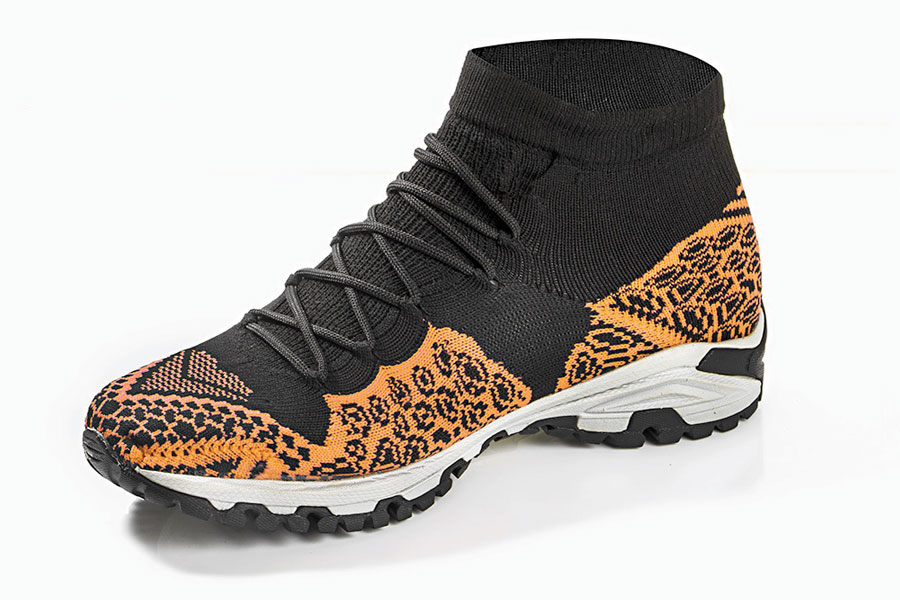
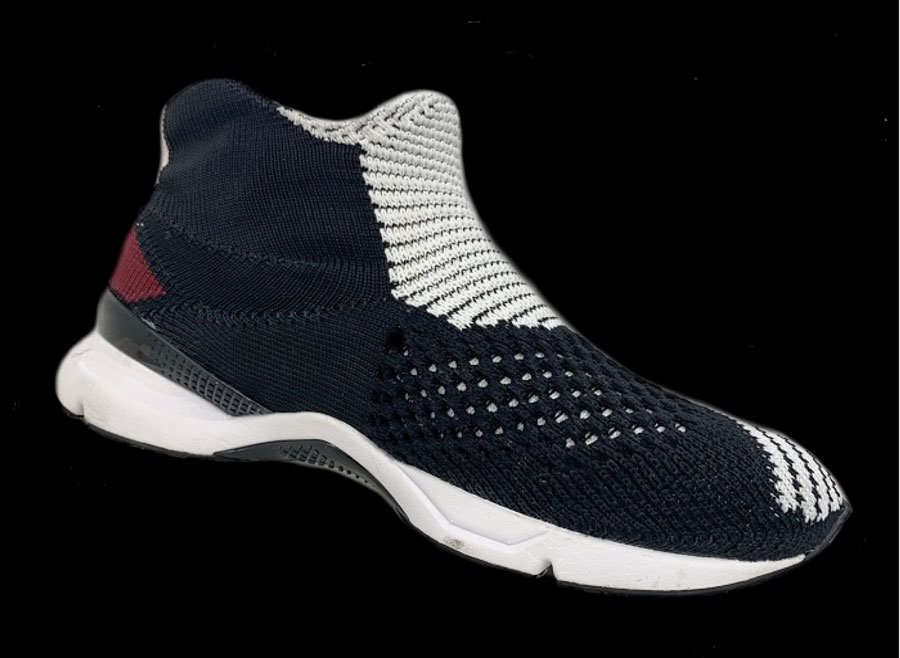
Knit shoes were seen all over the knitting hall at ITMA 2019. In just three years, flat computerized machine, circular machine, warp knit machine, and the most newsworthy, the traditional sock machine manufacturers now have the technology to produce sock/shoe combinations turning the whole market on its head.

These shoes provide sock-like comfort and maintain a trendy, yet athletic, look. The shoe with a knitted upper has become increasingly popular among the younger generation owing to the high-level influence of sports. The knitted upper shoe requires little to no manual labor during manufacturing; the only labor required is to attach the knitted part to the shoe. This allows footwear manufacturers to move production closer to their larger markets, reducing or possibly eliminating the costs of shipping and tariffs. Circular-knitted shoe uppers for sports and leisure footwear have been an option since 2012 when they debuted at the Olympic Games. Since then, fabric shoe uppers have mostly been flat-knitted, with circular knitting and warp knitting running neck-and-neck a fair distance behind.

When the three techniques are compared, however, circular knitting leads the field for productivity. In addition, setup times are shorter, with the result that smaller batches can be manufactured profitably. Then there are the sock manufacturers that had the technology, but not the know-how, of how to turn a sock into a shoe upper.

S1M sock/shoe design from Colosio

Cesare Colosio S.r.l. is a circular knitting machinery manufacturer based in Italy. In 2015, after 60 years of experience in intarsia knitting, the company developed the first circular intarsia machine ever patented for the production of knitted, seamless shoe uppers. The S1+, is a machine that has been acknowledged by the most important international shoe brands with more than 600 machines installed since 2016. According to Colosio, the S1+ machine is not only “100-percent sustainable,” allowing the elimination of waste of material throughout the whole manufacturing process, but it is also extremely versatile. The machine produces uppers for multiple applications, from technical and sports footwear, to casual and fashion shoes. Additionally, with an average production capacity per machine of four pairs of uppers per hour, manufacturers can minimize industrial costs and times. The S1+ can create seamless uppers made using different and independent yarns and, as a consequence, different and independent areas depending on the final result that the producer wants to achieve.

S1M sock/shoe design from Colosio
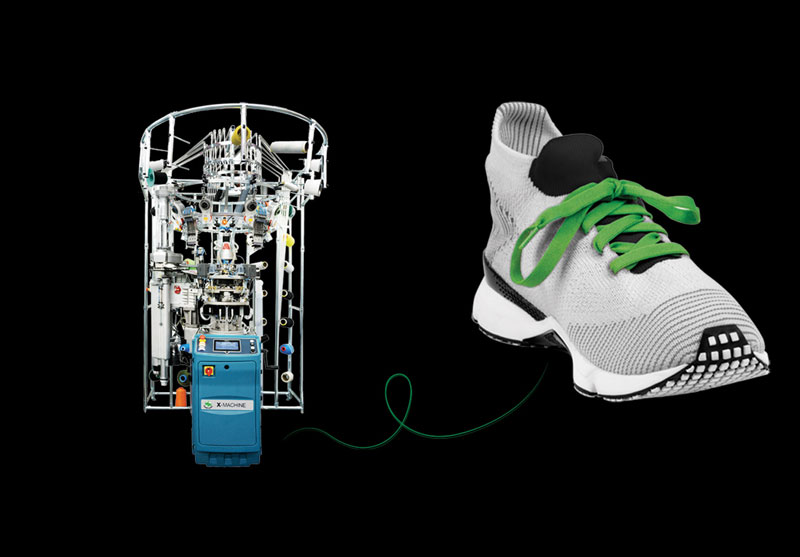
Santoni’s X Machine Sock is designed for shoe uppers

In a similar vein, is Santoni’s new, patented XT machine with ingenious intarsia technology for efficient production of shoe uppers. Single-cylinder intarsia electronic knitting machine with four reciprocating feeds and two selection points — three technical ways — per feed and per rotating sense for the production of intarsia products with breathable mesh areas with cushioning and/or transfer stitch areas knitted in sculpted terry.

The machine knitting head is equipped with cams, as well as a special-patented chain linking system, which allows only preselected needles to be driven to the stitch cam for knitting.

Santoni has applied for a series of new machine patents in order to be able to knit 4-feed high-definition colored logo patterns as well as 3D patterns on the same course as intarsia, sculpted terry and transfer stitch areas.

Mayer & Cie.’s double jacquard OVJA 1.1 EETT machine can be used to produce knitted shoe uppers.

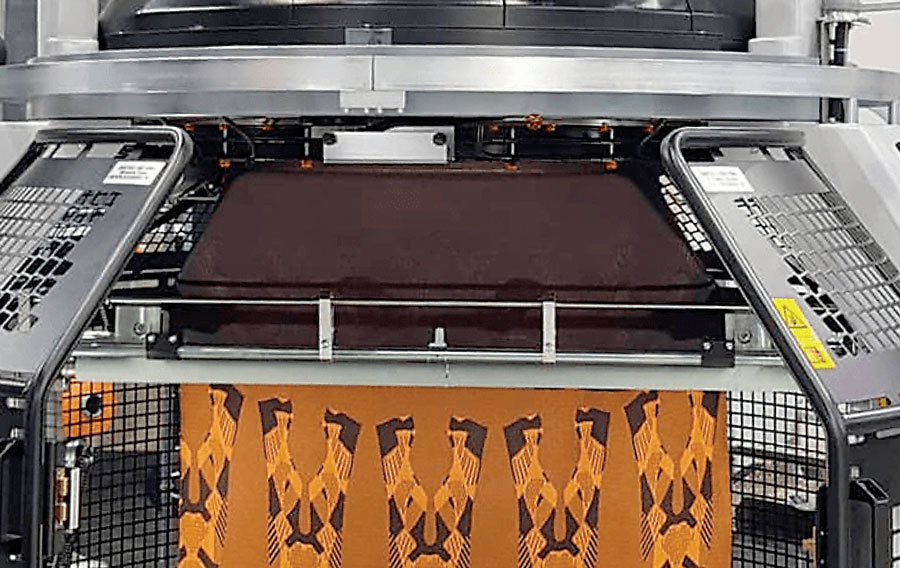
Nearly all the large circular knit companies now have large circular jacquard machines, such as Mayer & Cie.’s OVJA 1.1 EETT machine, to compete with the traditional Santoni Mec-Mor, which in various forms has been around for years but is now focused on shoe upper fabric production. These machines combine double jacquard selection on the cylinder and dial electronics and bidirectional transfer selection, and can knit an almost infinite variety of patterns, including hole structures according to the companies.

Spin Knit

Last but not least on the weft knitting sphere is the spin knit revolution, which allows knitting to happen directly from either roving or sliver instead of a yarn package. Mayer & Cie., Germany-based Terrot GmbH and Pailung Machinery Mill offered different variations of this technology at ITMA 2015. Although these machines were focal points at the booths, there does not seem to be much movement in the adoption direction.

However, one established machine with new features is Mayer & Cie’s Spinit 3.0 E. The machine now also processes polyester, is capable of a higher working speed and is linked to the Knitlink digital platform making the combined spinning and knitting machine a more attractive proposition. The 3-in-1 Spinit systems concept of combining three processes — spinning, knitting and cleaning — in one machine and thereby saving time, space and energy, has earned Mayer & Cie. several awards, most recently in 2017 when it was awarded the IKU Innovation Prize for the Climate and the Environment, awarded in alternate years by the Federal Environment Ministry (BMUB) and the Federation of German Industry (BDI). Visitors to ITMA 2019 observed the new “Enhanced Performance” Spinit 3.0 E.

Spin knit fabrics can now be designed with thick and thin yarns including Ikat designs allowing the machinery to offer design features rather than just cost savings. There may be hope for this technology if the sportswear brands see its potential.

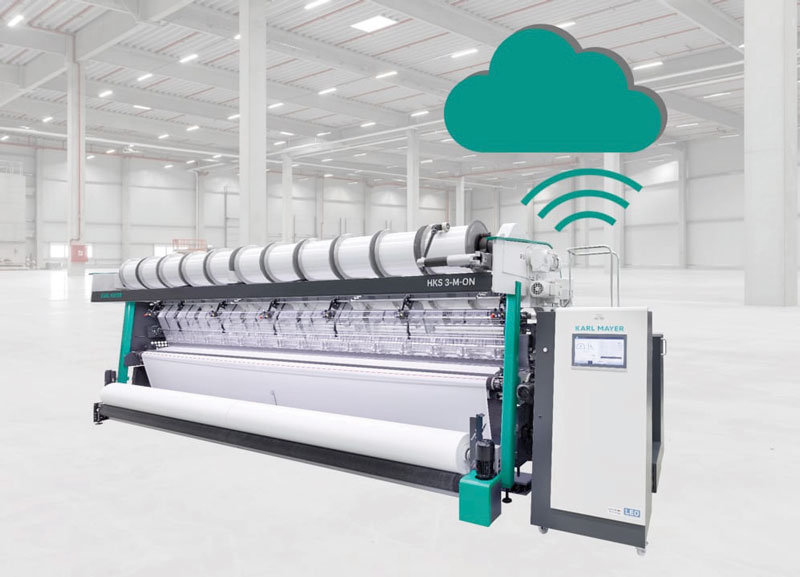
Karl Mayer’s HKS 3-M-ON is the first three-bar HKS model with electronic guide bar control that allows immediate pattern changes.

Warp Knitting

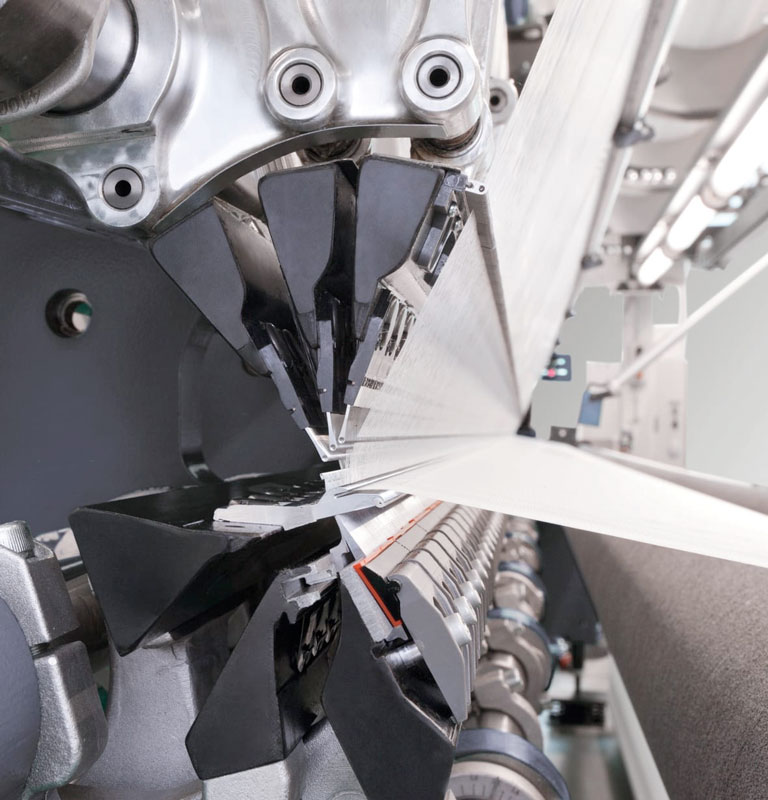
One of the major problems with warp knitting, is the number of mechanical changes that need to take place on the machine in order to run a new pattern. Germany-based Karl Mayer Textilmaschinenfabrik GmbH offers a new model that is changed on-line. Its HKS 3-M-ON is the first three-bar HKS model with electronic guide bar control, which allows for immediate pattern changes without any mechanical modification and no delay in production. The operator only needs to download the required information from a secured cloud to the machine and a new fabric design can be immediately produced. In times of rapidly changing market requirements, it is an asset to be able to react quickly to such demands and be able to access a library of designs, where making previously short runs was impossible.

Karl Mayer also introduced has a new generation of warp knit fabric technology. The double needle bar technology is opening a new chapter by offering, besides the usual 3D spacer fabrics, new 4D-KNIT.SOLUTIONS produced on its RDPJ 6/2 EL.

This ingenious bar arrangement and technical configuration, combined with Karl Mayer’s established high-quality piezo-jacquard technology, enables this double needle bar machine to open up a new dimension producing fabrics with diverse malleable patterning on both fabric sides. The 3D motifs can be completely variable in shape, positioning and height. Small and flat reliefs, or deep and bulky forms with cushioning, are possible. Further, the design can contain freely placed holes, for even more possibilities. The openings can be used for directed air flow or lighting effects.

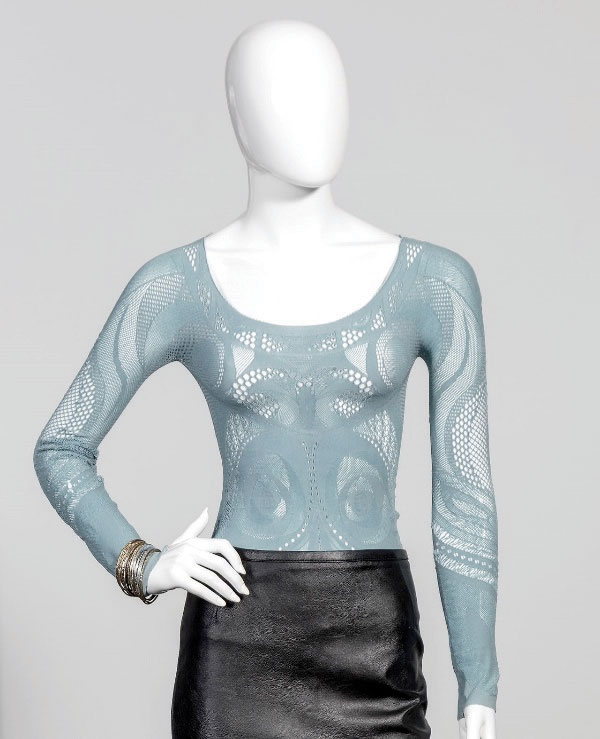
An open warp-knit jacquard design produced on Karl Mayer’s RDPJ 6/2 machine is both comfortable and feminine.

Knitted body mapping for warp knit is the future. Rascheltronic®, Karl Mayer’s RSJ line, is a series of high-speed jacquard raschel machines for producing jacquard-patterned, stretch and non-stretch fabrics. These high-speed jacquard raschel machines incorporate jacquard patterning that enables a virtually unlimited range of designs to be worked using an electronic guide bar. The computer controls permit rapid lapping changes and long-repeats on pre-made-up fabrics, and also enables functional zones to be incorporated in the fabric.

These machines are capturing the market. Innovative, warp-knitted, seamless components can be produced in a single sequence, without any seams, for the toes, fingers and even the head. They can be used in functional sportswear, underwear, hosiery and fashionable outerwear.

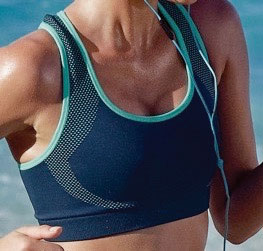
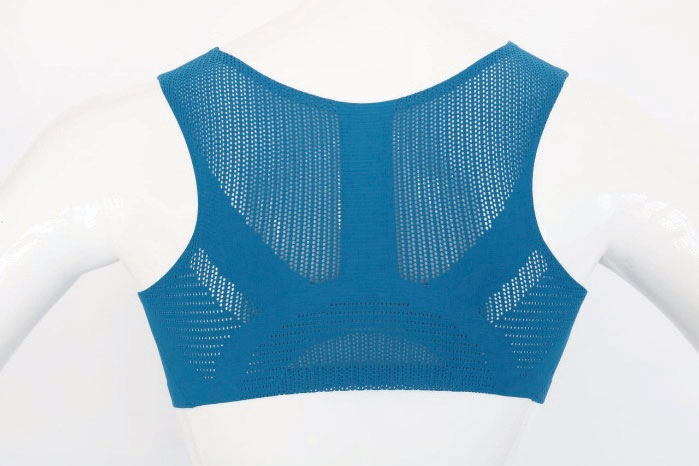
A sports bra example from Karl Mayer comprised of different functional zones without disruptive seams — strong fabric zones for support, high elastic zones for free movement, and mesh structures where breathability is needed.

Fashion Is A Driver For The Future

The knitting industry has come a long way in the last four years with shoes and wearables leading the charge. Robotics and artificial intelligence are finally on the way and it is yet to be seen how these technologies will be integrated fully into a garment let alone the human body. However, expect there to be a lot more trial and error over the next four years as some of these companies try to navigate this integration. What seems apparent is that this technology integration is haphazard at best and just because the technology is there, it does not always make it to the marketplace. In the meantime, fashion is still going to lead the way, so whatever is new and exciting in an aesthetic sense may have a greater chance to move technology forward. The big iconic brands need to play their part to support the technology as long as the design and technology are twinned.

Technical textiles for medical fabrics need to combine functional requirements such as customized fit, controlled compression application and complex product layouts with mixed materials and jacquard patterning as shown in these Stoll designs.

May/June 2020
Through6 To Expand Its Disruptive On-Demand Manufacturing Model To North Carolina

GARDEN GROVE, Calif. — May 27, 2020 — Through6, a tech-enabled manufacturing solution that allows brands and merchants to have access to cut-and-sew apparel on an on-demand basis, announces a major expansion of its business to Sanford, a high-tech manufacturing community in the Raleigh area of central North Carolina.

“We are so pleased to welcome Through6 to Lee County,” said County Commission chair Amy Dalrymple. “After decades of absence, their high tech process will bring back cut and sew operations to our community, providing great new jobs and returning Made-in-the-USA clothing to our local product line-up.”

The California-based business has already disrupted the conventional garment manufacturing industry by offering its partners the ability to grow and/or create new revenue streams without the traditional barriers of inventory, minimums or long lead times.  Through6’s vertical model and technology platform also allows brands to be far more responsive to market needs.

Just recently, Through6 pivoted its production efforts to produce and fulfill face masks and other PPE coverings in response to the COVID-19 pandemic, enabling its customer/merchants to not only survive during the unprecedented times but to achieve the strongest sales volumes in the company’s history.

“Given the textile manufacturing prominence in North Carolina, we’re incredibly excited to attract some great local talent and increase Through6’s production output to better serve our customers worldwide,” said CEO Carlos Goncalves.

Ramping up this Summer, the new Through6 office and manufacturing facility in Sanford will support the growth of 100 new jobs in the region, from technologists to printing and sewing operators and warehousing personnel.

“Mark up another win for our community!” said Sanford Area Growth Alliance’s CEO Michael Smith. “We look forward to helping them enjoy many years of success here.”

Posted May 27, 2020

Source: Through6

New Developments In Fibers, Yarns & Fabrics

Lenzing offers environmentally friendly wood-pulp-based EcoVero™ fibers. Photograph courtesy of Sadia Rafique/Lenzing.

Closed loop systems and circular economies are two ways the fiber, yarn and fabric industries are tackling sustainability issues.

By Dr. Kavita Mathur

The fiber and yarn chapter was launched at ITMA 2011 in Barcelona in response to industry demands for a comprehensive, one-stop sourcing platform for textile and garment manufacturers. Since its addition to ITMA, this chapter has continued to grow. At ITMA 2015, the chapter included another subchapter on recycled fibers and yarns to support the industry’s commitment to sustainability. For ITMA 2019, the chapter was expanded to include an innovative fabrics section as well. The fiber, yarn and fabric chapter offered innovative and eco-friendly solutions with a focus on recycling, waste reduction and production efficiency at ITMA 2019.

According to a new report from Grand View Research, the global textile market was valued at $925.3 billion in 2018 and is projected to reach approximately $1.2 trillion by 2025 at a compound annual growth rate of 4.24 percent. Within this growth, the textile yarn market is estimated to be worth $12.6 billion by 2020 according to B2B research company MarketsandMarkets™. As the global textile industry continues to grow, it is generating greater demand for raw materials, novel applications and new production processes.

The fiber and yarn sector is an integral part of the textile and garment industries. To stay competitive, these industries are striving for continuous improvement and therefore are constantly looking for innovative solutions to meet the changing demands and industry standards. These standards are geared mainly towards sustainable solutions such as recycling, waste reduction, production efficiency and closed-loop production. With increasing involvement from governments, these standards now are becoming crucial for trade and businesses.

It is obvious that sustainability is a rising concern of brands, equipment and fabric manufacturers, and consumers. The industry is still very recycled-centric, which is clearly not enough. There has been a greater push for water savings, durability and waste management, as well as reduced emissions, water pollution, and carbon footprint. The yarns, fibers, and fabrics chapter at ITMA 2019 offered a very crucial component of the textile industry as more industrial and fashion companies look for innovative and sustainable materials.

Sustainable Solutions

Second to oil, the textile industry is one of the largest contributors to harmful environmental effects. According to the UN Partnership on Sustainable Fashion, it is responsible for approximately 10 percent of greenhouse gas emissions and 20 percent of wastewater production globally. As a result, the need for textile companies to alter their approach to manufacturing and production is drastically increasing. Across the board, companies are developing fibers and yarns as innovative solutions to address the need for more sustainable systems. There are two major sustainability initiatives exhibited by various companies — circular fashion and closed loop systems.

Circular Economy/Circular Fashion

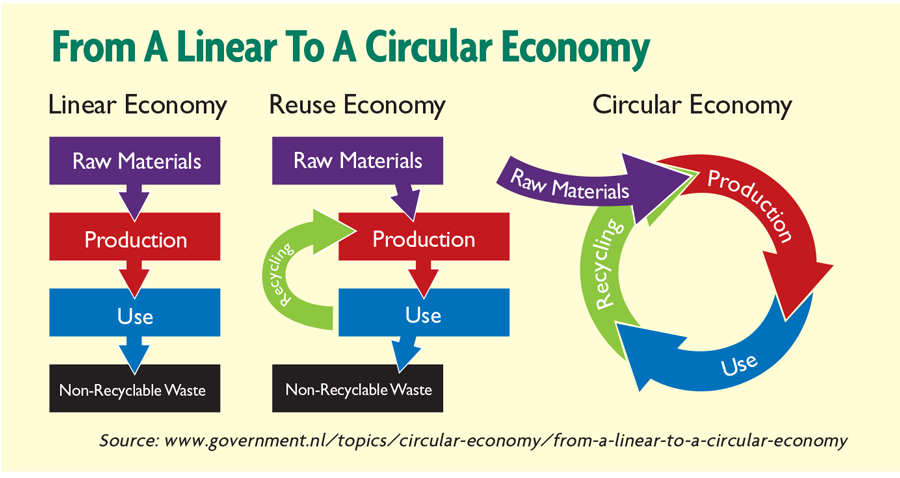
Today’s current textile industry follows a linear economic structure with a very short lifespan — textiles are sourced, produced and ultimately thrown away. This economic structure, although fast, is very inefficient, unsustainable, and detrimental to the environment. Recently, the reuse economy has gained a lot of attention to tackle this situation. This platform improves the linear process by reusing textiles over and over again. However, this kind of cycle eventually ends when the item can no longer be repurposed or recycled and ultimately ends up in the landfill as it would in a linear economy. This type of economic structure is referred to as a circular economy or circular fashion, which not only addresses the ability to extend the life of a product, but also protects the environment at the same time. In a circular fashion industry, every aspect of the production process is pushed to be circular, ethical, and ultimately environmentally friendly and sustainable. This includes recycling materials, using biodegradable solutions, sourcing raw materials ethically, and using more efficient manufacturing and production processes.

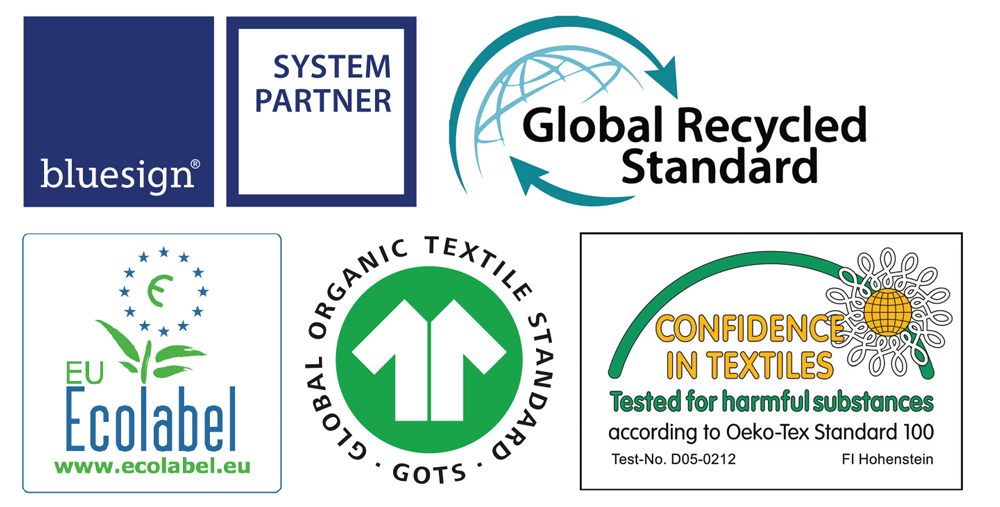
(clockwise from top left): bluesign® standard, Global Recycled Standard, EU Ecolabel, Global Organic Textile Standard, and Oeko-Tex STANDARD 100 by OEKO-TEX® eco labels.

At ITMA 2019, companies emphasized their circular fashion initiatives by showcasing efficient manufacturing and production processes including reduced emissions, waste, water, chemicals and energy usage; and by finding ways to biodegrade post-consumer materials in order to fully close the loop. Various companies were able to ensure the credibility of their products through the use of eco-labels including the bluesign® standard, Global Organic Textile Standard (GOTS), the EU Ecolabel, STANDARD 100 by OEKO-TEX® and the Global Recycled Standard (GRS).

The bluesign standard provides a means of pre-testing and analyzing all components required to manufacture a product before those components go into production. By analyzing the environmental footprint of these components, it helps to eliminate sources of harmful environmental contamination from the very beginning. The GOTS certificate ensures that fibers going into production are organic, production is ethical both on an environmental and social level, and that the consumer will receive a responsibly made product. The EU Ecolabel is a label that identifies products that were made with the environment in mind for manufacturing processes, distribution methods and safe disposal capabilities. Standard 100 by Oeko-Tex is a certification system for all aspects of the manufacturing and production process, which helps safeguard the consumers’ and environmental health by ensuring that no harmful chemicals are utilized during the production process. The GRS label is provided to companies who utilize recycled content in their products, and certifies that the recycled material used is traceable, environmentally friendly, and labeled correctly.

Switzerland-based Archroma provides “safe, efficient, and enhanced” textile chemical solutions, according to the company. Its chemicals are bluesign approved, GOTS certified, biobased, perfluorinated chemical (PFC) free, formaldehyde free and metal free. By certifying its products with eco-labels and utilizing sustainable practices, Archroma is able to effectively protect the environment against harmful wastewater and also save valuable natural resources.

Switzerland-based Clariant International Ltd. demonstrated its sustainability initiatives by introducing dope-dyed yarns that use 98-percent less energy and 99.9-percent less water compared to package-dyed yarns. In addition, the Clariant introduced new functional additive masterbatches such including fluorine-free hydrophobic and anti-soil masterbatches for polyester; chain extender masterbatches to help recycle polyester; and soft touch masterbatches for polypropylene, polyester, nylon and polylactic acid fibers, filaments and nonwovens.

Italy-based DBT Fibre promoted sustainability in its long and short staple spinning processes with the aim of optimizing the environmental and social impact through its sustainable business model in a circular economy. As part of its Eco Fiber Green Action Solutions, the company installed a photovoltaic system with a capacity of more than 650 kiloWatts, which generates savings in carbon dioxide (CO2) emissions equivalent to 390 tons per year. In addition, its geothermal plant replaced the use of fuels and therefore eliminated any type of emissions into the atmosphere. DBT also has a system to recover waste materials from its manufacturing processes and recycle 100 percent of all packaging materials.

In response to the need for environmental awareness, Spain-based Nylstar S.L. showcased its NATEO Sustainability Program — which is focused on zero water pollution, water-savings and recycling initiatives — for its Meryl® nylon brand. Meryl NATEO nylon yarns offer an eco-friendly alternative to cotton and address recycling options.

Meryl EcoDye yarns are dyed using a dope-dyeing method in which the color is added to the polymer dope before extrusion. This method provides excellent color fastness and color take-up while eliminating the need for water during the dyeing process, according to the company. Meryl Cotton 66 is a yarn that was made in response to the environmental damage done by the cotton farming industry. This yarn looks and feels like cotton and eliminates the need for large amounts of water and agricultural chemicals that are required for cotton farming. Meryl Eco Denim is a technology that eliminates up to 11,000 liters of water per pair of jeans made. Nylstar also offers Meryl Skinlife, a silver ion-based antimicrobial treatment that eliminates odors while maintaining a balanced environment for the skin and therefore does not require the fabrics to be laundered as frequently. In its zero water pollution program, Nylstar also has developed variety of performance yarns that do not incorporate any topical chemical treatments under the Meryl Touch brand.

Spain-based Antex’s YNVIRON™ recycled dyed yarn solution, significantly reduces harmful greenhouse gas emissions, saves energy, reduces water consumption, and conserves natural resources, according to the company. The fiber, made using a blend of post-industrial and post-consumer waste, is colored using a dope dying solution.

Beaulieu International Group, Belgium, introduced its UltraBond staple fiber that doesn’t require latex or other binders when used in nonwoven applications. This product allows for a significant decrease in water consumption which results in a 93-percent reduction in energy use, and reduces CO2 emissions by more than 35 percent without the addition of any other agent.

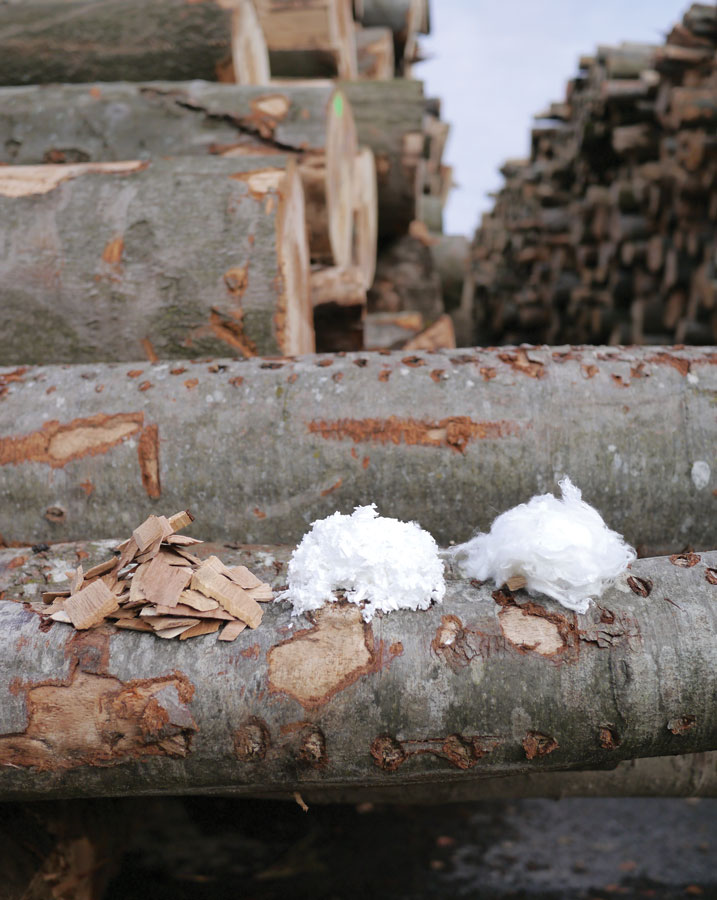
Austria-based Lenzing AG, a producer of environmentally friendly wood-pulp-based fibers, showcased EcoVero™ fibers at ITMA. According to the company, the production of EcoVero fibers “generates up to 50-percent lower emissions and water impact compared to generic viscose.” Tencel™ x Refibra™ is another new product that is a combination of cotton textile scraps and wood pulp made using Lenzing’s efficient closed-loop manufacturing process. This product is 100-percent bio-derived, compostable and biodegradable, and results in overall 95 percent reduction in water used, according to Lenzing.

Spain-based S.Vilarrasa offers a recycled cotton yarn made using pre-consumer cotton garment waste.

Spain-based S.Vilarrasa S.A., a manufacturer of open-end spun yarns, introduced a recycled cotton yarn that was produced using pre-consumer cotton garment waste. This replaces virgin cotton which reduces water use, agricultural chemicals and garment dyes. Vilarassa’s recycled cotton yarn results in a reduction of 4,800 kilograms (kg) of water, 16.5 kg of chemicals, 233.8 kg of CO2 emissions, 3500 kg of water contamination, and 500 kiloWatt hours of energy. The company has the GTS certificate that ensures its recycled material is verified.

Closed Loop Production

Based on the most recent statistics provided by the U.S. Environmental Protection Agency (EPA), there were 16.9 million tons of textiles generated in 2017 in the United States. From this, 11.2 million tons of textile waste was landfilled, and only 2.6 tons were recycled. This waste not only impacts the environmental condition on land, but it also contributes significantly to man-made waste polluting the oceans. Every year, more than 8 million metric tons of plastic waste enters the ocean.

Several ITMA 2019 exhibitors in the fibers, yarns and fabrics chapter addressed a closed loop production system through recycling and waste reduction means.

First established at ITMA 2015, the Sustainable Innovation Award aims to encourage companies to address textile sustainability by coming up with innovative solutions. The 2019 award went to Italy-based denim company Candiani S.p.A.’s for its Re-Gen, a “circular denim” fabric created using regenerated and recycled raw materials. The fabric is comprised of 50-percent Tencel x Refibra lyocell and 50-percent post-industrial recycled cotton waste from Candiani’s own operation. The chemicals and dyes used also are environmentally friendly, according to Candiani. Additionally, Refibra incorporates fiber identification technology, creating transparency in the supply chain.

Seaqual™, a fiber from Spain-based Textil Santanderina S.A., stands out it its mission to reduce the amount of waste currently in the ocean and to reduce more waste from entering the ocean. Seaqual is a 100-percent recycled marine plastic fiber, and the company partners with local fishermen to help collect the waste to produce the fiber. Textil Santanderina reports that for every kg of Seaqual fiber created, it removes 1 kg of trash from the ocean.

Some of Nylstar’s Meryl fibers also are created with waterways and the ocean in mind. The NATEO program ensures that high tenacity Meryl fibers do not deposit microplastics in the environment. In addition, Nylstar’s recycling program offers two products — Meryl Recycled fibers, which reuse post-production waste to create a new raw material; and Meryl Pure, which is designed to be 100-percent recyclable by using natural stretch instead of elastane for stretch in garments.

Maria Ohisalo, Interior Minister of Finland, wearing an evening dress made using materials from Infinited Fiber Company.

Finland-based Infinited Fiber Co. displayed an innovative recycling solution at ITMA not only for pre- and post-consumer textile waste, but also for cardboard scraps and agricultural waste. Its waste material is separated, turned into a liquid and then spun into a high-performance fiber. This system allows the company to reduce its water usage by 20,000 liters per kg of cotton and greatly lowers CO2 emissions.

As previously mentioned, Antex’s YNVIRON product aims to reduce energy consumption and environmental impacts through recycling post-industrial and post-consumer waste. The waste that is collected is shredded, melted, and extruded before being turned into a chip for future processing.

Eco-Friendly knitted fabrics from Haksa Tekstil San Tic A.S., Turkey, feature yarns that utilize recycled raw materials from pre-production textile waste to create a product that in turn saves billions of liters of water, saves thousands of tons of cotton fiber, and reduces thousands of tons worth of chemical contamination entering the environment, according to the company. The waste used can be combinations of cotton, polyester, Unifi’s Repreve®, acrylic or wool.

In addition to its EcoVero, Tencel and Refibra fibers, Lenzing offers Veocel™, a combination of cotton scraps and wood pulp for nonwoven purposes. Veocel fibers feature EcoDisperse technology, which allows nonwoven moist toilet tissues to disintegrate and biodegrade after flushing. Lenzing’s Veocel fibers produced using EcoColor technology are dope-dyed with color pigments to deeply embed the color while using water and energy only sparingly throughout the production process to reduce the environmental impact.

To ensure that all waste is utilized in its production processes, Lenzing utilizes a biorefinery to repurpose any leftover wood materials. This include biobased acetic acid, furfural, magnesium lignosulfonate, soda ash, sodium sulphate and xylose. These biobased coproducts may be used in the food, animal food, pharmaceutical, cosmetic, chemical, and textile industry for various applications.

Germany-based Kelheim Fibres GmbH introduced specialty viscose fibers that are made using 100-percent cellulose. This allows the fibers to be completely biodegradable. Kelheim works with CanopyStyle to ensure it does not source wood from ancient or endangered forests.

Another trend seen in this ITMA 2019 chapter, was alternative ways of making biodegradable alternatives to man-made materials currently used in the textile market. Taiwan-based Nan Ya Plastics Corp. displayed its GREEN ONE biodegradable polyester filament. Testing has shown Green One biodegrades in landfills into CO2, methane, and soil matter in approximately 98 days. This material can be combined with Nan Ya’s recycled polyester, heavy metal-free polyester and biopolyester.

Man-made fiber technology manufacturer Oerlikon, Switzerland, introduced a new fiber production method to fully recycle partially oriented and fully-drawn filaments via a process of homogenization drying, extrusion, pre-filtration, a vacuum filter from BB Engineering, and pelletizing and downstream melt application. Its process allows for all spinning waste to be directed back into production.

Beaulieu also displayed range of fibers, yarns and technical textiles that can replicate any type of staple fiber spinning technology using different type of polymers and additives with a variety of cross sections. These HT8 high-tenacity staple fibers offer unique high tensile strengths without compromising on elongation.

The Woolmark Company, Australia, showcased its cradle to cradle initiative that evaluated the impact its products have on the environment in order to ensure they contribute to a sustainable and circular economic structure. To measure the sustainability of the products, cradle to cradle assesses the materials’ health, reuse capabilities, renewable energy, carbon emission contribution, water usage and social impact. Woolmark works with parent company Australian Wool Innovation Ltd. to research, develop, certify, educate the community, and provide quality wool products for the textile industry. Since wool is an inherently sustainable natural fiber that is 100-percent biodegradable, it doesn’t negatively impact the environment. Woolmark is an advocate for conducting life cycle assessments to assess a product’s environmental impact from the beginning of its life to the end. This includes how the material was sourced, the manufacturing process, the products use and disposal of the product.

The Textile Industry Versus The Environment

The textile industry is a contributor to harmful environmental effects and waste generation in the eco-system. As a result, the necessity for textile companies to alter their approach to manufacturing and production is drastically increasing. ITMA 2019 provided an integrated platform of eco-friendly solutions including recycling, waste reduction, and pollution reduction and prevention. This theme was evident across the board as companies showcased a range of their fibers, yarns and fabrics to address sustainability issues.


Editor’s Note: Dr. Kavita Mathur is associate professor, Textile and Apparel, Technology and Management, at NC State’s Wilson College of Textiles, Raleigh, N.C.


May/June 2020

NCTO Presses For PPE “Buy American” Policy

The National Council of Textile Organizations (NCTO), Washington, is urging the U.S. government to institute a “Buy American” policy for personal protective equipment (PPE). Such a policy would support U.S. manufacturing and provide an incentive for manufacturers to invest in PPE supplies and equipment to supply the front-line workers in need during the COVID-19 pandemic.

“If the government is sincere about reconstituting a U.S. production chain for medical PPE to resolve the drastic shortages we are experiencing during the current pandemic, it is going to have to make key policy changes to help incentivize domestic production,” said Kim Glas, president and CEO, NCTO. “A strong Buy America mandate for these vital healthcare materials needs to be instituted for all federal agencies, coupled with other reasonable production incentives, to help ensure a strong U.S. manufacturing base for these essential products.”

Glas notes that the existing Buy American rule for military textiles in place at the U.S. Department of Defense ensures “the vital textile materials our U.S. warfighters depend upon, come from a secure domestic production chain that cannot be severed during a military emergency by offshore entities.” The rule also serves as a model example of such a mandate.

“Expanding domestic purchase requirements through Executive Order and other legislative initiatives will ensure that PPE production through U.S. supply chains that have been created overnight, don’t evaporate as soon as this crisis is over,” Glas said.

“ … If our country is to be prepared for future deadly pandemics such as the one it is now facing, reasonable policy changes need to be implemented to ensure that we strengthen our domestic supply chain to address America’s security, safety and healthcare requirements.”

May/June 2020
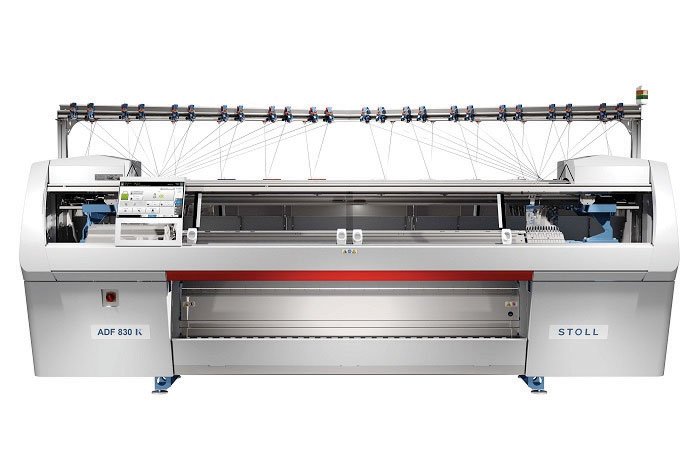
Sponsors