
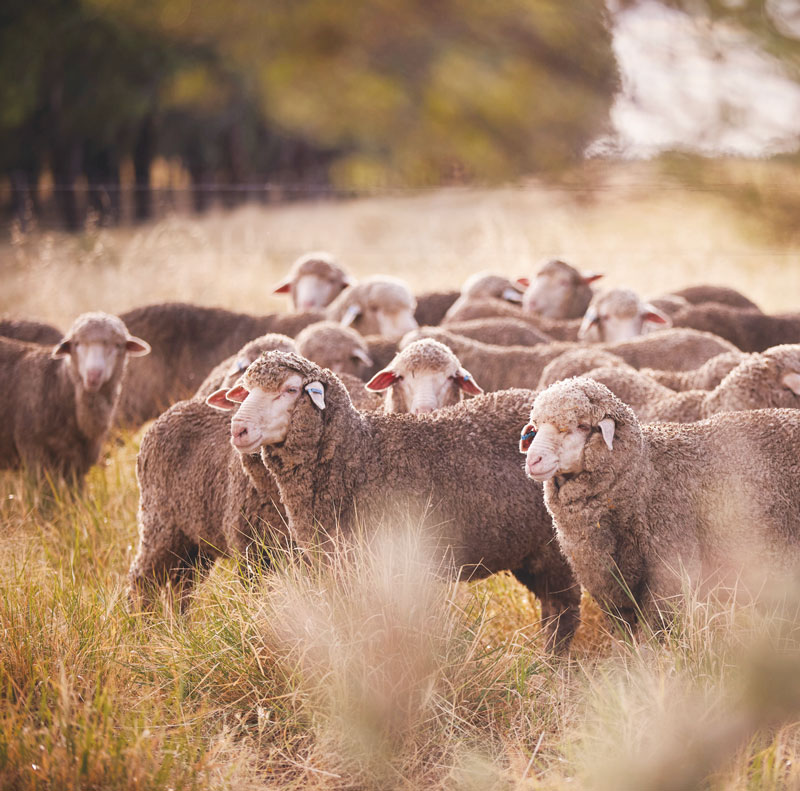
Innovations from Nuyarn®, Woolx, Ciele, PAKA and Allbirds are proving that natural fibers can deliver technical performance without compromise.
By Rachael S. Davis, Executive Editor
In the current era of sustainable textiles, one natural fiber has been quietly staging a come back. According to The Woolmark Company — a not-for-profit subsidiary of Australian Wool representing the global Australian wool supply chain and promoting the use of wool in premium textile products — merino wool presently is in demand at unprecedented levels.
A recent press release from Woolmark shared that the Australian wool market has experienced its largest price increase in 30 years, in part influenced by “tight inventories, genuine consumer demand and renewed confidence across the supply chain …” Woolmark believes this shift in the market is because of real demand and is not a short-term movement.
According to the press release, the market value for wool is predicted to almost double from $34.9 billion in 2022 to $63.2 billion by 2033.
Natural Advantages
Once a wardrobe staple along with cotton, wool lost market share with the advent of man-made fibers. Concerns about animal welfare also painted wool as a less than desirable fiber choice. But the natural advantages of wool — including warmth, durability, elasticity, odor resistance, temperature regulation, moisture management, resilience and breathability, among other properties — make it too valuable to exclude from the fiber choice landscape. As a 100-percent natural performance fiber, wool also is biodegradable, renewable and recyclable, making it a perfect fiber for a sustainable ecosystem.
Beyond luxury fashion, where Woolmark reports wool emerged as a key fiber in recent Spring/Summer collections, wool’s natural properties and seasonal adaptability are motivating sports brands to launch innovative wool apparel.
“As citizens demand more from what they wear — comfort, performance, traceability and responsibility — merino wool is meeting the moment,” said Woolmark Managing Director John Roberts. “With leading influencers and brands alike embracing its story, it’s no surprise demand is rising across luxury fashion, sportswear and lifestyle. It’s the fiber that truly delivers, naturally.”
Following is a snapshot of some companies and apparel/footwear brands that are championing the use of wool fiber.
Nuyarn: Driving A Shift In Tradition
According to Andy Wynne, CEO of New Zealand-based Nuyarn®, “The wool industry has undergone a remarkable transformation.” Wynne sees wool escaping its traditional categories of suits, formalwear and sweaters, among other categories, and becoming a “legitimate performance and comfort material across diverse categories including everyday hoodies, footwear uppers, women’s activewear, technical sportswear, loungewear, athleisure and beyond.”
Technology advancements, such as Nuyarn spinning technology, are helping drive the shift in tradition. Nuyarn’s twist-free spinning technology drafts superfine merino wool with a high-performance nylon filament carrier yarn to produce an ultrafine, two-ply yarn with more volume and aeration than merino yarns made using traditional worsted spun-yarn technologies (See “Nuyarn: Wool A New Way,” TW, January/February 2023). According to the company, the light weight and softness of the resulting yarns make them perfect candidates for next-to-skin applications in baselayer garments in particular.
Rather than avoiding the conversation, Wynne prefers to tackle historical concerns about wool head on. The company uses transparency, certification and education including full Responsible Wool Standard (RWS) certification, which ensures rigorous animal welfare standards and traceability from farm to finished product. “We’re also bluesign®, GOTS, and OEKO-TEX certified, demonstrating our commitment across the entire production chain,” Wynne shared.
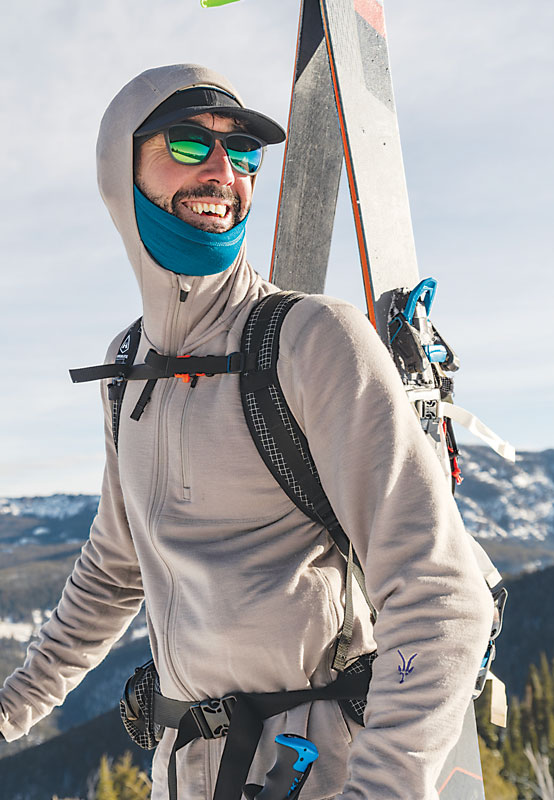
Nuyarn’s primary customers are active outdoor and lifestyle brands seeking to integrate natural fiber performance garments into their product lines. “Our development process is highly collaborative and tailored to each brand’s specific needs and customer base,” Wynne said. “As a fully vertical business — controlling every-thing from yarn production to fabric manufacturing to finished garments, we can offer brands a streamlined partnership with a single entity rather than managing multiple suppliers.”
Just some of the apparel brands using Nuyarn include:
- Artilect — A long-time proponent of Nuyarn, Artilect offers baselayer products and accessories made using the yarn including the Flatiron 185 crew and leggings, which are made using a baselayer yarn blend — 91-percent superfine Nuyarn merino wool and 9-percent nylon — knit into a 185 gram per square meter (gsm) fabric that is bluesign certified. Artilect uses hangtags to share the benefits of Nuyarn with consumers under the “More than merino” tagline. The brand also incorporates a TAP wifi-enabled sticker on the hang-tags so users can scan using a smartphone to learn more online.
- Ibex — Ibex features Nuyarn in its Woolies Pro Tech Q-Zip and Woolies Pro Tech Bottom baselayers. The fabric, comprised of 85-percent merino wool and 15-percent nylon, weighs 125 gsm making it Ibex’s lightest weight baselayer ever. While Ibex does not promote Nuyarn specifically on the hangtags, it touts the benefits of merino in a thoughtfully designed hangtag. The company does explain Nuyarn and all of its benefits on its website in the product descriptions.
- Lé Bent — Committed to performance, apparel brand Lé Bent features Nuyarn in its Featherweight Hooded Merino Crew top and Featherweight bottoms. The 125 gsm fabric is made using a Signature Merino Blend that contains 60- percent merino, 25-percent bamboo and 15-percent nylon.
Nuyarn also has established partnerships with Allbirds and HOKA, and the footwear industry currently makes up one of the company’s largest categories.
Additionally, Wynne announced that the Herculan® technology has allowed the company to transition carpet wool — coarse fibers historically relegated to flooring and upholstery applications only — into high-performance wearable garments. “We’ll be launching a performance wool fleece using this material in fall 2026,” he shared.
“Wool isn’t a fiber of the past, it’s a fiber of the future and I wouldn’t be in this business if I didn’t believe that,” Wynne said. “We’re at an inflection point where consumers are actively seeking alternatives to synthetic materials due to growing awareness of microplastic pollution and climate concerns. Athletes and outdoor enthusiasts are driving demand for natural, sustainable performance options, and technology like Nuyarn makes those choices viable without performance compromise.”
Woolx: Leggings For Active Lifestyles
Woolx was founded in 2012 in Endicott, N.Y. as family-run brand focused on merino wool clothing that combines technical performance and everyday comfort. The product line incorporates essentials, pajamas, shapewear and layers, in ultra-heavyweight fabrics, featherlight pieces and everything in between for all seasons.
Traditional wool has an average thickness of 30 microns, while typical merino wool — known for its fineness — has an average thickness of 21 microns. To avoid any itchy, scratchy sensations against the skin, Woolx uses a super-fine merino wool with an average thickness of only 17 microns in many of its products.
“While wool might make some people think of their grandma’s scratchy sweater, this is not that,” said Nicole Calleo, co-founder and CEO, Woolx. “We’ve taken all the natural benefits of traditional wool —temperature regulation, durability and comfort — and reimagined them in a modern, insanely soft merino that’s as stylish as it is functional.” In addition, all of Woolx’s clothing is ethically sourced and responsibly made. “Every Woolx piece is certified non-mulesed ensuring the highest standards of animal welfare and sustainability, ” Calleo said.
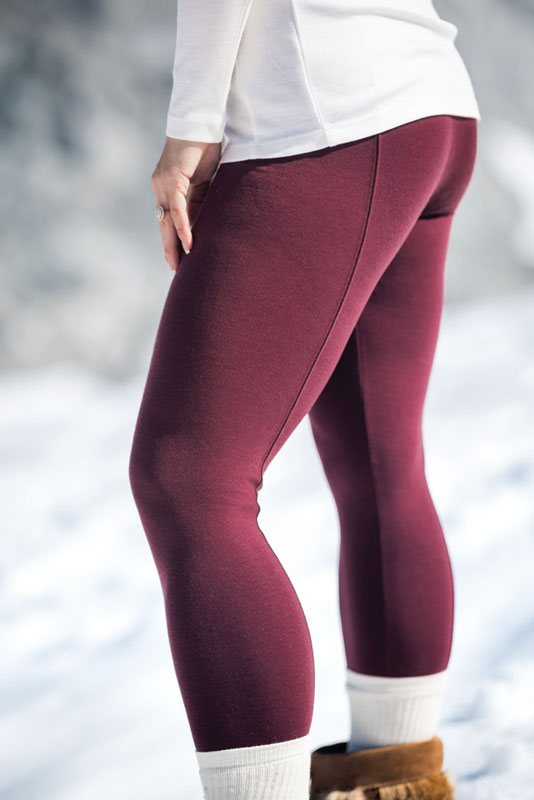
Woolx offers the Stella Leggings and Piper Pocket Leggings. Stella represents one of Woolx’s warmest baselayers for fall and winter, while Piper is a merino wool baselayer with functional side pockets for all-day comfort and performance.
“The idea for Woolx’s merino wool baselayer leggings came from a simple need: clothing that could keep up with active, outdoor lifestyles without com-promising comfort,” Calleo said. “The founders wanted something that could move easily, breathe well, and regulate temperature during hikes, runs or even when used in everyday wear. Merino wool turned out to be the perfect solution — warm when it’s cold, cool when it’s warm, and soft enough to wear all day.”
The company recently extended the use of merino wool to mini Woolx, a new line of kids’ baselayers.
Ciele x Woolmark
Based in Montreal, Ciele Athletics— focused on headwear and apparel for runners — was founded in 2014 by Jeremy Bresnen and Mike Giles. “We are all very passionate about running, technical garments, responsibility, and doing the best we can as individuals and an organization,” said Dan Marrett, global marketing director, Ciele Athletics.
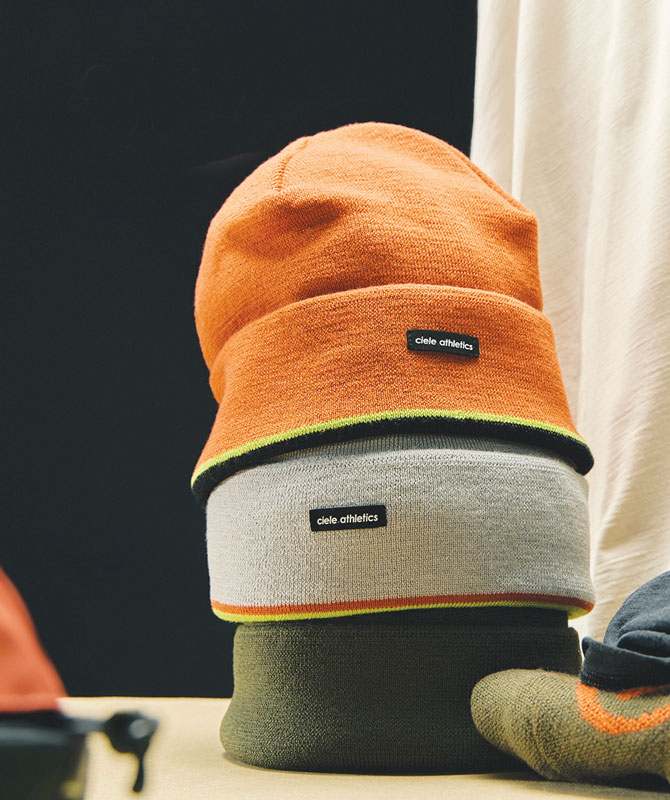
Ciele works with suppliers to develop technical fabrics and performance constructions tailored for running and movement. The brand recently partnered with Woolmark to launch its first-ever Woolmark-certified merino wool collection of apparel and headwear for winter. According to Ciele, each piece is independently tested and meets the Woolmark standards for durability, colorfastness and quality. Pieces in the line include beanies, balaclavas and baselayers made using 100-percent wool as well as merino/silk blended yarns.
“We’ve been exploring natural performance fibers for a while and that exploration led to our Sorino™ fabric line,” reported Ciele’s design team. “Partnering with an industry leader like Woolmark felt like the right move to help us highlight everything that makes merino exceptional. The Woolmark certification gives runners confidence that they’re getting the best quality merino possible. It’s a mark of fiber integrity, performance and traceability — all things that align with how we approach design and manufacturing at Ciele.”
Ciele is reimagining merino as a year-round performance fabric, not just a cold weather choice. “For us, reimagining merino means leaning into what it already does best and redesigning around its strengths to create true, all-season performance,” the company shared.
PAKA: Alpaca Focused
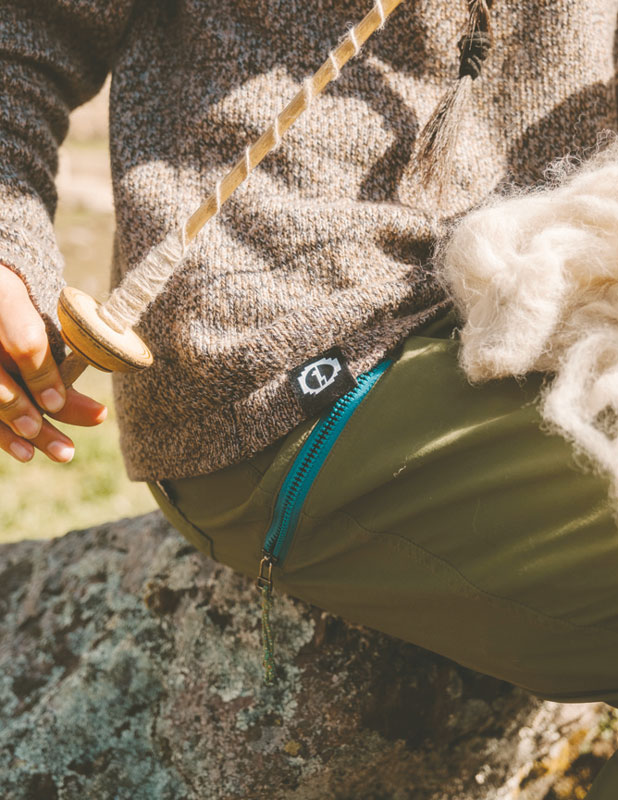
While sheep’s wool currently is experiencing unprecedented demand, Peru-based PAKA is firmly focused on another fiber in the protein family — alpaca. Founded in 2017 by Kris Cody, the certified B-Corp. business works directly with non-governmental organizations alongside the indigenous people in Peru to create its natural, all-purpose clothing and accessories (See “PAKA: Tri-Blend Fiber Trio,” TW, November/December 2022). PAKA’s mission remains one of connecting people to where their clothing comes from and supporting the communities who make the garments.
“At PAKA, we’re continuously exploring how natural performance can evolve across categories,” said Megan Krajco, PAKA Design director. “Our foundation began with alpaca fiber in sweaters, but our vision is to build a complete ecosystem of products that support everyday explorers.”
Most recently, Paka has expanded into the outerwear category with its patented PAKAFILL® alpaca insulation material, which can replace down or synthetic fiber fill options, providing needed warmth without weight. PAKAFILL is featured in the brand’s Apu parkas and Mayu vests and jackets for men and women.
One interesting product that resulted after a 2022 PAKAFILL puffer launch, was a packing cube. In contrast to the company’s alpaca focused products, the upcycled packing cubes are made using deadstock polyester shell fabric left over from puffer production. The company was determined not to send the unusable material to landfills and came up with the idea for the packing cubes.
“From day one when Kris originally founded PAKA, our focus has been to help consumers connect to our natural world, make more conscious choices and support the Peruvian communities where our products come from,” said Laura Rysz, senior director of Brand and Marketing, PAKA. “That mission truly remains at the core of everything we do today, from the decisions we make on product development to starting team meetings with PAKA Foundation updates.” The foundation was formed in early 2025 to support “alpacas, alpaqueros, weavers and education for the Peruvian communities we work with,” Rysz shared.
PAKA just announced its first-ever Heritage Collection, co-created directly with master Quechuan artisans in Peru. The company gives back 5 percent from sales of the collection to the artisans’ non-governmental organization.
PAKA has also branched out into underwear and continues to innovate in knitwear building on “The Hoodie,” the original sweater PAKA developed. In addition, “the alpaca fiber in every PAKA item now is traceable back to the source,” noted Krajco.
“The wool/protein fiber market has made an incredible shift toward transparency, traceability and regenerative land management that was not part of the mainstream conversation 10 years ago,” Krajco offered. “At the same time, technology is allowing us to enhance what nature already perfected — through improved spinning, dyeing, and knitting techniques that preserve fiber integrity and reduce the environmental impact. What excites us the most is the fusion of tradition and innovation. We’re using modern tools to amplify the story nature already tells through fiber.”
As wool and other protein fibers step back into the spotlight, the apparel industry is seeing a convergence of innovation, transparency and consumer demand. Whether it’s Nuyarn pushing the boundaries of yarn engineering, Woolx refining next-to-skin comfort, Ciele reimagining merino for performance, Allbirds redefining footwear rules, or PAKA building a modern ecosystem around alpaca, these companies illustrate how nature and technology can thrive together. In a landscape once dominated by synthetics, wool and its protein-fiber counterparts are reshaping the future of performance, comfort and sustainability.
 Allbirds: Footwear Disruptor Launches PFAS-Free, Fully Waterproof Shoes
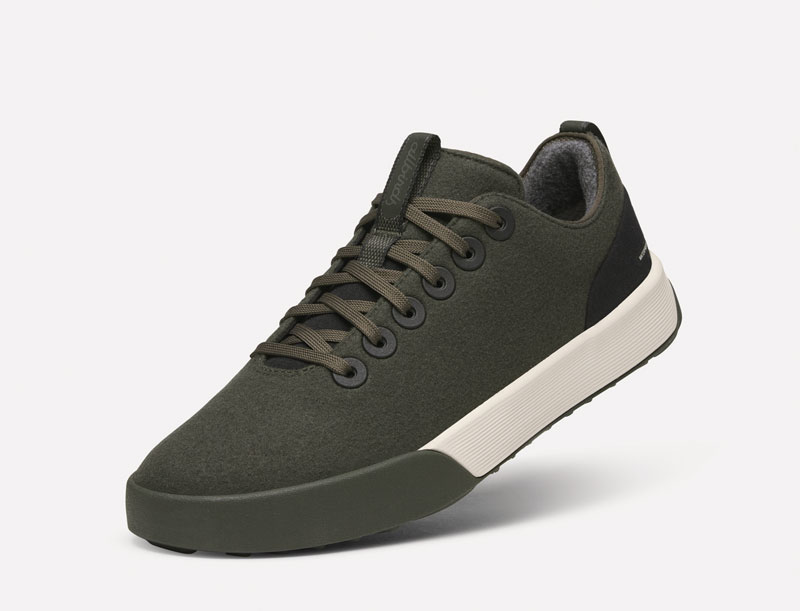
A champion of wool since its founding in 2015, footwear brand Allbirds, San Francisco, recently introduced its first fully waterproof collection in three silhouettes — the Wool Runner NZ Waterproof, Wool Runner NZ Mid Waterproof and the Wool Cruiser Waterproof. Each shoe upper is made using merino wool and is treated with C-Zero per- and polyfluoroalkyl substances (PFAS)-free durable water repellent (DWR). An additional breathable, waterproof membrane placed between the upper and interior lining further prevents water from penetrating the upper and reaching the feet.
“We were really excited about C-Zero DWR because it gave us the all-weather performance we needed, without having to use PFAS,” said Adrian Nyman, chief design officer, Allbirds. “In the design and development process, we explored different PFAS-free DWRs an ultimately selected C-zero because it delivered the perfect balance of water-repellency, durability, and played well with our toolkit of natural materials.”
Allbirds previously offered a weather-resistant Mizzle style, but had not yet developed a fully waterproof, all-weather option for showers, heavy rain or slushy conditions. “We wanted to redefine what waterproof shoes could be, with an Allbirds twist,” Nyman, said. “While most waterproof shoes lean utilitarian and technical, we believe that by looking to natural materials like wool, we can bring something new and exciting to this space.”
When Allbirds got its start, wool was not material ordinarily used in footwear applications. “But our founders knew it had incredible properties that could be put to use,” Nyman said. In 2016, when Allbirds introduced its first shoe, the Wool Runner, the product “flew in the face of all the ‘usual rules’ of footwear, particularly because of the use of merino wool, an untapped natural material in an industry so often dominated by virgin synthetics,” Nyman noted. “Almost 10 years later, Allbirds has sold nearly a pair of Wool Runners every minute, and the style has become a mainstay in wardrobes around the world — safe to say the founders were onto something!”
2025 Quarterly Issue IV



