HELSINKI — September 29, 2021 — Suominen has successfully developed HYDRASPUN® Aquaflo, a moist toilet tissue with even better dispersibility. HYDRASPUN® Aquaflo offers near parity dispersion with dry toilet tissue but with premium thickness for a better consumer experience in use. With HYDRASPUN® Aquaflo, Suominen sets a new standard for dispersible nonwovens.
Suominen’s new flushable nonwovens substrate, HYDRASPUN® Aquaflo passed the stringent standards for dispersibility set by both the International Water Services Flushability Group (IWSFG) and INDA/EDANA (GD4) in independent testing.
“We are extremely proud to launch HYDRASPUN® Aquaflo. Its 100% cellulosic fiber composition is evidence of sustainable origins and its capability to fully and rapidly break down in wastewater provides biodegradability in disposal, giving consumers an end-to-end eco-friendly solution for personal care. Dry toilet tissue is recognized as the material most capable of breaking down in sewer systems and HYDRASPUN® Aquaflo was developed with this result in mind, “says Andrew Charleston, Manager, Category Management, Americas.
HYDRASPUN® Aquaflo is proof of Suominen’s emphasis on delivering industry leading innovations and its position as a clear frontrunner in innovative and sustainable nonwovens.
STAMFORD, Conn. — September 28, 2021 — Hexcel has collaborated with HP Composites S.p.A (HP Composites), a world leader in the production of carbon fiber components for automotive and motorsports, to develop carbon fiber Class A body panels. Hexcel HexPly® XF surfacing technology is being extensively used by the Italian component producer to manufacture external body panels and other components for supercars such as Alfa Romeo’s stunning new supersport sedans, the Giulia GTA, and GTAm.
With five production plants in Italy, HP Composites has built an impressive track record of high-performance composite successes on both road and racetrack. HP has combined this processing expertise with Hexcel HexPly® XF3 surfacing material, HexPly® M47, and HexPly® M49 prepregs, working to the highest standards set by the most prestigious supercar OEMs and leading motorsport teams.
Hexcel’s automotive composites portfolio is the result of decades of industry experience and the creation of strategic partnerships to develop and optimize leading-edge technologies. HexPly XF3 is an epoxy prepreg surface material, developed with processing input from the HP Composites team to address the challenges of producing high-quality Class A automotive body panel surfaces with excellent resistance to aging tests.
Applied as the first ply in the mold and after curing at 120-180˚C in an autoclave, HexPly XF3 produces a smooth part surface with no porosity, that requires minimal preparation for painting.
HexPly XF3 is supplied in an easy-to-handle roll format with good tack and drapability. After curing, it can be easily prepared for painting with a rapid sanding process. HP Composites has incorporated automated robotic sanding techniques for this finishing stage with the paint-ready HexPly XF3 surface providing excellent paint adhesion according to EN ISO 2409.
HP Composites typically uses autoclave processing for HexPly XF3 parts, maximizing weight savings and structural performance of the final components. In addition, HP has also developed its own proprietary press and compression molding processes, including Air Press Moulding® technology, compatible with HexPly XF3 and other HexPly prepregs for higher volume production series that require increased production rates.
“Our long-term experience has given us a detailed understanding of the critical features that influence how prepregs and surfacing technologies interact with different production processes,” said Abramo Levato, General Manager, HP Composites S.p.A. “The relationship we have with Hexcel is both highly technical and highly supportive. As a result we have a complete material package for high-quality Class A body panels that are formulated specifically with our requirements in mind.”
“Combining the expertise of HP with a strong technical interaction and collaborative dialogue, Hexcel and HP were together able to develop the optimum HexPly XF surfacing technology,” said Claude Despierres, VP Sales and Marketing, Hexcel. “With HexPly XF3 we satisfy the toughest industry standards.”
CALHOUN, GA — September 28, 2021 — Designers, purchasers, and showrooms are sourcing American made custom area rugs more than ever. U.S. manufacturing offers more dependable delivery than overseas rug manufacturers. Additionally, freight costs are on the rise. As a result, sales of Delos’ U.S. made custom rugs continue to grow. In an effort to prepare for future manufacturing volume, Delos purchased additional tufting machines over the summer that have been in production for several months.
Following Mannington Commercial’s recent acquisition of AtlasMasland’s existing commercial product lines, equipment, and facilities from The Dixie Group, Delos agreed to purchase Masland’s U.S. custom area rug department’s equipment. The recent purchase of AtlasMasland aims to give Mannington Commercial an expanded presence in the market and improved manufacturing efficiencies (Source: floordaily.net). With new acquisitions of equipment and talent, Delos will be even more positioned to achieve aggressive lead times on larger projects.
“The design community often assumes that textile manufacturing left the country years ago and are unaware that custom rugs are effectively being tufted right here in the U.S. today. In 2008, the market was ripe for a U.S. custom area rug source, and that is when we entered the scene. The acquisition of new equipment and talent will continue our growth and provide an even greater source of pride to be a manufacturer in the United States,” stated Leah Phillips, Co-owner, Delos, Inc.
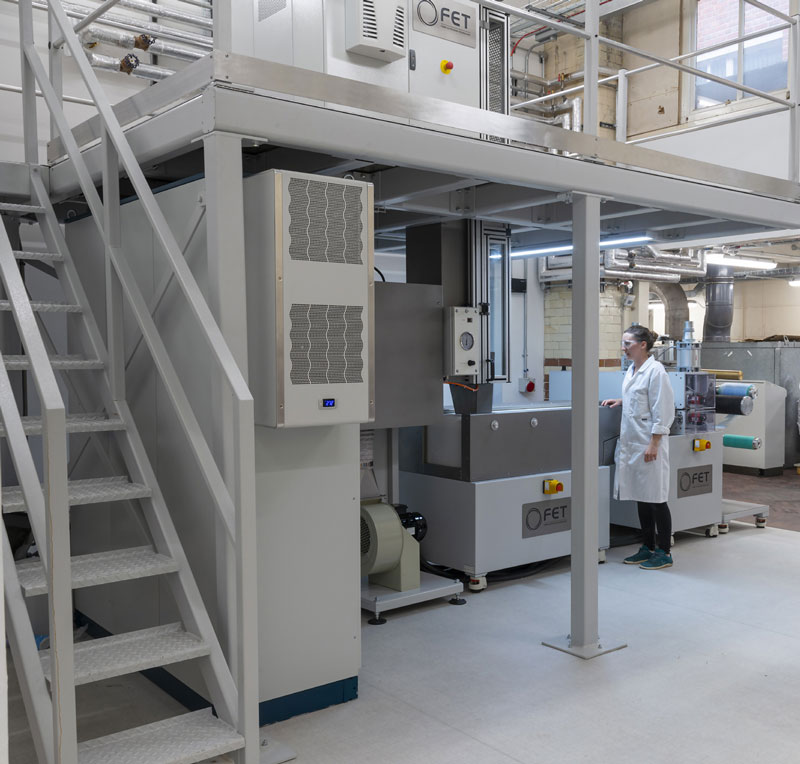
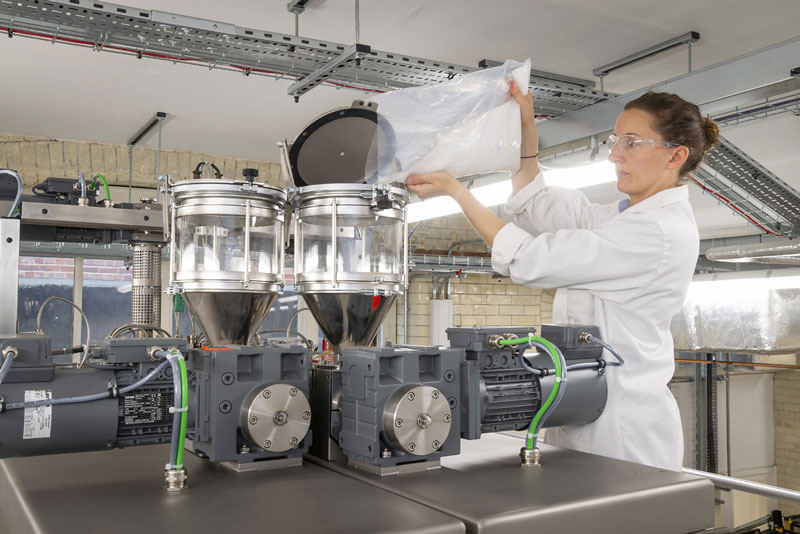
LEEDS, England — September 27, 2021 — Fibre Extrusion Technology (FET) will introduce its new lab-scale spunbond system at the forthcoming INDEX 2020 nonwovens exhibition taking place in Geneva, Switzerland, from October 19-22, 2021.
Complementing the company’s successful meltblown technology, the new spunbond range provides unprecedented opportunities for the scaled development of new nonwoven fabrics based on a wide range of fibers and polymers, including bicomponents.
The market availability of this new technology is particularly timely, given the industry’s current preoccupation with the development of new substrates based on biopolymers, sustainable resins or recycled fibers.
FET has already supplied one of these new spunbond lines to University of Leeds in the United Kingdom, and a second, in combination with a metlblown line, to the University of Erlangen-Nuremberg in Germany.
“Our new spunbond technology is unique in providing the ability to process a wide range of polymers, including those normally not considered appropriate for the spunbond process, at the scale required to fully explore material combinations and bring new products to market,” said FET Managing Director Richard Slack. “FET has built on its melt spinning expertise to develop a true laboratory scale spunbond system.”
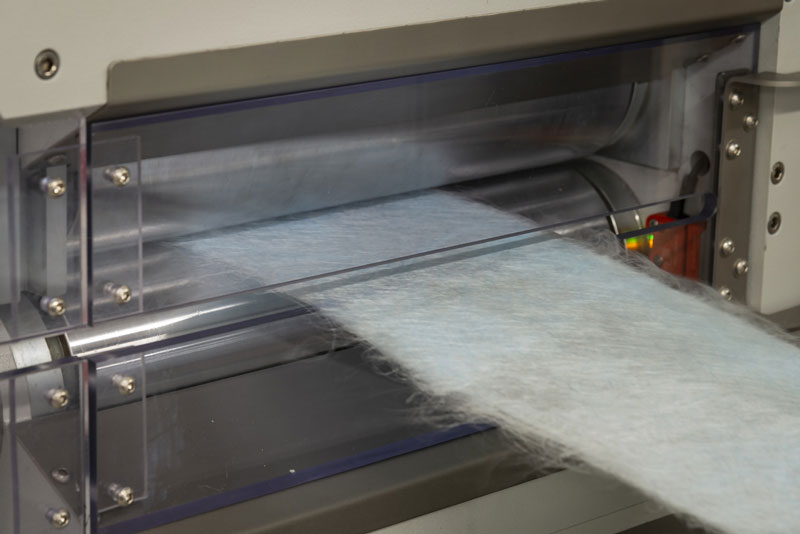
The technology is unique in providing the ability to process a wide range of polymers, including those normally not considered appropriate for the spunbond process.
Properties
Steve Russell, professor of Textile Materials and Technology at University of Leeds, agrees.
“Our new spunbond line from FET forms part of a wider investment in facilities to support fundamental, academic research on future manufacturing, where the focus is on studying the small-scale processing of unconventional polymers and additive mixes to form spunbond fabrics with multifunctional properties,” he said. “Key to this research is developing the underlying process-structure-performance relationships, based on the measured data, to provide a detailed understanding of how final fabric performance can be controlled during processing.”
Many exciting materials developed in academic research struggle to progress beyond the bench as a result of compatibility issues with key manufacturing processes such as spunbond, he added.
The versatile new spunbond system is perfectly suited to academic research work.
“By leveraging mono, core-sheath and island-in-the-sea bicomponent technology, the Leeds team is working with polymer and biomaterial research scientists, engineers and clinicians to explore the incorporation of unusual materials in spunbond fabrics, potentially widening applications,” Russell says. “The new spunbond system is perfectly suited to our academic research work, and is already proving itself to be extremely versatile and intuitive to use.”
“We look forward to discussing the possibilities of this versatile new system with interested parties at INDEX in Geneva,” Slack concluded. “It is capable of processing pure polymer with no requirement for processing aids or additives, to obtain a wide range of structural and mechanical properties, and there are numerous options for the post-processing of the webs.”
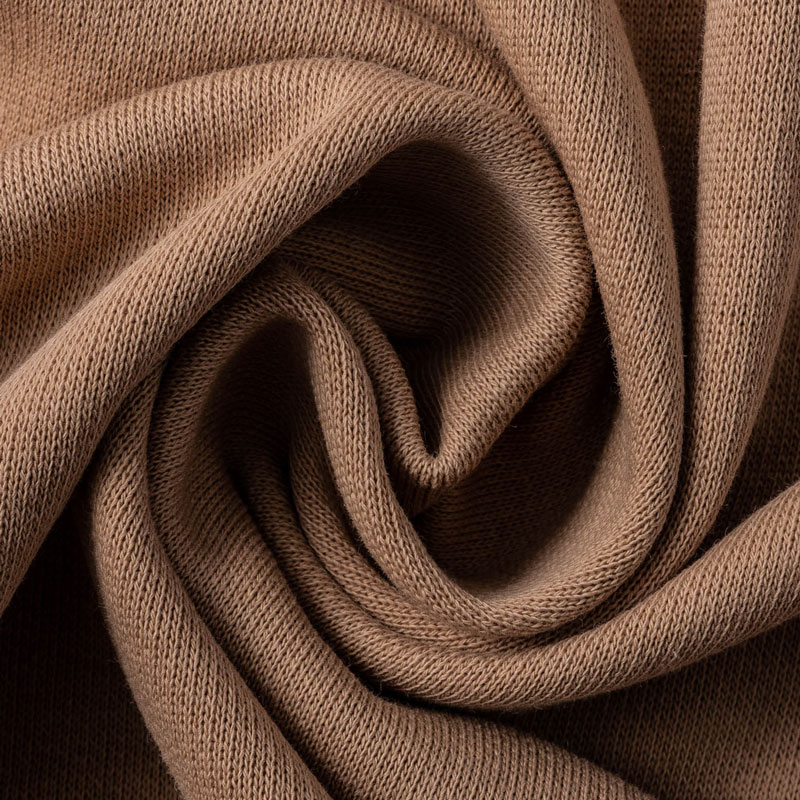
LOS ANGELES, Calif. — September 16, 2021 — Circular Systems has partnered with Tintex, a Portugal-based sustainable textile company, to launch a premium knits collection designed with Texloop™ RCOT™ Primo high quality recycled cotton yarns using Tintex’s Colorau™ Natural Dyeing Processing, some of the lowest impact materials and processing available on the market. The collaboration establishes a new precedent for the textile industry by using a breakthrough patented process that replaces synthetic dyes with natural extracts and combining with fabric milled with yarns with up to 50-percent recycled cotton.
Circular Systems and Tintex teamed up to bring this much-needed solution to the fashion industry. Dyeing is one of the most polluting parts of the textile industry. The World Bank estimates that 17 to 20 percent of industrial water pollution comes from textile dyeing and finishing treatment given to fabric. Some 72 toxic chemicals have been identified in water solely from textile dyeing, 30 of which cannot be removed. Colorau natural dyeing process incorporates compounds of natural origin like plants into substrates to produce functional, ecological, and sustainable technology. This technology also focuses on its environmental impact by eliminating potentially toxic effluents generated by synthetic dyestuffs.
The use of low temperatures in the dyeing process and the substitution of traditional auxiliaries with natural occurring alternatives also contribute to the overall process’ impacts reduction. There is no sacrifice in color durability, as Colorau is focused on natural extracts with inherent color fastness properties that can be also antimicrobial. This unique technology is designed to mimic the beauty and authenticity of nature. The collection will be available in Thyme, Chestnut Tree, Gambier and Morus Tinctoria colors.
Texloop RCOT Primo recycled cotton is Circular Systems’ most widely-adopted impact solution reaching millions of consumers to-date. With its own innovative GRS classification from Textile Exchange (PD0067), RCOT Primo are the highest quality ring-spun yarns with up to 50-percent recycled cotton with a multitude of applications across fashion products. This fabric collection marks the first time Circular Systems has partnered up with a premiere mill partner like Tintex to execute a complete, circular material solution from raw materials to finished fabrics with natural dye.
“We’ve admired Tintex’s work for a long time. They are one of the most sophisticated knit and dye finishing mills in Europe with a strong commitment to creating the lowest impact processes and products,” said Isaac Nichelson, CEO and co-founder of Circular Systems. “We have been collaborating for years with the amazing team at Tintex. In the latest project we are excited to have combined our best in class recycled cotton Texloop RCOT Primo with their Colorau process to produce a beautiful knit fabric collection, with colors that are both long-lasting and fabrics that are circular by design.”
“This collaboration with Circular Systems is a great example of how the industry is evolving to become a synergetic and integrated platform of ideas. Through a process of co-creation we are placing the consumer at the center of the business We celebrate how our teams aligned to achieve this common objective of bringing the Best-in-Class technologies to the market.” said Ricardo Silva, CEO of TINTEX.
The collection is available for purchase through Tintex and can be viewed on their website. The collection will also be presented to commercial buyers at Premiere Vision Paris from Sept 21-23. Tintex Booth Number 3B4 3C3.
ALPHARETTA, Ga. — September 22, 2021 — Datatex is proud to announce the sign of a new agreement with Buhler Quality Yarns Corp. in the United States.
A division of Korea-based Samil Spinning, Buhler has been in the business of producing high-quality yarns in the United States since 1996 and has recently invested in modernizing its manufacturing technologies.
The next step in their digital transformation is to improve the information systems and Datatex solutions were selected for the transformation.
The importance of innovation and quality control led the company to adopt Datatex solution NOW ERP, in particular they will implement our modules COSTING and FINANCIALS for the accounting aspects and visibility of actual costs, MQM for machine schedule optimization and improved production efficiency and CAMS for shop floor management and providing the traceability required to ensure sustainability information for their end customers.
Datatex is eager to begin this new project that will help Buhler Quality Yarns to improve their manufacturing activities, support top management with timely, relevant information and allow the team to continue creating top-quality products!
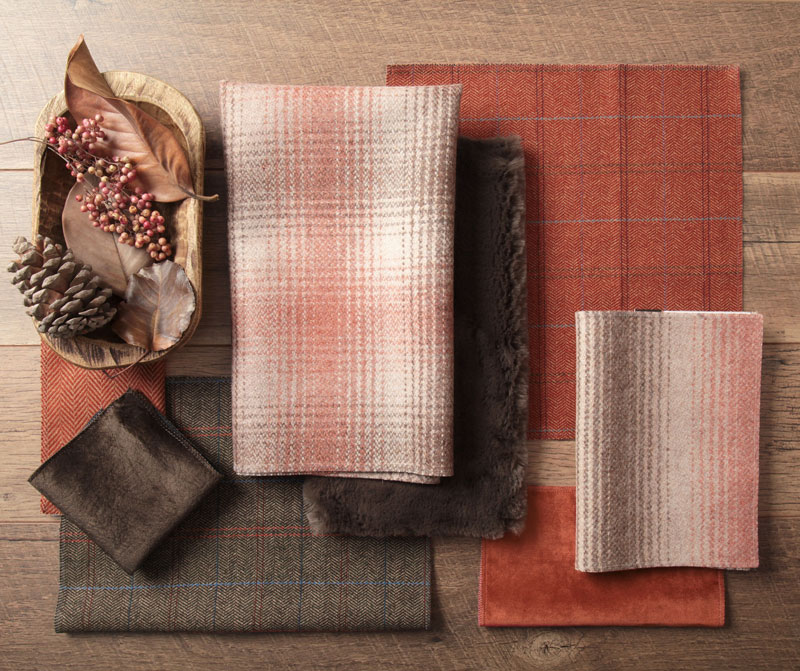
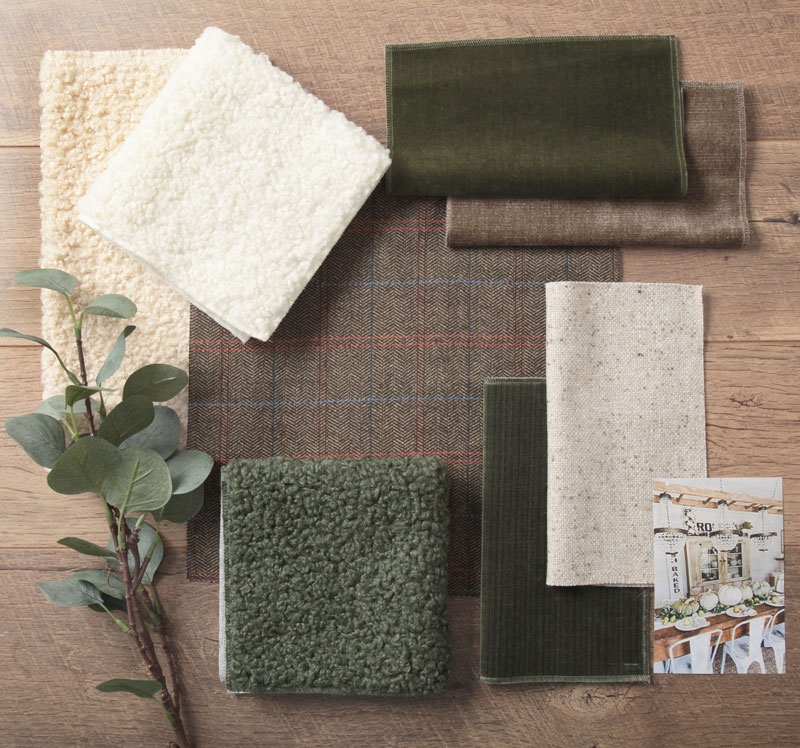
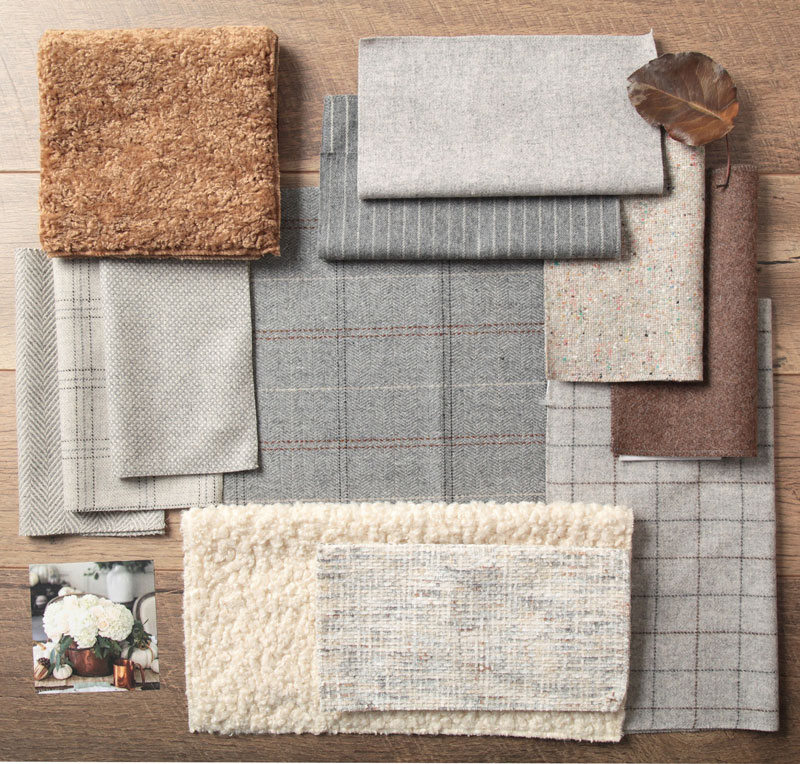
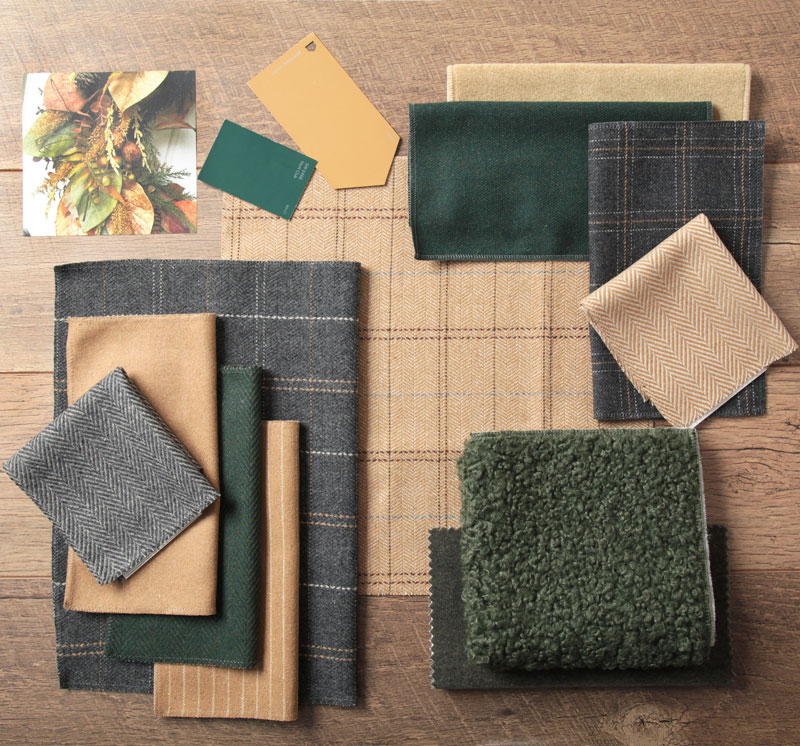
MOORPARK, Calif. — Sept. 22, 2021 — It’s finally here. The season of sweater weather, pumpkin spice, and all things cuddly and cozy. As we say goodbye to the vibrant colors and light, breezy fabrics of summer, Pindler is preparing for fall with several fabrics in a selection of warm beiges, mustard yellows, pine greens and burnt oranges that add the perfect seasonal vibe to any setting.
SOFT TEXTURES
Picture this: you just got home from picking apples or exploring the pumpkin patch. You’re all bundled up, and you can smell pie baking in the oven as you watch the crisp, autumn breeze rustle the trees outside. The perfect backdrop for this scene? A room that captures the essence of the season with soft, touchable, textural fabrics that create an inviting fall mood.
WOOLS
Nothing screams fall more than the sentimental comfort of wools. With a quintessentially cozy look that brings to mind sweaters, blankets, scarves and hand-knitted mittens, wools create a homey, welcoming atmosphere. Made from strong, durable, natural fibers, wools embody the best of the season.
VELVETS
For a more sophisticated fall aesthetic, velvets offer the ideal blend of coziness and luxury. Durable, yet soft and comfortable, velvets add a rich, smooth look that complements a wide variety of design concepts. From small accents that bring a touch of elegance to statement drapery that sets the mood of the room, velvets are a must-have when it comes to fall settings.
FAUX FURS
It isn’t fall until you’ve spent at least one day cuddled up on the couch with a warm drink and your favorite book or movie. And the best way to create the perfect environment for snuggling up inside is decorating with faux furs. Perfect for everything from pillows to decorative throws, faux furs leave everyone feeling warm and fuzzy.
All of these fall fabrics are available at Pindler’s 16 corporate showrooms and nine agent showrooms across the U.S. as well as two agent showrooms in Canada.
WASHINGTON — September 23, 2021 — The American Apparel & Footwear Association welcomed the Senate’s confirmation of Sarah Bianchi as a Deputy United States Trade Representative today. Bianchi will work closely with the apparel and footwear industry, with portfolios covering Asia, Africa, Investment, Services, Textiles, and Industrial Competitiveness.
“Sarah Bianchi brings a wealth of experience to this role, and we are excited to work with her on the critical industry issues and with trade relationships in Asia and Africa,” said Steve Lamar, president and CEO of the American Apparel & Footwear Association. “Getting the USTR bench up to full strength is important for the U.S. apparel and footwear industry, which depends on access to global suppliers and to global customers to support the livelihoods of more than 3 million American workers throughout our supply chains.”
Yesterday, AAFA welcomed the confirmation of Jayme White, also for a Deputy USTR position. AAFA has also been pushing for swift confirmation of other pending appointments, including María L. Pagán for Deputy United States Trade Representative (Geneva Office); Christopher Wilson, Chief Innovation and Intellectual Property Negotiator; and Elaine Trevino as Chief Agriculture Negotiator.
OBERTSHAUSEN, Germany — September 20, 2021 — Fiber-reinforced composite solutions with non-crimp fabrics as reinforcement layers offer many advantages in lightweight construction and are therefore in demand in a wide range of applications, particularly when the price is right.
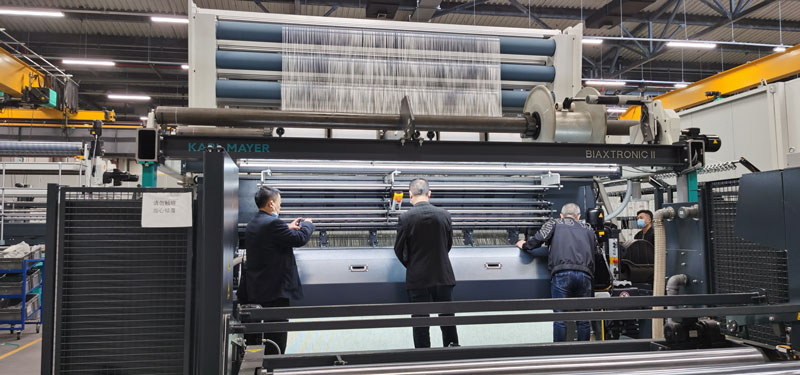
KARL MAYER Technische Textilien offers the BIAXTRONIC® to produce biaxial non-crimp fabrics highly efficiently. The high-performance warp knitting machine processes textile glass fibers and makes it possible to incorporate mats made from chopped textile glass fibers or other substrates directly into the reinforcement structure. This results in high-quality composite reinforcements that are firmly established in the transport, marine, construction and renewable energy sectors.
At the end of last year, the proven composite machine underwent a generational change. The new BIAXTRONIC II is characterized by a clear focus on the mid-range market and even more customer benefits.
Flexible, productive and affordable
The new BIAXTRONIC II is based on the technically mature concept developed for its predecessor. Building on this technology, the machine was further tailored to the needs of the commodity market in terms of its price-performance ratio, and changes were made to the weft insertion. Unlike before, the BIAXTRONIC II can work with both course-oriented and non course-oriented weft-insertion. A conversion kit — available as an optional extra — makes a variable change possible, thus increasing flexibility. “In the event of significant market changes, the machine can be converted, thereby offering a real advantage,” said Jochen Schmidt, president of Karl Mayer’s Technical Textiles business unit.
The new weft-insertion system processes textile glass fiber material with a gauge of up to 2,400 tex into reinforcement structures with a maximum weight per unit area of 500 grams per square meter (g/m²). Glass mats weighing up to 600 g/m² can therefore be integrated by means of a chopping unit , while maximum output of 1,100 m²/h can be achieved thanks to intelligent technical solutions and a coherent overall concept. Despite the high working speed, the BIAXTRONIC II handles the fibre material extremely delicately.
Other innovations include a state-of-the-art operator interface for simple, intuitive handling, as well as KAMCOS® and connectivity features from the latest KARL MAYER machine generation.
Successful market launch
With its extended performance potential and sharper pricing profile, the BIAXTRONIC II has been well received by the market. The first machine has already been sold in Europe, and in-depth project discussions are currently underway with various Chinese customers.
The BIAXTRONIC® II was most recently presented to selected manufacturers in China as part of a presentation at KARL MAYER (CHINA) in spring 2021. The performance demonstrations in Changzhou attracted significant interest. “We had many excellent conversations. In particular, our guests from the areas such as of shipbuilding, sports and leisure and construction wanted to know more about the technical details and new possibilities. This should result in some promising projects,” says Zhang Bin, Head of the Technical Textiles Machinery department.
Guests attending a BIAXTRONIC® II performance demonstration, held at KARL MAYER (CHINA) in spring 2021
NEW YORK CITY — September 21, 2021 — Pact — maker of sustainable, certified organic cotton clothing — today announced it received $7.5 million in funding from Gerber Finance, an eCapital company and the leading finance partner for companies experiencing accelerated growth. Pact is working with Gerber Finance’s Naturally Gerber division, which supports companies within the fast-growing natural products space, from clean label, organic and non-GMO products, to sustainable design and packaging.
Pact makes clothing and linens from certified organic cotton and partners with Fair Trade Certified™ factories to ensure care for both people and planet. Their product line includes clothing for women, men, babies, and kids as well as bath towels and bedding. The $7.5 million in funding from Gerber Finance will aid in supporting Pact’s inventory growth, new marketing initiatives, and investment into new channels of distribution.
“Thanks to the introduction by our private equity sponsor, Sunrise Strategic Partners, we realized very quickly that Gerber Finance was a perfect match in more ways than one,” said Drew Cook, CFO of Pact. “Everyone we’ve met at Gerber Finance believes in our business model, understands ecommerce, and values the aspects of our brand that make us unique. This played out with a flexible, well-structured piece of debt that can grow with us and provides the funding needed for us to continue our profitable growth without diluting existing shareholders.”
“We truly believe in Pact’s mission, values and dedication to sustainability,” said Jennifer Palmer, CEO of Gerber Finance. “Through our Naturally Gerber Finance division we are committed to supporting natural brands that have a positive impact on the health of people and the planet, and we couldn’t be more excited to see Pact grow and expand in a highly competitive industry.”
Gerber launched its Naturally Gerber Finance division in 2020 to serve the needs of its growing base of natural products companies in its portfolio. The team has funded over dozens of natural products companies including Stasher, Coola, and Om Mushroom Superfood.