Oerlikon Nonwoven Participates In FILTECH: Meltblown And Spunbond Technology For The Production Of Synthetic Filter Media On Display

NEUMÜNSTER, Germany  — January 27, 2022 — “We love building systems, machines and components that sustainably manufacture the materials your successful products are made of,” promises Dr. Ingo Mählmann, head of sales at Oerlikon Nonwoven. This claim expresses the company’s passion for continually improving its technology and the strong partnerships with its customers. Oerlikon Nonwoven is now — for the very first time — exhibiting at the leading trade fair for filter and filtration systems — the FILTECH in Cologne, Germany, March 8-10, 2022. The Germany-based manufacturer of nonwoven systems and equipment will be taking the opportunity to focus on market- and customer-oriented system solutions for filtration applications. Trade fair visitors will be able to meet the team and delve into the company’s comprehensive product and process know-how at trade fair stand B18 in Hall 8.

Filtration: leading meltblown competences from Neumünster

Unique and highly-sophisticated nonwovens for filtration, insulation and sorption applications can be simply and efficiently manufactured thanks to Oerlikon Nonwoven’s meltblown technology. The polymers used to produce the filter media and membranes are as diverse as their field of applications. The spectrum ranges from classical polyolefins (PP, PE), PET, PLA, PBT and PA all the way through to special plastics such as PPS and TPU. All these, and other raw materials, can be reliably processed using the Oerlikon Nonwoven meltblown technology.

Filter media can be efficiently electrostatically charged with the ecuTEC+ electro-charging unit developed by Oerlikon Nonwoven for increasing the filtration performance of meltblown media without reducing air permeability. It distinguishes itself from other concepts currently available on the market as a result of its extreme flexibility. Users can choose from numerous possible variations and hence set the optimum charge intensity for their respective filter applications. However, ecuTEC only represents the beginning of an era of new charging and treatment systems available from Oerlikon Nonwoven for further increasing media filtration performance and product diversity. Trade visitors are invited to visit the Oerlikon Nonwoven stand to take a closer look at this brand-new product and its unexpected performance possibilities.

High-performance technology for industrial nonwovens – Spunbond solutions for filter applications

Oerlikon Nonwoven systems for industrial nonwovens are capable of high production capacities and yields with simultaneously low energy consumption. In addition, spunbond products are also becoming increasingly important in filtration applications — both as backing materials for filter media and as the filter media itself. An engineered nonwoven structure permits the inclusion and/or combination of different customer-specific requirements for various functions into just one layer. It is Oerlikon Nonwoven’s many years of bi-component spinning experience in particular that enable the creation of completely new nonwoven structures and hence the incorporation of various functions in a single material. The bi-component spinning process allows the combination of various fiber cross-sections and simultaneously the manufacture of different fibers from a single or different polymers using only one system. The spectrum ranges from classical core-sheath and side-by-side bi-component filaments, splittable fibers all the way through to so-called mixed fibers.

Posted: January 28, 2022

Source: Oerlikon

Filo At Milano Unica With FiloFlow

BIELLA, Italy— January 26, 2022 — On February 1 and 2, Filo will be present at Milano Unica (Fiera Milano – Rho) showing FiloFlow’s yarns.

Within the Trends Area of the High-end Textile and Accessories Salon — entitled in this edition “MU Hotel” — a dedicated space is reserved for Filo, where it proposes the materials that are the basis of the fabrics on display. The presence of Filo in Milano Unica wants to underline in a concrete and immediate way the link between yarns and fabrics of the highest quality, protagonists of the upstream part of the Made in Italy chain of excellence.

In particular, the yarns shown at Milano Unica are those exclusively proposed by Filo’s exhibitors in the scope of FiloFlow, Filo’s sustainability project, which has been launched some editions ago.

Paolo Monfermoso, manager of Filo, says: “Filo has been participating in Milano Unica for many years, with very good results both in terms of professionals’ satisfaction and visibility of our Exhibition. The synergy between Milano Unica and Filo is in fact key to give concrete visibility to the strength of our supply chain and increase its value on international markets. The sinergy is founded on two essential concepts for textile industry: sustainability and traceability, which Filo expresses through the FiloFlow project.”

The 57th edition of Filo will take place at MiCo – Milano Convention Center February 23-24, 2022.

Posted: January 28, 2022

Source: Filo

Kodak Launches KODACOLOR Film-To-Fabric Ink System

ROCHESTER, N.Y. — January 27, 2022 — Eastman Kodak Company announces the launch of a new ink system for Film-to-Fabric (FTF) — also known as Direct-to-Film (DTF) — printing projects.

Film-to-Fabric ink systems can be used with most modified inkjet printers and involves three simple components: powder, film, and ink. The benefits of DTF, like Kodak’s FTF system, include the ability to print on a wide variety of fabrics such as natural fabrics, polyester, nylon, rayon, blends, and cotton; less investment in hardware for startup; and more flexibility to accept customer printing projects.

Kodak’s film-to-fabric ink system includes KODACOLOR powder, KODACOLOR film, and ink specially designed for use in a film-to-fabric application. Customers with existing Direct-to-Garment (DTG) printers have the option to use KODACOLOR DTG inks with KODACOLOR film and powder to add Kodak’s FTF to their offerings.

For fabric print shop owners wanting high-quality fabric prints without the expense of a full-fledged DTG fabric printing system or wanting to offer additional print projects on fabrics other than cotton to their customers, Kodak’s FTF ink system is the ideal solution.

Grant French, Kodak’s DTG and FTF product manager said, “We are pleased to announce the entry of Kodak into this market, giving more customers access to a high-quality, lower cost business option to create amazing, printed fabric projects.”

Kodak has been producing and selling digital inks for thermal piezo and continuous inkjet systems going back to the 1990’s demonstrating our ongoing commitment to the inkjet business. Kodak has a strong history of innovation and excellence in the key technologies needed to produce superior fabric inks and ink systems.

Customization of fabrics for garments, accessories, upholstery and soft signage is growing, which represents a significant business opportunity for Kodak in the FTF, DTG and wide format printer industries.

KODACOLOR products are manufactured in Rochester, N.Y.

Posted: January 28, 2022

Source: Eastman Kodak Company

The Creative Luxury Of Italy-Based Woolen Mill Lanificio Cerruti Selects Itema Weaving Technology

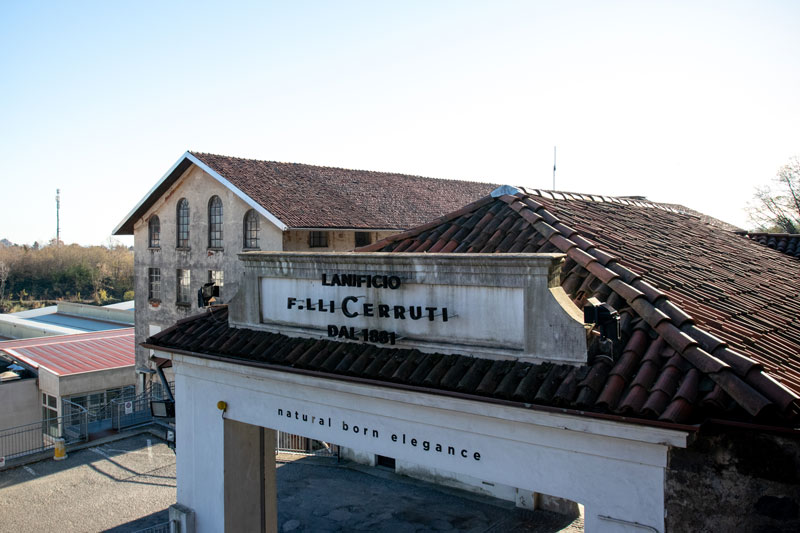
BIELLA/COLZATE, Italy— January 27, 2022 — Lanificio F.lli Cerruti, a historical excellence of “Made in Italy” as well as one of the most prestigious Italian woolen mills, has selected Itema, a manufacturer of advanced weaving solutions, as weaving supplier for 30 new weaving machines that will be installed in its Biella manufacturing plant. The new weaving machines are set to increase the production capacity and the overall manufacturing efficiency, but in the first place they will contribute to further enhancing fabric quality and processes sustainability.

After a strategic study based on a careful market and competitors’ assessment, Lanificio Cerruti identified the Itema rapier weaving machine as the best technology to meet its demanding needs and Itema as the ideal candidate to forge a partnership grounded on shared values. The Itema rapier R9500² ensures to Lanificio Cerruti the highest sustainability levels in three different fields:

  • environmental, as it is designed to reduce energy consumption and waste of raw materials;
  • social, thanks to the ergonomic features that simplify and protect weavers;
  • economic, due to the delicate treatment of the yarns which leads to raw materials saving and quality improvement; furthermore, the remote monitoring allows to minimize interruptions and failures.

With this agreement Lanificio Cerruti and Itema, excellences of Made in Italy respectively in the fashion and in the weaving machinery industries, start a cooperation based on the common orientation towards an increasingly sustainable innovation, meant to generate value while respecting the environment and people.

“Lanificio F.lli Cerruti joins with great satisfaction a partner of excellence as Itema to undertake a path that will help us to further enhance the concept of creative luxury, so inherent in the DNA of our company,” commented Filippo Vadda, president and CEO of Lanificio Cerruti. “This partnership is the evidence of our strong commitment to an increasingly positive impact on the planet and on future generations — since at Lanificio Cerruti sustainability means looking ahead using the best available technology”.

“We are proud to work with Lanificio Cerruti. It is not just a technological partnership, but the beginning of a co-development journey that will allow us to design and implement solutions of great value,” added Ugo Ghilardi, CEO of the Itema Group. “We firmly believe that together we will give prestige to the Made in Italy creativity and innovation, which are admired all over the world”.

The new Itema weaving machines will be installed in the Biella plant of Lanificio Cerruti starting from March 2022.

Posted: January 28, 2022

Source: Itema Group

Finisterre Launches Award-Winning Biosmock Made With Traceable HD® Wool Apparel Insulation

SHIPLEY, England — January 27, 2022 — Nearly one year after British sustainable outdoor brand, Finisterre, was honored by winning a 2021 Gold ISPO Outstanding Award in the Insulation Apparel Category for its Biosmock, the company is pleased to launch its first fully-circular jacket for consumer purchase.

Built as a practical insulated outerwear piece, the Biosmock can be layered beneath a waterproof jacket or worn on its own as an outer shell, providing warmth and comfort in all conditions. Constructed with a PrimaLoft® BIO compostable shell, renewable and traceable HD® Wool Apparel Insulation, and biodegradable fasteners, the entire jacket is designed to break down safely at the end of its long and useful life.

“We worked closely with the team at HD Wool to source and incorporate HD Wool Apparel Insulation into the Biosmock design,” said A. Todd, lead designer at Finisterre. “Wool’s natural heat retention and breathability makes it an excellent insulator, as well as being renewable. Furthermore, through the  Woolkeepers® initiative, consumers are able to trace the jacket’s insulation back to the four individual farms in the South West of England that supplied the wool- providing full traceability and accreditation from farm to Finisterre.”

The HD Wool Apparel Insulation QR code on the Biosmock hangtag will link consumers to the farm that supplied the wool for the  garment. One of the farms providing the wool is managed by Natasha Harris, a fourth-generation farmer based in South Devon, which is just over the Tamar from Finisterre’s base in Cornwall.

Watch the video to learn more about Natasha’s farm and about what being a Woolkeeper means to her:

Through the  Woolkeepers quality assurance and sourcing program, HD Wool Apparel Insulation offers a complete solution to meet the growing demand among brands, retailers and consumers for natural fibers and traceability. It supports responsible farming and animal welfare, paying a fair price for wool, and nurturing a community of growers on the journey  towards regenerative agriculture – a sustainability initiative that builds soil fertility, sequesters carbon, improves watersheds, and supports biodiversity by properly managing livestock on the grasslands of the world.

“We are incredibly excited for the launch of Finisterre’s Biosmock and delighted to link our Woolkeepers community to end-consumers,”  said Simon Whitmarsh-Knight, Managing Director, HD Wool Apparel Insulation. “As with HD Wool, Finisterre is incredibly passionate about making a positive impact on the environment and pushing boundaries to make the best products it can. Collaborating with the team on the Biosmock project has been a true privilege.”

Posted: January 28, 2022

Source: Finisterre

New Geosynthetics Standard Provides Specifications for Vinyl Sheet Piling

W. CONSHOHOCKEN, Pa. — January 27, 2022 — ASTM International’s geosynthetics committee (D35) has approved a new standard that will help engineers, designers, and specifiers who work with vinyl sheet piling. Applications for such piling include the construction of seawalls, retaining walls, and chemical cut-off walls.

“The new specification will standardize the materials used and it will allow producers to meet the United States Army Corp of Engineers’ requirements for vinyl sheet piling,” says ASTM International member Steve Hargrave. “It will standardize the maximum design stress, when stating the allowable moment.”

The new standard (soon to be published as D8427) covers material and testing requirements for polyvinyl chloride sheet piling.

This effort directly relates to the United Nations Sustainable Development Goal #9 on industry, innovation, and infrastructure, among others.

“The new standard includes the use of recycled materials, which use less energy to produce,” says Hargrave, innovation and engineering director, CMI Limited. “The vinyl sheet piling is inert in the environment in use.”

Hargrave also notes that the standard can be used to mitigate environmental issues like water flow and contamination and that transportation energy is reduced when using materials covered in the standard.

Posted: January 28, 2022

Source: ASTM International

TENCEL™ Celebrates 30 Years Of Sustainable Fiber Innovation

LENZING, Austria — January 26, 2022 — Lenzing’s flagship textile brand, TENCEL™, is celebrating three decades of sustainable fiber innovation this year. Since 1992, the TENCEL brand has empowered companies across the textile value chain to adopt more eco-friendly practices.

“Since its launch 30 years ago, TENCEL has always been envisioned as a solution provider for the textile industry,” said Robert van de Kerkhof, member of the Managing Board at Lenzing. “Aligning with the industrywide shift towards deeper levels of sustainability and transparency, in 2018, the brand evolved from a behind-the-scenes contributor to a front-facing player. From then on, TENCEL expanded its offerings from fiber creations to pioneering digital technologies. To date, the TENCEL brand has exceed expectations across the industry as ‘the trusted provider’ of high-quality sustainable fibers among leading global fashion and home textile brands. We are thrilled to reach this milestone and are looking forward to driving continuous innovation and building stronger partnerships over the next 30 years and beyond.”

Digital technologies enabling supply chain transparency

Since 2018, TENCEL has redefined itself as a consumer-facing ingredient brand. This success is reflected in the collaboration between TENCEL and more than 300 brand partners globally in various consumer-centric campaigns. The 2021 launch of TENCEL eShop, the first ever e-commerce channel created by a sustainable fiber producer, is a testament to TENCEL’s strong relationships with its brand partners and its commitment towards encouraging consumers to make informed purchases.

As part of the “digital first” strategy of the TENCEL brand, TENCEL invested heavily in proprietary technologies to reduce environmental impact during textile production and developed platforms to support stakeholders’ sustainability momentum. From the introduction of fiber identification technology to fabric certification and licensing services offered via the Lenzing E-Branding Service platform, the TENCEL brand has been a driving force towards full-scale supply chain transparency.

The achievements of the TENCEL brand thus far can be largely accredited to the ongoing trust, confidence and support of its supply chain partners, without whom, this milestone would not have been possible. Looking ahead, cross-sector collaboration between mills, fabric makers, brands and non-governmental organizations, will remain a key priority for TENCEL and help to further enable supply chain transparency and digitalization of the textile industry.

“With its circularity and solution for low carbon emissions, TENCEL is the answer to an eco-strategy in fashion,” said Adriano Goldschmied, Genious Group president and founder. “I was first introduced to the TENCEL brand about 30 years ago, when I was looking to give denim a more feminine and friendly style. I was so impressed by TENCEL that I designed a complete collection, which revolutionized the textile and denim industry. In an era where comfort and sustainability are ‘must-haves’, TENCEL branded fibers are essential.”

Forging the way to a carbon-zero textile industry

In addition to driving supply chain transparency, the TENCEL brand is also committed to achieving net-zero emissions by 2050. In 2020, the industry’s first carbon-zero TENCEL branded fibers were launched, and the carbon zero offering was quickly extended to fibers with REFIBRA™ technology in 2021. Anticipating the rising demand from consumer brands for specialty fibers, Lenzing has been strengthening its production capabilities with an ambitious growth plan. Such growth will be fueled by the opening of the world’s largest lyocell production facility in Thailand in early-2022.

“In 2022, we will continue to focus on producing carbon-zero innovations that make a difference to the textile and fashion industries,” said Florian Heubrandner, vice president, Global Textiles Business at Lenzing. “The next decade will see more sustainability-driven innovations unveiled to actualize our 2050 vision. We are grateful to have worked alongside our partners and colleagues over the last 30 years and we look forward to greater success in the next 30!”

“In celebration of our 30-year milestone, the TENCEL brand will be commencing a series of brand, employee, and consumer activations globally to further advocate for change as part of the ‘Feel Good Fibers Since 1992’ campaign,” said Harold Weghorst, global vice president of Marketing & Branding at Lenzing. “We would not be able to accomplish these initiatives without the support and goodwill of our partners, to whom we are truly thankful. Moving forward, we will continue to empower brand partners and consumers on their journey to sustainability with our ongoing initiatives, like the #MakeItFeelRight Digital Campaign and TENCEL X Partner Campaign.”

From February onwards, TENCEL 30th anniversary celebrations themed
“Feel Good Fibers Since 1992” will kick-off on TENCEL.com and feature exciting content and partner activities across multiple regions and channels.

Posted: January 28, 2022

Source: Lenzing Group

Conveners Of The Textile Industry Jointly Support A Digital Platform To Enhance Scaleup Of Circular Economy

CAMPBELL HALL, N.Y. — January 26, 2022 — Industry organizations, working on related circularity projects, are aligning efforts to create the infrastructure to enable the recycling of post-consumer textile waste. Through their own projects and together through pre-competitive industry-wide collaboration, Accelerating Circularity, Fashion for Good, Global Fashion Agenda’s Circular Fashion Partnership, Reverse Resources, SMART, and WRAP are supporting the scaling of digital solutions to create the infrastructure for textile recycling. Reverse Resources is launching one such platform for collectors, sorters, and pre-processors – its goal is to facilitate textile-to-textile recycling.

We are calling on the industry to support this effort.

The Reverse Resources platform will now be able to house information on collectors, sorters, pre-processors, locations, services, and volumes.  The tool is designed to be open access allowing circular system actors to find required services. Reverse Resource’s initial digital platform made significant headway in the post-industrial textile waste industry – linking recyclers with manufacturer’s information to increase the transparency of availability of post-industrial materials – thus leading to greater circularity.  The expanded digital platform will develop information on the availability and access to post-consumer materials for all industry actors.

“Reverse Resources is a tracking and trading platform for textile and post-consumer waste, providing 360-degree transparency of the waste flows. We match the supply and demand, break down market barriers, shorten supply chains, thereby increasing value along the way,” said Ann Runnel, founder and CEO of Reverse Resources. “Our mission is to help to bring down the cost of recycling to support the scale-up of the circular economy. The more industry members that participate, the more we can create economies of scale”

Over the past two years, Global Fashion Agenda worked closely with Reverse Resources to engage global brands, manufacturers in Bangladesh, and recyclers to develop the platform for post-industrial textile waste.

“A key unlock to circular fashion systems is increasing transparency and traceability of waste feedstocks and matchmaking waste types, to recycling solutions,” said Federica Marchionni, CEO, Global Fashion Agenda.

“This is one of the first of many open-sourced digital tools we hope to see in the market that will allow the industry to move forward on its circularity goals,” said Karla Magruder, founder and president of Accelerating Circularity. “The industry needs the information that will be housed in the platform, on what services and materials are available when it comes to post-consumer textiles available for textile-to-textile recycling.”

“To achieve circularity, we need to collectively develop innovative business models, which require new digital systems, infrastructure, and collaborations,” noted Katrin Ley, manager director, Fashion for Good. “We are all aligned on the same objective to drive progress so working together to facilitate that through collaborative technology platforms makes sense.”

“WRAP is pleased to support the development of this platform via our connections with the UK textile reuse & recycling sector. Digital platforms will create the transparency needed for more circular textile industry,” shared Cat Salvidge, Sustainable Textiles Sector specialist, WRAP  “Circularity is key to WRAP’s new voluntary agreement for a more sustainable textiles industry, Textiles 2030, so this collaboration comes at a great time”.

The platform is being piloted with several large collectors, sorters, and pre-processors who have been participating in the Accelerating Circularity Project Europe, Global Fashion Agenda’s Circular Fashion Partnership in Bangladesh, and Fashion for Good’s Sorting for Circularity India Project. Ultimately the goal of the platform is to more effectively and economically allow for the recycling of the estimated 17 million tons in the USA [1]and 5 million tons in Europe[2] of post-consumer waste that goes to landfills annually.

Join us for a webinar  February 9, 2022 to learn more:

08:00 AM Eastern Time (US and Canada) / 14:00 Central European Time (CET)

Register in advance for this meeting: https://us02web.zoom.us/meeting/register/tZwkce2vrj8sHNL2LsAyluMYNN7cnqsGyLOK

After registering, you will receive a confirmation email containing information about joining the meeting.

To learn more about Reverse Resources visit www.reverseresources.net

[1] https://www.epa.gov/facts-and-figures-about-materials-waste-and-recycling/textiles-material-specific-data#TextilesTableandGraph

[2] https://publications.jrcec.europa.eu/repository/handle/JRC125110k p.8

Posted: January 28, 2022

Source: Accelerating Circularity

NCTO: Independent Study Highlights Benefits Of U.S.-CAFTA-DR Agreement And Devastating Impact Of Weakening Agreement’s Rules

WASHINGTON — January 26, 2022 — The National Council of Textile Organizations (NCTO), representing the full spectrum of U.S. textiles from fiber through finished products, issued a statement today on the release of an independent study examining the valuable economic and societal impact of the U.S.-Dominican Republic-Central America Free Trade Agreement (CAFTA-DR), and the significant adverse impact of proposals aimed at weakening the agreement’s rules of origin.

The economic study conducted by Werner International highlights the importance of maintaining the current rules of origin in the agreement, which supports more than one million jobs in the U.S. and the region and $12.5 billion in two-way trade and has fostered significant and impactful investments in manufacturing and apparel production. The study also finds various proposals aimed at weakening the agreement’s carefully negotiated and longstanding textile rules of origin would severely harm the region and U.S. and result in massive job, investment, and export losses.

“The Werner report comes at a pivotal time, as the global supply chain crisis and concerns over forced labor in Xinjiang have sparked a shift in sourcing out of Asia and a renewed focus on nearshoring and onshoring jobs back to the Americas. As outlined in this report, the U.S-CAFTA-DR agreement is a critically important and deeply economically impactful agreement that has fostered a co-production chain for textiles and apparel supporting over one million jobs in the region and the U.S,” said NCTO President and CEO Kim Glas. “This is due to a key element of the agreement called the ‘yarn forward rule of origin,’ a unique investment-based rule that ties lucrative duty-free access to the U.S. market to investment in yarn, fabric, and cut-and-sew production in the region and the U.S.”

Glas added: “We appreciate the broad bipartisan support, including from the administration, for maintaining the essential yarn forward rule of origin and ensuring those rules are not eroded through harmful changes. This common support for preserving the provision is vital to the bipartisan efforts focused on ushering in a new era of American manufacturing prowess and economic prosperity. Conversely, the report found that weakening the rules by adding ‘flexibilities’ such as cumulation and short supply changes would exacerbate the migration crisis by devastating our industries and further tether us to our counterparts in Asia, including China.”

Jan Urlings, vice chairman of Werner International, stated: “In our examination of the economic and societal impact of the U.S.-CAFTA-DR agreement, we found the current benefits of the agreement support a strong and vertically integrated co-production chain that has contributed significantly to investment and economic stability in the region and the United States. A major aspect of our report examined how various proposals aimed at weakening the rules of origin would impact the region and the U.S. The data overwhelmingly demonstrates that the current co-production chain would be undermined by subsidized Asian/Chinese fabrics and yarns whether directly or indirectly through a third party, would devastate direct and indirect textile employment and investment in the U.S., the region and the entire Western Hemisphere.  It would also exacerbate enforcement issues associated with Xinjiang cotton produced with forced labor.”

The study goes on to find that if brands and retailers made a commitment to double exports from CAFTA-DR to the U.S under the current rules, it would result in an additional 180,000 U.S. textile jobs, 2.17 million new jobs in the CAFTA-DR region, and conservatively $6 billion in new investments in the U.S. and region.

Rep. Bill Pascrell (D-NJ), Textile Caucus co-chair, stated: “Imports from China and other countries that use forced labor and other predatory trade practices have crippled our manufacturing industries and destroyed millions of U.S. jobs. The manufacturing of cotton products and other goods from Xinjiang have tainted our supply chains and helped perpetuate the Chinese Communist Party’s continued human rights atrocities. As global supply chains are recalibrating to nearshore and onshore textile and apparel production chains under the rules of origin in our Hemispheric trade agreements, we must strongly reject efforts to erode those essential rules that support textile and apparel jobs in the U.S. We must not allow China backdoor access to these critical markets, which will further hurt our own industries and reward China and other countries with direct and indirect preferential tariff access.”

Rep. Patrick McHenry (R-NC), Textile Caucus co-chair, stated: “The global supply chain crisis triggered by the coronavirus pandemic has exposed our severe overreliance on China.  This report showcases that onshoring and nearshoring of this critical production chain is critical for the U.S. textile industry and workers in the CAFTA-DR region.  The US-CAFTA-DR trade agreement has spurred hundreds of millions of dollars of investment because of the strong rules of origin that support this co-production chain.  Any erosion of these rules would harm American producers and exacerbate the immigration crisis.  As supply chains are pivoting, we must seize on the opportunity for growth in good paying jobs in both the U.S. and the region and end our overreliance on China.”

Key Findings from Werner report:

I. Adverse consequences to adding flexibilities to/weakening the yarn forward rule:

  • Destroys U.S. and Western Hemisphere textile employment, with a total projected loss of more than 307,000 U.S. textile and cotton farming jobs and a loss of 250,000 jobs in Central America’s primary textile industry.
  • Devastates U.S. cotton farmers, currently employing 115,000 people in 18 states. Projected sales drop of 30% for U.S. and Western Hemisphere cotton growers.
  • Provides direct and indirect backdoor access to Chinese textile inputs, further perpetuating Xinjiang forced labor.
  • Chills future investment and destabilizes current investment in region. Over $1 billion in capital investments have been made in CAFTA-DR countries since 2005, which have helped create a vertical regional production chain. Weakened rules place major future and long-term U.S. investments at risk.
  • Severely undermines defense procurement under the Berry Amendment and the domestic warm industrial base supplying mission critical items to U.S. armed forces. More than two-thirds of the U.S. textile and apparel industry would be wiped out, destabilizing the domestic textile military industrial base and its ability to meet surge production in times of military mobilization.
  • Cripples efforts to construct a viable domestic/nearshoring supply chain for personal protective equipment (PPE).
  • Exacerbates the flow of immigration, undermining the administration’s intended goal of spurring economic development in the region to address the root causes of outward migration.
  • Exponentially increases greenhouse carbon emissions through transpacific shipping and Asian coal-fired energy.

II. Proactive steps to help improve the competitive position of CAFTA-DR region:

  • Better coordination among lending agencies of the federal government, such as the U.S. Agency for International Development, Inter-American Development Bank, and Export-Import Bank, to ensure targeted, strategic investment in this sector and competitive low or zero interest financing and loan guarantees.
  • Support for a comprehensive infrastructure plan with targeted, high-impact investments and competitive loans to upgrade regional power grids, roads, and local ports would pay immediate dividends.
  • Provide incentives to the Western Hemisphere co-production chain for carbon emission reductions and sustainable products.
  • Ensure trade stability in the region by maintaining maximum pressure on China, including enforcing the U.S. ban on cotton and cotton products made with forced labor in Xinjiang.
  • Refrain from changing cumulation and short supply process, which would lead to a surge of third-country yarns and fabrics and displace hundreds of thousands of jobs in the region and U.S.
  • Oppose granting duty-free access and other benefits through an expansion of the Generalized System of Preferences (GSP) program to apparel and textiles and negotiating free trade agreements with major Asian suppliers.
  • Close the de minimis loophole for imports from China that allow goods valued at $800 or less to enter duty free if imported by one person on one day.

Posted: January 28, 2022

Source: The National Council of Textile Organizations (NCTO)

IFAI: Tent Industry Back Together At Tent Expo

ROSEVILLE, Minn. — January 27, 2022 — Over 550 tent and rental professionals gathered in Daytona Beach, Fla., last week for the IFAI Tent Expo.

Members of the Tent Rental Division and other industry professionals took the opportunity to meet in person for the first time in two years, driving near-record attendance at this year’s event.

Tent Expo offers a chance to connect in-person that can’t be replicated by virtual events, said Josh Kohn, CEO and co-founder, SOHO Event Rentals, Fairhope, Ala.

“It’s so good, the relationships, the networking, getting to meet face to face with people, it really builds those relationships,” Kohn said. “To be here on the floor with the tents and manufacturers, to be able to ask questions … really speeds up the conversation versus just looking at a PDF or online at something.”

More than 50 exhibitors were on hand to share the latest innovations in tents, equipment, flooring, furniture, accessories and more.

“I’ve learned so much from all the manufacturers,” said Steven Eisenstein, president of Classic Tents & Events, Norcross, Ga. “I’ve learned the right tents, to buy. I got the TentOx from coming to this event many years ago. Coming to Tent Expo helps us learn how we can be more efficient with our labor, do more and save money. It’s coming to these events that you learn about all the different pieces of equipment and what they can do.”

The three-day Tent Expo kicked off with the annual golf tournament and a private, behind-the-scenes tour of the Daytona International Speedway, followed by two days of education, networking and product demos.

Indy Car racer James Hinchcliffe delivered the keynote address, telling the story of his struggles to become a professional driver, and his comeback from a life-threatening injury he suffered while practicing for the 2015 Indianapolis 500.

Two tent industry leaders were also honored with the Bruce W. Wodetzki Award. The award is named for the first chairman of IFAI’s Tent Rental Division and recognizes professionals who continue his legacy of impacting the growth, direction and success of the industry. This year’s honorees were Jim Reyen, business director at Eureka! Tents, and George Smith, president and CEO of Mahaffey Fabric Structures.

Education topics at this year’s Tent Expo included advice on diversifying your business and hiring, as well as tips on ballasting, an update on codes and standards and more.

“The biggest thing is the access to the knowledge,” Kohn said. “We’re a young company. We’re first generation, so we didn’t have all that knowledge passed down. To be able to go in and access all this information, particularly the safety information … this world didn’t exist to me before I started coming to Tent Expo and joined IFAI.”

Save the date for Tent Conference 2023

Mark your calendar now. The 2023 Tent Conference will be January 11-13 in Savannah, Ga.

Posted: January 28, 2022

Source: Industrial Fabrics Association International (IFAI)

Sponsors