140-Year-Old Ulster Weavers Relaunches As A Contemporary Homeware Brand

ULSTER, Northern Ireland — December 3, 2021 — Ulster Weavers, the 140-year-old textile manufacturer from Northern Ireland, is going through its biggest change in generations as it repositions its business as a contemporary homeware brand targeting the millennial audience.

The company, which has customers in 50 countries, is introducing new contemporary kitchen textile and homeware collections that are inspired by the places and culture of Northern Ireland as part of the major brand relaunch.

Ulster Weavers has its roots in Northern Ireland’s famous linen industry, having been founded in 1880, and today is renowned for its vibrant textiles, with products including tea towels, aprons, and oven mitts.

The new collections will also include a range of new home furnishing items in contemporary designs which will be unveiled at Spring Fair in Birmingham in February 2022.

The brand relaunch is allied to a pledge by Ulster Weavers to grow sustainably, with a commitment to align its strategy with UN Sustainable Development Goals 9, 11, 12 and 14 and to make approximately three quarters of its new retail products in Northern Ireland.

As a result of the relaunch, Ulster Weavers plans to increase turnover 100 percent between now and September 2024.

Gillian McLean

Gillian McLean, managing director of Ulster Weavers, said: “Ulster Weavers have been linen makers and shapers since 1880. But we are set to go through the biggest change that the company has experienced in at least a generation, as the launch of our contemporary kitchen textile and homeware collections repositions our brand to connect with young millennial families worldwide.”

“The roots that ground us are a powerful combination for a brand in today’s marketplace — from our linen heritage and provenance to our local craftsmanship, textiles specialism, and quality of design and product. In a highly competitive category, we now need to retell our story, connect with a new and burgeoning audience and deliver on our purpose to enrich homes and lives everywhere.

“Our commitment to operating sustainably for the benefit of our customers’ businesses and our consumers’ lives is a key part of our strategy and makes business sense. Producing locally, responsibly, and sustainably not only supports the social and economic welfare of our local community but also protects the environment for future generations,” she adds.

Annie David, head of Innovation at Ulster Weavers, said: “We carried out a global audience and market research programme. Our goal was to map the macro trends impacting our category and identify white space, key lifestyle movements, and consumer audiences that offered opportunity. This knowledge and insight provided the bedrock for our brand rejuvenation and informed our vision to bring inspiration and craftsmanship to every home in the world. We are very proud of our rebrand and new collections and look forward to showcasing them at Spring Fair. We will also continue to keep our finger on the pulse of consumer and design trends into the future. This will inform ongoing new product development, enabling us to create relevant products on an ongoing basis that meet and exceed the needs, wants and expectations of consumers for the benefit of our customers.”

Posted December 7, 2021

Source: Ulster Weavers


11th ITMF Corona-Survey: Business Situation, Expectations Are Very Good Along The Global Textile Value Chain

ZURICH — December 3, 2021 — In the first half of November 2021 the ITMF conducted the 11th ITMF Corona-Survey among more than 330 companies around the world in all segments along the textile value chain. For the fourth time since May, companies were asked the same set of questions about their 1) business situation, 2) business expectation, 3) order intake, 4) order backlog, and 5) capacity utilization rate.

On average across all regions and all segments, the business situation has improved significantly since the 10th survey in September. The balance between companies with a good and a poor business situation jumped from +10 percentage points (pp) to +28 pp (see graph below). When it comes to business expectations in six months’ time (May 2022) the balance is +33 pp. This means that significantly more companies are expecting business to be more favorable than less favorable by May 2022. Nevertheless, expectations were slightly higher in the previous surveys.

A look at the different regions reveals that the business situation improved on average in most regions except for East Asia. Business expectations are optimistic in all regions.

As for the different segments the gap between the upstream segments — fiber producers, spinners, and textile machinery producers — on the one hand and the downstream segments — weavers/knitters, finishers/printers, and garment producers — on the other hand is narrowing.

As far as order intake is concerned the very positive situation (+40 pp) is the source for the above-mentioned very good business situation. Order intake expectations increased again from an already high level to +41 pp.

Order backlog has remained almost unchanged since May and is around 2.5 months. By nature, the textile machinery segment has on average a much longer backlog (6 vs. 1.5 months for spinners). The capacity utilization rate has increased slowly but continuously since May 2021, indicating that the supply chain disruption is still a big — but hopefully diminishing — concern.

Posted December 7, 2021

Source: ITMF

Elbrus’ Tests Showed Ten Milligrams Of Graphene Nanotubes Warm Up The Alpinist In 40 Seconds

LONDON — December 6, 2021 — Graphene nanotubes have been used to form a 3D network that transforms textile into a heating element. A climbing jacket made of fabric with nanotubes warmed up in 40 seconds during tests on Mount Elbrus, Europe’s second highest peak. The next step is the integration of temperature control sensors into the jacket and software development. The ArcticTex start-up specializes in the development and creation of heated textiles modified with TUBALL graphene nanotubes from technology company OCSiAl.

The treatment of textile fabric with graphene nanotubes makes it possible to convert the fabric into a heating element. A mixture with just 1 gram of TUBALL nanotubes is enough to treat 2.5 square meters of fabric, which is sufficient for the heating elements of 98 jackets. So each jacket contains approximately 10 milligrams of nanotubes. For comparison, a drop of water weighs 80 milligrams.

In 2021, ArcticTex released a pilot model of a climbing jacket with integrated heating modules. The technology facilitates fast and uniform heating of the fabric from a portable power source while preserving the flexibility of the fabric. The company’s specialists managed to create a lightweight heating jacket with a total weight of less than 0.5 kg thanks to the reduced volume of thermal insulation and the replacement of metal heating elements with nanotube-improved textiles. The maximum heating temperature of the product is 45 °C, which ensures comfort and safety. The jacket was tested in extreme weather conditions on Mount Elbrus.

“The climbing jacket with modules made of innovative heating fabric was successfully tested by climbers during the ascent of Elbrus in August 2021. In strong winds and temperatures of minus 10–15 °C, the jacket retained heat and the fabric warmed up to a comfortable temperature in 40 seconds. The battery charge lasted for 6 hours of continuous operation,” said Olga Moskalyuk, the Head of ArcticTex.

In 2022, ArcticTex will begin mass production of this jacket model. Simultaneously, the company is working on the creation of products with integrated temperature control sensors. With the help of special software, such clothes will be able to maintain the requested temperature and signal to rescuers in case of emergency.

TUBALL graphene nanotubes are already widely used to manufacture static dissipative textiles. Such clothing guarantees safety in ATEX industries where the accumulation of static charge could lead to accidents.

December 7, 2021

Source: OCSiAl

Sateri Becomes China’s First Lyocell Producer To Be Oeko-Tex STeP Certified

SHANGHAI, China — Together with its earlier achievement of the STANDARD 100 by OEKO-TEX® certification that confirms its Lyocell fiber is free from any harmful substances and complies with European standards, Sateri’s lyocell products are qualified to carry the MADE IN GREEN by OEKO-TEX® product label. This label not only attests to Sateri’s Lyocell fibre as safe and manufactured in environmentally-friendly, socially responsible and safe facility, but also the Group’s commitment to higher levels of transparency and accountability through the product traceability feature of the label.

The STeP by OEKO-TEX® certification comprises three levels describing the extent to which a company has achieved sustainable production and working conditions of factories in the textile industry. The areas of assessment include chemicals management, environmental performance, environmental management, social responsibility, quality management, as well as occupational health and safety.

Allen Zhang, president of Sateri, said: ” In addition to having all our (five) viscose mills OEKO-TEX® STeP certified as well as compliant with the emission limits set out in the European Union Best Available Techniques Reference Document (EU-BAT BREF) on Polymers, we now have our first Lyocell facility awarded with this certification. This not only reflects Sateri’s relentless pursuit for responsible manufacturing excellence, but marks an important step towards sustainable value chain management. Sateri will continue to work with upstream and downstream partners to realise the sustainable development of our entire industrial chain.”

Sateri’s Lyocell fiber factory in Rizhao commenced operation in May 2020, with an annual output of 20,000 metric tons of Lyocell fiber. The same site houses a 5,000 metric ton Lyocell pilot production line dedicated for the development of Lyocell application technology. In March 2021, the Group announced plans to expand its Lyocell annual production capacity in China up to 500,000 tonnes by 2025.

A natural and biodegradable fiber, Sateri’s Lyocell is made from wood pulp sourced from certified and sustainable plantations. It is manufactured using closed-loop technology, requiring minimal chemical input during the production process, and utilizing an organic solvent that can be almost fully (99.7%) recovered and recycled.

Sateri’s Lyocell is used to produce high quality textiles and personal hygiene materials. Using a unique high technology manufacturing process, it has outstanding dry and wet strength, high uniformity and consistency, and superior quality. It blends well with various textile fibres to create different fabric styles and characteristics for wide downstream applications.

Posted December 7, 2021

Source: Sateri

Registration Is Open For The 2022 Smart Fabrics Summit

ROSEVILLE, Minn. — December 7, 2021 — Registration is now open for Smart Fabrics Summit 2022 taking place March 28–29, 2022, in the Talley Student Union at North Carolina State University in Raleigh, N.C. 

The Smart Fabrics Summit returns to an in-person format for the first time since 2018. This year will be the first time the summit is hosted in Raleigh, N.C. The previous Smart Fabrics Summits in 2018 and 2016 were hosted in Washington, D.C.

The 2022 summit will be a 2-day event that features engaging education sessions, product showcases, facility tours and multiple networking opportunities. The theme for the summit is “Disruption, Innovation, and Getting ‘Back to the Future’”.

The Smart Fabrics Summit brings together market segments that need to collaborate in order for the smart fabrics industry to meet its full potential and accelerate its development by U.S. manufacturers, spurring original thinking among public and private sector organizations on how new and existing policies affect future products.

For more information and to register for the Smart Fabrics Summit, https://smartfabricssummit.com/

Posted December 7, 2021

Source: Industrial Fabrics Association International (IFAI)

Zeftron Nylon Releases “Radically Modern Color” Booklet

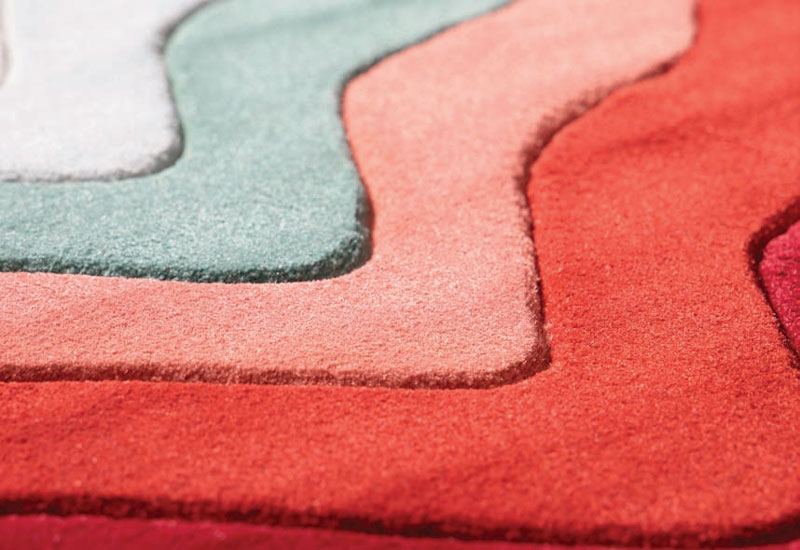
DALTON, Ga. — December 2, 2021 — Zeftron® nylon, a premium nylon 6 solution-dyed yarn system for commercial carpets, announces a new design resource to inspire commercial interior designers to experiment and think about ways to take risks in their designs for commercial interior settings, including carpet.

Radically Modern Color dives into the unimaginable ways colors are being combined and applied to create everything from apparel to home decor. The new booklet can be downloaded for free at www.zeftronnylon.com/index/RadicalColors.aspx.

“If this new decade has delivered anything, it’s disruption. In 18 months we’ve seen major wildfires, political protests, and a global pandemic,” said Tim Blount, Zeftron nylon business leader.

“We’ve also seen a shift in the way color is being used. The color trends and themes in the report run the range from psychedelic looks to the pairing of colors once thought unimaginable. It’s exciting to see the imaginative ways in which colors and color applications are being used today across so many sectors moving to brighter hues and combinations that are reminiscent of the 60s and the last time we were in the midst of such a revolutionary era.”

Radically Modern Color focuses on four trends that have emerged, discussing what they are, where they are being used and how they are changing design.  The trends include:

  • The Psychedelic Comeback  – The 60s are back and so are the bright colors and sinuous shapes prominent then.
  • Building Blocks – Color blocking is going to the extreme by pairing colors next to each other on the color wheel for a bold effect.
  • Blurring The Lines – Gradients are all the rage and so is the Guassian blur.
  • Clash Of The Colors – Pairing bubble-gum pink, red and maroon may have clashed in the past, but not so in this new decade.

Radically Modern Color draws on Zeftron’s role as a leading supplier of premium nylon for commercial broadloom carpets, which are specified for myriad commercial settings. Zeftron nylon offers designers a proven color palette of more than 120 quality colors.

Posted December 7, 2021

Source: Zeftron

Teijin Frontier’s New Breathable Material Adapts To Perspiration

TOKYO — December 7, 2021 — Teijin Frontier Co., Ltd., the Teijin Group’s fibers and products converting company, announced today that it has developed a highly comfortable knitted fabric that responds to perspiration by changing its structure three-dimensionally, thereby increasing breathability and eliminating the feeling of stuffiness.

Teijin Frontier will market its new self-adjusting fabric as a core product for year-round sports and outdoor use beginning in fiscal 2023. Wide ranging of applications will include casual and functional apparel and uniforms as well as various materials. The company expects to target sales of 250 thousand meters in fiscal 2024.

Teijin Frontier’s new self-adjusting fabric has a solid knitted fabric structure that changes shape in three directions in response to perspiration thanks to its specially textured, side-by-side (S/S) composite yarn made from two types of polymers, each with different hygroscopicity. The yarn’s structure also includes a coiled crimp.

Technical properties of new adaptive fabric

Spinning

  • Side-by-side composite yarn made with two polymers, each with different hygroscopicity
  • Specially textured yarn combines side-by-side composite and ultra-fine crimped yarns

Knitting

  • Special solid knitted fabric with a three-dimensional yarn structure
  • Excellent wind protection due to high-density knitted design (ventilation volume: 50cc/cm2/sec or less)

Dyeing

  • Dyeing technology contributes to adaptive function
  • Quality-control technology enhances breathability, dimensional changes and quality

Features of new adaptive fabric

Functionality

  • Highly adaptive breathability (about double that before sweating)
  • Minimal dimensional changes (5% or less both vertically and horizontally)
  • Excellent wind protection (ventilation rate of 50cc/cm2/sec or less)
  • Soft texture and attractive appearance
  • Combines with materials offering balanced functions or those for preventing sweat stains, sweat-induced chill or body odor

Eco-friendliness

  • Combines with recycled polyester
  • Adaptive breathability contributes to energy saving

In 2009, Teijin Frontier began offering a S/S composite yarn made with polymers of varying hygroscopicity and fabric in which the stitches open and close in response to perspiration. However, since the fabric’s stitches open wide in the presence of perspiration, causing clothing sizes to change significantly, it was necessary to limit stitch opening to a practical level for commercial applications.

Posted December 7, 2021

Source: Teijin Frontier

Lectra And Gerber Boost Fashion Ecosystem Productivity With Patternmaking Solution Interoperability

PARIS — December 7, 2021 — Lectra and Gerber announce that their patternmaking users will now be able to easily exchange CAD digital assets between their Modaris and AccuMark software to unleash productivity in the fashion ecosystem.

CAD systems abound in the modern fashion industry. Due to the diversity of user needs and required functions, designers, pattern makers, developers and manufacturing teams often work with different systems and platforms. Therefore, compatibility is essential. However, interoperability among various CAD systems has been a major challenge for the industry.

Thanks to the synergies created by the integration of Lectra and Gerber, Modaris and AccuMark customers now have access to modules that make the pattern conversion process quick and accurate. For Modaris users, Pattern Converter is a web application that enables companies to convert files in the AccuMark format into the Modaris format with a simple drag and drop. AccuMark users will be able to use Data Conversion Utility or Pattern Design, both of which are fully embedded in the AccuMark software, to convert Modaris patterns to the AccuMark format. Not only do these intuitive, easy-to-use applications eliminate the time-consuming, error-prone manual conversion process but they also enable companies to reduce costs linked to data conversion, open up the scope of collaboration and boost productivity by streamlining communication between teams and departments.

“Interoperability and data reliability represent a major challenge in the fashion industry. We understand that Lectra and Gerber customers have been using a mix of programs in their ecosystem for decades. Providing them with the flexibility they need to work in faster fashion cycles is our top priority. We are working on even more ways to ease the operations of our customers, no matter what tools and processes they use” says Céline Choussy, chief product officer.

Posted December 7, 2021

Source: Lectra

Biomimicry Institute Partnership Awarded Multi-Million Dollar Grant To Pilot Decomposition Of Textile Waste

LONDON — December 7, 2021 — The Biomimicry Institute has been awarded 2.5 million  euros to lead a multi-year initiative called Design for Decomposition. By embracing true decomposition — the way leaves break down into soil to build healthy ecosystems — the initiative will demonstrate scalable new pathways for the ~92 million tonnes of fashion waste discarded annually. The initiative is an ambitious follow-up to the Institute’s The Nature of Fashion report in 2020, which identified decomposition as the missing link for the sector.

Together with Laudes Foundation, Hong Kong Research Institute of Textiles and Apparel (HKRITA), Yale Center for Green Chemistry and Green Engineering, Metabolic Institute, The OR Foundation, and Celery Design, the Biomimicry Institute will pilot technologies that convert wasted clothes and textiles into biocompatible raw materials. The multi-year Design for Decomposition initiative will host pilots in Western Europe and Ghana, testing the most viable decomposition technologies that are commercially viable but have yet to scale.
The initiative begins with a deep-dive into biological research about the various types and circumstances of natural decomposition and then matches those approaches to the hundreds of known decomposition technologies to determine which best model nature. In the pilot phase these approaches will be tested in Accra, Ghana, which receives about 15 million used garments each week, and also in a large city like Amsterdam or Berlin with more established waste management infrastructure. Simultaneously, researchers at Yale will be taking a hard look at what really decomposes and how.

“Determining the rate or speed at which molecules degrade in the environment is of crucial importance to assess risks to our own health and health of the environment. While experiments to assess the biodegradation of chemicals when in the environment have been developed and are routinely carried out, these have several limitations that make it hard to predict the fate of chemicals and materials in the ‘real’ environment,” explained Dr. Paul Anastas, Director of the Center for Green Chemistry and Green Engineering at Yale. “Our goal is to close that gap.”
To avert some of the worst effects of a global industry that produces 100 billion garments each year for a population of 7.5 billion, a new approach is needed for the fashion sector. In the last 25 years, the amount of clothing bought in the EU per person has increased by 40%, following a sharp fall in prices. Europeans on average discard about 11 kilos of clothing every year, with some used items shipped overseas to places like Accra but about 87% incinerated or landfilled1, including the donated clothes people were hoping would have a second owner. But with landfills closing, new ones too costly to make, and incinerators under scrutiny for carbon emissions, a new option — or a very old one — is increasingly necessary.

“Nature has primary producers, consumers, and decomposers, and all rely on dispersal, entropy. Without all three there is no cadence to life,” said Beth Rattner, Executive Director for the Biomimicry Institute. “If the fashion sector is going to be a force for good on the planet, it has to follow the same laws of nature. The North Star is not a shirt that becomes another shirt, but a shirt that subsidizes the regenerative fashion system we all know is possible.”

With catalytic funding from Laudes Foundation, the initiative is part of its fashion materials portfolio, which supports brave, innovative efforts that inspire and challenge the industry to harness its power for good. “Demonstrating that decomposition can put fashion back into natural resource cycles will be a powerful proof point for fashion and its allied industries, and a bold step towards reversing the environmental damage the industry has created thus far,” said Anita Chester, Head of Materials at Laudes Foundation. “We are thrilled to support this consortium led by Biomimicry Institute, and eagerly await the results of their game-changing pilots to scale bio-compatible solutions for the fashion industry at large.”

More than a third of all microplastic pollution — some 500,000 tonnes — are released each year from clothing, most ending up in oceans. Knowing that over 60% of garments are plastic-based and nearly all apparel is made with toxic processes, dyes, and coatings, the foremost question in the initiative is: what will this post-consumer waste decompose into that is not hazardous? All decomposition technologies are being screened through this lens, and the team has engaged toxicology partners from the Scripps Institution of Oceanography at UC San Diego, University of Ghana, and Yale.

“The end-of-life management of waste is a huge and complex problem that sits at the interface of the biosphere and the technosphere. We must find alternative pathways for handling the myriad of natural and synthetic materials embodied in the products we consume,” said Savanna Browne-Wilkinson of Metabolic Institute. “This is a critical and under-represented part of the current discourse on industrial transformation and will play an important role in how we design a regenerative, inclusive, and circular bioeconomy.”
After proving that advanced decomposition is viable locally, the joint partnership plans to prove that this system change can scale globally.

The OR Foundation, leading the work in Accra, Ghana, sums up the schism humans often experience around what we buy versus our place on the planet: “Waste makes visible our separation from nature and yet this separation is rarely in focus. We are excited to be part of this initiative, because the goal is not to maintain a false sense of control, attempting to perpetually juggle products above nature, but rather the goal is to work with nature, to find our place within the ecosystem.”

Reflecting on the scale of the problem and the goals of the initiative to address this volume, Edwin Keh, CEO of HKRITA, remarked, “It doesn’t get much more ambitious than this.”

The consortium is looking for more partners, technologies, pilot sites, and funders who want to tackle post-consumer fashion waste.

1 European Parliament

Posted December 7, 2021

Source: Biomimicry Institute

High-Performance Structural Materials Company Materia Inc. To Join ExxonMobil Chemical As Wholly-Owned Subsidiary

PASADENA, Calif. — December 7, 2021 — Materia Inc., a high-performance structural materials company that has pioneered the development of a Nobel Prize-winning technology for making a new class of polymers, today announced that it has been acquired by ExxonMobil Chemical Co., a division of ExxonMobil Corp.

This acquisition couples Materia’s Nobel Prize-winning technology with ExxonMobil’s complimentary proprietary processes and world-class manufacturing capabilities to bring these new sustainable structural polymers to greater commercial scale.

Materia has been working since its formation in 1999 on the development and commercialization of a new class of ruthenium catalysts and ROMP chemistry invented by Caltech Professor Robert Grubbs, for which Dr. Grubbs received a Noble Prize in Chemistry in 2005.

“Materia’s flagship polymer family, Proxima™, draws upon the ROMP catalyst technology to produce hydrocarbon based products with significant performance and sustainability advantages,” said Cliff Post, Materia’s president and CEO, “This technology can be used to form composites that exhibit strength and stiffness equivalent to steel, with significantly reduced weight.”

With initial support from CalTech and private investor capital, Materia has achieved commercial applications in several sectors, including oil & gas and industrial molding applications. In 2016, Materia received a $2 million grant from the Department of Energy to explore the feasibility of molding hydrogen tanks from a Proxima/carbon fiber composite.

Since 2017, ExxonMobil and Materia have been collaborating to research further uses for Proxima under a joint development agreement, including wind blade and anti-corrosion coatings. The technology could enable the manufacture of longer and more durable wind turbine blades for more efficient renewable energy generation. ExxonMobil anticipates expanding the scope of applications for Proxima, including parts for electric vehicles and sustainable construction projects.

“We are excited to begin this new chapter with ExxonMobil in our mission to deliver next-generation materials for a more sustainable world,” said Ray Roberge, chairman of the board of Materia Inc. “This development marks the culmination of decades of basic science research made possible by Caltech and all of Materia’s shareholders, especially Michael M. Kellen and Andrew S. Gundlach of Bleichroeder LLC, and the Dr. Alfred J. Bader and Joseph Bernstein families. Materia employees are excited to pursue the commercialization of these important technologies.”

The acquisition includes Materia’s extensive portfolio of patents and intellectual property, its headquarters, research and technology center in Pasadena, Calif., and its manufacturing facility in Huntsville, Texas. ExxonMobil intends to operate the business under the Materia company name as a wholly owned subsidiary.

Posted December 7, 2021

Source: Materia Inc.

Sponsors