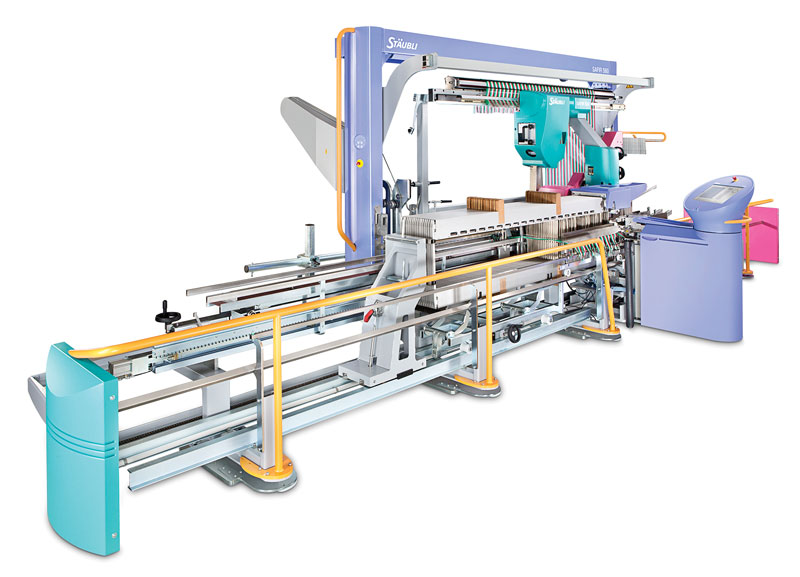
Stäubli Textile offers automation solutions for today’s modern weaving mills including the SAFIR automatic drawing-in machines.
TW Special Report
To succeed in today’s ever-more competitive textile industry, weaving mills must meet a challenging range of essential requirements, including optimized production workflow, high-quality output, cost-efficient operation and on-time delivery. Mills must examine every step of their production process to identify and exploit their optimization potential. Automation along the entire process chain is central in this effort. Switzerland-based Stäubli Group is a competent global partner for mills that want to increase their productivity, delivering automation solutions for weaving preparation, weaving all sorts of fabrics, and mastering new application challenges.
SAFIR automatic drawing-in machines enable the mill’s drawing-in department to supply the required amount of completely drawn-in warp beams to the weaving department. The weaving harness and reed are prepared to perfection, according to Stäubli, with no crossed threads, no multiple threads in heddle, and no drop-wire or repeat errors. This improves the ratio of weaving machines per operator. It also reduces downtime, thereby boosting the efficiency and productivity of each weaving machine. The use of automatic instead of manual drawing-in typically improves the mill’s overall weaving efficiency by 1 to 4 percent or more, which over a year can amount to several hundred thousand meters of fabric, depending on the size of the mill.
The trend toward higher-quality fabrics and the use of increasingly finer and more specific yarns increases the number and complexity of warp threads to be drawn in. If the mill relies on manual drawing in, more workers will be required. But finding and keeping suitable workers in this field is becoming increasingly difficult. The willingness to do such work is disappearing, and the organizational effort required for manual drawing in is significant. Another drawback of manual drawing in is that human error creeps in as the thousands of warp threads are drawn into the shafts, heddles, reed and drop wires pinned onto the weaving machine.
When it comes to warp changes, Stäubli Textile provides a complete range of warp-tying solutions that can handle the entire spectrum of fibers and filaments, from the finest silk to coarse polypropylene tape. These high-precision machines are reliable workhorses that can be easily integrated into the workflow of any weaving mill. They feature many state-of-the-art technologies like automatic docking to the warp and a unique auto-reverse function that repeats the yarn separation without operator intervention when a double end is detected.
Stäubli Textile division collaborates with the Stäubli Group’s Robotics division to develop new automation solutions for the textile industry. Synergies and intensive know-how exchange among the 600 research and development specialists and application engineers in the Stäubli Group have led to new automation examples like pick and pack bobbin handling, and solutions for loading yarn bobbins on preparation creels for both direct or sectional beaming. Stäubli robots can be designed for any application in any industry where speed, precision, and reliability are required. The comprehensive range of robots — including industrial, collaborative, mobile, and AGV — are all Industry 4.0 compliant to support industry transformation. Textile industrials can count on the Stäubli Group to support their efficient production with proven automation solutions today and new leading-edge solutions tomorrow.
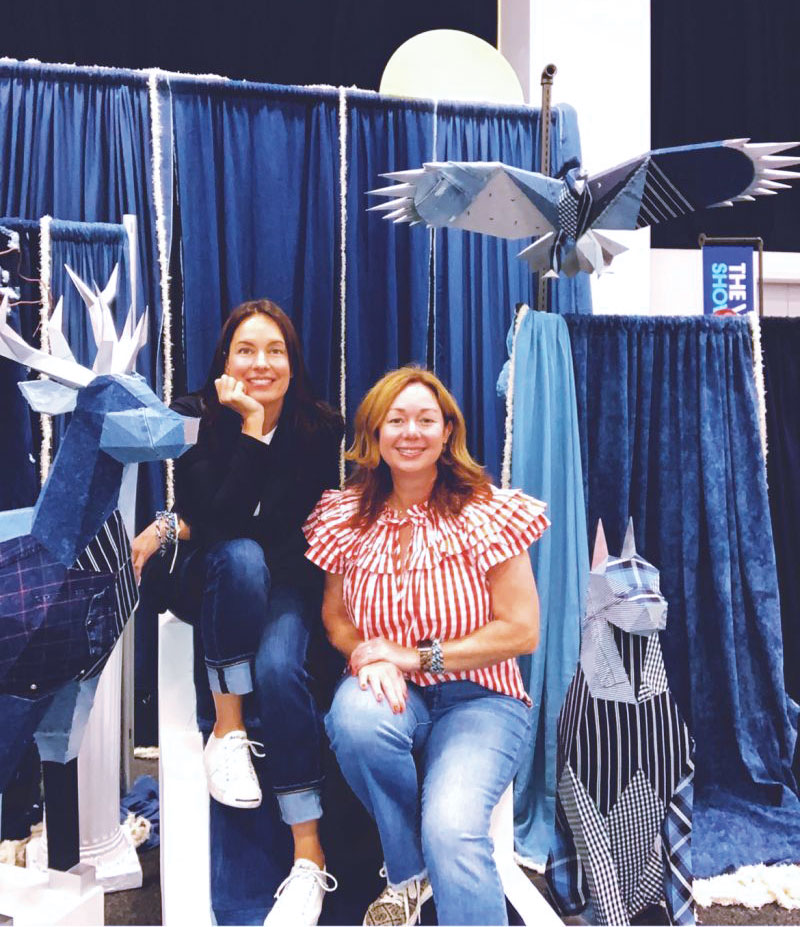
Co-founder and CEO of Intrinsic Advanced Materials and Co-inventor of CiCLO technology Andrea Ferris (left) and Cheryl Smyre, director, Advanced Materials, Parkdale, are teammates leading the Intrinsic Advanced Materials joint venture.
Intrinsic Advanced Materials — a joint venture between Intrinsic Textiles Group and Parkdale Advanced Materials — offers a solution to man-made microfiber pollution with its CiCLO® technology.
TW Special Report
Microplastics — defined by the U.S. National Oceanic and Atmospheric Administration as any piece of plastic less than 5 millimeters in length — are harmful to marine and aquatic life, and, like it or not, textiles have been found to be a contributor to microplastics in the environment in the form of microfibers. Such particles are too small to feasibly recover and once in the environment, they persist because they do not biodegrade naturally. The full extent of the problem is still being studied, but between the millions of tons of apparel and other textile products sent to landfills each year, as well as fiber shedding from textiles during use and laundering, much work is to be done to reduce the impact of textile fibers in the environment.
Realistically, there is no “one-size-fits-all” solution and companies are tackling the problem in a variety of ways — from developing new recycling technologies that can handle mixed waste streams to recover and recycle plastic an almost infinite number of times, to encouraging circular economies and textile reuse.
Another strategy employed by Intrinsic Textiles Group LLC focused on making man-made textile fibers biodegradable. It is impossible to ensure that no microfibers end up in the environment, so what if such tiny fibers could biodegrade in nature and reduce their environmental impact? That was the question asked by Andrea Ferris and partner Alan McIntosh when they founded Intrinsic Textiles Group and set to developing a technology they named CiCLO®.
Ferris notes on the CiCLO website that, “CiCLO fibers were invented from a conviction that ‘built to last’ shouldn’t mean ‘here forever.’”
The pair’s business and burgeoning technology eventually caught the eye of Parkdale Advanced Materials — the fibers and yarns innovation division of Parkdale Inc., Gastonia, N.C. In 2018, the two companies decided to collaborate and a joint venture company — Intrinsic Advanced Materials — was formed.
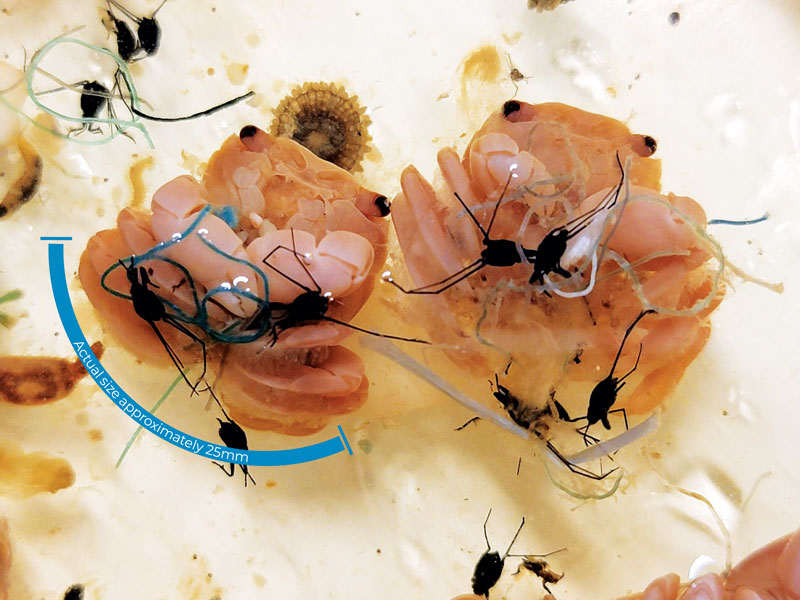
Tiny fibers can have big impact: Pelagic crabs are shown shackled by fugitive man-made microfibers in this image captured by the Moore Institute for Plastic Pollution Research.
Textile Worldrecently had the chance to discuss CiCLO’s progress with Ferris, co-founder and CEO of Intrinsic Advanced Materials and co-inventor of CiCLO technology, to learn more about the company’s beginnings, how the technology works and the product’s commercialization.
TW: Circling back to the beginning, it’s unusual for a textile technology to get its start in Silicon Valley! What was the drive behind the technology?
Ferris: CiCLO technology was the brainchild of Intrinsic Textiles Group, a textile technology start-up that spun out of a uniforms and branded merchandise agency in Silicon Valley serving hi-tech clients as well as fast casual restaurant chains. We initially invented the technology to solve our own problem. But, over years of research and development, we discovered that we’d created such an important solution to help reduce plastic pollution that it made sense to build an infrastructure to make it available to the rest of the world too.
TW: How was the concept initially conceived?
Ferris: The story goes like this. Way back in 2012, we had the realization that the large uniforms programs we were supplying were emitting massive amounts of microplastic pollution in the form of man-made fibers into the environment. We were already using recycled polyester (rPET) as a raw material, but had a crisis of conscience when considering the unavoidable pollution the products we supplied were causing. So, we set out to make a better polyester — one that would still be durable and high performance during the useful life of finished products, but one that would eventually biodegrade when it ends up in the environment as a pollutant. We knew that biodegradable plastics existed, so it sounded easy enough at the time!
More than 60 percent of the world’s textiles are made with man-mades like polyester and nylon, which fall into the category of plastics. “Plastics” have a bad rap, but polyester and nylon play an important role in our lives — delivering high performance characteristics — they comfort and protect us — durability — they last virtually forever so we can use longer and buy less — easy care — less washing and drying is required — and global availability at affordable costs. But almost all fabrics shed fibers during manufacture, use and care. The fibers, referred to as microfibers or fiber fragments, are so small that they leak into the environment. Once fugitive, they cannot be recaptured. It’s common knowledge that most plastics, including polyester and nylon, are not inherently biodegradable and persist indefinitely in the environment. Considering all this, it’s not shocking that research shows that man-made textiles are a contributor to microplastic pollution
While source reduction, 100-percent prevention of plastic pollution and completely closed loops are ideal goals, the idea for the CiCLO solution was grounded in current reality. The goal in developing CiCLO technology was to ensure that fiber fragments shed from man-made fabrics using the technology won’t persist in the environment forever the way other man-mades do.
TW: Parkdale is known for its cotton processing expertise. What about the CiCLO technology was attractive to Parkdale, and how does it complement Parkdale’s traditional business?
Ferris: As the largest spun yarn manufacturer in the Western Hemisphere, Parkdale’s production of polyester-containing yarns exceeds 500 million pounds per year. It has taken a leadership position in delivering sustainable solutions for the textile industry and CiCLO is the proven technology to mitigate microfiber pollution generated by man-made textiles. Parkdale is committed to being part of the solution by creating a path for a cleaner planet, and that is transformational for the textiles industry.
TW: What did the development process look like, and how did Parkdale’s involvement contribute to a commercial product?
Ferris: The development process was long and comprehensive, starting with an investigation into existing biodegradable technologies and biopolymers. We found that while there were some innovative materials in the market, there was nothing designed specifically for the requirements of high-performance textiles. By that, I mean we needed a technology with safe ingredients that could be blended homogeneously, spun efficiently with conventional and recycled polyester using existing equipment, dyed and finished conventionally, with no loss of mechanical characteristics or durability … but that also eventually biodegraded at greatly accelerated rates when fugitive as a pollutant in the environment. The technology didn’t exist, so we made it! It took four years of trial and error, relationship building, raw materials sourcing and evaluation, and a sizable — and ongoing — financial investment in third-party lab testing for performance and biodegradation.
The joint venture with Parkdale has been instrumental in scaling CiCLO technology, from contributing its expertise to optimizing the formulation for spinning to transforming the company from a startup with limited resources and reach to a meaningful textile technology business. Parkdale’s size, textile industry relationships and sincere commitment to innovative solutions that improve lives and sustain the planet make it the perfect company to help CiCLO polyester become the new industry standard globally.
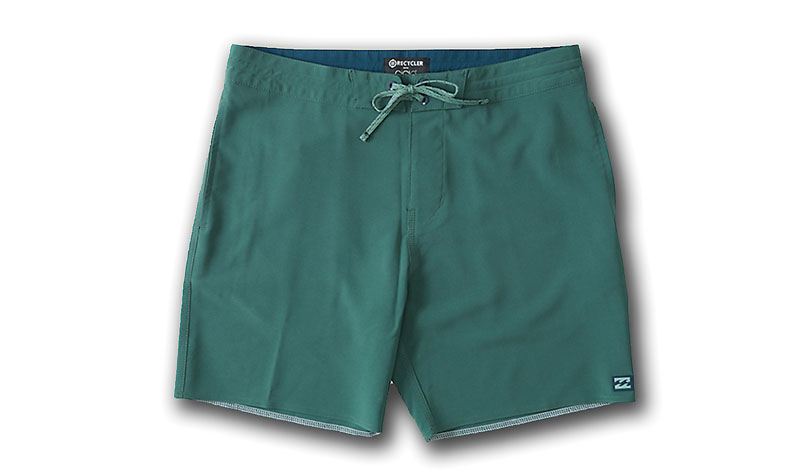
Australia-based lifestyle and technical clothing brand Billabong has adopted CiCLO® and currently offers boardshorts and wetsuits featuring the technology.
TW: For readers not familiar with CiCLO technology, what is it and how does it work? What types of man-made fibers are compatible with the technology?
Ferris: CiCLO technology gets blended with conventional or recycled polyester and nylon during melt extrusion at the very beginning of the fiber manufacturing process. It becomes permanently embedded in the fiber, so it never washes out. In the simplest of terms, it provides nutrients that attract and act as a food source for microbes, allowing microbes to breakdown and digest — or biodegrade — the active ingredients as well as the surrounding polymer.
The process can be likened to how other natural and inherently biodegradable materials break down in the natural uncontrolled environments. Just like a wool sweater won’t biodegrade during manufacturing, use, care, or in the closet, neither will CiCLO polyester or nylon. Biodegradation of any biodegradable materials requires the presence of moisture and microbes over extended periods of time.
TW: The technology is “scientifically proven.” How is the technology tested for biodegradation and what sort of data supports those claims?
Ferris: The efficacy of CiCLO technology has been scientifically proven by long term biodegradation studies conducted by third-party labs, including Intertek and Bureau Veritas among others, using internationally recognized ASTM Test Methods that simulate environments where man-made fibers are prolific pollutants — wastewater treatment plant sludge, natural soil, anaerobic digester landfill conditions and sea water.
Biodegradation is a complex topic, as is the testing. We often give long presentations on these topics alone. We share comparative long-term data to prove greatly accelerated biodegradation, but no claims can or should be made about “how fast” a biodegradable material will biodegrade in natural, uncontrolled environments. Think about it … every drop of seawater, square foot of landfill, and field of soil varies greatly — from nutrients to moisture to diversity and density of microbes, absence or presence of oxygen, temperature, among other factors.
If I could leave readers with two takeaways on the topic of biodegradation it would be that first the length of time it takes anything that is biodegradable — think wool, cotton or paper, for example — to biodegrade will vary based on many factors including the material properties and external factors; and second, years of third-party testing proves that CiCLO polyester and nylon biodegrade at greatly accelerated rates versus to comparable non-CiCLO polyester and nylon in wastewater treatment plant sludge, natural soil, anaerobic digester landfill conditions and sea water.
TW: During development, what were the challenges and were there any roadblocks?
Ferris: We had some bumps in the road along the way when it came to biodegradation testing.
We do not extrapolate data, and full biodegradation studies can take a few years. We went to market using one primary lab but quickly realized that brands and retailers wanted to see triangulated data from multiple labs. There aren’t a lot of labs that offer biodegradation testing, and the test environments can be challenging to manage because they are living systems. Even the most reputable labs sometimes have systems die and need to restart experiments, adding to the already long time frames. Over the past four years, we have invested heavily in building relationships with third-party lab resources and conducting additional long-term studies to corroborate data. Ongoing testing is a top priority. Our research and development team always has multiple studies in the works, and we’re committed to spot testing materials in the market.
TW: Have companies been quick to adopt the technology?
Ferris: My semi-joking answer is that “quick” and “textile development” seem to be competing concepts. CiCLO technology may break the world record for most highly vetted textile technology ever to be commercialized!
My serious answer is that we find it can take two to three years from the time a brand shows interest in CiCLO fibers to when its CiCLO-branded products stock shelves. Coming from a textile background, we understand this process and appreciate the due diligence on our clients’ part. We launched in 2017 and are now seeing new products coming to market every week from brands we have been working with for years. There’s truth to the statement that the day you plant the seed isn’t the day you eat the fruit.
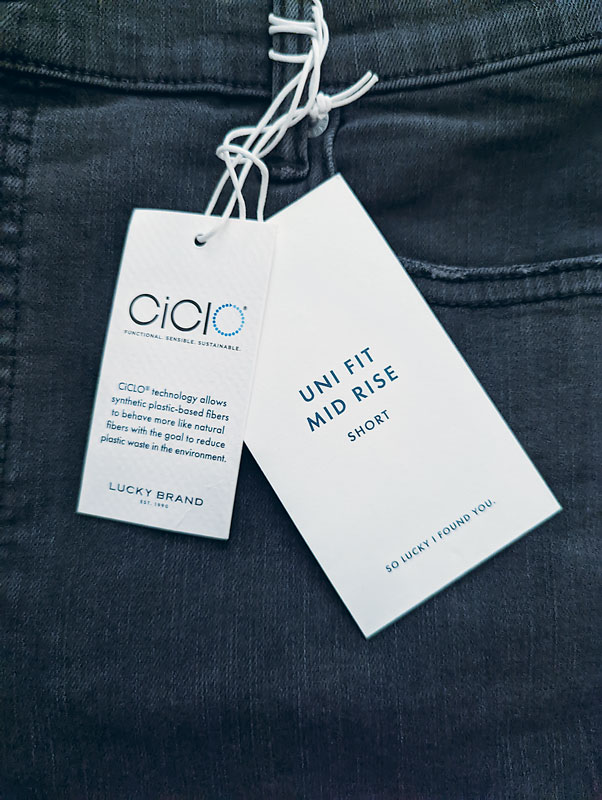
Lucky Brand is opting to use hangtags on its products featuring CiCLO® to educate consumers about the technology.
TW: Who has adopted and are any brands currently featuring the technology in consumer products? Is the product branded and marketed to consumers using hangtag programs?
Ferris: Products made with CiCLO fiber have been available at retail since early 2020. It’s used widely in apparel and home textiles like bedding. Some adopters include Girlfriend Collective, Billabong, Definite Articles, Oakley, Aeropostale, Junes Bags, Lucky Brand, Kindthread, DCK Boardshorts, Sheets & Giggles, Finisterre, and Nimble. CiCLO branded products can be found at Target, Macy’s, Bed Bath & Beyond, Urban Outfitters, Madewell, Free People, and many more retailers.
We offer CiCLO hangtags upon request, which is tied into our traceability program, that many brands utilize. Some choose to create tags using their brand voice and aesthetic, but that are also in line with CiCLO brand guidelines about how to communicate biodegradable plastics to consumers.
TW: Is it requested by brands or are textile manufacturers opting to use the technology to attract customers to their textile products?
Ferris: Both, and the source of interest has evolved over time. As a new company and technology, we initially had to prove ourselves and the product to fiber and fabric manufacturers. We couldn’t sell the product to brands until we were also able to offer CiCLO fiber availability globally. Then, we tirelessly presented the concept to brands and helped align them with our reputable fiber suppliers. Brand awareness of CiCLO technology has grown so significantly that today we get daily inquiries from both brands wanting to adopt and manufacturers wanting to supply.
TW: Is the product certified by any third-party organizations?
Ferris: The chemistry used to create CiCLO technology is ECO PASSPORT Certified by OEKO-TEX®. All components are also REACH compliant.
TW: Does CiCLO technology extend beyond textiles?
Ferris: We are solely focused on pollution caused by textiles today, and very intentionally avoid applications for unnecessary single-use plastics like straws. Our position is that biodegradation of plastics makes sense when the material unavoidably leaks into the environment and cannot be recovered or recycled.
In addition to designing with CiCLO polyester and nylon, we encourage brands and manufacturers to pursue ways to lessen shedding, filter fibers, recycle, reduce use of man-made fibers, utilize natural fibers and all the other ways the industry can work to mitigate pollution caused by textiles. CiCLO technology is just one arrow in the quiver!
TW: So, after 10 long years, you’ve proven the science, built a global infrastructure for traceability and availability, developed meaningful and responsible marketing, and adoptions are growing daily. What challenges do you face today and what keeps you up at night?
Ferris: Every business has challenges, and I’ll share our top two.
First, brands and retailers are facing real and difficult supply chain disruptions, which delays adoptions of any new technology. We’re patient, understand these issues and are here for the long haul, so this is temporary and we’re already overcoming this.
Second, there is understated confusion on the complex topic of biodegradation — how fast, in what environments and how does it work? Unfortunately, we’ve seen some bad actors doing things like having a very specific fiber, or fibers, certified compostable, then marketing a “biodegradable” yarn for textiles. BPI, a certifying body for compostability, will only certify products and materials related to food packaging and yard waste. Additionally, finished products — not just raw materials — need to be certified to qualify as compostable. Commercial compost is not an end-of-life solution for textiles.
We see it as our job to educate the industry, which we’re doing. It will continue to take time and becomes more challenging as other companies and manufacturers propose well branded — and I’d like to think well meaning — but irresponsible, unproven solutions to synthetic microfiber pollution. That’s what keeps me up at night!
The board of directors of the American Floorcovering Alliance Inc. (AFA) recently voted to dissolve the floor covering advocacy organization. Pandemic-related revenue shortfalls and event cancellations were factored into the decision. The board agreed to donate a cash balance of $135,000 that remained to Georgia Northwestern Technical College (GNTC) to support flooring industry education programs. GNTC — which added a Flooring Production program in 2019 comprising of a Flooring Production Operator and Flooring Production Technician certificate program — was selected to receive the funds based on its essential role in workforce development for the floor covering industry.
“Upon the dissolution of AFA, we determined that the balance of cash after liquidation would be best used by local colleges to assist in training and recruiting students to help fill the employment gap and provide skilled talent to the industry,” said Stephanie Manis, owner of Capital Contract Services and former executive director of AFA.
EAST PROVIDENCE, R.I. — September 29, 2022 — Motion plastics specialist igus® is expanding through investments in its Low-Cost Automation and has now acquired the majority shares in Commonplace Robotics based in Bissendorf near Osnabrück. As an integrator, Commonplace Robotics specializes in intuitive control systems and software and power electronics for robotics, both in industry and in education. The two companies have been cooperating intensively for six years. They have, among other things, developed the igus Robot Control, which supplements igus’ low-cost kinematics made from high-performance plastics.
Dr. Christian Meyer, who worked at the Fraunhofer Institute for Production Engineering and Automation at that time, founded the company Commonplace Robotics 11 years ago. The name says it all. Make the integration and operation of robots so cost-effective and easy that they become “commonplace” — meaning they can be used anywhere. The first products with a control system and proprietary power electronics were robots for teaching.
Dr. Meyer approached igus in 2016 because he found that igus robotic kinematics matched his vision of “commonplace” — cost-effective, simple, and suitable for the industry. Since then, the two companies have jointly developed products such as the iRC igus Robot Control, an actuator, and the ReBeL cobot. New developments can be quickly implemented thanks to the high level of vertical integration of Commonplace Robotics – from firmware and software to switch cabinet construction and circuit board assembly.
Driving Low-Cost Automation forward with increased innovative power
“Many customers are surprised that they can implement simple robot tasks in just 30 minutes without any programming knowledge,” said Frank Blase, CEO of igus GmbH. “We are very pleased that, following intensive collaboration over the last six years, an even more focused approach to Low-Cost Automation is now possible.”
With this acquisition, Commonplace Robotics and igus are combining their innovative strengths.
“We are looking forward to exciting technological projects with igus. The RBTX platform for low-cost robotics, operated by igus, brings new requirements from customers from all areas of the industry to our laboratories every day,” stated Dr. Meyer. “Much of this can be implemented quickly, especially as we expand with this investment.”
The latest product of the collaboration is the ReBeL cobot for 4,970 euros, including the control system. The actuator, also available as an individual component, combines igus’ plastic know-how in the gearbox with the power electronics and software from Commonplace Robotics. With six axes, the ReBeL can handle a payload of up to two kilograms with a range of 664 millimeters with a net weight of just 8.2 kilograms.
Requests and orders come from traditional areas of applications such as quality control and pick and place applications in mechanical engineering. However, new areas of applications such as restaurant automation or urban farming are now becoming more frequent.
Milliken & Company recently announced it has expanded its domestic yarn spinning capacity with the acquisition of a plant — previously known as Frontier Spinning Plant #3 and located in Mayodan, N.C. — from Montreal-based Gildan Activewear Inc. The open-end spinning facility will make yarn for Milliken’s protective fabrics, workwear, government and defense, industrial, and napery businesses. Milliken will rename the plant Two Rivers Plant.
“Investing in this plant enhances the agility of Milliken’s Textile Business and shores up our supply chain in the U.S. to benefit our customers,” stated Halsey Cook, president and CEO. “Guided by integrity and excellence in all we do, this move bolsters our supply chains to enhance customer service.”
BIOPHIL Natural Fibers, a hemp stalk processor with a processing facility in Pennsylvania, has announced plans to invest more than $10.9 million in a new operation in Lumberton, N.C. The company produces fiber and hurd from the stalks, which can be used in a variety of applications from construction to paper and nonwovens and woven textiles. The new 90,829-square-foot facility will have decortication equipment as well as parallel processing lines to further clean, refine, and cut hurd and fiber to customer specifications. The operation also will house research and development for mycelium load-bearing structural composites by Okom Wrks Labs, as well as prototyping and eventually manufacturing for hurd-based construction materials and other hemp-based products.
Biophil will hire 41 associates for the new facility including production, administrative and managerial roles with an average starting salary of more than $40,000.
In this issue of Textile World, the cover story, “CiCLO®: Just One Arrow In The Microfiber Pollution Solution Quiver” highlights three impressive points.
It is refreshing to see the U.S. textile industry acknowledge, address and invest in solving serious environmental challenges.
Environmental issues facing the industry have always been taken seriously, but on some level the industry has had a contentious relationship with environmental regulators.
There is a strong history of progress on improving the relationship and impact of
textile manufacturing on the environment — who doesn’t want clean air, clean water and efficient use of clean power?
In truth, the relationship between textile manufacturing and the environment really has moved to the next level.
Now, in some cases, effluent leaving the plant is cleaner than the water entering the plant. Technological improvements in textile dyeing, printing and finishing have reduced both consumption and waste of water, dyes and chemicals. Digital printing, new indigo technology, waterless dyeing, and improved foam and spray application of finishes are perfect examples.
The next level of improvement is focused on embracing sustainability and the full life cycle of products the industry creates.
Recycling technologies have moved from a fringe group of manufacturers to the mainstream with recycled polyester in common use. Apparel brands have been supportive and demanded sustainable solutions for their products which has encouraged manufactures to invest and innovate with new technologies.
Acknowledging the man-made microfiber pollution challenge — the impact fiber and plastic five millimeters in length loose in the environment — goes a long way to developing serious solutions.
The CiCLO story is a prime example of developing a serious solution. As Co-founder and CEO of Intrinsic Advanced Materials and Co-inventor of CiCLO technology Andrea Ferris explained: “CiCLO technology gets blended with conventional or recycled polyester and nylon during melt extrusion at the very beginning of the fiber manufacturing process. It becomes permanently embedded in the fiber, so it never washes out.”
CiCLO provides nutrients that encourages microbes to biodegrade the polyester or
nylon within which the CiCLO is embedded. One can only imagine the breadth of
environmental impact this technology will have and the proof is in the partnership.
In 2018, Intrinsic Textiles Group LLC and Parkdale Advanced Materials — the fibers
and yarns innovation division of Parkdale Inc., Gastonia, N.C. — formed a joint venture named Intrinsic Advanced Materials.
Ferris stated: “As the largest spun yarn manufacturer in the Western Hemisphere, Parkdale’s production of polyester-containing yarns exceeds 500 million pounds per
year. It has taken a leadership position in delivering sustainable solutions for the
textile industry and CiCLO is the proven technology to mitigate microfiber pollution generated by man-made textiles.”
It is that kind of leadership — acknowledging, addressing and investing in solving serious environmental challenges that takes the textile industry’s relationship with the environment to the next level — and into the future.
A memorandum of understanding (MOU) recently was signed between North Carolina State University, Gaston College and Catawba Valley Community College, and Honduras-based Central American Technological University (UNITEC) in an effort to educate and train a next-generation textile workforce using training and certificate programs as well as undergraduate and graduate degree programs. An increase in nearshoring and onshoring in Honduras, Central America and the United States is leaving the industry with a shortage of trained workers.
With almost $1 billion of textile and apparel investment in the United States and Central America anticipated this year, employee growth projections over the next five years suggest more than 10,000 new skilled workers will be needed to meet the demands of the industry in Honduras alone.
The MOU, backed by the U.S. Department of State, also creates an educational pathway to economic opportunity in Honduras and the region.
A signing ceremony was held at Gaston College in Dallas, N.C. Both U.S. and Honduran government officials — including Jose W. Fernandez, under secretary of state for Economic Growth, Energy and the Environment; Jennifer Knight, deputy assistant secretary for
Textiles, Consumer Goods and Materials at the U.S. Department of Commerce; and Hector Zelaya, private secretary to Honduran President Xiomara Castro — participated in the signing, as well as a roundtable discussion that followed. In addition, the government officials toured two of Gildan Activewear’s yarn spinning facilities in Salisbury, N.C.
After a string of months in which demand for U.S-made yarns remained remarkably high, especially considering inflation rates and a slowing economy, the past few weeks have seen a slight-to-moderate drop in inquiries and orders for a number of spinners.
“I think we’re in a lull — a temporary one, I hope — because the market is currently saturated,” said one source. Added another, “The retail pipeline looks to be full at the moment. Store shelves are generally well stocked, and our customers are hesitant to place new orders until they see how the economy goes. Fingers are crossed at this point that we can avoid a recession, but the odds of that seem to be decreasing day by day. Consumers have already begun to tighten up their pocketbooks.”
In fact, The Expectations Index, part of the Consumer Confidence Index published by The Conference Board®, although recovered slightly in August from July’s nine-year low, still remains below a reading of 80, suggesting recession risks continue. Consumer concern about inflation remains elevated, but has retreated from the high of previous months.
Cotton Prices, Sustainability Practices
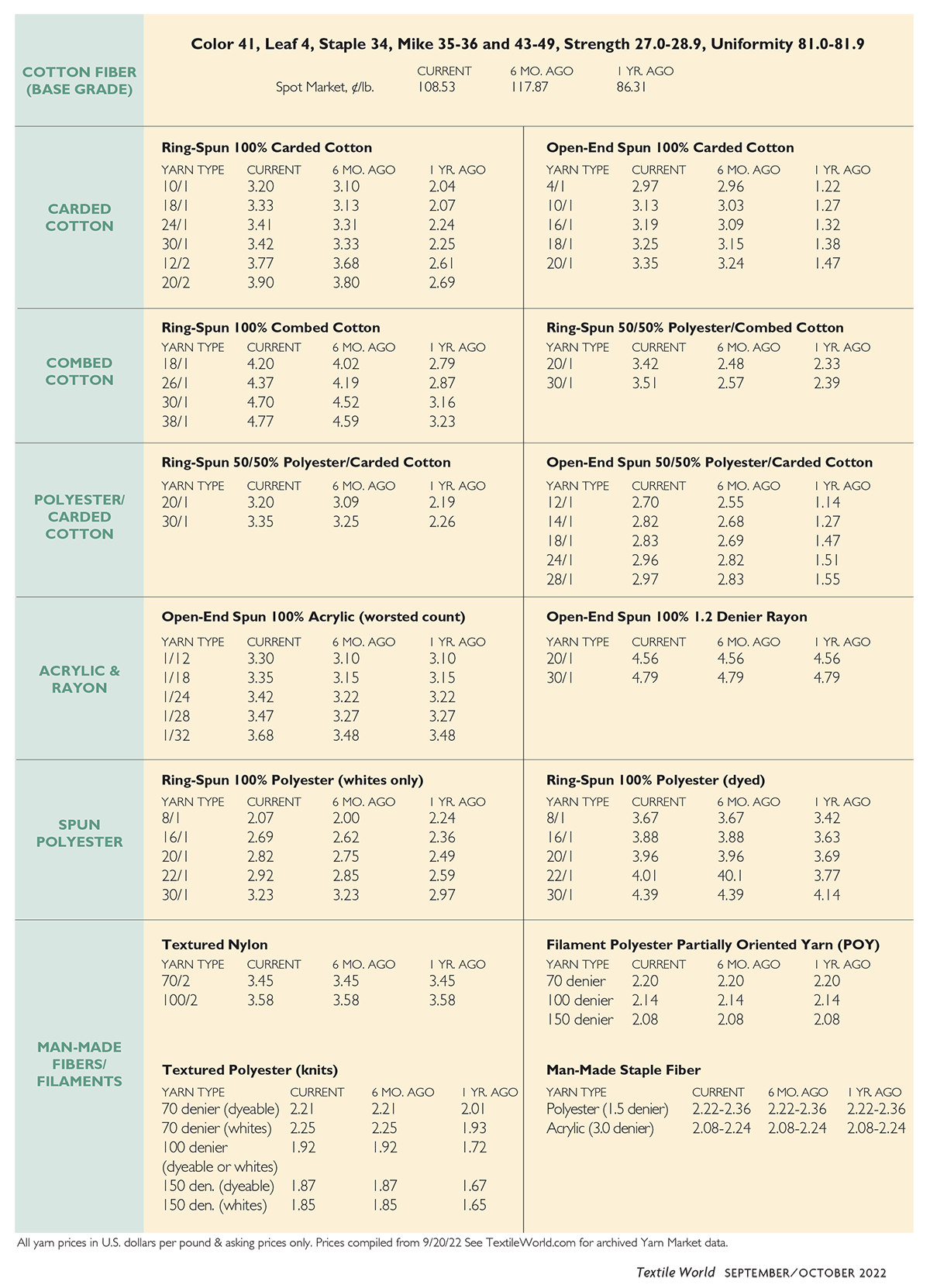
Spot quotations for the base quality of cotton (color 41, leaf 4, staple 34, mike 35-36 and 43-49, strength 27.0-28.9, and uniformity 81.0-81.9) in the seven designated markets measured by the USDA averaged 108.53 cents per pound for the week ending September 15, 2022. The weekly average was up from 90.71 cents reported for the corresponding period a year ago. Daily average quotations ranged from a high of 111.07 cents Monday, September 12 to a low of 106.10 cents Thursday, September 15. Spot transactions reported in the Daily Spot Cotton Quotations for the week ended September 15 totaled 7,467 bales. This compares to 7,613 spot transactions reported the corresponding week a year ago. Total spot transactions for the season were 20,447 bales compared to 24,772 bales during the same period a year ago.
The ICE October settlement price ended the week at 105.24 cents.
In other cotton news, Cotton Incorporated, as part of the USDA Partnership for Climate-Smart Commodities pilot project, is collaborating with industry leaders to focus on increasing the adoption of climate-smart agriculture practices. The project will build markets for climate-smart cotton and provide technical and financial assistance to more than 1,000 U.S. cotton farmers to advance adoption of climate-smart practices on more than one million acres. This will allow the production of more than four million bales of climate-smart cotton over five years.
“The climate-smart cotton program brings together USDA with private industry resources to increase the production and demand for climate-smart cotton that will help the U.S. cotton industry meet the ten-year sustainability goals,” noted Dr. Jesse Daystar, vice president and chief sustainability officer for Cotton Incorporated.
Eastman, Patagonia® Collaborate On T-shirts
Eastman, maker of Naia™ Renew sustainable fibers and yarns, is collaborating with Patagonia® to offer a limited run of T-shirts made with Naia Renew ES — Eastman’s latest fiber offering made with increased recycled content.
Named for its enhanced sustainability, Naia Renew ES is made with 60 percent recycled content. Unlike other cellulose-based yarns and fibers, this option requires fewer virgin materials to make an environmentally friendly product. Naia Renew ES is made from a combination of 40 percent molecularly recycled waste material, 20 percent recycled cellulose, and 40 percent renewable wood pulp.
The 20 percent recycled cellulose comes from waste materials, textiles waste and non-forest-derived cellulose waste. This innovation is made possible through Eastman’s continuous efforts to collaborate with eco-conscious partners throughout the value chain. For example, the Naia team has partnered with GP Cellulose, a pulp supplier with a focus on sustainability, to integrate renewable forest fibers and non-forest fiber solutions into its feedstock.
The remaining 40 percent recycled content comes from Eastman’s molecular recycling technology that breaks down hard-to-recycle waste materials like plastic packaging and old carpet into fundamental building blocks to produce the acetic acid used to make cellulose acetate yarn and fiber.
The Washington-based National Council of Textile Organizations (NCTO) recently hosted two roundtables — one with Representative Greg Murphy (R-N.C.) and a second with Congresswoman Kathy Manning (D-N.C.) — and both featuring textile executives from the fiber, yarn, fabric and finished textile product sectors. The meetings were designed to highlight the importance of the industry and urge the lawmakers to back policies that support the competitiveness of the U.S. textile industry.
The event with Representative Murphy was hosted by East Carolina University in Greenville, N.C.; while Unifi Inc. hosted the roundtable with Representative Manning at its headquarters in Greensboro, N.C.
Executives spoke about the innovative and sustainable production practices, as well as the industry’s contribution to the state of North Carolina. According to U.S. government data, textile jobs employ more than 36,000 people in the state and support a further 108,000 jobs. The state also leads the nation with its $2.7 billion in textile-related exports.
Executives also raised priority issues for the industry in Washington such as maintaining the yarn forward rules of origin in the Dominican Republic-Central America Free Trade Agreement (CAFTA-DR), advancing the Miscellaneous Tariff Bill, and upholding buy American and Berry Amendment procurement policies, among other issues,
“As the proud representative for North Carolina on the Ways and Means Committee, it’s an honor to work alongside NCTO to promote American jobs, grow our state economy, and protect domestic manufacturing,” Representative Manning stated.
“I am thrilled to engage with industry leaders in my district, as we discuss ways to grow the U.S. textile industry and the critical role that textile manufacturers play in our local, state, and national economy,” Congresswoman Manning said.
NCTO President and CEO Kim Glas expressed her sincere appreciation to both lawmakers for participating in the meetings. “It is imperative that we have sound trade and government procurement policies that help the U.S. industry continue to grow jobs and contribute to the overall U.S economy,” Glas noted.

 Stäubli Textile offers automation solutions for today’s modern weaving mills including the SAFIR automatic drawing-in machines.