PFAS Regulation Challenges

Brian Rosenstein

Confusion about the 9,000 different perfluoroalkyl and polyfluoroalkyl substances (PFAS) makes regulation a difficult subject.

By Brian Rosenstein

The miscommunication, disinformation, and overall confusion that is being spread around the textile industry regarding perfluoroalkyl and polyfluoroalkyl substances (PFAS) is getting worse every day. Unfortunately, this may not improve any time soon. As someone who works in the textile finishing industry,

I currently spend almost half of my time dealing with PFAS in one way or another. One may think this is a good thing for a textile coater who specializes in the application of durable water repellents (DWR) and other performance-enhancing

technologies. But when discussions have nothing to do with increased sales or new business development, it’s a big problem.

I was always taught not to present a problem without a suggestion on how to solve the problem. PFAS seems to have become an exception to that “rule.”

PFAS is an umbrella term for more than 9,000 unique substances that all have one thing in common — they provide the highest level of cleanability and stain resistance. There is

no other technology on the planet that can singularly protect against water and oil-based stains at the level of a PFAS. Substitutes result in inferior protection. PFAS can be found in a wide variety of products such as automobiles,

food packaging, military equipment, cosmetics, cell phones, and yes, textiles. While a small subset of

the 9,000 substances have been linked to environmental and health hazards, the majority of them have not. More importantly, the PFAS chemicals that are currently used in the textile industry have not been tied to any health or environmental hazards. However, the small subset of harmful substances has made the entire group of chemicals a target for regulation.

Confusing Topic

So why is there so much confusion about PFAS? The biggest culprit is the fact that as an industry, our audience has changed. We’re no longer trying to sell customers on something they need and instead are dealing with regulators on science. Customers can be persuaded by science and facts. Regulators will only process enough information to fit their agenda, which leads to poor decision-making.

For example, many may have heard of the dreaded CAS# by now. Briefly, a Chemical Abstracts Service number (CAS#) is a unique identification for any given chemical that exists. There cannot be one CAS# for a group of chemicals. The definition of PFAS literally means, “many different fluorinated chemicals.” Therefore, it is virtually impossible to create one CAS# for a specific PFAS. The only solution is to identify and disclose the many individual CAS# that make up any given PFAS product. When this happens, it might be possible to assign a CAS# to one of the 9,000 different PFAS chemicals. The problem is that this is akin to revealing a chemical formula or intellectual property. Translation: no one will be getting a CAS# for PFAS right now. Unfortunately, regulators — at both federal and state levels — are continuing to ask for one specific CAS# for PFAS sold into their state. What are the product manufacturers supposed to do in this situation?

Another example of poor decision-making is illustrated by the Department of Defense (DoD), which almost passed a rule banning all PFAS on all textile materials it purchases for the U.S. military, including warfighters.

If passed, there would no longer be any alcohol or oil protection on the coveralls for our fuel handlers on aircraft carriers or surgical scrubs for doctors performing surgeries. The rule also would result in reduced protection against moisture and the elements for Kevlar® body armor.

Once moisture is introduced to Kevlar, it is no longer bulletproof. This broad-brush approach employed by the DoD to eliminate PFAS quite literally puts people’s lives in danger. Fortunately, at the eleventh hour, the Washington-based National Council of Textile Organizations (NCTO) was able to get the provision removed from the bill. But that was last year, and unfortunately, this same provision is now back on the table as part of DoD purchase plans for 2023.

Sharing The Message The Right Way

Where has the textile industry failed? The problem is education, and more importantly, the third component of education. There are three key parts when it comes to teaching an audience — content, volume and messaging.

In the textile arena, both content and volume have been maxed out. We have more detailed information and people willing to present it than is necessary. But the messaging still reflects an approach towards customers and not regulators. When textile professionals try to educate their audience, its common to see a periodic table of the elements, graphs, charts, and sometimes even a T-square. While highly accurate and irrefutable, this method of educating is not received very well by our new audience — the regulators. Especially when it’s compared to the environmentalists’ message where sensationalism is an artform. Scientists still wear pocket protectors and don’t know how to scare people. This makes exposing the truth about PFAS even harder.

Lawmakers at both the federal and state levels have all of the information they need to make sound decisions on PFAS. But sound decisions are not happening because the science is boring and doesn’t usually earn votes. While there are plenty of “teachers” out there, what is really needed is a team of PFAS-whisperers who understand the science AND can effectively convey the information to these decision-makers. This is sorely needed as soon as possible because poor decisions are being made at breakneck speed.

Some states are already beginning to pass laws based upon the confusion and misinformation. Some of the states are not looking to ban PFAS right out of the gate. They are asking instead that certain key pieces of information are reported. At least one of those states recently passed a law mandating certain PFAS reporting by January 1, 2023. Many companies already have begun collecting and preparing information to meet this new requirement. There’s only one problem — there’s nowhere to send the data. The same state who legislated reporting to begin in January isn’t expected to have its data-collection system up and running until at least April 2023. Talk about putting the cart before the horse. In the meantime, the supply chain is scrambling to address the new state regulations on PFAS while spending untold amounts of time and money. In the absence of any federal oversight, each state will devise its own method of monitoring and regulating PFAS. Currently, five states actively are trying to legislate or regulate PFAS, and none of them have the same set of “rules.” Only 45 more to go after that. What are manufacturers supposed to do?

It is a huge problem. Lawmakers and regulators are running out of their shoes in this “race” to eliminate PFAS. Personally, I just wish they would take a breath, slow down, and make a concerted effort to actually listen to the science and make educated decisions.

Solutions

How can the industry help solve this problem? By joining advocacy groups, such as NCTO, which possesses the experience and lawmaker outreach. This will give the textile industry a stronger, clearer voice in educating the individuals who are charged with making decisions in our country. PFAS is not the end of this. Once PFAS is in the rearview mirror, another topic no doubt will bubble to the surface. Maybe it will be an attempt to ban antimicrobials or flame retardants, again. Or perhaps lawmakers will try to ban cleaning products such as bleach and solvents. How’s that for irony?

Bottom line is this: Everyone reading this article either already has a product, or will have a product impacted by government regulation. The only solution is to do a better job of educating our government about what it is the textile industry does and the benefits its products offer.


Editor’s Note: Brian A. Rosenstein is CEO of Devon, Pa.-based TSG Finishing LLC, a fifth-generation family-owned high-performance finishing and coating company with facilities in Hickory and East Conover, N.C. TSG Finishing provides value-added service to all textile markets including medical, military, automotive, construction, home furnishings and filtration. The company recently announced a multiphase investment project to modernize all its primary textile finishing equipment.


DISCLAIMER: The views and opinions in this article are those of the author and do not necessarily represent official policy or position of Textile World/Textile Industries Media Group, LLC or its clients.


November/December 2022
A New Era Of Sustainability For Cotton Fabrics

DuraTech™ by Microban® is a new antimicrobial treatment specifically developed for cotton products.

By Yihong Li and Xiuzhu Fei

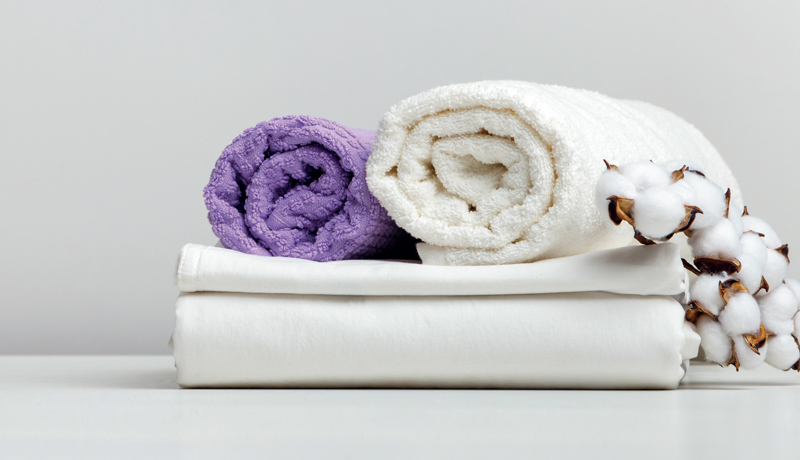
Cotton is the most extensively grown non-food crop in the world,1 and makes up a significant part of the global textiles market, accounting for a revenue share of greater than 39 percent in 2021.2 Fabric manufacturers choose this organic material for its longevity, absorbency and color retention, while consumers appreciate its softness, breathability and comfort. However, the properties of cotton that make it well suited to use in clothing and home textiles also make it susceptible to the build-up of odor-causing bacteria.

Susceptibility To Microbes

Natural cotton fibers are made from cellulose with a permeable, hydrophilic structure, making them accessible to moisture, dead skin cells, food residue, airborne dust and other contaminants from the environment. The large surface areas of sheets, towels and other cotton products can easily trap environmental contaminants, making them vulnerable to colonization by a diverse community of microorganisms. Bacterial growth on cotton fabrics causes multiple undesirable outcomes — such as discoloration, odors and degradation of the fabric — worsening product performance and increasing laundering requirements. One solution to these problems is to incorporate antimicrobial technologies during the manufacturing process, enhancing the cleanliness of cotton products and extending their lifespans.

Current Antimicrobial Technologies

Antimicrobial treatments can be applied during the exhaustion or finishing step of fabric manufacturing to provide a wide range of benefits, including improved fabric durability, odor-causing bacteria prevention, a decrease in water- and energy-intensive laundry requirements, and a reduction in the quantity of chemicals required for fabric care. Cotton materials are often treated with metal-based antimicrobial agents, such as zinc- and silver-based products, some of which may pose potential environmental concerns3 or regulatory challenges. Alternatives like quaternary ammonium compounds are more sustainable than heavy metals, but may have reduced compatibility with other additives used during the cotton manufacturing process because of the presence of cationic ions within their chemical structure. In addition, some conventional cotton finishes can suffer from poor wash durability, as many antimicrobials are water-soluble, so the treatment can be easily stripped from textiles over time during washing.4

Durable Antimicrobial Finishes For Cotton

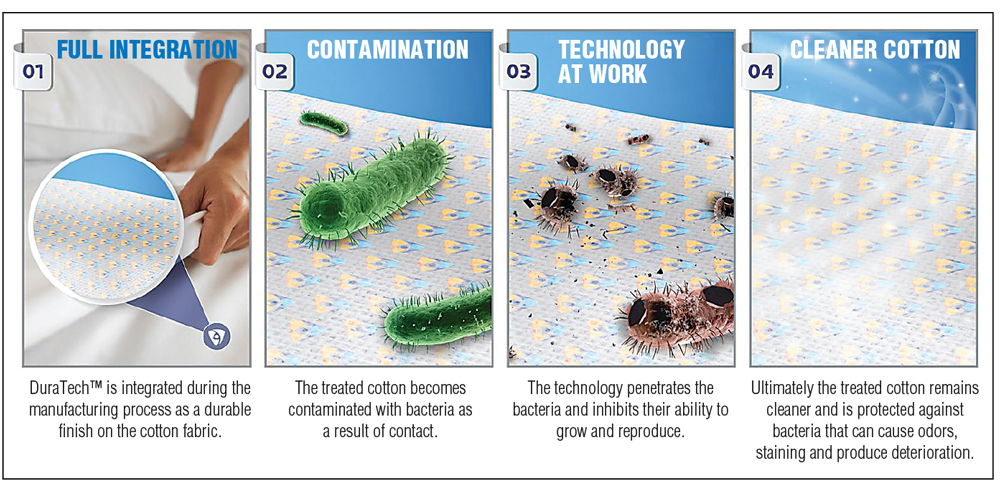
Huntersville, N.C.-based Microban International recently released a new product line — DuraTech™ by Microban® — as a durable, effective antimicrobial solution for cotton products. DuraTech uses an antimicrobial compound that is odorless and colorless. Though it is also water soluble, it can bind to cellulose via permanent covalent bonding, resulting in wash durability. The compound has been widely used in the cosmetics industry where it acts as a sustainable preservative to prevent the harmful build-up of bacteria in cosmetics and personal care products. The technology works by integrating into cotton fabric during the manufacturing process and penetrating bacteria, inhibiting the ability of microbes to reproduce.

Efficacy And Durability

The antimicrobial efficacy and wash durability of the DuraTech antimicrobial technology has undergone stringent validation following industry standard testing methodologies. These procedures involved testing multiple types of cotton — including 100-percent cotton knits for apparel, 100-percent woven cotton sheeting and 100-percent terry cotton fabrics — in line with the ISO 20743, JIS L 1902, and AATCC TM 100 standard testing methods. During testing, DuraTech-treated cotton underwent laundering and tumble-drying using a representative commercial detergent. Antimicrobial efficiency was tested by comparing quantities of bacteria known to cause cotton degradation on treated and untreated cotton samples, and relevant fabric properties were also measured before and after laundering.

DuraTech technology was assessed for its antimicrobial efficacy after multiple washes, following the AATCC LP1 washing protocol on various cotton materials. Fabric pH, color fastness and crocking fastness also were evaluated following AATCC TM 81, AATCC TM 61-2A, and AATCC TM 8 protocols, respectively. The reduction of odor in DuraTech-treated cotton products compared to untreated products was tested with the AATCC TM211 Drager method, providing real-time and visual depictions of ammonia levels using two ammonium-producing, odor-causing bacteria.

Seamless Incorporation Into Manufacturing

DuraTech consists of two water-soluble parts — the active compound and a catalyst — allowing for seamless mixing and incorporation into padding manufacturing processes without the need for polymer binders that can cause unexpected buildup on process rollers in the mill. Because of its water solubility and the absence of binders in its composition, DuraTech covalently bonds with the cellulose structure of cotton under certain conditions to impart long-lasting wash-resistant antimicrobial properties to the textile without impacting its physical properties.

When applied to cotton fabrics, the water soluble DuraTech™ finish inhibits bacterial growth to prevent stains, odors and product deterioration.

Benefits And Applications Of Antimicrobial Cotton Technologies

The expected lifespan of cotton fabrics depends on their intended use; cotton knits for seasonal garments will undergo up to 50 wash cycles, while domestic-use items like sheeting and terry towels — which are more frequently exposed to human skin and humidity — will require more regular washing. Reported findings demonstrate that DuraTech-treated cotton maintains up to 99.99-percent bacterial inhibition after 75 wash cycles compared to untreated controls. In addition, treated samples achieve up to 99-percent odor reduction after 75 washes, without compromising on other essential fabric properties.

Microban reports that DuraTech is compliant with industry standards and regulations, compatible with sustainable manufacturing processes, and safe for handlers and users. The non-heavy metal-based formula is biodegradable, and is not an aquatic hazard according to OECD test guidelines 301A, 111, and 209.5 The technology is registered with the United States Environmental Protection Agency (EPA), and Microban also is pursuing textile-specific certifications for DuraTech — like Bluesign® and Oeko-Tex® — as part of an ongoing commitment to making textile manufacturing processes more sustainable.

Built-in antimicrobial technologies can be a key tool in the cotton textile industry, seamlessly integrating into the production process to extend the usable lifespan of fabrics and enhance the end-user experience.

References
1 Cotton: Industries: WWF. World Wildlife Fund. https://www.worldwildlife.org/industries/cotton.
2 Grand View Research. Global Textile Market Size & Share Report, 2022-2030. https://www.grandviewresearch.com/industry-analysis/textile-market.
3 Roy Choudhury, A. Finishes for protection against microbial, insect and UV radiation. Principles of Textile Finishing 319-382 (2017).
4 Tessier D. Surface modification of biotextiles for medical applications. Biotextiles as Medical Implants 137-156 (2013).
5 Qian, L. & Sun, G. Durable and regenerable antimicrobial textiles: Improving efficacy and
durability of biocidal functions. J Appl Polym Sci 91, 2588-2593 (2004).


Editor’s Note: Yihong Li is senior technical manager and Xiuzhu Fei is senior formulations chemist for Textiles at Microban International, Huntersville, N.C.


November/December 2022

Kornit Issues Second Annual Impact Report

Israel-based Kornit Digital Ltd. recently shared the results of its second annual Impact Report, which details progress to date, as well as future goals for waste, chemicals, greenhouse gas emissions, energy use, product development, training, diversity and supply chain. Kornit’s strategy focuses on two fundamental pillars — Enable the Change and Be the Change — that incorporate both social and environmental performance indicators. Kornit reported key accomplishments in Climate Action and Waste Management, Green Chemistry, and Diversity and Inclusion and Community Engagement categories compared to a 2021 baseline.

Kornit Digital’s Chief Marketing Officer Omer Kulka said: “Since our founding in 2002, Kornit has dedicated itself to creating lasting change in our industry. Our renewed impact strategy further holds us accountable to that vision.”

November/December 2022

Epson Introduces Large Format Dye-Sublimation Printers

Epson has introduced the SureColor® F6470 and Surecolor F6470H — a four-color and six-color 44-inch-wide dye-sublimation printer, respectively, to its SureColor F-Series product line. The F6470 — suitable for personalized goods, apparel and home décor, among other items — offers speed of up to 820 square feet per hour (ft2/h); while the F6470H prints at speeds of up to 400 ft2/h. The expanded color options of the F6470H — CYMK plus either light cyan/light magenta, fluorescent pink/fluorescent yellow, or orange/violet — offers the ability to produce photographic panels, flags and banners, as well as meet branding color requirements.

November/December 2022

Avient Introduces Wilflex™ Epic™ Rio Inks

Avon Lake, Ohio-based Avient Specialty Inks recently launched Wilflex™ Epic™ Rio ready-for-use (RFU) standard colors. The line includes 33 new flexible cure inks for screen printing applications and replaces its Epic Standard Color portfolio, effective February 1, 2023. The inks have a lower flexible cure profile of 266 to 320°F to minimize energy use and expenses while maximizing output. According to the company, the inks also print with excellent opacity, have wet-on-wet printing capabilities, offer great stretch and a soft hand when cured.

November/December 2022

Hohenstein Partners With Sizekick

Germany-based testing, certification and research company Hohenstein has made an 1.3 million euro investment in Sizekick, an artificial intelligence technology startup company. The two will collaborate on technology to improve online shopping experiences and enable accurate sizing decisions to reduce returns and associated carbon dioxide emissions. The investment will help Sizekick launch its smartphone app in 2023.

“Our artificial intelligence is already learning thanks to the comprehensive Hohenstein database of 3D body scans,” said Jake Lydon, Sizekick’s chief technology officer. “This is an extremely big advantage for our AI.”

November/December 2022

Komar To Open Georgia Operation

Global apparel company Komar Brands — a producer of sleepwear, intimates, kids apparel and layering apparel brands for a portfolio of owned, licensed and private-label brands — has announced plans for a new manufacturing and distribution center in Bryan County, Ga. The $87 million investment, located at a Georgia Ready for Accelerated Development (GRAD) site — will create 294 jobs. The GRAD site has met certain certification requirements through the Georgia Department of Economic Development in a proactive program to help catalyze economic growth and industrial development.

November/December 2022

Sentinel Acquires L2 Brands

New York City-based private equity company Sentinel Capital Partners has acquired L2 Brands, a producer and marketer of custom apparel and headwear for collegiate, destination and leisure, and corporate markets. Founded in 1991, the company offers more than 150 styles sold under its League and Legacy brands that are made in key manufacturing facilities in Hanover, Pa., and El Salvador. Financial terms of the deal were not made public.

“I am incredibly proud of the brand stewardship, operational excellence, and passionate team that we have built at L2,” said Legacy founder and L2 CEO Paige Wingert. “Our company is well-positioned to capitalize on its differentiated business model and the strong and sustainable momentum we enjoy in our markets.”

November/December 2022

Perfectly Circular: Candiani’s Compostable Jeans

Italy-based Candiani S.p.A. has developed a stretch denim named Coreva that features organic cotton yarns wrapped around a natural rubber core yarn, resulting in a biodegradable garment.

Lab tests showed Candiani’s new Coreva stretch denim is completely biodegradable.

By Antonia Wilson

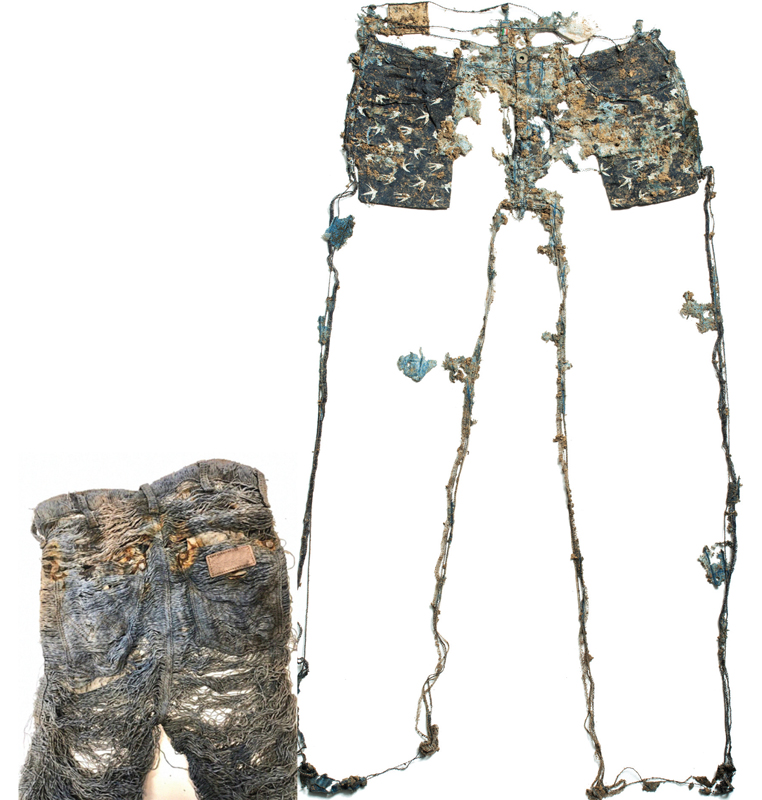
“We buried the jeans in March and they were gone in January,” CEO Alberto Candiani said of Candiani Denim’s most recent experiment.

Ten months sounds impressive, but controlled lab tests have shown the Italy-based brand’s new stretch denim, Coreva, can almost completely biodegrade in as little as six months in optimum conditions. “We tried to compost Coreva stretch jeans in our backyard and it worked,” Candiani said. “The difference between the lab test and our backyard test is that temperature and humidity are not constant in nature.” This of course means consumers could try the experiment for themselves, years down the line in their own compost bins.

Natural Rubber Component

First launched in 2020, Coreva replaces the need for petrochemical-based elastane often found in stretch denim and stretch fabrics more widely. Made using organic cotton yarns wrapped around a natural rubber core yarn — both renewable sources — the resulting fabric is plastic-free meaning it also won’t shed microplastics when washed. However, the fabric still maintains the elasticity, durability and softness expected from high-quality stretch denim. Not only does this make it fully biodegradable — able to be broken down through composting — but also more easily processed post-consumer use, with fibers separated for reuse or recycling, in part thanks to the thickness of the rubber yarn.

“At the end of life of a product it would be correct first to upcycle it, then to downcycle it and at the end to recycle it,” Candiani explained. “When you recycle a product, an old pair of jeans for example, you will be able to extract a portion of material that can be reused to spin a new yarn to make a new jeans, but the rest will inevitably be waste. Our aim is to allow that waste to return to nature with a positive impact, giving purpose to the raw materials initially extracted to make the jeans as they can now be used to grow new raw materials.”

Given that the majority of clothing globally is now made from synthetic fabrics, Candiani’s innovation has overcome a major technological challenge that could have a huge impact on the fashion industry more widely.

Circular Product

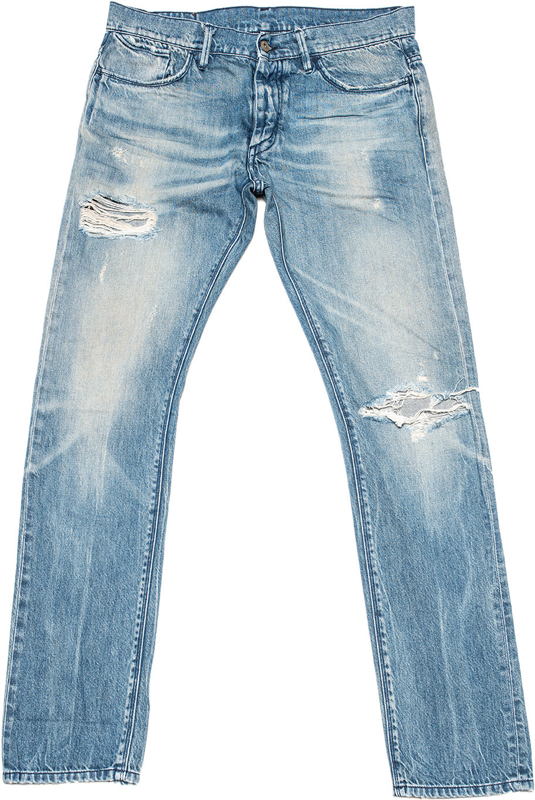
The images from the experiment speak for themselves — a dusty outline of what was once that familiar pair of jeans, with only disjointed seams and disintegrated pockets remaining. It’s a stark, but refreshing sight compared to the images saturating the media showing diggers emptying fabric waste into landfills.

The aim is to create regenerative denim goods that can be returned to the environment — to use jeans to eventually grow the cotton to make jeans. The tangible circularity of Coreva comes at a time when the need to embrace nature-based solutions in fashion and recognize biodiversity as part of the climate crisis more widely, is more urgent than ever before. While many brands talk the talk in their sustainability strategies, critics say it often remains a check-box exercise, rather than brands legitimately addressing their impacts.

Consumers are increasingly savvy, demanding transparency, traceability and tangible efforts from brands to do better; and organizations including the United Nations continue to highlight the impact of the fashion industry, not only in terms of the environmental and ethical of production, but also post-consumer waste.

“Everything I’m doing is to connect the industrial and the agricultural systems in order to neutralize impacts and, if possible, to create a final positive impact of products on the environment through regenerative properties and practices,” Candiani said. “True design means problem-solving, and fashion has to look into circularity, science and smart materials in order to engineer products — starting with solutions to the problems those same products may create at the end of their lifecycle. Ethically, this should be mandatory, but we all know that the fashion industry is still massively over-producing without caring much — the reason why we need legislation and politics to regulate the industry.”

Controlled lab tests demonstrated that
Candiani’s Coreva jeans almost completely
biodegrade in as little
as six months in
optimum conditions.

Fully Tested

Candiani has produced an impressive selection of sustainable fabrics, with a variety of certifications, but Coreva is an industry first and was trialed in collaboration with several partners including the Rodale Institute, a non-profit organization that supports regenerative agricultural research. “Rodale was, for us, the perfect partner to test Coreva’s regenerative circularity models and systems in every specific environment where organic and regenerative agriculture take place,” Candiani noted. “The idea was to test, verify and scientifically certify effectively on and in the ground Coreva’s compostability and regenerative properties.”

Experiments on the material’s biodegradability, disintegration and ecotoxicity — a measure of a substance’s harm to animals and plants — were carried out to determine compostability, in compliance with European Union standards. However, since there is not yet a dedicated certification process for compostable fabric, the closest available category of packaging was selected. All of the criteria were met, and after 12 weeks, 98.1 percent of Coreva’s original mass had disintegrated. Mung beans and barley were grown to test soil health and conditioning capacity, with results showing significantly better growth of up to 23.5 percent. More recently, growing Candiani’s hybrid, non-GMO cotton variety, Blue seed cotton — designed to produce a stronger fiber, be more resistant in the field, and require less water and chemicals — also was successfully tested.

Although Candiani does not claim to have invented stretch denim, the brand is known to be an expert in the industry. Perfecting Coreva for production still took five years of research and development, however, refining the biogen fabric to ensure it was hard-wearing in consumer use, but biodegradable post-use. “A big challenge was the original vulcanization process of that rubber which was not allowing the elastic to be fully biodegradable, but we fixed that thanks to a very solid partner that tweaked the process and gave us a yarn which is not only bio-based but also biodegradable — and compostable,” Candiani said. The final challenge was about its performance and stability, he noted. But that was an “easy fix” — perhaps unsurprising given the brand’s heritage as a leader in its field.

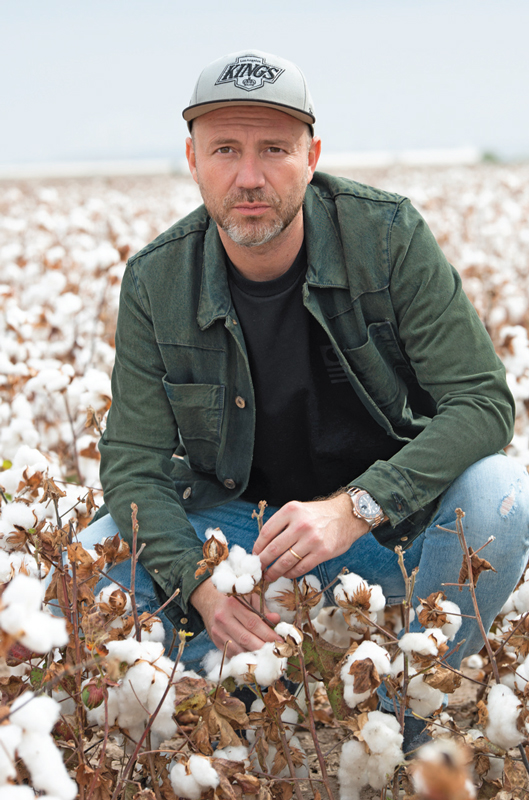
Alberto Candiani, CEO of Italy-based denim brand Candiani S.p.A.

Company Ethos

As a fourth-generation denim producer, Candiani is taking strides to innovate both the family company and the industry, and his vision to uphold heritage while embracing change follows his globally minded father. Candiani talks about sustainability as a mission based on location rather than a journey. In operation since 1938, the company’s mill in the town of Robecchetto con Induno, Italy, sits between Milan and the Alps. Since 1974, it has been located at the heart of a nature reserve called Parco Del Ticino, running alongside the River Ticino, with a hugely diverse ecosystem. Despite being Europe’s largest denim mill, with two plants covering 85,000 square meters of production, it has been dubbed the “greenest mill in the blue world” with much stricter local environmental regulations than other denim mills, Candiani reported, which the brand has fully embraced.

“No other large textile operation in the world is located inside a nature reserve,” Candiani said. “The national reserve was founded decades after the mill was originally started so we found ourselves all of a sudden surrounded by it. Being immersed inside such a delicate environment that required special attention and care made us think and act differently in terms of production and productivity, challenging us to come up with our own best practices in order to reduce our impact on nature.”

The brand has now developed a full Coreva collection, including shirts and pants in various fits and colors. British designer Stella McCartney and Dutch jeansmakers Denham are among the first brands beyond Candiani to use Coreva in their own collections. Candiani acknowledges that it may not be a swift transition across the entire industry, given that Coreva can cost 30- to 50-percent more than conventional man-made stretch denim. He remains confident, however, as Coreva outperforms synthetics in terms of elasticity, recovery and comfort, according to Candiani. The aim is to have all Candiani stretch denim made with Coreva by 2030. Alongside this, the brand will use regeneratively grown cotton in at least 50 percent of the entire production of its denim by next year.

Given the growing body of research showing the devastating pace of biodiversity loss and its link with climate change, a move towards regenerative agriculture is something more brands need to engage with. Regenerative agriculture involves a holistic, natural approach to farming, prioritizing long-term value over short-term gain. For instance, practices such as crop rotation, natural grazing patterns, avoiding chemical pesticides and planting native trees or creating wetlands to boost biodiversity. This approach not only reverses soil erosion, which helps ecosystems become more resilient against droughts, desertification and wildfires, but it can also improve the health of the soil, which allows it to absorb a greater amount of carbon from the atmosphere. And sequestering carbon, particularly through soil, is, arguably, the biggest nature-based solution to climate change. It’s not only a means to future-proof the land, but future-proof a business as well.

Candiani will no doubt continue to disrupt, innovate and reinvent — but, what could the future of fashion look like in a dream world of circularity? “Edible fabrics,” Candiani noted. “I can’t promise you yet that in the future we’ll be able to eat our jeans at the end of their lifecycle instead of throwing them away. What I can tell you for sure, is that we have already made it possible to link industrial denim production to regenerative agriculture by creating edibles, such as veggies, using old jeans as soil conditioner.”


Editor’s Note: Antonia Wilson is a freelance writer and editor.


November/December 2022

High-Tech Crochet & Warp Knitting Solutions For Surgery Applications

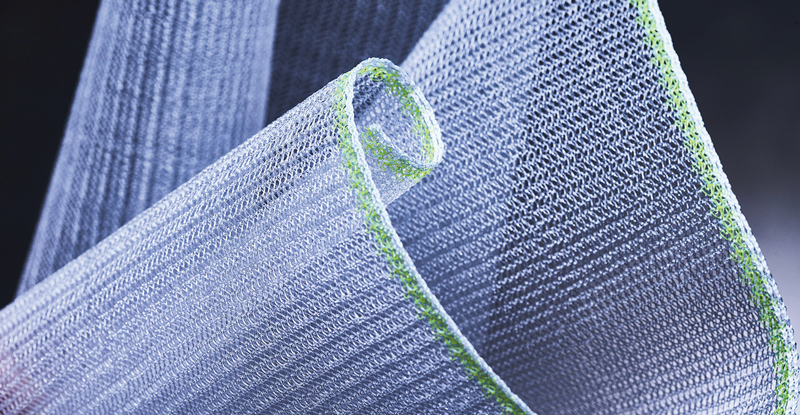
A knit medical hernia mesh

Comez offers a variety of machines that are suitable for producing highly technical medical applications.

By Fulvio Festari

Italy-based Comez International S.r.l. — a member of the Jakob Müller Group, Switzerland — specializes in engineering and manufacturing crochet and warp knitting machines. Its products are used worldwide for narrow fabric production including lace and ribbons for outerwear and lingerie accessories. However, increasing demand for technical textiles prompted Comez to develop specific solutions for highly technical applications as well.

Knit fabrics are widely used in various surgical applications and textile implants including suture materials, hernia meshes, artificial ligaments and knitted grafts, for example. The versatility of Comez knitting machinery enables its customers to design a variety of textiles that meet required specifications in terms of strength, flexibility, durability and stability for medical textiles.

Hernia Mesh

Many manufacturers choose Comez machines for hernia mesh production with customized knitted designs and a wide range of pore configurations. The mesh may be used to treat abdominal or inguinal hernias. Comez provides solutions for these knitted textile implants — such as the ACOTRONIC 8B/600 and the SNB/EL-800 machines — which are perfectly adapted to their area of use for permanent patient support. Both 2D and 3D meshes can be produced using monofilament or other materials.

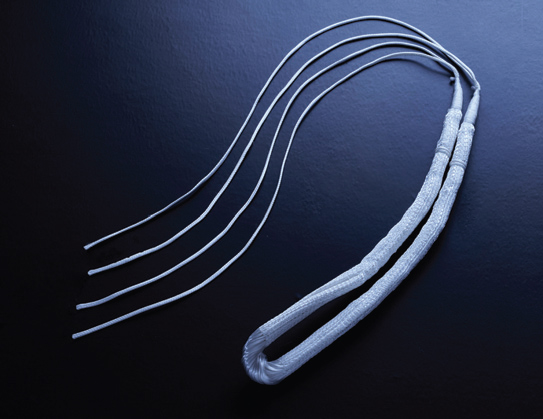
A knit artificial ligament.

Textile Ligaments

Textile ligaments, used for the reconstruction of damaged ligaments, are another innovative application that can be designed using Comez advanced knitting technology such as the ACOTRONIC 8B/600. These articles require a special texture that can be created using crochet knitting machines. The layout of the finished product — as well as its dimension — can vary according to individual requirements and surgical treatments.

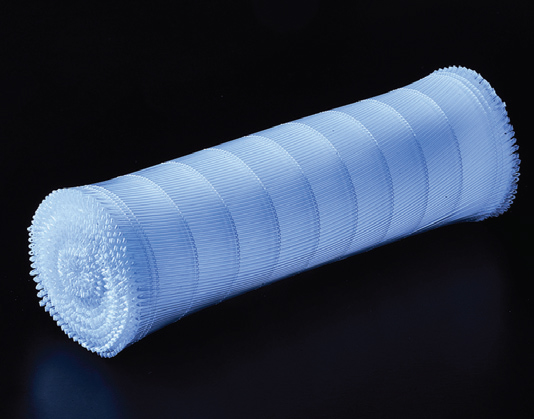
Blood filtration fabric

Blood Filtration Fabric

Artificial lungs, blood oxygenators and heat exchangers can be based on textile products. All these solutions contain membrane fabrics consisting of microcapillaries linked by crochet knitting technology. Comez designed a solution for the production of blood filtration fabrics, a special configuration of the CT-8B/829 model.


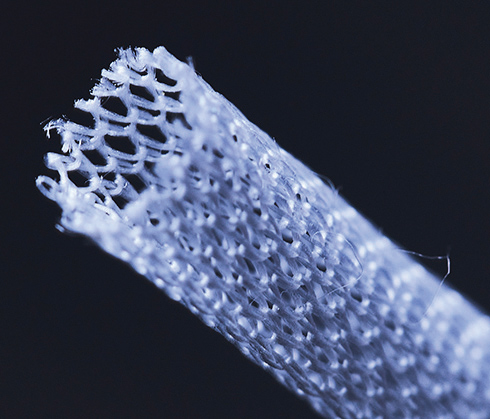
A knit vascular graft

Knitted Vein And Artery Grafts

Specific warp and crochet knitted textile vascular grafts are also used during cardiovascular surgery to replace damaged or malfunctioning arteries and veins. These grafts are made using man-made materials and are produced in different designs and diameters featuring linear and bifurcated structures. The Comez DNB/EL-32 model permits the construction of such graft materials.

Comez provides a full scope of services including consultancy, joint developments with regards to new solutions, and customized machine configurations for surgical and technical applications.


Editor’s Note: Fulvio Festari is product manager at Italy-based Comez International S.r.l.


November/December

Sponsors