Monforts Delivers Tenter With Conveyor Belt To Lohmann

Germany-based Lohmann Vliesstoffe GmbH and Co. KG has installed a Montex tenter with a
conveyor belt from A. Monforts Textilmaschinen, also based in Germany. The new equipment, which
replaces a 50-year-old tenter and belt dryer, will enable Lohmann to increase production volumes
for its nonwoven fabrics.

The Montex performs as a conventional tenter, and also provides a relaxation operation when
used with a DynAir dryer in a one-line configuration, according to Monforts. The combination range
therefore performs both production processes.

“This offers us not only savings in space, but also potential savings in operating and
maintenance costs,” said Wolfgang Riediger, Ph.D., plant manager, Lohmann. Lohmann, part of TWE
Vliesstoffwerke comprising 13 textile companies, is using the machine to finish nonwoven fabrics up
to 2.6 meters wide and weighing from 200 grams per square meter (g/m
2) to 1,500 g/m
2.

July 2005

Russell Adds 150 Jobs In Alexander City

Atlanta-based Russell Corp. will expand its knitting and dyeing activities in Alexander City, Ala.,
adding 150 jobs and moving to a 24-hour, seven-days-per-week operation. The company said an
increase in its Activewear business is driving the need for additional production and improved
manufacturing capacity utilization.

July/August 2005

Wacker ELASTOSIL 47005 Suitable For Technical Textile Applications

Germany-based Wacker-Chemie GmbH recently unveiled a new Elastosil® top coat that is suitable for
outdoor textiles, protective apparel and airbags. Elastosil 47005 transparent silicone top coat
features a silicone/organic polymer binder and nanoscale components that facilitate customization
of the coating to provide surface properties appropriate to the particular end-product.

According to the company, the coatings special surface provides superior weatherability,
resistance to aging and dirt repellency to tents and awnings. It also adheres readily to the fabric
surface, is easily processed and has a low coefficient of friction.

July 2005

Heals Launches FlexiBurn, Modifies Titan Tester

James H. Heal and Co. Ltd., England, has introduced the Heals FlexiBurn flammability testing
instrument, which features a built-in radiator and conforms to the BS EN 13772 standard for
curtains and draperies. Other features include interchangeable precision test frames and burners; a
comprehensive library of pre-programmed standards; and a versatile, multilingual user interface
with touch-screen graphic liquid crystal display. Users also may write their own standards. In
addition, Heals offers a competitively priced test chamber with instructions for self-assembly.

Heals also has modified its Titan Universal Strength Tester to include Chinese-language
software and a new T6 universal pneumatic jaw.

July/August 2005

Izod Develops Golf Shirt Using Cotton Incorporated’s Moisture-Management Technology

The Izod Retail Division of New York City-based Phillips-Van Heusen Corp. has unveiled a
women’s golf shirt featuring moisture-management technology developed by Cary, N.C.-based Cotton
Incorporated
(See ”
Quality
Fabric Of The Month
,” March 2005)
. It features exceptional wicking performance, while
retaining cottons look, comfort and feel, according to the companies.

“Now we can make cottons that literally pull moisture from the skin through the inside of the
fabric to the outside,” said William A. Rearick, director, Textile Chemistry Research, Cotton
Incorporated. “This keeps the skin and the inside of the fabric dryer. At the same time, we reduce
the tendency for the fabric to cling to the skin by 50 percent or more. Moisture spreads on the
outside of the fabric so it takes less time to dry. All this without hurting the breathability of
cotton. So in the dry state, we maintain the natural properties that make cotton so comfortable and
popular to start with.”

The new line of shirts hits Izod retail stores across the country in July, and is available
in four colors mango, clover, blueberry and black.

July/August 2005

ITG Explores Vietnam Opportunities

International Textile Group Inc. (ITG), Greensboro, N.C., and Vietnam National Textile Garment
Corp. (Vinatex), Vietnam, have agreed to enter into discussions related to mutual business
interests. Vinatex comprises 57 member companies having a combined annual industrial production
totaling approximately $594 million and a gross export value of more than $1 billion.

“We anticipate our discussions with Vinatex to be quite broad in scope and range from
commercial and technical agreements encompassing global sales and services to more specific issues
such as managing selected manufacturing plants in Vietnam,” said Wilbur L. Ross, chairman, ITG. “We
will also consider opportunities to invest in new and existing Vinatex facilities,” he added.

July/August 2005

Genencor Develops OXY-GONE® T400 Catalse Enzyme

Genencor International Inc., Palo Alto, Calif., has introduced OXY-GONE® T400. The new catalase
enzyme removes hydrogen peroxide before the dyeing process. According to the company, Oxygone T400
is effective over a wide range of temperatures (30°C to 70°C), has excellent storage stability and
exhibits the highest level of hydrogen peroxide tolerance among competitive products.

July 2005

Regitex Purchases Open-End Spinning Facility

Regitex Inc., Quebec, a manufacturer of ring-spun and protective yarns, has added a third spinning
facility to its business with the recent purchase of a nearby open-end yarn-spinning facility,
which is now doing business as Regifil. The company has hired additional employees in order to
produce acrylic and other yarns at the new plant.

July 2005

Congressmen Support Crackdown On Chinese Imports

Key members of the House of Representatives are supporting legislation that would crack down on
what they see as illegal trade practices by China in an effort to win congressional support for the
Dominican Republic-Central American Free Trade Agreement (DR-CAFTA). The legislation for the first
time would permit the United States to levy punitive import duties on illegally subsidized goods
from state economies such as China. It also would punish countries that manipulate their currencies
to gain an international trade advantage.

Rep. Phil English (R-Calif.) is sponsoring the legislation, and he received the blessing of
Rep. Bill Thomas (R-Calif.) chairman of the House Ways and Means committee. Up until this time,
Thomas has been opposed to the anti-China legislation, but he said the English bill is strong and
responsible legislation. Earlier this month, the Senate passed DR-CAFTA by a vote of 54-45, but the
outlook in the House is uncertain, as there is strong Democratic opposition and lack of support
from some Republicans, including a number of textile-state representatives who have either
announced their opposition or are non-commital. On July 16, President Bush flew to North Carolina
to drum up support in the textile states. He said DR-CAFTA is a pro jobs bill that would help
stabilize the economies of the Central American states and create trade opportunities.

Rep. Charles B. Rangel (D-NY), a powerful Democratic representative on the Ways and Means
Committee, also has introduced a bill calling for countervailing duties on goods from state-run
economies and punitive action against currency manipulation. The Democrat bill goes ever further
than the Republican bill in that it would tighten the definition of currency manipulation and
require the president to file a complaint with the World Trade Organization within 90 days of a
determination of manipulation.

Textile industry lobbyists have long sought the ability to file countervailing duty cases
against state-run economies such as China, and have been calling on the US government to take
action against Chinas currency manipulation, which they say amounts to as much as a 40-percent
subsidy on imports.Rep. Thomas said he would like to see the punitive legislation acted on before
the House considers DR-CAFTA later this month,

July 2005

Certifying Textile Satisfaction


T
he lifting of textile import quotas by the World Trade Organization (WTO) has
dramatically increased the volume of textile and apparel imports from China and other countries
into the United States. The New York Times reported that in January 2005 alone, the United States
imported more than $1.2 billion in textiles and apparel from China, up from about $701 million a
year ago.

Retailers and consumers must know if products from abroad are environmentally friendly and
free of harmful substances. US textile and apparel manufacturers wonder if these products comply
with regulatory and safety requirements they must abide by in the United States. The
well-established and internationally recognized Oeko-Tex Standard 100 concept can answer these
questions.

To assess the growing significance of the standard for the North American market, the
executive committee of the International Oeko-Tex Association, Switzerland, recently visited a
number of well-known textile and apparel manufacturers in the United States. The delegation
included representatives from the Germany-based Hohenstein Research Institute, which was one of the
founders of the Oeko-Tex Standard 100 in 1992. The organization currently operates the only two
Oeko-Tex branches in North America one in Apex, N.C., and one in Mexico City.
oekotexsticker
The Oeko-Tex Standard 100 serves as a benchmark for environmental friendliness and overall
quality in textiles.


Oeko-Tex Certification In North America


Currently, there are 27 companies in the United States, Canada and Mexico that hold Oeko-Tex
certificates. However, in view of the relaxation of trade barriers by the WTO, national
manufacturers are becoming more interested in using the internationally recognized Oeko-Tex
Standard 100 to position themselves as high-quality providers and to prove it to their consumers in
the retail business, said Raimar Freitag, secretary general, Oeko-Tex.

Many companies from all phases of production in North America from suppliers of raw
materials and accessories to yarn and fabric manufacturers and garment manufacturers are already
involved with the Oeko-Tex certification system. Therefore, expanding the Oeko-Tex network is easy
because it is possible to use imported materials that are Oeko-Tex-certified.

For US consumers, issues such as skin-friendliness and other health aspects are more
important than ever when buying textiles. It may be a reflection of the general wellness trend or a
consequence of changing attitudes about ecology that creates a desire for more sustainability in
all aspects of life. One of the early pioneers of Oeko-Tex Standard 100 in the United States is
Portland, Ore.-based Hanna Andersson, a mail-order house specializing in apparel for the entire
family. According to its catalog and website, “You’ll notice that many hannas throughout the
catalog are certified, and as we add more, were placing not only softness against babies and
childrens skin, but safety as well.”


International Importance

Of The Oeko-Tex Label


As a global certification system capable of testing raw materials, interim products and
end-products, the Oeko-Tex Standard 100 has established itself in the textile chain as a firm
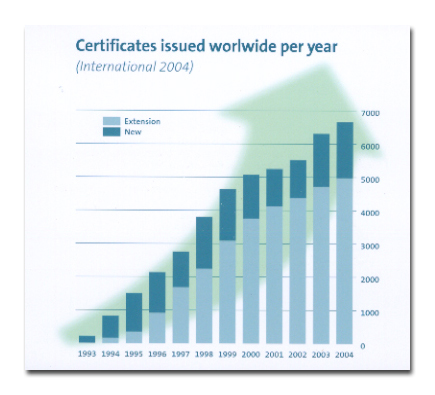
benchmark for textiles that aren’t harmful to health and the environment. With more than 45,000
certificates issued for millions of individual products, and more than 6,000 companies
participating in 80 countries, the Oeko-Tex label is the most well-known and successful brand of
its kind, according to the association.

The leading regions with certifications are Europe (68.8 percent) and Asia (28.9 percent).
The major selling markets for Oeko-Tex-certified products are the European countries and Japan,
where consumers ecological awareness is most strongly developed. There, the Oeko-Tex label can be
found in all kinds of retail stores, including mass retailers and food discount stores. Oeko-Tex
labels are found so frequently on all categories of articles that it now is almost like a brand
name for customers.

oekocertificategraph


Benefits Of The Modular Oeko-Tex System


For Industry And RetailersThe modular principle of Oeko-Tex certification means that
licensed companies can minimize their testing costs. Using certified components for their products
spreads the costs among all suppliers. Sources for possible harmful substances are likely
introduced during manufacturing. However, manufacturers can use production processes that use no
hazardous substances.

When the globally accepted Oeko-Tex criteria are used as delivery requirements, product
safety is maximized for manufacturers, retailers and consumers.

The test criteria are updated each year and always are based on the latest scientific
findings and current legal requirements. The testing for harmful substances is carried out by the
independent institutes of the Oeko-Tex Association. Certified products give peace of mind to
consumers and are powerful selling arguments for the retail trade. If product properties such as
functionality, fashionable design, ease of care and long service life, among others, are similar,
home textiles and apparel that bear the Oeko-Tex certificate offer the important benefit of being
safe for human health, regardless of where they are manufactured.


Reliable Security:

The Oeko-Tex List Of Criteria


Another advantage of the Oeko-Tex Standard 100 is its comprehensive and practical testing
scope for textiles. As a general principle, the larger the skin contacts for a textile, the
stricter are human-ecological requirements for textile products.The Oeko-Tex list of criteria
includes both legally banned and identified harmful substances, and certain parameters for human
health protection. Specifically, textile products are tested for carcinogenic and allergy-inducing
dyes, banned azo dyes and pesticide residues. There also are strict limits for formaldehyde,
extractable heavy metals, chlorinated phenols, toluene and organo-tin compounds. Finally, textiles
must be colorfast and have a skin-friendly pH value.


Requirements For Oeko-Tex Certification


Products can only bear the Oeko-Tex label if all their components satisfy the Oeko-Tex
Standard 100 criteria. Those products include non-textile accessories such as zippers, buttons and
interlining, among others. An Oeko-Tex certificate is valid for one year and can be extended only
after passing the tests again. For quality assurance, authorized Oeko-Tex institutes carry out
annual random tests of Oeko-Tex-labeled products purchased in the marketplace at a rate of at least
15 percent of issued certificates.


July 2005

Sponsors