
The Rupp Report: Open Your Eyes For Business

A few weeks ago,

Textile World
reported about the disastrous financial situation around the world. Apart from the
ever-so-resilient nonwovens and technical textiles sectors, the textile industry is facing problems
too, but not everyone. If you look around for business opportunities, you’ll find them. Here is a
small but fine example of true entrepreneurship from Hong Kong:


Fashion Place: Nathan Road


Giordano is one of the big labels in Asia, especially popular in Hong Kong. Many
always-crowded shops in Hong Kong show the importance of the brand. Recently, I was in Hong Kong.
And, as always, to get a feeling for the latest fashion trends in Hong Kong, one of the first trips
is going up and down Nathan Road.

But, where is the link to the financial crisis with institutes such as Morgan Stanley,
Goldman Sachs, Merrill Lynch, Lehman Brothers or even AIG? Look in a shop window at Giordano in
Hong Kong, and you’ll find the answer.
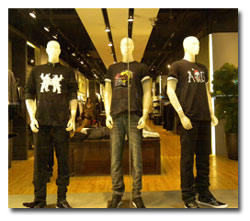
ruppmannequins

Pick Up The Situation

Some clever designers at Giordano picked up on the current financial situation, creating
funny T-shirts with quite nasty prints. One of the T-shirts was printed with the image of the grim
reaper; the others you can see in the picture. I was amazed and thought to myself, “What a
brilliant idea! I’m sure they will be sold out soon.” The next idea was to buy some of these
T-shirts as a wonderful example of entrepreneurship. Bearing in mind my own collection of probably
more than 100 T-shirts, I decided not to buy one.

Sorry, We’re Sold Out

Forty-eight hours later, being on Nathan Road again, I saw the shop window and decided to buy
a T-shirt. By now, two of the mannequins had the same T-shirt on, and two prints were already gone.
I went into the shop and asked for one T-shirt like the one in the shop window. “Sorry, sir,” the
sales person said. “We’re sold out – no more T-shirts. The success was enormous.”

It took me one hour to convince the shop manager to undress a mannequin and sell me the
T-shirt. These days, I read in the financial newspapers that some fired Swiss bankers have started
to pay back some of their exorbitant bonuses. Maybe I should show them the T-shirt?

Do you have more good news to tell the world? Send it to
jrupp@textileworld.com

December 2, 2008

FesslerUSA Nets PEDA Grant To Help Fund Solar Project

FesslerUSA, an Orwigsburg, Pa.-based private label knitwear manufacturer, has received a $1 million
grant from the Pennsylvania Energy Development Authority (PEDA) as partial funding for the
installation of its $5.6 million Solar Energy Project.

The company will build a solar photovoltaic power plant next to its manufacturing facility in
Deer Lake, Pa., to provide 667,000 kilowatt hours of electricity annually to the plant.

“As an integral part of the FesslerUSA Corporate Sustainability Program, this system will
avoid air pollution from traditional power sources by an estimated 506 tons of carbon dioxide
annually,” said Bonnie L. Meck, the company’s COO and chief sustainability officer.

In addition, Meck added, “By controlling our energy costs, this solar project will help to
ensure that we continue to grow and employ Pennsylvanians as we have for more than a century.

FesslerUSA’s sustainability program encompasses the option of using organically grown cotton
and other sustainable fibers, as well as initiatives to improve the energy efficiency of its
facilities – including the use of T5 lighting, variable speed drives on machinery and reflective
paint to reduce lighting requirements – and such practices as recycling of production by-products,
use of raw materials produced using environmentally sustainable methods and local sourcing to the
extent possible.

December 2, 2008

SmartSilver™ Antimicrobial Protection Now Available For Technical Fibers

State College, Pa.-based NanoHorizons Inc. – developer of SmartSilver™ nanoscale antimicrobial
additive for textile, healthcare, coatings and plastics applications – and Philadelphia-based
commission specialty dyer G.J. Littlewood & Son Inc. have developed a process to incorporate
SmartSilver into high-performance technical fibers such as Basofil®, Kevlar®, Nomex® and Twaron®.

NanoSilver – which is registered with the US Environmental Protection Agency and has received
Oeko-Tex approval as a safe, cost-effective, permanent antimicrobial, anti-odor treatment – is
applied to the fibers during the dyeing process. Less of the nanoscale additive is required to
provide the benefit comparable to that provided by traditional silver-based treatments. In
addition, other performance additives, such as for moisture management and flame retardancy, retain
their full function in NanoSilver-treated fabrics, according to NanoHorizons.

Littlewood also is investigating the integration of SmartSilver into fibers used in air
filtration systems and for medical textiles such as minor post-surgical after-bandage applications.

December 2, 2008

PBI To Expand Capacity, Add Jobs

Charlotte-based PBI Performance Products Inc. – a manufacturer of high-performance
polybenzimidazole (PBI) fiber and polymer for firefighter jackets and other heat- and
flame-resistant applications, and a wholly owned business of North Charleston, S.C.-based The
InterTech Group Inc. – will invest $15 million over the next five years to expand its Rock Hill,
S.C., plant and to develop advanced polymer applications using its Celazole® PBI polymer.

The project, which is the first major expansion since PBI began operations in 1983, will
increase the capacity at the plant by 50 percent and include new fiber spinning technology as well
as new processes for tailoring Celazole polymers to applications such as separations, coatings and
films. PBI expects to add 19 new positions as a result of the expansion, creating at least 10 in
the first year. The company plans to begin construction in 2010.

“The constantly growing number of applications where polybenzimidazole fibers and polymers
have proven their value necessitates we invest in the future with expanded capacity and new process
technology that will precede and surpass the expectations of the market,” said Grant Reeves,
president, PBI Performance Products. “We will be proactive in this endeavor by continuing to
maintain excess capacity for large programs, with direct support for research and development,
global marketing to publicize PBI’s unmatched physical properties and collaboration with the
world’s most respected designers and engineers.”

PBI heat- and flame-resistant fiber does not burn in air, melt or drip, and remains strong
and flexible after exposure to flame. Celazole PBI polymer is an engineering thermoplastic
available in pure polymer form, shapes, and a moldable blend of PBI and polyetheretherketone. PBI
Performance products are used in a variety of applications including protective clothing for fire
fighters, military personnel and industrial workers; semiconductors and electronics; aerospace and
automotive; and other high-temperature applications.


December 2, 2008

Huntsman Textile Effects Business Adopts New Structure

Paul Hulme, President of the Materials & Effects division of Huntsman Corporation (NYSE: 
HUN), announced today that the company has completed a comprehensive review of the strategy for its
global Textile Effects (TE) business.  As a result, the Textile Effects business will move to
implement a new structure that will see its operations expand significantly in Asia and consolidate
in the Americas and in Europe as it transitions from a regional to a global, market-focused
organization.  The company has targeted approximately $60 million in annual savings when all
phases of the restructuring are fully completed.

Mr. Hulme said: “Upon acquiring this business, we rapidly rationalized its complex global
manufacturing footprint and then moved to review its product portfolio and business
structure.  We are now prepared to move to a stage where the business can show its real
potential as we focus on products and markets where we see opportunity to win now and in the long
run.”

The streamlined Textile Effects business will be comprised of two global strategic business
units: Apparel & Home Textiles and Specialty Textiles, which together will focus on nine growth
market segments. All business and support functions will be aligned to this new structure.

Peter Huntsman, President and CEO of Huntsman Corporation, commented:  “We firmly
believe in our textile chemicals and dyes business.  As we previously achieved during the
highly successful restructuring of our Advanced Materials business following its acquisition by
Huntsman, our goal for TE is to reach a world-class cost position and become a truly market focused
organization. This comprehensive change will contribute significantly to maintaining our leadership
position in the textile chemicals and dyes market.”

About Textile Effects

Huntsman’s Textile Effects is the leading global provider of high-quality dyes and chemicals
to the textile and related industries, manufacturing a broad range of dye and chemical products
that enhance the colour of finished textiles and improve performance characteristics, such as
wrinkle resistance, lasting freshness and the ability to repel water and stains. The business
currently serves over 4500 customers located in 80 countries.

About Huntsman

Huntsman is a global manufacturer and marketer of differentiated chemicals. Its operating
companies manufacture products for a variety of global industries, including chemicals, plastics,
automotive, aviation, textiles, footwear, paints and coatings, construction, technology,
agriculture, health care, detergent, personal care, furniture, appliances and packaging. Originally
known for pioneering innovations in packaging and, later, for rapid and integrated growth in
petrochemicals, Huntsman today has 13,000 employees and operates from multiple locations worldwide.
The Company had 2007 revenues of approximately $10 billion. For more information, please visit the
company’s website at
www.huntsman.com.

December 2, 2008

Press Release Courtesy of Huntsman Corp.

AATCC Foundation/ITT Program Offers Undergraduate Research Grants

The Undergraduate Research Support Program sponsored by the Research Triangle Park, N.C.-based
AATCC Foundation and the Raleigh, N.C.-based Institute of Textile Technology (ITT) is making grants
available to US college juniors for research in the fields of textile engineering or chemistry, and
polymer or materials science.

Through the program, ITT will provide up to five $2,000 awards annually, to be paid directly
to the student to cover supplies, testing, and other research expenses. During their senior year,
award recipients will be invited to present their research and have the opportunity to make
professional contacts at ITT’s Spring Meeting.

The deadline for filing a complete application is Jan. 16, 2009. For a list of areas of
interest and additional information, visit
www.aatcc.org/foundation/research.htm.


December 2, 2008

EIH Acquires Polyester Fibers LLC

EIH Acquisitions LLC, an affiliate of Miami-based private investment firm Empire Investment
Holdings (EIH), has acquired Carthage, Miss.-based Leggett & Platt Inc.’s subsidiary Polyester
Fibers LLC – a manufacturer and distributor of value-added, high-loft nonwoven materials for
bedding, furniture, filtration and retail applications.

“Polyester Fibers has a rich history, and through several years of strategic acquisitions and
organic growth, is the market leader within its core end markets,” said David F. Alfonso, chairman
and CEO, Empire Investment Holdings. “We are excited about the company’s future, and the inherent
ability to unlock additional value through Empire’s proven operational expertise by working closely
with the Fibers team, as well as its customers and vendors.”

Polyester Fibers comprises four operating units – Tupelo Fibers, Cumulus Fibres, Cameo Fibres
and Buffalo Batt – which will continue to operate with the company’s own management team. The
company employs 450 people and has annual revenues of approximately $100 million. During the
transitional period, Polyester Fibers plans to launch a branding campaign and also will release
further details about its strategic plan.

EIH will acquire more than 1 million square feet of space, including Polyester Fibers’
headquarters and administrative office, nine manufacturing plants and two distribution centers in
New York, North Carolina, Ohio, Tennessee and Mississippi. Polyester Fibers also maintains
strategic partnerships with four China-based manufacturing facilities.

December 2, 2008

Trade Official Sees No Need For Quotas On Chinese Textile Imports

A leading Bush administration trade official does not see any need for renewed quotas on Chinese
imports of clothing and textiles, because China is not expected to fill this year’s quotas that are
due to expire December 31.

Christopher Padilla, under secretary of commerce for international trade, said: “We have
faced calls to impose new quota restraints even though China will not even fill its existing quota
level for imports this year.” Padilla cites a number of reasons for this, including rising
production costs in China and a shift to other markets in Asia. He also noted that the value of the
yuan, China’s currency, has appreciated by about 20 percent since 2005, and that is a contributing
factor in the decrease of Chinese exports.

The US textile industry and its supporters in Congress have been pressing for a textile and
apparel imports monitoring system that could eventually lead to imposition of new tariffs or quotas
or both. One proposal would ask the Department of Commerce to establish a monitoring program
similar to the expiring program for Vietnam. That’s not very likely to happen under the Bush
administration. At the same time, the leadership of the House Ways and Means Committee has asked
the International Trade Commission to provide it with information that could lead to imposition of
trade restraints. The commission will make its first report to the committee by December 1, but no
action is expected until after the Obama administration takes office.

Meanwhile, Bush administration officials, including the president, continue to press for
approval of the Colombia Free Trade Agreement (FTA) before the end of this year. In the midst of
all of the turmoil in Congress and the administration regarding the economic stimulus package,
President George W. Bush reportedly has used the Colombian agreement as a bargaining chit in
connection with the effort to modify the stimulus package to include some aid for the ailing
automobile industry. Secretary of Commerce Carlos M. Gutierrez said in a speech last week that the
Colombia FTA and those with Panama and South Korea should be approved “with the same urgency that
we passed the economic stimulus package.” The Colombia FTA has the backing of US textile
manufacturers and importers, but it is strongly opposed by organized labor.


November 25, 2008

Commerce Department Finds No Dumping Of Vietnamese Apparel

As the Bush administration wraps up its 18-month long monitoring of apparel imports from Vietnam,
it has concluded there is no evidence of dumping and sees no cause for self-initiating any
anti-dumping investigations. Responding to pressure from the US textile industry and its supporters
in Congress, the Department of Commerce began monitoring imports from Vietnam shortly after Vietnam
was accepted into the World Trade Organization. At the time the program was started, US Trade
Representative Susan C. Schwab said it would run only until the end of the Bush administration.

Under the program, Commerce examined imports of trousers, shirts, underwear, swimwear and
sweaters and issued a report every six months. The department compared trends in unit values and
import levels from a wide variety of countries in Central America as well as Cambodia, India,
Indonesia, Macau, Malaysia, Pakistan, the Philippines and Thailand. In  announcing results of
the final six-month survey, David Spooner, assistant secretary of  commerce for import
administration, said: “This final investigation reveals that prices of Vietnam apparel are in line
with, and in most cases even exceed, other major suppliers.”

US Association of Importers of Textiles and Apparel Executive Director Laura Jones, who has
been highly critical of the monitoring program from the outset, praised the department’s final
conclusion, and said: “The fact that three Administration reviews have consistently found no
evidence of dumping confirms that this program never should have been established in the first
place.” She charged that the monitoring forced importers to change sourcing plans, adding to costs
and undermining efficiencies and diverted apparel orders to other sources and “did not bring a
single order or job to the United States.”

Jones urged the incoming Obama administration to “focus on positive initiatives and not make
the mistake of thinking monitoring is a replacement for sound business decisions.”

November 25, 2008

China Increases Assistance To Its Textile Exporters

An effort by the Chinese government to assist its flagging textile industry has triggered a strong
reaction from US manufacturers who fear it could contribute to a surge in imports after all quotas
on Chinese imports expire December 31.

When textile and apparel exports fell during the first quarter of this year by 11 percent to
$82 billion, the Chinese government decided to increase its export tax rebates for textiles and
apparel from 14 percent to 17 percent. That action was taken after what Premier Wen Jiabao cited as
a “serious and unprecedented situation due to economic changes at home and abroad.”

Reacting to the tax rebate announcement, Cass Johnson, president of the National Council of
Textile Organizations, said: “By dramatically increasing subsidies just prior to the phase-out of
quotas, China has thrown down a gauntlet that the US government and the US Congress cannot ignore.”
Johnson said the new tax breaks coupled with two similar increases amounts to an increase of 55
percent since July 2008. He charged that Chinese exporters have seen subsidies from the central
government increase from $19 billion to $29 billion.

Johnson called on the incoming Obama administration to “act swiftly against China” by
self-initiating trade remedy cases if Chinese imports surge once quotas are removed. He noted that
last month, President-elect Barack Obama committed to a textile monitoring program directed at
illegal trade activities. He also urged the new administration to consider taking complaints of
illegal textile trade to the World Trade Organization.

In addition, he urged Congress to enact legislation addressing what the textile industry and
others believe is a major subsidy resulting from currency manipulation in order to gain an
advantage in international trade.

Johnson said the current  trade deficit with China (January through September) has risen
to $195.4 billion from $187.6 billion in 2007.

November 25, 2008

Sponsors


