DNA Technical Fabrics Introduces Inherent Plus+ FR Denim

COLUMBUS, Ga. — October 7, 2016 — DNA Technical Fabrics, a division of DNA Textile Group, is pleased to introduce their new collection of INHERENT PLUS+ FR Denim fabrics.
DNA’s Inherent Plus+ FR denim collection utilizes a patent pending dual FR technology to provide layered FR protection with comfort, performance, and premium styling. “DNA’s Dual FR Technology was developed in response to customers’ requests for an innovative FR denim that can be laundered in premium fashion washes and maintain the same level of flame-resistant protection currently offered in the market,” according to Marty Odum, vice president of Technical Fabrics.

Inherent Plus + FR Denim can be enhanced through premium laundry applications including hand sanding, whiskers, enzymes, and stonewashing to achieve a range of fashion wash effects. Products in the new collection contain 13% to 20% stretch, from 11 to 13.5 oz, with added moisture wicking and improved drying to increase comfort.

DNA’s INHERENT PLUS+  FR Denim fabrics are compliant with NFPA 2112, NFPA 70E, and ASTM F1506.

Posted October 7, 2016

Source: DNA Technical Fabrics, a division of DNA Textile Group

Bicomponent Staple Fiber Order For Oerlikon Neumag

NEUMUENSTER, Germany —  October 6, 2016 — Oerlikon Neumag received an order for a bicomponent staple fiber plant from a long-time regular customer in Italy. The order comprises of a plant for the production of sheath/core fibers made of polyester, polypropylene and polyethylene. Commissioning is scheduled for the second half of 2017.

“The investment is being made in the scope of a planned extension of our customer’s staple fiber production capacities,” explains Gerrit van Loenen, the staple fiber sales director responsible for this project. “As a total solution provider, we were able to convince our customer with our technology.”

Years of experience in bicomponent spinning

Oerlikon Neumag looks back on several years of experience in building bicomponent staple fiber plants. The first plant for this type of fiber was already put into operation in 1995. Oerlikon Neumag offers solutions for various fiber cross-sections including “sheath/core”, “side-by-side”, “island in the sea” as well as “orange type” and “trilobal”. The applications are manifold, covering self-crimping fibers, binding fibers, as well as super-micro fibers and hollow fibers.

The Oerlikon Neumag bicomponent staple fiber technology is characterized in particular by very robust nozzle packages, which do not have any expensive wearing parts, which in turn significantly reduces costs in this sector. The processing costs when cleaning the nozzle packages are kept to a minimum. In addition, there is also the possibility of a separate temperature control in the spinning beam for the two polymers. The quality and viscosity of the polymers can thus be adapted exactly according to process requirements.

Posted October 6, 2016

Source: Oerlikon Neumag

Browzwear To Reveal An Advanced Development In 3D And PLM For Fashion Companies With Dassault Systèmes During PI Apparel Berlin

NEW YORK CITY — October 5, 2016 — During PI Apparel Berlin, Browzwear will demonstrate how its 3D digital technology together with Dassault Systèmes’ Product Lifecycle Management solutions can streamline the way fashion companies design, develop and manufacture products. The demonstration will show how Browzwear’s 3D Apparel models can be integrated to Dassault Systèmes’ “My Collection” industry solution experience, a world class PLM solution for fashion, consumer goods and retail companies.

It will also show how apparel designers and developers can leverage managed assets from “My Collection” and later share finished garments’ Bill of Materials in Dassault Systèmes’ 3DEXPERIENCE platform. This makes it far simpler and more efficient for fashion designers and developers to make use of available assets, and focus instead on the creative process.

‘My Collection’ was developed with 3D in mind from the very beginning. And with Browzwear 3D and Dassault Systèmes, product teams can share realistic 3D Apparel models and technical specifications from the earliest stages of the development processes to dramatically improve communication and collaboration with a variety of stakeholders of the development stream. “Visitors at PI Apparel in Berlin will see how the combination of 3D Asset & PLM workflow is enabling leading brands to shorten time to market and enhance creativity while delivering products that reflect the Voice of the Customer,” said Avihay Feld, Chief Product Officer at Browzwear.

“Using visually compelling and technically accurate 3D models for apparel from early development extends collaboration with designers, and streamlines manufacturing. It enables companies to meet market requirements and enhance creativity in a way that was not possible with traditional 2D workflows. We are very excited to demonstrate this capability with Dassault Systèmes at the event.”

Posted October 6, 2016

Source: Browzwear

coLLo Launches Sun Protective Men’s Golf Shirt Line

NEWPORT BEACH, Calif. — October 6, 2016 — Excessive exposure to the sun’s burning rays is a dangerous and often overlooked health issue for recreational and professional golfers. In response, coLLo Apparel has introduced its new line of high performance, UPF 50+ sunblocking men’s golf shirts.

“As a golfer, I was frustrated by the lack of options for protecting myself from skin cancer, especially my neck,” said Tom Hurst, coLLo founder, and president. “That led me to launch coLLo and design our unique collars. Nearly 3.7 million cases of skin cancer are diagnosed each year, and the risks for golfers are exceptionally high. We’re serious about protecting golf players from UV radiation, and donate a percentage of every coLLo shirt sale to skin cancer research and prevention.”

Featuring certified UPF 50+ sunblocking, moisture wicking, four-way coLLoStretch™ fabrics, and patent pending high collar, coLLo is exclusively focused on making UV protection golf clothing. The coLLo men’s golf shirt line is available in three different collections:

  • Cypress offers maximum athletic performance in a dry fleck jersey fabric, available in athletic and relaxed fit models.
  • Sawgrass utilizes coLLo’s luxurious double-dyed and lightly brushed fabric offered in athletic and relaxed fit models.
  • Princeville is offered in an athletic fit featuring lightweight brushed fabric made from 15 environmentally friendly recycled plastic bottles.

Persistent sun exposure is a constant health threat to golfers. According to the Skin Cancer Foundation, professional golfers received on average an estimated 217 times the amount of ultraviolet (UV) radiation needed to cause a sunburn over the course of a year.

Recreational golfers are at risk too, since every hour, they can receive 3.5 to 5.4 times the amount of UV radiation exposure needed to cause a sunburn. Ultraviolet Protection Factor (UPF) is a rating generally used for clothing to measure the relative effectiveness of skin protection from the sun. It measures the amount of UVA and UVB radiation that penetrates fabric and reaches the skin.

Created to block 95 percent of the sun’s damaging UV rays, the design and fabric of the coLLo golf shirt line can help players get the most from their game with unequaled sun protection and maximum comfort.

Sold through golf pro shops and retailers, coLLo shirts can be embroidered with a custom golf club logo.

Posted October 6, 2016

Source: coLLo Apparel

Meridian Industries Introduces The “New Aurora” At Grand Opening of New Plant

YORKVILLE, Ill. — October 5, 2016 — Today, under sunny skies on a perfect fall day during the grand opening celebrations of the company’s new manufacturing plant, Aurora Specialty Textiles Group unveiled its new logo and Mission Statement before a gathering of approximately 100 customers, staff and community leaders.

The celebration marks the end of a two-year period that began with the decision to invest millions in a new, state-of-the art North American textile manufacturing operation, in a new location – but without leaving the area in Illinois where Aurora has operated for over 133 years. Aurora is a subsidiary of Milwaukee, Wis.-based Meridian Industries Inc.

The event also marks the formal launch of the company’s new high tech manufacturing facility and the company’s commitment to investing in state-of-the-art technology while moving into exciting, new global markets for wide width coating and finishing, including print media.

“Today is a tremendous day for Aurora Specialty Textile Group,” said Dan LaTurno, president, Aurora. “It marks the symbolic end of our transition from the Aurora plant to our new Yorkville operation, and the beginning of a new, exciting era. We’ve been committed to becoming a global leader in wide width coating and finishing and this new plant, which could not operate today without the hard work of the people here, is testament to what we are calling today ‘The New Aurora.’
LaTurno added that ‘The New Aurora’ reflects the company’s commitment to staying ahead of the industries it serves. “As the world changes, we now have the world-class capabilities, state-of-the-art equipment and expertise within R&D to meet those challenges.”

After LaTurno introduced the new Mission Statement (see below) and corporate tagline, “Innovative Textile Solutions,” Meridian owner, Bruce Pindyck addressed the group.
“From my first involvement in Meridian in 1968, I have believed in investing back in the business and in being in the forefront from a technological, manufacturing and innovation standpoint,” said Pindyck. “I have always felt that our businesses needed to be nurtured and supported. I am also committed to a strong manufacturing presence in our country. Meridian is my life’s work and I am passionately committed to having our companies be successful for the benefit of all of our constituencies.”

LaTurno explained that the company’s new logo is based on the one by which the company is so well known, but now has added color and dimension to reflect Aurora’s expanded bleaching, dyeing, finishing and coating capabilities.

“The tagline, Innovative Textile Solutions, is even more critical,” LaTurno said.  “With the word Innovative we are telling customers that we are pioneering, inventive and modern with a strong focus on R&D. The word Textile reflects our core market, which involves processing the various styles of textiles, and the word Solutions reflects our capabilities as an industry partner and problem solver, because solving problems is how we distinguish ourselves from just being a transaction-based supplier.”

The presentations by LaTurno and Pindyck were followed by a guided tour of the company’s new 124,000 square foot manufacturing operation.

Founded in 1883 on the west side of the Fox River in Aurora, Illinois, USA, just north of downtown,  Aurora operated solely as a bleaching operation before adding finishing, dyeing and coating capabilities. Pindyck purchased Aurora in 1977.

Recently, as the global textile industry changed, company leadership saw the opportunity to move into ultra wide-width coating of textiles and establish Aurora as a premier textile coater. That move, however, required finding a larger manufacturing facility and investing in new equipment. After reviewing the options at hand, the company decided to move forward into the future with the new plant and equipment and began adding new employees, while also training existing employees to operate a new generation of equipment.

The plant features the company’s new EHWHA ultra wide-width coating and finishing line, which works easily with a broad range of woven and non-woven materials up to 134” wide.  The EHWHA enhances Aurora’s ability to serve both current and new customers, including those in the print media industry.

Today, Aurora is poised to move into a leader position in several new, expanding textile markets.

As the new Mission Statement says:
“Here at Aurora, we serve a growing number of markets and take pride in being a North American leader in wide-width finishing and coating of textiles. We are dedicated to helping our customers succeed in today’s highly dynamic, ever-changing world through our investment in world-class manufacturing capabilities, state-of-the-art technologies and comprehensive Research & Development expertise.  To this end, we strive every day to earn our customers’ trust as the coating and finishing partner they can turn to for innovation and high quality product solutions.”

Posted October 5, 2016

Source: Aurora Specialty Textiles

Verdezyne Signs Distribution Agreement With Aceto Corporation To Power Regional Sales Of Verdezyne’s BIOLON®DDDA

CARLSBAD, Calif./PORT WASHINGTON, N.Y. — October 5, 2016 — Verdezyne Inc., a synthetic biology company producing biobased chemicals, and Aceto Corp. (ACET) —  a marketer, seller and distributor of specialty chemicals in the United States — announced an agreement for sales and distribution of Verdezyne’s BIOLON® DDDA (biobased dodecanedioic acid). Biolon DDDA will be produced by Verdezyne and will be distributed in the United States of America by Aceto.

Verdezyne’s Biolon DDDA is produced more sustainably than traditional petroleum-derived intermediate chemicals and will be used to make a variety of end-user products including automotive parts, coatings, cosmetics, and fragrances.

“The market is interested in high-quality renewable chemicals such as our Biolon, which can be used in the production of high-performance nylon 6,12, molding resins, lubricants, adhesives and powder coatings,” said Dr. E. William Radany, president and CEO, Verdezyne. “We are excited to bring Biolon to the U.S. market with Aceto, a highly respected distributor of specialty chemicals. We are certain that through this partnership we will be able to continue to provide excellent customer service and high-quality products to the market.”

“Aceto is very excited to add Biolon to our product offering of polymer building blocks,” commented Keith Wilkinson, vice president, specialty chemicals Aceto. “We are also excited to add a biobased product to our portfolio that can be offered at competitive prices.”

Posted October 5, 2016

Source: Verdezyne

SAC And Lenzing Join The World Apparel & Footwear Lifecycle Assessment Database Initiative To Build A More Sustainable Fashion Industry

ZURICH, Switzerland — October 5, 2016 — The environmental sustainability consulting group Quantis is pleased to announce that the Sustainable Apparel Coalition (SAC) and Austrian fiber company Lenzing have officially joined the World Apparel and Footwear Lifecycle Database (WALDB) as partners. WALDB, a pre-competitive global initiative founded by Quantis, is a to provide a robust and credible database for environmental impact assessment and footprinting in the fashion industry.

SAC and Lenzing join HUGO BOSS, Legero/Think! Shoes, the Swiss Federal Office for the Environment (FOEN) and BSD Consulting, a group of industry leaders that have come together to collaboratively measure the environmental impacts created by materials used in the apparel and footwear supply chains.

The addition of these two new key players in the apparel industry and leaders in sustainability illustrates the need for more robust and credible data from the industry’s value chains. Data on the environmental impacts in supply chains is sparse, yet it is essential for organizations to drive metrics-based sustainability programs. WALDB will solve this data challenge.

The aim of WALDB is to bring together partners in the industry, in an open and pre- competitive dialogue, to address the needs and challenges of environmental data collection and availability. In this initiative, the partners will work together to expand the database with reliable data on the processes along the apparel and footwear value chains.

WALDB enables apparel and footwear companies to identify environmental hotspots along their value chain as well as to quantify the benefits of improvement and reduction measures and to benchmark individual footprints compared with industry averages. Moreover, credible communications and marketing efforts can be built on sound metric-based footprint data, which can be used for sustainability reporting in full compliance with relevant ISO Standards and with the European Commission’s Product Environmental Footprint (PEF) initiative.

The interest in calculating LCA in the apparel and footwear industry is rapidly increasing. Companies are looking for reliable data to make informed decisions and to prioritize their sustainability efforts. Furthermore, the development of new public policies like the Green Economy and the EU’s Single Market for Green Products are adding to the demand for credible data.

“I have witnessed a clear shift from the apparel industry – one that is characterized by a sharp increase in interest in developing a more holistic and quantitative approach to environmental sustainability,” Rainer Zah, Quantis Zurich Managing Director and WALDB project lead confirms. “Solid metrics serve as a guide to organizations’ sustainability strategies allowing them to make good decisions, based on hotspots across their operations, to make the most impact. The WALDB database will allow companies to assess their impacts, make strategic decisions, and engage their supply chains based on facts.”

Environmental impacts can range from water consumption for cotton cultivation, to impacts from dyeing and tanning, to greenhouse gas emissions from manufacturing and transportation.

The WALDB partners work together to collect comprehensive datasets based on primary data from the partners and on existing data from scientific studies. The datasets are released annually, the first release took place in July 2016 and consists of 60 datasets which cover wool, cotton, and leather supply chains for shirts, pullover, trousers and shoes. The datasets will continuously be expanded during the next two years according to the needs of the partners.

Posted October 5, 2016

Source: Quantis 

OEKO-TEX® And CALIDA Highlight The Wishes Of Mothers When Buying Children’s Clothes

ZURICH, Switzerland — September 22, 2016 —  Chic, trendy and affordable — these are the requirements for children’s clothes. And, of course, they must also be practical, hard-wearing and comfortable to ensure that they are accepted by the little ones. Unsurprisingly, mothers and fathers want to protect their children from coming into contact with harmful substances. At the same time, they must be sure that the textiles have been manufactured under fair environmental and working conditions. Children’s fashion that is environmentally friendly and sustainable is popular with many parents and has developed from a niche to a trend topic. But, when purchasing children’s clothes, how can parents be sure that textile brand and retail companies really implement sustainability along their supply chains?

This question was considered by Stefan Kehrer, director of Materials Management
at CALIDA AG, David Pircher, Director of Business Development at the OEKO-TEX® Association, and host Anna Czerwinska, marketing and communication manager
at the Oeko-Tex Association, during a podium discussion at the Kind + Jugend
2016 fair in Cologne. Under the motto “Give mothers what they want — well-designed clothes manufactured in a responsible and transparent way”, the participants agree
that transparency plays a key role in the consumer’s buying decision. According to
Stefan Kehrer, this transparency “is granted to Calida customers in fulfilment of our responsibility” because: “they quite rightly want to know how and where we produce
our products.”

According to David Pircher, consumers are increasingly demanding environmentally friendly and socially responsible production conditions as well as product safety from manufacturers, clothing brands and retailers. He says, “Oeko-Tex seized this wish as an opportunity to create a traceable consumer label for sustainable textiles, MADE IN GREEN by Oeko-Tex.” On one hand, this meets the consumer requirements and, on the other hand, suppliers of textile products can disclose their supply chain in a transparent way with regard to best practices. According to Stefan Kehrer, this was the reason why Calida presented the entire children’s collection with the MADE IN GREEN label. He adds, “With the introduction of MADE IN GREEN by Oeko-Tex, we are strengthening our long-term sustainability strategy of manufacturing Calida products with a clear conscience so that our customers can also have a clear conscience when wearing them.

In this regard, MADE IN GREEN is exactly what we were looking for.” This was the cue for David Pircher to clarify the reasons why MADE IN GREEN is perfect as a tool for increased transparency: “Every article awarded the MADE IN GREEN label has a clear product ID and/or QR code which allows consumers to track the manufacture of the product. Each product ID shows which production stages were included in the manufacture as well as the countries in which the textiles were produced.” According to David Pircher, consumers acknowledge this new level of transparency with corresponding trust. Stefan Kehrer added, “At Calida we can show how profitable our commitment to sustainability really is as measured by the service provided. And all in black and white”.

“Let’s look into the future. In your opinion, how will the clothing and textile industry develop further?” With this question, host Anna Czerwinska introduced the closing words of the discussion round. Stefan Kehrer is convinced that the information, comparison and buying options for responsible and informed consumers will increase in the future. “This offers many opportunities for all market players”, however, “transparency and trust are the key elements here.” For David Pircher, the textile development is trending toward “Smart Clothes”, i.e. textiles that carry out a particular function using components such as sensors or mini computers. But here too, given all this functionality, one must not loose sight of the fact that these complex textiles must under no circumstances be harmful to health, “This is our challenge for the future.”

World-class quality, comfort and sustainability have been the trademarks of Calida
AG since 1941. The traditional Swiss company remains true to its philosophy with its recent award of the MADE IN GREEN by Oeko-Tex label. MADE IN GREEN gives Calida customers a level of transparency that has not yet been achieved as, now, the consumer can scan the QR code or reference the test number on the label to track the production of an article. The MADE IN GREEN label provides information on the country in which production took place and which production facilities were involved. MADE IN GREEN also provides verification by an independent resource that the labelled textiles have been tested for harmful substances and that they have been manufactured using environmentally friendly technologies and in a socially responsible manner.

In spring 2016, Calida started to label several women’s and men’s products with the MADE IN GREEN label. The Calida children’s collection is the first fully labelled segment since July 2016. Their aim is to label the entire Calida collection in the coming years.

Posted October 5, 2016

Source: The International OEKO-TEX® Association 

W. L. Gore Introduces Next Generation Of FR Apparel For Oil And Gas Workers

ELKTON, Md. — OCTOBER 4, 2016 — W. L. Gore & Associates Inc. — the company that created the category of waterproof, windproof, and breathable outerwear and reset the industry watermark for comfort and protection with GORE-TEX® Fabric — is now doing the same for oil and gas industrial workers with the introduction of GORE® FR Apparel products featuring GORE-TEX® PYRAD® Fabric – the most comfortable flame-resistant (FR), foul-weather outerwear available on the market.

GORE® FR Apparel is a new line of FR foul weather outerwear products designed to meet the demanding needs of oil and gas workers. A jacket, bib, and detachable hood combination offers protection from incidental flame exposure and weather protection across a wide range of environmental conditions, while offering moisture management to improve comfort and safety. The durable, lightweight 2-layer ePTFE membrane construction also helps protect workers from exposure to hot liquids, steam common oilfield contaminants, and allows for easy care and cleaning.

Leveraging the same platform as GORE-TEX® Fabric and utilizing Gore’s proprietary PYRAD® Fabric Technology, GORE® FR Apparel complies to ASTM F2733-09 and ASTM F1891-12 and adds retro-reflective properties that meet or exceed ANSI/ISEA 107-15 Class O, Type 1 and CSA Z96-15, Class 1, Level 2 offering HSE managers the confidence they need when selecting FR outerwear for their employees.

“Simply put, GORE® FR Apparel is a best-in-class line of foul-weather outerwear products that will deliver an unprecedented performance-to-value solution for our customers in the oil and gas markets,” said Sean McDearmon, Market Development Champion for Gore. “A new performance benchmark has been established.”

Posted October 4, 2016

Source: W. L. Gore & Associates, Inc.

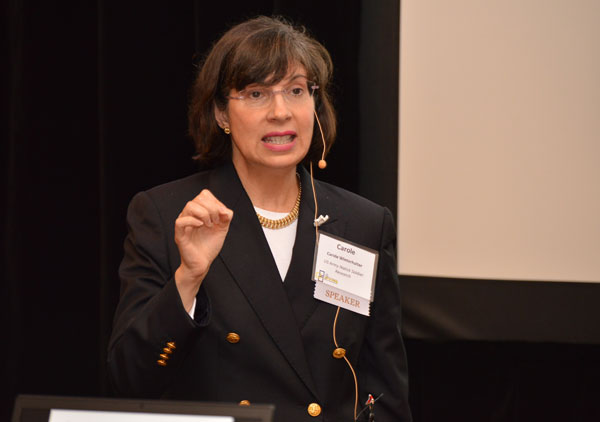
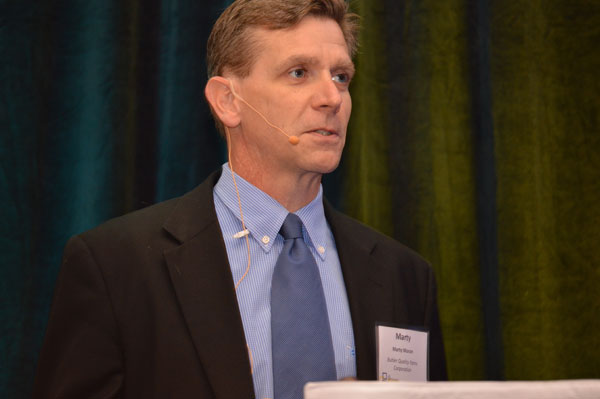
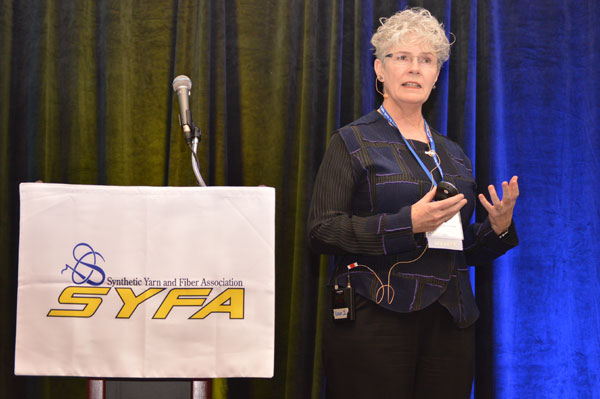
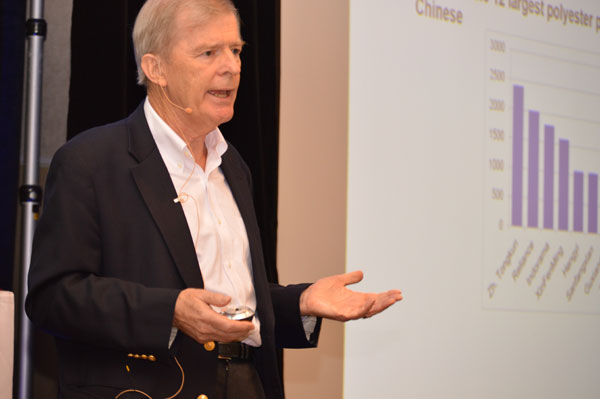
SYFA Fall 2016 Meeting — “Diverse Elements Of The U.S. Supply Chain … Leaders In Action”

Sponsors