ITMA 2019 Exhibitor Preview: Oerlikon

REMSCHEID, Germany — May 8, 2019 — Oerlikon invites all visitors to this year’s ITMA in Barcelona on a journey into the future of man-made fiber production. From June 20-26, 2019, the world market leader will show all its guests its vision of a sustainable and automated manmade fiber production in a virtual 4D showroom at its 1,000 m² stand in Hall 7, A101: “Clean Technology. Smart Factory.” is the motto of the future. And this is only a stone’s throw away from reality at the stand. Because today Oerlikon is presenting four world premieres for efficient machine and plant concepts in a new, innovative industrial design. Together with numerous other innovations, all this forms the new DNA of the Oerlikon Manmade Fibers segment.

The challenges for the manmade fiber industry are manifold and Oerlikon shows its customers solutions:

  1. Choosing the right business model

Price pressure on fiber and yarn manufacturers is growing due to global market consolidation. Here it is important to position oneself correctly. Are you producing polyester, nylon or polypropylene for the niche market and skimming off good margins with innovative products and ingenious material properties, or are you looking for business success through economies of scale in the volume market such as the constantly growing apparel sector? Oerlikon has the right answers for both business models. And the most important thing: the market leader supplies all solutions from a single source. See for yourself at the world premieres of the machine and system concepts of WINGS FDY PA6, BCF S8 Tricolor and the revolutionary eAFK Evo texturing machine.

  1. Finding alternatives for good personnel

Finding good operators in the manmade fiber industry is becoming increasingly difficult, even in emerging industrial nations such as China, India and Turkey. The solution is obvious. What, for example, the automotive industry achieved years ago with the 3rd Industrial Revolution is now also taking its course in the textile industry. And at the same time it is even shifting up a gear. In the next step, automation in combination with digitization will lead to new, sustainable production. Oerlikon will be showing how automation and digitization interact at ITMA. Self-learning machines and systems, artificial intelligence (AI), remote services and edge computing are just a few of the key words in the digital half of the new Oerlikon Manmade Fibers DNA.

  1. Guarantee quality and traceability

The qualities of the fibers and yarns must meet the highest demands and their production must be traceable throughout the textile value chain. This no longer only plays an important role in the automotive industry, where safety is of paramount importance. Other branches of industry that use fibers, yarns and nonwovens also want to know where the raw materials they produce for consumer articles come from. Legal regulations are demanding this more and more frequently. Oerlikon offers optimal solutions with its DIN ISO certified manufacturing processes. More than half of the world’s manmade fiber producers are convinced every day that the qualities produced on Oerlikon Barmag, Oerlikon Neumag and Oerlikon Nonwoven equipment are right – and all visitors to ITMA can do the same on site.

  1. Efficient and sustainable production

In the future, the materials produced from manmade fibers must become part of a further improved global recycling economy. The recycling of polyester — with more than 80 percent market share the most frequently used manmade fiber in the world — has not only been on the agenda since today. Oerlikon already has solutions at hand: from PET bottles to fibers and filaments, to textiles and carpets. ITMA is the next step. With the VacuFil® Oerlikon in cooperation with the subsidiary company BBEngineering presents the world premiere No. 4 – a recycling solution within a running polyester production with a waste-free approach.

Vision becomes reality

The Oerlikon Manmade Fibers segment thus demonstrates what the ITMA in Barcelona promises as the world’s leading trade fair for textile machinery and plant construction: “Innovating the world of textiles – sourcing for a sustainable future”. In Hall 7, A101, this is already reality.

Posted May 8, 2019

Source: Oerlikon

Techtextil 2019 Exhibitor Preview: Huntsman Textile Effects

SINGAPORE — May 8, 2019 — Huntsman Textile Effects is bringing its breakthrough disperse dyes and inks, comprehensive range of durable water repellents and deep technical expertise to Techtextil 2019.

“As a leading provider of high-quality dyes and textile chemicals, we are excited to showcase our solutions that deliver on performance and sustainability in equal measure,” said Oliver Gerlach, Global Marketing Manager for Process Chemicals at Huntsman Textile Effects. “We have been at the forefront developing non-fluorinated durable water repellents, robust washfast dyes for polyester and pioneered the digital printing market from its earliest days two decades ago.”

Sustainable durable water repellency at Techtextil

  • Following the expansion of the long-term alliance between Huntsman and Chemours, an extended range of offerings around PHOBOTEX® and Zelan™ for sustainable, high performance and non-fluorinated durable water repellent finishes.

Disperse ink ranges to be featured at Techtextil

  • TERATOP® XKS HL disperse inks. Ideal for automotive digital printing and outdoor end-uses, these inks deliver excellent light fastness and superior printing performance on Kyocera print heads. TERATOP XKS HL is the only ink range that meets the automotive industry’s light-fastness standards.
  • TERASIL® TS water-based sublimation inks. Ideal for waterless paper transfer printing, and designed for Piezo Epson DX print heads, these inks deliver high color density and superior printing performance for sportswear, apparel, flags and banners.
  • TERASIL W/WW dyes. Robust and high performance washfast dye range for polyester. The range achieves right-first-time performance and is bluesign® approved and suitable for STANDARD 100 by OEKO-TEX® certified textile products.

Unrivalled expertise and experience

Huntsman Textile Effects also has a unique body of knowledge and experience built up over decades in the industry. It shares its technical expertise and application knowledge with mills around the world to help them achieve greater productivity and efficiency. It also offers local technical support worldwide.

Visit Huntsman Textile Effects at Techtextil in Hall 3, Stand D48.

Posted May 8, 2019

Source: Huntsman Corp.

Randa Accessories To Acquire Haggar Clothing Co.

NEW YORK CITY — May 7, 2019 — Randa Accessories, an accessories company, announced today that it has entered into a definitive agreement to acquire 100 percent of Haggar Clothing Co. The transaction is expected to close within 45 days.

Randa, a privately-held company founded in 1910, produces belts, wallets, headwear, slippers, luggage, neckwear, jewelry, and other accessories under 50 brands, including Levi’s, Tommy Hilfiger, Columbia Sportswear, Dickies, and Kenneth Cole. Randa distributes its products globally through more than 20,000 stores and employs more than 4,000 associates at 26 offices located in 10 countries.

Since its beginnings in a one-room office in Dallas in 1926, Haggar Clothing Co. has grown from a manufacturer of men’s fine dress pants and slacks into one of the most recognized apparel brands in the market.

Haggar also owns Montreal-based Tribal. Tribal was founded in 1971 and is the largest women’s sportswear supplier to the specialty boutique market in North America, with over 2,400 active accounts.

“The acquisition of Haggar is an important waypoint on our strategic journey,” said Jeffrey Spiegel, CEO of Randa Accessories. “Following our Moats, Boats & Bridges strategic roadmap, this acquisition allows Randa to bring its existing expertise to adjacent brands, channels of distribution, and product classifications. This transaction brings together two successful, financially strong, and complementary businesses to better serve our retail and brand partners, our associates, and our consumers. We believe that brands matter — and Haggar and Tribal are highly relevant brands in their respective markets.”

Randa reports that revenues for the combined companies will be greater than $1 billion this year.

“Randa is the ideal strategic partner for Haggar because of the combined strengths of our two companies,” said Michael Stitt, Haggar CEO. “Jeff and his extraordinary leadership team add invaluable scale, resources, expertise, and marketing, in addition to retail partnerships. They align with our core values and high standards.”

In 1938, Haggar created the first ready-to-wear, finished bottom, pre-cuffed pant. During World War II, the company kept factories running 24 hours a day to supply over 10 million uniforms to the U.S. military. Haggar coined the word “slacks” to be worn during “slack time.” By the end of the decade, Haggar had become the largest producer of slacks in the world.

In 1980 the company began production of sport coats, vests, and Haggar “Custom Fit” suits, which allowed customers to purchase jackets and pants separately, creating a new menswear category: “suit separates.”

Haggar has over 80 branded brick-and-mortar retail locations, a dedicated direct-to-consumer ecommerce platform, and its products are sold in over 10,000 stores throughout North America.

“Today, understanding and applying consumer data is an essential tool,” Spiegel added. “The addition of Haggar’s retail stores and e-commerce business will supply us with invaluable insight into our consumers’ evolving expectations and path-to-purchase. This information will provide a powerful and actionable lens for our retail and brand partners, as well as our consumers.”

Haggar will remain in Dallas and will be managed by Haggar’s current leadership team. “This is a healthy company, led by a strong and respected team of talented professionals,” said Spiegel. “We intend to provide this extraordinary company with additional resources to drive our mutual success.”

Randa is funding the acquisition through a combination of cash on hand and committed financing provided by Wells Fargo Bank, National Association and JPMorgan Chase Bank, N.A.

Posted May 8, 2019

Source: Randa Accessories Leather Goods LLC

AAPN 2019 pro:Americas Conference

NCTO President & CEO Kim Glas To Deliver Textile Policy Update At The Southern Textile Association’s (STA) Southern Division Spring Meeting

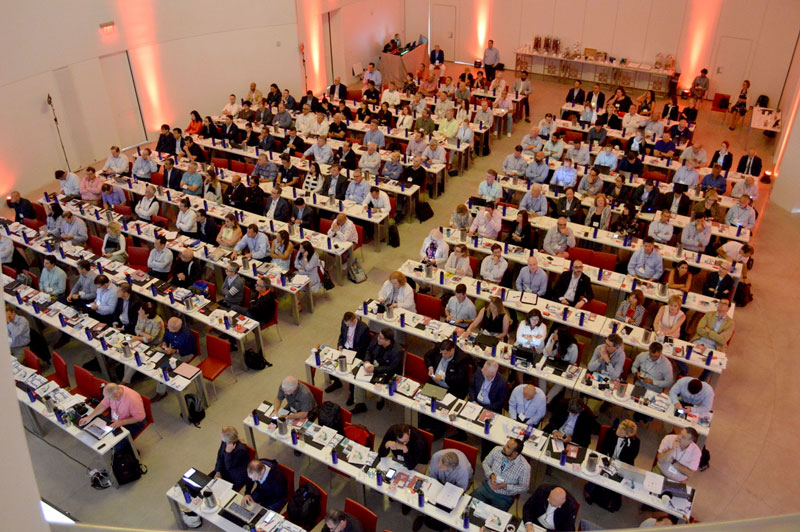
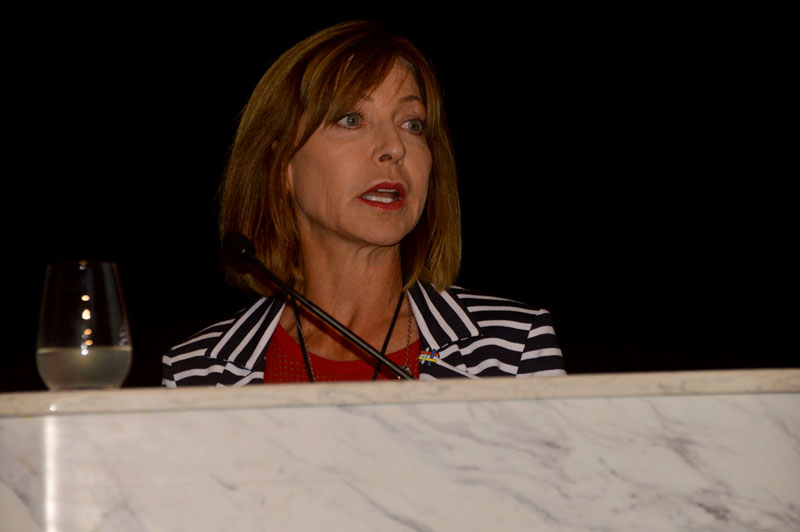
WASHINGTON — May 7, 2019 — The Southern Textile Association’s (STA) Southern Division Spring Meeting will host NCTO President and CEO Kim Glas who will outline key textile policies. Cameron Hamrick, president of Hamrick Mills and chairman of STA’s Southern Division, and Matt Shannon, plant manager for Greenwood Mills and first vice president of STA, will give opening remarks.

The meeting will be held Wednesday, May 15, 2019, from 8:00 a.m. to 1:00 p.m. at the The Madren Conference Center, Clemson, S.C.

Glas will present an update on textile policies in Washington, ranging from the status of the U.S.-Mexico-Canada-Agreement (USMCA) to Section 301 tariffs.

NCTO is a Washington, DC-based trade association that represents domestic textile manufacturers, including artificial and synthetic filament and fiber producers.

  • U.S. employment in the textile supply chain was 594,147 in 2018.
  • The value of shipments for U.S. textiles and apparel was $76.8 billion in 2018.
  • U.S. exports of fiber, textiles and apparel were $30.1 billion in 2018.
  • Capital expenditures for textile and apparel production totaled $2.0 billion in 2017, the last year for which data is available.

Posted May 7, 2019

Source:  The National Council Of Textile Organizations (NCTO)

Keeping Up With A Sustainable Lifestyle Through Riding On An Eco-Journey With TENCEL™

LENZING, Austria — May 7, 2019 — One year ago, Lenzing launched the all-new TENCEL™ brand in Paris, and what a year it has been for the brand. Through its unwavering commitment to innovation, quality and sustainability, Lenzing has made great progress towards establishing our new B2Me strategy, which has helped to enhance relationships with customers, brands and retailers, and engage more closely with a growing base of impassioned conscious consumers.

Building on the success in 2018, Lenzing will continue to strengthen the TENCEL brand, by leveraging and increasing consumer engagement and its co-branding portfolio. In January, Lenzing supported the “Make it Feel Right” campaign — an important awareness initiative for sustainable fashion. It also partnered with organizations for environmental preservation and support the Earth Day this year. To drive greater industry presence Lenzing opened a bespoke TENCEL Studio in Singapore in addition to collaborating with industry brands across fashion, home textile and sportswear.

“Last year was a special year for the TENCEL brand, and with widespread support from our partners and customers, we are proud to see the brand evolve in such a positive way. In 2019, we will strive to further collaborate and develop valuable relationships with our partners. Our products offer unparalleled sustainability and comfort, and continuing to provide these valuable features to our customers is a core focus of our brand this year,” said Robert van de Kerkhof, Chief Commercial Officer, Lenzing Group.

Here’s an overview of the latest TENCEL brand stories:

  • TENCEL Supports All-New “Make it Feel Right” Campaign To Drive Greater Eco-Fibers Awareness
    • Launched in January, the “Make it Feel Right” campaign seeks to empower consumers to make more informed choices about the clothing they purchase, care for and dispose of. International organizations, brands and thought leaders from the industry have become supporters of the movement, spreading its message across global channels. The campaign is already having an impact and promises to outreach to more people throughout the year.
  • Bespoke TENCEL Studio Opens At Design Orchard In Singapore
    • Lenzing has partnered with the Textile and Fashion Federation Singapore to launch the “Cocoon Space” within the innovative new hub for local fashion designers — Design Orchard. The area comprise of a TENCEL fabric library and TENCEL studio which will raise awareness about sustainable fashion design for the Singaporean fashion community.
  • AKEMI and TENCEL Announce Bold And Innovative Collaboration Paving The Way For The Future of Bedding
    • 
AKEMI has launched a new collaboration with TENCEL, showcased at a special premiere in Malaysia in April. TENCEL aims to deliver unparalleled comfort, look and moisture management to AKEMI’s high quality bedding. AKEMI claims it has long been inspired by TENCEL’s reputation for providing industry’s best renewable fibers and its status within the sustainable fiber movement in addition to superior quality, comfort and durability made TENCEL a natural choice for AKEMI.
  • Lenzing and Solvay Unveils Eco-Collaboration For New Sustainable Fabric
    • 
Solvay and Lenzing are partnering to create innovative new fabrics derived from the best of both company’s offerings. The new fabric has been created by layering TENCEL Active branded lyocell fibers with Solvay’s pioneering AMNI SOUL ECO® Fiber, which comprises a material that work together to enhance each other’s’ benefits, creating a material with unmatched thermal and moisture regulation, comfort and hygiene.
  • TENCEL Revealed Collaboration With Renowned Designer Giray Sepin At Istanbul Mercedes Benz Fashion Week
    • Giray Sepin’s Fall Winter 2019 offering in collaboration with TENCEL was unveiled at the Mercedes Benz Fashion Week Istanbul, delivering the brand’s signature style with a focus on eco-fashion. The collection reimagines utilitarian garments in bold colorways with an impressive attention to detail.
  • TENCEL Enriches Homes And Interiors Offerings, Bringing REFIBRA™ To Heimtexil And Collaborating With Luxury Home Brand Whinny In China
    • TENCEL has begun venturing into the home & interior fiber development by bringing REFIBRA technology to Heimtexil and awarding their one of the first China premium brand partnership to luxury home textile brand Whinny. These developments addressed the industry’s need for further transparency and growing demand for sustainable products.
  • Why reDEW8 Does What It Does For Denim
    • TENCEL spoke to reDEW8 co-owner Peter Lantz about the brand’s mission to combat disposable, unsustainable fashion, and challenge the fast-fashion culture. Peter discusses how he is using this collaboration with TENCEL brand to motivate others to minimize the detrimental impact of fashion on the environment, encouraging shoppers to consider environment preservation and rethink the quality of fast-fashion garments and push for more industry transparency.
  • Why Girls Are Going Boyish When It Comes To Jeans?
    • Boyish Jeans’ Creative Director Jordan Nodarse chatted with TENCEL team to discuss Boyish Jeans’ origin story, latest and future projects, product concept, sustainability, current trends, and Jordan’s own denim journey, and most importantly, why they chose to use TENCEL branded fibers to produce their jeans.
  • TENCEL Launches Eco-Campaigns In Honor Of Earth Month 2019 in US And Taiwan
    • As part of Lenzing’s global environmental strategy, the company launched campaigns in key markets as a part of Earth Month this year. TENCEL collaborated with US-based NGO One Tree Planted on a new campaign entitled “From Trees, For Trees” through donating trees. It also launched its first green initiative “Green Taiwan, Green Earth” in Taiwan by partnering with Blue Magpie Tea, utilize technology and contractual farming system to protect local tea farms.

Posted May 7, 2019

Source:  TENCEL™

Sappi North America Invests $25 Million in Cloquet, Minn., Mill

CLOQUET, Minn. — May 7, 2019 — Sappi North America Inc. — a producer and supplier of diversified paper, packaging products and dissolving wood pulp — today announced the completion of a $25 million capital investment at its Cloquet, Minn. mill to debottleneck areas of the pulp manufacturing process. The bulk of the investment was made in the recovery areas of the pulp mill.

“We are pleased that this investment brings an additional 30,000 tons per year (TPY) of pulp production capability to better serve our dissolving wood pulp customers,” said Mike Schultz, managing director, Sappi Cloquet Mill.

Sappi North America Inc., headquartered in Boston, converts wood fiber into products that customers demand worldwide. The success of its four diversified businesses — high-quality Coated Printing Papers, Dissolving Wood Pulp, Packaging and Specialty Papers and Casting and Release Papers — is driven by strong customer relationships, best-in-class people and advantaged assets, products and services. High-quality Coated Printing Papers — including McCoy, Opus, Somerset, and Flo — are the key platform for premium magazines, catalogs, books, direct mail and high-end print advertising.

The company is a manufacturer of Dissolving Wood Pulp with its Verve brand, a sustainable fiber used in a wide range of products, including textile fibers and household goods. Sappi delivers sustainable Packaging and Specialty Papers for luxury packaging and folding carton applications with our single-ply packaging brands, Spectro and Proto, and for the food and label industries with specialty papers LusterPrint and LusterCote. Sappi also offers Casting and Release Papers with the Ultracast, PolyEx and Classics lines for the automotive, fashion and engineered films industries. Customers rely on Sappi for high technical, operational and market expertise; products and services delivered with consistently high quality and reliability; and, state-of-the-art and cost-competitive assets and innovative spirit.

Sappi North America is a subsidiary of Sappi Ltd., a global company headquartered in Johannesburg, South Africa, with more than 12,000 employees and manufacturing operations on three continents in seven countries and customers in over 150 countries.

Posted May 7, 2019

Source:  Sappi North America, Inc.

MXP (Manufacturing Sportswear Joint Stock Company) Proposes Six Breakthrough Solutions For Vietnam’s Private Sector Development

HANOI, Vietnam — May 7, 2019 — MXP (Manufacturing Sportswear JSC.) has proposed six strategic solutions to Vietnam’s Government to strengthen Vietnam’s private enterprises, particularly in the apparel sector, in accordance with the Comprehensive and Progressive Agreement for Trans-Pacific Partnership (CPTPP), which took effect in the beginning of this year. These proposals were made at the Vietnam Private Sector Forum 2019.

One of the leading textile and apparel manufacturing and exporting companies in Vietnam, MXP, produced more than 10 million items in 2018. MXP proposed six strategic solutions in a constitutional proposal to the Government and leaders of the Vietnam Textile and Apparel Association (VITAS), Vietnam Leather, Footwear and Handbag Association (LEFASO), and Vietnam Association of Seafood Exporters and Producers (VASEP), including:

  1. Creating a policy for Vietnamese banks to grant credit and disburse funds for businesses with sustainable production activities;
  2. Eliminating discrimination in the apparel industry and creating equal competition between Vietnamese and FDI enterprises;
  3. Designing a mechanism to cut corporate income tax to support enterprises creating lots of jobs for society;
  4. Appealing to the Government to create stipulations for companies with over 10,000 employees to provide reserve funds to provision against unemployment contingencies;
  5. Asking the Government to issue a minimum wage schedule for the coming 5 and 10 years; and
  6. Revising regulations for a maximum total overtime of 40 hours per month, instead of the current 30 hours.

The private enterprise economic forum was held on a national scale, focusing on discussing key strategic macroeconomic issues and policies regionally and globally. MXP represented the voice of the private sector to discuss and design solutions with the Economic Ministries and industry experts to promote the strong export industry of Vietnamese enterprises amidst the opportunities stem from the CPTPP.

Mr. Tran Quang Hao, MXP’s Sales Director, said: “MXP has pioneered the application of 4.0 technology to increase labor productivity and management capacity, partnering closely with suppliers of raw materials to open the way for FOB customers who are readily integrated in the global fashion industry’s value chain.”

These strategic shifts will aid businesses to adapt and capture the impending wave of the CPTPP, increasing the value of Vietnamese enterprises manufacturing for export.

Posted May 7, 2019

Source:  MXP (Manufacturing Sportswear Joint Stock Company)

Teijin’s Sereebo® Now In Use For General Motors As World’s First CFRTP For High-Volume Production Vehicles

TOKYO, Japan — May 7, 2019 — Teijin Limited announced today that its Sereebo® carbon fiber reinforced thermoplastic (CFRTP) has been selected by General Motors (GM) for use in select pickup box applications. This is the world’s first use of CFRTP for structural parts in a high-volume production vehicle.

Sereebo® will be used to manufacture the optional CarbonProTM pickup box jointly developed by Teijin and GM for the GMC Sierra Denali 1500 and GMC Sierra AT4 1500. Specifically, the pickup box’s inner headboard, side and floor panels will be made with Sereebo®. Following production startup in early June, GMC Sierra CarbonProTM Editions for both vehicles will begin appearing at select GMC dealerships in the U.S. this summer. The CarbonProTM panels will be produced at Continental Structural Plastics’ Huntington, Indiana, manufacturing facility.

Sereebo® used for CarbonProTM contains randomly-orientated, isotropic carbon fiber in a polyamide matrix resin. Manufactured using with the world’s first mass-production technology for CFRTP, the molding time for Sereebo® is approximately one minute, which is significantly shorter than the molding time for conventional carbon fiber reinforced thermoset plastics (CFRP). Compared to steel, CarbonProTM is 40 percent lighter, offers 10 times greater impact resistance, is more corrosion-resistant, and is even more readily recyclable. Finally, because of its material characteristics, Sereebo offers extended design flexibility and freedom, which allowed GM engineers to mold in many of the unique features of the CarbonProTM box.

Teijin has been developing leading-edge composite product technologies and applications since establishing the Teijin Composites Innovation Center in 2008. In 2011 the company developed the world’s first mass-production technology for CFRTP, realizing a production interval (takt) time of just one minute. Teijin subsequently established a technical facility in the U.S. and a pilot plant for the fully integrated production of CFRTP in Japan. Since branding its CFRTP product as Sereebo® in 2012, Teijin developed high-volume production methods in collaboration with domestic and international partners, including GM. After acquiring CSP, a global leader in automotive lightweight composite technologies in 2017, Teijin established an organizational framework for composites production, sales and evaluation in North America. GM’s adoption of Sereebo® for CarbonProTM is a momentous step forward for CFRTP’s use in high-volume vehicles.

Teijin is expanding its product portfolio ranging from materials to component design, as well as its global supply chain, in an effort to help automakers reduce vehicle weights. Teijin also aims to become an automotive solution provider by expanding its offerings beyond carbon fiber and glass fiber materials, for which the company is actively collaborating with other materials manufacturers. The automotive composite products business of the Teijin Group is targeting annual sales of USD 2.0 billion by 2030.

Posted May 7, 2019

Source: Teijin Limited

ITMA 2019 Exhibitor Preview: KARL MAYER Technische Textilien GmbH

OBERTSHAUSEN, Germany — May 7, 2019 — KARL MAYER Technische Textilien GmbH is getting into the market for machine technology for producing thermoplastic UD tapes.

KARL MAYER Technische Textilien GmbH is launching a completely new line for efficiently producing thermoplastic UD tapes, a special type of fibre-reinforced plastics (FRPs).

FRPs are important drivers in the lightweight construction sector and are contributing to the concept of sustainability in the building sector. UD tapes score points here by offering maximum potential for producing lightweight structures. They are made up of unidirectional, continuous reinforcing fibres, which means that they can absorb high levels of stress. Using thermoplastic rather than thermosetting matrix systems gives rise to further advantages. For example, thermoplastic UD tapes can be recycled but, above all, they can be processed more efficiently – an important requirement for mass production.

The mass production of semi-finished products forms the focus of the new line for processing thermoplastic UD tapes. There is a need for reproducibility, quality and efficiency at a reasonable cost – challenges that this company, with its many years of experience in non-crimped fabrics (NCFs) made from glass and carbon fibres, has been tackling.

More specifically, KARL MAYER Technische Textilien has extended its spreading technology to include suitable heating and impregnating modules. The result is a machine system that is setting the trend. This new development delivers a continuous mode of operating, a high production speed, and large tape widths. It represents KARL MAYER Technische Textilien’s latest step along the way to being a systems supplier for dry and impregnated NCFs.

The first line for producing thermoplastic UD tapes will be ready to be presented in autumn of 2019 at KARL MAYER Technische Textilien in Chemnitz and will be available for producing samples on behalf of customers. The first public debut of the new line will be at ITMA, which is to be held from 20 to 26 June 2019 in Barcelona. The machine will also be part of KARL MAYER Technische Textilien’s presentation in the forum of the next Techtextil fair in Frankfurt. The date of this event is 15 May 2019.

Posted May 7, 2019

Source: KARL MAYER Textilmaschinenfabrik GmbH

Sponsors