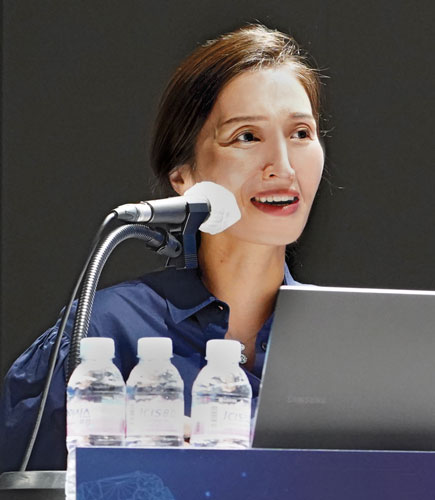
Youngone’s Rae Eun Sung spoke with Textile World about her role in the family business and the company’s role in the global apparel industry.
TW Special Report
The Youngone Group was founded in South Korea in 1974 by Kihak Sung. The company began life as a producer of down-filled winter jackets and ski suits for customers in Europe. Since its founding, the company has become one of the world’s largest manufacturers of premium outdoor clothing, sportswear, shoes, bags, accessories and materials for many of the world’s leading performance brands. Youngone also produces its own brands for the outdoor industry serving consumers across the globe. In addition, Youngone operates the license business for The North Face brand in South Korea, so it not only manufactures but sells directly to consumers through its extensive retail network across Korea.
Today, the Youngone Group is comprised of Youngone Holdings and Youngone Corp., and both companies are listed on the Korean Stock Exchange.
Textile World recently had the pleasure of speaking with Youngone Group’s Vice Chairman and President Rae Eun Sung. As the daughter of Youngone’s chairman and founder, during her childhood Ms. Sung spent time accompanying her father on business trips, shadowing him and visiting the company’s factories during school holidays. “I was fascinated to visit various factories around the world,” Sung said. “I was always destined to be involved with the family business!
Background
TW: What does your current job entail and how do you approach the role?
Sung: I began working full-time for the company after I finished my undergraduate studies at Stanford University in 2002. My father insisted I learn about all aspects of the business, so I’ve worked in virtually every part of the company over the last 22 years.
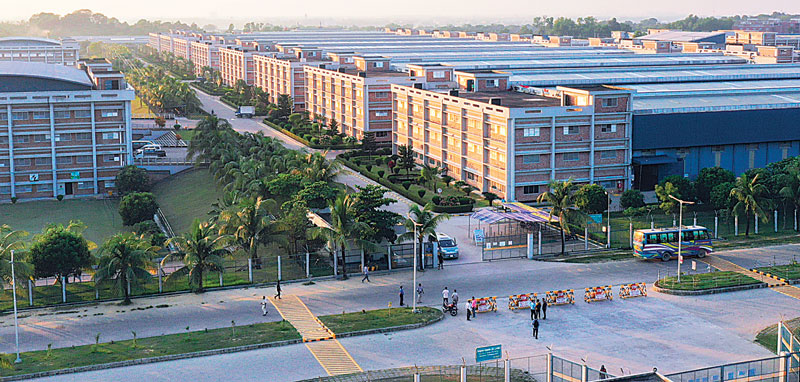
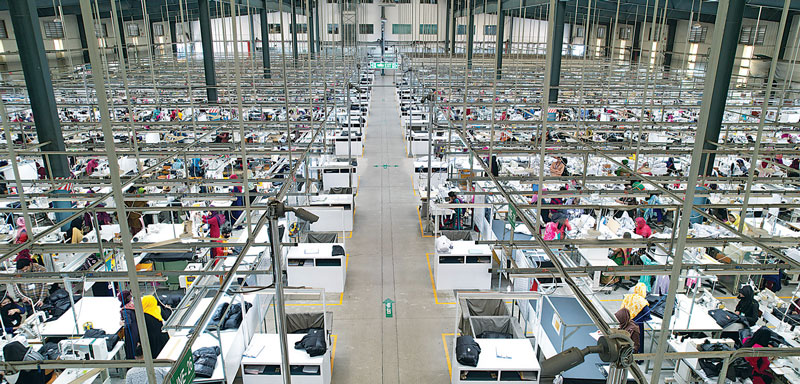
My father is still actively involved, and he is passionate about the factory designs, investing in state-of-the-art machinery and the production processes. His vision for our Korean Export Processing Zone (KEPZ) facility in Bangladesh is to create an entire ecosystem, complete with factories, lush green spaces, schools, a technical institute, a medical complex, a botanical garden and eventually a sports arena, to serve not just Youngone employees and their families, but the wider community.
So I tend to focus on the day-to-day operations of the business, as well as the longer term strategic direction. For example, I set up a $65 million corporate venture capital fund in 2022 in Singapore to nurture startups and innovators, especially in the areas of sustainability and circularity. We are now in the process of setting up the second fund to further expand our investment portfolio.
Youngone Group
TW: What is the company’s mission and has the mission changed over time?
Sung: From an early stage I felt it was important to clearly define our company’s vision and mission. So, I developed our vision and mission statements: “Striving for Excellence with Passion.” The company is relentless in its pursuit of excellence and customer satisfaction. Our mission is to be “A trusted and reliable partner, a caring employer and a responsible corporate citizen, focused on sustainability.”
It is now a group of companies with over 90,000 employees with a presence in 17 markets and annual revenues in excess of $3 billion.
TW: Are there any landmark moments in the company’s history?
Sung: There are several highlights worth noting. Becoming the first foreign investor in Bangladesh’s garment industry in 1980 was a key moment. We were also the first company to employ a predominantly female workforce, which challenged cultural norms at the time. Today,Young-one is the largest foreign investor in Bangladesh and the largest private employer with over 65,000 employees. Another important milestone was our acquisition and long term development of the KEPZ in Chittagong, Bangladesh.
We acquired a barren area of 2,492 acres and over a period of eleven years, we have transformed the area into a lush industrial zone by planting over 3 million trees, creating 37 water bodies to harvest more than 600 million gallons of rainwater each year, and cultivating botanical gardens. As a result, the area illustrates the rich bio-diversity that can be achieved by balancing development and one’s commitment to the planet. I am proud to share our export zone is home to over 137 species of birds and wildlife along with 500 species of plants.
In Korea, one of the most significant milestones was when we set up a joint venture company with our partner Goldwin to launch The North Face products domestically.
TW: Can you share a little about the company’s strengths and current capabilities?
Sung: In terms of our overall key strengths and capabilities, I’d say first and foremost we have unrivaled experience, having started more than 50 years ago. In that time, we’ve worked incredibly hard to build a reputation for quality, reliability and innovation, which is why we work with so many of the world’s leading brands. Second, our diversification strategy not only enables us to be closer to our customers, it also gives us greater flexibility and resilience. Finally, our vertical integration strategy is a key competitive advantage as it balances our dependence on suppliers, while giving us greater control over quality and improving consistency.
I believe that establishing a clear corporate culture from the outset has been vital to our success. I created the company’s “Core Values” over a decade ago and we recently conducted a refresh to ensure all of our global colleagues understand and live the Core Values.
Our Core Values are encapsulated in the mnemonic HEART:
- Honesty and Integrity — We are true and sincere and adhere to high ethical principles;
- Excellence — We take pride in our work and strive for the highest levels of customer and employee satisfaction;
- Agility — We navigate changing market conditions quickly;
- Responsibility — We value, promote and contribute to communities and society at large and conduct business in a responsible and sustainable manner; and
- Together — We must all live the core values and be accountable for our actions. Together we can make a real difference.
Supply Chain & Retail
TW: What advantages does a vertically integrated supply chain provide in terms of speed, quality and innovation?
Sung: We embarked on our vertical integration strategy even before the pandemic. At the height of the pandemic it became clear that we needed to accelerate the expansion of our materials division in order to avoid supply chain disruptions. However, we also saw an opportunity to develop new business models by producing enough material to supply local factories in Bangladesh, so that they too can avoid having to import long lead time materials. Currently, we sell around 50 percent of our Draw-Textured Yarn, 30 percent of our woven and knitted fabrics, and 40 percent of our Ecoloft insulation to local companies.
Aside from avoiding potential supply chain disruptions, we also have complete control over the quality of our own materials, and we can quickly adjust production volumes depending on demand.
TW: The company has a global footprint with manufacturing facilities in Asia as well as Central America. What advantages does this offer?
Sung: We began diversifying our production facilities more than 20 years ago. In addition to our main production base in Bangladesh, which accounts for around 60 percent of our production, we now have factories in Vietnam, El Salvador, Uzbekistan, Ethiopia and India. This strategy is partly designed to be closer to our customers, which reduces and simplifies logistics. It also provides greater flexibility in case of disruptions for our customers, who seek multi-country, multi-category, vertical operations like ours.
TW: How is a changing apparel retail environment impacting Youngone?
Sung: We firmly believe changing consumer behavior is a good thing. Buying fewer, better quality garments that last longer is definitely better for the environment. However, we still see continued growth as we acquire new customers and expand into new and developing markets, such as India. We recently opened our first factories in India because it is well known that consumers there favor products made in India.
TW: Did the advent of “fast fashion” affect Youngone and did you observe any changes with customers.brands in reaction to the movement?
Sung: Youngone is not involved in “fast fashion” as much. The majority of our customers produce specialized performance sports or winter clothing, shoes and bags. The advent of fast fashion has had a challenging impact on the garment industry due to the increase in waste and pollution.
However, we believe consumer awareness and advocacy is helping to address the problem. Conasumers everywhere are becoming more environmentally conscious. They are interested in knowing where their clothes are made and whether they have been produced sustainably and in factories with safe, humane, working conditions. This is a really positive trend we believe will continue.
TW: As supply chains shrink, do you anticipate Youngone moving closer to the customer? How would this affect the company’s relationships with brands and retailers?
Sung: Shrinking the supply chains is not only good for the environment with fewer products being shipped over long distances, it also helps to provide great control over quality, delivery lead times and inventory levels. Youngone began adopting a diverse, vertically integrated business model many years ago and we have been accelerating that process since the pandemic, which demonstrated how vulnerable entire industries can be to supply chain disruptions.
Production
TW: How does Youngone balance contract manufacturing with developing its own brands and intellectual property?
Sung: We take intellectual property very seriously, which is why we often have specific factories dedicated to our key customers. We also organize our company to create the appropriate firewalls in development and maintain best in class processes to ensure the security of our data and especially our customers’ designs and innovations.
Our retail footprint is in South Korea and focused on The North Face brand which is customized for this specific market. Over the years we have also made targeted investments in performance companies, always taking great care not to compete with our customers and instead finding the appropriate adjacency, or a totally new category.
TW: How does the company maintain consistency in quality, compliance and innovations across its global manufacturing network?
Sung: In terms of quality and consistency, we have rigorous quality training standards for our quality inspectors across all of our factory operations. The training is updated regularly when we introduce new product lines or processes.
TW: Youngone manufactures apparel and other products for some iconic outdoor and athletic brands. What do you think makes these customers choose and stay with Youngone?
Sung: I believe we have been successful in retaining our iconic global customers because we take a very collaborative approach. We work closely with their design teams when developing new materials and processes. This is a fast-paced, highly competitive industry, so above all, these customers demand consistent quality, innovation and reliability.
TW: Do you have any thoughts about how AI and automation may affect production, and are there any tools or technologies Youngone is looking to adopt?
Sung: We believe AI will definitely have a role to play in the future. We have already started running some trials using AI in areas such as logistics, material planning and utilization. We think there could be significant reductions in material wastage for example.
Working closely with our customers, with their own AI assisted design programs and in combination with our own research and development facilities, we are constantly looking at new materials, tools and technologies.
Sustainability/CSR
TW: In the United States, attracting and developing a trained workforce is a challenge. Does Youngone experience workforce issues and does the company have any initiatives to tackle the problem?
Sung: So far we have been fortunate to maintain a very low staff turnover level globally. There are several possible reasons for this. However, we believe the main reason is that we prioritize safe, comfortable working conditions. We embrace diversity and equality, and all employees are protected under our global code of conduct. In addition, we provide subsidized canteen facilities, on-site medical care, childcare facilities and a host of other benefits.
TW: What are some of the ways Youngone supports workforce development and
well-being across its production facilities?
Sung: Youngone has a predominantly female workforce — around 80 percent globally. However, at the KSI Garment Factory, women only make up around 20 percent of the supervisors. To address this issue, we have introduced several programs, such as our GEAR program — Gender Equality and Returns — which is designed to train female supervisors. So far, more than 200 women have completed the training in Bangladesh to become supervisors. We have also introduced another program for female supervisors to become managers or technical specialists, called GEAR Advance. While this is a relatively new program, more than 30 women have already progressed to become managers and specialists.
TW: Environmental stewardship is an underlying tenet of Youngone. What are the most impactful sustainability initiatives the company has implemented across its global facilities?
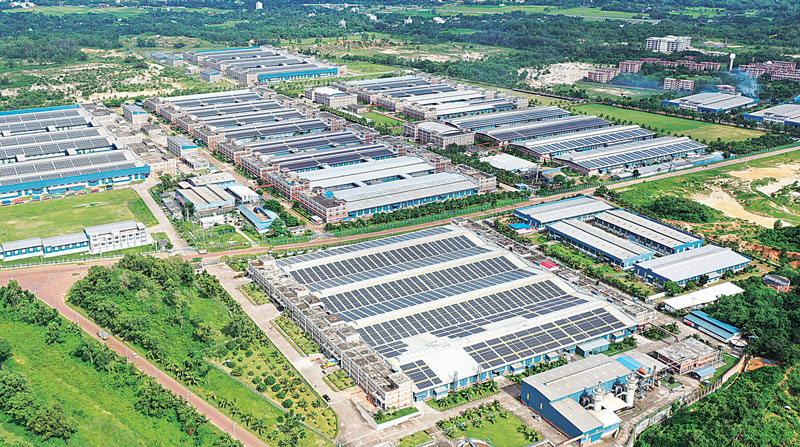
Sung: Sustainability and environmental protection has been at the heart of everything Youngone does since the very beginning. Our major initiatives include our solar panel investments. Our goal is to reach 100 MWp across our global facilities by 2030.
We recently phased out coal-fired boilers in Vietnam and replaced them with biomass boilers. The resulting ash is collected and used to produce fertilizer, which is made available to local farmers.
All of our factories have wastewater treatment plants and effluent processing facilities. We also have rainwater harvesting facilities at many of our operations.
One of the major initiatives underway is to make of use scraps or recycled material, such as our award-winning “Ecoloft” range of products. More than 40 percent of our synthetic down fillers are made from recycled or scrap materials.
At our KEPZ operations in Bangladesh, we have planted more than 3 million trees and created 37 water bodies that are capable of harvesting more than 600 million gallons of rainwater.
Looking Forward
TW: Are there any trends in apparel and outdoor performance Youngone is watching?
Sung: The number one trend is focused around sustainability and circularity. That means products made with a high level of recycled content, which can be further upcycled or recycled. We have been investing in startups and innovators in this space through our corporate venture capital group.
TW: Do you see any growth opportunities for the company?
Sung: Much of our production is still outerwear and winter clothing categories for which Youngone is well known. Notably, our “performance and athleisure wear”sector grew significantly during the pandemic, and it continues to grow. The key advantage of this sector is that it is less seasonal. We also see great potential for growth in the footwear sector, as well as premium products such as merino wool.
TW: How is the company positioning itself over the next five to 10 years?
Sung: Our main priority is to continue supporting our new and existing customers with high quality and reliability, especially with so much volatility and the uncertain impact of changing trade landscapes.
In the short to medium term, we will continue to ramp up our sustainability efforts with investments in solar power and recyclable materials. We are continuing to diversify with new factory locations in Africa and Central America. And we are focusing on developing the next generation of designers and innovators with the opening of a Textile Institute in Bangladesh.
TW: If you had to identify one key challenge for Youngone going forward, what would that be and how is the company positioned to meet the challenge?
Sung: We believe the main challenge for Young-one and the garment industry as a whole is sustainability. The combination of regulatory changes in several markets, coupled with growing consumer awareness and shifting buyer practices, means we have to continue innovating and finding more ways to make our business more sustainable.
TW: Please give a quick synopsis of the Youngone’s value proposition. Tell readers what sets the company apart and makes it unique.
Sung: There are several key things that differentiate Youngone from other OEM garment makers. Our 50-year history of continued growth and development clearly demonstrate that our fundamental business model is sound and that we are here for the long term. Second, our diverse global operations gives us greater resilience and flexibility, while being closer to our customers. Our “Core Values” ensure all of our 90,000 employees worldwide understand and embody the principles of honesty, integrity, quality and responsibility. And lastly our vertical integration strategy enables us to guarantee consistent quality and reliability.
2025 Quarterly Issue IV