Shima Seiki Selects Archroma’s Color Atlas Library System For New Design Software 

REINACH, Switzerland — September 10, 2020 — Archroma, a global supplier of color and specialty chemicals towards sustainable solutions, today announced that the 4,320 color references of its Color Atlas library have been selected by Shima Seiki and integrated into its SDS-ONE APEX series of software for the design, planning and virtual sampling of textile and apparel.

Shima Seiki is a provider of digitally optimized solutions for the fashion industry, that combines its on-demand WHOLEGARMENT knitting machine with realistic virtual sampling. Based on actual yarn data, fabric simulations generated on the SDS-ONE APEX-series are unparalleled in quality and realism. Design and simulation are available for knits and various other textile applications, and smooth transition to machine programming is possible for quick and accurate design-to-manufacture interface.

That is where the Color Atlas by Archroma® will considerably benefit to the users of Shima Seiki’s solutions.

The Color Atlas was launched in 2016 to provide fashion designers and stylists with off-the-shelf color inspiration that can be implemented in production with just a few clicks.

The Color Atlas continues to evolve in line with Archroma’s commitment to sustainability through innovation. The company describes it as “The Archroma Way to a sustainable world: safe, efficient, enhanced, it’s our nature”. All color references available in the Color Atlas have been formulated with products that comply with leading international eco-standards, and can be selected based on the desired sustainability profile.

Today, the Color Atlas contains 4,320 colors applicable on cotton poplin, almost the double compared to similar tools available to textile and fashion specialists. Technical support is available to designer, manufacturers, as well as brands and retailers, through Archroma’s global offices — for every single color from its selection to its implementation in production. Engineered color standards empowered by NFC technology are also available for all colors and reproducible in production.

With this new collaboration, the users of the SDS-ONE APEX design software of Shima Seiki will have at their disposal 4320 colors that they can visualize, evaluate and implement, in a considerably accelerated process from the first creative idea to the production to the final outlet, whether online or in brick-and-mortar shops.

“Accurate color evaluation and communication are very important issues for design work”, explains Hideya Ohtani, general manager, Graphic System Development Division, at Shima Seiki. “We have high expectations for Archroma’s Color Atlas to help our APEX series users develop their products in an even more smooth and accurate manner. “

“We are proud to bring our Color Atlas library to the users of Shima Seiki’s extremely advanced design software,” says Chris Hipps, head of Color Management Services, at the Archroma Brand Studio. “Designers and users of the software will have at their disposal not only color options they never had before but also colors that they can trust will be implementable right away. That’s what we strive to do at Archroma: create a new way of working: safe, efficient and enhanced. It’s our nature!”

Posted September 10, 2020

Source: Archroma
Avery Dennison Fastener Solutions Introduces 100-Percent Biodegradable Apparel Fastener

FITCHBURG, Mass. — September 10, 2020 — Avery Dennison Corp. Fastener Solutions has launched a tag fastener for the apparel industry that completely degrades within one year of exposure to soil microorganisms, without leaving behind microplastics or harmful substances.

“Plastic fasteners, which attach price tags and other product information to garments are on 90 percent of the approximately 80 billion garments manufactured each year and that adds up to a whole lot of plastic — the equivalent of the same amount of plastic found in 761,581,156 single-serve 0.5 liter PET water bottles,” said Dan Riendeau, senior marketing manager, Global Packaging and Retail, Avery Dennison Fastener Solutions. “Brand owners and  retailers are increasingly seeking ways to reduce their environmental footprint and this product innovation helps to do that. As a materials science innovator, we’re excited to grow this product line and offer our customers more options and a solution that is not dependent on consumer recycling behaviors.” he added.

The new bio-PP Fastener is made out of a proprietary blend of polypropylene material specifically designed to biodegrade in les3s than a year once it is on soil, without leaving behind microplastic or other harmful substances. Comparatively speaking, a regular polypropylene fastener can take anywhere from 20 to 30 years to breakdown and depending on environment conditions, an everyday plastic bag can take 10 to 20 years to decompose while also leaving behind adverse microplastics.

The product and its environmental performance has been verified by Impact Solutions, an independent plastic expert with over 100 years of combined experience in plastics, failure analysis, and product development.

The launch of the Ecotach™ bio-PP Fastener follows the April launch of the Ecotach line of recycled fasteners from Avery Dennison. “With these new technologies, we’re able to help brands advance circularity initiatives to keep plastic products in use or offer them a sustainable solution that removes single use plastic altogether,” said Riendeau.

Among Avery Dennison’s 2025 Sustainability Goals is a commitment calling for 70 percent of the products Avery Dennison sells to conform to, or enable end products to conform to, the company’s sustainability principles.

Posted September 10, 2020

Source: Avery Dennison

Ascend Expands Antimicrobial Acteev™ Technology Into Finished Goods Line To Combat COVID-19 Spread

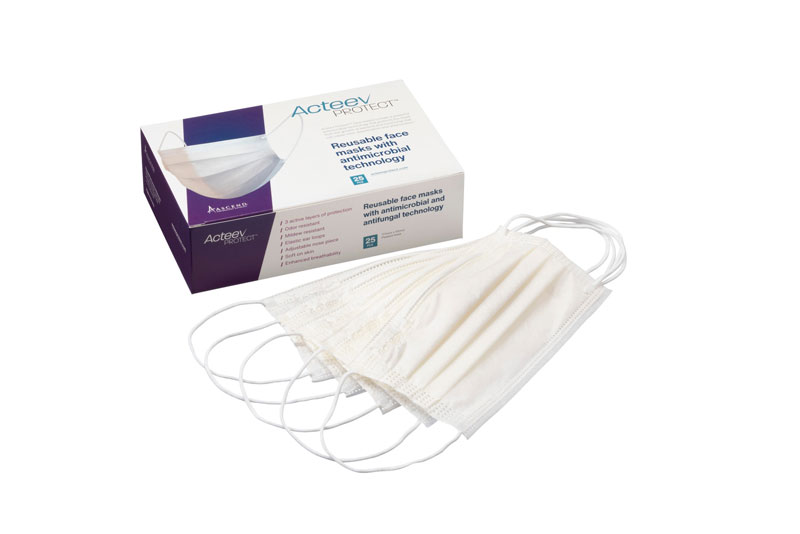
HOUSTON — September 10, 2020 — A new line of face masks combining comfort with protection is available from Acteev™ by Ascend Performance Materials, a manufacturer of technology-forward textiles and engineered materials. The brand’s first product, the Acteev Protect™ Nonwoven Mask, is a reusable general purpose mask that features powerful built-in antimicrobial technology to protect the mask from odor-causing bacteria and mold fungi in a soft, breathable, comfortable fabric that is gentle on the skin.

The mask is the first in a series of planned Acteev product introductions that will include a knit fabric mask and a sports gaiter. The company also announced it is designing an N95 respirator and a line of surgical masks and is developing more engineering plastics solutions for high-touch surfaces such as light switches and tray tables; textiles for use in scrubs and hospital gowns; and nonwoven fibers and rolled goods for use in applications such as filtration systems.

The expansion into masks is a natural extension for Ascend, which is the largest producer of nylon 6,6 resin in the world, said Dr. Lu Zhang, who joined Ascend earlier this year as vice president and leader of the Acteev business. “The nylon Ascend makes is durable enough to be used under the hood of a car, but when it’s spun into fibers, it can be woven or knitted into fabrics that are soft and silky,” she said. “Combined with our antimicrobial Acteev technology, our fabric makes an Acteev Protect Nonwoven Mask more breathable, more comfortable and more wearable than anything else we’ve encountered in the market.”

The Acteev Protect Nonwoven Mask is an ideal choice for anyone seeking better protection, comfort and breathability than a typical blue mask and better availability than an N95 respirator, which are reserved for health care workers, Zhang said.

“Masks only inhibit the spread if they’re worn — that’s why comfort and breathability are so important,” Zhang said. “As we send our kids back to school, return to the workplace, resume shopping and otherwise get back to normal life, we need an option that is long-lasting and wearable for hours.

“They’re great for teachers, restaurant staff, transportation workers, industrial personnel and anyone whose lifestyle takes them out of their homes and into the world,” Zhang said.

Darayus Pardivala, the president of the Americas division of Sulzer Rotating Equipment Services, purchased the masks for employees at all 32 of the company’s locations in North and South America. “They’re much easier to breathe through compared to what we had in the past, there’s an added level of protection and our employees are much more comfortable,” Pardivala said. “The pushback we had in the past about wearing masks is completely gone.”

Recent testing on the knit fabric completed at the University of Cambridge has demonstrated that Acteev technology deactivates the virus that causes COVID-19, SARS-CoV-2, with 99.9-percent efficacy on contact1. Ascend is working with the U.S. Environmental Protection Agency, the U.S. Food and Drug Administration and other governmental agencies to obtain the appropriate regulatory clearances to make specific claims regarding the technology’s antiviral properties.

Acteev Protect Nonwoven Masks are made with Acteev technology with active zinc ions in a polymer matrix to destroy microbes.

“Acteev’s active layer of defense uses safe, environmentally friendly active zinc ions embedded into the matrix of the polymer — not a chemical spray that will wash away or flake off — meaning these masks can be used again and again,” said Phil McDivitt, CEO of Ascend.

The Acteev Protect Nonwoven Masks are constructed with three layers of zinc-embedded materials.

“Our scientists and engineers invented a process for creating a revolutionary new fabric that checks all the boxes,” McDivitt said. “Acteev fabric is soft to the touch and moisture-wicking to keep the face cool, and it’s more breathable than other materials used in masks.”

Posted September 10, 2020

Source: Ascend Performance Materials

Wrangler® Seeks Committed Farmers For New Jean Celebrating Regeneratively Grown Cotton

GREENSBORO, N.C. — September 10, 2020 — Wrangler®, a global icon in jeanswear and casual apparel, today announced plans for a new jean that celebrates the benefits of regeneratively grown cotton. Global cotton farmers who can demonstrate and document soil-carbon and biodiversity improvements are invited to apply for their cotton to be purchased for a Wrangler Retro® Premium submission as part of The Jeans Redesign project from the Ellen MacArthur Foundation (EMF).

The Jeans Redesign see’s over 50 brands embrace the principles of circular economy to ensure positive impacts for the environment, society and the health of those working in its industry. The guidelines, as set out by over 40 denim experts alongside the Foundation, establishes the minimum requirements for the durability, material health, recyclability and traceability of denim jeans. As defined by the EMF, one of the key principles of circular economy is the regeneration of natural systems. The principle aligns with Wrangler’s aim to source 100 percent sustainably grown cotton by 2025.

“A circular economy is symbiotic with regenerative agricultural practices,” said Roian Atwood, Senior Director, Global Sustainable Business at Wrangler. “Wrangler is amplifying our commitment with this call to action as we work with farmers to rapidly scale the supply of sustainably-grown cotton. For this project, we’re looking for the best of the best.”

To be considered for inclusion in the Wrangler Retro® Premium “Regenerative Jean” collection, Wrangler is asking any farmer from around the world to submit documented evidence of improved soil health and environmental benefits resulting from their adoption of regenerative agricultural systems. Examples include improvements in soil carbon, soil physical properties, biological properties, and determined benefits to the environment. An external panel chaired by the Soil Health Institute will review farmer submissions for selecting the final candidate. Farmers interested in applying can find more information about the submission process at https://soilhealthinstitute.org/regenerative-cotton/.

This global call to action builds on the launch of Wrangler’s sustainable cotton program in 2017, the Wrangler Science and Conservation Program, with an aim to build a more resilient and regenerative cotton supply. The program is an alliance of industry experts, pioneering farmers, and nonprofit partners that sponsors research, farmer workshops and promotes soil health farming practices. Research shows these science-backed methods can increase yield while reducing water and energy inputs, fighting erosion, and add more carbon into the soil. Wrangler aims to source 100 percent of its cotton from farms using land stewardship practices by 2025.

“Over the last 100-150 years, many of our most productive agricultural soils have lost 40-60 percent of their precious organic carbon back into the atmosphere,” said Wayne Honeycutt, President and CEO of the Soil Health Institute. “Restoring carbon back into the soil with regenerative agriculture is one of the greatest opportunities we have to address both climate change and the financial well-being of farmers. We hope more brands will follow Wrangler’s lead and produce climate beneficial clothing.”

In addition to signing onto the Jeans Redesign guidelines, the brand joined EMF’s Make Fashion Circular, which drives collaboration between apparel industry leaders to ensure clothes are made from safe and renewable materials, new business models increase their use, and old clothes are turned into new.

Posted September 10, 2020

Source: Wrangler®

New Innovative Partnership To Manufacture Medical Supplies Locally — N.C. Legislature Provides Over $14 Million In Funding 

Textile Technology Center

DALLAS, N.C. — September 9, 2020 — A new and innovative partnership to provide better products for the medical community and potentially create new small business opportunities is underway.

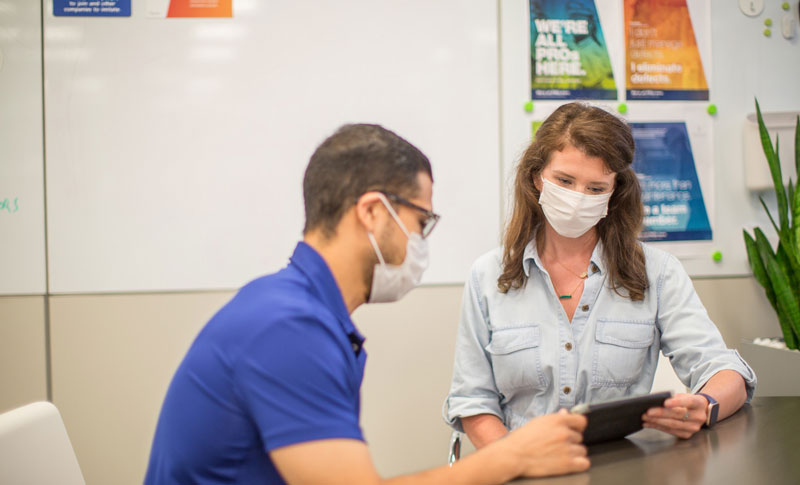
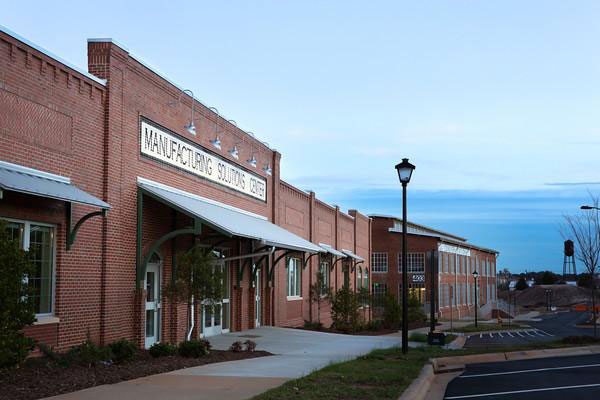
Gaston College’s Textile Technology Center is partnering with the Manufacturing Solutions Center (MSC) at Catawba Valley Community College, the City of Conover, Gaston County, and the private sector to create a launch pad for prototyping and testing reusable personal protective equipment (PPE) products for entrepreneurs and existing manufacturers in response to the COVID-19 pandemic. In support of this effort, the N.C. legislature today passed Bill 1105 Coronavirus Relief Act 3.0 (page 92), which provides $14.3 million in funding.

Manufacturing Solutions Center

The funding will be allocated for the following purposes:

  • The City of Conover will receive a $9,000,000 grant. Approximately $7,250,000 of this amount is allocated to construct a purpose-built facility to house testing labs, rapid prototyping, and a textile sourcing library. The Manufacturing Solutions Center (MSC) at Catawba Valley Community College, located in Conover, will receive $1,250,000 to develop a clean room upfit for their facilities, with $500,000 to be used for equipment, materials, and logistics for a rapid prototyping pilot line to create product and to train a workforce for U.S. manufacturers of PPE.
  • A $5,300,000 grant will go to Gaston County to construct an Incubator and Extrusion Center for Advanced Fibers for Gaston College’s Textile Technology Center. 
Dr. John Hauser

“I’m excited about this new initiative and the building of a new fiber innovation center,” said Dr. John Hauser, president of Gaston College. “Over the years, the Gaston College Textile Technology Center and Catawba Valley Community College’s Manufacturing Solutions Center, have always worked collaboratively on projects, but were limited by needing additional equipment, space, funding and other resources. Now we have an opportunity to expand our expertise to produce high-quality products to benefit our communities.”

“Our city and county partners are strongly behind this project,” continued Dr. Hauser. “They will assist us in building an incubator business that will provide a space and the resources to engage new entrepreneurs and small businesses to manufacture and distribute PPE products. This will mean growth of new businesses and jobs in our community.”

Dr. Garrett Hinshaw

Dr. Garrett Hinshaw, president of Catawba Valley Community College is looking forward to the expansion of the MSC facility and continuing the strong collaboration and partnership between the two centers. “The Manufacturing Solutions Center looks forward to working with Gaston College’s TTC in developing new, advanced fabrics that will better protect our medical and essential workers. This new funding will help us expand our operations and create more high demand, well-paying jobs in our region. This level of collaboration and partnership will serve as a model for the future so that we can better meet the needs of economic and workforce development by leveraging the strength of both Gaston College and Catawba Valley Community College.”

Since the start of the COVID-19 pandemic, hospitals, and emergency care clinics in North Carolina and around the country have experienced shortages of vital PPE needed to care for critically ill patients infected by the coronavirus. Unfortunately, approximately 96 percent of all PPE supplies were manufactured outside the United States.

In addition, medical personnel and essential workers wearing masks — particularly N95 and cloth face masks — for long periods of time were now experiencing “maskne,” acne or other skin irritations from wearing the masks. A better-quality product needed be developed.

In response to this and related COVID-19 product needs, companies quickly turned to the Manufacturing Solutions Center and the Textile Technology Center for product research, testing, and development to produce diagnostic test kits and create fabrics for innovative Personal Protective Equipment such as advanced face mask coverings, shields, and protective gowns. But in order to develop and manufacture these better products, the two Centers discovered they needed additional space, more specialized equipment, and resources. The funding from Bill 1105 will help to meet those needs.

Sam Buff, Director for the Textile Technology Center, commented: “In the midst of our COVID response, Dr. Hinshaw and Dr. Hauser immediately recognized the need for a focus on advanced fiber research and development, and both have been instrumental in advancing the COVID response at our centers.”

Catawba Valley Community College’s Manufacturing Solutions Center and Gaston College’s Textile Technology Center continue to be leaders in textile development and manufacturing. Both provide a full range of solution-based services for the textile and manufacturing industries including:

  • Business Incubation Services;
  • Yarn & Short Staple Processing  ;
  • Fabric Formation & Extrusion  ;
  • Full range of Physical Lab Testing & Analysis; and
  • Customized Textile Training  .

Posted September 9, 2020

Source: Gaston College

Takisada-Nagoya Co. Ltd Has Officially Signed A Supplier Agreement With Polygiene AB

STOCKHOLM — September 9, 2020 — Takisada-Nagoya is a textile company based in Japan. Founded in 1864 the annual turnover is approximately $590 Million. It will sell treated fabrics with all the Polygiene brands from ViralOff to Biostatic stays fresh, both domestically and internationally, starting in October 2020, in preparation for the Fall-Winter collections 2021 and beyond. The mutual starting forecast is worth around $4 Million for Polygiene over three years.

“Under this pandemic situation with COVID-19, it has affected us all to adopt a “new-normal” lifestyle. Which means that the demand for antimicrobial as well as antiviral functionality through textile, has increased rapidly. Polygiene have the number one brands for this in Japan, and we also like that they are committed to be green just like us. Together we will aid the growth of our partners and society,” said Kentaro Taki, CEO of Takisada-Nagoya.

“Japan understood even before the pandemic the value of antibacterial properties in textiles. Together with Takisada-Nagoya we will serve many consumer-facing brands with the benefits of viral protection, antimicrobial properties and odor control. All of which results in less reasons to over-wash and discarding of textiles, which is as important in the long run as all other benefits,” said Ulrika Björk, CEO of Polygiene.

Posted September 9, 2020

Source: Polygiene AB

Bavan Holloway Joins The Board Of Directors Of TPI Composites

SCOTTSDALE, Ariz. — September 8, 2020 — TPI Composites Inc. (TPI), the only independent manufacturer of composite wind blades with a global footprint, announced today that Bavan Holloway has joined its board of directors, effective September 8, 2020. Holloway also will serve on the Audit Committee of the Board. Holloway brings more than 30 years of broad finance and audit experience in complex and highly regulated global business environments.

“We are excited to have Bavan join our board,” said Steven Lockard, TPI’s chairman of the board. “We will greatly benefit from Bavan’s deep audit and global finance experience to help support our strategy of diversified, profitable global growth.”

From August 2010 to April 2020, Holloway served as vice president of Corporate Audit for The Boeing Company (Boeing). She also served in various senior finance roles for Boeing from May 2002 to August 2010. Prior to joining Boeing, Holloway worked for KPMG LLP as a partner and in other roles primarily serving investment services, broker dealer and financial clients. Holloway holds a B.S. degree in Administration from the University of Tulsa and a M.S. degree in Financial Markets and Trading from the Illinois Institute of Technology.

Posted September 9, 2020

Source: TPI Composites, Inc.

Milliken Joins Polypropylene Recycling Coalition To Help Ensure A Circular Future For PP-based Packaging

SPARTANBURG, S.C. — September 9, 2020 — As part of a multi-pronged strategy aimed to amplify plastic circularity, Milliken & Company joined the Polypropylene Recycling Coalition, an industry collaboration established by The Recycling Partnership to improve polypropylene (PP) plastic recovery and recycling in the United States. Milliken will tap into its material science expertise to help the organization increase the supply of high-quality recycled PP plastic in a variety of ways, including funding the coalition’s efforts to enhance the PP recycling infrastructure nationwide, establishing consumer education programs that encourage curbside recycling, and offering its product portfolio to packaging producers looking to use recycled PP plastic material.

According to The Recycling Partnership’s 2020 State of Curbside Recycling report, as much as 1.6 billion pounds of PP plastic may be available per year from single-family homes for potential recycling into new products. The Polypropylene Recycling Coalition aims to improve PP recycling in the U.S. by awarding grant dollars for sorting equipment and supporting consumer education programs and research. Through these efforts, the coalition will help make it easier for people to recycle PP plastic and ensure more recyclers can effectively sort the material in their facilities.

“Milliken’s partnership with the Polypropylene Recycling Coalition illustrates our goal of convening thought leaders within the plastics industry to help create meaningful solutions to address the plastics end-of-life challenge,” shared Halsey Cook, president and CEO for Milliken & Company.

Milliken’s Solutions for Recycled Polypropylene 
“Our membership in the Polypropylene Recycling Coalition is one way we are improving the quality and performance of recycled polypropylene,” added Allen Jacoby, senior vice president, plastics additives for Milliken’s Chemical Division. “It will add a new dimension to our goal to boost plastic circularity — which includes maintaining a robust portfolio of additives and modifiers.”

Milliken’s DeltaMax™ Performance Modifiers, UltraFit™ Solutions and Millad® NX™ 8000 clarifying agent promote the recyclability of PP plastic packaging. DeltaMax Performance Modifiers optimize the physical properties and processability of recycled PP plastic resins, particularly their impact resistance and melt flow. UltraFit Solutions allow converters to use recycled PP plastic resins to produce parts with consistent dimensional tolerances. Millad NX 8000 clarifier received Critical Guidance Recognition from the Association of Plastic Recyclers (APR) in 2019. This recognition for innovative materials validates that Millad NX 8000 clarifier is compatible with plastic packaging recycling and does not adversely affect the recyclability of PP parts.

Polypropylene plastic offers important sustainability advantages in food and non-food packaging applications, including high-performance mechanical properties that reduce the amount of material required in an application compared to other resins. Because it can be used in containers, closures and labels, PP plastic helps avoid multilayer constructions that are traditionally difficult to recycle. Milliken clarifiers, nucleating agents, performance modifiers and other additive solutions help ensure that PP plastic can be successfully recycled and made available for reuse in various applications — preserving its value and extending its useful life.

Posted September 9, 2020

Source: Milliken & Company

The INDEX™ Innovation Awards Go Live

BRUSSELS, Belgium — September 8, 2020 — The INDEX™ Innovation Awards are presented only once every three years for “Excellence in the nonwovens and related industries.” Originally due to be presented at the INDEX20 exhibition in April, since postponed until September 7-10, 2021, EDANA has decided to present these coveted industry Awards ‘Live’, in an online ceremony which will take place on October 6, 2020, from 3-4 p.m.

The INDEX Innovation Awards are open to all INDEX20 exhibitors and EDANA members, for products commercially available by January 31, 2020, and have been selected by a jury of experienced industry members. The INDEX Innovation Awards are the highest accolade for the best examples of excellence in the industry, highlighting creativity and innovations from businesses of all sizes and roles within the business.

The Awards are comprised of seven categories covering all fields of the nonwovens supply chain, with a maximum of three nominees selected per category. The winners will not be disclosed until the online event on 6th October 2020.

The live ceremony will feature short videos from the nominees in each category (see below), followed by the announcement of the winner of each live on-line.

In addition, during the weeks leading up to the live event, observers and participants in the nonwovens industry will be able to view gradually the videos from the nominees posted on the index nonwovens LinkedIn page starting from Tuesday, September 8.

By watching the videos of their choice, visitors to the page will be able to participate in a special prize. The video which receives the most ‘Likes’ in total on the index nonwovens page will be honored with a special INDEX20 ‘People’s Prize’, and voted the most liked industry innovation of this year.

All the Award winners’ and nominees’ submissions will subsequently be on display in the Nonwovens Innovation Lab, a new feature at the INDEX20 exhibition, taking place at Palexpo in Geneva, September 7-10, 2021, aimed at showcasing how invention and sustainability drive the industry forward.

Nominees for each of these, in alphabetic order, are as follows:

  • Nonwoven Roll Goods
    • Fa-Ma Jersey – Microfly ™ – nanocham AG+
    • Jacob Holm – Sontara® Dual   
    • Sandler – New ADL
  • Finished products made from, or incorporating nonwovens
    • Callaly – Tampliner®
    • Dupont De Nemours – Dupont™ Tychem® 2000 SFR
    • Hassan Group- Heatable Geosynthetic Material
  • Raw materials or components (e.g. fibre, binder, polymer, tape), of special relevance to the nonwovens industry and related converted products
    • Beaulieu Fibres International – UltraBond
    • Omya International – Omyafiber® 800 (Calcium Carbonate)
    • Pelsan – Biodegradable breathable film for hygiene & medical market
  • Innovation in machinery of special relevance to the nonwovens industry
    • CAMPEN Machinery – New patented airlaid beater forming technology
    • Dienes Werke für Maschinenteile – Depth Control Senso Plus (Led)
    • GDM – Expandable Welding Wheel
  • Achievement for the most original marketing campaign for a product made from, or incorporating nonwovens:
    • Berry Global – J-Cloth® Plus Biodegradable Communication Campaign
  • Sustainable Product
    • Ahlstrom-Munksjö – Fiber+, Green Capsule oxygen barrier lid, Compostable k-cup filter
    • Beaulieu Flooring Solutions – Rewind – Forward thinking carpet
    • RKW – RKW HyJet® Crop Cover
  • Sustainable process or management practice
    • Diaper Recycling – Pureflow8
    • Fatersmart – Closing the loop on used absorbent hygiene products
    • TiHive™ – TULIPZ

Posted September 9, 2020

Source: EDANA

National Retail Federation: Imports Spike As Economy Continues Recovery And Retailers Stock Up For Holidays

WASHINGTON — September 9, 2020 — Imports surged to unexpected high levels this summer and may have hit a new record as the U.S. economy continues to reopen and retailers stock up for the holiday season, according to the monthly Global Port Tracker report released today by the National Retail Federation and Hackett Associates.

“It’s important to be careful how much to read into these numbers after all we’ve seen this year, but retailers are importing far more merchandise for the holidays than we expected even a month ago,” NRF Vice President for Supply Chain and Customs Policy Jonathan Gold said. “Some of these imports are helping replenish inventories that started to run low after consumers unleashed pent-up demand when stores reopened. But this is the clearest sign yet that we could be in for a much happier holiday season than many had thought.”

“The economy has come into sharp focus, and for good cause,” Hackett Associates Founder Ben Hackett said. “The previous yo-yo pattern of import levels reached a peak in July that appears to have extended into August. Nonetheless, data from around the globe is a mix, with a weak recovery as Europe struggles with rising COVID-19 numbers but China’s exports remain solid. Will this last? A lot of uncertainty is in play.”

U.S. ports covered by Global Port Tracker handled 1.92 million Twenty-Foot Equivalent Units in July, the latest month for which after-the-fact numbers are available. That was down 2.3 percent year-over-year but up 19.3 percent from June and significantly higher than the 1.76 million TEU forecast a month ago. A TEU is one 20-foot-long cargo container or its equivalent.

August was estimated at 2.06 million TEU, a 6 percent year-over-year increase. Actual August numbers won’t be known until next month, but that would be an all-time high, beating the previous record of 2.04 million TEU set in October 2018.

September is forecast at 1.89 million TEU, up 1.1 percent year over year; October at 1.71 million TEU, down 9.2 percent; November at 1.58 million TEU, down 6.8 percent, and December at 1.53 million TEU, down 11 percent.

Those numbers would bring 2020 to a total of 20.1 million TEU, a drop of 6.7 percent from last year, still the lowest annual total since 19.1 million TEU in 2016. The first half of 2020 totaled 9.5 million TEU, down 10.6 percent from last year.

The forecast numbers call for 7.58 million TEU during the July-October “peak season” when retailers rush to bring in merchandise for the winter holidays, making 2020 the third-busiest peak season on record following 7.7 million TEU in 2018 and 7.66 million TEU last year.

January 2021 is forecast at 1.6 million TEU, down 12 percent from January 2020.

Global Port Tracker, which is produced for NRF by the consulting firm Hackett Associates, provides historical data and forecasts for the U.S. ports of Los Angeles/Long Beach, Oakland, Seattle and Tacoma on the West Coast; New York/New Jersey, Port of Virginia, Charleston, Savannah, Port Everglades, Miami and Jacksonville on the East Coast, and Houston on the Gulf Coast.

Posted September 9, 2020

Source: The National Retail Federation (NRF)

Sponsors