September/October 2020

Japan-based Shima Seiki Mfg. Ltd. has chosen 4,320 color references from Switzerland-based Archroma’s Color Atlas Library to add to its SDS-ONE APEX software for textile and apparel design, planning and virtual sampling.

The Woolmark Co. has launched the Woolmark Learning Center, an online learning portal designed to educate the global textile supply chain at both a fundamental and masters education level.

Atlanta-based Messe Frankfurt Inc. announced the 2020 Techtextil North America and Texprocess Americas symposiums will move to a virtual format. Presentations, beginning
in October and running through March, will be divided into two tracks — Technical Textiles and Sewn Products.

Germany-based Messe Frankfurt GmbH has announced Heimtextil 2021 will move from
January to May and will be held concurrently with the biennial Techtextil and Texprocess 2021 events, to be held May 4-7, 2021.

The Materials Science Group at Synalloy, Cleveland, Tenn., has introduced Manawet V-8 — a 100-percent active blended surfactant that is stable to caustic and strong acids. The company reports it is suitable for peroxide bleaching, as a prescour and as an after rinse.

The Roseville, Minn.-based Industrial Fabrics Association International (IFAI) has announced it will collocated IFAI Expo with a new U.S. show named Sun Shading Expo organized by Germany-based Messe Stuttgart. The collocation will begin in 2021 and is expected to continue for  a minimum of five years.

Expo Producción® organizers Tarsus México and Exposition Development Co. Inc. (ExpoDevCo) have rescheduled the event in Mexico City. The show will now take place June 15-17, 2021, at the Centro Citibanamex.

September/October 2020

Loepfe Introduces WeftMaster SFB

Switzerland-based Loepfe Brothers Ltd. has introduced a new weaving technology named WeftMaster® SFB. The newest addition to the WeftMaster family is designed for projectile and rapier looms and controls the tension of all yarn types. Its weft thread brake has been upgraded with new electronics and can control up to four brakes. All brakes were designed for reduced yarn abrasion and higher wear resistance.

“Today, it’s all about productivity and maximizing return on investment,” said Loepfe’s Head of Products & Solutions Guido Wieland. “The WeftMaster SFB helps our customers in the technical textile business to increase production while, effectively, prolonging the life of their original equipment.”

September/October 2020

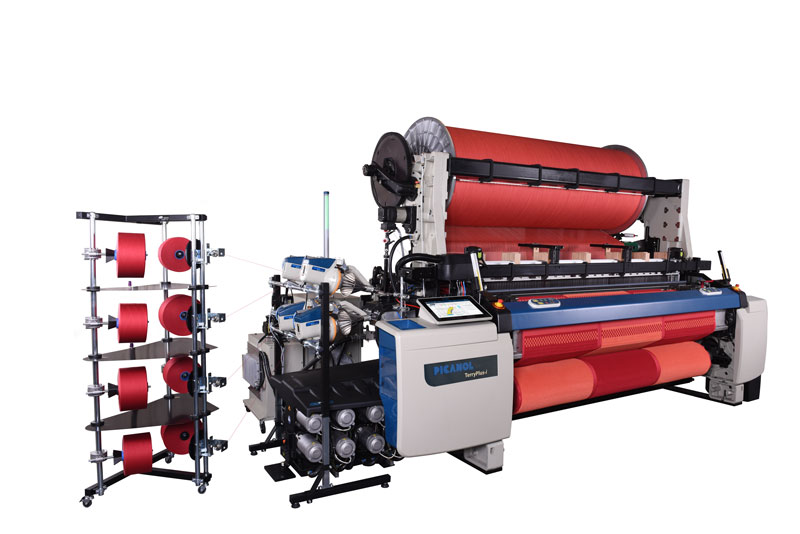
Picanol Launches TerryPlus-i Airjet Weaving Machine

TerryPlus i SmartShed

Belgium-based Picanol NV has introduced the TerryPlus-i airjet weaving machine. Developed with smart performance, sustainability, intuitive control and data in mind, the technology is based on the new OmniPlus-i that debuted at ITMA 2019. Dobby or jacquard shedding motions are possible and the machine feature SmartShed technology for independent and individual shedding motion.

“The latest terry technology makes the new TerryPlus-i the most performant and versatile terry machine on the market,” explained Johan Verstraete, vice president, Weaving Machines. “It doesn’t matter if it is high pile, low pile, high density, low density, complex styles, or simple styles — this machine can handle any challenge. In order to realize this versatility we have developed a completely new pile formation system where the user can program any pile height between zero and 12 millimeters, regardless of whether it is plain terry, wave patterns, or any other pattern and this is done on a pick-by-pick basis.”

September/October 2020

Balancing Performance & Protection

Ascend’s Acteev™ offerings combine the performance of nylon 6,6 with the protection of zinc.

By Rachael S. Davis,Executive Editor

When Houston-based Ascend Performance Materials introduced its patent-pending Acteev™ technology last year, the company touted the odor-fighting properties of the nylon textile resin when used in textile, apparel and filtration applications. However, the onset of the COVID pandemic created additional potential for the Acteev.

“Although we introduced Acteev officially in October of last year, our technology had already been developed for nearly five years,” said Alison Jahn, vice president, global communications and external affairs. “When the pandemic hit a few months later, we knew our technology could be used for a much larger purpose because Acteev’s antimicrobial technology is built into the polymer.”

The Ascend technology uses zinc, which differs from other antimicrobial products that often incorporate silver as the active ingredient. The zinc is embedded in the polymer matrix during manufacturing, not applied as a coating or treatment, which results in a permanent, washfast application when turned into woven, knit, or nonwoven articles. Nylon 6,6 is hygroscopic and attracts moisture, which in turn, activates the zinc ions.

“The embedded zinc in its ionic form is a powerful inhibitor of bacterial growth,” said Dr. Vikram Gopal, Ascend’s senior vice president of technology. “Zinc is an essential element needed for bacterial growth, so bacteria readily allows it inside the cell body. But the zinc ion out-competes other essential elements such as manganese and magnesium and chokes their ingestion channels,” he said. “Without those minerals, the microbes can’t grow or reproduce.” In addition, “Zinc is more environmentally friendly than silver and is labeled by the FDA as GRAS or ‘generally recognized as safe,’” Jahn noted.

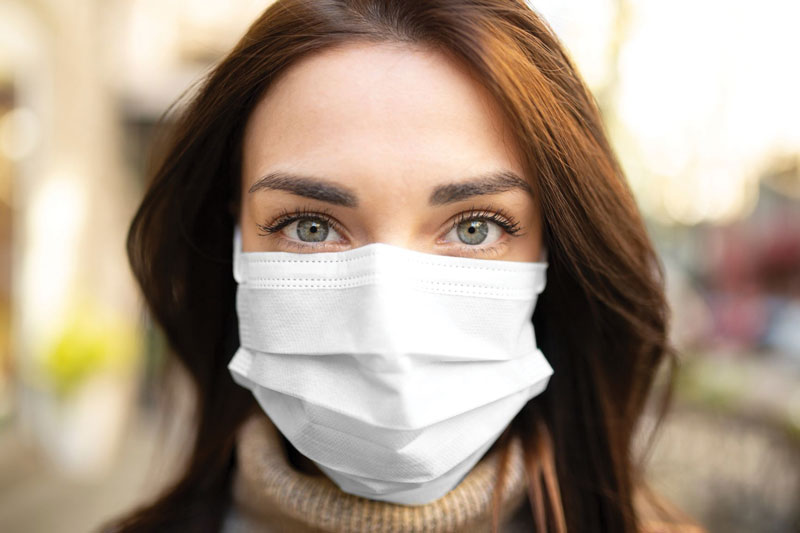
Ascend has grown the brand adding Acteev Protect™ and Acteev Biodefend™ names for the applications. Acteev Protect is specially formulated to guard against mildew, fungi and other microbe growth in everyday applications such as consumer masks, scrubs, apparel and work uniforms. Acteev Biodefend was developed for medical device applications including Level 1-3 surgical masks, surgical scrubs, sheets and medical grade filtration applications.

Ascend has submitted its first FDA 510(k) for clearance to market Acteev in the United States in a surgical mask under the Acteev Biodefend name. According to the company, independent lab tests have shown “Acteev materials to achieve greater than 99 percent efficacy at deactivating bacteria, fungi and viruses, including SARS-CoV-2.”

“Customers can purchase Acteev Protect in various forms including knit, woven, nanofiber, microfiber and spunbond constructions,” Jahn said. “It’s also available in resin form for use in engineered plastics applications. Ascend manufactures all these form factors at our manufacturing locations in the United States.”

Most recently, Ascend launched the Acteev Protect Nonwoven mask, the first product in a series of planned Acteev product introductions. “The nylon Ascend makes is durable enough to be used under the hood of a car, but when it’s spun into fibers, it can be woven or knitted into fabrics that are soft and silky,” said Dr. Lu Zhang, who joined Ascend earlier this year as vice president and leader of the Acteev business. “Combined with our antimicrobial Acteev technology, our fabric makes an Acteev Protect Nonwoven Mask more breathable, more comfortable and more wearable than anything else we’ve encountered in the market.”

“With Acteev, we have cracked the code of balancing top physical performance with antimicrobial protection,” Dr. Gopal said.


For more information about Acteev™ by Ascend, contact Joseph Menner 713-315-5720; jmenne@ascendmaterials.com; acteev.com.


September/October 2020

FESPA Mexico Exhibition Postponed To September 2021

DORKING, England — September 28, 2020 — FESPA has today announced that FESPA Mexico 2020 will be postponed to 23 – 25 September 2021. The exhibition, which was originally scheduled to take place from 26 – 28 November 2020, will again be hosted at the Centro Citibanamex in Mexico City.

The decision to postpone the exhibition was taken in response to the ongoing business disruption and continued public health risk caused by the global COVID-19 pandemic.

Neil Felton, FESPA CEO, explains: “In May 2020, we took the decision to delay FESPA Mexico until November in the face of the developing pandemic. Since then, the impact of COVID-19 in Central America has been dynamic and uncertain. Our number one priority is the health and safety of all of our exhibitors and visitors and we are therefore taking this step to eliminate the risk to all of our participants. We look forward to welcoming our Mexican community back in September 2021.”

FESPA Mexico Exhibitor Showroom

In November 2020, in lieu of the live event, FESPA will be launching a new online Exhibitor Showroom for its Mexican speciality print community.

The digital platform will allow regional exhibitors to showcase all their latest news, product launches and videos. In addition, visitors and prospects will be able to network virtually with exhibitors to share ideas and initiate discussions on sales.

Michael Ryan, Group Exhibition Manager concludes, “We recognise the importance of hosting FESPA Mexico in educating, connecting and advancing the speciality print market in Mexico and Central America, so we’re excited to announce the exhibitor showroom. With this initiative, we’re enabling exhibitors and visitors to connect with each other, share knowledge and spark inspiration until we’re able to meet in person again in September 2021.”

For the latest updates on the FESPA Mexico exhibitor showroom visit: www.mexico.fespa.com

Posted September 29, 2020

Source: FESPA

ExxonMobil Introduces New Groundbreaking High-Loft, Ultra-Soft Nonwoven Solutions For Hygiene Products

HOUSTON Texas — September 29, 2020 — ExxonMobil has introduced a new breakthrough solution to produce nonwoven fabrics with lofty thickness, ultra-cushiony cotton-like softness, and a silk-like smooth touch. Also offering low lint and uniformity, the solution provides a tailored balance of properties for nonwovens used in premium diapers, pant-type diapers, feminine care and adult incontinence products.

  • Delivers nonwovens with lofty thickness, ultra-cushiony, cotton-like softness and a silk-like smooth touch;
  • Processes easily on Reicofil bi-component spunbond technology lines; and
  • Elevates premium diapers, feminine care and adult incontinence products to the next levels of comfort and feel good touch.

“Working collaboratively with Reifenhäuser Reicofil has resulted in a new benchmark for high loft, soft nonwovens to meet growing market demand globally, and particularly in Asia Pacific,” said Olivier Lorge, Global Market Manager, Polypropylene, Vistamaxx and Adhesions Business, ExxonMobil. “Addressing the hygiene market’s desire for innovative, differentiated soft nonwovens, this solution will unlock business opportunities for ExxonMobil customers across the value chain.”

A blend of ExxonMobil™ PP3155E5, ExxonMobil™ PP3684HL and Vistamaxx™ 7050BF performance polymer, the solution is easily processed using bi-component (BiCo) spunbond technology from Reifenhäuser Reicofil, an acknowledged market leader in complete nonwoven, meltblown and composite production lines. By adjusting the formulation, nonwovens can be tailored to meet the needs of different hygiene product components such as the bellyband, back sheet and top sheet used in baby diapers, feminine care, and adult incontinence products.

Offering the thickness required for cushiony softness, the nonwoven fabric is as resilient as it is lofty, while delivering good drapability, uniformity for consistent products and low lint for surface stability. Formulation variations allow nonwovens to be produced with a different feel to meet the needs of the application, from a cottony touch to a silky touch. Spunbound fabrics can be manufactured that are up to 15 percent thicker for outstanding protection compared to other BiCo spunbond high-loft solutions. Plus, 80 percent of the thickness is maintained after being placed under load for an extended period.

“Collaboration can deliver true innovation, as this cutting-edge, high loft solution proves,” said Tristan Kretschmann, R&D manager, Reifenhäuser Reicofil. “Delivering enhanced performance, this solution is an ideal and cost-efficient replacement for carded fabrics that will enable brand owners and converters to create innovative solutions to meet different application needs.”

Posted September 29, 2020

Source: ExxonMobil

Virtual Format Set For 2021 Beltwide Cotton Conferences

CORDOVA, Tenn. — September 29, 2020 — The National Cotton Council (NCC) will conduct the 2021 Beltwide Cotton Conferences (BWCC) virtually on January 5-7 (Tuesday-Thursday) due to continued concerns regarding COVID-19’s spread.

The BWCC, coordinated by the NCC, annually brings together university and USDA researchers, regulatory agencies, extension personnel/agents, consultants, and industry sales/support personnel to exchange information about new products and production/processing systems that can be tailored to individual farming operations for maximum efficiency.

Those planning to participate in the 2021 live-stream event must register at the BWCC’s website, www.cotton.org/beltwide/, which will be updated as program information becomes available. Registration will continue after the virtual 2021 BWCC concludes to permit registered participants access to the event’s on-demand content.

Registration costs for the 2021 BWCC have been reduced due to the virtual format: $180 for NCC/Cotton Foundation members, university and USDA researchers, extension personnel, associations and consultants; $500 for non-U.S. research, extension, associations, and consultants; $350 for non-NCC/Foundation members; and $75 for students.

The 2021 BWCC will begin at 8 a.m. on January 5 with the half-day Cotton Consultants Conference – open to all attendees. Among topics planned for that session are a National Weather Service discussion of prediction models/long range forecasting as well as university cotton physiologists describing weather models’ influence on cotton physiology decisions including growth regulator use and leaf shed practices. EPA officials will review the availability status of dicamba and other plant protection chemistries, and a panel will discuss Bt resistance management and EPA’s new proposed requirements. Participants also will get an update on cotton leafroll dwarf virus and product updates from various agribusiness companies.

The 11 BWCC cotton technical conferences, which now includes the Cotton Sustainability Conference, will provide updates on research and current/emerging technology. Those sessions will meet concurrently beginning on the afternoon of January 5 and conclude by 5 p.m. on January 7.

Posted September 29, 2020

Source: National Cotton Council

MAS Holdings Doubles Its Empowerment Commitment To The UN Foundation In The Midst Of COVID-19

COLOMBO, Sri Lanka — September 29, 2020 — MAS Holdings, the largest design-to-delivery apparel solutions provider in South Asia renewed its commitment today to empower more of its employees by extending its original undertaking to provide health and wellbeing education and services focusing on sexual and reproductive health; and awareness on gender-based violence, to its employees and the communities adjacent to their manufacturing locations. Having surpassed the target of 10,000 beneficiaries since its commitment in June 2019, MAS doubled its commitment to reach 20,000 beneficiaries by the original 2021 timeline. The company, headquartered in Sri Lanka, formalized their new commitment at the virtual parallel event of the 75th session of the UN General Assembly co-hosted by the World Benchmarking Alliance (WBA) and the Universal Access Project of the UN Foundation (UNF).

MAS Holdings was one of 11 trailblazing global companies that committed to improving the health and wellbeing of its workers and community members around the world in 2019 through the UNF’s Universal Access Project and its Private Sector Action for Women’s Health and Empowerment Initiative. The company outlined bold, measurable and time-bound plans to empower its employees through highly focused programs on women’s health, sexual and reproductive health and rights and on gender-based violence, anchored to its globally acclaimed hallmark women’s empowerment platform, ‘Women Go Beyond’ in alignment with SDGs 3 and 5, among others.

A Legacy Anchored in Women’s Empowerment

With women making up 70 percent of the company’s 99,000 global workforce, MAS Holdings identified a fundamental requirement to support and empower its female employees very early in its operation, before it was defined as a corporate responsibility. Stand-alone initiatives that helped women, soon started showing results and began to scale into larger, long-term programs. MAS began to invest heavily in women’s career development, skill development and more importantly in their health and well-being, creating awareness on sexual and reproductive health and rights, menstrual health, nutrition, pre- and post-natal care and issues surrounding gender-based violence.

In 2003, all empowerment and gender equality initiatives came under the Women Go Beyond (WGB) banner that also gave the company a powerful platform to recognize and reward its women on their achievements, a powerful element that pushed WGB and MAS to the global limelight as a pioneer of ethical business practices; WGB has provided over 300,000 opportunities for its employees and their families since its inception, highlighting women’s empowerment as the foundation of economic stability in Sri Lanka and the region. Women who treated their jobs as transitory in nature found new meaning in their careers, discovering not only untapped intellectual capacities and skillsets, but also economic freedom, autonomy and self-confidence.

Progress of Commitments in 2020

While COVID-19 resulted in catastrophic economic and health impacts around the world, MAS was able to leverage its existing WGB framework to reach out to female employees and support them through multi-faceted programs that also addressed possible escalations of domestic and gender-based violence (GBV) during pandemic-related lockdowns. MAS Holdings was able to enhance the quality of its existing health-related WGB programs provided for all employees in 2019 while also introducing highly focused programs on sexual and reproductive health and rights (SRHR), non-communicable diseases (NCD) and life skills through its 2019 commitment.

In addition to the health and wellness programs focusing on hygiene, nutrition, family planning, pre- and post-natal care, that have been carried out over the last decade, MAS has partnered with the Family Planning Association of Sri Lanka to train in-house trainers to deliver workshops on sexual and reproductive health and rights and NCDs. This enabled both male and female employees to share this comprehensive knowledge in their communities to create awareness.

Another such new initiative focuses on equipping in-house counselors and human resources executives with “skills to better address cases of domestic violence and GBV, including an understanding of the legal framework surrounding GBV.” A Legal Rights Awareness Program conducted at an MAS facility in Bangladesh educated 2,800 women on domestic violence as a consequence of early marriage and provided legal aid for those affected.

MAS’ social sustainability strategy is well aligned with its business strategy and is driven by its senior leadership. Dedicated teams across the Group work on identified focus areas and drive necessary interventions to address the many gaps in access, education and services faced by women across global locations.

Other notable programs include the company’s Aloka Breast Cancer Awareness Initiative that saw the company partner with the Sri Lanka Cancer Society to conduct awareness sessions on breast cancer, symptom detection and self-examination. The program educated 6,939 employees and trained 132 more employees on lump-detection, elevating company-wide benchmarks in health and well-being expertise.

Additionally, a total number of 1,167 female employees of MAS graduated from the Personal Advancement and Career Enhancement (P.A.C.E.) program launched by Gap Inc. nurturing their professional and leadership skills..

2021 and Beyond

“We are proud to announce the expansion of our commitment to the UNF’s Universal Access Project and its Private Sector Action for Women’s Health and Empowerment.,” Deputy General Manager of Women’s Empowerment, Advocacy and Code of Conduct, Thanuja Jayawardene said during the virtual event. “Gender equality is a core value for us as an organization and we have an expansive framework to drive this agenda, focusing on economic, social and personal empowerment. We see health, wellbeing and freedom from gender-based violence as basic requirements, to developing female leaders for our businesses and our communities. This is a journey and we have a long way to go, implementing meaningful change.”

As MAS Holdings fast adapts and recovers in a post-COVID landscape, it lies tethered to its founding value of first and foremost being responsible for the safety, health and well-being of its employees. While the company adjusts to the new normal, it remains optimistic of achieving its new targets despite the obstacles and global industry turmoil, taking sustainable action to educate, encourage, empower and celebrate its women.

Posted September 29, 2020

Source: MAS Holdings

ITOCHU, Borealis And Borouge Announce Collaboration To Enable Uptake Of Renewable Polypropylene In The Japanese Market

VIENNA, Austria — September 25, 2020 — Borealis, Borouge and ITOCHU jointly announced today that they have the strategic intent to jointly evaluate how to enable uptake of renewable polypropylene (PP) in the Japanese market.

The developments of climate change are attracting attention in Japan and overseas, and countermeasures are urgently required. Under these circumstances, Japan has formulated a basic plan to introduce approximately two million tons of renewable plastic products by 2030. There is a need to shift to renewable plastics, which feature enhanced environmental considerations without compromising the superiority of plastics.

PP is a principal raw material characterized by its high strength and high heat resistance. It is used extensively, including in food containers, daily commodities and automotive parts. Meanwhile, it has been considered difficult to commercialize PP production from renewable materials due to the many technical difficulties in the production.

Since its foundation in 1994, Borealis has been in business in at least 120 countries as a world-class plastic and resin manufacturer. In the environmental sector, it engages in manufacturing and sales of renewable plastics and recycled resins. In March 2020, it embarked on the commercial production of renewable PP and is now working to expand sales in Europe and around the world.

The renewable PP is made from sustainable feedstock from organic waste and residue streams. Unlike using feedstocks produced with agricultural crops suitable for food and livestock feed, this renewable feedstock is composed of various wastes and residues like from vegetable oil production or used cooking oil from the food industry. Reusing waste products to manufacture renewable feedstocks further enhances their appeal from a sustainability perspective. This step clearly showcases Borealis’ EverMinds™ ambition in terms of thinking circular. The traceability from the point of origin to the final product is ensured through the mass balance model and ISCC Plus certified by a third-party independent body.

Borouge provides innovative plastics solutions for the packaging, energy, infrastructure, mobility, healthcare and agriculture industries. Borouge is working to bring about a plastics circular economy on several fronts, including developing new disruptive packaging designs for re-use and recyclability, and introducing mono-material solutions that enable recyclability and help to unlock value for customers while supporting their sustainability goals.

Borouge is also actively working across the entire value chain to drive innovations in quality, supply and usage of recyclate materials, and create ready to use, value-adding solutions that our customers require to advance their circularity. Borouge aims to be a one-stop shop to its customers for all their sustainable packaging requirements.

ITOCHU aims to enhance its corporate value by addressing social issues through its core business. ITOCHU will move forward with the expansion of the global renewable plastics business, particularly in Japan and in Asia. It targets to commercially launch Japan’s first food containers and packaging materials made of Renewable PP by the end of 2020 as well as other sanitary goods, miscellaneous daily goods, cosmetic containers, office supplies, home electric appliances, automotive parts and other items in many different fields.

ITOCHU will actively use its Group networks in Japan and overseas to create a new business model in the domain of renewable plastics and to accelerate actions towards achieving a society for sustainable global development.

Posted September 29, 2020

Source: Borealis AG

Dow And Sport Singapore Partner To Divert 300,000 Pairs Of Shoes Away From Landfill Into Building New Sports Infrastructure

SINGAPORE — September 25, 2020 — Materials science company Dow and national sports agency Sport Singapore (SportSG) today announced a pioneering partnership to catalyze circular economy solutions in Singapore.

Drawing on its technological and R&D expertise and track record of collaborative solutions, Dow will work with Sport Singapore to transform shoes contributed by members of the community into jogging tracks, fitness corners and playgrounds.

This project is a first-of-its-kind in Asia Pacific.

From September 26, members of the public can give a second life to their used sports shoes by contributing to building new sports surfaces and infrastructure rather than throwing them away.

The “Others see an old shoe. We see the future.” project aims to recycle 300,000 pairs of used sports shoes and divert them away from the landfill over the next three years. A shoe collection drive is scheduled to launch on World Environmental Health Day on September 26, which aims to raise global awareness about today’s most pressing environmental health concerns.

The public can choose to drop their used sports shoes at any of the 30 collection points including participating ActiveSG sport centres & stadiums, Decathlon stores, JD Sports stores and more than 30 education institutions (for students & staff only) all over Singapore. The collection drive will end on November 30.

SportSG CEO Lim Teck Yin, said: “This project demonstrates how we can all play a meaningful part in workable real-world solutions that champion sustainability in our fields of endeavour. The partnership with Dow has brought ideas and expertise together to encourage collective responsibility in the community to drive positive change — taking the effort to recycle your worn-out shoes can not only contribute to new infrastructure but reduce the load on landfills. We hope that this collaboration will bring about ripple effects with more partners in promoting shared aspirations in sustainability through sport.”

“As we move away from a make-use-dispose society into one where circularity becomes ever more relevant today, collaborating with partners across the value chain such as Sport Singapore and the community is critical. We all have a role to play if we want a better outcome for the environment,” said Jon Penrice, Dow president for Asia Pacific. “This project aligns well with our recently announced sustainability target to Stop the Waste where we will collaborate with like-minded partners to increase global recycling, enabling 1 million metric tons of plastic to be collected, reused or recycled through partnerships by 2030.”

This circular economy project collects used sports shoes — including school shoes and football boots without metal studs — from the general public. The rubberized soles and midsoles are then ground into rubber granules that are used as a material to build the sport infrastructure, partially replacing hazardous recycled tires. A water-based and solvent-free binder technology then binds the granules together. The result is environmentally friendlier and safer sports infrastructure for users delivered through partners collaborating for a more sustainable future.

A pilot project to test the feasibility of using recycled sports shoes to partially replace recycled tires was conducted for an initial 200 square meter area — approximately 100 meters 2-lane jogging track — at the yet to be unveiled Kallang Football Hub.

A team of R&D experts from Dow and Dow’s business partner B.T. Sports working in Singapore perfected the process over a period of six months before the pilot project was completed earlier this year.

According to a report by market research company Statista, an estimated 22 million pairs of shoes are sold in Singapore yearly. Statistics from the National Environment Agency indicate that 161,000 tonnes of textile and leather waste were disposed of in Singapore in 2019, of which, only 4 percent was recycled.

Posted September 29, 2020

Source: Dow

Sponsors