OBERTSHAUSEN, Germany — April 21, 2021 — In spring 2015, KARL MAYER’s warp preparation customers in India had two highlights to look forward to: the global player celebrated the start of production at its new plant in Ahmedabad by launching its new ISOWARP sectional warping machine at the same time. A few years later, the state-of-the-art factory run by KARL MAYER Textile Machinery India Private Ltd. took over the construction of the ISOWARP for the domestic market. Being “Make in India” facilitates the shortest possible delivery times, the highest availability of spare parts and the best service quality, and is combined with all the design, quality assurance and product management expertise that the entire KARL MAYER Group has to offer. Key component parts also come from the European network to ensure the highest product quality.
The first two models were delivered to Rajapalayam Mills Ltd. in 2019 and are performing well there. “These machines are working at highest production and produce high quality warp beams, enabling the successful performance of our weaving machines. The KARL MAYER ISOWARP made in India is real value for money and is on par with the machines made in Germany,” said Mohana Rengan, the company’s COO.
This year, the innovative machine is once again playing an important role. In spring 2021, a demo centre featuring the ISOWARP as its centrepiece is set to open at KARL MAYER’s Indian site in Ahmedabad. Here, customers will be wowed by the performance of the warp preparation system and can carry out specific processing tests.
High flexibility plus product quality
The ISOWARP sectional warping machine complements the premium PROWARP® version as a model suitable for the commodity market. Since its launch, it has been continuously adapted together with the associated GH creel in terms of structure and complexity to meet local conditions and diverse customer requirements. Nowadays, a complete family of machines is on offer. The main additions are versions offering new working widths and performance characteristics relating to beaming tensioning and warping speed, for example, which open up completely new applications. Initially designed for shirt production, the ISOWARP can now also be used for household textiles and terry cloths, and for processing filament yarns, among others.
The ISOWARP impresses with its efficiency and quality across all applications. Warp preparation productivity can be significantly increased compared to equipment using conventional counterparts. The quality of the warp beams meets the same high standards as all KARL MAYER machines. It enables an efficiency increase in the weaving mill of 2 to 6 percent, and is particularly based on high-precision band structure control, which is managed by state-of-the-art software.
What’s more, the ISOWARP requires almost no maintenance and only a few spare parts.
GREENSBORO, N.C. — April 21, 2021 — Every day is Earth Day as Cone Denim works in support of preserving Earth’s natural resources. Water is one of the most important resources on the planet; without water, there is no life. A global leader in denim authenticity and sustainable innovation, Cone Denim remains committed to the responsible use of water and leading global water conservation initiatives in the manufacturing of denim fabrics.
“We are focused on a sustainable future and minimizing our impact on natural resources,” said Steve Maggard, president, Cone Denim. “To support these efforts, we’ve affirmed our commitment to the UN Sustainable Development Goals with our water conservation initiatives focused on Goal number 6: Clean Water and Sanitation. We are driving conservation efforts throughout our manufacturing processes and establishing greater transparency and improved ways to monitor, track and report our progress.
We are glad to participate in the UN Global Compact and CEO Water Mandate to further collaboration among global leaders and drive meaningful change.”
Cone Denim has announced its next phase of water reduction initiatives which includes the completion of the Zero Liquid Discharge waste water treatment facility at the Cone Denim Parras (CDP) facility located in Northern Mexico. This customized ultrafiltration and reverse osmosis system will recycle 90 percent of the water used at CDP back into the manufacturing process, leaving only a small amount of water that is lost due to evaporation needing to be replaced with fresh water. As a result, no wastewater will be discharged into the environment, and once completely operational this summer, the Zero Liquid Discharge facility will save over 140 million gallons of water a year — the equivalent of 16,000 gallons per hour.
Cone Denim’s Ozone Flash Finish, introduced last year across its manufacturing platform in Mexico and China, allows significant water savings in the creation of sustainable denims. In partnership with Jeanologia and their G2 Dynamic system, Cone is able to use 85-percent less water in the finishing of denim fabrics, compared to conventional finishing methods. In addition to significant water savings, this eco- efficient ozone technology uses less energy, fewer chemical and allows fabrics to be engineered with an affinity for laser and eco garment washing techniques, offering additional water savings down the line.
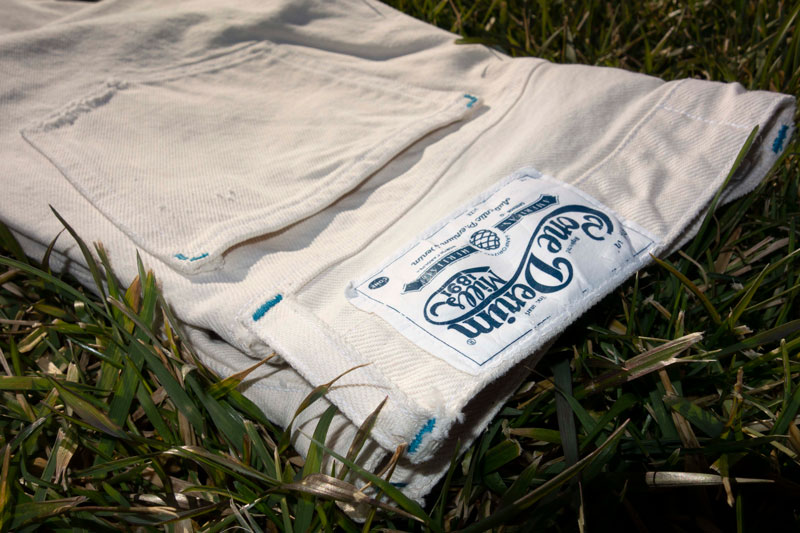
As further commitment to raising awareness and ending the global water crisis, Cone has introduced its newest Cone Community Denim, called Clean Water selvage, featuring a teal selvage I.D. symbolic of global water awareness and made with OCS-certified organic cotton. A portion of the proceeds from the sale of this collection will be donated to Water.org to support their efforts to increase access to clean water worldwide.
Maggard continued: “We are making significant investments to ensure we are doing our part as a valued supply partner to lead in responsible manufacturing innovation and help our customers achieve their sustainability goals. We will continue to be transparent in our communications and further document our progress through verified audits and Higg index reporting.”
NEW YORK CITY — April 21, 2021 — Browzwear, a creator of 3D digital solutions for the fashion industry, and Cotton Incorporated, a not-for-profit company providing the resources and research needed to help companies develop and market innovative and profitable cotton products, are joining forces ahead of Earth Day to create an eco-conscious digital fabric collection.
The all-natural digital collection will consist of over 20 minimally processed cotton fabrics ready to use in VStitcher’s asset library. In addition, Cotton Incorporated’s CottonWorks™ platform will offer users an exclusive collection of over 100 downloadable, Browzwear-compatible, digital cotton fabric files for 3D garment development. By being able to easily access natural, minimally processed fabric alternatives within VStitcher, designers can create endless styles, while reducing textile waste throughout the process and ultimately market a more eco-conscious product.
Utilizing sustainable solutions from responsible farming practices to minimal processing in manufacturing to Browzwear’s VStitcher 3D design program, cotton can go from fiber to product in a way designers and consumers can feel good about. In textile manufacturing, in particular, there are several technologies such as laser etching, cationic cotton dyeing, and enzymatic scouring that can help product developers and manufacturers reduce water, energy, and chemicals during textile processing. Using 3D design programs like Browzwear’s VStitcher for garment prototyping continues the quest toward sustainability throughout the entire product development process by reducing sample waste and lead time.
“Sustainability and innovation are at the forefront of everything we do at Browzwear, which is why we’re thrilled to launch this collection with Cotton Incorporated,” said Sharon Lim, CEO of Browzwear. “This collaboration is about transforming the product development process towards sustainability, and ensuring that we provide more ecological digital options for designers, at every stage between concept and design. The demand for retailers and brands to lower their carbon footprint and conduct greener and more sustainable practices is growing amongst consumers, and we’re proud to be a part of this initiative that will enable this change.”
Cotton Incorporated’s efforts are focused across every area of the cotton life cycle from fiber through finished product. With a staunch commitment to environmental sustainability and the circularity of cotton, Cotton Incorporated advances the use of cotton in textile products by doubling down on innovation. “Innovation is at the heart of what we do with cotton,” said Mark Messura, senior vice president of Global Supply Chain Marketing, Cotton Incorporated. “It starts at the farm level where cotton is responsibly produced and continues in our work supporting design and manufacturing.”
“Designers have easy and free access to an amazing array of cotton fabric files. Combining these digital fabrics and cotton trend insights, designers are on a fast path to innovate and create,” said Katherine Absher, manager of Fashion and Digital Design Marketing, Cotton Incorporated.
ISRAEL — April 21, 2021 — The collaboration sees Indorama Ventures’ fiber producer FiberVisions, and spunlaid nonwoven manufacturer Avgol working closely with scientists at Polymateria to commercially harness the innovative ‘biotransformation’ technology pioneered by the U.K.-based company. The patented technology alters the properties of polyolefins to make them biodegradable in a natural process.
The Biotransformation Technology allows the companies to bring disposable products a unique managed lifecycle and further expand an already extensive catalog of fiber/spunlaid offerings. The focus of these efforts will be in the launch of non-oxo-degradative components for Personal Protection Masks and Face Covering, Hygiene, Agricultural, Industrial and Homecare applications.
The use of Biotransformation Technology will support application in non-virgin resin recycling while providing a solution for ‘fugitive’ used articles, including those items that have not been properly recycled or disposed of. This process involves the material decomposing into a wax, wherein the wax is further degraded by environmental bacterial action into carbon dioxide, water and biomass.
The parties have been developing prototypes of component fiber and non-woven products. The first prototypes developed through the partnership have been tested and are compliant with the stringent testing for biodegradability defined in British Standards Institute’s (BSI) new standard for Biodegradation, PAS9017. In meeting this standard, fiber and fabrics are confirmed to form no harmful microplastics as part of the biodegradation process.
D. K. Agarwal, CEO of Indorama Ventures, said: “We are delighted to be partnering with Polymateria to bring their revolutionary technology into our fibers business and sustainability portfolio more broadly.
The collaboration between our businesses over the last 18 months has been exemplary and created a credible and scalable solution to an increasingly visible environmental issue”.
Niall Dunne, CEO of Polymateria, said: “With 32 percent of all plastic winding up in our natural environment each year we need to ensure we are working with partners who can enable scalable solutions to address what is becoming close to a 100 million tons per year problem.
Indorama has a strong track record on sustainability and shares our mission and values. The trust that has emerged between our businesses has been grounded in science and a shared mission to tackle the plastic pollution pandemic at scale”.
Shachar Rachim, CEO of Avgol, said: “This is an incredibly exciting collaboration for IVL and Avgol. Our business remains dedicated to developing sustainably sound materials, and the development of entirely biodegradable components is an important step in bringing the first 100-percent biodegradable-recyclable Hygiene products to the market. This collaboration underscores our commitment to commercialize innovative products which are environmentally focused.”
FUNDÃO, Portugal — April 21, 2021 — Twintex invests in Virtual Reality as an innovative method to increase its digitalization in the clothing sector.
Due to the pandemic situation that the textile and clothing industry has been overcoming and the need to adapt to current circumstances, the largest clothing company in the Center of Portugal has recently launched on its digital platforms a 360-degree virtual tour in which is possible to meet its two facilities with a click — Twintex and Logistic Centre as well as the entire team in operation.
Through this digitalization, it is possible to follow all the production processes from the reception of raw material, cutting, product making, shipping etc. to participating in the creative process of the team. In addition to its presence on social platforms available to everyone, this project has a version in Oculus GO that offers the user the experience of Virtual Reality within a clothing manufacturer. In this way, the company opens its doors and reinforces its transparency and rapprochement with consumers, clients and the community in which it operates.
At Twintex, we believe that what were initially adaptations to the working method are now trends that will remain and develop more and more in the future. This is why we have to continue implementing new tools to keep up with market changes, Client needs and our Community, says Liliana Torres, Public Relations, Sustainability and CSR Manager of the company.
Exporter of 100-percent of its production and producer of the paramount fashion Brands worldwide, Twintex has been implementing new ways of relating to its Clients who are increasingly standing out through the various digital platforms while promoting digitalization in the region.
TOKYO — April 21, 2021 — Teijin Ltd., JGC Holdings Corp. and ITOCHU Corp. have signed a joint agreement on the license business of polyester chemical recycling technology from discarded polyester textile products.
In recent years, environmental damage — such as global warming caused by greenhouse gases and marine pollution caused by waste plastic and abandoned fishing gear — has become more serious, and global countermeasures are urgently needed. Japan has implemented various initiatives aimed at helping to realize a more sustainable society, such as targeting the achievement of net zero emissions by 2050. In the fiber and textile industry, there is an urgent need to address sustainability issues such as the mass disposal of clothing as well as environmental challenges such as high levels of carbon dioxide emitted during manufacturing.
Teijin has extensive and global experience in this area as a result of its operation of the world’s first large-scale plant utilizing chemical recycling technology to produce polyester from discarded polyester textile products.
JGC has developed world-class engineering technology and has acquired a wide range of expertise in the oil & gas sectors, among others. It is now focusing on the construction of environmentally friendly plants and on other technologies and businesses related to the protection of the environment.
In 2019, ITOCHU launched its “RENU” project, aiming to address the problem of excessive waste in the textile industry; it is also developing a global market for recycled polyester materials derived from used clothing and spare fabric generated during textile manufacture.
This agreement will bring together Teijin’s proprietary chemical recycling technology deployed in the manufacture of polyester, the expertise of the JGC derived from its global engineering business, and ITOCHU’s extensive network of textile industry players. The three companies intend to establish a system for collecting discarded polyester fiber products and cost-effective chemical recycling technology for using such products as raw materials.
Going forward, Teijin, the JGC and ITOCHU aim to expand the range of effective solutions for the mass disposal of used textile products.
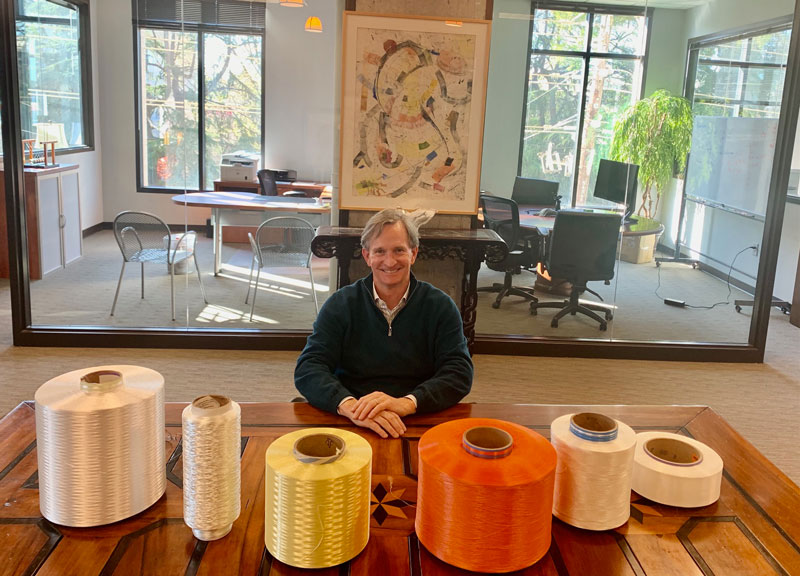
Art Hamilton with a selection of yarns offered by Hamilton International.
ATLANTA — April 21, 2021 — Effective immediately, Hamilton International is pleased to announce its return as an independent supplier to the polyester industrial yarn segment.
Following the divestiture of a partnership with an international manufacturer that created the largest polyester industrial yarn importer in North America, Hamilton returns to the market on which it was founded, while continuing to supply its international customer base with a broad range of polyester, nylon, polypropylene, para aramid and cotton industrial, textile, spun and staple yarns.
The American-owned company is focused on providing innovative textile solutions to its customers while supporting their uninterrupted supply chain.
Hamilton International is led by Art Hamilton who has more than 30 years of experience in the industry and is able to leverage a worldwide network of sourcing relationships to meet client needs.
“Our approach to the market allows us to negotiate the best pricing, meet a customer’s precise requirements, and mitigate supply chain issues,” Hamilton said. “We work with suppliers in several countries, and we’re not afraid to invest to keep the supply chain full. Plus, we’re focused on innovation to address our customers’ needs.”
Hamilton International supplies textile solutions to customers across industries by sourcing products and investing in strategic production. The company was founded in 2008 by Hamilton following years in the industrial textiles industry. His experience includes time with Martin-Colorfi as senior vice president during its public offering.
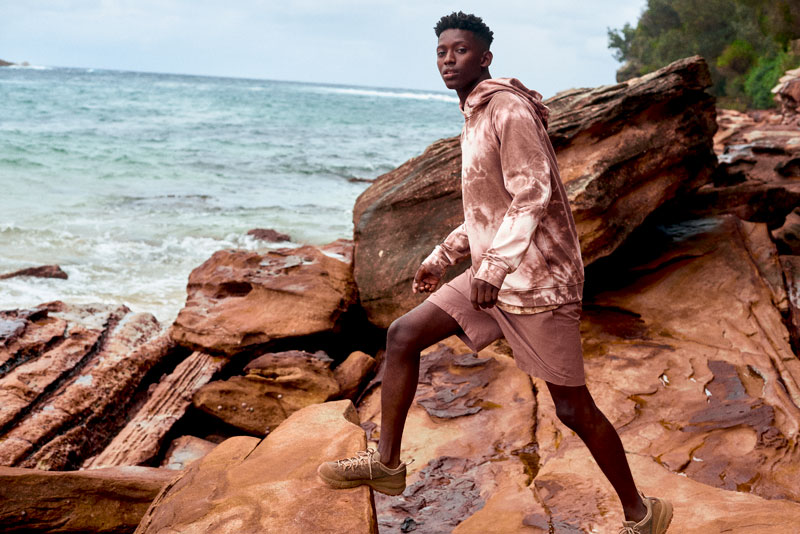
Earth Dye is a new, limited-edition collection of products that features casual, easy-to-wear styles made with lower-impact dyes upcycled from the waste of oranges, beets, and saw palmetto trees sourced from the agricultural and herbal industries.
VANCOUVER, British Columbia — April 20, 2021 — lululemon athletica inc. today announced two new initiatives that underscore lululemon’s commitment to its Impact Agenda and deliver on its future-facing commitments toward sustainability: lululemon Like New, the brand’s first-ever recommerce program, and Earth Dye, a new, limited-edition collection made with earth-friendly dyes, both launching this May. The new initiatives are the latest efforts from the brand under its Be Planet pillar, which is focused on making products that are better in every way for people and the planet.
“lululemon is actively working to help create a healthier future, and we are focused on meeting the goals detailed in our Impact Agenda, including making 100 percent of our products with sustainable materials and end-of-use solutions by 2030,” said lululemon CEO Calvin McDonald. “Our lululemon Like New and Earth Dye initiatives are both meaningful steps towards a circular ecosystem and demonstrate the sustainable innovation underway in product development and retail.”
Released in Fall 2020, lululemon’s Impact Agenda marked the brand’s stake in the ground toward an equitable, sustainable future, and outlined its vision to minimize environmental impact and contribute to a better world. Developing products with sustainable materials and end-of-use solutions are central to the multi-year strategy.
lululemon Like New is a creative and regenerative guest model, and one way the brand is extending the life of product that has been designed to last. lululemon also continues to innovate better materials. The lower impact dyes featured in the new Earth Dye collection follow the introduction of solution-dyed nylon, as well as recycled polyester and Forest Stewardship Council® (FSC®)-certified rubber materials, among others. lululemon is a founding member of the Mylo™ Consortium as well, a group of forward-thinking global companies focused on contributing to a more sustainable future for fashion. Mylo is a sustainable alternative to leather made from renewable mycelium.
To learn more about lululemon’s Impact Agenda and Be Planet actions, visit https://shop.lululemon.com/story/sustainability.
lululemon Like New
lululemon Like New is a recommerce model for guests to rethink, revive, and rediscover lululemon product through a trade-in and resale program that directly reinvests profits to support additional sustainability initiatives, including circular product design, renew and recycle programs, and store environmental programs. The trade-in program launches as a pilot in California and Texas in May, then expands into a resale program in the same markets in June.
Starting in May, lululemon guests in California and Texas can begin to trade in gently used lululemon clothing in one of the brand’s 80+ participating stores or by mail in exchange for a lululemon e-gift card. The online resale program will begin in June, with 100 percent of profits1 being reinvested into additional sustainability initiatives, further extending and amplifying the positive impact of lululemon Like New.
Eligible products need to be in “like new” condition. lululemon has partnered with Trove, recognized industry experts in branded recommerce, to support with resale technology and operations. All trade-in products will be cleaned using state-of-the-art technology. Gear that does not meet quality standards will be recycled through lululemon’s longstanding partnership with debrand.
lululemon’s product quality lies at the heart of the program, extending the life of gear that has already been designed to last. Purchasing lululemon Like New product, from guest favorites like Wunder Unders to ABC Pants, can save up to 50 percent of the product’s carbon footprint and 310 grams of waste2. Guest feedback will be collected throughout this year’s pilot to inform future scaling.
Earth Dye Collection
Earth Dye is a new, limited-edition collection of products that features casual, easy-to-wear styles made with lower-impact dyes upcycled from the waste of oranges, beets, and saw palmetto trees sourced from the agricultural and herbal industries. These dyes use less water, carbon, and synthetic chemicals compared to conventional synthetic dyes, aligned with the brand’s goal to decrease its environmental footprint.
The collection marks one way lululemon is designing its products for long-lasting performance, beauty, and sustainability. Coupled with the sustainable dye solution, the tie-dying process produces a slightly different result each time, so every print in the collection is unique. Inspiration was drawn from colors and textures found in natural landscapes, resulting in muted, earthy tones.
lululemon’s new Earth Dye Collection will be available globally starting Tuesday, May 11, 2021, in select colors at lululemon stores and online at lululemon.com.
1100% of pilot program profits or 2% of revenue, whichever is higher. 2Trove calculations on average carbon footprint and waste savings between lululemon’s Wunder Under High Rise Tight 28″ Full-On Luxtreme and ABC Joggers 30″ Warpstreme as of January 2021. Per item carbon footprint savings were calculated by taking the percentage difference between the life cycle impact of a new item versus a resold item, including the incremental impacts of transporting, cleaning, and reselling the item. The impact of a resold item assumes that the item has 90-95% (depending on item condition) of usable life left at the time of resale, and that the purchase of a resale item directly replaces the purchase of a brand new item 60% of the time (i.e., displacement rate). Waste savings is equal to the weight of the garment in grams. Amount of savings may vary for other lululemon products.
GREENVILLE, S.C. — April 20, 2021 — Delta Apparel Inc., a provider of core activewear and lifestyle apparel products, today announced preliminary sales and operating results for its 2021 fiscal second quarter ended April 3, 2021.
The Company expects net sales for its March quarter to be approximately $108 million, a 12-percent increase compared to the prior year. The second quarter double-digit sales growth in both the Delta Group and Salt Life Group segments, coupled with margin expansion and controlled spending, is expected to result in operating income more than double the prior year March quarter, and diluted earnings per share in the range of $0.58 to $0.60 compared to $0.19 in the prior year period.
Robert W. Humphreys, the company’s chairman and CEO, commented: “We continue to be very encouraged with the broad-based demand we are seeing for our products in the many markets we serve. I am incredibly proud of our team’s hard work and dedication to service the demand from existing customers while building additional channels of distribution that should fuel further growth in the future. Our Activewear business had an outstanding quarter, led by over 40-percent growth versus prior year in our FunTees business shipping to major brands and retailers alike. Our DTG2Go digital print business saw a slower start to the quarter but gained momentum as the quarter progressed, with double-digit unit growth in the March period and the launch of several new customers during the month. Consumers continued to seek out the Salt Life brand across all channels with notable performance at our branded retail stores and e-commerce site, which grew over 175 percent and 40 percent, respectively, compared to last year. We are entering the season with the largest wholesale order book on record for Salt Life, showing the continued strength of the brand at retail.”
Humphrey’s further commented, “Delta Apparel’s strategic advantages, namely our vertically-integrated and innovative supply chain, diversified sales channels, and authentic brands, differentiate us in the market and we believe are the key reasons we are able to deliver such compelling top line and bottom line results for our stakeholders. Our manufacturing team has been ahead of schedule in increasing our production to record levels to service the demand we are seeing for our activewear and branded apparel. Although we remain inventory constrained in the near term, we are working diligently to serve our customers’ needs and ultimately rebuild our inventory levels for future opportunities. We look forward to providing more information on our March quarter results and business outlook in early May.”
MILWAUKEE/TURIN, Italy — April 20, 2021 — Rockwell Automation Inc., a company dedicated to industrial automation and digital transformation, and Comau, an industrial automation and robot manufacturer, announced today that they are joining forces to give businesses worldwide vital tools to maximize manufacturing efficiencies through unified robot control solutions.
“Industrial companies are looking for efficient ways to integrate robotics into their operations for process optimization and agility,” said Rockwell Automation Chairman and CEO Blake Moret. “Rockwell Automation’s collaboration with Comau will simplify programming and lifecycle management, accelerating time to value for our customers.”
Moret said this expansion of robotic applications is rooted in Rockwell’s broader strategy to help industrial companies save time and improve performance with unified robot control, ultimately providing long-term value for their business. The partnership is a collaborative development and selling model that offers the unified robot control product to both companies’ customers.
“Comau’s robotics and industrial automation expertise, as well as its reputation for high performance, reliability, and quality, combined with Rockwell Automation’s global capabilities and experience in automated material handling, food and beverage, household and personal care, and life sciences, gives customers the incremental value of an integrated robot solution,” said Comau CEO Paolo Carmassi. “Comau is eager to work with such an important partner that has a market-leading global footprint in all industries.”
Engineers will now be able to program their entire machine in one environment, including Comau robot arms directly controlled through Rockwell Automation’s Logix-based controllers. Rockwell Automation’s Studio 5000® automation system design software provides relief from the time-consuming and often difficult task of trying to coordinate traditionally separate machine control and robot systems to work together using two different software tools.
Machine builders, system integrators, and others will gain development and deployment efficiencies through the use of digital engineering tools like Rockwell’s Emulate3D digital twin software, which creates digital models of production lines, auto-generates machine control code, and has built-in capabilities for Comau robots.
The combined Rockwell and Comau solutions will also offer benefits beyond enhanced integration. For example, end users can use analytics and digital twin tools to gain deeper insights into machine performance and potential production optimization. They can also use safety and security solutions to reduce business risks.
Operators on the manufacturing floor who use Rockwell’s FactoryTalk® software suite will benefit from being able to see both line and robot control systems on a single interface. In-plant and remote technicians will only need to learn and maintain one architecture to monitor both systems. They can also leverage Rockwell’s augmented reality (AR) tools to improve lifecycle and service cycle maintenance.
Automazioni Industriali Capitanio, a recognized system integrator, designs, manufactures, and commissions automation systems for the metals industry and is an early adopter of the joint solution. Marco Capitanio, managing director of AIC, said the Rockwell-Comau collaboration allows the company to offer a seamless robot solution for customers, which he sees as a key advantage for a machine builder.
“We value the simple and flexible programming environment, complete access to robot supervision and diagnostic parameters, and the ability to leverage existing automation panels and standard control devices,” Capitanio said.
Rockwell products and technology that will be key to robotics integration include the following:
Allen-Bradley ControlLogix® control systems;
Kinetix® 5700 servo drive platform;
Studio 5000® automation system design software;
FactoryTalk® View human machine interface (HMI) software;
FactoryTalk® InnovationSuite™, powered by PTC digital transformation software suite;
Emulate3D™ digital twin software; and
PTC Vuforia AR tools for remote collaboration and information capture.
Comau’s comprehensive robot range meets the needs of a wide variety of industries, from automotive to logistics, food and beverage, and packaging, just to name a few. It includes more than 40 different industrial robotic arms, with load capacities from 3 to 650 kilograms.

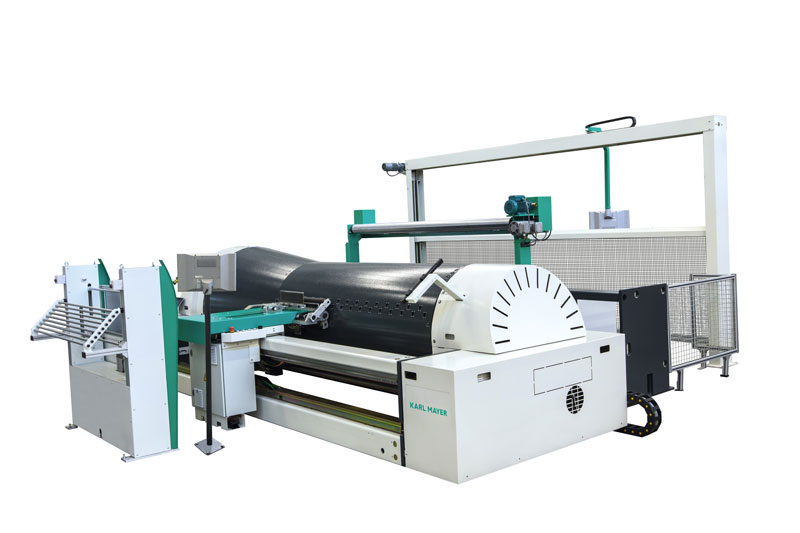 OBERTSHAUSEN, Germany — April 21, 2021 — In spring 2015, KARL MAYER’s warp preparation customers in India had two highlights to look forward to: the global player celebrated the start of production at its new plant in Ahmedabad by launching its new ISOWARP sectional warping machine at the same time. A few years later, the state-of-the-art factory run by KARL MAYER Textile Machinery India Private Ltd. took over the construction of the ISOWARP for the domestic market. Being “Make in India” facilitates the shortest possible delivery times, the highest availability of spare parts and the best service quality, and is combined with all the design, quality assurance and product management expertise that the entire KARL MAYER Group has to offer. Key component parts also come from the European network to ensure the highest product quality.