How Digitalization Is Helping Clothing Manufacturers Choose The Right Color

TW Special Report

Clothing companies compete in markets with a bewildering array of products designed to tempt and tantalize consumers into making a purchase. A garment’s color says a lot about the wearer and so manufacturers must get this right if they are to succeed in such highly competitive markets.

Color Matters

Color is essentially the light that is observed by the human eye. What is perceived as color is affected by the light source, how wavelengths are reflected/absorbed, and how the viewer receives and interprets the light. However, consumers are not generally aware of these distinctions. What matters to them is how they feel, and color can have a profound affect upon the way they respond to an item of clothing.

Firstly, colors are cultural markers that are interpreted in specific ways by individual societies. For example, in the West you might say “green with jealousy,” but in India green is symbolic of hope and virtue. In the Far East, red demonstrates prosperity, vitality and good fortune, but in many cultures it is used to signify a warning or danger. When choosing color palettes for clothing, it is important to be aware of these factors in order to not send out the wrong message.

Secondly, and more significantly, fashion trends will have a major impact on the colors people want to wear. Consumers are increasingly fashion-conscious, meaning suppliers need to stay informed about what color palettes are in-fashion and what are out of fashion. These trends can be impacted by a wide variety of diverse factors. For example, in 2021, people might feel drawn towards the five colors of the Olympic rings and so they become fashionable. However, in 2020, when people were often restricted to their homes, they might have looked at neutral home furnishing colors for inspiration. Without the need to go out, people often retreat towards more homey colors.

Clothing colors conform to fashion ideals and cultural signifiers, but they also conform to the needs of the consumer. This diverse set of requirements means consumer demand can change very quickly and suppliers must be able to respond rapidly to ensure their products continue to meet the needs of the market.

Choosing the Right Color

Three groups of people are normally involved in choosing what color a garment should be — the designer, the buying office, and the supplier/manufacturer. They need to make their decisions based upon an understanding of all of the above and also what they think will sell. With so many people involved, and the fact we also perceive colors in different ways, this process is inevitably subjective and difficult.

Traditionally, approving a color for a garment involves the supplier submitting a physical color sample to the other decision makers. These are then considered side-by-side, with the decision makers either approving a sample or making comments for a rework.

There are several problems with this process. Firstly, it is time-consuming and expensive, with samples and responses being conveyed back and forth between factories and offices. Secondly, this long-winded process allows the opportunity for sample contamination or aging, or the samples may even become mixed up, with decision makers commenting on the wrong swatches.

In the time of COVID-19, the color approval process has become even more convoluted. Many of the decision makers are now required to work from home. Samples therefore need to be ferried to even more destinations, increasing the chance of contamination or confusion. It is also possible that couriers may be unable to deliver to some decision makers, based on regional restrictions. The whole process is therefore slowed down and more expensive, with an increased possibility of mistakes occurring.

Digitalization: A Better Way to Choose Color

Forward-thinking businesses are now turning towards digitalization to help them streamline the color assessment process. Instead of sending physical samples to decision makers, they are sending samples to independent laboratories that then measures the colorimetric data and capture real color images. If required, the laboratory will also generate a color data file.

This information is then shared to all decision makers via cloud-based technology. All stakeholders have rapid access to the same image, report, data and standards, allowing them to make informed decisions based on identical information about the sample.

This process has multiple advantages for both the supplier and the consumer. For consumers, it results in less expensive and more appealing products. For designers, the process is faster and more accurate. It also allows suppliers to respond more quickly to changes in fashion, meaning the consumer can easily stay ‘on-trend’.

With samples only needing to be sent to one destination, the process is cheaper and more sustainable. It also allows greater consistency and engenders objective decision making.

SGS Solution

SGS’s cloud-based solution helps suppliers to streamline their color approval process. Samples are processed by their global network of specialist laboratories, and the results can be viewed by stakeholders around the world. The system measures samples to ISO 105 J03 or AATCC 173 and can be applied to wide variety of materials, including rubber and leather.

When designing and manufacturing new garments, SGS’s Cloud Based Color Assessment service provides the ideal solution, helping businesses to reduce waste and their carbon footprint, while speeding up the decision-making process and removing subjective inconsistencies.

November 2021
TrusTrace Launches Traceability Ecosystem To Accelerate Sustainable Transformation In The Fashion Industry

COIMBATORE — November 18, 2021 — TrusTrace, a platform for supply chain transparency and product traceability within the fashion and retail industries, today announced its new traceability ecosystem that will further the company’s mission to accelerate sustainable transformation in the fashion industry.

The ecosystem aims to solve major supply chain transparency and sustainability challenges by developing powerful integrated solutions through seamless data integration and knowledge exchange. The ecosystem launches with key industry players Higg, Open Apparel Registry (OAR), circular.fashion, Renoon and Haelixa. This series of collaborations will also reinforce TrusTrace’s position as the mission-critical, one-stop operating platform for brands aiming to solve major supply chain traceability and sustainability challenges.

Shameek Ghosh co-founder and CEO, TrusTrace comments: “We are incredibly excited to launch the traceability ecosystem in collaboration with such a strong group of respected industry leaders. I have always believed that sustainability can not exist without traceability and a challenge of this scale needs significant collaboration. TrusTrace’s open architecture platform ensures we are able to integrate seamlessly with other sustainability solution providers within this ecosystem, allowing us to deliver holistic solutions for some of the fashion industry’s biggest sustainability challenges.”

The traceability ecosystem brings together a series of key collaborations to deliver powerful solutions for both brands and eco-conscious customers. The first phase launches with sustainability insights platform, Higg and global apparel open-source database, the Open Apparel Registry.

With the fashion industry fast transitioning towards products and supply chains with less impact on the environment, there is an increased demand for deep and accurate upstream supply chain data. The Higg partnership will facilitate the integration of TrusTrace and Higg data sharing, allowing TrusTrace clients to understand the social and environmental impact of their supplier facilities and their products by accessing their data from Higg on TrusTrace. Users will now be able to understand the footprint of the various materials in a single location and analyse supply chain and material combinations. Customers will also be able to access the Higg Facility Environmental Module (FEM) and Facility Social & Labor Module (FSLM) FLSM against their supplier facility profiles on TrusTrace, providing them with a single view of all the sustainability information for a facility.

To enable seamless data sharing about facilities with different certification bodies, audit bodies, and other industry solutions, it is important to be able to easily identify a facility across these different systems, using one common industry standard facility ID. Together with the Open Apparel Registry, TrusTrace will map all its 8000+ supplier facilities using an industry standard unique OAR ID and enable brands to standardize facility information across different systems like Higg, ZDHC and other certification bodies. This collaboration addresses the lack of standardization in facility information across multiple databases, helping to streamline and improve facility level information for the fashion industry.

“There is a real urgency for comprehensive tools and contextualized data to help bring visibility and insight to untracked areas of the supply chain,” said Higg CEO Jason Kibbey. “Our partnership with TrusTrace demonstrates a joint belief that collaboration is the most effective way to develop the best tools to capture deeper insights into the chain of custody. Together we bring robust new capabilities to both platforms that will support our clients in accelerating towards their sustainability goals.”

“The opportunity for industry collaboration and accurate factory identification is given a huge boost each time another organization chooses to programmatically connect their database with the OAR and incorporate OAR IDs into their systems. The more data we are openly sharing across our respective databases, the more organizations of all sizes are able to access and work with the data that is core to the collaboration and change that so many in the sector are looking to achieve.” Natalie Grillon, Executive Director, Open Apparel Registry

The second phase of the ecosystem will launch in early 2022 with a key focus on driving physical traceability and circularity.

Collaboration with physical marking and tracing technology solution, Haelixa, will develop a joint traceability programme supporting end-to-end traceability through physical tracers such as invisible DNA markers.

Furthermore, the collaboration with circular.fashion will enable brands to embed a circularity.ID into their garments to foster end-to-end traceability, transparency of the supply chain, increased customer engagement, prolonged use and recycling at end-of-life.

Finally, Renoon, a platform that empowers eco-conscious consumers to shop according to their sustainability values, will also join the TrusTrace ecosystem to collect supply chain data, manage product evidence and automate the process of checking product compliance to sustainability standards. This provides end consumers with more accurate data driving purchase decisions and brands with a recognition for their sustainability efforts.

This launch marks the first stage of the TrusTrace traceability ecosystem, the platform will continue to focus on developing precompetitive collaborations in order to accelerate powerful solutions for the fashion industry.

Posted November 18, 2021

Source: TrusTrace

JCPenney And Muhammad Ali Enterprises Announce A Long-Term Strategic Partnership That Features The G.O.A.T. As The Amplifier For JCPenney’s Goodwill Mission And Community Initiatives

LEWISVILLE, Texas  — November 18, 2021 — JCPenney today announced that it has partnered with Muhammad Ali Enterprises, appointing the global icon as its Goodwill Ambassador. Through the long-term charitable partnership, Ali’s Six Core Principles will be integrated into JCPenney’s community initiatives and utilized to uplift JCPenney’s corporate mission to live by James Cash Penney’s Golden Rule. The partnership will kick off on Nov. 30 with the ‘Be The Greatest’ campaign in honor of Giving Tuesday.

To kick off the partnership, JCPenney has engaged the nonprofit Step Up to serve as the inaugural charitable partner. In celebration of Giving Tuesday, a global day of giving on Nov. 30, JCPenney and Muhammad Ali will launch the ‘Be The Greatest’ campaign to inspire people to lift others up and be their best selves.

Step Up propels young women facing system barriers to pursue their dreams of success by empowering them to become confident, career-focused, and ready to join the next generation of leaders. Step Up’s purpose fundamentally aligns with Ali’s Six Core Principles and JCPenney’s values. Ali’s monumental life and journey were fueled by Confidence, Conviction, Dedication, Giving, Spirituality, and Respect. These Six Core Principles were the foundation of his activism and today, serve to inspire greatness in others. The ‘Be The Greatest’ campaign is an evergreen initiative that will tap into Ali’s guiding principles and aim to inspire JCPenney associates and customers to make a difference in their communities.

‘Be The Greatest’ kicks off this holiday season with a virtual livestream event featuring a surprise guest from Muhammad Ali Enterprises, members of the JCPenney community, and Step Up leaders, students, and alumni. The occasion will be marked by a $100,000 donation to Step Up from JCPenney.

“I have always believed that Muhammad belonged to the world,” said Lonnie Ali. “The principles by which he lived are more relevant than ever in 2021. I know that Muhammad would be honored to see his Six Core Principles illuminated by JCPenney and extended to the young women of Step Up.”

“We are incredibly honored to partner with one of the most influential humanitarians of all time to inspire greatness in others,” said Andre Joyner, senior vice president and chief human resources officer at JCPenney. “Muhammad Ali’s Six Core Principles are a natural extension of JCPenney’s founding principle of the Golden Rule—to treat others as we would like to be treated. We’re excited to launch ‘Be The Greatest’ with Step Up, especially during this season of giving.”

JCPenney has supported Step Up since 2018 by providing grants for their Young Luminaries program, prom dress shopping sprees, associate mentoring opportunities, and most recently a virtual panel in association with International Women’s Day and JCPenney’s Women’s Initiative Networking Group of Success (WINGS) Business Resource Team.

The partnership was created by Authentic Brands Group (ABG), a brand development, marketing, and entertainment company, which owns Muhammad Ali Enterprises in partnership with Lonnie Ali as trustee of the Muhammad Ali Family Trust (MAFT).

Posted November 18, 2021

Source: JCPenney

Consortium Led By Aker Offshore Wind Secures Blade Recycling Pilot Project Funding

OSLO, Norway — November 18, 2021 — A U.K. Government grant has been secured for an innovative pilot to develop the United Kingdom’s first wind blade turbine recycling plant.

The £2 million, three-year project involves a consortium led by Aker Offshore Wind and Scottish researchers, with the aim of ensuring a more sustainable future for the global wind industry and the wider composites manufacturing industry — accelerating the drive towards net zero emissions and waste and creating new skills and job opportunities in the UK.

The pilot will now get underway to develop a commercially viable solution, overseen by industry lead Aker Offshore Wind, trade body Composites UK, and researchers at the University of Strathclyde’s Advanced Composites Group and Lightweight Manufacturing Centre, which is a part of the National Manufacturing Institute Scotland Group.

Other academic and industry partners include Nottingham University, global waste management firm SUEZ, composite distributor GRP Solutions and composite part manufacturer Cubis.

The project is set up to commercialise a revolutionary method developed by the University of Strathclyde to separate the glass-fibre and resin components in composites and recover the glass-fibre component which can then be reprocessed, moulded, and reused in other industries, such as the motor trade and the construction industry.

Innovate UK, the UK Government’s innovation agency, has awarded £1.3 million to the project, with Aker Offshore Wind contributing more than £500,000 to make the project a reality.

At present, when giant turbine blades reach the end of their working lives, there are only two options for managing the waste: send them to a landfill or to waste-to-energy plants where they are combusted at significant energy cost.

The environmental benefits from this project cannot be understated as waste from wind turbine blades alone are expected to reach around 2 million metric tons globally by 2050, and UK volumes of composite waste already exceed 100,000 tonnes per year.

Aker Offshore Wind has pledged its support to trade body WindEurope’s call for a Europe-wide landfill ban on decommissioned wind turbine blades by 2025 and considers this project a crucial step towards setting a new standard for the industry.

With thousands of turbines being erected and built as part of the transition away from fossil fuels, the project partners applied to the U.K. Government for support to position the UK as the global leader in blade recycling and provide a futureproofed solution for turning waste into new resources.

The pilot project will now put this into action, with the aim to make recycling of composite parts the norm and ensure the wind industry is a driving force for a new circular economy.

UK Government Minister for Scotland Malcolm Offord said: “Offshore wind is playing an important role in our plans to reach net zero, particularly in Scotland. It’s great news that this funding will support the development of wind turbine blade recycling, helping prevent blades ending up in landfill and furthering our green ambitions.

“In line with the goals agreed at COP26, the UK Government is investing in research and innovation projects right across the UK to help create a greener future.”

Sian Lloyd-Rees, Managing Director of Aker Offshore Wind UK, said: “This project will be an important piece in our drive to accelerate the move to net zero waste and emissions and demonstrates Aker Offshore Wind’s commitment to sustainability across the lifecycle of a wind project; all while investing in Scotland and the UK to build a more sustainable future for decades to come.

“At COP26 we heard the urgent call for action and this planned innovation will answer that call to secure tangible solutions for circular business models. The Innovate UK grant will make blade recycling a firm reality, building on the expertise of the researchers at Strathclyde University and our decades of experience at Aker Offshore Wind to create a commercially-viable green solution.”

Malcolm Forsyth, Sustainability Manager at Composites UK and overall project leader, said: “This project is a vital step towards establishing a commercial recycling route for composite materials in the UK and beyond, covering both wind turbine blades and several other applications in the construction and transport sectors.

“Composite materials combining glass-fibre and polymer resin systems, have a huge role to play in enabling the UK economy to transition to net zero and we need effective recycling at end of life to ensure that composite materials achieve high levels of circularity in future.

“Composites UK and all the project partners are very excited that this break-through technology scale-up project has now been funded by the UK government and will make the recycling of glass-fibre composites a commercial reality in the UK in the years to come.”

Professor Sir Jim McDonald, Principal at the University of Strathclyde, said: “Wind Energy is a key component of the transition to net zero and it is essential that the technology and materials that provide renewable energy are as sustainable as they can be.

“As we have seen at COP26 in Glasgow, a global move to renewable, sustainable sources of energy will help to make some of the biggest advances in the quest to tackle climate change. At Strathclyde, we have developed novel processes for recycling and reusing wind turbine blades, which will help to reduce waste in the renewables sector and wider industry.

“This project, and our partnership with Aker Offshore Wind, are examples of the research and industrial engagement which has placed Strathclyde at the forefront of innovation in renewable energy and composites sustainability.”

Posted November 18, 2021

Source: Aker Offshore Wind AS

BERNINA Of America Welcomes New CEO Of Bernina Textile Group

AURORA, Ill.  — November 18, 2021 — BERNINA of America — a manufacturer of sewing, embroidery, and quilting machines — is proud to announce that Kai Hillebrandt has been appointed CEO of BERNINA Textile Group. Hillebrandt will be in charge of leading BERNINA Textile Group’s 15 global companies including BERNINA International and BERNINA of America. Hillebrandt succeeds Claude Dreyer who held the position since 2008.

“We are delighted to welcome Kai to the BERNINA family,” said Paul Ashworth, president and CEO of BERNINA of America. “Kai has a long history of bringing innovative ideas to the forefront. His leadership and proven ability to deftly navigate the peaks and valleys associated with today’s business landscape will serve BERNINA well. I look forward to working closely with him to bring continued success to the American market.”

Prior to joining BERNINA, Hillebrandt spent many years working in the consumer electronics industry. He has held senior executive roles at Philips, Samsung and, most recently, at Panasonic where he served as Managing Director and was responsible for Consumer Electronics and Appliances in Germany, Austria, Switzerland, and the Netherlands. As CEO of BERNINA Textile Group, Hillebrandt will focus on continued growth, innovation, sustainability and the quality, and durability of all BERNINA products.

“I am humbled and honored by the warm welcome from BERNINA employees and customers across the globe,” said Hillebrandt. “I look forward to leading a company that has always been synonymous with quality and innovation. I promise to work tirelessly to uphold the values that have been exemplified by five generations of owners and to continue the tradition of providing our loyal customers with the same high-quality, innovative products they have come to expect from BERNINA.”

Posted November 18, 2021

Source: BERNINA

Radianza™ Fiber Is Now “bluesign® APPROVED”

BANGKOK — November 18, 2021 — Radianza™ fiber, the flagship acrylic fiber brand of Thai Acrylic Fibre Co. (Aditya Birla Group), is now “bluesign® APPROVED” – making it the first and only acrylic fiber to get this certification, according to the company. This bluesign APPROVED certification is another feather in the cap for Radianza, which is now the only acrylic fiber which has Higgs MSI scores, Life Cycle Assessment (LCA) study and digital tracking & tracing facility.

The gel-dyeing technology behind Radianza is the key driver for its superior sustainability performance. Water pollution and water consumption are two of the biggest environmental problems facing the fashion industry and conventional dyeing processes contribute immensely towards these two problems. In gel-dyeing, the dye is absorbed in the fiber within 4-5 seconds with close to zero discharge of unused dye and minimum requirement of water. The LCA study as well as the MSI scores show significant reduction of environmental impact while using Radianza fiber in place of conventional acrylic fiber and processes.

bluesign APPROVED articles go through a rigorous certification process by Bluesign Technologies ag — the organization behind the certification — and it certifies that these articles are produced in a resource conserving way with a minimum impact on people and the environment. “We are very proud of getting the bluesign APPROVED certification for Radianza fiber. It gives even more assurance to both our direct and downstream customers of a sustainability index of their products made with Radianza fiber. It also shows our commitment to not only come up with more and more sustainable products for the industry, but also the length at which we will go to ensure that our customers can safely claim the better environmental impact of their products,” said Thomas Varghese, Business Head – Textiles – Aditya Birla Group.

Thai Acrylic Fibre Co. Ltd., is also the only acrylic fiber company to be a bluesign SYSTEM PARTNER.

Posted November 18, 2021

Source: Thai Acrylic Fibre Co. Ltd. (Aditya Birla Group)

Toray To Boost Large-Tow Carbon Fiber Production

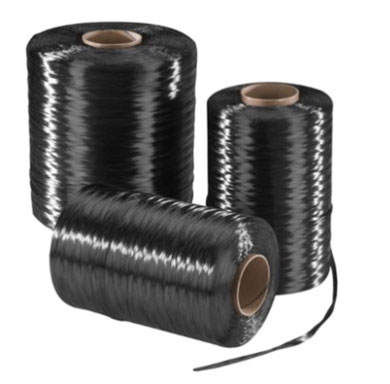
TOKYO — November 18, 2021 — Toray Industries Inc., announced today that U.S. subsidiary Zoltek Companies Inc., will bolster its large-tow carbon fiber (with more than 40,000 filaments) production capacity in 2023. The upgrade will cost around $130 million (around ¥14 billion). A Zoltek facility in Jalisco, Mexico, will lift its annual capacity around 54 percent, to more than 20,000 tons, boosting the combined annual capacity of that company’s Mexican and Hungarian operations to about 35,000 metric tons.

Toray expects the market for this fiber to expand over the medium through long terms. That is because of growing deployments of wind power as an eco-friendly source of renewable energy. An associated factor is rising demand for longer and lighter blades to boost generating efficiency, fueling the use of carbon fiber, which is lightweight, strong, and rigid. The capacity increase will stabilize supplies to cater to expanding large tow carbon fiber demand. Zoltek will keep drawing on production facilities in the United States, Hungary, and Mexico to take advantage of increasing global demand, particularly for wind turbine blades.

Toray has made expanding globally in promising areas a central strategy under Project AP- G2022, its medium-term management program. The company is accordingly pursuing growth in energy applications for the carbon fiber composites. Toray will fully leverage its comprehensive capabilities in keeping with its corporate philosophy of contributing to society and help materialize a carbon-neutral economy by 2050.

Posted November 18, 2021

Source: Toray Industries Inc.

Management Succession Planning At Uster Technologies AG Succession Plan Ensures ‘Seamless Transition’ For Company And Customers

Nasiou (left) and Maccabruni

USTER, Switzerland — November 18, 2021 — Uster Technologies is to have a new Chief Executive, in a planned and phased handover by April 2022. At his own request, current CEO Thomas Nasiou decided to step-down, and will be succeeded by Davide Maccabruni, former CEO of SSM Schärer Schweiter Mettler AG and General Manager of Savio Group Components.

Thomas Nasiou, who has been CEO for the past 6 years and in Uster Technologies for the last 16 years, has decided to step-down as CEO: “Since I joined Uster and also during my tenure as CEO, I only felt privileged and honored to meet and work with so many colleagues and friends. We have been through some exciting and challenging times, innovating, developing and growing together, keeping in mind creating value for ourselves, for our organization and for our customers and partners,” he says. “We maintained our focus on the needs of our customers and our commitment to providing the best solutions to help them with the many challenges they face in todays but mainly tomorrow’s demanding market environment. The work has been enjoyable and fulfilling. It is time for me to change my priorities in life and focus more on other personal interests, which require time and energy. I am glad that we have found the ideal successor, so we can work towards a seamless transition for the future.”

The successor of Thomas Nasiou will join Uster on January 1, 2022 and will take over as CEO on April 1, 2022.

New CEO: a colleague with textile industry background

Davide Maccabruni has extensive experience of the textile industry, with customers and the markets. His experience has been gained working in both innovation and management roles at Sultex (ITEMA weaving), at SSM and at Savio. He has a detailed understanding of the needs of modern textile manufacturers.

“This background makes him uniquely qualified to take the next step as CEO” says Thomas Nasiou: “Davide’s deep and broad textile expertise, knowledge and innovation spirit will ensure continuity and stability of the Uster business. His experiences as well as his personal values fit ideally to the Uster culture.”

Davide studied Management and Production Engineering at Politecnico di Milano and got his Ph.D. in Management, Technology and Economics from the Swiss Federal Institute of Technology (ETH) in Zurich.

From 1998 until 2004 he worked as assistant and research associate in the Institute for Textile Machinery and Textile Industry / Institute of Manufacturing Automation at the Swiss Federal Institute of Technology (ETH) in Zurich. From 2004 until 2006 he was a project manager at SSM and from 2006 until 2009 he has been the CTO in Sultex and ITEMA Weaving. In 2009 he joined SSM as CTO and in 2016 he became its CEO, until 2020 when he joined Savio as the General Manager of the Savio Group Components.

“I am glad and honored to join Uster, an organization that offered so much to our textile industry “, he says. “I commit to serve with my knowledge and experience to the efforts of all Uster colleagues to stay focused on ‘Think Quality’ and remain successful developing solutions that create value for the entire textile chain. But more importantly, to work together and make sure that the Uster spirit of a great organization remains and thrives.”

Davide Maccabruni was born in 1974 and holds both the Italian and Swiss nationality. He is married and has two children.

The Board of Directors and Toyota Industries Corporation are pleased that the successor for the CEO has been found early, providing the time for continuity and a successful takeover.

Posted November 18, 2021

Source: Uster Technologies AG

INDA and EDANA Jointly Publish The Global Nonwoven Markets Report

CARY, N.C./BRUSSELS — November 18, 2021 — A new report published by two nonwoven trade associations forecasts strong market demand for nonwovens materials through the next five years, according to the joint publication from EDANA and INDA’s Global Nonwoven Markets Report, A Comprehensive Survey and Outlook, 2020–2025.

This is the seventh edition of the Global Nonwoven Markets Report, formerly titled Worldwide Outlook for the Nonwovens Industry, and is available for purchase from both INDA, the Association of the Nonwoven Fabrics Industry, and EDANA, the International Association Serving the Nonwovens and Related Industries.

This comprehensive report provides in-depth information and analysis of the global nonwoven macro drivers, supply and demand, and regional trade. Among the highlights of the report:

  • In the historical period (2010–2020) production increased 6.2-percent annually, led by growth in the spunlaid processes and drylaid hydroentanglement.
  • China led the growth in production, adding an additional 4.7 million tonnes from the end of 2010 through to the end of 2020, representing a 11.5-percent annual growth rate.
  • Across the nonwoven end use segments, the wipes, filtration, medical segments expanded at the fastest rates, given the industry’s rapid response to provide materials that keep the surfaces we touch clean, protect the air we breathe, and provide a barrier to keep our bodies safe.

“The worldwide nonwovens industry’s prospects are excellent and it remains an exciting industry in which to be involved,” said the report’s co-authors Jacques Prigneaux, Market Analysis and Economic Affairs Director at EDANA and Brad Kalil, director of Market Intelligence & Economic Insights at INDA.

The report includes detailed regional information and forecasts on production, technology and investment requirements for North America, Greater Europe, Asia and the South America region. The report further features regional views of economic growth, population, product by end use, and trade flows. Other key topics include raw material usage and a detailed appendix.

“As strategic partners, INDA and EDANA are committed to promoting the sustained growth of the nonwovens industry. This report provides the industry’s best estimates on future demand by the key nonwoven segments and it is predicated on sound macro-economic analysis,” said INDA President Dave Rousse. “This Global Nonwoven Markets Report is an essential planning resource for all those involved in global strategic planning for nonwovens throughout the supply chain.”

“With the remarkable growth and global success of nonwovens, both industry insiders among our member companies and outsiders, from financial analysts to potential investors, require more than ever reliable sources of market information as well as forward-looking data. This new report issued by our two leading nonwovens industry associations builds on decades of experience, and of close observation and direct data collection from hundreds of companies,” said EDANA General Manager Pierre Wiertz. “Produced by the industry for the industry, this is therefore a unique tool and a more legitimate and reliable source of data than any other report about nonwovens.”

The report is available for purchase now and delivery starting on September 30, 2021. For more information or to purchase, contact:

INDA:
Cindy Garcia, cgarcia@inda.org, (919) 459-3711, or visit https://imisw.inda.org/store/searchresults.aspx?categoryid=2

EDANA:
Jacques Prigneaux, Market Analysis and Economic Affairs Director, +32 2740 1818, jacques.prigneaux@edana.org, or visit https://www.edana.org/publications/statistics-nonwovens-report

Posted November 18, 2021

Source: EDANA and INDA

Indorama Ventures Included In The Dow Jones Sustainability Indices (DJSI) For The Fifth Consecutive Year

BANGKOK, Thailand — November 18, 2021 — Indorama Ventures Public Co. Ltd. (IVL), a global sustainable chemical company, announced its inclusion in the Dow Jones Sustainability World Index (DJSI World) and the Dow Jones Sustainability Emerging Markets Index (DJSI Emerging Markets) for the third and fifth consecutive year respectively. The successive years of DJSI inclusion reflect IVL’s strong commitment to sustainability with globally recognized industry best-in-class practices.

This year, 139 chemical companies were selected from more than 11,000 companies from 61 industries and about 5,300 companies eligible for S&P Global ESG indices. IVL ranked in the 97th percentile with full scores in the areas of environmental and social compliance, enabling policies through industry associations, human rights protections in the workplace and value chain, and sustainable water management including forecasting potential water related risks in operations.

Yash Lohia, chief sustainability officer at Indorama Ventures, said: “As a global leader, this is an important milestone in our operations as we transform the chemical industry. Our inclusion in the DJSI for the fifth year running is a tribute to how IVL’s operations are contributing to a more sustainable future. Our strategy includes focusing on climate action, aligning with the world’s net zero ambitions, strengthening the circular economy and PET recycling with our ambitious targets, and enhancing shared value with our stakeholders.”

Manjit Jus, global head of ESG Research at S&P Global, said: “We congratulate Indorama Ventures for being included in the Dow Jones Sustainability Indices (DJSI) for DJSI World and DJSI Emerging Markets. A DJSI distinction is a reflection of being a sustainability leader in your industry. The record number of companies participating in the 2021 S&P Global Corporate Sustainability Assessment is testament to the growing movement for ESG disclosure and transparency.”

The Dow Jones Sustainability Indices (DJSI) are a global benchmark for sustainability-driven companies, evaluating material governance & economic, environmental and social factors. Listed companies are considered best-in-class in their industries for sustainability achievements at a global level. For more detail on Corporate Sustainability Assessment, please visit spglobal.com

Posted November 18, 2021

Source: Indorama Ventures Public Company Limited (IVL)

Sponsors