Oerlikon Publishes Sustainability Report 2021

PFÄFFIKON & SCHWYZ, Switzerland — March 31, 2022 — Oerlikon has published today its Sustainability Report 2021, outlining the progress and achievements of the company in environmental, social and governance topics.

“Sustainability is an inherent part of our strategy and technologies, which is reflected in our solutions for customers and in our own operations,” said Georg Stausberg, chief sustainability officer and CEO of Oerlikon’s Polymer Processing Solutions Division. “On our journey toward our 2030 targets, I am very pleased that we have made excellent progress in our sustainability achievements, initiatives and processes in 2021, especially against the challenging COVID-19 pandemic backdrop.”

In 2021, Oerlikon demonstrated that it was well equipped to respond swiftly and effectively to the pandemic to ensure the safety, health and well-being of its employees, customers, vendors and communities, and with minimal disruption to its operations and business.

In Oerlikon’s approach to sustainable innovation, collaboration remains a hallmark as the company remains focused on extending tool life, reducing fuel consumption in cars and airplanes, improving textile machinery efficiency, increasing recycling of fibers and materials and pioneering future technologies. In the report, there are many case studies and examples of how Oerlikon continues to help customers with cost-effective and climate-friendly solutions and services to build their business in key markets.

“We will continue to engineer solutions that contribute to a more sustainable planet, and further work on our environmental, social and governance performance in our operations in pursuit of the 2030 targets we have set for ourselves,” added Stausberg. “We recognize the need to implement improvements on an ongoing basis — that sustainability is not a sprint toward the finish line but a continuum on our journey to make Oerlikon a more sustainable and responsible company for all our stakeholders.”

Please find the online and PDF (download) version of the report on Oerlikon’s website: oerlikon.com/sustainabilityreport-2021

Posted: March 31, 2022

Source: Oerlikon

Ascend Agrees To Acquire Formulated Polymers Ltd.

HOUSTON — March 29, 2022 — Ascend Performance Materials has reached an agreement to acquire the compounding division of Formulated Polymers Ltd., an engineered materials manufacturer in Chennai, India. This acquisition will establish Ascend’s first manufacturing base in the subcontinent and strengthen Ascend’s global reach in the electrical and e-mobility application space.

The deal includes a world-scale manufacturing facility in Chennai as well as warehouses throughout India. Formulated Polymers, which has operated over three decades as a polyamide compounder in India, is currently a licensee of Ascend’s Starflam® flame-retardant polyamides.

“Demand for our materials in India is strong and growing,” said Phil McDivitt, Ascend’s president and CEO. “The team at Formulated Polymers has built an excellent, diversified business with a proven track record of technology development in polyamides. We are excited to build on their expertise to drive additional value-added growth in India and beyond.”

Ascend, a fully integrated producer of durable engineered materials, has grown its global production footprint with five acquisitions over the last four years, each focused on specific synergies with the company’s core business. This acquisition provides a significant growth opportunity for Ascend in India, one of the highest growth economies in the world.

“Being customer-focused is one of our values,” said John Saunders, Ascend’s vice president for Europe, the Middle East, North Africa and India. “We look forward to supporting our customers in a fast-growing market by continuing to invest in capacity, technical resources and product development to meet their needs.”

The deal is expected to close on May 1, after receiving necessary approvals. Terms of the agreement were not disclosed.

Posted: March 31, 2022

Source: Ascend Performance Materials

IND HEMP And Hempitecture Announce Supply Partnership For Domestically Produced Hemp Fiber Nonwoven Insulation

IND HEMP Chief Strategy Officer Dr. Trey Riddle and Hempitecture CEO Mattie Mead show off the raw hemp bast fiber and finished Hempwool® insulation product at the IND HEMP Booth at IDEA22.

MIAMI BEACH, Fla. — March 30, 2022 — IND HEMP and Hempitecture announce today at ‘IDEA22 — The World’s Preeminent Event for Nonwovens and Technical Fabrics — the coordinated supply chain partnership for the production and manufacture of natural hemp fibers for Hempitecture’s nonwoven Hempwool® insulation to be grown, processed and manufactured in the western United States. IND HEMP is coordinating genetics, agronomy and contracting production acres of industrial hemp fiber in Montana, Oregon, Washington and now Idaho. The company is the “supply” in supply chain performing “first touch” decortication processing — the initial separation of raw materials direct from the farm to produce a consistent supply of raw hemp bast fiber at scale. Hempitecture has market proven their Hempwool insulation product, branded as “the most sustainable, high performing insulation material on the planet” for the past few years and is currently in construction of the factory that will make the nonwoven airlaid insulation product in Jerome, Idaho.

“Hempitecture’s partnership with IND HEMP represents more than just a critical supply chain solution. It represents the restoration of American manufacturing, the empowerment of rural economies and forward thinking innovation in sustainable materials. We look forward to innovating the building products of the future with IND HEMP’s processed hemp fiber” shares Hempitecture Co-Founder and CEO Mattie Mead.

The two companies share values and a strong commitment to sustainability and doing better by the planet. Hemp can capture and remove more carbon dioxide from the atmosphere per acre annually than a forest or other agricultural crops. In addition to the carbon sequestered into the soil while the plant is growing, the plant biomass above the ground is an average of 45-percent carbon. When the fibers are processed into insulation and built into a home, that carbon dioxide is durably sequestered and locked up into the material, while also offsetting more energy intensive processes and the carbon footprints of existing materials, such as glass fiber insulation. The companies are aligned and working together with other stakeholders to present industrial hemp and it’s use in products to compete in the XPRIZE Carbon Removal Challenge, which is funded by the Musk Foundation with $100 Million in prize rewards to spur innovation in technologies and products to remove and sequester carbon dioxide from the atmosphere, with modeled plans to scale to a gigaton of carbon dioxide removed annually.

“IND HEMP is dedicated to supporting rural economies and providing sustainable solutions to industry. We are excited about Hempitecture’s products and use of natural fiber in construction materials. This continues to showcase how IND HEMP’s products and sustainability benefits can be adopted successfully across a wide range of applications” Says Trey Riddle, chief strategy officer for IND HEMP.

IND HEMP is a family owned, mission-driven agricultural hemp food, feed and fiber production and processing company with a dedicated focus on creating opportunities for farmers and rural communities in Montana and across the west. IND HEMP has built the processing infrastructure — a 10 acre greenfield site with a 52,000 ft² production facility around a 5 ton per hour LAROCHE bast fiber decortication processing line that came online in Q1 2022.

Posted: March 31, 2022

Source: IND HEMP LLC

FABRIC, Fashion Incubator And Business Accelerator, Relies On Lectra’s On-Demand Microfactory For Domestic Manufacturing

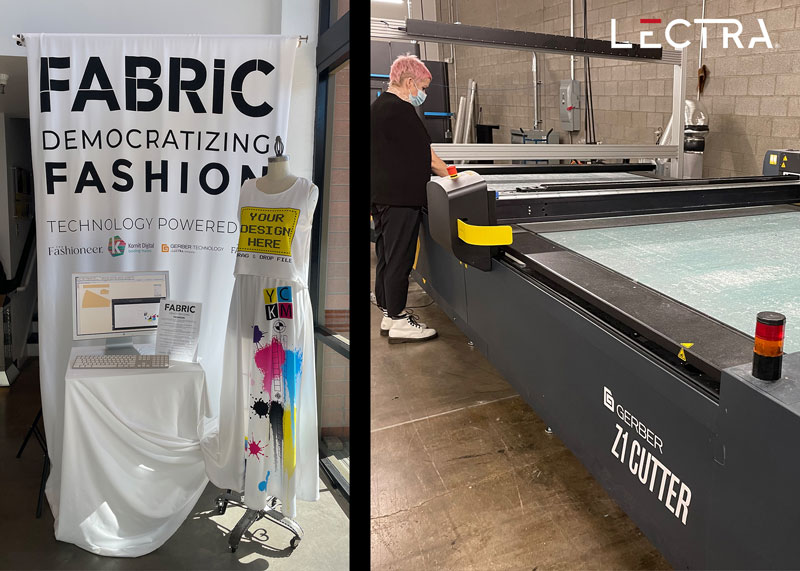
NEW YORK CITY — March 22, 2022 — FABRIC, the Fashion And Business Resource Innovation Center, implemented Lectra’s solutions to make technology the central part of its operations, empowering designers to grow their brands to the next level thanks to on-demand domestic manufacturing.

From its early beginnings, the center realized that one of the best ways they could help designers be competitive in the industry as a whole was to integrate Gerber Technology, a Lectra company’s IoT-enabled solutions into their workflow. This foresight was critical when the pandemic hit, as people started to seize the opportunity to start their long-awaited apparel businesses but couldn’t access the resources or the manufacturing usually available overseas. The need to produce product domestically and in smaller batches, without a significant price increase for the customer, became essential.

The co-founders of FABRIC both knew first-hand how daunting, overwhelming and costly it was to start an apparel business and wanted to ease that burden for others. They called it “Democratizing Fashion”.

“We wanted to figure out how to provide the resources for an apparel entrepreneur under one roof and help these apparel entrepreneurs be more competitive with the bigger brands,” said co-founder Angela Johnson, on why they started FABRIC.

Its mission has resulted in helping nearly 800 apparel entrepreneurs bring their dreams to life and resulted in more than $6.8 million donated in free and discounted programs and services. FABRIC is unique in that it doesn’t turn away brands who need help finding the right resources to manufacture garments. The company focuses its efforts on helping a higher volume of smaller brands, instead of allowing the production needs of bigger brands to edge out those most in need of their services.

This strategy of small batches and unique products required a reinvention of the process, as well as an ability to connect the dots between the different systems and managing data from design to the final product. FABRIC always wanted to support 21st century manufacturing for smaller, digitally-native brands, and when it saw Gerber’s Innovation Center and Microfactory in New York City, it was able to realize the possibilities.

Upon visiting the Innovation Center, co-founder Sherri Barry remarked how seamless and integrated the process was and imagined the possibilities for her own customers. She noted the ability to “start with any surface design, have it patterned in Gerber AccuMark® 2D/3D, visualized with a 3D sample, digitally printed, then cut with an IoT-enabled cutter and sewn, really made on-demand production a reality.”

Gerber AccuMark allows the development of 2D digital patterns that can be visualized in 3D with production accuracy while avoiding the need for creating a physical sample and ensuring a perfect fit. When surface designs are involved, the images are positioned in AccuMark patterns, and then data is passed seamlessly to the Kornit Presto digital printer and accurately read and cut using the Gerber Z1 cutter with ContourVision™.

FABRIC continued to fuel the expansion of its technology suite by including Gerber YuniquePLM®, a cloud-based PLM system that helps to manage all the orders for its many brands. It also helps keep the data seamlessly connected to AccuMark and have it updated in real time.

Adopting technology also helped FABRIC successfully pivot during the pandemic to large-batch production of PPE thanks to having a fully integrated technology-based system.

Because of its reliance on Gerber’s technology suite, FABRIC and The Fashioneer’s complete microfactory are now able to provide cutting edge solutions and much needed resources to up and coming brands and designers nation-wide and may someday rival the traditional fashion hubs of the world.

Posted: March 31, 2022

Source: Lectra

Coloreel Opens New Market — India

STOCKHOLM, Sweden — March 31, 2022 — Coloreel, with its technology for digital dyeing of textile thread on-demand for more sustainable and creative embroideries, announced the sale of five single-head machines to new distribution partner in India, Apsom Infotex Ltd.

The deal is the first step for Coloreel entering the industrial embroidery market in India, one of the world’s largest markets for textile production and embellishment. Apsom is the market leader in the Digital Inkjet Print Market in India for textile and industrial applications with more than 25 years of experience from operating in India.

“We are very excited to finally be able to enter the Indian market,” said Sven Öquist, vice president, sales at Coloreel Group AB. “We have since long had great interest from decoration manufacturers on the Indian market but COVID has been delaying our market entry. Our new partnership with Apsom provides us with great reach into the Indian embroidery and digital print market and we are looking forward to many more orders to come.”

“It was love at first sight for the people at Apsom when we spotted the Coloreel technology at an oversees exhibition and the entire team has since been completely focused on bringing the technology to the Indian market,” said Anirudh Dadu, business development manager at Apsom. “In a traditional industry like textiles its very rare to see such a game-changing innovation. We are very excited to have the opportunity to distribute Coloreel in India being amongst the world’s biggest Apparel and Textile producing markets.”

Posted: March 31, 2022

Source: Coloreel

VDMA: Dr. Janpeter Horn New Chairperson Of Textile Machinery Association

LEONBERG/FRANKFURT, Germany — March 31, 2022 — Dr. Janpeter Horn, managing director of August Herzog Maschinenfabrik, is the new chairperson of the VDMA Textile Machinery. Dr. Horn was elected at the members’ meeting of the Association in Leonberg. The new executive board is completed with Regina Brückner, managing associate of Brückner Trockentechnik and Verena Thies, managing shareholder of Thies Textilmaschinen, who were elected as vice chairpersons.

After his election, Dr. Horn stated: “I am pleased to have Ms. Brückner and Ms. Thies by my side. Both have been serving on the Executive Board of the VDMA Textile Machinery as well as the European Committee of Textile Machinery Manufacturers CEMATEX for many years. With this team, we are well prepared to effectively represent the interests of the industry at national and international level.”

Based in Oldenburg, Northern Germany, Herzog is a company with a long tradition and at the same time the most innovative developer and manufacturer of braiding and winding machinery. Worldwide references in braiding and winding technique confirm the company’s technical and quality leadership.

The new Executive Board of the VDMA Textile Machinery for the legislative period until 2026 is composed of:

  • Dr. Janpeter Horn (Chairperson), August Herzog Maschinenfabrik;
  • Regina Brückner (Vice Chairperson), BRÜCKNER Trockentechnik;
  • Verena Thies (Vice Chairperson), THIES;
  • Peter D. Dornier, Lindauer DORNIER;
  • Stefan Flöth, A. Monforts Textilmaschinen;
  • Arno Gärtner, KARL MAYER STOLL Textilmaschinenfabrik;
  • Markus Kleindorp, MEMMINGER-IRO;
  • Andreas Lukas, ANDRITZ Küsters;
  • Benjamin Mayer, Mayer & Cie.;
  • Dr. Jörg Morgner, Temafa Maschinenfabrik;
  • Benjamin Reiners, Reiners + Fürst;
  • Dr. Uwe Rondé, Saurer Group;
  • Eric Schöller, Groz-Beckert;
  • Georg Stausberg, Oerlikon Textile; and
  • Heinrich Trützschler, Trützschler Group.

Posted: March 31, 2022

Source: VDMA Textile Machinery

Jonathan Mersereau Appointed Sales Manager, X-Pac® Fabrics

Jonathan Mersereau

PUTNAM, Conn. — March 30, 2022 — Dimension-Polyant — a producer of sailcloth and manufacturer of X-Pac® lightweight, durable and 100 percent waterproof laminates developed for packs and bags — has hired Jonathan Mersereau as its new X-Pac sales manager.

Mersereau brings his diverse sales and marketing roles in team sports, consumer beverage, and the home building product industries to the world of performance textiles developed for outdoor, urban and fashion markets.

He has held managerial positions with the New Hampshire Fisher Cats baseball team, Coca Cola Bottling Company of Northern New England, and most recently, DRIcore wood flooring products. Jon holds a Bachelor’s Degree from Colby-Sawyer College in Sport Management and a M.B.A from the University of Hartford.

“In the short time Jon has been with us, we are incredibly impressed with how he has immersed himself with getting to know our products, customers and industry,” said Taylor North, head of Technical Fabrics, Dimension-Polyant. “We are very happy to have Jon on our team and we’re both looking forward to attending the Functional Fabric Fair Portland, Oregon this April.”

“My role at Dimension-Polyant and X-Pac® bring me full circle roots in sports management and business development,” Mersereau said. “I am thrilled to be joining such a growing company and vibrant outdoor industry.”

Posted: March 31, 2022

Source: Dimension-Polyant

EURATEX Welcomes E.U.’s Ambition For A Sustainable And Competitive Industry, But Calls For A Smart And Realistic Implementation

BRUSSELS — March 30, 2022 — Today the European Commission released its long-awaited Strategy for Sustainable Textile, with the ambition to move the sector towards the path of sustainability. EURATEX welcomes the E.U. ambitions to act on sustainable textiles and investments, in order to change how textiles are made, chosen and recovered. Many European companies have already chosen this path, therefore the strategy should support them in this process, especially considering today’s energy crisis.

The strategy recognizes the strategic importance of textiles, which are not only used as apparel or furniture, but applied in cars, medical equipment, agriculture, etc. It acknowledges the European Industry pro-active initiatives to tackle microplastics, to solve challenges of market surveillance and the skills needs. More cooperation is needed for re-use and recycling of textiles and to set up an E.U. market for secondary raw materials. On this last point, EURATEX ReHubs initiative is developing proposals to size EPR potential, to transform waste into value, and create a new capacity and jobs.

The proposed “transition pathways,” which will translate the strategy into action, will be critical in this respect: how will these sustainability targets be reached, what will the cost for SMEs be, how can companies be supported in that green transition, what about the impact on global competitiveness? These are essential questions to be addressed in the coming months.

The Textile strategy is part of much broader package, including as many as 16 new legislative actions[1] and other policies which will directly impact on textile value chain. In particular the Sustainable Product Initiative Regulation released today includes game-changing provisions on Digital Product Passport, Eco-Design, SMEs and Green Public Procurement.  The Regulation has an overwhelming ambition and, to be realistic, it would require a new way of joint working between institutions and business, and which builds on lessons learned on data flow across value chains, interoperability, conformity assessment and effective measures to support SMEs.

If wrongly implemented, such an unprecedented wave may cause a complete collapse of the European textile value chain under the burden of restrictions, requirements, costs and unlevel playing field. On the contrary, the changes ahead can boom the entire textile ecosystem and create a model of successful green and digital transition in manufacturing, which starts in Europe and expands globally.

Already in 2019, EURATEX asked policy makers to work together and remove barriers to circular economy, solve the market surveillance paradox in which laws are made but not checked, and to help create scale economies to make sustainable textiles affordable, hence the norm.

For example, there are 28 billion products circulating per year in EU, which is an impressive task for market surveillance authorities including customs. EURATEX has been stressing non-sufficient market surveillance and it is actively working on solutions for a fair and effective market surveillance of textile products through Reach4Textiles. EURATEX very much welcomes that the European Commission recognizes our work and the need for market surveillance by establishing more harmonised efforts in the EU.

EURATEX also welcomes the establishment of the Digital Product Passport. It has a high potential to improve every step in the textile value chain, from design and manufacturing to recycling and purchasing. At the same time, EURATEX calls the co-legislators to take into account the role of SME’s in this transition and to put forward pragmatic initiatives, supporting SME’s across the EU in a systematic approach.

Alberto Paccanelli, EURATEX President, concludes: EURATEX calls for true cooperation with all policy makers and other stakeholders across the value chains to advise, pressure-test and use this opportunity for a successful transition. Our ambition must be to reconcile sustainability, resilience and competitiveness; we know it can be done”.

[1] Sustainable Product Initiative Regulation, Waste Framework Directive revision, Waste Shipment Regulation, Green Claim legislation, Product Environmental Footprint, Extended Producer Responsibility schemes (Member States), End of Waste Criteria, Microplastic legislation, Corporate Sustainable Due Diligence Directive, Corporate Sustainable Reporting Directive, Market Surveillance implementation plans (Member States), Industrial Emission Directive, Taxonomy Regulation, Green Public Procurement Directive, REACH revision, PFHxA restriction, PFAS restriction, Skin Sensitizer restriction, Bisphenol restriction, Fiber Regulation, Ecolabel Directive, others.    

Posted: March 30, 2022

Source: EURATEX

CASA And INDA Welcome Introduction Of WIPPES Act In U.S. Senate: Bill Creates New Federal ‘Do Not Flush’ Labeling Mandates

CARY, N.C. — March 30, 2022 — The California Association of Sanitation Agencies (CASA) and INDA, Association of the Nonwoven Fabrics Industry joined in welcoming the recent introduction of the WIPPES Act in the U.S. Senate by Senators Jeff Merkley (D-OR) and Susan Collins (R-ME).

This bipartisan legislation is intended to address the growing problem of sewer system clogs caused by improper disposal of consumer wipes like baby wipes, household cleaning wipes, cosmetic wipes and others that are not intended to be disposed of in toilets. Improper disposal of these wipes can have significant negative impacts on wastewater infrastructure, including causing sewer spills. The bill would help address this problem by establishing federal requirements for these disposable wipes to carry prominent “Do Not Flush” labeling on packaging. Additionally, the bill would provide funding for an Environmental Protection Agency-administered grant program focused on educating consumers about how to recognize “Do Not Flush” labeling, identify relevant products, and understand the impacts that flushing these products can have on wastewater treatment infrastructure.

“CASA applauds Senator Merkley and Senator Collins for introducing the WIPPES Act. This bipartisan legislation addresses the flushing of non-flushable wipes that has plagued the clean water sector for decades and protects the billions of dollars ratepayers have invested to clean up our waterways and protect public health,” said CASA Executive Director Adam Link. “Lacking proper disposal instructions, consumers unwittingly end up flushing these single-use, synthetic wipes that can clog pipes, pumps, and treatment equipment,” he continued. “Establishing commonsense ‘Do Not Flush’ labeling practices addresses this problem at the source. CASA also appreciates the bill’s grants program to support education and outreach activities that expand ratepayer awareness of the “Do Not Flush” label and ensure these wipes do not make their way into our wastewater systems.”

“There are different wipes for different purposes with different recommended disposal paths. The wipes industry is committed to responsibly managing those wipes products that should not be flushed and protecting public infrastructure and the environment,” said INDA President Dave Rousse.

“Prominent ‘Do Not Flush’ labeling, visual symbols on packages and robust education programs are critical to raising consumer awareness about proper disposal of these products,” he continued. “INDA applauds Senator Merkley’s and Senator Collins’ vision and work to address this issue in a meaningful way. We look forward to working with the wastewater sector and other stakeholders to support this bill’s swift passage in Congress.”

Posted: March 30, 2022

Source: INDA, Association Of The Nonwoven Fabrics Industry

Faribault Woolen Mill Acquires Brahms Mount

FARIBAULT, Minn. — March 29, 2022 — Minnesota-based brand Faribault Woolen Mill, maker of handcrafted blankets, decorative throws, apparel, and accessories, will soon be adding cotton to its product line up with the acquisition of Brahms Mount, a Maine-based manufacturer of high-quality cotton blankets, throws and other textiles. The deal closed this week under undisclosed terms.

“We’re thrilled to bring the amazing employees of Brahms Mount into our Faribault family,” said Faribault Mill President and CEO Ross Widmoyer. “This acquisition is a great extension of our strategic focus on building Made in USA jobs.” As part of the combined company, Brahms Mount will continue its cotton product manufacturing at the Monmouth, Maine, facility and retain the current employee base.

Bold new brand

As part of the acquisition, Faribault Woolen Mill Co. will rebrand as “Faribault Mill” to reflect the product offering expansion. The new logo is displayed in this news release. A new line called The Brahms Mount Collection by Faribault Mill will launch later this Spring.

“The addition of Brahms Mount, with its amazing cotton throws and blankets, perfectly complements our woolen mill products for customers all across the country,” said Faribault Mill Chairman, Paul Grangaard. “This acquisition will also accelerate our company’s plans to open new retail stores in New England.”

Posted: March 29, 2022

Source: Faribault Mill

Sponsors