Techtextil 2022 Exhibitor Preview: Carrington Textiles — Biodegradable Fabrics For Workwear

ADLINGTON, England — May 31, 2022 — Being the first textile manufacturer to use biodegradable technology to produce workwear fabrics, Carrington Textiles has announced their focus on the promotion of Orca and Hawksbill, as well as on their latest flame retardant addition, Flamestat 250, at Techtextil 2022.

Recently launched during their ‘Weaving Sustainability into our Fabrics’ campaign, where the company released their newest fabrics Constance 210, Balaton 255, Kielder 185, Delamere (210 & 245), and Rivington (205 & 220), Carrington Textiles’ Orca and Hawksbill stand out for their addition of the new CiCLO fibre.

The CiCLO technology is a sustainable textiles ingredient in the form of an additive that is combined with polyester at the very beginning of the fibre making process. When CiCLO polyester ends up in the environment either through washing or end of life of the garment, it behaves like natural fibres, in turn reducing microplastic pollution and textile accumulation.

Hawksbill’s composition includes 65% CiCLO polyester and 35% organic cotton. While Orca incorporates 26% recycled CiCLO polyester, 29% virgin CiCLO polyester and 35% Better Cotton. Hawksbill and Orca are the sustainable alternative to the company’s bestselling fabric, Tomboy.

These two fabrics are made following Carrington Textiles’ usual rigorous quality standards, so they not only offer the best performance and durability to the end user, but also greatly reduce their impact on the environment when the life of the garment comes to an end.

Carrington Textiles’ Managing Director, Neil Davey, says: “It’s great to be able to attend exhibitions once again. We have invested a great deal of resources into R&D to bring these sustainable fabrics to market and have already had excellent feedback from customers and partners. We are delighted to be showing them face to face to customers and all those interested at Techtextil”.

Antistatic flame retardant durability

Contrary to the business model of fast fashion retailers, increasing the life of garments is a key focus of Carrington Textiles with the utilisation of fabrics that can withstand industrial washes and multiple uses.

Flamestat 250 gsm, a new member of the Flamestat family, is guaranteed to last the lifetime of the garment due to its robust construction. With 75% cotton, 24% polyester and 1% antistatic, this fabric’s flame retardancy is to the standards EN ISO 11612, EN ISO 14116 index 3 and EN ISO 11611; while its antistatic properties are to the EN ISO 1149-3-5 standard.

New commercial video

Carrington Textiles has also announced that they have been working behind the scenes in the last few months to create their new commercial video. This film is the company’s newest visual asset that aims to reflect the manufacturer’s culture, global reach and sustainable message.

For the production of the video Carrington Textiles worked with their colleagues in Europe and Asia to create a short visual representation of the values that drive the company. This new commercial video is to be screened at their stand during Techtextil 2022 and available on the Carrington Textiles’ social media channels from the beginning of June.

Free passes for visitors

To make it easier for customers and partners to visit their stand, Carrington Textiles has created a short online form where people can request free passes to Techtextil 2022 – subject to availability. To access the form visit carrington.co.uk/techtextil2022. The manufacturer’s stand is located in hall 11.1, stand C56.

Posted: May 31, 2022

Source: Carrington Textiles Ltd.

INDA Promotes Tony Fragnito To President

CARY, N.C. — May 31, 2022 — The Board of Directors at INDA, Association of the Nonwoven Fabrics Industry, elevated Tony Fragnito from COO of INDA to president of INDA effective May 31. Fragnito will assume the position currently held by Dave Rousse, who will become president Emeritus and provide support and assistance to Fragnito as needed until Rousse fully retires in January 2023.

Fragnito joined INDA November 29, 2021 as COO and has been leading INDA’s implementation of its new Strategic Plan, as well as updating INDA’s technology platform.  This follows decades of leadership experience assisting trade and professional organizations in realizing their organizational and operational potential. A certified public accountant, Fragnito brings strong financial acumen in addition to extensive information technology, human resource and program management accomplishments from organizations representing a variety of professions and industries.

“Promoting Tony to President of INDA completes the transition plan put in place by the INDA Board in 2021 to provide continuity through Dave’s impending retirement in the development and implementation of the new Strategic Plan,” said Dr. Bryan Haynes, INDA board chair and R&E technical director at Kimberly-Clark. “Dave has led INDA since 2012 and developed a successful, professional organization that now needs to be taken to a new level through the new Strategic Plan.”

“It is an honor to be chosen to lead INDA during this important time for the industry,” Fragnito said. “The INDA Board and membership, led by Dave Rousse, have demonstrated the industry’s growth potential and innovation possible through strong collaboration. It is my goal to continue this collaborative model, expand the industry by reaching new markets, and improve the systems, resources and technical content available to INDA staff and industry participants.”

“The INDA Board has worked through a thoughtful and smooth transition plan, leveraging the new operational talents Tony brings to the organization alongside the industry contacts and issue management experience I have developed over the last ten years,” Rousse, said.  “I look forward to continuing to contribute as needed to Tony’s leadership of INDA.”

Posted: May 31, 2022

Source: The Association of the Nonwoven Fabrics Industry (INDA)

U.S. And Central American Textile And Apparel Groups Send Letter To Vice President Kamala Harris On CAFTA-DR Rules And China 301 Tariffs

WASHINGTON — May 31, 2022 — The main textile and apparel manufacturing trade groups in the United States and Central America sent a joint letter to Vice President Kamala Harris today, outlining critical issues, such as upholding strong rules of origin in the U.S. free trade agreement with the region and maintaining China 301 tariffs on finished apparel imports, ahead of the Summit of the Americas taking place in Los Angeles next week.

The National Council of Textile Organizations (NCTO), representing the full spectrum of U.S. textiles from fiber through finished sewn products, and the Central America – Dominican Republic Apparel and Textile Council (CECATEC), the main apparel and textile group in the region, thanked Harris for her leadership in helping drive more investment to northern Central America and for the Biden administration’s commitment to strengthening the economic partnership forged between the United States and the region, which supports 1 million collective textile and apparel jobs.

“Perhaps most critical for our collective industries is the administration’s strong support for the “yarn forward” rule of origin in the U.S.-Dominican Republic-Central America Free Trade Agreement (CAFTA-DR), which promotes trade, investment and economic development in the United States and the region. This ensures the benefits of the agreement go to the partners in the agreement, which helps drive massive investment and certainty,” the groups stated in the letter. “The agreement’s strong rules have brought trade and investment to the region and the U.S. and allowed us to compete against highly subsidized industries in Asia often employing illegal trade practices such as the use of forced labor.”

“We continue to urge the administration to hold highly subsidized economies accountable for predatory trade practices that have blatantly undermined our collective industries and our workers. It is critical for the administration to continue to ensure the 301 tariffs remain on finished apparel products that have helped bring diversification in sourcing from Asia and provided opportunities for both U.S. and Central American workers,” they noted. “The tariffs are playing a key role in unlocking investment in the region and the U.S.”

See the full letter here.

Posted: May 31, 2022

Source: The National Council of Textile Organizations (NCTO)

RefrigiWear® Acquires Samco Freezerwear

DAHLONEGA, Ga. — May 27, 2022 — RefrigiWear, a  supplier of insulated work apparel for the cold chain, today announced its acquisition of Samco Freezerwear Co (Samco). Founded in 1968, Samco is a provider of freezerwear, insulated industrial workwear, and other insulated industrial apparel and accessories for workers in the food-related cold chain.

“We are excited to welcome Samco to the RefrigiWear family. This acquisition will help us serve our customers with a broader range of choices,” explained Ryan Silberman, CEO, RefrigiWear. “For us, it’s all about the customer and gaining capabilities to serve the ever-changing and demanding environments they face in the cold chain.This acquisition is a strong statement of our continued support of the workers and companies that help bring food to our kitchen tables.”

Both companies offer a selection of products that keep workers warm and safe in temperature-controlled distribution and production facilities, which can sometimes operate in temperatures well-below freezing. RefrigiWear and Samco will continue to operate under separate brand names with diverse product offerings for customers both small and large.

Posted: May 27, 2022

Source: RefrigiWear, Inc.

Bureau Veritas Grants Certification To TerraCycle For Recycled Claim Standard

TRENTON, N.J. — May 26, 2022 — Bureau Veritas Consumer Products Services — a testing, inspection/audit, advisory and certification services company — has contracted with international recycling company TerraCycle to provide conformity assessment services to verify the company’s recycling operations and adherence to the Recycled Claim Standard as published by the Textile Exchange.

“I am pleased to report that Bureau Veritas has granted certification to TerraCycle for the Recycled Claim Standard (version 2.0) for two of the waste streams in their US operations.” said Chuck Rogers, Americas director, Technical Consulting and Supply Chain Solutions, Bureau Veritas. “TerraCycle’s demonstrated conformance to the Recycled Claim Standard is a testament to TerraCycle’s competence and commitment within the recycling industry.”

The Recycled Claim Standard (RCS) is a set of requirements implemented to achieve third-party certification of recycled input and chain of custody using metrics of material mass balance. To achieve this certification, Bureau Veritas audited TerraCycle’s current supply chain, recycling process, operational methods, and associated sub-contractors specifically for Mixed Flexible Packaging and Mixed Rigid Packaging for conformance to RCS.

“Starting in 2020, TerraCycle began working with Bureau Veritas to define, conduct, and complete independent audits of our US supply chain,” said Tom Szaky, founder and CEO of TerraCycle. “We have now received certification in the US for two major material categories and are working to replicate this process for additional waste streams globally throughout 2022. This certification by a global leader in their field is additional reassurance to our partners that the material sent to us is never used for waste to energy or buried in landfills.”

The relationship with Bureau Veritas allows for global scale and reach thanks to Bureau Veritas’ leadership position within the retail/consumer goods marketplace with test labs and auditors worldwide.

Posted: May 27, 2022

Source: TerraCycle, Inc.

Baldwin’s TexCoat G4 Finishing System Empowers Unprecedented Productivity And Sustainability For Graniteville Specialty Fabrics

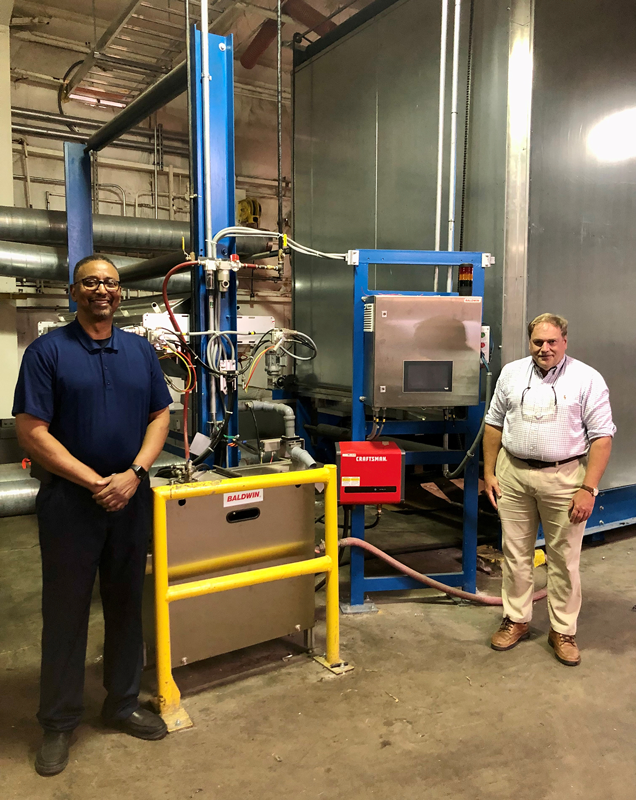
Graniteville Specialty Fabrics team members Bennie Mathis (left), plant superintendent, and Doug Johnson, executive vice president of Development and Technical Services stand with the newly installed TexCoat G4 from Baldwin.

ST. LOUIS — May 26, 2022 — Baldwin Technology Company Inc. has announced the installation of its state-of-the-art TexCoat G4 finishing system at Graniteville Specialty Fabrics, a recognized leader in the production of specialty coatings and coated fabrics. With Baldwin’s cost-efficient and highly sustainable spray finishing technology, Graniteville Specialty Fabrics has been able to increase production efficiency, and minimize chemical and water waste.

Based in Graniteville, S.C., Graniteville Specialty Fabrics produces coatings and coated fabrics that are resistant to water, fire, UV and weather for the military, marine and tent markets, and others. The company excels in developing and sourcing custom coatings, and creating specialized technical solutions to meet specific, and often unique, end-user requirements. The installation of Baldwin’s TexCoat G4 is part of a major facility upgrade to maximize production efficiency and capacity in the durable water-repellent finishing and coating line to meet growing customer demand for advanced engineered products.

With extensive sustainability benefits, unprecedented tracking and process control, and Industry 4.0 integration, the TexCoat G4 provides consistently high-quality fabric finishing, with no chemistry waste, as well as minimal water and energy consumption. This system utilizes non-contact precision-spray technology, ensuring precise finishing coverage with the exact amount of chemistry for reaching the optimal performance of the fabric. Changeovers (pad bath emptying, cleaning and refilling) are significantly reduced, resulting in substantial chemical conservation and increased productivity.

“We are pleased to be a key partner in Graniteville Specialty Fabrics’ modernization project,” said Rick Stanford, Baldwin’s vice president of Global Business Development, Textiles. “The team reached out to us, and it was clear that the TexCoat G4 was the right tool to help them minimize waste and increase productivity.”

Doug Johnson, Graniteville Specialty Fabrics’ executive vice president of Development and Technical Services, said the company needed to increase its productivity and sustainability, without sacrificing fabric quality and performance.

“Anytime you change from a traditional process like padding, it is human nature to be a little skeptical,” Johnson said. “Baldwin organized production-scale trials for us at a nearby TexCoat-equipped factory. We took the finished fabric and scrutinized the look and feel, and performed a battery of tests in our lab to American Association of Textile Chemists and Colorists spray-rating and hydrostatic-head standards. The results were impressive. Moreover, when we commissioned our TexCoat, we duplicated and exceeded the fabric performance realized during the trials.”

Posted: May 27, 2022

Source: Baldwin Technology Company Inc.

Techtextil North America And Texprocess Americas 2022: High Marks Received

ATLANTA — May 27, 2022 — Techtextil North America and Texprocess Americas took place May 17-19, 2022, in Atlanta, Georgia. Back together for the first time since 2018, the anticipated reunion of these industry-leading events assembled the entire textile supply chain for three days of networking, education and business development.

From the show’s opening on day one, the excitement to meet, in-person, with industry peers and learn about the latest innovations could be felt throughout the Georgia World Congress Center.

“After such a long hiatus, it was really wonderful to finally hold these events together under one roof, “said Kristy Meade, vice president of Technical Textiles & Technology Shows. “COVID-19 proved to be a challenge for everyone, but it is clear that these industries are resilient overall, and more motivated than ever to continue to push for innovation and advancement. We’re happy to be able to provide a platform for them to do so.”

Exhibitors & Products

The co-location of Techtextil North America and Texprocess Americas is known for creating the largest event in the Americas for the sourcing of materials, machinery and equipment, technology, services, and more representing the entire technical textiles, nonwovens and sewn products industries.

This year, the joint exhibit hall brought together hundreds of exhibiting companies from across the textile industry spectrum, showing the latest in textile research and development, raw materials, advanced textile production, processing, manufacturing technology, sustainability and more.

Throughout the three days, visitors were able to see products up-close, watch live demonstrations, and meet with exhibitors providing the latest solutions across the supply chain. Exhibitors were also able to take advantage of the shared exhibit hall, sourcing suppliers and strategic partners for their own businesses:

“We’ve had such a great time at Techtextil North America, being able to not only meet with our customers, but also finding great equipment suppliers as well,” said Megan Hartford of Mid-Mountain Materials.

Educational Program 2022

Visitors and exhibitors alike attended sessions addressing today’s hottest topics in textile innovation and sewn products manufacturing, with access to 16 paid symposium sessions and over 20 complimentary sessions on the show floor. Sessions ranging from Automaton and Robotics in Sewing to Military and Protective Textiles brought leaders from across industries to learn about the latest innovations, technologies and trends.

“We attend the symposiums every year and there is always something new to learn, not only from the speakers but also the questions asked during the sessions,” said Visitor Edwin Rosado, Fruit of the Loom. “The show is a very good experience, we will continue to attend because it is always going to be very helpful.”

“The Robotics and Automation in Sewing session was super informative,” said Visitor Michael Rhoades, MSA Safety. “We got a ton out of it; I had a lot of questions that now I have the answers to. Moving forward, I now know how to ask the right questions and the right people to go to.”

“I think these have been very good presentations by important people in the areas of smart textiles and high performance fibers,” said Guowen Song, visitor and speaker, Iowa State University. “These topics really represent the future of textiles — a lot of new technology, a lot of new findings — they are going to be leading the charge in the functional textile industry.”

Attendee Quotes:

“I’ve been really enjoying the show,” said Shini Arora, visitor, Amazon. “For me, this is an entirely different side of the manufacturing that I’m getting to see. It is eye-opening in how much innovation is happening and how much investment there is in the area of manufacturing.”

“I’m thrilled to be at Texprocess (Americas) because innovation in manufacturing and textiles is where my focus is,” said Sherri Barry, visitor and speaker, Fabric Fashioneer/Adea Every Day Luxury. “It is so great to have an opportunity to collaborate with people who are like-minded, and to learn the newest and greatest things happening in the industry. I’m already planning on coming back next year!”

“The networking was priceless!,” noted Rose Rodriguez, visitor, Coyote Logistics. “Messe Frankfurt North America’s trade show brings together some of the best developers, brands, and marketers. I found the show well organized, and the communications and updates sent to me kept me engaged and informed. We look forward to meeting new faces next year!”

Exhibitor Quotes:

“Lots of quality people, a great restart,” said Bruce Stroupe, exhibitor, Perlon (Hahl Inc). “It was nice to be able to truly focus on meetings with people who are ready to make purchases. We will definitely be back next year!”

“We were very pleased with the leads generated and are looking forward to the show again next year,”  Steven Kunreuther, Exhibitor, Texpak Inc.

“BastCore had an amazing show with constant traffic at our booth,” said Coleman Beale, Exhibitor, BastCore. “It’s great to see buyers with a real interest in sustainability.”

“As of now, it being the third day, I can say that the show has been amazing for us,” said Ashutosh Mishra, exhibitor, Threads India Ltd. “We got a tremendous response from all of the companies and suppliers we have met with, and have been able to gather approximately 20+ prospects, which is a huge amount for any event.”

“We were able to get in front of people we would not have had the opportunity to otherwise!” said Moti Sandman, exhibitor, Deitsch Plastic Company Inc.

The next edition of Techtextil North America and Texprocess Americas will be held next year, May 10-12, 2023, back in Atlanta.

Booth sales are currently active for the 2023 editions. Companies interested in becoming an exhibitor can contact Pinar van der Vegt, pinar.vandervegt@usa.messefrankfurt.com or Shannon Downer, shannon.downer@usa.messefrankfurt.com to book space today. In addition, any company or individual interested in speaking opportunities can contact Ali Rosenberger, ali.rosenberger@usa.messefrankfurt.com.

Thank you for your coverage and support of Techtextil North America, incorporated with ATME-I, and Texprocess Americas, co-produced by SPESA.

Posted: May 27, 2022

Source: Messe Frankfurt North America

Techtextil 2022 Exhibitor Preview: James Heal

HALIFAX, England — May 27, 2022 — James Heal, a textile quality control solutions brand, have announced it will be demonstrating brand new instruments from its performance testing range at Techtextil exhibition in Frankfurt this June.

The company is exhibiting in Europe for the first time since establishing a direct sales operation in Mönchengladbach, which is now selling and supporting its range of precision textile testing instruments and consumables directly in Germany.

James Heal, who is celebrating its 150th anniversary this year, will be showing the latest innovations including the AirPro Air Permeability Tester, used to measure the resistance of the flow of air through products such as performance apparel, medical textiles, PPE, infant products, nonwovens and geotextiles.

In addition visitors to James Heal stand, located on the BTMA Pavilion in Hall 12, will see the HydroView Hydrostatic Head Tester, used for testing the water resistance of anything from protective gloves, diving dry suits, winter sports apparel, to fishing waders, roofing and ground sheets.

ProDry, an instrument to test the drying rate of performance fabrics will also be on show, alongside a brand new accessory to the range – the StretchiMount! More about this new product will be revealed at the show.

As well as the provision of test instruments the company also supplies customers with world-class test materials and provides high quality calibration and servicing.

James Heal is a PPT Group brand and has offices in the United Kingdom and United States, as well as Germany, and is represented globally by a network of agents. Lutz Gerold, Head of Sales for James Heal in Germany commented, “We are excited to be at Techtextil showing some of our latest products. The team are really looking forward to meeting customers old and new at the exhibition. It’s great see trade shows back!”

Posted: May 27, 2022

Source: James Heal

Automation To Support Supply Chain Woes

By Claudia Jarrett

Unpredictable markets, an unstable procurement chain and impatient customers are just a few challenges your supply chain deals with. Balancing supply, demand and capacity has reached such a level of complexity that automation is increasingly sought after — and warehousing and materials handling are no exception. These are just a few of the reasons warehouse managers should look to increase their investment in automation.

Business Wire reports that more than 80 percent of the warehouses today have no automation whatsoever. However, it is expected that companies will ramp up investment into warehouse automation in the next few years. In fact, a Gartner survey states that 75 percent of companies will have integrated intralogistics smart robots into their warehouses by 2026.

Simply put, warehouse automation is the process of replacing repetitive tasks with automated systems. The goal here is for these automation systems to eliminate labor intensive and time consuming duties. Doing so, in turn, frees workers up to focus on more value-added tasks, such as quality control.

Intralogistics smart robots are designed specifically to support warehouses and distribution centres. Automation of this kind is becoming increasingly sought after in response to rising labor costs and the skills shortage. That’s also not to forget the increased demand on warehouses resulting from the COVID-19 pandemic and from recent materials shortages that impacted all sectors of manufacturing.

With smart solutions to fit all budgets, there are several reasons to consider increasing your investment in automation. Investing in them now can be a great step to future-proof your business and gain a competitive edge, so let’s explore why.

Safety first

Safety is one of the key reasons to implement automation in your facility. Robots in warehouses perform inherently dangerous tasks, such as reaching items on high shelves. Secondly, they also help to prevent injury or sickness, resulting from general worker fatigue. Common injury causes range from using improper lifting techniques, to working erratic shifts.  These benefits are reinforced by a research article published recently by the Harvard Business Review, where workers cited it as the number one benefit.

Furthermore, the same study cited an additional benefit that is being applied during the era of the pandemic. A stocking associate at a retail chain in Michigan stressed that her warehouse was safer following COVID protocols. “With just the push of a button, the cleaning robots drive around cleaning the floors and wiping everything down the whole night.”

Customer satisfaction

Investing in a fully automated warehouse system will increase operational efficiency and better address growing customer demands. In today’s fast paced world consumer expectations for receiving products and services are higher than ever. Thankfully, today’s smart warehouses have much higher throughout, are immediately restocked and resupplied and allow for services like same-day delivery.

For example, using technologies such as scanning, bar codes, RFID tags, blockchains, IoT, analytics and AI, companies can drive faster order delivery, improved tracking and reduce losses and damage to packages. Better order tracking and real-time updates about in transit and delivery status can also help to enhance customer satisfaction.

In addition, operations can also be automated and simplified, such as validating and sorting packages while unloading with the help of technology, routing them appropriately and minimizing delays in delivery through dispensing accurate information to delivery personnel and customers. Such technology ensures more uniformed and desired results, despite the skill of handlers. 

Automation options

One option is automated material handling systems (AMHS), which ensure efficient transport of material from one place to another in the manufacturing area. This machine can be used in the same department or bay, on opposite ends of the manufacturing floor, or even in two separate buildings.

An AMHS uses route and process step information provided by the manufacturing execution system (MES) to move material using conveyers, vertical elevators, and autonomous vehicles. Several other advanced technologies are used for the identification of material. These include radio-frequency identification (RFID), barcoding, optical character recognition (OCR), near-field communication, or ultra-wide band indoor tracking to detect the location of a material or carrier for transport by the AMHS.

No human interaction with carriers, transport systems or material is required with a fully implemented AMHS. The AMHS independently controls the identification, routing and delivery of material to the appropriate tool. The machine even places and removes the material from the load ports on the tool. If this process is done solely by human efforts, it can be costly and even risk worker safety and product damage as manufacturing incorporates many steps at many stations during the lifecycle of the transported material.

There’s more?

The sky is the limit when choosing automation options. Even smaller jobs, such as removing recycling from the shop floor, can be automated. For example, Fetch Robotics’ Autonomous Mobile Robots (AMRs) can be programmed to pick up recycling at custom time intervals, according to a warehouse’s needs. This frees up workers to perform more valuable tasks, resulting in improved employee satisfaction.

A recent article from McKinsey anticipates that investing in integrated solutions across the three main areas of materials handling — warehouse management, shop-floor operations and field operations — may be an effective strategy to future-proof your business. These share a few familiar success drivers, including accuracy, reliability and cost efficiencies.

In warehouse management, crucial success metrics include picking and sorting speed and tracking accuracy. Whereas shop-floor operations value timely delivery of products to production lines and low operating costs. Finally, the field-operations use case benefits from mechanical capabilities such as construction, mining, ports and the flexibility to handle multiple operations simultaneously.

Whatever your automation setup, whether a hybrid mix of new and legacy systems that includes obsolete products, or a new integrated solution, EU Automation can help. If you need obsolete automation equipment to improve your facility, visit the EU Automation website to find out more.


Editor’s Note: Claudia Jarrett is U.S. country manager at industrial parts supplier EU Automation


May 26, 2022


Textile Industry: Automatic Scraper Strainers Protect Critical Membrane Systems

Automated scraper strainers pre-filter water and wastewater to protect fragile membrane systems from damage caused by large, suspended particles, reducing maintenance and replacement costs.

TW Special Report

The textile industry uses substantial amounts of water and large quantities of chemicals to perform necessary functions. Chemical detergents and caustic substances remove dirt, grit, oils and waxes. Bleach improves whiteness/brightness, while dyes, fixing agents and inorganics provide various colors. Additionally, oils improve spinning/knitting, glues enable binding, and specialty chemicals function as softeners as well as agents for wetting and stain release.

However, these chemicals must be removed from wastewater before discharge from textile mills to comply with local, state, and federal regulations. As a solution, membrane separation technology is evolving to reduce chemical pollutants in wastewater effluent. In many cases, chemicals, dyes, and salts can be recovered from the effluent and the water can be reused. Membrane filtration also reduces energy costs if warm water can be reclaimed, which further expedites quick ROI on the technology.

The challenge is that membrane systems are delicate and can be easily damaged by large particulates in the water. A pre-filtration step eliminates this risk by removing oversized suspended solids to prevent damage, eliminate unnecessary maintenance, and reduce the cost of premature membrane replacement.

Among the pre-filtering options available, automatic self-cleaning scraper strainers are increasingly popular because they are affordable, require very minimal maintenance or attention, and can remove solids down to 75 microns. The strainers allow for continuous, uninterrupted flows even during blowdown cycles. When compared to filters that must be manually cleaned or even conventional backwash systems, automatic scraper strainers can save substantial costs on maintenance and membrane replacement.

Industrial Water Treatment and Membrane Systems

Although various filtration methods use membranes, the most mature is pressure driven membrane filtration, which relies on a liquid being forced through a filter membrane with a large surface area. Depending on the size and type of the particles involved, the process could be categorized as reverse osmosis, nanofiltration, ultrafiltration, or microfiltration.

In general, reverse osmosis is used to produce potable water or deionized water. Nanofiltration is used in wastewater treatment. Ultrafiltration and microfiltration are increasingly used in water and wastewater treatments.

Numerous industries have high water usage that can require further treatment of water, including textiles, automotive, aerospace, oil & gas extraction, refining, and pulp & paper mills. In industrial applications, water treatment is also vital to protect downstream equipment from fouling, scaling, corrosion, and other forms of damage or premature wear due to contaminants present in the source water. For these reasons, cooling tower and boiler feed water are generally pre-treated.

Membrane filtration is also utilized to treat non-potable water sources such as gray water and reclaimed/recycled “purple pipe” water.

Because the membranes are made using thin, porous sheets of material, failing to sufficiently pre-filter any large, suspended particles from the water can cause severe damage and fouling — leading to premature replacement and unnecessary maintenance, according to Robert Presser, vice president of Acme Engineering Products Inc., a North American manufacturer of industrial self-cleaning strainers.

“Most membrane filter manufacturers recommend that all influents be pre-screened from 100 to 500 microns to maintain membrane filter efficiency,” says Presser, whose company is an ISO 9001:2015 certified manufacturer of environmental controls and systems with integrated mechanical, electrical and electronic capabilities.

He adds that automatic scraper strainers are typically installed before the intake plenum of membrane filters, after the supply pumps.

Extending Membrane Life

As an alternative to sand filters, centrifugal separators, and basket type strainers, automatic scraper strainers provide superior membrane protection while drastically reducing required maintenance.

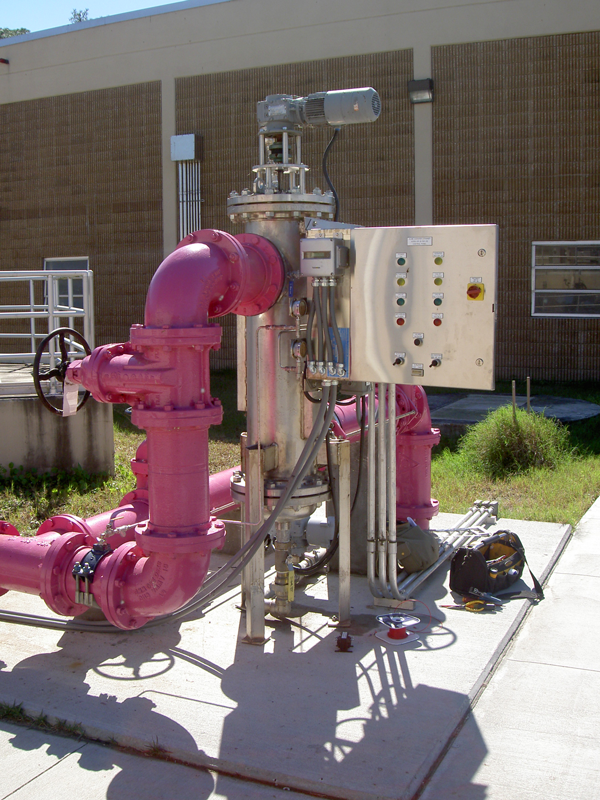
For the textile industry, automatic scraper strainers like those from Acme Engineering can provide continuous removal of suspended solids to comprehensively protect membrane systems. The automatic units are motorized and designed to continually remove suspended particulates in industrial process water and wastewater to the specific size required down to .003 inches (75 microns).

Conventional manual strainers can become clogged quickly due to limitations in straining area. When that occurs, cleaning or media replacement is required, which increases maintenance costs. The other alternative for fine straining is automated backwash-style strainers of various designs. As particle sizes grow larger, however, large contaminants can jam up the backwash system or remain in the body of the strainer, requiring manual removal and interruption of the process flow.

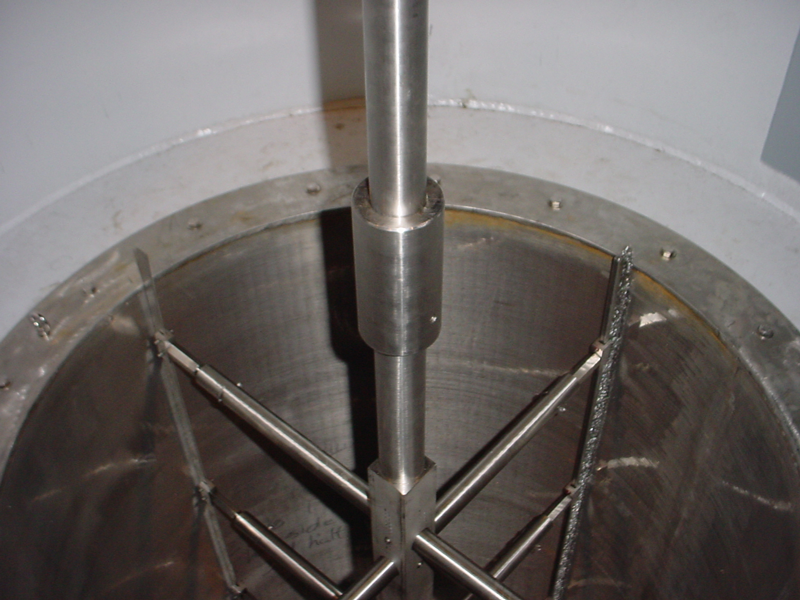
With the automatic scraper strainer, cleaning is accomplished by a spring-loaded blade and brush system, managed by a fully automatic control system. Four scraper brushes rotate at 8 RPM, resulting in a cleaning rate of 32 strokes per minute. The scraper brushes get into the wedge-wire slots and dislodge resistant particulates and solids. This approach enables the scraper strainers to resist clogging and fouling when faced with large solids and high solids concentration. It ensures a complete cleaning and is very effective against even organic matter “biofouling.”

With this type of system, manual maintenance for cleaning is eliminated. Blowdown occurs only at the end of the intermittent scraping cycle when a valve is opened for a few seconds to remove solids from the collector area. Liquid loss is well below 1 percent of total flow.

With so much to gain, textile industry plant managers should consider selecting an automated, self-cleaning system that is essentially “set-and-forget,” where automatic scraper strainers comprehensively protect delicate membranes and allow personnel to focus on other aspects of the facility.

May 26, 2022

Sponsors