Gildan Publishes Its 18th Environmental, Social, And Governance (ESG) Report

MONTREAL — July 29, 2022 — Gildan Activewear Inc. is pleased to announce that it has published its 18th Environmental, Social, and Governance (ESG) Report, which outlines the company’s ESG commitments and performance results, accompanied by further details on Gildan’s Next Generation ESG strategy and future targets.

The year 2021 was characterized by the ongoing COVID-19 pandemic, supply chain disruptions, labor shortages, and geo-political and climate uncertainty. Despite these global challenges, Gildan continued its leadership in responsible apparel manufacturing and closed-off the year with strong ESG performance and further progress against its strategic initiatives.

“We are pleased with the work we’ve done to continue playing a role in improving the livelihood of people who make our clothes, protecting the environment, empowering our communities, and increasing the sustainability of our products,” said Glenn J. Chamandy, president and CEO of Gildan. “Our vertically integrated business model continues to be the driving force behind our leading ESG practices and allows us to ensure that our products are made with respect throughout our entire supply chain.”

The report is available here: https://gildancorp.com/en/responsibility/respect-for-transparency/esg-reports/  and key highlights can be found below:

Environment

In 2021, Gildan continued to make investments in systems, technologies, and initiatives towards reducing its carbon footprint and improving water efficiency. The company thus set a strong base for fulfilling its future environmental goals and reaching the level of decarbonization required to meet the goals of the Paris Agreement, and early in 2022, Gildan signed the Science Based Targets initiative (SBTi) commitment letter.
Key environmental highlights in 2021 included the following:

  • 39 percent of Gildan’s energy came from renewable sources;
  • 18-percent reduction in water intensity compared to 2018;
  • 15-percent decrease in total waste intensity compared to 2018; and
  • 68-percent reduction in waste clippings compared to 2020.

Social

Gildan prioritizes being an ethical manufacturer by respecting human rights; health and safety; diversity, equity, and inclusion; and communities. In 2021, the Company continued to focus on ensuring fairness, inclusion, and opportunity in its labour practices – including across its supplier base – and on its community engagement work.

Key social highlights in 2021 included the following:

  • $15.1 million towards in-kind benefits for employees;
  • 98 percent of Gildan workers were represented by formal Health and Safety committees;
  • 78 percent of respondents from Gildan’s 2021 employee engagement survey said they believed the Company was an inclusive workplace;
  • Steadily increased female representation by 2 percent per quarter at the senior management level;
  • $2.1 million donated to community partners; and
  • $850 million total expenditures in materials and services with local suppliers.

Governance

With a longstanding commitment to operating transparently and with integrity, Gildan has been publishing its ESG reports in alignment with the Global Reporting Initiative (GRI) Standards: Comprehensive option since 2008, and the Sustainability Accounting Standards Board (SASB) Apparel, Accessories and Footwear Sustainable Accounting Standard since 2020. The Company also plans to publish its first stand-alone Task Force on Climate Related Financial Disclosures (TCFD) report in 2022 and expects to be fully aligned with TCFD recommendations by 2025. In addition, in 2022, the company incorporated sustainability linked terms into its credit facility and has tied a portion of CEO and senior executive compensation to the accomplishment of ESG targets.

Key governance highlights in 2021 included the following:

  • Nine out of 10 of Gildan’s Board of Directors were independent;
  • Two thirds of Gildan’s three Board level committees were chaired by women;
  • The Board Diversity Policy was updated to reflect an expanded definition of diversity and the Company committed to a target of achieving at least 30 percent female representation on the Board at or prior to the 2023 shareholder meeting; and
  • Retained an independent advisory firm to review the Board’s processes and structure, composition and succession planning, and oversight of ESG matters.

Recognitions

In 2021, Gildan was recognized by the following organizations:

  • Named one of the “World’s 100 Most Sustainable Corporations” by Corporate Knights;
  • Included on the Dow Jones Sustainability Index (DJSI) for the ninth consecutive year;
  • Named one of the “Top 100 ESG Companies of 2021” by The Investor’s Business Daily;
  • Received a “B” score on climate change and water security from CDP; and
  • Ranked sixth out of 250 brands on the 2021 Fashion Transparency Index.

Posted: August 1, 2022

Source: Gildan Activewear Inc.

Pet Product Compa y Avanti Introduces Respond Dog Beds Powered By CELLIANT®

LOS ANGELES — July 28, 2022 — Hologenix’s CELLIANT® infrared technology, an ingredient in textiles across many categories including bedding, is now offered in a new line of sustainable dog beds. The first performance fabric product from AVANTI, RESPOND is a wellness collection that promotes good health not only for pets but also for the planet. It is made from 100-percent recycled PET and uses patented Celliant technology for unmatched performance.

Celliant transforms the body’s heat into full-spectrum infrared energy. This energy is reflected back to the body, making it possible for the tissue and muscle to absorb it, promoting local circulation and tissue oxygenation. This proven technology helps keep the body dry and at the appropriate temperature. Celliant has been demonstrated to enhance energy, endurance, strength, stamina and comfort as well as promote faster recovery and more restful sleep. The RESPOND beds’ orthopedic memory foam filler adds an extra layer of comfort and wellness.

Introduced at the world’s largest pet conference, Interzoo in Germany in May, RESPOND dog bedding was the result of determination by AVANTI leaders Raghav and Devika Modi to become champions of pet wellness and performance products while also aligning with the New Delhi, India-based company’s focus on sustainability.

“People today want the same high-quality in terms of wellness, sleep and recovery for their pets as for themselves,“ said Raghav Modi, AVANTI’s Managing Director. “Celliant was a natural fit for its functional performance benefits and sustainability. The RESPOND Collection is also design-led and blends aesthetically with household décor and furnishings.”

Ideal for ailing and senior pets, RESPOND beds are made from GRS-certified 100-percent recycled polyester Celliant yarns and orthopedic memory foam and have natural latex-coated bases for extra skid-resistance. AVANTI pet bed covers are removable and washable.

RESPOND dog beds are offered in nine SKUs, three different shapes and three colorways of each shape: grey, blue/grey and green/grey in shades that are associated with wellness.

“We are excited to further our offerings in the pet sector with the RESPOND Collection from AVANTI,” said Seth Casden, Hologenix co-founder and CEO. “We very much enjoy our partnership and look forward to future collaborations.”

Look for the RESPOND Collection from AVANTI coming soon to major pet retailers in the European Union and the United States.

Posted: August 1, 2022

Source: Hologenix, LLC.

GIS Support For Konica Minolta 1024a Printheads

CAMBRIDGE, England — July 28, 2022 — Global Inkjet Systems Ltd (GIS), a Nano-Dimension division, now offers its flexible drive electronics and software for the Konica Minolta KM1024aSHE and KM1024aLHG-RC industrial inkjet printheads via its Ethernet platform.

For more than 15 years, GIS Drive Electronics have provided comprehensive, high performance and flexible datapath solutions to take full advantage of key manufacturers’ printhead capability, consistently delivering field-proven productivity, print quality and system reliability.

With a compact design, the KM1024aSHE (6pl/40kHz, 20pl 22kHz) is compatible with solvent, oil, and UV inks. The KM1024aLHG-RC (27pl binary up to 240pl 8dpd) has recirculation at the nozzle plate ideal for high-laydown applications such as ceramics, textile, opaque white, varnish printing and materials deposition coatings. The KM1024aLHG-RC is also compatible with solvent, oil, UV, and aqueous inks.

Support for the Konica Minolta KM1024aSHE and LHG-RC printheads is achieved through the GIS HMB-DG2 Ethernet Head Management Board, and a new GIS Analogue Head Board (AHB), the AHB-KM-1024a, to drive each KM104aSHE or LHG-RC printhead to its full potential.

The GIS HMB-DG2/AHB-KM-1024a configuration has a flexible design and can drive up to 2 x KM1024aSHE or LHG-RC printheads. It comes with an option to add up to 2 x stackable daughter boards to support up to 6 x printhead connections and multiple HMBs scaled to support larger systems. The HMB-DG2 includes print data management, waveform control and printhead diagnostics, all accessed over Ethernet. The GIS datapath hardware is complemented by Atlas® software offering optional RIP, VDP and Image Quality (IQ) Tools to achieve the high-quality, demanding printing requirements of industrial applications.

This addition to its product portfolio boosts the position of GIS as a leading supplier of integrated inkjet solutions worldwide.

Posted: August 1, 2022

Source: Global Inkjet Systems Ltd.

Gartex Texprocess India’s New Delhi Edition To Be Bigger Than Ever With More Than 200 Exhibitors Confirmed

NEW DELHI — July 28, 2022 — With participation of over 200 companies, Gartex Texprocess India is gearing up for a power-packed edition in New Delhi. The recently announced association with FABEXA will bring fabric manufacturers and suppliers from Gujarat on the show floor to deliver a strong push to the region’s textile and apparel sector.

Following the success of its first-ever Mumbai edition earlier this May, Gartex Texprocess India — a platform for garment and textile machinery, fabrics, accessories, and allied industries — is ready to open the curtains in New Delhi at Pragati Maidan from August 4-6, 2022.

Affirming strong support and recognizing the potential impact of Gartex Texprocess India, Shri Upendra Prasad Singh, Secretary, Ministry of Textiles, Government of India, stated: “lndia is one of the prominent textiles and clothing producing countries in the world. Domestically, it is the second largest employment providing sector and accounts for 11.4% of lndia’s global merchandise exports during 2020 – 21 and holds a 4% share on the global trade in textiles and apparel. Gartex Texprocess India New Delhi will not only provide opportunities to overseas buyers to source their requirements but also provide a platform to domestic exporters, especially SMEs for expanding their export potential.”

Collocated alongside Denim Show, Fabrics & Trims Show and Screen Print India, the three-day show will converge more than 200 companies to create an extensive display of manufacturing technologies and finished products.

Top textile and apparel machine manufacturing brands such as: Aura, Fabcare, Jaysynth Dyestuff, Wenli, Baba Textile Machinery, Orange-O-Tec and Jack have confirmed their participation at Gartex Texprocess India, while the Denim Show unite leading denim producers of India such as: Jindal Worldwide Ltd, Arvind Ltd, Raymond UCO Denim Ltd, LNJ Denim, Siyaram Silk Mills Ltd,Kanchan Group and many more under its wing.

Meanwhile, Screen Print India will showcase manufacturing technologies for textile, digital and screen printing from brands such as DCC Print Vision LLP, JN Arora, Konica Minolta, Epson and Green Printing Solutions, among others.

With an aim to promote localization in the fabrics’ sector, organizers Messe Frankfurt India and MEX Exhibitions Pvt Ltd have joined hands with FABEXA, an arm of Ahmedabad’s nodal textile trade body Maskati Cloth Market Mahajan for the Fabrics & Trims Show. The FABEXA pavilion will host around 70 fabric manufacturers from Gujarat to demonstrate their expertise in fabric, cotton and natural based fabrics, including: Nakoda Fashion Pvt Ltd, Shashwat Textiles Pvt Ltd, Bhavna Processors Pvt Ltd, Viru Textile Mills Pvt Ltd, Panam Texfab Pvt Ltd and Shree Chamunda Fabrics. The trade fair will also welcome about 300 fabrics sourcing representatives as hosted buyers over the span of three-days.

As a highly-recognized industry exhibition, Gartex Texprocess India New Delhi 2022 is backed by the support of Ministry of Textiles as well as chief industry associations and trade bodies, comprising: The Confederation of Indian Textile Industry (CITI), Denim Manufacturers Association (DMA), Maskati Cloth Mahajan, Retailers Association of India (RAI) and the Apparel Export Promotion Council (AEPC).

Entering its seventh edition, Gartex Texprocess India will provide industry buyers an excellent platform to source the latest manufacturing machinery and behold the progress taking place in textile, garment production, screen printing and other allied sectors.

Posted: August 1, 2022

Source: Messe Frankfurt Trade Fairs India Pvt Ltd.

Cosmo Speciality Chemicals Appoints Sunil Vaidya Sales Head

Vaidya

NEW DELHI — July 28, 2022 — Cosmo Speciality Chemicals, a 100-percent subsidiary of Cosmo First Ltd., today announced the appointment of Sunil Vaidya as head sales – Textile Division. In his new role, Vaidya will be responsible for driving sales and development for Cosmo Speciality Chemicals nationally. He will report to Anil Gaikwad, business head, Cosmo Speciality Chemicals.

Vaidya comes to Cosmo Speciality Chemicals with more than 30 years of experience in sales and marketing, business development and strategic planning. He has in depth understanding of Textile Dyes & Chemicals industry and would capitalize his expertise to drive sales for the specialty chemicals business.

On the announcement, Pankaj Poddar, Group CEO, said, “With more than three decades long career in the textile industry, Sunil has knowledge and expertise across various domains of sales, development, and strategic planning.  I am delighted to welcome Sunil as part of Cosmo’s Team and confident that his addition would be instrumental in accelerating sales and powering growth for our speciality chemicals business in the textiles industry and beyond.”

Commenting on his new role, Vaidya said: “Within a few years, Cosmo Speciality Chemicals – Textile division has launched multiple products and built credibility across industry which can be witnessed by its phenomenal growth. I am thankful that the leadership has entrusted me with the responsibility of driving growth via sales for speciality chemicals business across markets. I look forward to leveraging expertise and R&D capabilities of the team to help unlock new market opportunities.”

Posted: August 1, 2022

Source: Cosmo Speciality Chemicals

Industry Continues To Grow Sustainable Practices

By Jim Phillips, Yarn Market Editor

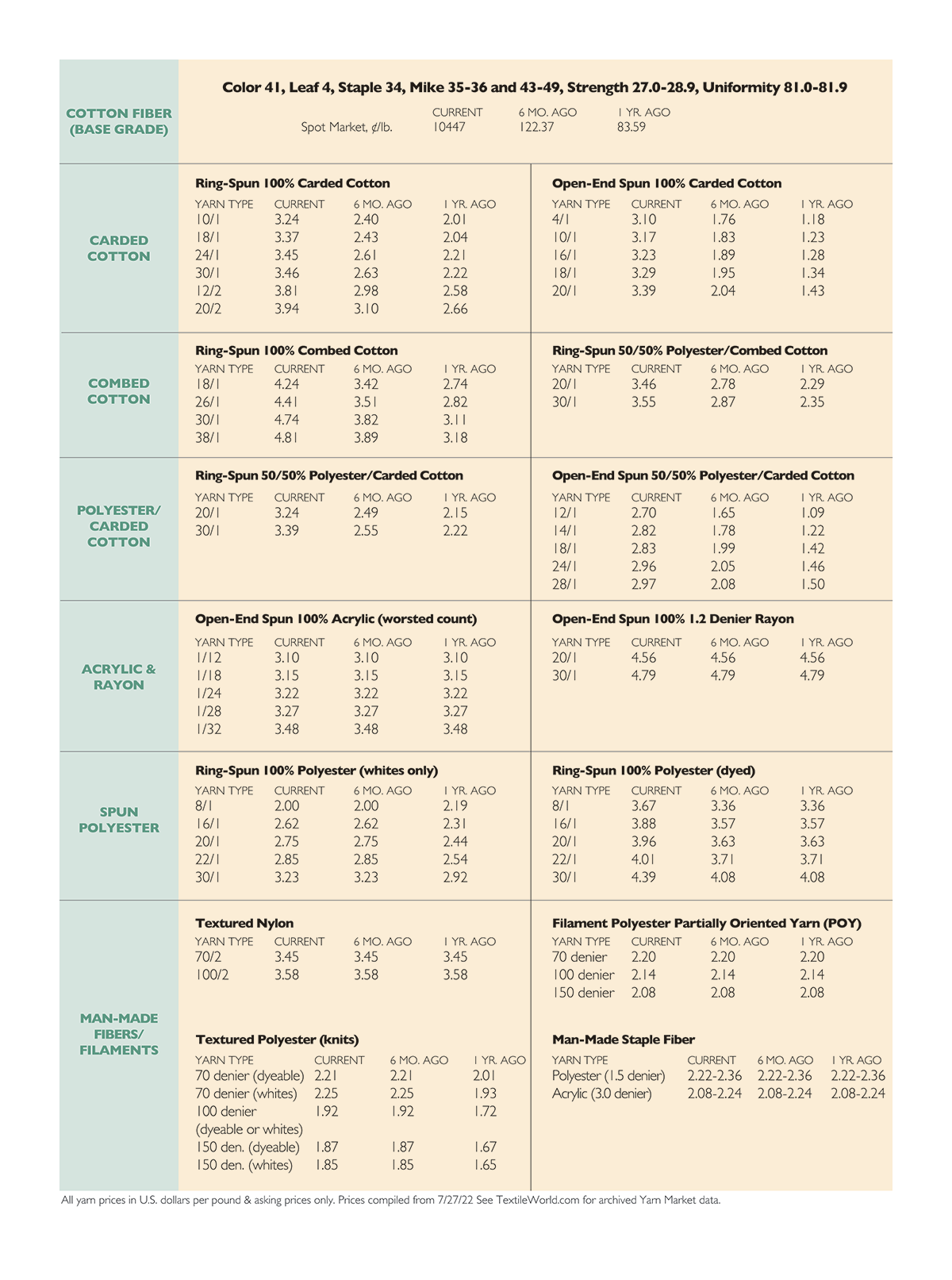
The U.S. textile industry continues to make considerable strides in sustainable manufacturing.

For example, American & Efird — and its subsequent parent company, Elevate Textiles — has been establishing sustainability goals and publishing reports quantifying how it is achieving those standards for more than half a decade. Unifi, with its REPREVE® line of products, has also taken its place among the global leaders in environmentally friendly manufacturing methods and technology. Glen Raven published its first sustainability report in 2021. And more and more companies are joining the ranks.

“Many in the textile arena — the fiber producers, the yarn makers, the weavers, knitters, dyers and finishers — have achieved some remarkable results in what could be considered a relatively short period of time,” said one university ecology professor. “You used to think of textiles as a ‘dirty’ industry, one that left the air and water polluted. It was not uncommon at all to see once-beautiful rivers near a dyehouse be a different color every day, with no life-sustaining properties. You don’t see that today. Certainly, a bit of that is attributable to regulation, but much of it has been because of the efforts of environmentally responsible companies. Some other industries are following this lead, and, unfortunately, some are still lagging behind.”

U.S. Cotton Trust Approved As International Sustainability Standard

In addition to individual companies, entire segments of the industry are also making considerable headway in sustainability endeavors.

For example, The U.S. Cotton Trust Protocol has been approved as a standard for sustainable cotton by Siegelklarheit, an initiative of the German Federal Government. By helping consumers to better understand environmental and social labels, Siegelklarheit wants to contribute to more sustainable purchasing decisions. U.S. Cotton Trust Protocol successfully passed Siegelklarheit´s assessment system. As a result, members of the Partnership for Sustainable Textiles (PST) can use the Trust Protocol as another standard to calculate their share of sustainable cotton.

The Trust Protocol is the only system that provides quantifiable, verifiable goals and measurement and drives continuous improvement in six key sustainability metrics — land use, soil carbon, water management, soil loss, greenhouse gas emissions, and energy efficiency. It is also the world’s first sustainable cotton fiber system to offer its members article-level supply chain transparency through the Protocol Consumption Management Solution.

“The Trust Protocol’s vision is to set a new standard in sustainable cotton production where full transparency is a reality and continuous improvement to reduce our environmental footprint is the central goal,” said Dr. Gary Adams, president of the U.S. Cotton Trust Protocol. “We commit to ensuring the protection and preservation of the planet, using the most sustainable and responsible techniques.”

Launched in 2020, the U.S. Cotton Trust Protocol was designed to set a new standard in more sustainably grown cotton, ensuring that it contributes to the protection and preservation of the planet, using the most sustainable and responsible techniques.

U.S./Australian Consortium Successfully Diverts Cotton Waste

A 12-month trial on a cotton farm just outside the rural town of Goondiwindi, Queensland, Australia, has shown it is possible to divert large amounts of cotton textile waste at end of life from landfills to cotton fields with no harm done to soil health or cotton yields, according to Cotton Leads, a consortium of the U.S. and Australian cotton industries. Project collaborators are confident that with a solid business plan and more research, returning shredded cotton products to cotton fields could soon offer benefits to soil health, as well as a scalable solution to the massive global problem of textile waste.

“At the very least the trial showed that no harm was done to soil health, with microbial activity slightly increased and at least 2,070kg of Carbon Dioxide equivalents (CO2e) mitigated through the breakdown of these garments in soil rather than landfill,” said Dr. Oliver Knox, cotton-industry-supported soil scientist said. “The trial diverted around two tons of textile waste from landfills with no negative impact on cotton planting, emergence, growth or harvest. Soil carbon levels remained stable, and the soil’s bugs responded well to the added cotton material.”

He continued: “There also appeared to be no adverse effect from dyes and finishes, although more testing is needed on a wider range of chemicals to be absolutely sure of that.”

According to a farmer involved in the testing, the cotton fields easily “swallowed up” the shredded cotton material, giving him confidence that this composting method has practical long-term potential. “We spread the cotton textile waste a few months before cotton planting in June 2021 and by January and the middle of the season the cotton waste had all but disappeared, even at the rate of 50 tons to the hectare,” he said.

July 2022

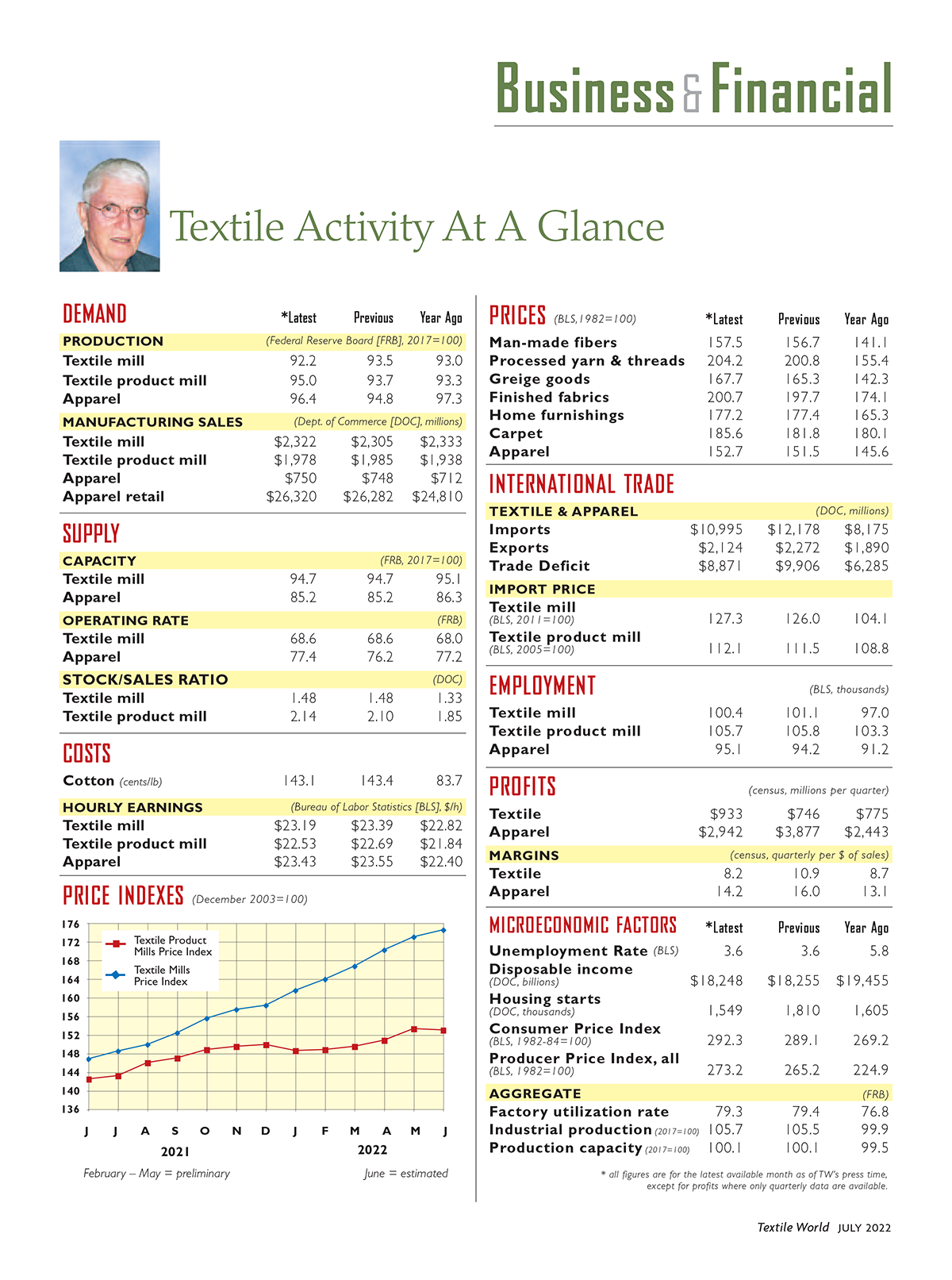
Textile Activity At A Glance: July 2022

July 2022

Thanh Cong Realizes Efficiency Increase, Savings With Coats Digital’s GSDCost

The award-winning sportswear and knitwear manufacturer also benefited from an increase in orders; a significant reduction in overtime hours and material waste; and a happier workforce, with the introduction of scientifically assessed fair and achievable performance incentives

TW Special Report

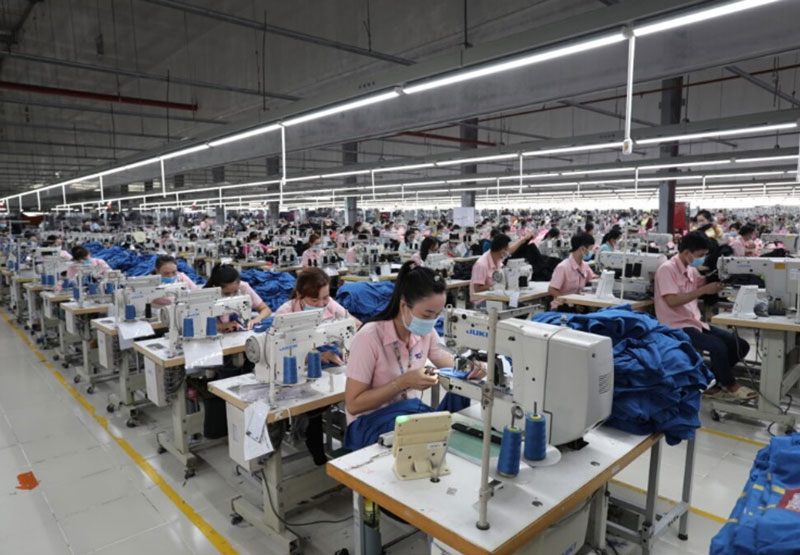
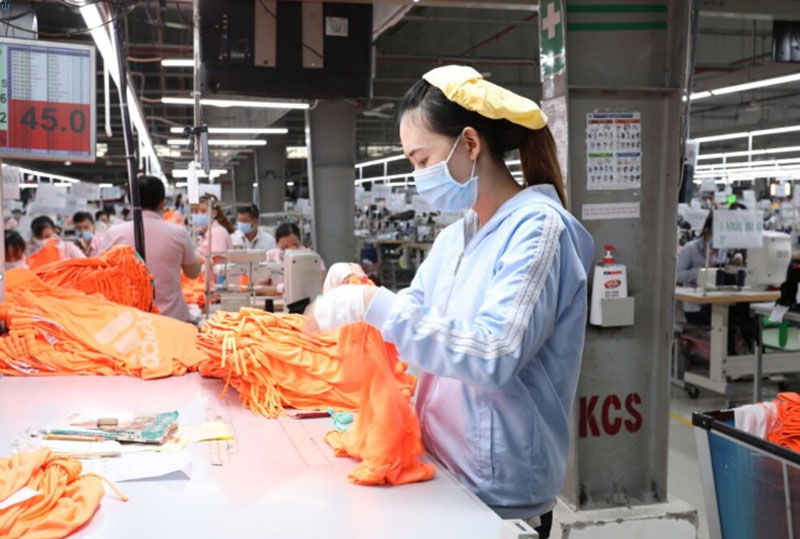
Coats Digital is delighted to announce that following the implementation of Coats Digital’s GSDCost, award-winning sportswear and knitwear manufacturer, Thanh Cong Textile Garment Investment Trading JSC has realised a 14 percent efficiency increase and saved thousands of dollars with each manufacturing production run, due to more accurate and transparent costing and capacity forecasting. By establishing international standard time benchmarks, based on accurate Standard Minute Values (SMVs), the company also enjoyed an increase in orders, a significant reduction in overtime hours and material waste, and increased transparency around its labor costs to support an achievable performance incentive program.

Located in Ho Chi Minh, Vietnam, sportswear and knitwear manufacturer Thanh Cong Textile Garment Investment Trading JSC offers a fully integrated vertical production system of spinning, weaving, knitting and dyeing garment production. Since its inception in 1979, the company has achieved steady growth, and now boasts an annual turnover of over $130,000,000. Customers include CSW, Adidas, New Balance, Eddie Bauer, SanMar, Kohl’s and JCP, and it is listed as one of Vietnam’s Top 500 largest enterprises. Thanh Cong has additionally won a variety of awards, such as: Eddie Bauer’s Product Quality and On-Time Delivery Award; JC Penney’s Operational Excellence Award and a Gold Brand Certificate Award from Ho Chi Minh City.

Prior to implementing Coats Digital’s SaaS-based cost optimization solution, GSDCost, Thanh Cong based its cost and capacity forecasts on inaccurate historical data stored in multiple Excel spreadsheets which were notoriously difficult to update in real-time across all costing, capacity planning and manufacturing teams. As a result of inaccurate standard minute values (SMVs) regarding CM (Cost to Make) production times, and poor costing and planning visibility, Thanh Cong suffered low efficiency rates, high defect rates and late deliveries, which often resulted in additional air shipment costs and an unnecessary amount of material and people-hour wastage.

With rising CM costs in both labor and raw materials and a high variation in production quality, due to time studies based purely on historical experiences, Thanh Cong needed a standardized solution that would accurately record SMVs through effective, standard motion digitized codes so it could optimize its costing processes, significantly enhance global manufacturing efficiencies and ultimately ensure it remained profitable in a highly volatile industry environment.

Following the implementation of GSDCost, Thanh Cong was able to establish international standard time benchmarks based on standard motion codes and predetermined times. This enabled the sales, costing, planning and manufacturing teams to communicate efficiently using the same language, based on a scientific method for correctly analyzing manufacturing costs.

As a result, business units could confidently and fairly negotiate product prices with customers, and a more succinct single view of overall CM costs enabled Thanh Cong to realise a production efficiency increase of 13.82 percent.

Tran Thanh Bang, Thanh Cong Smart Factory team leader, said: “GSDCost is the only globally recognised international method-time-cost standard to successfully achieve cost optimisation and sustainable improvements to productivity. We certainly have not been disappointed. Coats Digital’s latest SaaS version of GSDCost has enabled us to not only increase our overall efficiencies by a staggering 14 percent, but has very positively impacted our bottom line, by saving us over $12,000 in costs per 22,000-piece production run.”

In a nutshell, because capacity planning and material requirements were based on real forecasts, Thanh Cong not only benefited from reduced overtime staff costs and material wastage, but also avoided having to pay extra high shipping and air-freight charges, as orders were significantly less likely to be delayed. Thanh Cong reports that it is now saving over $12,000 on a 22,000-piece order, as a result of higher efficiency cost planning, and the absence of emergency costs, previously required to deliver orders on time.

An open and transparent production capacity platform has also enabled Thanh Cong management to set achievable productivity goals based on a fair standard of working hours. The introduction of achievable performance incentives has consequently greatly improved staff morale and motivation, as goal setting targets are now based on realizable targets.

“GSCDCost will undoubtedly bring us more business opportunities as we can quickly respond to order requests, realistically take on more business, and know that we can meet promised delivery targets, every time.  Another great advantage is that there is no longer any disagreement between the sales and production teams regarding cost plans, which means a much more peaceful working environment, where staff can occupy themselves with more meaningful activities to enhance the business. Our staff are also enjoying working towards incentivised good performance targets, based on real and achievable goals,” Tran Thanh Bang added.

Coats Digital’s GSDCost method analysis and pre-determined times solution is widely acknowledged as the de-facto international standard across the sewn products industry. The solution supports a more collaborative, transparent and sustainable supply chain, in which brands and manufacturers establish and optimise ‘International Standard Time Benchmarks’ using standard motion codes and predetermined times. This use of a common language and standards supports accurate cost prediction, fact-based negotiation, and a more efficient garment manufacturing process, while concurrently delivering on CSR commitments.

Coats Digital’s enhanced feature of a globalized Fair Wage Tool combines the international standard time for any given style, with detailed factory efficiencies, contracted hours and the fair living wage for the country (data provided by the Fair Wage Network). This added tool enables brands and manufacturers to quickly agree the fair living wage allowance for any given garment, in any factory in the world.

Patrick Chau, Customer Success manager, Coats Digital, said: “We are delighted that Thanh Cong has realised such fantastic efficiency results and significantly increased its profitability as a result of implementing GSDCost. Thanh Cong’s planning and sales teams were quick at learning how to get the most out of the GSDCost solution and its waste reduction achievements and increased transparency around labor costs, will greatly support the company and its brand partners’ social responsibility goals to meet increasing consumer demands for a more transparent, sustainable and ethically responsible apparel supply chain.”

July 28, 2022

Quality Control: Finding The Right Solution In Changing Clothing And Footwear Markets

Quality remains the key factor for success in competitive clothing and footwear markets. With the industry facing multiple challenges, how can retailers maintain quality while implementing agile supply chains?

Global political instability; rising fuel and energy costs; regulators demanding greater sustainability and empowered, knowledgeable consumers seeking more reliable products from transparent supply chains that have a positive impact on the communities and environments in which they operate. The drivers impacting global garment and footwear markets are changing and intensifying.*

In the last few decades, textile and footwear brands and retailers have typically relied on global, linear supply chains. These have delivered cost reductions and consistency but, in an uncertain and physically disconnected world, they come with the inherent risk that supply could become disrupted and unreliable.

Response

Agile, dynamic supply chains are replacing traditional linear models. Brands and retailers are looking at diversification and near-sourcing to enable greater flexibility while reducing their environmental impact. A reduction in distance to market will result in a significant reduction in CO2 emissions.

There are multiple benefits to these new dynamic sourcing solutions. Alongside supply chain risk mitigation, they offer the chance to reduce transport costs, improve brand reputation and ensure compliance with market demands for sustainability.

However, there is a major downside. An increase in the number of suppliers in a chain can make it difficult to manage quality and, if quality is not maintained, this can result in products failing to sell, recalls, reputation damage and/or additional costs for rework.

Supply chain management

Brands and retailers need to be certain they are working with the right suppliers. They need to be certain that a factory can deliver on its promises, is choosing the right inputs and production methods, has the necessary accreditations for compliance, and that quality is maintained throughout production, storage and transportation. When every aspect of a supply chain is critical, the retailer cannot rely on output controls to maintain quality.

The impact of poor quality control isn’t always just financial. Real life examples of harmful and damaging failures include broken needles, scissors and wire in finished garments, retailers receiving moldy goods, and Chromium VI formation in leather materials. Output controls must be replaced with an effective upstream management system.

Moving quality control from the end to the start of the supply chain means brands and retailers can ensure a supplier’s factory can deliver the products they want by checking:

  • Capability to manufacture, store and transport a product to the required specification
    Capacity to manufacture the required amounts; and
  • Technical competencies and production processes to ensure they are right for maintaining and controlling quality.

However, managing dynamic supply chains can be challenging, especially when the ability to travel is disrupted by hybrid working models and the realities of the ’new-normal’.

Upstream solutions

Retailers should employ a range of solutions to ensure effective upstream management of the supply chain and the delivery of high-quality products:

  • Technical Factory Assessment (TFA) – evaluates a factory’s capability and process management, identifying potential process risks and areas for improvement;
  • Production Readiness Check (PRC) – assesses a factory’s readiness for mass production in relation to a specific order – reducing costs and mitigating risks; and
  • Onsite Production Control (OPC) – on-site assessment and preventive advice to secure bulk quality at an early stage.

SGS Solution

SGS Advanced Field Service is an analytical tool that clearly defines potential problems in the supply chain. It supports effective supplier identification, material sourcing, operational process evaluation and data analysis. The service incorporates TFA, PRC and OPC to create a single, highly effective solution to upstream supply chain management. It also offers efficient upstream quality control solutions for issues such as Chromium VI formation, metal contamination and mold prevention.

SGS has specially developed strategies for both clothing – Garments Operational Optimization Diligence Services (GOODS) – and footwear – Footwear Operational Optimization Technical Service (FOOTS) – to help brands ensure their end products conform to regulatory and customer-specific requirements.

For brands and retailers operating in these new dynamic trading environments, SGS Advanced Field Service provides the ideal solution for ensuring competitiveness through continued enhancements in quality.


Reference:

*https://www.raconteur.net/supply-chain/is-onshoring-really-the-answer-to-supply-chain-nightmares/


July 28, 2022

Bluesign®: Helping The Textile Industry Successfully Negotiate The EU Green Deal

The European Union (EU) has set out plans to create a climate-neutral continent. How will this impact the textile industry and what solutions are available?

TW Special Report

“Our goal is to reconcile the economy with our planet, to reconcile the way we produce, the way we consume with our planet…the old growth model that is based on fossil fuels and pollution is out of date.” Ursula von der Leyen, European Commission President, 2019.*

What is the Green Deal?

The European Green Deal (EGD) is a set of initiatives that commits all 27 Member States to transforming the EU into a modern, resource-efficient and competitive economy. It commits them to:

  • No net emissions of greenhouse gases by 2050;
  • Decoupling economic growth from resource use; and
  • Ensuring no person and no place is left behind.

Impact on the textile industry

Textile consumption has been identified by the EU as having the fourth highest impact on the environment, after food, housing and mobility. It is also one of the top three pressures on water and land use and top five for resource use and greenhouse gas emissions. Set against these negatives, the industry does employ more than 1.5 million citizens.

The EU has therefore set several goals for the textile industry. By 2030, all textile products must be:

  • Durable, repairable and recyclable;
  • Largely made from recycled fibers;
  • Free from hazardous substances; and
  • Produced in ways that respect social rights.

Impact on chemical use

The ‘Environment and oceans’ section of the EGD contains a specific strategy for chemicals – ‘Chemicals strategy for sustainability’ – which includes nearly one hundred actions. Its primary objectives are:

  • Better protection for citizens and the environment;
  • Boosting innovation in safe and sustainable chemicals; and
  • Enabling a transition to safe and sustainable chemical use – by design.

Current regulations and directives, such as Regulation (EC) No 1907/2006 on Registration, Evaluation, Authorization and Restriction of Chemicals (REACH) and Regulation (EC) 1272/2008 on Classification, Labeling and Packaging of Substances and Mixtures (CLP), will be directly impacted by the EGD. Therefore, its impact on the textile industry will be great.

Safety and sustainability by design 

The EU is looking to create multiple drivers for change. These include developing sustainable-by-design criteria to help companies remove substances of concern from the complete product lifecycle by substituting safer alternatives. In addition, they are looking to:

Measure industrial transition by introducing key performance indicators (KPI)
Amend IED (2010/75/EU) to include requirements for on-site assessments and restrictions on substances of very high concern (SVHC)

The EU’s strategy prioritizes a range of substances:

  • Carcinogenic, mutagenic and reprotoxic substances (CMRs);
  • Endocrine disruptors;
  • Persistent, bioaccumulative and toxic (PBT) and very persistent and very bioaccumulative (vPvB) substances;
  • Immunotoxicants;
  • Neurotoxicants; and
  • Substances toxic to specific organs and respiratory sensitizers.

In the future, a substance might automatically be restricted once there is evidence that it falls into one of these categories.

The EU operates a zero-tolerance approach to companies that fail to comply with REACH. Compliance audits will therefore be required in Member States and enforcement checks will be targeted at known areas of non-compliance, such as e-commerce sites, imports and CLP failures.

Moving forward

The market for greener textile products already exists. With the EGD, the EU is tapping into something that consumers are already demanding. Through legislation and positive exemplars, e.g., greener police uniforms, this market is set to grow as consumers become better informed and they are able to make more sustainable purchasing decisions.**

The EU may be leading the way, but this is a global trend. Forward-thinking manufacturers are already producing sustainable and responsibility sourced products to compete in these competitive, growing markets.

For some textile and garment manufacturers, this may be a new way of thinking and working. It is clear there is a commercial advantage in switching to more sustainable design and production methods but without expert support, it may be hard for them to meet the demands of the markets and the requirements of the EGD.

SGS Solution

Bluesign®, a member of the SGS Group, is a holistic system that provides solutions in sustainable processing and manufacturing for the textile and clothing industries. Based on strict criteria, it supports and enables a company’s sustainable development, including corporate responsibility.

It provides a tool by which manufacturers can design a more sustainable business model, including access to a positive list for chemical substitution — replacing non-assessed and non-rated chemistry with safer and more sustainable alternatives.

Materials produced within a value chain assessed by bluesign can carry the bluesign®APPROVED label. Among other things, this means they are SVHC-free. A product can carry the bluesign®PRODUCT label if at least 90% of the textiles and 30% of accessories within it carry the bluesign®APPROVED logo.

Bluesign empowers manufacturers to ensure their supply chain is delivering products in accordance with strict sustainability criteria. With consumer demand for sustainable products increasing and the provisions of the EU EGD coming into effective, bluesign® offers manufacturers a better way to succeed in ever-changing competitive markets.

References:

*https://fashionunited.com/news/business/what-does-the-eu-s-green-deal-mean-for-the-textile-industry/2019121331305

**https://fashionunited.com/news/business/what-does-the-eu-s-green-deal-mean-for-the-textile-industry/2019121331305

July 28, 2022

Sponsors