Cuyahoga Falls, Ohio-based Americhem Inc. announced the launch of nDryve, a PFAS-free, in-melt surface-modifying technology platform designed to deliver durable multi-fluid repellency against alcohol and other low-surface-energy fluids in fiber systems.
As global regulations accelerate the phase-out of per- and polyfluoroalkyl substances (PFAS), manufacturers face pressure to maintain barrier performance without fluorinated chemistries. nDryve integrates directly into the polymer during melt processing, embedding surface-modifying functionality within the fiber matrix rather than relying on removable finishes.
“Evolving global PFAS regulations are reshaping how manufacturers evaluate barrier and surface performance technologies,” said Matt Miklos, vice president of corporate strategy and marketing at Americhem. “nDryve provides a PFAS-free pathway that aligns performance with emerging regulatory expectations.”
The technology is optimized for polyolefin and engineering fiber systems including PP, PET and PA6 for applications such as medical fibers, apparel, hygiene materials and industrial protective fabrics.
Remscheid, Germany/ Yangzhou, China-based Barmag Huitong (Yangzhou) Engineering Co. Ltd., a subsidiary of Barmag, commissioned the first continuous polymerization plant for polyamide 6 in China’s Zhejiang province.
Following a construction and commissioning phase, the plant began production at the end of 2025. According to the company, 20 metric tons of high-quality polyamide 6 are produced daily with significantly reduced energy consumption. The material is processed into filament yarn for textile applications via a direct spinning facility.
The joint venture between German chemical fiber plant manufacturer Barmag and Chinese chemical plant specialist Huitong has further developed the classic two-reactor technology, making it competitive and establishing the concept as an option for future PA6 direct spinning. Barmag Huitong Engineering is working on process and equipment innovations to increase plant efficiency while promoting sustainable development of the nylon industry chain.
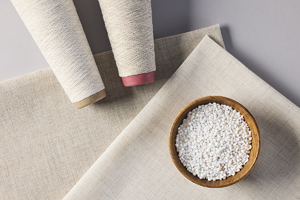
UNIFI®, Makers of REPREVE®, introduces Luxel™: a linen-inspired, easy-care performance yarnGreensboro, N.C.-based Unifi Inc., maker of REPREVE recycled yarn, announced the launch of Luxel, a yarn technology that combines the look and feel of linen with performance features and recycled materials.
Luxel captures the natural look and feel of linen while offering moisture-wicking, wrinkle resistance and odor control. The technology is built into the yarn and is suited for apparel, footwear, home furnishings, workwear and accessories.
Luxel is made with REPREVE recycled polyester yarn, including 30% REPREVE Takeback, which incorporates textile waste.
“We developed this yarn to provide designers and manufacturers with a product that delivers the premium look and tactile appeal of linen but delivering on enhanced benefits of easy care, durability and sustainability,” said Eddie Ingle, CEO of UNIFI.
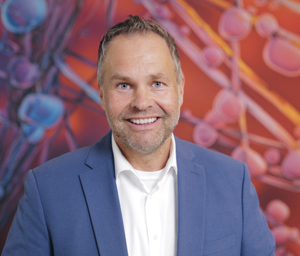
Dr. Andreas RapsCEO Dr. Andreas Raps outlines growth strategy, portfolio management and sustainability initiatives shaping Freudenberg Performance Materials.
By James M. Borneman, Editor In Chief
Weinheim, Germany-based Freudenberg Group is a family-owned company operating in 60 countries, with more than 51,000 employees and 2025 sales of more than 11.7 billion euros, roughly $13.9 billion.
Freudenberg Group’s portfolio includes seals, filtration, technical textiles, specialty chemicals, medical products and cleaning technologies, among others. Freudenberg & Co. KG is Freudenberg Group’s strategic parent company and Freudenberg SE serves as the corporate parent overseeing business operations.
Freudenberg Performance Materials is Freudenberg Group’s specialist in nonwovens and technical textiles. The company reports that it operates 35 locations in 14 countries.
Widely known for Evolon, its proprietary microfilament textile platform used in technical and industrial applications, as well as other branded technical textile platforms such as Colback, Dripstop, Enka Solutions and Lutradur, Freudenberg Performance Materials develops and manufactures nonwovens and technical textiles for markets including apparel, automotive, building materials, energy, filtration, health care, footwear and specialty applications.
Dr. Andreas Raps was appointed CEO of Freudenberg Performance Materials on Jan. 1, 2024. He previously held several executive positions at Freudenberg Sealing Technologies, starting in 2004 and most recently as CEO of the global Special Sealing Division, which has 17 manufacturing sites worldwide.
From 2016 to 2024, Dr. Raps was CEO of EagleBurgmann, a joint venture between the EKK Group of Japan and the Freudenberg Group.
Before joining Freudenberg, Dr. Raps worked for management consulting firms in Boston, Munich and Zurich. He holds an MBA from the University of Passau and earned a PhD in business administration with a thesis on strategy implementation. Dr. Raps has also been a member of the Freudenberg SE Executive Council since 2020.
Recently, Dr. Raps sat down with the editors of Textile World to discuss his vision of Freudenberg Performance Materials’ many innovations, the management of a complex product portfolio and the company’s commitment to future-oriented, sustainable technical textiles.
Textile World: Dr Raps, Freudenberg Performance Materials’ size, complexity and international footprint must present significant demands, what do you perceive as the most challenging aspect?
Dr. Andreas Raps: The biggest challenge is finding the right balance between global consistency and local responsibility. At Freudenberg Performance Materials, we operate worldwide, but our customers and markets are very specific. That’s why we set clear global standards for aspects like quality, safety and performance, while empowering our regional teams to adapt solutions locally.
Secondly, collaboration is critical. We actively connect customers, R&D and Operations early on. Innovation doesn’t happen in isolation. Cross-functional teams and standardized development processes help us turn ideas into reliable solutions.
Finally, our Guiding Principles give us orientation. Principles like Customer Value, Innovation, Responsibility and Long-term Orientation are deeply rooted at Freudenberg and actively lived today. They help us stay stable, adaptable and trusted – by our customers and by our people.
TW: How do you prioritize opportunities across people, products and markets?
Dr. Raps: For us, it always starts with people. We invest strongly in developing our employees and in creating a culture where responsibility, collaboration and entrepreneurship are encouraged.
Our global talent management is very systematic because opportunities only become reality when people are empowered to act.
On the product side, close collaboration with customers is key. Innovation happens when we combine material science expertise with deep application and market understanding. International and cross-functional teamwork ensures that good ideas move quickly from concept to real impact.
In terms of markets, we continuously observe regional trends and emerging applications. Market responsibility is largely decentralized, which allows us to respond fast to local opportunities, while still leveraging the strength and scale of our global network.
TW: Many people speak about innovation, but how do you create and propagate a culture of innovation? How do you support it? What barriers impede it?
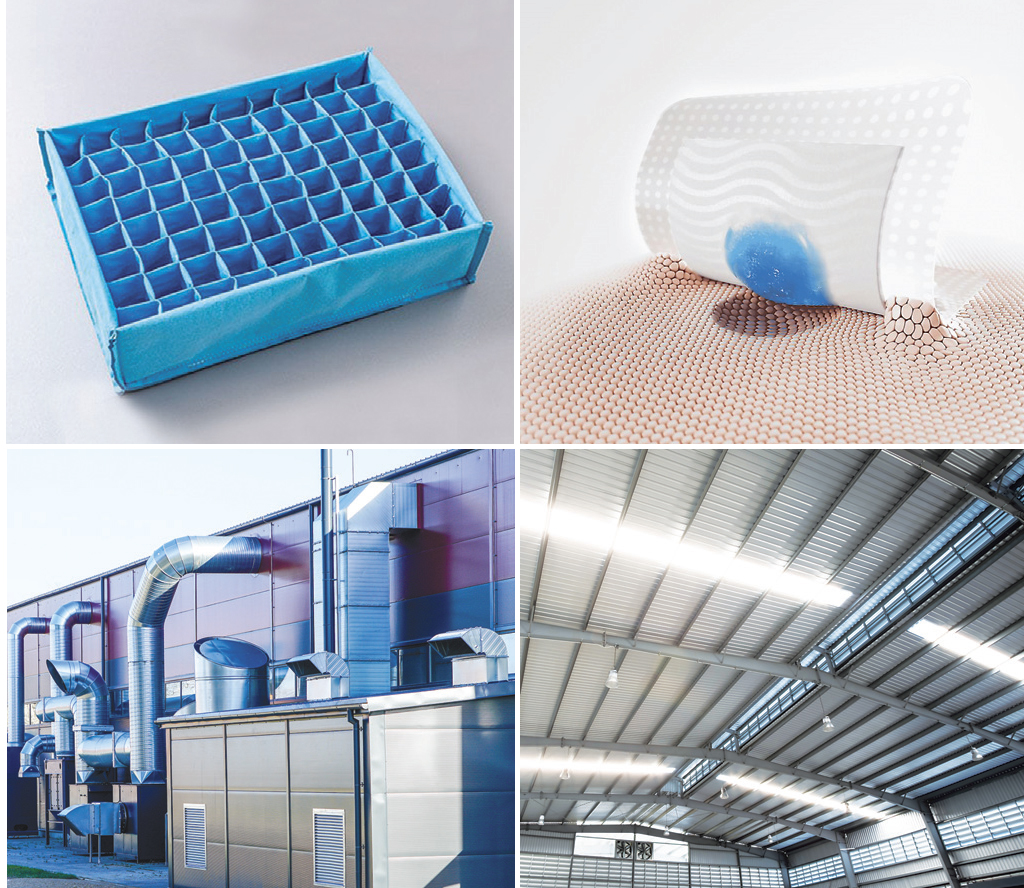
Some of the many technical textile solutions by Freudenberg Performance Materials include (clockwise from upper left) Evolon® packing; Tacnera® silicone foam dressings; Dripstop® condensation control; and Filtura® air filtration.Dr. Raps: Innovation at Freudenberg Performance Materials is not a buzzword — it’s anchored in our Guiding Principles and starts with real customer needs. We empower teams, encourage local decision making, and at the same time connect people globally through ONE FPM. ONE FPM is our shared way of working that breaks down silos and connects people, functions and regions worldwide to focus consistently on customer value and long-term success.
Leadership plays a central role. We lead based on trust, responsibility and clear direction. Cross-functional and cross-regional collaboration is actively supported and manufacturing expertise is an integral part of innovation, from the first idea all the way to industrial scale.
Of course, there are barriers. Our size and complexity can slow things down, so we work continuously on simplifying structures.
Risk aversion can also be an obstacle. We address this by encouraging learning, experimentation and — maybe most importantly — trust. And regarding silo thinking, ONE FPM helps us overcome it.
TW: How do you understand such a diverse product portfolio? How do you manage it and keep each product responsive, or even leading in its respective market segment?
Dr. Raps: We organize our portfolio around customer applications, not around internal technologies. That keeps us close to real market needs.
Every three years, we run a structured strategic planning process, including technology roadmaps. Each product area has clear ownership, a defined strategy and a clear customer value proposition.
Application expertise is crucial here. It keeps us connected to the realities of each segment. At the same time, our matrix organization and corporate functions ensure coordination and alignment across the company.
TW: With such a large footprint and capabilities, how do you drive synergies across products and processes within the company?
Dr. Raps: ONE FPM is the central enabler. Shared technology platforms allow us to reuse solutions and accelerate development.
Global manufacturing and process standards help ensure consistent quality and scalability. In addition, joint development projects across sites and structured knowledge transfer are part of our daily work.
Corporate functions support this coordination, but real synergies come from people collaborating openly across functions and regions.
TW: How do you stay on top of the future opportunities these products serve and beyond current markets?
Dr. Raps: Our sales teams continuously analyze how customer requirements, applications, and technologies are evolving. We look at new growth markets, strengthen local for local approaches, and advance circular economy concepts.
At the same time, we are very disciplined in focusing our resources on healthy and promising areas. This means avoiding tying up capacity in markets with declining demand, and freeing up investment for future-oriented solutions.
TW: The manufacture of nonwovens and technical textiles is an intensely technical business. How do developments, refinement of processes and innovation proliferate among Freudenberg’s divisions, sites and members?
Dr. Raps: International collaboration is part of our daily routine. Development expertise is bundled in global development teams, and production sites continuously share best practices under unified quality standards.
Dedicated process engineers run both local and global projects to improve our assets. This ensures that improvements and innovations are spread across the entire organization.
TW: Dr. Raps, how do you combine the company’s overarching goals with developing a product from concept to market?
Dr. Raps: Sustainability is a good example, and currently a challenging one.
That’s why we focus on applications where sustainability delivers a clear functional and economic benefit. One example is plant propagation systems.
Our nonwoven paper pots are designed to remain in the soil, eliminating removal and disposal steps. They are made from 100% bio-based PLA and wood pulp, without chemical binders, combining functionality, ease-of-use and environmental benefits.
TW: How do you balance internal process innovation with customerdriven innovation? Does innovation take many different paths?
Dr. Raps: We aim for a healthy and balanced innovation portfolio.
As said, we develop solutions that are clearly market driven, where we see a concrete customer need and strong long-term potential. At the same time, we are deliberately pursuing technology push approaches, which usually take more time and involve higher risks. They can also lead to strong differentiation.
Our Evolon is a good example of that. It’s a unique microfilament textile that combines extremely fine fibers into a strong, breathable and versatile material for demanding industrial and consumer applications.
Both paths are important.
TW: As a global manufacturer, what challenges lay ahead and how do you strategically prepare for them?
Dr. Raps: Sustainability is a major challenge. Our goal is CO2 neutrality by 2045, which requires further development of our energy-intensive processes, reducing energy consumption and transitioning to green energy.
Digitalization and automation are another key area. We focus on replacing safety-critical and ergonomically-demanding tasks, scaling successful solutions globally.
For example, at our Emmen site in the Netherlands, automated guided vehicles and robotics now handle heavy, repetitive tasks. This improves safety, productivity and product quality, giving people more time for quality critical work.
Overall, we aim to actively shape the market, guided by a strong customer perspective and long-term orientation.
TW: The topic of AI seems to enter every conversation. How will AI impact Freudenberg Performance Materials?
Dr. Raps: I see AI as a strategic enabler. It can make processes more efficient, sharpen demand analysis and accelerate innovation. But AI must be implemented responsibly. People development is at the core. We qualify our employees to use new technologies effectively.
TW: How do you foster the company’s commitment to future-oriented, sustainable technical textiles?
Dr. Raps: Sustainability is deeply rooted in our values and history. Today, it is firmly embedded in our strategy and increasingly demanded by our customers. Dedicated structures like our sustainability governance ensure that this commitment is translated into concrete action across the organization.
Our goal is to enable our customers to meet their own sustainability responsibilities through high-performance materials.
Malmö, Sweden-based Polygiene announced the launch of Polygiene OdorCrunch2.0, a next-generation odor capture technology designed to reduce odors in apparel and textiles through a non-metal capture mechanism.
Building on the original Polygiene OdorCrunch technology, OdorCrunch2.0 delivers enhanced odor absorption performance across a wider range of fabrics, including lightweight 100% polyester, blended constructions and natural fibers. The technology captures environmental odor molecules within the textile structure, preventing them from being released during wear.
Polygiene OdorCrunch2.0 is heavy-metal free and uses an odor capture mechanism that retains odor molecules without compromising fabric comfort, breathability, appearance, or performance. The technology can be integrated into existing finishing processes, including padding and exhaust application methods.
According to the company, OdorCrunch2.0 provides high odor reduction in accordance with ISO 17299-3. The technology is suited to textile items that are not easily or frequently washed, such as garments requiring dry cleaning or specialist care. The technology contains no heavy metals, no PFAS and its biodegradability properties are under testing.
Durham, N.C.-based American Association of Textile Chemists and Colorists announced advancements to the AATCC Stain Release Replica, the tool used to evaluate a fabric’s ability to release stains from corn oil (AATCC TM130) and household soils (AATCC TM215).
The AATCC Stain Release Replica evaluates a fabric’s ability to release oily stains after home laundering or household soils during home laundering. In AATCC Test Method 130, an oil stain is applied to fabric, weight is applied, and the fabric is washed using standardized home laundering conditions. In AATCC TM215, household stains including red wine, ketchup, mustard, coffee, and grape juice are applied to fabric, weight is applied, and standard laundering is conducted.
Recent advancements have allowed AATCC to reduce adhesives and paper used in manufacture. The replica is now produced using a direct printing method, reducing paper and adhesive materials while maintaining the same consistent five-point rating scale.
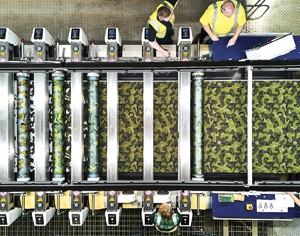
Pincroft’s new Zimmer Rotascreen TGAdlington, UK-based Pincroft Dyeing & Printing and Toray Textiles Europe Ltd. announced a collaboration to supply printed woven technical textiles for the UK defense sector. Both companies are established suppliers to NATO military programs.
Strategically located in northwest England, Pincroft operates one of Europe’s largest fully integrated textile processing, printing and finishing facilities. Exporting to more than 80 countries with annual production capacity exceeding 50 million meters, the company has built a reputation in military printing and flame-retardant finishing.
Toray Textiles Europe Ltd. specializes in weaving, dyeing and finishing of synthetic fiber textiles across defense, medical, and industrial applications. The company recently invested more than £15 million in advanced looms and process machinery.
“Leveraging our combined expertise and innovation, alongside our UK-based operations and supply chains, Pincroft and Toray are well placed to support the shared goals of strengthening national security, driving economic growth and improving sustainability,” said Paul Farrell, group sales director at Pincroft.
“This collaboration supports employment across the manufacturing sector and helps build a resilient domestic supply chain,” said Paul Daynes, sales manager at Toray Textiles Europe Ltd.
Mönchengladbach, Germany-based Monforts launched a digital platform designed to give textile manufacturers access to the company’s finishing technologies, technical expertise, and aftersales support worldwide.
A key feature is a series of interactive 3D tours covering the company’s principal technology ranges. Visitors can virtually explore the latest MONTEX stenter lines, MONFORTEX sanforizing systems and THERMEX continuous dyeing technologies, as well as coating options and exhaust air cleaning modules.
The platform streamlines interaction with existing customers. Ordering spare parts and arranging service support can be initiated directly via a simplified contact tool, ensuring rapid routing of inquiries to specialists.
“Our new digital platform developed with a focus on usability and accessibility,” said Nicole Croonenbroek, marketing manager at Monforts. “It allows customers to engage with our technologies and experts, making essential services such as spare parts and technical support easier to access.”
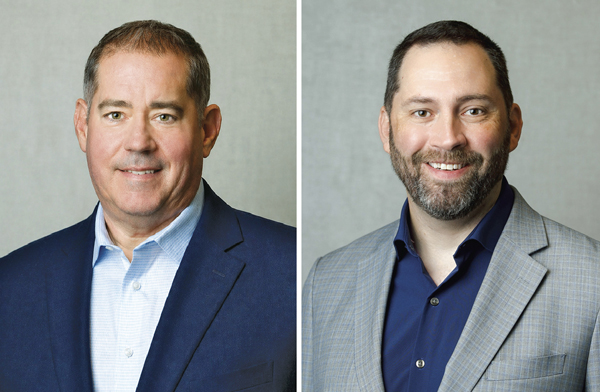
With Arclin’s recent acquisition of the DuPont™ aramids business complete, Arclin CEO Bradley Bolduc and President Mark Glaspey share their fresh perspective on shaping the future of Kevlar® and Nomex®.
Textile World Special Report
Founded in 1992 and headquartered in Alpharetta, Georgia, Arclin is a privately held materials science company focused on advanced polymer technologies and engineered materials for demanding industrial and performance-driven applications.
With Arclin’s April 1 acquisition of the DuPont™ aramids business complete, Arclin CEO Bradley Bolduc and President Mark Glaspey are carving a fresh path forward for the iconic Kevlar® and Nomex® brands. While the acquisition marks Arclin’s entry into the textile industry, they say it represents a natural continuation of the company’s focus on performance materials, innovation and mission-critical applications.
Bradley Bolduc joined Arclin in 2012 and served across nearly every facet of the business before taking the helm as CEO in 2021. Beginning his career in specialty chemicals, he brings a molecular-level approach to innovation, grounded in firsthand experience turning new technologies from concept into real-world applications. Under Bolduc’s leadership, Arclin has evolved into a diversified, global materials science company that serves customers across a range of end markets, including construction and building materials, industrial, personal protection, aerospace, defense, automotive and EV, pharmaceuticals and agriculture.
Mark Glaspey joined Arclin in 2002, beginning in technical sales and applications before progressing through senior leadership roles spanning manufacturing, operations and business execution. Appointed President in early 2026 after serving as Chief Operating Officer, Glaspey brings nearly 25 years of institutional knowledge and a deep understanding of how innovation, reliability and customer trust intersect in complex materials businesses.
With the aramids acquisition behind them, Arclin enters the textile industry as the steward of two of the most renowned performance fiber brands in the world. In conversation with Textile World, Bolduc and Glaspey share how Arclin’s history, leadership philosophy and long-term investment mindset are shaping the future of Kevlar® and Nomex®.
Textile World: Arclin may be new to textiles, but it is not new to performance materials. How do you describe Arclin to a textile audience that may be encountering the company for the first time?
Bradley Bolduc: At its core, Arclin is a materials science company. We design and manufacture polymer technologies, engineered products and specialized materials that go into applications where performance truly matters and failure isn’t an option. What differentiates us is that we don’t just supply base chemistry — we tailor molecules, formulations and material systems specifically for how our customers need to use them.
That approach has allowed us to build long partnerships across industries, because we enable our customers’ products to perform, last longer and deliver greater value. While textiles is a new industry for Arclin, performance is not new territory for us. Aramids fit naturally into our portfolio because they sit at the intersection of chemistry, processing and mission-critical application, which is where we feel right at home.
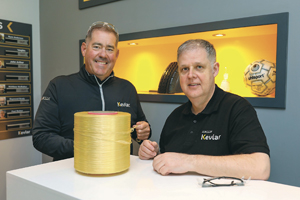
Arclin CEO Bradley Bolduc joined Plant Manager Sean Godfrey on a site tour in Maydown, Northern Ireland this spring.
TW: Arclin has had several major acquisitions over the past few years, including The Willamette Valley Company, Polymer Solutions Group and now DuPont’s aramids business. How does Arclin evaluate and integrate acquisitions?
Bolduc: Arclin has been a growth compounder for a long time. We’ve delivered over 15 consecutive years of organic EBITDA growth and that doesn’t happen by accident. It comes from being selective, from understanding how different technologies fit together and from having the discipline to say no when something doesn’t align.
That same discipline guided our approach to the aramids business. We don’t view Kevlar® and Nomex® as standalone acquisitions or legacy products; we see platforms with significant runway. They check all our boxes: strong intellectual property, critical end-use performance, global relevance and the opportunity to invest and innovate over the long term. For us, this wasn’t diversification for diversification’s sake.
TW: Why acquire the aramids business now?
Bolduc: We’re seeing renewed emphasis across industries on materials that protect people, assets and systems — asking them to go further and last longer. Aramids are category-defining materials in that regard, and decades after their introduction they continue to play an indispensable role. Today, platforms like Kevlar® EXO™ underscore how the category continues to evolve, bringing more tailored, application-specific performance to meet modern protection and durability demands.
We believe the aramids brands are ready for their next chapter. As a private company, we can take a longer-term view. We can reinvest in innovation, modernize operations and expand applications thoughtfully. That ability to be patient and to invest through cycles is critical when you’re responsible for materials that are this vital.
TW: The DuPont™ aramids business — the Kevlar® and Nomex® brands — have such a rich legacy, how do you approach continuity?
Mark Glaspey: Continuity is foundational. These brands carry decades of trust and our responsibility as stewards is to preserve what makes them successful while ensuring they remain competitive for the future. From day one, our focus has been on operational continuity by maintaining manufacturing reliability, quality and customer relationships across a truly global footprint.
At the same time, continuity does not mean standing still. We are investing in manufacturing capabilities, process discipline and innovation infrastructure so that these brands can rise to meet increasing consumer and market needs. The goal is thoughtful enhancement and advancement rather than disruption.
TW: Those familiar with Arclin often speak of innovation, how does your chemistry background influence how the company approaches innovation?
Bolduc: Our team recognizes that meaningful breakthroughs don’t happen overnight and that getting from ideation to commercialization requires patience, technical rigor and continued investment. For me, innovation is hands on. It’s about understanding the chemistry, the processing challenges and how materials behave in real world systems.
That perspective guides how we allocate both time and capital. We’re willing to invest early, take a long view and support ideas through their full development cycle.
TW: Can you give an example of the process within Arclin?
Bolduc: Arclin Firepoint® is a good example. We spent nine years developing and refining the proprietary technology behind this sheathing because, as wildfire zones expand and families seek greater protection, we saw an opportunity to deliver a product that could meaningfully slow the spread of flames and help save lives. While most fire-resistant sheathing is rated for up to 60 minutes, Firepoint exceeds that benchmark with a 90-minute rating. If we were overly focused on short-term returns, this product simply would not exist.
Being a private company helps enormously in this regard. We’re not managing to quarterly optics, so we’re able to build platforms that compound value over years and decades.
Arclin believes Nomex®, alongside Kevlar®, are materials that still have enormous room to grow.
TW: How does that philosophy apply to Arclin’s approach to aramids?
Glaspey: It translates into balance. Innovation must be paired with execution. Our responsibility is to ensure that advancements are scalable, repeatable and reliable for customers who depend on these materials every day. That means disciplined operations, rigorous quality systems and close collaboration with customers across the value chain.
Aramids are not static materials. There is real opportunity to advance them, not just at the molecular level, but in processing, form factors and application. Our role is to create an environment where that evolution can happen consistently and responsibly.
TW: Where do you see the most significant opportunities for innovation with aramids?
Bolduc: Anywhere performance and protection matter. That includes established applications, but also emerging use cases driven by higher expectations around durability, safety and reliability. We’re seeing opportunities where lightweight strength, thermal performance and resilience open doors to applications that didn’t exist or weren’t viable before.
What excites me is that these materials still have enormous room to grow. Advances like the next generation of Kevlar® EXO™, which is 30-40% stronger than legacy Kevlar®, much lighter,and able to be woven in a way that allows for maximum flexibility and softness while delivering unmatched thermal protection properties. We believe this is a game changer for the industry and a great example of what’s possible when you continue to invest in core technology: new generations of the “tried and true” that are bigger and better than the previous. If that wasn’t enough, we also are focused on remaining best-in-class when it comes to working with customers on application development. This is where our people and industry know-how never disappoint. Stay tuned!
TW: Mark, how does Arclin work with customers to translate their needs into applications?
Glaspey: Collaboration is critical here. Materials only deliver their full value when they can be effectively integrated into products and manufacturing processes. Our teams work closely with customers to understand their requirements, constraints and long-term objectives. That partnership mindset has been core to Arclin for decades and will continue to guide how we support the aramids business.
Because we operate globally, we’re also able to bring consistent standards and support across regions, which is especially important for customers serving international markets.
TW: Finally, what message would you like to share with the textile community as Arclin begins this new chapter?
Bolduc: First and foremost, we’re here for the long term. We respect the legacy of Kevlar® and Nomex® and we’re committed to investing in our combined future. These are not finished technologies; they’re evolving platforms with enormous potential.
Arclin’s culture is built around innovation, discipline and stewardship. We’ve compounded growth for more than 15 years by staying true to that DNA and we plan to bring the same mindset to aramids. We’re excited to work alongside the textile industry, learn from you and help advance what these materials can do for years to come.
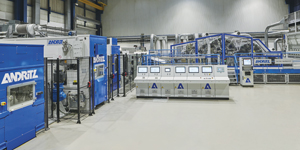
Needlepunch technical center, located in Elbeuf, FranceANDRITZ perspective on demand drivers, regional developments and technology innovations shaping investment decisions.
Textile World Special Report
Global nonwoven technology provider ANDRITZ reports the needlepunch nonwovens market as stable, supported by diversified end-use demand and infrastructure investment.
In the following report, Austria-based ANDRITZ outlines the market forces, application trends and technology developments influencing capital investment and competitiveness.
ANDRITZ Reports
The global market for needlepunch nonwovens continues to demonstrate strong structural resilience, supported by the technology’s exceptional versatility across a wide range of applications, including geotextiles, filtration, automotive interiors, synthetic leather, insulation and technical felts. Unlike single-segment textile technologies, needlepunch benefits from highly diversified end markets, each following its own investment and demand cycle. This diversity provides a natural buffer against economic volatility.
After a short slowdown in early 2020, the market strongly recovered until the third quarter of 2023, driven by infrastructure investments and renewed industrial activity across Europe, North America and Asia. While 2024 has been a more cautious investment climate due to geopolitical tensions and inflationary pressures, the medium- and long-term outlook for 2025 and 2026 remains positive, supported by fundamental market drivers.
Regional Dynamics Shaping Demand
Europe and Turkey remain mature but strategically important markets, driven by high value-added applications such as automotive interiors, technical geotextiles, filtration media and specialty industrial felts. Investments in these regions are primarily aimed at productivity improvements, quality differentiation and energy efficiency rather than pure capacity expansion. Turkey, in particular, plays a pivotal role as a competitive manufacturing and export hub, bridging European quality standards with cost-efficient production and strong access to regional and international markets.
Asia remains the strongest growth engine for needlepunch nonwovens, driven mainly by filtration, synthetic leather and stitch-bonded applications. This region benefits from strong domestic consumption, industrialization and export-driven manufacturing strategies, supported by strong financial assets and enabling multiple line investments.
Emerging regions such as the Middle East and parts of Central Asia are also gaining importance, supported by infrastructure development and growing interest in building local nonwoven production capabilities. In North America, renewed momentum can be observed in automotive applications, such as wheel arch liners and infrastructure-related geotextiles, where reshoring strategies and supply-chain security are influencing investment decisions.
Globally, demand growth is driven by infrastructure spending, environmental regulations, lightweight construction trends and the increasing use of recycled and bio-based fibers, applications where needlepunch technology offers clear technical advantages.
Investment Trends: Productivity, Quality And Flexibility
Despite a more cautious macroeconomic environment, nonwovens producers continue to invest in new machinery and line upgrades. Importantly, many recent projects represent net capacity additions rather than simple replacement investments, reflecting confidence in long-term demand.
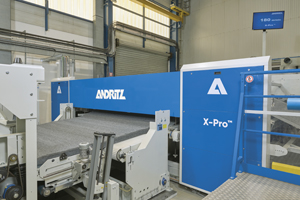
ANDRITZ X-Pro™ crosslapper for high-speed nonwoven productionInvestment decisions are increasingly driven by fast ROI, low total cost of ownership, improved surface quality and web evenness, higher productivity with reduced mechanical stress and greater process flexibility. As needlepunch lines represent significant CAPEX, investment processes are becoming more structured and data-driven, relying on extensive feasibility studies, simulations and trials at technical centers.
Service capabilities also play a decisive role. Remote support, rapid spare-parts availability, retrofit solutions and process expertise are increasingly valued, particularly in the context of workforce turnover and skills shortages.
Key Applications Driving Investments
Geotextiles remains one of the largest and most stable application segments for needlepunch nonwovens, supported by global infrastructure projects, urbanization, road construction, erosion control and drainage systems. This cost-sensitive market demands high-output lines up to 2,000 kg/hour and advanced weight regulation systems, to maintain competitiveness.
In Asia, filtration media and synthetic leather remain key drivers of needlepunch investments. Stricter environmental regulations and sustained industrial growth continue to support demand, while synthetic leather applications increasingly rely on advanced needling patterns and precise batt formation to achieve high surface quality, uniformity and mechanical consistency.
Automotive demand remains regionally diverse. While North America continues to invest in wheel arch liners, Europe focuses increasingly on aesthetic interior components and Asia shows sustained interest in velour and technical felts for both automotive and footwear applications.
Sound absorption and insulation applications, often based on recycled or natural fibers, are gaining importance across construction and mobility markets. The ability of needlepunch lines to process 100% recycled materials while maintaining consistent quality has become a key factor for producers.
Lightweight nonwovens represent a highly demanding segment, requiring precise control to achieve low basis weights with stable performance. Applications such as hygiene, filtration and medical products rely on uniform web formation, carefully controlled pre-bonding and needling processes, including elliptical needling, with efficiency and material optimization acting as key investment drivers.
Technology Developments In Andritz Needlepunch Machinery
Recent improvements at ANDRITZ reflect a strong alignment between machine development and current market expectations for productivity, quality and process flexibility. These developments address a wide range of applications, from high-output geotextiles to lightweight and quality-critical nonwovens.
ANDRITZ neXloom elliptica Type DF-4 needleloomIn batt forming, the ANDRITZ X-Pro™ crosslapper represents a significant step forward in crosslapping performance for needlepunch lines. Its X-Path advanced web transfer concept ensures continuous web control from card delivery to batt forming, resulting in improved evenness, straight edges and stable processing at high speeds. This level of control is particularly relevant for demanding applications such as filtration, synthetic leather, geotextiles and automotive nonwovens.
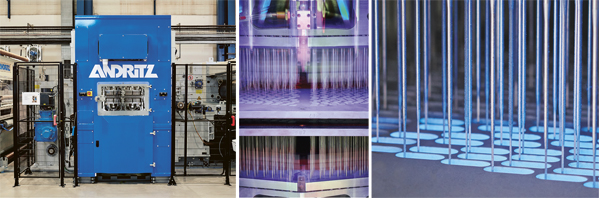
The ANDRITZ neXloom elliptica Type DF-4 needleloom represents an advancement in pre-needling technology for high-quality nonwovens. Designed for light products processed at high speed, it combines optimized pre-needling consolidation with improved surface appearance. Its elliptical needling process, using one needle per hole, eliminates surface marking, reduces fabric stretching and improves fabric uniformity, while enabling reliable and flexible operation for demanding applications such as automotive, paper felts, spunbond products and synthetic leather.
Outlook And Challenges
While the fundamental outlook for the needlepunch market remains positive, challenges persist. Investment timing remains sensitive to geopolitical tensions, energy costs and inflation, while skills development and knowledge transfer become increasingly critical as the workforce evolves. At the same time, the growing use of recycled and natural fibers (hemp, flax and jute) introduces greater variability in raw materials, requiring more robust and flexible process solutions.
Overall, the needlepunch nonwovens market enters the coming years with solid fundamentals, diversified demand and strong innovation momentum. Investments are clearly shifting toward flexible, efficient and quality-focused production solutions that offer fast returns and long-term competitiveness.
Unlock New Market Opportunities With Andritz Needlepunch Pilot Line
The ANDRITZ needlepunch pilot line at our Elbeuf technical center offers customers a unique opportunity to turn ideas into market-ready solutions. Built to full industrial scale and equipped with the latest ANDRITZ technologies, this pilot line enables realistic trials, rapid product development and confident investment decisions. Customers can test a wide range of fibers and applications under production-like conditions, supported by experienced process experts, advanced digital tools and an integrated testing laboratory.
Whether optimizing an existing process or developing an entirely new product, the ANDRITZ needlepunch pilot line is designed to accelerate innovation, reduce risk and unlock new market opportunities.
Executive Summary: Needlepunch Outlook
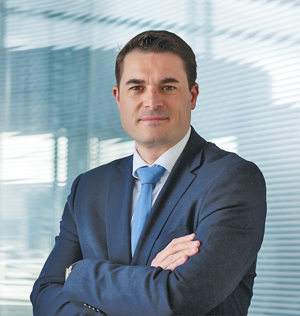
Guillaume JulienBy Guillaume Julien, ANDRITZ Global Director Sales for Engineered Textiles
The global needlepunch nonwovens market demonstrates strong resilience, underpinned by its versatility across diversified applications such as geotextiles, filtration, automotive interiors, synthetic leather, insulation and technical felts. This diversity provides a natural hedge against economic volatility and supports long-term market stability.
Following a strong recovery through 2023, driven by infrastructure investments and renewed industrial activity, 2024 has seen a more cautious investment climate influenced by geopolitical tensions, inflation and energy costs. Nevertheless, the medium- and long-term outlook remains positive for 2026 and beyond.
Regional dynamics continue to shape demand. Asia stands out as the primary growth engine, driven by filtration, synthetic leather and industrial applications, while Europe and Turkey remain mature but strategically important markets focused on productivity, quality differentiation and energy efficiency. In North America, reshoring initiatives and infrastructure spending are reviving investments, particularly in automotive and geotextiles.
Investment decisions increasingly prioritize fast return on investment, low total cost of ownership, surface quality, productivity and process flexibility. The growing use of recycled and natural fibers is accelerating demand for robust, adaptable technologies.
Overall, the needlepunch market enters the coming years with solid fundamentals and strong innovation momentum — a clear shift toward flexible, efficient and quality-focused production solutions.