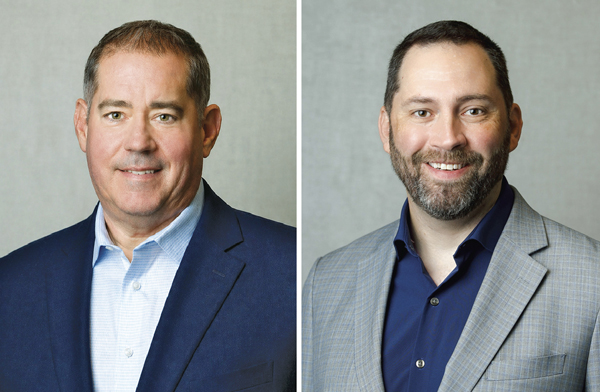
With Arclin’s recent acquisition of the DuPont™ aramids business complete, Arclin CEO Bradley Bolduc and President Mark Glaspey share their fresh perspective on shaping the future of Kevlar® and Nomex®.
Textile World Special Report
Founded in 1992 and headquartered in Alpharetta, Georgia, Arclin is a privately held materials science company focused on advanced polymer technologies and engineered materials for demanding industrial and performance-driven applications.
With Arclin’s April 1 acquisition of the DuPont™ aramids business complete, Arclin CEO Bradley Bolduc and President Mark Glaspey are carving a fresh path forward for the iconic Kevlar® and Nomex® brands. While the acquisition marks Arclin’s entry into the textile industry, they say it represents a natural continuation of the company’s focus on performance materials, innovation and mission-critical applications.
Bradley Bolduc joined Arclin in 2012 and served across nearly every facet of the business before taking the helm as CEO in 2021. Beginning his career in specialty chemicals, he brings a molecular-level approach to innovation, grounded in firsthand experience turning new technologies from concept into real-world applications. Under Bolduc’s leadership, Arclin has evolved into a diversified, global materials science company that serves customers across a range of end markets, including construction and building materials, industrial, personal protection, aerospace, defense, automotive and EV, pharmaceuticals and agriculture.
Mark Glaspey joined Arclin in 2002, beginning in technical sales and applications before progressing through senior leadership roles spanning manufacturing, operations and business execution. Appointed President in early 2026 after serving as Chief Operating Officer, Glaspey brings nearly 25 years of institutional knowledge and a deep understanding of how innovation, reliability and customer trust intersect in complex materials businesses.
With the aramids acquisition behind them, Arclin enters the textile industry as the steward of two of the most renowned performance fiber brands in the world. In conversation with Textile World, Bolduc and Glaspey share how Arclin’s history, leadership philosophy and long-term investment mindset are shaping the future of Kevlar® and Nomex®.
Textile World: Arclin may be new to textiles, but it is not new to performance materials. How do you describe Arclin to a textile audience that may be encountering the company for the first time?
Bradley Bolduc: At its core, Arclin is a materials science company. We design and manufacture polymer technologies, engineered products and specialized materials that go into applications where performance truly matters and failure isn’t an option. What differentiates us is that we don’t just supply base chemistry — we tailor molecules, formulations and material systems specifically for how our customers need to use them.
That approach has allowed us to build long partnerships across industries, because we enable our customers’ products to perform, last longer and deliver greater value. While textiles is a new industry for Arclin, performance is not new territory for us. Aramids fit naturally into our portfolio because they sit at the intersection of chemistry, processing and mission-critical application, which is where we feel right at home.
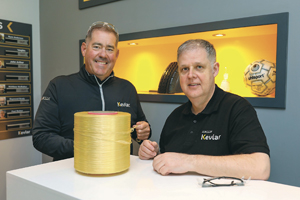
TW: Arclin has had several major acquisitions over the past few years, including The Willamette Valley Company, Polymer Solutions Group and now DuPont’s aramids business. How does Arclin evaluate and integrate acquisitions?
Bolduc: Arclin has been a growth compounder for a long time. We’ve delivered over 15 consecutive years of organic EBITDA growth and that doesn’t happen by accident. It comes from being selective, from understanding how different technologies fit together and from having the discipline to say no when something doesn’t align.
That same discipline guided our approach to the aramids business. We don’t view Kevlar® and Nomex® as standalone acquisitions or legacy products; we see platforms with significant runway. They check all our boxes: strong intellectual property, critical end-use performance, global relevance and the opportunity to invest and innovate over the long term. For us, this wasn’t diversification for diversification’s sake.
TW: Why acquire the aramids business now?
Bolduc: We’re seeing renewed emphasis across industries on materials that protect people, assets and systems — asking them to go further and last longer. Aramids are category-defining materials in that regard, and decades after their introduction they continue to play an indispensable role. Today, platforms like Kevlar® EXO™ underscore how the category continues to evolve, bringing more tailored, application-specific performance to meet modern protection and durability demands.
We believe the aramids brands are ready for their next chapter. As a private company, we can take a longer-term view. We can reinvest in innovation, modernize operations and expand applications thoughtfully. That ability to be patient and to invest through cycles is critical when you’re responsible for materials that are this vital.

TW: The DuPont™ aramids business — the Kevlar® and Nomex® brands — have such a rich legacy, how do you approach continuity?
Mark Glaspey: Continuity is foundational. These brands carry decades of trust and our responsibility as stewards is to preserve what makes them successful while ensuring they remain competitive for the future. From day one, our focus has been on operational continuity by maintaining manufacturing reliability, quality and customer relationships across a truly global footprint.
At the same time, continuity does not mean standing still. We are investing in manufacturing capabilities, process discipline and innovation infrastructure so that these brands can rise to meet increasing consumer and market needs. The goal is thoughtful enhancement and advancement rather than disruption.
TW: Those familiar with Arclin often speak of innovation, how does your chemistry background influence how the company approaches innovation?
Bolduc: Our team recognizes that meaningful breakthroughs don’t happen overnight and that getting from ideation to commercialization requires patience, technical rigor and continued investment. For me, innovation is hands on. It’s about understanding the chemistry, the processing challenges and how materials behave in real world systems.
That perspective guides how we allocate both time and capital. We’re willing to invest early, take a long view and support ideas through their full development cycle.
TW: Can you give an example of the process within Arclin?
Bolduc: Arclin Firepoint® is a good example. We spent nine years developing and refining the proprietary technology behind this sheathing because, as wildfire zones expand and families seek greater protection, we saw an opportunity to deliver a product that could meaningfully slow the spread of flames and help save lives. While most fire-resistant sheathing is rated for up to 60 minutes, Firepoint exceeds that benchmark with a 90-minute rating. If we were overly focused on short-term returns, this product simply would not exist.
Being a private company helps enormously in this regard. We’re not managing to quarterly optics, so we’re able to build platforms that compound value over years and decades.
TW: How does that philosophy apply to Arclin’s approach to aramids?
Glaspey: It translates into balance. Innovation must be paired with execution. Our responsibility is to ensure that advancements are scalable, repeatable and reliable for customers who depend on these materials every day. That means disciplined operations, rigorous quality systems and close collaboration with customers across the value chain.
Aramids are not static materials. There is real opportunity to advance them, not just at the molecular level, but in processing, form factors and application. Our role is to create an environment where that evolution can happen consistently and responsibly.
TW: Where do you see the most significant opportunities for innovation with aramids?
Bolduc: Anywhere performance and protection matter. That includes established applications, but also emerging use cases driven by higher expectations around durability, safety and reliability. We’re seeing opportunities where lightweight strength, thermal performance and resilience open doors to applications that didn’t exist or weren’t viable before.
What excites me is that these materials still have enormous room to grow. Advances like the next generation of Kevlar® EXO™, which is 30-40% stronger than legacy Kevlar®, much lighter,and able to be woven in a way that allows for maximum flexibility and softness while delivering unmatched thermal protection properties. We believe this is a game changer for the industry and a great example of what’s possible when you continue to invest in core technology: new generations of the “tried and true” that are bigger and better than the previous. If that wasn’t enough, we also are focused on remaining best-in-class when it comes to working with customers on application development. This is where our people and industry know-how never disappoint. Stay tuned!

TW: Mark, how does Arclin work with customers to translate their needs into applications?
Glaspey: Collaboration is critical here. Materials only deliver their full value when they can be effectively integrated into products and manufacturing processes. Our teams work closely with customers to understand their requirements, constraints and long-term objectives. That partnership mindset has been core to Arclin for decades and will continue to guide how we support the aramids business.
Because we operate globally, we’re also able to bring consistent standards and support across regions, which is especially important for customers serving international markets.
TW: Finally, what message would you like to share with the textile community as Arclin begins this new chapter?
Bolduc: First and foremost, we’re here for the long term. We respect the legacy of Kevlar® and Nomex® and we’re committed to investing in our combined future. These are not finished technologies; they’re evolving platforms with enormous potential.
Arclin’s culture is built around innovation, discipline and stewardship. We’ve compounded growth for more than 15 years by staying true to that DNA and we plan to bring the same mindset to aramids. We’re excited to work alongside the textile industry, learn from you and help advance what these materials can do for years to come.
2026 Quarterly Issue II