AFFOA Celebrates Opening Of New Headquarters With Ribbon-Cutting Ceremony In Bedford, Massachusetts

BEDFORD, Mass. — June 16, 2026 — Advanced Functional Fabrics of America, Inc. (AFFOA), a national leader in advanced textile innovation and Manufacturing USA Institute, proudly celebrated the opening of its new headquarters with a ribbon-cutting ceremony at 135 South Road, Bedford, Massachusetts. The event brought industry leaders, government partners, academic institutions, and startup innovators together to mark this milestone in AFFOA’s mission to accelerate textile technology and manufacturing breakthroughs to safeguard the nation, advance industry, and improve quality of life.

“Our new facility enables AFFOA to expand its technical development capabilities, better serve the US advanced textile ecosystem, and create an environment to inspire the next generation of innovators,” shared Sasha Stolyarov, Ph.D., CEO of AFFOA. “We are grateful to our members and partners who attended and are looking forward to leveraging this new space as a hub for collaboration, innovation, and workforce development.”

Distinguished Speakers Headline the Celebration

The ceremony featured remarks from a distinguished group of leaders at the forefront of advanced manufacturing and textile innovation:

  • Sasha Stolyarov, Ph.D., CEO of AFFOA, welcomed attendees and spoke to the organization’s continued commitment to driving innovation in functional fabrics and positioning the United States as a global leader in advanced textile technology.
  • Lily Fitzgerald, Director of the Center for Advanced Manufacturing at the Massachusetts Technology Collaborative, spoke to the importance of AFFOA’s work within the broader Massachusetts advanced manufacturing landscape and the critical role the institute plays in supporting the Commonwealth’s innovation economy.
  • Eric Evans, Ph.D., Chair of the AFFOA Board of Directors, Director Emeritus of MIT Lincoln Laboratory, and Professor of Practice and Senior Fellow at MIT, offered inspiring remarks on the transformative potential of advanced textiles and the vision that drives AFFOA’s work at the intersection of technology, defense, and everyday life.

A Showcase of Innovation

Following the ribbon cutting, guests toured AFFOA’s new state-of-the-art facilities, gaining firsthand insight into the organization’s extensive end-to-end development capabilities and technical expertise. The tour provided a compelling window into cutting-edge research and development in functional fabrics and wearable technologies, showcasing the breadth and depth of innovation across the U.S. Advanced Textiles ecosystem.

A Broad Coalition of Industry, Academia, Government, and National Security Leaders

The event drew an impressive cross-section of stakeholders from across the innovation ecosystem, reflecting the wide-ranging impact of AFFOA’s work across sectors.

Industry and academic representatives in attendance included leaders from MIT, MIT Lincoln Laboratory, Harvard Medical School, Puma, Shark Ninja, E Ink Corporation, Boston Engineering, Draper Knitting, and many more — underscoring the vibrant partnerships that define AFFOA’s collaborative approach to innovation.

Government officials representing elected leaders at the federal and local levels were also in attendance, including:

  • Laura Byman, representing the Office of Senator Elizabeth Warren
  • Michael Massiwer, representing the Office of Senator Edward Markey
  • Tom Arsenault, representing the Office of Congressman Seth Moulton
  • Selectman Terence Parker, representing the Town of Bedford

Their presence reflects the strong government support for AFFOA’s mission and its significance to both the local community and the nation’s advanced manufacturing strategy.

Representatives from the U.S. Department of War, including the U.S. Navy and U.S. Army, were also in attendance, demonstrating the critical role advanced textiles play in national defense and military readiness.

Posted: June 18, 2026

Source: Advanced Functional Fabrics of America, Inc. (AFFOA)

Trützschler’s Integrated Draw Frame IDF 3: Unlocking The Full Potential Of Short Fiber Processing

MÖNCHENGLADBACH, Germany — June 3, 2026 — Spinning mills worldwide are looking for solutions that combine higher productivity, stable quality and shorter processes, especially when processing short fibers. Trützschler’s integrated draw frame IDF 3 has proven to be a powerful answer to these requirements. Evaluations from several customer trials in Türkiye under real production conditions highlight the strong performance of the IDF 3, particularly when combined with the next-generation card TC 30i.

Outstanding results with TC 30i and IDF 3

TC 30i and IDF 3 installation at a customer site in Türkiye.

A leading Turkish spinning mill produces a 100% cotton rotor yarn (Ne 30/1). The mill compared its conventional set-up of one breaker and one finisher draw frame, running consistently at 90 kg/h, with a TC 30i card combined with the integrated draw frame IDF 3. While the conventional setup was limited to 90 kg/h, TC 30i and IDF 3 enabled a stepwise increase in production to 130 kg/h and later even 150 kg/h. Across all trials, the combination delivered higher and more consistent quality with lower IPI levels. These results confirm excellent process stability at significantly increased production output.

Further results from other Turkish spinning mills underline the competitive advantage of IDF 3 combined with the TC 30i. Another customer operates TC 30i cards equipped with IDF 3, in a rotor spinning line which processes cotton and cotton blends. The combination shortens the process and delivers a 33% increase in productivity compared to a conventional competitor setup, which included a breaker and a finisher draw frame. At the same time, consistently high quality is maintained. The customer reports that the decision to adopt the TC 30i and IDF 3 should have been made much earlier.

Proven performance beyond TC 30i

Another Turkish customer carried out trials using the IDF 3 combined with a TC 19i card, processing a blend of 50% cotton waste and 50% polyester. At a production rate of 130 kg/h, the IDF 3 process reduced IPI levels by around 50% compared to a conventional two-passage draw frame setup consisting of one breaker and one finisher draw frame. Even when the production rate was increased to 220 kg/h, the IPI values achieved with the IDF 3 remained below those achieved in the conventional process. Encouraged by these results, the mill management decided to remove competitor cards and competitor draw frames from the mill and to switch to the latest card generation, TC 30i, combined with IDF 3.

The proven solution for direct spinning

IDF 3 helps improve sliver quality, yarn evenness and strength – especially when processing higher short fiber content.

The success of IDF 3 lies in its ability to control short fibers reliably while enabling a shortened spinning preparation process. Results repeatedly show that the shorter the fiber and the higher the proportion of short fibers, the stronger the positive effect of the IDF 3 on sliver quality – resulting in improved yarn IPI values, better evenness and maintained yarn strength.

Conventional draw frames typically involve two drafting zones, which can lead to a higher amount of floating fibers, especially when processing short fibers. In contrast, the IDF 3 operates with only one drafting zone. With its special drafting zone geometry, the IDF 3 ensures reliable fiber guidance and effectively stabilizes floating fibers. Its unique design minimizes count variations and leads to more homogeneous sliver and improved yarn quality.

These effects become especially powerful when combined with the TC 30i. The card delivers material at high productivity levels and the IDF 3 keeps up this speed, even during can change. At the same time, this powerful combination reduces space requirements, compressed air consumption and operator effort. In this way, TC 30i and IDF 3 unlock the full benefits of direct spinning, particularly for applications with high short fiber content or recycled materials.

Posted: June 17, 2026

Source Trützschler Group SE

Göliplik Prepares To Enter The Nonwovens Market With Production Line From ANDRITZ

GRAZ, Austria — June 16, 2026 — Turkish yarn manufacturer Göliplik Şeremet Tekstil Sanayi ve Ticaret A.Ş. is preparing to enter the nonwovens market for sustainable wipes with a WetlaceTM production line from ANDRITZ. Erection and commissioning of the line will start in the last quarter of 2026.

ANDRITZ neXline wetlaceTM line for the production of flushable wipes
Image: ANDRITZ

ANDRITZ is supplying a complete neXline wetlace™ line that will produce high-quality roll goods for bio-based, flushable wipes. The project is being implemented in close cooperation between both companies and is progressing according to schedule.

Erdogan Seremet, owner and president of Göliplik, said: “With the installation of the ANDRITZ line, we are taking a decisive step into the nonwovens market. Our strong collaboration – built on trust and shared sustainability goals – demonstrates how a technology partnership can become a growth catalyst. As the project advances toward start-up, our teams are laying the foundation for a new

chapter in sustainable wipes production in Türkiye.”

Tobias Schäfer, Vice President ANDRITZ Nonwoven & Textile added: “Throughout the project, we have worked closely together, with a strong focus on structured project management, transparent communication, and coordinated engineering activities. This joint approach has enabled steady progress across all project phases to date.”

As part of the project, Göliplik’s operating team will be welcomed to ANDRITZ’s dedicated Nonwovens location in France for training to support knowledge transfer and preparation for commissioning.

Additional training will also be provided on site to ensure a smooth transition into operation.

The collaboration reflects the shared commitment of Göliplik and ANDRITZ to the reliable implementation of advanced nonwoven technologies for a sustainable future.

Göliplik Şeremet Tekstil Sanayi ve Ticaret A.Ş. is a leading manufacturer of yarns. Founded in 1987 in Bursa, the company operates four facilities producing a wide range of blended yarns.

Posted: June 17, 2026

Source ANDRITZ AG

STOLL: Agreement Signed For The Divestiture Of Selected Assets To Ningbo Cixing Co., Ltd.

OBERTSHAUSEN , Germany — June 17, 2026 — In early 2025, KARL MAYER announced its strategic decision to focus on its core business areas of WARP KNITTING, WARP PREPARATION, and TECHNICAL TEXTILES. As part of this move, the flat knitting machine business under the STOLL brand was discontinued and the production site in Reutlingen was closed in October 2025.

Against this backdrop, KARL MAYER has signed an agreement for the transfer of selected assets from the former STOLL business unit. The assets are to be transferred to Ningbo Cixing Co., Ltd. (CIXING Group). The scope of the transaction includes, among other things, the STOLL brand, selected materials and stock, and specific technological assets.

The closing of the transaction is pending and is expected at a later date.

The future use of the assets falls under the sole responsibility of the CIXING Group and is not covered by the agreement. The CIXING Group will provide updates on any future developments in due course.

The fulfilment of existing warranty obligations to customers remains guaranteed. A transition of service and support for the installed machine base to the CIXING Group is planned for later this year.

Posted: June 17, 2026

Source: KARL MAYER

U.S. Textile Partnership Connects Premium Wovens, Digital Printing, Finishing, And Cut-And-Sew Production

GREENVILLE, S.C. / GAFFNEY, S.C. — June 10, 2026 — Carolina Creative Products and Tryon Finishing (divisions of Carolina Creative Enterprises), Springs Digital, and Hamrick Mills announce a strategic manufacturing collaboration designed to reinforce premium USA-made textile production for home, apparel, industrial, and specialty brands.

Located within close proximity in Upstate South Carolina, the partnership connects Hamrick Mills’ woven fabric expertise, Springs Digital’s advanced digital textile printing capabilities, Carolina Creative Products’ soft goods manufacturing expertise, and Tryon Finishing’s specialized printing and finishing operations, – creating a streamlined, fully domestic fabric-to-finished-product solution.

A Regional Manufacturing Advantage

Hamrick Mills, based in Gaffney, South Carolina, operates a vertically integrated manufacturing facility producing high-quality woven fabrics, including polyester/cotton blends and 100% cotton constructions. The company serves apparel, support apparel, home furnishings, and industrial markets with fabrics manufactured entirely in the United States of domestically sourced raw materials.

Springs Digital, based in Rock Hill, South Carolina, offers advanced digital textile printing capabilities that complement the partnership’s woven fabric, rotary printing, finishing, and sewn-product manufacturing operations.

Carolina Creative Products, based in Greenville, South Carolina, specializes in large-scale cut-and-sew manufacturing of finished soft goods, including decorative pillows, bedding, table linens, shower curtains, pet beds and other sewn home products.

Tryon Finishing, located in Tryon, North Carolina, provides critical printing and finishing capabilities that enhance fabric performance and final product quality. Services include fabric preparation (PFP), rotary printing, batch dyeing, finishing treatments, and production support. Tryon Finishing bridges raw fabric production and finished goods manufacturing, reinforcing quality control and efficiency across the supply chain.

Together, the partner organizations provide a cohesive American manufacturing ecosystem integrating fabric development, digital textile printing, rotary printing, finishing operations, and sewn product manufacturing within a tightly aligned regional footprint.

“This collaboration reflects our shared commitment to advancing American manufacturing,” said Cameron Hamrick, President of Hamrick Mills. “By aligning domestic fabric manufacturing with advanced digital printing, finishing expertise, and sewn product capabilities, we are creating dependable, high-quality solutions that strengthen and simplify their U.S. supply chains.”

“This collaboration allows us to offer brands a rare level of vertical integration within domestic textile manufacturing,” said Naiden Kremenliev, CEO of Carolina Creative Enterprises. “Combining woven fabric production, finishing operations, and sewn product manufacturing within the same supply chain creates advantages in speed, transparency, quality control, and reliability.”

Posted: June 16, 2026

Source: Hamrick Mills

Polartec® X Peak Performance: Driven By Purpose

SPARTANBURG, S.C. — June 10, 2026 — Peak Performance was launched in 1986 after a moment of clarity in the mountains when two longtime friends sat on a chairlift in Åre, Sweden. Frustrated by the gap between what existed and what they really needed, they decided to make it themselves. Their philosophy from the beginning was that performance and style should never be separated. And what started as a desire to create better ski gear has evolved into a Swedish mountain brand rooted in the freeride spirit, designing technical apparel that balances function, expression, and identity.

“We’ve crafted our product portfolio around what inspires us most—from finding the right design and deploying the right technical solutions to enhancing it to fit the needs of our athletes. Polartec® is a valued partner in that, delivering the highest level of performance while supporting our mission to bring the freeride spirit to the world.” – Peak Performance Design Team.

Designing Experience

There’s a rhythm to how Peak Performance works, but it doesn’t follow a typical schedule. Ideas start on the mountain, get tested in motion, and come back sharper. The team designs the way they live; hands-on, iterative, and constantly moving between concept and reality. It’s why products never feel overworked or overbuilt, and why every detail has a purpose. Because when you’re skiing, hiking and pushing your limits, the last thing you should be worrying about is what you’re wearing.

This approach reflects a distinctly Swedish approach to design, where clean aesthetics, functionality, and longevity sit alongside progressive innovation. Material choices play a key role in this balance, helping the team fine-tune breathability, warmth, and weight. Performance metrics alone mean very little, they say, it’s also about how something feels, how it moves, and how it connects with the person wearing it. Sure, Peak Performance gear needs to excel in demanding conditions, but it should also inspire confidence, freedom, and movement beyond the mountain.

People Who Push

Equally important is the wider Peak Performance community, built upon people who explore, go further, push faster, and live fully. Each with their own flow, they tend to rely on what they know works and whose every challenge becomes authentic feedback. It’s all part of a continuous exchange that feeds right back into the process.  Real people, shaping real products.

Erik Stensson, Design Manager at Peak Performance, understands this mindset first-hand. Splitting his free time between alpine skiing and running, Erik is constantly moving between seasons and conditions, a rhythm that shapes how he sees design. Rather than starting with theory and specs, it comes from being out there and using the product in real situations. “I end up going back to the same pieces because they work across seasons and can be worn on their own or layered depending on what the day demands, like my Freelight Polartec® Alpha™ Hood,” he says. “It’s a question of trust, and when trust is there, you have the freedom to focus on everything else.”

Evolving Forward

There’s a certain independence in how Peak Performance operates. The “build better, stay curious, and never lose touch with why you started” attitude remains, as does the belief that design should start with real experience, not assumptions. Which is why the people at Peak Performance continue to evolve their gear to move across seasons, disciplines and whatever comes next. Because progress, like the mountains themselves, is never static.

Posted: June 15, 2026

Source: Polartec®, a Milliken & Company Brand

TERNAfil Wins First Place At PitchMiUp Night 2026: Carbon + Ceramic = New High-Performance Hybrid Fiber

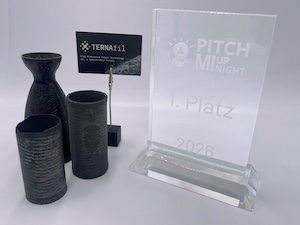
AACHEN, Germany — May 21, 2026 — The RWTH spin-off TERNAfil has developed MAXCarbon, a new high-performance hybrid fibre that combines the mechanical performance of carbon with the temperature and corrosion resistance of ceramic materials.

For this development, TERNAfil was awarded first prize at the PitchMiUp Night in Minden on 21 May 2026.

With its scalable technology, TERNAfil is working on new material solutions for applications in aerospace, energy technology and high-performance composites.

Fabian Jung from TERNAFIL at PitchMiUp

Fabian Jung, an ITA PhD student and TERNAfil founder, is enthusiastic: “Our success demonstrates once again how current research is making its way out of the laboratory and into real-world industrial applications. We at TERNAfil are delighted with the award and the many exciting discussions and new contacts we made there.”

Bielefeld University of Applied Sciences hosted its second PitchMiUp Night. The event focused on start-up founders, who presented their ideas and stories of how they started their businesses. The three best performers were awarded prizes.

Posted: June 15, 2026

Source: Institut für Textiltechnik of RWTH Aachen University

Bally Ribbon Mills Highlights Kevlar® Webbing And Tapes For Military Applications

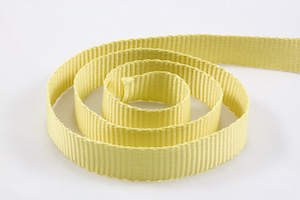
BALLY, Pa. — June 15, 2026 — Bally Ribbon Mills (BRM), a designer, developer, and manufacturer of highly specialized engineered woven fabrics, highlights its high-performance Kevlar® webbing and tapes, specifically designed to meet the stringent Mil-T-87130 military specification. This reliable webbing solution has established itself as a trusted choice across various military applications, offering unmatched strength and durability.

BRM’s Kevlar® webbing is recognized for its superior tensile strength and toughness. Constructed from heat-resistant synthetic fibers, this webbing provides excellent protection against cuts, tears, and punctures, ensuring dependable performance even in extreme conditions. The durability of Kevlar® translates to enhanced safety for military personnel and equipment.

Despite its remarkable strength, BRM’s Kevlar® webbing remains lightweight and flexible. This advantageous combination facilitates easy handling and integration into diverse applications, reducing the overall weight of gear while improving mobility for military personnel. The flexibility of the webbing makes it suitable for a wide range of products, including parachute reinforcement, load-bearing equipment, and personal protective gear.

A key feature of BRM’s Kevlar® webbing is its outstanding resistance to heat and flame. This property adds an essential layer of protection in environments where exposure to high temperatures is a concern. The inherent flame resistance of Kevlar® ensures that the webbing will not burn, melt, or drip, making it a critical component for firefighting gear and fall protection harnesses.

All of BRM’s Kevlar® webbing products are manufactured to meet or exceed military specifications, ensuring reliable performance in critical applications. The commitment to quality and precision guarantees that these products provide the highest level of protection and durability.

For more information on Bally Ribbon Mills’ Kevlar® webbing and tapes that meet Mil-T-87130 specifications, visit https://www.ballyribbon.com/mil-spec/kevlar-webbing.

Posted: June 15, 2026

Source: Bally Ribbon Mills (BRM)

EDANA Launches Landmark Continence Report To Mark The Start Of The World Continence Week

BRUSSELS, Belgium— June 15, 2026 — Today marks the official commencement of the World Continence Week. To honor this global awareness initiative, EDANA has published a comprehensive report titled “The Central Role of Absorbent Hygiene Products in the Management of Adult Urinary Incontinence: Benefits, Costs and Environmental Impact.”

The World Continence Week (WCW) is an annual global initiative dedicated to raising public awareness about incontinence and bladder or bowel health issues. Traditionally held in June, this awareness week aims to shed light on a condition that affects millions of people worldwide but is frequently kept secret due to widespread social stigma, embarrassment, and taboo.

Urinary incontinence (UI) is a widely prevalent condition affecting millions worldwide across all age groups, with an escalating incidence among older demographics. As global populations age and lifestyle-related risk factors such as obesity and reduced physical activity continue to scale up, the need for reliable, long-term care management frameworks has never been more pressing. This new landmark report provides an essential, multi-dimensional analysis of how Absorbent Hygiene Products (AHPs), and more specifically, continence products, act as a vital lifeline for individuals, macro-economies, and public healthcare systems alike.

Urinary incontinence is a complex condition

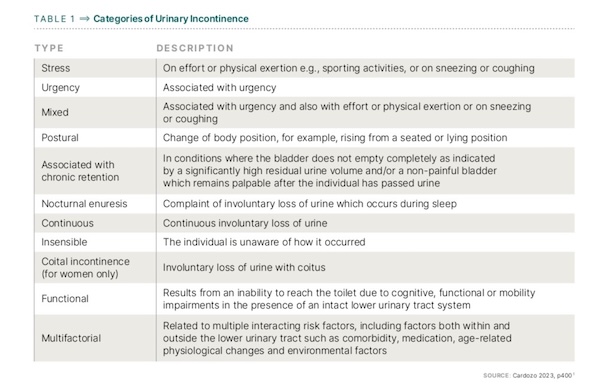
The report establishes that UI is a deeply nuanced clinical reality. It primarily manifests in three main forms—urge, stress, and mixed incontinence—each driven by distinct physiological mechanisms. Other variations, such as functional incontinence caused by cognitive or physical mobility impairments, further highlight that UI is not a single, uniform issue but an intricately layered medical challenge.

Urinary incontinence has a major impact on society

Driven by global aging trends, rising obesity rates, and the expansion of chronic diseases, the global footprint of UI is growing rapidly. Beyond the estimated 465 million adults currently affected worldwide, the macro-economic burden is staggering. Unmanaged UI accounts for billions in direct healthcare costs and tens of billions in indirect costs, creating massive financial strains due to reduced workplace employment, elevated absenteeism, and heavy institutionalization burdens.

People with urinary incontinence manage their condition in a variety of ways

A clear majority of individuals manage UI privately due to lingering social stigma, with up to 80% navigating symptoms without ever consulting a clinician. For those who do seek formal primary care, assistance is not always guaranteed. Clinical pathways dictate a stepwise management sequence—ranging from lifestyle adaptations to specialized surgeries—but for the millions who cannot be fully cured, daily containment remains the primary solution.

Absorbent hygiene products have a significant part to play in managing urinary incontinence

AHPs are heavily proven, effective tools that directly elevate health-related quality of life and preserve user dignity. These purpose-made products are regulated medical devices engineered to the highest performance standards specifically to handle urine loss. Clinical evidence demonstrates that the utilization of high-quality bodyworn AHPs drastically reduces caregiver laundering demands, supports professional workforce participation, and cuts the risk of secondary medical complications like pressure ulcers by up to 67%.

Absorbent hygiene products are a worthwhile expenditure for the public payer

By keeping individuals socially and economically active while preventing severe skin breakdowns or unnecessary hospitalizations, disposable AHPs deliver exceptional socio-economic returns. Public healthcare systems across nations like the UK, the Netherlands, and Australia actively endorse this value by integrating these essential containment products into official public reimbursement and payment schemes.

Industry initiatives are reducing the environmental impact of absorbent hygiene products

The report highlights ongoing sector-wide efforts to lower the ecological footprint of these vital solutions. Through continuous material science innovation and cradle-to-grave Life-Cycle Assessments (LCAs), products have become lighter and down-gauged via advanced superabsorbent polymers (SAP), optimizing resource efficiency while strictly maintaining skin safety. Concurrently, various exploratory initiatives are evaluating mechanical separation, chemical recycling, and anaerobic fermentation pilots to help advance scale-level circular economy solutions for the end-of-life stage.

Posted: June 15, 2026

Source: EDANA

P.J. Dempsey Elected Chair Of TRSA Board Of Directors 

ALEXANDRIA, Va. — June 8, 2026 — At the Annual Business Meeting held during TRSA’s 113th Annual Conference & CEO Summit on May 14 in Napa, CA, members elected new officers and directors to the association’s Board of Directors. The newly elected officers and directors will begin their terms in mid-October.

P.J. Dempsey

P.J. Dempsey, President of Dempsey Uniform & Linen Supply, was elected the 69th TRSA Board Chair, succeeding Randy Bartsch, Executive Chair of Ecotex Healthcare Linen Service.

Dempsey brings extensive industry and association leadership experience to the role. A second-generation industry leader, he leads Dempsey Uniform & Linen Supply, a family-owned business founded in 1959 and headquartered in Jessup, Pennsylvania. He has served on TRSA’s Board of Directors for more than a decade and held numerous volunteer leadership positions, including Board Treasurer and Chair of the Government Relations, TRSAPAC, Strategic Planning and Environmental Committees. He was elected vice chair of the Board in 2024.

“TRSA plays an important role in advancing and strengthening our industry, and I’m honored to serve as Board Chair,” said Dempsey. “I look forward to working alongside the Board, staff and members to build on TRSA’s strong momentum and help ensure our industry continues to thrive.”

“Serving as TRSA Board Chair has been a tremendous honor,” said Bartsch. “I am proud of what we have accomplished together and grateful for the dedication, professionalism and leadership of our volunteer leaders, members and staff. TRSA’s strength has always come from the engagement of its members, and I am confident that P.J. and the incoming Board will continue to advance the association’s mission and strengthen the industry we serve.”

“We are grateful to Randy for his outstanding leadership and service to TRSA,” said Joseph Ricci, President & CEO of TRSA. “His commitment has helped strengthen the association and advance key initiatives on behalf of our members. We also congratulate P.J. on his election as Chair and look forward to working with him as we continue building a strong future for the industry.”

TRSA elected additional officers, including Roger Harris, CEO, Metro Linen, as vice chair and Theresa Garcia, COO, Division Laundry & Cleaners, as treasurer.

The newly elected directors are:

  • Karl Fillip II, CEO, NOVO Health Services
  • Linda McCurdy, President & CEO, K-Bro Linen Systems (Canada)
  • Andrew Steiner, CFO, Alsco Uniforms

The re-elected directors are:

  • Brian Herington, CEO, PureStar Group
  • Josh Wildman, CEO, Wildman Uniform & Linen

The Board’s Nominating Committee recommended the slate of candidates.

Departing Board members include Jim Kearns, COO, Alsco Uniforms; Rick Kelly, COO, Pellerin Milnor Corp.; and Liz Remillong, Vice President, Strategic Alliance, CORE Linen Services. Their terms will conclude at the October 13 Board meeting preceding the TRSA Healthcare Conference in San Diego.

In addition, the TRSA Associate Committee has submitted Bob Fesmire, Jr., as the candidate director representing Machinery.

Posted: June 15, 2026

Source: TRSA, The Association For Linen, Uniform, And Facility Services

Sponsors