Huixing Machine Co., Ltd. Acquires Insolvent Mayer & Cie.

ALBSTADT, Germany — February 10, 2026 — Insolvency proceedings against Mayer & Cie., a German manufacturer of circular knitting and braiding machines, were initiated on 1 December 2025. Immediately after the insolvency proceedings were opened, the entire business was shut down. Most employees were then given notice of termination at the end of February 2026. The plan is to complete the production of the  remaining orders in the circular knitting by the end of the month.
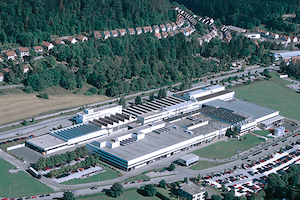
Mayer & Cie. headquarters in Albstadt.

In December 2025, Mayer & Cie.’s braiding machine division was sold to an Italian investor. Now, with Huixing Machine Co., Ltd. Shishi, a buyer has been found for the circular knitting machine business at the last minute. The Chinese machine manufacturer will take over selected assets, including the property in Albstadt and shareholdings, including the two subsidiaries of Mayer & Cie. in China and the Czech Republic. The purchase agreements were signed on Monday.

Huixing Machine Co., Ltd. Shishi is based in Shishi City in Quanzhou, a center of the Chinese textile and engineering industry. Huixing manufactures and sells high-quality knitting machines and develops the associated intelligent software. The company employs around 1,000 people in research and development, manufacturing, sales and customer service at six production sites. Huixing is one of China’s leading companies in the textile and engineering industry.

According to its own statements, the buyer intends to resume production of circular knitting machines at the Albstadt site once the purchase agreement has been completed. The completion of the purchase agreement is still largely dependent on granting the necessary official approvals, including the approval from the relevant Chinese authorities for foreign investments and a clearance certificate from the German Federal Ministry for Economic Affairs and Energy. As things stand at present, the purchase agreements are expected to be completed within approximately six to eight weeks. In the period between signing and closing, the buyer also intends to finalize the concept for the new company.

Mayer & Cie. specializes in the manufacture and sale of circular knitting and braiding machines, which are almost entirely exported and are valued by textile manufacturers worldwide. The company is owner- managed in its fourth generation and operates in a market that is currently characterized by considerable turbulence. Mayer & Cie.’s turnover slumped dramatically, leading to financial difficulties, with the result that the company was forced to file for insolvency under its own administration in September 2025; proceedings were opened on 1 December 2025. As no investor for the circular knitting machine division could be found after an intensive international search, business operations are planned to be shut down after a short period of organized production wind-down until the end of the month.

Experienced restructuring lawyer Martin Mucha from the law firm Grub Brugger has joined the company as general representative and, together with his team, is supporting the management in the self-administration proceedings. He comments: “With the sale of the assets of Mayer & Cie.’s circular knitting division to Huixing, we have found a prospect for the planned resumption of business. It is good news for the location that operations are to be ramped up again in the future. The investor not only brings financial resources to the table, but also excellent business relationships, particularly in Asia, but also worldwide, from which Mayer & Cie. can benefit. I am delighted that, after intensive efforts in the final stages, we were able to achieve this result.”

Ilkin Bananyarli, a lawyer at PLUTA Rechtsanwalts GmbH, was appointed as trustee for Mayer & Cie. He says: “All parties involved showed tireless commitment, but the M&A process did not initially lead to an investor solution. This makes this last-minute turn of events all the more gratifying. This is a very welcome outcome for this long-established company and its creditors.”

“We had been searching intensively for an investor for Mayer & Cie. for many months, which initially seemed unsuccessful. Despite the announced closure, we continued our search and our efforts to realize the assets at full speed. The assets, know-how and brand should not be lost. The fact that we were able to interest Huixing in Mayer & Cie. and ultimately convince them is a great success for all of us,” explains Volker Wintergerst of Wintergerst Societät für Unternehmer-Beratung, who accompanied the investor process together with his colleagues Christian Scharfenberger and Simon Ulmer.

The Hechingen Local Court opened insolvency proceedings under self-administration on 1 December 2025. In contrast to regular insolvency proceedings, this means that entrepreneurial responsibility remains in the hands of the management. At Mayer & Cie., this support is provided by restructuring expert Martin Mucha. In self-administration, the competent local court does not appoint an insolvency administrator, but rather a trustee who supervises the proceedings in the interests of the creditors. Lawyer Ilkin Bananyarli from PLUTA Rechtsanwalts GmbH was appointed as trustee for Mayer & Cie.

Posted: February 16, 2026

Source: Mayer & Cie. / Sympra GmbH (GPRA)

Trützschler, Toyota And Murata At Zirve Tekstil — Perfect Quality Through Collaboration

MÖNCHENGLADBACH, Germany — February 10, 2026 — In today’s textile industry, excellence is not achieved by chance – it’s the result of deliberate decisions, technical expertise, and the courage to go beyond conventional paths.

From left to right: Erhan Tenekeci (General Manager Zirve Tekstil) and Ahmet Öztürkmen
(Trützschler Türkiye Sales Engineer).

The Turkish company Zirve Tekstil has done just that: by combining the best technologies from Trützschler, Toyota and Murata, they’ve created a production setup that delivers outstanding yarn quality – recognized worldwide.

A strategic choice for excellence

“We knew a one-brand setup might be easier,” says Erhan Tenekeci, the company’s General Manager. “But our goal was to stay competitive, which meant choosing the best in every category, Trützschler for fiber and spinning preparation, Toyota for roving and ring spinning frames and Murata for winding.”

Perfect quality from the start

Excellent quality in yarn manufacturing starts with spinning preparation. The Trützschler bale opener BO-P, for example, gently opens the fibers and ensures best possible blending from the start. The Pre- Cleaner CL-X outperforms the competition with its outstanding cleaning efficiency while significantly reducing the loss of good fibers. All in all, Trützschler’s blow room solutions lay the foundation for consistent quality and economy in yarn manufacture.

The intelligent card TC 19i, equipped with SUPERTIP wires from Trützschler Card Clothing, contributes further to unmatched sliver quality through the automatic gap optimizer T-GO, which is only available from Trützschler. The card also features WASTECONTROL, which prevents any unnecessary fiber loss. In the combing stage, the TCO 21 Comber stands out with its dual-drive technology and automatic piecing optimization, delivering uniform quality across all eight heads – even at high speeds. It also enables top quality at low noil levels. Together with the high performance draw frames TD 9T and TD 10, these Trützschler spinning preparation machines form a tightly integrated system that transforms raw cotton into a perfectly prepared sliver, thus creating the basis for further processing.

In the roving stage, four Toyota FL200 Roving Frames ensure high-quality rovings even at low twist levels – a key factor for downstream performance. Twelve Toyota RX300 Ring Spinning Frames provide exceptional stability and precise spinning geometry. As Erhan Tenekeci, General Manager of Zirve Tekstil, explains: “Despite being limited to 1824 spindles, Toyota’s compact ring machines produce more and higher-quality yarn than even the longest machines of competitors. Their performance, combined with low maintenance and high adaptability, gives us a clear edge.” The final step is handled by the Muratec FPRO EX Automatic Winder, seamlessly connected via Coner Link. This setup ensures smooth yarn transfer, minimal contamination, and consistently high winding quality – completing a process chain where every detail is aligned for excellence.

Quality that speaks for itself

The mill produces 18.5 tons of premium combed ring yarn daily in counts of Ne 20, 24, and 30, primarily for knitting applications. Although the focus lies on utilizing locally grown cotton – which typically comes with greater variability in fiber properties – the mill successfully produces yarns that are in high demand both in local markets with stringent quality requirements and on international export markets. This commitment to excellence has not gone unnoticed: Pinter, the provider of the OptiFil system, has recognized the mill for achieving the highest efficiency among its Turkish benchmarking network with lowest yarn breakages – a clear indicator of the outstanding fiber preparation. This achievement is a testament to the effectiveness of combining top-tier machinery from Trützschler, Toyota, and Murata.

Collaboration without compromise – The best of all worlds

This project proves that integrating machines from different manufacturers can be done – and done well. The planning phase was smooth and collaborative, with all partners working hand in hand. The result: a production line that is more than the sum of its parts, with each machine contributing to one shared goal: perfect yarn quality.

It’s a powerful example of what’s possible when openness, technical excellence, and strategic thinking come together. By selecting the best solution for each step – regardless of brand – the mill has set a benchmark for modern spinning. “The best from every machine, for the best from every fiber.”

Posted: February 14, 2026

Source: Trützschler Group SE

Marco Bruno Appointed New R&D Head For Avgol Nonwovens Business To Expand Innovation Pipeline

TEL AVIV, Israel — February 11, 2026 — Marco Bruno is the new Global R&D Head for the nonwovens business at Avgol, an Indorama Ventures company. With more than 20 years of experience in the textile and nonwovens industry, including extensive expertise in high‑technology textile substrates, the manager brings deep knowledge in nonwoven and textile-related applications.

Marco Bruno

He is one of the inventors on more than 10 international patent filings covering advanced breathable functional materials and innovative material engineering developments in the nonwoven field.

At Indorama Ventures’ Avgol nonwovens business, Marco’s key goal is to further strengthen the company’s collaboration with up- and downstream partners across the value chain, ensuring that innovation translates into tangible, high value benefits for customers.

Being an active member of the company’s cross-business R&D community globally, he will also work closely with colleagues developing next-generation fibers for nonwovens and those focusing on the further enhancements of surfactants for technical and personal care applications.

As part of Indorama Ventures’ market-led innovation approach, Marco is eager to contribute to solutions that meet industry trends and help customers to respond to the needs of many end consumers in the baby diaper, adult incontinence and feminine care industry.

The company’s latest efforts to develop a comprehensive portfolio of soft nonwovens addressing different customer needs will be presented at INDEX, the world’s leading Nonwovens Exhibition taking place in May in Geneva, Switzerland.

Posted: February 14, 2026

Source: Avgol, an Indorama Ventures company

Nonwovenn Expands PFAS Free Ostomy Care Range To Meet Global Demand

BRIDGWATER, England — February 11, 2026 — Nonwovenn, one of the world’s leading nonwoven fabric-tech companies, is developing PFAS free activated carbon filter media for ostomy pouches, addressing the medical sector’s increasing need for safer, compliant and more sustainable filtration materials.

Photo – Sheila Alonso

Drawing on over two decades of expertise in the industry, Nonwovenn’s latest work combines odour and gas adsorption with low pressure drop, carbon integration and regulatory readiness.

The development is driven by regulatory scrutiny of PFAS continuing to increase worldwide. In the European Union, authorities have advanced a far-reaching proposal to restrict broad classes of PFAS under REACH. In the United States, ostomy pouches and accessories are classed as medical devices, making manufacturers responsible for materials selection, risk management and regulatory compliance. PFAS free options can help to simplify global market access and future proof product portfolios.

John Birkett, MediTech Business Director at Nonwovenn, said: “Demographic trends and regulatory changes are driving the need for next generation ostomy care technologies. We want to focus on delivering high-quality PFAS free filter media that can meet the practical and regulatory demands of modern ostomy systems.”

“Aging populations are driving greater demand for ostomy care, and we believe that reliable, discreet and comfortable pouch technology that offers effective control is incredibly important. Our customers, and the end users, are at the forefront of our minds as we continue to develop our products.”

Nonwovenn’s development programme engineers the products without intentionally adding PFAS to align with evolving legislation while maintaining adsorption and breathability. The measured performance parameters reflect published gas and composition data, odour drivers and clinical experience. Finished products are available as roll goods or cut filter inserts suitable for common ostomy pouch formats.

Posted: February 14, 2026

Source: Nonwovenn

BARMAG: Draw Textured Yarn (DTY) Efficiency For The Future Of Fancy Yarns

REMSCHEID, Germany — February 12, 2026 — Fancy yarns continue to gain importance in the textile market: Whether in fashion, home textiles or the automotive industry – the trend towards individuality is fueling the demand for textured, haptically differentiated and at the same time comfortable yarns.

Fancy yarns on the advance

Manufacturers are faced with the task of producing complex effect structures in a precise, reproducible and energy-efficient manner.

As a technology leader, Barmag offers texturing solutions that take the production of high-quality fancy yarns to the next level of performance.

Fancy yarn technology: More variety through customized process options

Varying yarn thickness, controlled effects, special surfaces and modified textures are essential for the production of fancy yarns.

Fabric made from cotton-like fancy yarns with a soft, voluminous structure for textile surfaces with a natural, cotton-like appearance.

Barmag’s texturing machines score points here with comprehensive modular options to produce yarn types such as “Cotton-like, Linen-like, Thick & Thin, Two-Tone, Different Shrinkage or Elastane-Covered. The combination of special fancy yarn devices – including hot pin, heater clip, pre-interlacing, bypass or special godets – enables producers to achieve precise, reproducible effect structures in downstream knitting and weaving applications.

The product portfolio is complemented by atmos.io, Barmag’s operating system for intelligent yarn production. atmos.io provides a data-based basis for decision-making: it digitizes the entire material flow, with each package carrying its own data. This allows yarn manufacturers to intervene in production at any time.

Stable yarn quality for demanding fancy applications

The texturing machines from Barmag are particularly impressive due to their ability to ensure consistently high yarn quality, even in complex fancy applications. The systems guarantee stable crimp characteristics, excellent uniformity and minimal effect variations. At the same time, they enable a reliable combination of POY, FDY and elastane. This performance is based on customer-focused R&D activities that specifically address current market trends – such as cotton-like and linen-like – and consistently incorporate them into the further development of technologies.

A clear advantage in the premium segment

Reproducible high-end yarn qualities are essential, especially in the fashion, home textiles and automotive sectors: creativity alone is not enough – process reliability, efficiency and consistency are just as crucial. This is where Barmag sets standards. Thanks to the close integration of quality, flexibility, efficiency, digitalization and safety, the DTY machines offer a premium solution for the economical production of modern fancy yarns.

More process stability, more added value, less risk

Manufacturers benefit from significantly more stable processes, higher added value and noticeably reduced quality and production risks – especially in sensitive premium segments. This makes the production of fancy yarns not only more creative and versatile, but also more measurable, plannable and economical.

Posted: February 14, 2026

Source: BARMAG – A Subsidiary of the Rieter Group

Freudenberg Performance Materials: Presenting A Comprehensive Range Of High-Performance Tapes For Power, Data, And Specialty Cables

WEINHEIM, Germany — February 12, 2026 — Freudenberg Performance Materials (Freudenberg) is returning to the Wire trade fair in Düsseldorf, Germany, after a gap of several years.

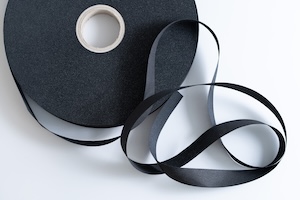
Freudenberg cable tapes.
Source: ©Freudenberg Performance Materials

The experts from the world’s leading supplier of technical textiles are looking forward to presenting their comprehensive range of high-performance tapes for power, data, and specialty cables to visitors at the trade fair and discussing solutions with them at stand D19 in Hall 13 from April 13-17.

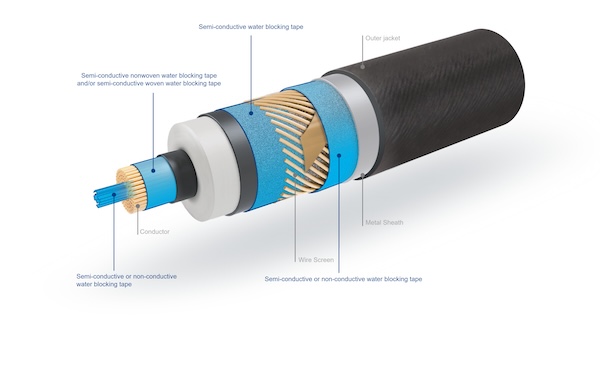
Freudenberg will showcase its high-performance cable tapes for all kinds of applications, including power, data, fiber optic, telecom, and special cables. Its cable tape product range for medium (MV) and high (HVDC and HVAC) voltage cables includes semi-conductive and non-conductive water-blocking tapes, binding tapes, bedding tapes, separation tapes, and special developments.

These tapes are critical for protecting and maintaining the structural integrity of cables, in particular thanks to their outstanding swelling performance and conductivity.

For submarine cables, Freudenberg offers tapes with exceptional water-blocking capabilities that are specifically designed to react instantly upon contact with water, swell into the fine spaces inside the submarine cable, and seal against moisture.

Example of applications for Freudenberg’s cable tapes in high voltage power cables.
Source: ©Freudenberg Performance Materials

“Freudenberg is a globally preferred partner of cable manufacturers as regards the development, manufacture and supply of high-performance tapes for the most demanding power and data transmission applications. By returning to Wire in Düsseldorf, we are strengthening our ties within the industry and demonstrating our commitment to supporting cable manufacturers in meeting today’s and tomorrow’s energy and digital challenges” says Jochen Bialek, Head of Global Sales Cable & Electro.

Posted: February 14, 2026

Source: Freudenberg Performance Materials

Atlas Publishes EV Weathering Testing Guide For Evaluating Long-Term Durability Of EV Interior And Exterior Materials

MOUNT PROSPECT, Illinois — February 11, 2026 — Atlas, the global supplier of weathering and lightfastness testing, has published the Atlas EV Weathering Testing Guide, a new application resource designed to help electric vehicle development teams and testing laboratories evaluate the durability of exterior and interior materials under realistic environmental stress.

The guide brings together accelerated laboratory weathering, benchmark outdoor exposure, and practical guidance to support confidence in long-term material performance.

EV Durability Brings Higher Combined Stress Exposure

Electric vehicles use a wide range of materials and functional systems which face combined stresses that add up quickly. Prolonged solar radiation, high temperatures, moisture exposure, and repeated thermal cycling can all be in play at once. Interior surfaces behind window glass can reach temperatures exceeding 100° C on dark materials, while exterior parts are exposed to ultraviolet radiation, heat, dew, rain, and rapid temperature changes. Without application-appropriate validation, these combined stresses can lead to fading, warping, cracking, delamination, and functional degradation – affecting appearance, mechanical integrity, and long-term performance.

Supporting Earlier Validation Under Tight Development Timelines

OEMs, suppliers, and emerging EV manufacturers routinely face critical questions: Will exterior materials withstand worst-case outdoor exposure? Can interior materials tolerate sustained heat and sunlight behind glass? Are suppliers delivering components that meet durability requirements consistently across programs? Weathering testing helps material scientists answer these questions using standardized, reproducible methods.

Atlas Full-Spectrum Xenon-Arc Simulation for Interior and Exterior Parts

Atlas xenon-arc laboratory weathering simulates full-spectrum sunlight – including ultraviolet, visible, and infrared radiation. This full spectrum matters for colored materials that respond to visible light, and for materials sensitive to long-wavelength UVA, which can be underrepresented in fluorescent UV testing.

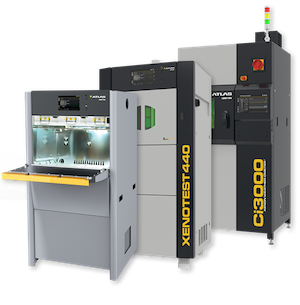
Atlas’ rotating rack instruments, the Ci Weather-Ometer® and Xenotest® systems, provide best in class uniformity for flat specimens used in critical material qualification work. The Atlas SUNTEST® static horizontal systems, are perfect for three-dimensional parts, molded components, assemblies, and complex geometries that are difficult to mount in rotating racks.

Optical Filter Selection and Setup Consistency Influence Comparability

Daylight filter selection is a key determinant of exposure relevance, and window glass filters are used to simulate filtered sunlight conditions typical of interior testing behind glazing. Specimen mounting and backing can influence heating and moisture behavior. When setup details are not defined by the test standard, those variables can affect comparability between methods – and between labs. Atlas experts understand these factors. From technical advice to final test method implementation, Atlas provides the support that you need.

Benchmark Outdoor Exposure Supports Long-Term Confidence

Laboratory outcomes are often validated through natural weathering benchmarks. Atlas operates benchmark exposure sites in subtropical Miami and desert Phoenix, providing reference climates characterized by high UV levels, moisture-driven stress from overnight dew, and extreme heat.

These natural benchmark exposures are useful, especially for correlation studies and determination of acceleration factors. Natural test options include static exposure racks, glass-covered enclosures for interior simulation, and approximately five-times concentrated sunlight devices such as EMMAQUA®. Newer approaches using ten “cool” mirrors expand testing capability for temperature-sensitive materials that cannot tolerate higher heat loads typical of traditional concentrated sunlight exposure. Equally important is Atlas’ unique Ultra‑Accelerated EMMA/EMMAQUA technology, which uses approximately ten‑times concentrated sunlight from twenty “cool” mirrors to deliver extremely high acceleration without overheating test specimens.

Correlating Accelerated Testing with Outdoor Results

Correlation studies connect accelerated laboratory exposure to natural weathering performance by comparing degradation trends and time-to-failure. Statistical measures, including Pearson correlation coefficients, can help teams evaluate whether laboratory parameters are reliably predicting outdoor behavior – and where refinement is needed when correlation is insufficient.

“Durability results can be difficult to compare if exposure conditions and setup details aren’t aligned,” said Dr. Oliver Rahäuser, Senior Product Manager at Atlas Material Testing Technology. “The guide highlights the parameters teams need to control and document, so results can be compared more reliably across methods, labs, and test partners.”

The Atlas Application Guide: “Weathering Testing of Electric Vehicles” is available now. To request a copy, contact Atlas. https://www.atlas-mts.com/contact/contact-us

Posted: February 14, 2026

Source: Atlas MTS, A business of AMETEK, Inc.

Rieter Responds To Higher Raw Material Prices

WINTERTHUR, Switzerland — February 12, 2026 — Global political and economic developments have been leading to rising raw material and energy costs for some time.

The textile machinery industry is also affected by this trend. Rieter machines and components consist to a large extent of steel, copper, aluminum and electronics. These materials in particular have seen higher demand and higher prices in recent months.

Rieter has not yet passed on the additional costs to its customers. Since the price trend is proving to be long-term, the company will adjust its prices from March 2026.

Posted: February 14, 2026

Source: Rieter Ltd.

Porcher Industries Revolutionizes In-Situ Consolidation With New Shape-Memory Thermoplastic Hybrid Textiles

BADINERES, France — February 13, 2026 — Porcher Industries, a global pioneer in high-performance thermoplastic composites and a leader in technical textiles, unveils its latest innovation: a new range of multilayer hybrid textiles designed for sectors such as sports, leisure, automotive and medical applications.

Fabric with shape-memory properties

Specifically developed for in-situ consolidation processes, this breakthrough overcomes several technological barriers by bypassing the limitations of conventional thermoplastic prepreg fabrics.

This hybrid textile structure offers, among other advantages, exceptional deformability and drapeability combined with shape-memory properties. Showcased at JEC World 2026, this solution highlights Porcher industries’ textile expertise and its strong commitment to the thermoplastic composites ecosystem.

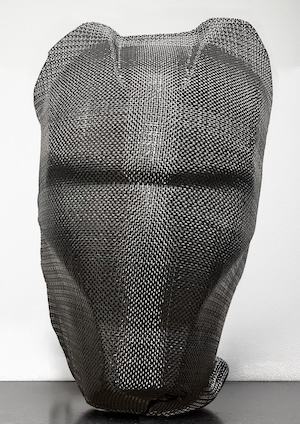
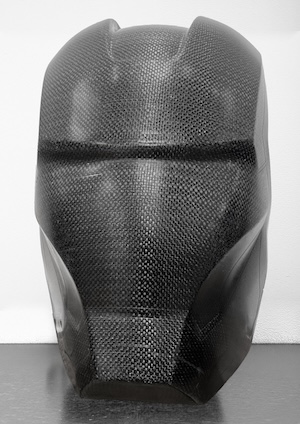
Traditional thermoplastic prepregs often reach their limits when it comes to consolidating complex shapes in situ. Porcher industries addresses this challenge with a unique hybrid textile structure made from commingled yarns based on glass, carbon, or aramid fibers. The result is a material with a high areal weight (up to 3 kg/m²), significantly reducing the number of plies required and thus offering considerable draping time savings. Its outstanding deformability and shape-memory effect enable the forming of complex 3D geometries without the use of additives such as spray glue, while the integrated low-temperature preforming function ensures precise positioning in the consolidation tool when necessary.

Compatible with a wide range of in-situ consolidation processes—from vacuum molding to advanced heating/cooling systems—this hybrid textile enables manufacturers to produce high-quality composite parts in under 10 minutes (with suitable heating/cooling equipment). It democratizes access to thermoplastic composites and opens new perspectives across numerous markets.

Complex thermoplastic part

Building directly on this innovation, Porcher industries also offers dry multilayer textiles dedicated to RTM or infusion processes. These fabrics share the same characteristics as the hybrid version: high areal weight, shape-memory effect, preforming capability, and more.

Beyond its technical performance, this solution is part of a responsible manufacturing approach. The recyclability of thermoplastic composites, combined with lower-energy and low-waste production processes, positions this innovation as a major advance toward sustainable manufacturing.

Porcher industries thus reaffirms its driving role in the evolution of composite technologies, providing OEMs and manufacturers with a flexible, efficient and sustainable pathway to next-generation materials.

Posted: February 14, 2026

Source: Porcher Industries

VIATT 2026 To Debut German Pavilion, Strengthening European Participation Alongside Key Asian Textile Hubs

HO CHI MINH CITY, Vietnam — February 13, 2026 — Vietnam’s textile and garment sector continues to be a major contributor to the country’s economic growth, with export revenues expected to reach USD 46 billion in 2025, a 5.6% increase from 2024 . From 26 – 28 February, the Vietnam International Trade Fair for Apparel, Textiles and Textile Technologies (VIATT) is set to contribute to economic growth opportunities by accelerating digital transformation and green transition across the entire textile value chain. The upcoming edition will respond to the rising demand for advanced technologies and sustainable materials with the introduction of the German Pavilion, alongside strong exhibitor participation from key Asian sectors, as well as several high-profile fringe events.

At its third edition, the fair will feature seven country / region pavilions and zones from China, Germany, Europe, India, Japan, Taiwan, and Türkiye, spanning VIATT’s three core sectors and the entire supply chain: Apparel Fabrics & Fashion, Home & Contract Textiles, and Technical Textiles & Technologies.

The inaugural German Pavilion, organised by the Federal Ministry for Economic Affairs and Energy (BMWE) in cooperation with the Association of the German Trade Fair Industry (AUMA), will be a focal point within the returning European Zone, which also spotlights leading exhibitors from Italy, Switzerland, Türkiye, and the UK. The pavilion will provide buyers with direct access to a comprehensive range of well-engineered products and solutions, emphasising quality, compliance, and time-proven manufacturing. Participating companies include:

Apparel Fabrics & Fashion
•    MUEHLMEIER Bodyshaping: a global leader in high-quality bra cups, shoulder pads, and garment accessories for lingerie, swimwear, and sportswear. The company combines innovative design, precise engineering, and sustainable production to deliver products that ensure comfort, perfect fit, and reliable support.

  •   Karl Conzelmann: with over 100 years of family-owned expertise, this producer of fine lingerie, ladies’ underwear, and loungewear knits most of its fabrics in Germany using high-quality yarns including sustainable micromodal, modal/viscose, and GOTS-certified cotton.
  •    Dalat Worsted Spinning (Suedwolle Group): since 1966, this family-owned business has produced dyed and natural worsted yarns in 100% wool and wool blends, with parallel manufacturing in Europe and Asia, including Vietnam’s first and most advanced worsted spinning mill in Da Lat.

Home & Contract Textiles
•    Huegin-Trietex: specialising in sun protection solutions, the company has been a leading producer of high-quality motors for interior window coverings since 1977. The Trietex® brand is renowned for its durability and reliability in vertical blinds and curtain tracks, making it a trusted choice in both commercial and residential settings worldwide.

  •    Paradies: for over a century Paradies has pioneered high-quality bedding, including the world’s first washable textile fibre duvet, setting standards for healthy, restorative sleep with sustainable, natural materials produced entirely in Germany and supplied to customers in around 50 countries worldwide.

Technical Textiles & Textile Technologies
•    Georg Sahm: as a leader in automatic winding technology for high performance fibres and technical yarns, Sahm offers innovative solutions in winding and unwinding technology as well as support for upstream and downstream winding-related processes.

  •    IBENA Shanghai Technical Textiles: specialises in high-performance materials, including emergency clothing for fire brigades, automotive seat cushions, and decorative textiles for stage productions.
  •    Lindauer DORNIER: one of the world’s technology leaders with its product lines of weaving machines, film stretching lines, and composite systems. The company manufactures advanced weaving machines that create high-end fabrics, including airbags, filters, and premium silk. It also leads the market in film stretching, producing ultra-thin plastic films for various tech applications.
  •    ZSK Stickmaschinen: producing outstanding embroidery, its machines combine premium quality with technical intelligence – used in apparel textiles, medical technology, aerospace, automotive, and beyond.

The pavilion’s lineup will be further enhanced by Global Standard (textile standards, certification) and Hohenstein Laboratories (testing, certification, quality control).

VIATT 2026 will continue to gather major exhibitors from Asia and beyond, solidifying the fair’s role as a hub for diversified textile supply and manufacturing partnerships in ASEAN. Beyond pavilions and zones from Germany and East Asia, one other pavilion is set to feature prominently: the India Pavilion, organised by TEXPROCIL (The Cotton Textiles Export Promotion Council), will return with 21 companies showcasing the country’s export-ready capabilities and breadth in cotton textiles and related categories. Notably, it will promote Kasturi Cotton, an initiative launched by the Ministry of Textiles, Textile Trade Bodies, and Industry, aimed at enhancing the value of Indian cotton according to established benchmark specifications. This pioneering initiative focuses on traceability, certification, and branding, setting a new standard for Indian cotton in the global market.

Fringe programme adding insights for Vietnamese and global sectors
Beyond the show floor, the fair will offer diverse opportunities for industry players through its wide range of fringe events spanning trends, innovation, market updates, and textile business strategies. Featured events include:

  •    TGIS 2026 (Vietnam Textile & Garment Industry Development Strategy Summit):  this summit will delve into critical topics such as AI & Upgrading, Sustainability & Compliance, and the International Brand Perspective on Vietnam. With networking a key focus, the event will also include dedicated matchmaking sessions between manufacturers and retail brands.
  •    Textile Industry Exchange: under the topic of The Trade Uncertainties in 2026, this roundtable event will bring together industry leaders to share valuable insights on critical topics, including tariffs in the US, the EU’s ecodesign regulations, and the impact and opportunities across Asia supply chain.

The Vietnam International Trade Fair for Apparel, Textiles and Textile Technologies (VIATT) is organised by Messe Frankfurt (HK) Ltd and the Vietnam Trade Promotion Agency (VIETRADE). For more details on this fair, please visit www.viatt.com.vn or contact viatt@hongkong.messefrankfurt.com.

VIATT 2026 will be held from 26 – 28 February 2026.

Other upcoming shows:

Intertextile Shanghai Apparel Fabrics – Spring Edition / Yarn Expo Spring / Intertextile Shanghai Home Textiles – Spring Edition
March 11 – 13, 2026, Shanghai

Intertextile Shenzhen Apparel Fabrics / Yarn Expo Shenzhen
June 9 –11, 2026, Shenzhen (Futian)

Intertextile Shanghai Home Textiles – Autumn Edition
August 18 – 20, 2026, Shanghai

Intertextile Shanghai Apparel Fabrics – Autumn Edition / Yarn Expo Autumn
August 25 – 27, 2026, Shanghai

Cinte Techtextil China
September 1 – 3, 2026, Shanghai

Posted: February 14, 2026

Source: Messe Frankfurt (HK) Ltd

Sponsors