
The Rupp Report: The Next Step To Sustainable Fibers (?)

The increased consciousness for the environment began some 20 years ago. Since then, many
organizations and nongovernmental organizations have started campaigning for a healthier
environment. In this context, the textile industry and mainly the producing sectors of the business
were and are challenged to produce their articles in a more sustainable way. Even the Chinese
government pays attention to this and has implemented rules in the last two five-year plans for a
more sustainable finishing. “From cradle to cradle,” “life cycle analysis” and “carbon footprint”
are just a few key terms in this — one can say — marketing fight for understanding, acceptance and
finally success of the products. To heighten the confusion, many organizations claim to have the
key to success, but nobody knows which rules are the right ones.


A Hidden Controversy

In this rising global consciousness to support a sustainable production of
textiles, fibers play an important role. For the neutral observer, it is extremely interesting to
see what’s going on in the fiber markets. Twenty-five years ago, the ratio between natural and
man-made fibers was somewhat 50:50. These times are gone forever. Today, the market share of
man-made fibers is heading to close to 73 to 75 percent of the global fiber consumption owing to
the increased properties, technical textiles and, last, but not least, a growing world population.
For quite some time, the producers of natural fibers, and here mainly cotton, tried to demonize
man-made fibers. These times are, luckily, over too. Everybody agrees that one fiber can complement
the other with inherent properties to build an even better product.

Viscose Is Booming

However, for the last one or two decades, there has been another fiber that is
competitive to cotton: viscose, rayon, Tencel®, lyocell, or whatever it may be called. In the
1980s, viscose production was such a dirty job that many European producers stopped production
because of soaring costs for a more environmentally safe production. Only Austria-based Lenzing AG
remained as a global player and became the undisputed leader in the world, holding most of the
international generic and brand names such as Lenzing Lyocell, Tencel, Modal® and others.

Viscose has enjoyed tremendous development over the last ten years. Virtually every year, a
new fiber type has appeared on the market. And parallel with the development and the growing
importance in the markets, the arguments for “clean production” became ever-more significant. And
the marketing activities increased on both sides. Reduced water consumption and fertilizer usage,
just to name two — the marketing strategy arguments are endless.

Dr. Susanne Jary, head of marketing, home textiles, mentioned at the Lenzing press conference
held last week at Heimtextil 2012 that in the year 2000, 30 million tags were distributed for
products made with Lenzing Modal. Today, more than 200 million tags are required. She also
mentioned that the yield of cellulose from beech wood is said to be twice as much compared to
cotton.


New Cellulose Fiber


The next step to a cleaner fiber was presented at the press conference: Jary announced the
home textiles market introduction of Lenzing Modal Edelweiss®, mainly for terry fabrics.
“Edelweiss” is the German name of an alpine flower, which is the symbol in the Alpine nations for
cleanliness and purity. She explained that the so-called Edelweiss effect should explain and
communicate the purity of this fiber. Lenzing said that “the botanic feeling can be incorporated
into remarkable terry goods. Beech wood proliferates by rejuvenation so no reforestation or
plantations are necessary. More than half of the wood used at Lenzing is harvested in Austria, and
the remaining raw material comes from neighboring countries.”

However, it is not only the fiber’s eco-friendliness that makes it so compelling. The fiber’s
performance properties such as color brilliance, absorbency, and softness make terry goods of
Lenzing Modal that are said to be especially appealing to consumers. Also, the colorfastness seems
to be on a high level. Gradual fading or graying is said to be no longer an issue with terry
fabrics made of Lenzing Modal.


Paper Background

Chlorine is a very aggressive agent for bleaching. The paper industry, for example,
has been selling chlorine-free paper for years. And cellulose fiber is made from the same raw
material as paper: wood pulp. So the idea was to produce a chlorine-free fiber, based on oxygen
bleaching. The Edelweiss treatment is said to offer new technological and environmental standards
for the entire cellulose fiber industry. The production process involves oxygen-based chemistry. It
is more environmentally friendly than conventional production procedures. At the moment, Modal
Edelweiss is the only Modal fiber to satisfy the highest environmental standards, Lenzing reports.

It is produced differently from the conventional Lenzing Modal fibers, but the properties,
such as softness and color brilliance, are the same. The fibers process identically at all points
in the textile chain. Jary added at the press conference that “the fiber plant in Lenzing Austria
is the only one in the world which is fully integrated and has all production steps, from pulp to
the fiber, perfectly under control throughout the entire process.”

It seems that Lenzing did a good job and took a step toward more sustainable products. To go
from the environmentally disastrous production processes in the 1980s to creating a chlorine-free
cellulosic fiber type was a long way. Let’s see if it will pay off.

January 17, 2012
Berry Amendment Change Benefits U.S. Textile Industry

ROSEVILLE, Minn. — January 17, 2012 — At a time when President Obama and his administration are on
a new mission to repatriate American manufacturing jobs, the U.S. Industrial Fabrics Institute
(USIFI) recently scored a small victory for the textile industry. USIFI is the manufacturing
segment of the Industrial Fabrics Association International (IFAI), and has a long track record of
fighting policy decisions that kill American manufacturing jobs —
semper vigilans.

This mission began two-and-a-half years ago when a surprise reinterpretation of the Berry
Amendment was announced by the Defense Logistics Agency (DLA) saying that military tents could be
constructed with components made offshore. That subtle interpretive phrasing would curtail American
companies, and was contrary to the spirit of the Berry Amendment, (USC, Title 10, Section 2533a), a
law which requires the Department of Defense to give preference in procurement to domestically
produced, manufactured, or home grown products.

Congress originally passed domestic source restrictions as part of the 1941 Fifth
Supplemental DoD Appropriations Act in order to guarantee a domestic source for products needed
during war. 


The battle begins

In 2009 at the request of its membership — the U.S. military tent supply chain —
USIFI sent a letter to Secretary of Defense, Robert Gates, explaining the industry’s understanding
of Berry compliance and requesting written clarification of the new DLA interpretation.

An August 2009 response from Nancy Heimbaugh, Director, Strategic Acquisition, DLA,
reiterated DLA’s position that only the fabric used in tents is subject to the Berry Amendment’s
domestic purchasing restriction; since tent components were not mentioned.  


Ms. Heimbaugh’s letter cited as example a phrase in the Berry Amendment statute that refers
specifically to components of clothing items. (This section of the Berry Amendment had been changed
in 2006; prior to that time, no mention of clothing components had been included in the Berry
Amendment.) Because of similar issues of non-compliant clothing components like buttons and
embroidered emblems being used in military apparel, the apparel industry initiated the 2006 change
to the Berry Amendment.

The division advances 

In the intervening months, USIFI polled the military tent-supply chain, including member and
non-member companies and textile and non-textile component producers to determine if broad support
existed for changing the statute’s language to include tent components. There was no dissention.
 

USIFI member company Easton Technical Products stepped forward to lead the effort with help
from Outdoor Venture Corporation, Camel Manufacturing, and Johnson Outdoors — three of the largest
domestic MilSpec tent manufacturers. In addition, a number of tent frame, trim, and fabric
suppliers agreed to help achieve a solution.

During 2009, 2010 and 2011, because of DLA’s new interpretation of the Berry Amendment, new
DoD contracts have been awarded to bidders using imported components. This created an industry-wide
sourcing issue which threatens many jobs within the domestic military shelter supply chain during a
time of high unemployment and economic uncertainty.    

A concerted effort was made to write language into the FY2011
Ike Skelton National Defense Authorization Act that included domestic tent components as
part of any contracts let by the DoD. Working through the office of Congressman Rob Bishop (UT,
1st), who at the time was on the House Armed Services Committee, leadership of the Defense
Logistics Agency (DLA) was informed of the inconsistency and the industry’s interest in fixing the
error.  

USIFI, with the assistance of the American Manufacturing Trade Action Coalition (AMTAC),
worked with Rep. Rob Bishop to craft legislative language to correct DLA’s mistaken interpretation.
Rep. Bishop, following the counsel of the staff of the House Armed Services Committee (HASC), was
able to propose that the following language be added to the DoD Authorization bill, H.R. 5136, in
2010:

“The committee is aware that the Director, Defense Logistics Agency has chosen to interpret
the requirement to buy certain articles from domestic sources per subsection (b) of section 2533(a)
of title 10 United States Code in such a manner that it applies expressly to tents, tarpaulins, or
covers, but not to the materials and components of tents, tarpaulins, or covers. The committee is
concerned that this narrow interpretation of the statute is inconsistent with the law. Therefore,
the committee directs the Director, Defense Logistics Agency to review the interpretation of the
current statute to ensure that they are compliant with both the law and with congressional intent
and submit a report to the Congressional defense committees not later than Oct. 1, 2011, explaining
how the committee’s concerns were addressed.”     

A battle lost

The HASC staff did not feel, at that time, that an attempt to amend the existing statutory
language was warranted. Their proposed statement offered a strong indication that Congress’ intent
was that the military shelter components be covered under the domestic supply restriction of the
Berry Amendment. Further, as “Directive report language,” the DoD would be required to
respond. 

Unfortunately, the legislation which passed in the waning hours of the 111th Session of
Congress (the
Ike Skelton National Defense Authorization Act for Fiscal Year 2011) was stripped of much
of the language in the earlier draft and did not include the previously agreed to language
(above). 

Therefore USIFI, with continuing help of the broad coalition of industry members and
Representative Bishop’s office, attempted a statutory fix in the 112th Congress. USIFI proposed
language to be inserted into the
2012 National Defense Authorization Act, permanently amending the Berry statute so that
tent components would be required to be produced in the U.S. The language was included in the
Defense bill approved by the House, but it was not included in the Senate bill.

Victory at last

A joint House and Senate committee produced the final document which passed and was signed
into law by President Obama on Dec. 31, 2011. The final bill, H.R. 1540 — the $662 billion
2012 National Defense Authorization Act — included the USIFI language requiring domestic
production of all tent components.

It is important to note that this change is not an expansion of the Berry Amendment beyond
its original scope, but rather a clarification of the original intent of the law. USIFI engaged its
entire membership as well as the military shelter value chain in their effort. The success of the
effort shows the value of collective action.

USIFI will continue to monitor military procurement, particularly Berry compliance, with
2012-2013 efforts directed to study of the recent change in the Berry threshold (the contract
amount that triggers domestic sourcing requirement) from $100,000 to $150,000; and tactics employed
by Defense Logistics Agency to circumvent Berry regulations.

Semper vigilans. 


Posted on January 17, 2012

Source: IFAI

Wool Research Makes Carbon Headway

Australia — January 17, 2012 — A collective of woolgrowers, scientists and carbon specialists known
as the Wool Carbon Alliance (WCA) has reviewed the latest research on wool’s role in the natural
carbon cycle, from woolgrowing properties to homes around the globe.

Life cycle analyses on-farm, together with 11 separate life cycle studies of wool products
have shown that natural wool fibre is carbon friendly.

Independent agricultural scientist with FSA Consulting Stephen Wiedemann said “advanced
methods of on-farm carbon accounting have shown how woolgrowers can play an important role in the
carbon cycle. Preliminary results suggest where soil carbon sequestration can be achieved, wool
production can be carbon neutral.” 

Advances in methodology in this area have led to considerably lower carbon footprint
estimates for wool (by 60 to 80 per cent).  

Wool Carbon Alliance Chairman Martin Oppenheimer said many of the existing perceptions about
wool carbon needed to be  challenged by current and relevant science. 

“We are finding that the wool fibre production systems, based on renewable grass and natural
vegetation, complement current demands to reduce carbon emissions. Wool is part of the natural
cycle of water and carbon that can impact climate in a positive way.”

The WCA also heard the latest research from Australian Wool Innovation’s (AWI) product
development team, which is working on ways of reducing wool’s carbon footprint by reducing energy
use during manufacturing, laundering and garment disposal. As part of the CEW (Chemicals, Energy
and Water) project, AWI is looking at ways to reduce the amount of energy used during the
manufacture of woollen garments and by the consumer when washing and drying.

In manufacturing, most energy is used during the dyeing operation, and AWI has adopted a two
pronged approach. Firstly looking at mechanical modifications to the dyeing machine, and secondly
the dyeing process itself.

With regard to domestic laundering of wool garments, AWI is exploring technology that allows
wool garments to be successfully washed at lower temperatures than the normal 40°C wash. In
addition, work is being conducted to reduce the drying time during tumble drying. Initial work
suggests the drying time can be reduced by about 30 per cent. An online resource for woolgrowers to
access relevant reports is available at
www.wool.com/carbon.

Posted on January 17, 2012

Source:
Australian Wool Innovation Ltd. (AWI)

Biomedical Structures Introduces Novel Absorbable BIOFELT® Scaffold For Breakthrough Surgical Applications

WARWICK, R.I. — January 17, 2012 — Biomedical Structures, LLC (BMS), a designer, developer and
manufacturer of biomedical textiles for medical devices and other advanced clinical applications,
today announced its new BIOFELT® absorbable scaffold for implant devices in orthopedics,
cardiology, and general surgery, as well as other in vivo applications.  BIOFELT’s unique
non-woven structure provides a fibrous matrix platform that enables natural tissue in-growth in
surgical applications.

BIOFELT is a three dimensional non-woven structure with very high surface area and void
volume designed to promote natural cell adhesion and regeneration. Produced from PGA (Polyglycolic
Acid), PLLA (Poly L Lactic Acid) and copolymers such as PLGA (co-polylactic acid/glycolic acid),
BIOFELT can be used as a component of medical devices or surgical systems with the benefit of
bio-absorbability.

“BIOFELT is a terrific example of how traditional tissue engineering technology and materials
can be used in more innovative ways across medical device sectors,” said Dean Tulumaris, President
and CEO of BMS. “BMS’ commitment to emerging device development has long been one of our strengths,
and we dedicate tremendous resources to the engineering of customized solutions to the most
difficult and novel device challenges. We are excited to bring our absorbable fiber and design
expertise into new and emerging clinical applications with BIOFELT.”

BIOFELT is custom-engineered for individual device requirements and is available in a wide
array of densities and thicknesses to allow for application-specific performance. Proven in
cardiovascular, orthopedic and urological tissue regeneration applications, BIOFELT has been
utilized in everything from internal wound management to hemostasis.  As a non-woven fabric,
BIOFELT can be produced as flat sheets, discs, tubes and a variety of other geometric shapes with
an absorption profile from anywhere from less than 30 days to one year.

Biomedical Structures provides advanced design, development and manufacturing of biomedical
textile structures with expertise in knitting, braiding, weaving and non-woven technologies. 
The company utilizes a broad offering of biocompatible absorbable and non-absorbable materials in
devices, drug delivery and surgical systems for orthopedic, cardiovascular, bariatric, cosmetic and
veterinary medicine applications.


Posted on January 17, 2012

Source: Biomedical Structures

Teijin’s Nanofront™ Polyester Offers Unprecedented 400nm Diameter

TOKYO — January 16, 2012 — Teijin Fibers Limited, the core company of the Teijin Group’s polyester
fibers business, announced today that it has decided to commercialize a new version of its
Nanofront high-strength polyester nanofiber with a diameter of 400 nanometers, or 22,500 times
smaller than the cross-sectional area of a strand of hair, an unprecedented achievement for a
commercial polyester fiber.

The new version, which will be marketed by Teijin Fibers as a finer version of its existing
700-nanometer Nanofront nanofiber, will expand the market for the company’s versatile,
high-performance nanofiber by meeting demands for even finer nanofibers in applications, such as
high-performance air filters that trap especially fine dust particles while allowing increased air
flow in compact, energy-efficient air conditioning systems.

Teijin Fibers introduced the world’s first commercial polyester nanofiber in 2008. The
700-nanometer version of Nanofront is 7,500 times smaller than the cross section of a hair strand
and boasts more than 200 related patent applications.

Nano-sized bumps on the surface of Nanofront raise frictional force and produce a surface
area dozens of times greater than that of regular fiber, giving the material outstanding slip
resistance. The ultra-fine fiber is also soft, stretchable, fits body contours comfortably,
promotes cooling and boasts excellent absorbency and opaqueness. Nanofront is used in a wide
variety of clothing and industrial applications, ranging from inner-wear, golf gloves and skin care
products to abrasive cloth and filters.

Teijin Fibers has already established the mass-production technology for even finer
nanofiber, as small as 280 nanometers in diameter, which it aims to commercialize eventually.

Going forward, Teijin Fibers will continue leveraging its competitive nanotechnologies in
nanofibers that incorporate functional polymers, such as polyethylene naphthalate (PEN),
olefin-based polymers, nylon, and polytrimethylene terephthalate (PTT). Applications in areas such
as electronic components, industrial filters, clothing and bedding are expected to meet
increasingly stringent demands in terms of usage and functional properties.


Posted on January 17, 2012

Source: Teijin Ltd.

Indorama Acquires FiberVisions Holdings

Thailand-based polyester producer Indorama Ventures PCL (IVL) has acquired Duluth, Ga.-based
FiberVisions Holdings LLC — a producer of specialty polyolefin staple fibers for nonwoven
applications, and through its joint venture (JV) ES FiberVisions, a producer of bicomponent fibers.

With manufacturing facilities located in the United States, Denmark, Argentina and China,
FiberVisions has a global production capacity totaling more than 200,000 tons per year. The company
devotes 75 percent of that capacity to the production of fibers for disposable branded feminine
hygiene products and 25 percent to fiber production for automotive and industrial applications.
FiberVisions also has a JV with Japan-based bicomponent fiber producer JNC.

“The acquisition of FiberVisions significantly enhances IVL’s position in the world’s most
specialized fibers business for hygiene products and other growing fiber applications,” said Aloke
Lohia, Group CEO, IVL. “As the largest producer of polypropylene staple fiber, FiberVisions
complements our strength as the world’s largest polyester producer and together we will increase
our ability to satisfy customer needs in all parts of the world.” 

“The combination of IVL and FiberVisions will give us an even stronger capability to develop
fiber innovations to help our customers successfully meet the ever changing and increasing market
demands,” said  Dr. Stephen Wood, CEO, FiberVisions. Wood said FiberVisions’ customer and
supplier relationships will not change as a result of the acquisition, adding, “We will continue
our focus on serving our customers with high-quality products, innovation, and superior service.”

IVL’s acquisition of FiberVisions follows several other notable acquisitions over the last
year including Wichita, Kan.-based Invista’s U.S. and Mexican polyester assets; Germany-based
polyester fiber and filament producer Trevira GmbH, acquired through a JV with Italy-based
Sinterama S.p.A.; Ireland-based Wellman International Ltd.’s recycling and fiber businesses in
Europe; and South Korea-based SK Chemicals Co. Ltd.’s polyester assets in Indonesia and Poland.


January 10, 2012

Lenzing, Smartfiber Expand Cooperation

Austria-based man-made cellulosic fibers manufacturer Lenzing AG and Germany-based smartfiber AG,
developer and marketer of high-tech lyocell specialty fibers including smartcel™ and SeaCell®, have
announced an expansion of a cooperation begun several years ago for the production of new lyocell
specialty fiber variants — including Lenzing’s granting of a license to smartfiber in 2007 to begin
pilot production of such new variants — as well as the development of new fabrics and other
projects. 

Going forward, Lenzing will be the exclusive manufacturer of smartcel — a specialty fiber
featuring various performance additives to provide antibacterial, hygienic, regenerative,
temperature-regulating, conductive and/or other properties — and SeaCell — a fiber containing
active substances derived from seaweed to provide wellness, skin-nurturing and anti-free-radical
properties. The pilot plant now located at smartfiber’s Rudolstadt, Germany, headquarters will be
moved to Lenzing’s Upper Austria location in order to speed up commercialization efforts and enable
a significantly improved production cost structure. smartfiber will continue to handle sales and
marketing for the two fibers, which have applications in home textiles, fashion and medical
textiles.


January 10, 2012

Young Takes Helm At DAK Americas

Charlotte-based polyethylene terephthalate (PET) resin and polyester staple fiber producer DAK
Americas LLC has promoted Jorge Young to president and CEO. Young, formerly executive vice
president – PET Resins, succeeds Hector Camberos, who has retired from that position, which he has
held since the founding of DAK Americas in 2001 as a subsidiary of Mexico-based conglomerate Alfa
S.A.B. de C.V.

Camberos will return to his home in Argentina to lead DAK Americas’ Argentina PET business.
He also will be involved with Alfa’s strategic growth initiatives and new business developments in
South America.

“I am pleased to hand over the leadership to Jorge Young to continue the growth of DAK
Americas into its second decade and still be able to contribute and help further expand DAK and
Alfa in South America,” Camberos said.

Under Young’s leadership of PET Resins, that business increased its capacity to more than 4.3
billion pounds per year, becoming North America’s largest PET resin producer and the second-largest
globally.

In conjunction with Young’s promotion, DAK Americas has expanded its Executive Team, which
also includes Jon McNaull, who moves from his position as vice president – Polyester Staple Fibers
to vice president – Resins; Tom Sherlock, who has been promoted from business director – PET Resins
to vice president – Specialty Polymers; and Mark Ruday, formerly president of recently acquired
Wellman Inc., who now will serve DAK Americas as vice president – Fibers.

“DAK Americas has experienced tremendous growth since its formation in 2001 and has
established an outstanding foundation on which the new leadership and organization can continue to
consolidate operations, expand and achieve global growth.”

January 10, 2012

TenCate Geotube® Technology Selected For Largest Tube Project In USA

PENDERGRASS, Ga. — January 10, 2012 — TenCate Geosynthetics Americas is selected by Parsons
Engineering of New York as the sole source to supply TenCate Geotube® containers for the dredging
project on Onondaga Lake, in the State of New York. This project is the largest geotextile tube
project in the US and North America.

As a result of over a century of industrial activity on the shores of Onondaga Lake, lake
sediments have been contaminated with chemicals such as heavy metals, PAH’s and volatile organic
compounds (e.g., chlorobenzene). Due to this contamination, Onondaga Lake and related upland sites
were added to the Federal Superfund National Priorities List (NPL) in 1994.

Dewatering and storage

The design by Parsons Engineering is to hydraulically dredge an estimated 2.1
million cubic yards of waste and pump it to a 50 acre dewatering cell through 4 miles of
double-walled pipeline. Their design specifies containing and dewatering the waste in geotextile
tubes stacked 30 feet in height. TenCate Geotube® containers, of various large circumferences, will
be supplied to dewater the sediments. This project is scheduled to begin in the spring of 2012 and
is planned to continue for 4 years. Upon completion of dredging and dewatering, TenCate Geotube®
containers will be permanently stored in the capped cell.

“TenCate has been chosen for the value it brings to the project”, comments Vicki Ginter,
Regional Market Manager at TenCate Geosynthetics Americas. “This includes the unique features of
the TenCate Geotube® containers such as circumferential seams and mechanical geoports, a history of
projects worldwide that are similar in scope and complexity, technical services including
geotechnical engineering support and detailed layout drawings for the dewatering cell, quality
control evidenced by its ISO 9001 certification and A2LA certified labs and the history and
strength of the TenCate corporation.”

Posted on January 10, 2012

Source: TenCate Geosynthetics Americas

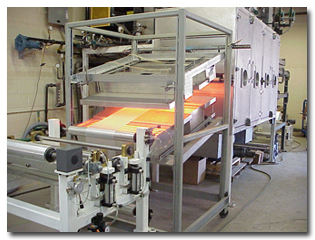
Radiant Energy Systems Expands Manufacturing Capabilities

HAWTHORNE, N.J. — January 2012 — Radiant Energy Systems Inc., a custom manufacturer of process
heating systems announces the expansion of its New Jersey plant. The addition reflects the
company’s continued technological advancements and requirements for increased production capacity.
The northern New Jersey facility increased production area by 50% in size with 5500 more square
feet of manufacturing space and new engineering offices. 

“The new production area will help Radiant Energy Systems keep up with increased
international demand,” says Bob Narang, President. The company already offers a range of lab
testing services for new product development and a pilot line running roll to roll trials and
limited production runs. With decades of engineering experience, Radiant Energy Systems is well
equipped to assist clients save on production costs and improve line speeds while maintaining high
product quality.

RadiantSystems

Radiant Energy Systems’ Pilot Coating Line


Radiant Energy Systems is a premier custom manufacturer of electrical and gas fired infrared,
hot air impingement and flotation dryers and combination systems. Founded in 1985, the company
serves the process heating industry worldwide.


Posted on January 10, 2012

Source: Radiant Energy Systems Inc.

Sponsors



