Industry-Leading Brands Confirmed For September’s Cinte Techtextil China

HONG KONG — July 19, 2018 — As the countdown to the 2018 edition of Cinte Techtextil China enters its last two months, the final exhibitor line-up is starting to take shape. A number of leading international and Chinese brands across the fair’s 12 product application areas will feature at the Shanghai New International Expo Centre from September 4-6, with an expected 500-plus total exhibitors from around 20 countries & regions set to feature.

Nonwovens exhibitor highlights

As the fair’s largest product category, buyers have a wide range of domestic and overseas brands to source from, including:

  • Johns Manville (US): who will showcase their polyester spunbond, PP & PBT meltblown, glass fibre nonwoven, micro glass fibre nonwoven, hybrid nonwoven, glass fibre needle mat and glass microfibre product lines among others at the fair.
  • J.H. Ziegler (Germany): with over 150 years’ expertise and their own production plant in China, they offer products for acoustic absorption in automotive interiors and exteriors, nonwoven foam composites for leather lamination, needle-punched nonwovens, foam nonwoven composites, laminated nonwovens and natural-fibre nonwovens.
  • KOBE-cz (Czech Republic): a new exhibitor to the fair, their nonwoven fabrics, mainly made from glass fibre with temperature resistance up to 800°C, are used for high-temperature isolation in the automotive, marine, energy and building industries. They also have isolation materials made from natural fibres including hemp, wool, cotton and flax.
  • TDF Nonwovens (China): one of the leading domestic brands, their specialties are polyester spunbond geotextiles, polyester filament roofing carriers, filter nonwovens, high-strength coarse denier polypropylene spunbond geotextiles and medical & health nonwovens.
  • Kingsafe (China): they specialise in the production of fusible interlining and nonwoven fabrics for high-end garments.

Yarn & fiber exhibitor highlights

  • Perlon (Germany): has developed a PET based monofilament, HighGrip, which guarantees long-lasting efficiency of conveyor belts, and is available in various types with different tribological characteristics, which they will feature at the fair.
  • Sateri (China): is a global leader in viscose rayon made from 100% dissolving wood pulp, and the largest maker of viscose fibre in China. Their natural and high-quality fibre, made from trees grown on renewable plantations, can be found in textiles and skin-friendly hygiene products.
  • Cordenka (Germany): producers of industrial rayon, their product range covers rayon tire cord, yarn, single-end dipped cord, short-cut fibre and more.
  • EMS-Griltech (Switzerland): will showcase a range of technical fibres & yarns and thermoplastic adhesives at the fair.
  • Barnet (Germany): several finished products (nonwovens, spun yarns and fabrics) made with their specialty fibre will be on display at the fair, including OPAN, para-aramid and carbon filament fibres. The application of their specialty fibre in flame retardant and anti-cut gloves and felts will be shown at their booth for the first time.

Coated textiles & solutions exhibitor highlights

  • Stahl (the Netherlands): the Dutch company will present new products from their water repellent and flame retardant ranges at this year’s fair. According to the company, as the Chinese government continues its efforts to clean up the environment, eco-friendly chemicals remain in strong demand in the country.
  • Sioen (Belgium): will showcase sign materials, truck tarpaulins, tents, membrane fabrics, apparel products, chemicals and specialty products such as inflatable boat fabrics, pool liners and more at Cinte 2018.
  • ROWA Lack (Germany): a new exhibitor at this year’s fair, they will present their special lacquer systems and top coatings.
  • Trelleborg (Sweden): also a new exhibitor, they will display engineered textiles, especially in the fields of outdoor, medical, protective and automotive.
  • FPC Technical Textile (Saudi Arabia): another first-time participant at the fair, they will showcase a range of high-end specialty fabrics including PVC coated fabrics and fibre glass PTFE fabrics.
  • Zhejiang Jinda New Materials (China): this supplier is known for its coated textiles for industrial, transportation and building uses, as well as warp knitted geo-synthetic materials and printable coated materials for advertisements.

Lenzing to showcase its new VEOCEL nonwovens specialty brand at the fair

First announced in June this year, and featuring at Cinte Techtextil, Lenzing’s new VEOCEL brand is billed as a premium range of nonwovens fibres for daily care, which “provides the nonwovens industry with fibres that are certified clean and safe, biodegradable, from botanic origin and produced in an environmentally responsible production process.” Products in this range can be applied to a multitude of uses including baby care, beauty and body care, intimate care and surface cleaning, under the VEOCEL Beauty, VEOCEL Body, VEOCEL Intimate and VEOCEL Surface brands.

Cinte Techtextil China is organised by Messe Frankfurt (HK) Ltd; the Sub-Council of Textile Industry, CCPIT; and the China Nonwovens & Industrial Textiles Association (CNITA).

Posted July 19, 2018

Source: Messe Frankfurt

Praxair Signs Long-Term Agreement To Supply US Methanol In West Virginia

DANBURY, Conn. — July 19, 2018 — Praxair Inc. today announced it has signed a long-term agreement to supply oxygen to U.S. Methanol LLC’s new facility in Institute, W.Va. The customer’s facility will produce methanol for use in the production of plastics, varnishes, medicines, adhesives and textiles.

Praxair will build a vacuum pressure swing adsorption (VPSA) plant that is expected to start up in 2019.

“We are proud to partner with U.S. Methanol as they build their first facility in West Virginia,” said Todd Lawson, vice president, east region for Praxair’s U.S. industrial gases business. “Praxair has a long-term expertise building and operating VPSA plants, and we look forward to providing them with a safe and effective solution.”

U.S. Methanol’s West Virginia facility will be a major regional manufacturer benefiting from the abundance of gas in the Marcellus and Utica shale fields. The low cost of producing natural gas and related byproducts is expected to expand the chemical industry in the area. The company selected the site because of its access to extensive water, rail and highway systems and low cost raw materials.

“We chose Praxair because of their reputation as a reliable supplier,” said Frank Bakker, CEO, U.S. Methanol. “They are an industry leader in VPSA technology, and we look forward to working with them as we expand our business in a region that is positioned for future growth.”

Posted July 19, 2018

Source: Praxair, Inc.

Asahi Kasei To Acquire Sage Automotive Interiors

TOKYO — July 19, 2018 — Asahi Kasei has decided to acquire Sage Automotive Interiors Inc. (Sage), a U.S.-based manufacturer of automotive interior material, for a cash transaction price of approximately $700 million (¥79.1 billion*). An agreement regarding the acquisition was concluded between Asahi Kasei and Clearlake Sage Holdings LLC, the 100-percent owner of Sage.

Under its Cs for Tomorrow 2018 medium-term strategic initiative, Asahi Kasei is focused on expanding automotive-related business as a priority in the Material sector. The company is currently working across the sector to strengthen relationships with vehicle manufacturers and their suppliers while expanding operations globally.

The automotive industry is in a period of transformation referred to as CASE, indicating trends toward connected, autonomous, shared, and electric vehicles. Such new trends create significant growth opportunities, including demand for vehicle interiors with greater comfort and innovative design. The market for automotive interior material is thus expected to continue expanding over the longer term.

Asahi Kasei supplies Lamous™ microfiber suede to Sage, and the two companies have a long-standing mutually beneficial business relationship. A leader in the development and manufacture of material for automotive interiors, Sage holds the No. 1 global share for vehicle seat fabric.** Sage has established a strong presence among vehicle manufacturers and their suppliers based on its comprehensive proposal capabilities, advanced design capabilities, and processing technology related to automotive interior material.

Asahi Kasei considered complementing its business portfolio with Sage’s business to be an effective means of accelerating its expansion in the automotive field. Last October the two companies began talks that led to the agreement for Asahi Kasei’s acquisition of Sage.

Asahi Kasei believes the acquisition will strengthen its position in the growing automotive interior material market, contributing to the overall expansion of its automotive-related business. Expected effects of the acquisition include:

  • Enhanced access to vehicle manufacturers and their suppliers, in order to swiftly and accurately ascertain trends and needs in the automotive industry;
  • Proposal and provision of comprehensive vehicle interior designs and solutions leveraging Sage’s design and marketing capabilities in combination with various Asahi Kasei products such as fibers, plastics, and sensors; and
  • Utilizing Sage’s sales, manufacturing, and marketing bases as management infrastructure and resources for the global expansion of Asahi Kasei’s operations.

The transaction price of approximately $700 million will change depending on the fluctuation of cash and debt balance, working capital, etc., at the time of closing. The total acquisition price including Sage’s interest-bearing debt is approximately $1.06 billion. Closing of the transaction is conditional upon performing the required procedures in accordance with each relevant country’s antitrust regulations, and obtaining approval from the relevant authorities. The process will be advanced as quickly as possible, and an announcement will be made upon completion.

With closing of the transaction, Sage will become a consolidated subsidiary of Asahi Kasei. The impact on financial performance will be disclosed without delay as necessary.

Corporate profile of Sage Automotive Interiors Inc.
Location: Greenville, South Carolina, USA
CEO: Dirk R. Pieper
Operations: Development, manufacture, and sale of fabrics as automotive interior material
Paid-in capital: $82.5 million (consolidated, as of December 31, 2017)
Establishment: 2009 (spinoff from fiber and chemical manufacturer Milliken & Company)
Production sites: United States, Italy, Poland, Romania, Brazil, China
Employees: Approximately 2,200 (consolidated, as of March 31, 2018)
Ownership: 100.0% by Clearlake Sage Holdings, LLC
Three-year trend of assets and sales:
2015 2016 2017
Total assets ($ million) 426.8 474.0 504.7
Net sales ($ million) 359.3 415.6 474.9


*At July 18 exchange rate of ¥113 per $.

** Woven and knitted fabric for vehicle seats (not including natural and synthetic leather)

Posted July 19, 2018

Source: Asahi Kasei America Inc.

Cook To Lead Milliken & Company

Halsey M. Cook Jr., incoming president and CEO, Milliken & Company
Halsey M. Cook Jr.,
incoming president
and CEO, Milliken &
Company

The Board of Directors of Spartanburg-based Milliken & Company has announced Halsey M. Cook Jr. will take the helm as president and CEO of the family-owned company,
effective September 1. J. Harold Chandler will continue as board chair.

Cook has a 30-year history leading large, diversified global businesses with roles in sales, marketing and product development. He comes from family-owned Sonepar USA, where he was president and CEO. Cook has a B.A. in Economics and English from the University of the South and an MBA from the University of Virginia.

“The Board of Directors is confident that Halsey is the right leader for Milliken’s next era,” said Chandler, current president, CEO and board chair. “He has the experience to accelerate what is working very well today at Milliken and, importantly, introduce change where the organization can further leverage our emphasis on innovation, manufacturing excellence and customer care. He will lead an organization with a proven management team that knows how to translate strategy into effective execution and sustainable results. His experience in growing diversified, global businesses and his leadership style are an excellent fit for Milliken’s values, culture and commitment to the community.”

“I’m honored and excited to have been selected to lead Milliken,” Cook said. “It is an esteemed company with talented associates and an opportunity-rich future. I am looking forward to meeting the team and listening to their ideas and aspirations for the next chapter of Milliken & Company.”

July/August 2018

Kentwool Turns 175

Founded in 1843, Greenville, S.C.-based Kentwool is celebrating its 175th anniversary this year. The fifth-generation family-owned business manufactures its premium wool products entirely in the United States employing some 81 employees between its offices in Greenville and manufacturing facility in Pickens, S.C.

After Mark Kent, the company’s CEO passed away unexpectedly last year, his wife, Kimberly V. Kent, formerly corporate counsel for Kentwool, took the helm of the company.

“At every turn I see the fruits of Mark’s leadership, his vision, and the affection he had for Kentwool and everyone in it,” Kim Kent said. “He was a service-focused leader, one with
a clear vision and a deep commitment to this company, our employees and our success.”

“You don’t make it to your 175th anniversary on accident,” said Keith Horn, president, Kentwool Manufacturing. “During his years as CEO, Mark expanded the business three-fold. Through Kentwool Performance, his advocacy about wool’s wearability in every season and his promotion of its natural qualities, Mark allowed us to adapt to changing consumer behaviors. He stayed one step ahead of things, so Kentwool was able to do the same.”

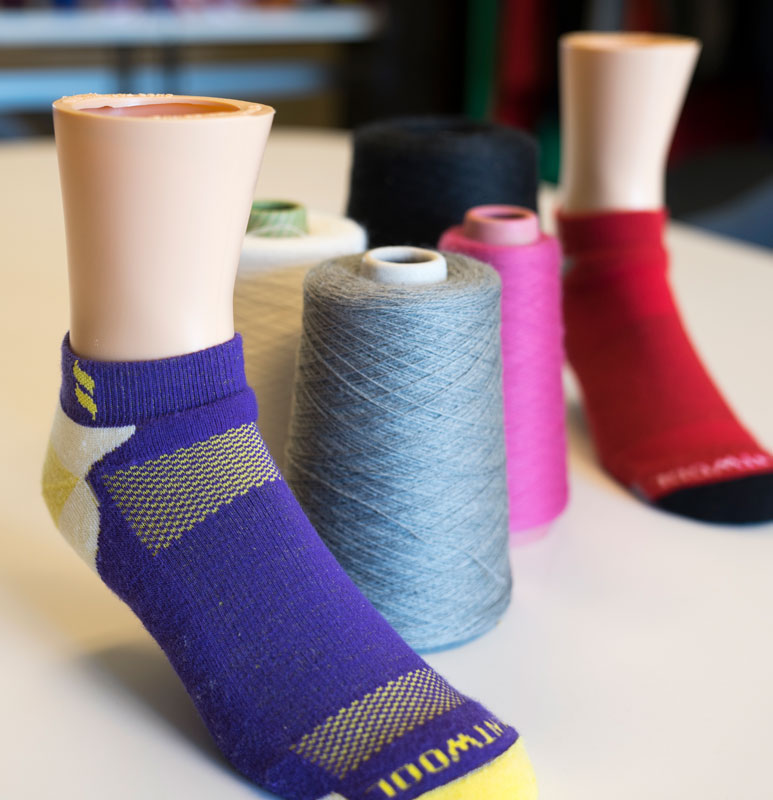
The company is known for the “World’s Best Golf Sock,” an idea that originated with Mark after playing a round of golf in uncomfortable socks that left him with blistered feet, as well as premium wool yarns.

Kentwoolproduct
Kentwool, maker of premium wool yarns and socks, is 175.

July/August 2018

DuPont IB Officially Opens Renovated Innovation Center

Wilmington, Del.-based DuPont Industrial Biosciences (IB) reports it has completed a renovation at its global business headquarters focused on modernization, consolidation and advanced capabilities. Building E353, as it’s known, is part of DuPont’s Experimental Station — an innovation center for technology over past decades responsible for such products as nylon, DuPont™ Kevlar®, Lycra® and renewably sourced Sorona®. The reopened E353 facility will continue DuPont’s tradition of scientific advancement, and also work to progress sustainable products and processes in the industrial biosciences sector. The upgrades are part of a more than $200 million investment in the Experimental Station campus, which began in 2016.

“At this new facility, we have hundreds of people working toward a more sustainable future by innovating biobased solutions that are better, safer and more renewable,” said William Feehery, president of DuPont Industrial Biosciences. “These technologies go into products that are used in everyday life. The redesigned and upgraded laboratories and office spaces are incubators for some of DuPont’s most groundbreaking work.”

July/August 2018

Teijin Breaks Ground On Carbon Fiber Plant In Greenwood, S.C.

Tokyo-based Teijin Ltd. has broken ground on a new carbon fiber plant in Greenwood, S.C. The plant will be part of its wholly-owned subsidiary Teijin Carbon Fibers Inc. (TCF). The company held a groundbreaking ceremony for the new facility. The total investment is expected around $600 million by 2030, and the TCF facility is expected to employ 220 people.

“We look forward to this new chapter of Teijin’s expansion in the U.S.,” said Yukito Miyajima, president, TCF. “We are strengthening its global upstream-to-downstream carbon fiber business. We have been leveraging research and development to expand carbon fiber business in the aircraft and automotive fields. Throughout this process, we looked at multiple locations, but ultimately, with the support of local and state government officials, we chose Greenwood as the ideal location for our new U.S. carbon fiber facility.

July/August 2018

Kimberly-Clark Expanding Nonwovens Plant

Kimberly-Clark Corp., Irving, Texas, reports it will invest $30 million to expand and improve its Berkley Mill nonwovens plant in Hendersonville, N.C. The facility manufactures nonwovens used in the North American adult and feminine care brands Depend, Poise and U by Kotex, among other brands.

The two-year project is expected to add 14 new jobs at the site.

“The Berkeley Mill team is proud about the role we will play in supporting the future growth of Kimberly-Clark’s adult and feminine care business in North America,” said Ernest Humphries, plant manager, Kimberly-Clark’s Berkeley Mill.

“This investment, combined with the commitment of our employees and the support of the local community, will bolster the mill’s competitiveness and position us for continued success.”

“Henderson County is very proud to support Berkeley Mill’s expansion,” said Michael Edney, chairman of the Henderson County Board of Commissioners. “Kimberly-Clark is a legacy employer in our county, and we are proud to play a key role in the company’s future. We look forward to many more years together.”

July/August 2018

CEMATEX Announces ITMA’s Return To Milan

CEMATEX, the European Committee of Textile Machinery Manufacturers, has announced ITMA 2023 will be held at the Fiera Milano Rho exhibition center in Milan, Italy, June 8-14, 2023. The 19th edition of the show is returning to Milan based on positive feedback from ITMA 2015 exhibitors and visitors. According to organizers, Milan beat out two other short-listed venues from an initial list of nine trade fair locations.

“Milan has excellent infrastructure for holding large-scale exhibitions like ITMA, which grosses over 200,000 square meters and attracts a global audience,” said Fritz P. Mayer, president, CEMATEX. “It offers an extensive range of hospitality services and air connections to all parts of the world. Italy also has a large textile machinery and textile making industry.”

“We are very pleased that Milan has been selected to host ITMA 2023,” said Alessandro Zucchi, president of ACIMIT, the association of Italian textile machinery manufacturers. “We will work hard with all parties, including government agencies and local partners to ensure another successful show.”

July/August 2018

Trade Law Challenges: Reshaping U.S. Trade Relations

BornemanBy Jim Borneman, Editor In Chief

Changes in international trade law always seem to have a destabilizing effect on textile industry growth because they bring risk into investment decisions.

Investments over the past three years have made the headlines with both domestic and foreign companies investing in the United States. The National Council of Textile Organizations (NCTO) has called attention to capital expenditures for textile and apparel production totaling $2.4 billion in 2016, the latest year for which data are available.

The thrust of the trade initiative is for fairness and reciprocity in trade deals.

The industry has had some successes with agreements like the North America Free Trade Agreement (NAFTA). As William V. McCrary Jr., outgoing NCTO chairman, recently noted:  “America’s most important trading relationship is NAFTA, a pillar upon which the U.S.-Western Hemisphere textile supply chain is built. At almost $12 billion combined, Mexico and Canada are the U.S. textile industry’s largest export markets. (See “2018 State Of The U.S. Textile Industry,” TW, May/June 2018).

“U.S. exports of fiber, yarns, fabrics, made-ups, and apparel were $28.6 billion in 2017,” McCrary continued. “This is nearly a 9-percent increase in export performance over 2016. Shipments to NAFTA and CAFTA-DR countries accounted for 54 percent of all U.S. textile supply chain exports.”

But trade with China is a different story.  The recent U.S. tariffs on Chinese goods under Section 301 of the Trade Act of 1974, and China’s retaliation is of concern. U.S. Trade Representative Robert Lighthizer recently released a statement saying:  “…in response to unfair Chinese practices, the United States began imposing tariffs of 25 percent on approximately $34 billion worth of Chinese imports. … The products targeted by the tariffs are those that benefit from China’s industrial policy and forced technology transfer practices.

“China has since retaliated against the United States by imposing tariffs on $34 billion in U.S. exports to China, and threatening tariffs on another $16 billion. It did this without any international legal basis or justification.

“As a result of China’s retaliation and failure to change its practices, the president has ordered USTR to begin the process of imposing tariffs of 10 percent on an additional $200 billion of Chinese imports.”

This sounds like a serious approach to reshaping the trade relationship with China, and there is a lot at stake.

“The Trump administration is right to confront China’s unfair trade practices. Section 301 tariffs show the world that countries who cheat the United States on trade will be held accountable,” said NCTO President and CEO Auggie Tantillo in response to Lighthizer’s comments. “With the inclusion of virtually all fiber, yarn and fabric tariff lines, NCTO’s response will be on a line-by-line basis….”

The U.S. textile industry has consistently found ways to rebound from trade law changes — think China’s World Trade Organization accession, dealing with NAFTA and then CAFTA-DR. It’s never easy but the promise of reshaping U.S. trade relationships couldn’t be more critical.

July/August 2018

Sponsors