Weaving The Biomedical Structure

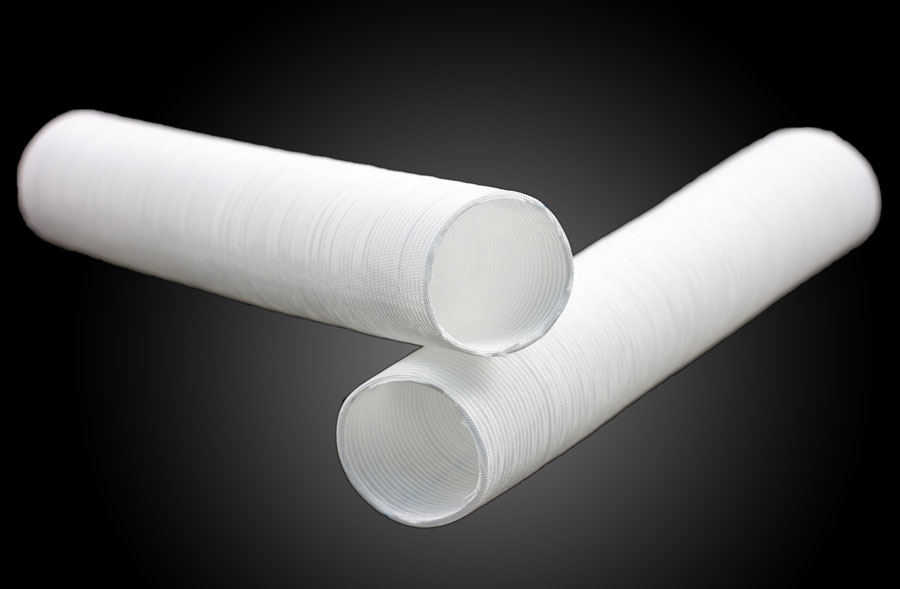
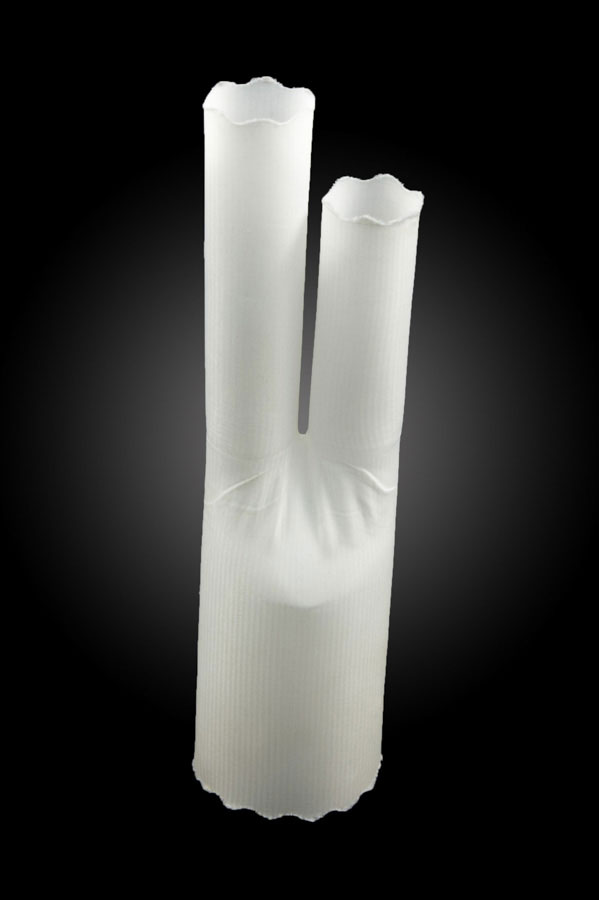
Bally Ribbon Mills’ biomedical textiles can be woven into straight, tapered, flared, or bifurcated structures, such as biomedical woven tubes.

Selecting the ideal fiber and weave for medical device textiles

By Amir Islam

As medical technology increases, so too does the availability of options for different biomedical applications. With so many different characteristics available in woven biomedical textiles, choosing the right, reliable textile is essential for mitigating risk and ensuring successful procedures and applications.

Woven Biotextile Properties

Weaving biomedical textile structures, such as straight, tapered, flared, and bifurcated vascular grafts, is an art requiring precision and unwavering attention to detail. The structures are made by weaving, knitting, and braiding, in which two sets of fibers or yarns are tightly interlaced. High quality woven textile structures for biomedical applications possess dimensional stability, high suture retention strength, high burst strength, and controlled permeability and porosity. In addition, they embody high tensile strength in both directions; low elongation, unlike knitting products; and high abrasion and friction resistance.

Many of these biomedical textile structure characteristics are prerequisites for use in implanted applications. Without high abrasion and friction resistance, for example, wear from internal movement could lead to malfunction and failure. Other characteristics particularly benefit specific applications, such as high burst strength for vascular implants required to hold up to blood pressure. Dimensional stability enables structures to retain their shapes for longer periods of time, and low elongation in a woven structure ensures the device serves its intended purpose. High tensile strength in both directions protects devices against defects from wear. Controlled permeability and porosity are especially important in a biotextile because it can withstand consistent blood flow. Finally, high suture retention strength enables the device to remain properly in place during implantation and recovery.

The advantages of biotextiles prove important in mitigating risk, so many device designers choose biotextiles over non-textile options for biomedical applications. Materials such as elastomer tubes, for example, do not possess the same beneficial characteristics.
With so many material options available, appropriately selecting a biomedical fiber for a given application depends on the performance required of the biomedical device in question.

Selecting the Right Biomedical Fiber

Medical technology has evolved substantially in recent years. With so many material options available, appropriately selecting a biomedical fiber for a given application depends on the performance required of the biomedical device in question.

For example, PET (polyester) fiber has been used in implantable devices for many years, as it is biocompatible with the body. In contrast, PGA (polyglycolic acid) fiber is not used in long-lasting implantable devices because the fiber is designed to dissolve over time. As another example, the Nitinol wire, a metal wire that has a “memory,” is used in applications requiring the wire to return to its original shape. Sometimes, this wire is used in conjunction with polyester fiber.

Fibers are either absorbable or non-absorbable, an important distinction for almost any application. Non-absorbable fibers include polyethylene terephthalate (PET), expanded PET (ePET), polypropylene, high-modulus polyethylene fibers (Spectra®, Dyneema®), polytetrafluoroethylene (PTFE), expanded PTFE, polyurethane, and metallic wires. Absorbable fibers include polyglycolic acid (PGA), polylactic acid (PLA), and polylactic glycolic acid (PLGA). Hybrid fibers are made when non-absorbable and absorbable fibers are woven together. With decades of experience in biotextile weaving, Bally Ribbon Mills has the capability to use monofilament, multifilaments, hybrid fibers, and metallic wires in their products.

It is also important to take into account the risks associated with a particular medical device when choosing the appropriate biomedical fiber for the application, in order to mitigate risk as much as possible. The FDA classifies medical devices as Class I, Class II, and Class III by the risks to the patient and/or the user and by the intended use of the device. Those with high risk, classified as Class III, usually sustain or support life, are implanted, or present a potential unreasonable risk of illness or injury. Examples include implantable pace makers, penile grafts, stents, and vascular grafts. Given the high stakes for those involved, using the fiber best suited for the application is crucial.

With so many material options available, appropriately selecting a biomedical fiber for a given application depends on the performance required of the biomedical device in question.

The Shuttle Loom Advantage

Designing and prototyping with biotextiles is a complex process requiring advanced technology. This process necessitates extensive expertise, skills, and knowledge of textile fibers, textile machineries, and weave designs.

Shuttle loom technology can produce perfect tubes, bifurcated tubes, flared tubes, and tapered tubes as well as desired shapes. Other weaving technologies, such as needle looms and rapier looms, cannot produce a perfect tube or other required shapes without fringes or double picks. Medical devices should not have any defects, such as missing picks, floats, or broken ends, that could affect performance. In addition, the dimensions of the device should be perfectly precise. Only automated shuttle looms can eliminate these defects. For these reasons, Bally Ribbon Mills exclusively uses shuttle loom technology to weave biomedical textiles in order to ensure the highest quality products.

At Bally Ribbon Mills, all medical products are manufactured in a Class 8 certified clean room, including all aspects of shuttle loom weaving. All Class III medical devices must be manufactured in a tightly-controlled clean room environment due to risks associated with such devices. The company’s quality control professionals also monitor operations and conduct final inspections inside the clean room. With this manufacturing environment and rigorous quality control processes, BRM is ISO 13485 certified for designing and manufacturing textile components for medical devices.

The Future of Biotextiles

The future of weaving for biomedical applications is trending toward increasingly advanced shuttle loom technology with more automated features. New advancements include the incorporation of electronic components and jacquard capabilities (a system of weaving that utilizes a highly versatile pattern mechanism, enabling the production of large, intricate designs and shapes). Looking to the future, Bally Ribbon Mills recently updated its biomedical weaving capabilities with an automated shuttle loom with multiple shuttles. Increasing automation will produce the highest quality of biotextiles, ensuring biomedical application needs are met with the most cutting-edge materials for years to come.


Editor’s Note: Amir Islam is director of research and development, Bally Ribbon Mills, Bally, Pa.


December 2019
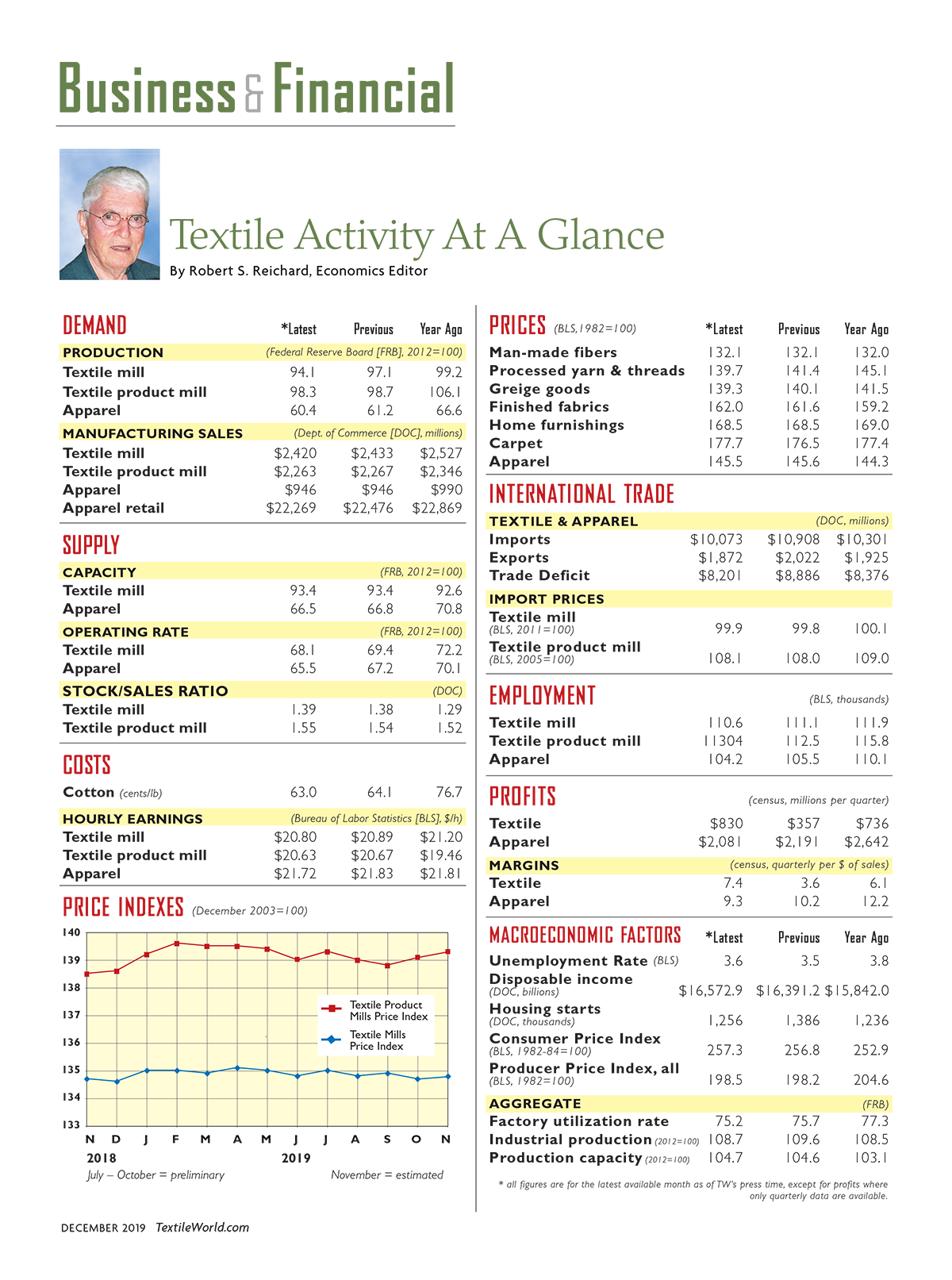
Textile Activity At A Glance: December 2019

December 2019

Lockheed Martin Delivers Mars 2020 Rover Aeroshell To Launch Site: Heat Shield And Backshell Will Protect NASA’s Rover During Descent To Mars

DENVER — December 13, 2019 — The capsule-shaped aeroshell that will protect NASA’s Mars 2020 rover was delivered to NASA’s Kennedy Space Center, Florida. yesterday. Built by Lockheed Martin, the aeroshell will encapsulate and protect the Mars 2020 rover during its deep space cruise to Mars, and from the intense heat as the entry system descends through the Martian atmosphere to the surface of Mars.

Because of the large mass and unique entry trajectory profile that could create external temperatures up to 3,800 degrees Fahrenheit, the heat shield uses a tiled Phenolic Impregnated Carbon Ablator (PICA) thermal protection system instead of the Mars heritage Super Lightweight Ablator (SLA) 561V. This will only be the second time PICA has flown on a Mars mission.

“Even though we have the experience of building the nearly identical aeroshell for the Curiosity Rover, the almost 15-foot diameter composite structure was just as big a challenge to build and test 10 years later,” said Neil Tice, Mars 2020 aeroshell program manager at Lockheed Martin Space. “We’ve built every Mars aeroshell entry system for NASA of its 40 years of exploring Mars, so we pulled from that experience to build this important system.”

Along with the Curiosity mission, this is the largest aeroshell/heat shield ever built for a planetary mission at 4.5 meters (nearly 15 feet) in diameter. In contrast, the aeroshell/heat shield of the InSight lander measured 8.6 feet and Apollo capsule heat shields measured just less than 13 feet.

The backshell and heat shield were transported from Lockheed Martin’s Waterton facility in Littleton, Colorado where they were built, to nearby Buckley Air Force Base. They were then loaded onto an Air Force transport plane and flown to NASA’s Kennedy Space Center.

Recently, Lockheed Martin integrated the MSL Entry Descent and Landing Instrument (MEDLI2) onto the heat shield and backshell. Provided by NASA’s Langley and Ames Research Centers, MEDLI2 will collect temperature and pressure data during the spacecraft’s descent through the Martian atmosphere.

The Mars 2020 rover is in testing at NASA’s Jet Propulsion Laboratory, Pasadena, California., which manages the Mars 2020 project for the NASA Science Mission Directorate, Washington. The mission will launch in July 2020 and land on Mars in February 2021 at the Jezero Crater.

Posted December 13, 2019

Source: Lockheed Martin

The United States Fashion Industry Association (USFIA) Statement After Announcement Of Phase One Trade Agreement With China

WASHINGTON — December 13, 2019 — On behalf of USFIA member companies and our customers, we welcome the announcement that the United States and China have finalized the Phase One trade agreement. These tariffs on apparel, accessories, home textiles, footwear and other consumer products represent an additional tax on American families.

We encourage President Trump and the Administration to move quickly to begin the Phase Two negotiations to find a solution to the trade war.

Posted December 13, 2019

Source: The United States Fashion Industry Association (USFIA)

Retailers Call China Trade Agreement “Right Direction” But Say a Final Deal is Needed

WASHINGTON — December 13, 2019 — The National Retail Federation today welcomed news that the United States and China have agreed on a “phase one” trade deal. “For the first time in months, the United States and China are moving in the right direction on tariffs, and we congratulate negotiators from both sides for the progress they have made,” NRF Senior Vice President for Government Relations David French said. “Tariffs create uncertainty and costs for American retail supply chains, and the trade war won’t be over until they are eliminated completely. We agree that we need to realign our relationship with China, but tariffs that harm American businesses, workers and consumers are not the answer and cannot be allowed to continue.”

The expected signing comes after NRF and other members of the Americans for Free Trade coalition sent President Trump a letter on Wednesday asking that tariffs that were set to take effect on Sunday be suspended.

Reports indicate that the agreement cancels those tariffs and will reduce tariffs that took effect in September but that earlier tariffs will remain in effect.

The letter called for “a final deal that not only addresses our key concerns with the U.S.-China trade relationship but also eliminates the current tariffs imposed on both goods sourced from China and our goods exported to the critically important China market.”

Posted December 13, 2019

Source: The National Retail Federation (NRF)

The National Council Of Textile Organizations Comments On The Administration’s Announced Phase One Deal On 301 Tariffs

WASHINGTON, DC — December 13, 2019 — The National Council of Textile Organizations (NCTO), representing the full spectrum of U.S. textiles from fiber though finished sewn products, provides initial comments on the Phase One deal on 301 tariffs reached between the United States and China today.

“We look forward to reviewing the details of the agreement as it becomes available, including the intellectual property enforcement mechanisms agreed to by both countries.  We have long supported the administration’s efforts to rebalance our trade relationship with China that has significantly eroded our U.S. manufacturing base for decades,” said Kim Glas, NCTO president and CEO.

The proposed announcement means that 301 duties on textile inputs will remain at a 25 percent tariff. Meanwhile, penalty duties on finished apparel and textile products implemented on September 1 will be reduced from 15 percent to 7.5 percent, and proposed duties on finished products set to be put in place on December 15 will no longer go into effect.

“NCTO has strongly supported applying tariffs on finished products as key negotiating leverage since textile and apparel production is a key pillar of the Chinese manufacturing economy,” Glas said. “Finished apparel, home furnishings and other made-up textile goods equate to 93.5 percent of U.S imports from China in our sector, while fiber, yarn and fabric imports from China only represents 6.5 percent, according to government data. Today’s announcement reduces tariffs on finished products at the same time it keeps tariffs in place on key inputs that aren’t made in the U.S. such as certain dyes, chemicals, and textile machinery. We believe a wiser approach would be to maintain penalty duties on finished Chinese products while reducing 301 duties on key inputs that are used by U.S. manufacturers. Doing so will maintain maximum leverage on China to reach a more comprehensive and enforceable intellectual property agreement, while reducing input costs for U.S. manufacturers. As domestic textile companies fight to compete with China and their illegal trade practices, it is important that U.S. manufacturers should be the first to see penalty duties removed on inputs not made in the United States.

As we review this Phase One agreement, it is important that the administration strike the proper balance of maintaining its leverage with China by keeping duties on finished product until a final strong and enforceable deal with China is completed. We look forward to reviewing and analyzing the deal in more detail.”

NCTO is a Washington-based trade association that represents domestic textile manufacturers, including artificial and synthetic filament and fiber producers.

  • U.S. employment in the textile supply chain was 594,147 in 2018.
  • The value of shipments for U.S. textiles and apparel was $76.8 billion in 2018.
  • U.S. exports of fiber, textiles and apparel were $30.1 billion in 2018.
  • Capital expenditures for textile and apparel production totaled $2.0 billion in 2017, the last year for which data is available.

Posted December 13, 2019

Source: The National Council of Textile Organizations (NCTO)

Monforts “Denimized” Customers Take The Lead In London Habitat 21

MÖNCHENGLADBACH, Germany — December 13, 2019 — Of the twelve participating denim mills who took part in Habitat 21 — a special Smart Creation showcase at the recent Denim Première Vision exhibition in London — no less than eleven were valued Monforts “Denimized” finishing technology users.

The aim of Habitat 21 was to highlight those companies taking an ecoresponsible approach to denim manufacturing via the use of recycled, organic and bio-based fibers, in combination with resource-saving dyeing and finishing technologies.

Monforts customers involved in the project were Advance Denim, Berto, Bossa, Calik, Evlox/Tavex, Kilim, Naveena, Orta Anadalou, Rajby Industries, Raymond Uco and Soorty.

Their innovations were detailed in a major presentation on trends for the Spring/Summer 2021 season by Manon Mangin of the Première Vision Fashion Team, based on three key themes — Sensation, Hybridization and Expansion.

Water savings

There was plenty of sustainable innovation on show from Turkey, with Bossa, for example, unveiling the latest creations from its ongoing Reset program — first introduced in 2006 and constantly evolving its eco-friendly options — and Calik exhibiting a denim collection made with its D-clear process, via which water is reduced by 40 percent in indigo dyeing and by 83 percent in the subsequent finishing.

Kilim is meanwhile intending to reduce water by 93 percent as a result of its current Cactus project, which will have a significant impact on the footprint of the 12 million meters of denim it makes annually, and in addition to resource-saving processes, Orta Anadalou is committing to complete traceability, with each of its garments now labelled with a unique QR code.

Hemp

Among innovations from Pakistan’s leading mills, Naveena made a splash with the introduction of its ‘cottonized’ hemp denim, developed in a collaboration with Kingdom Holdings — one of the largest manufacturers of hemp in China — in order to reduce the company’s reliance on cotton.

There are many challenges involved in working with hemp, Naveena says, but vertically-integrated spinning operations have enabled it to create blended yarns of cotton, hemp and Tencel containing only 49-percent cotton.

Both Rajby Industries and Soorty have now achieved Cradle to Cradle Gold certification for denim fabrics in their collections, as a globally recognized measure of safer, more sustainable products made for the circular economy.

To receive this certification, products are assessed for environmental and social performance across five critical sustainability categories — material health, material reuse, renewable energy and carbon management, water stewardship, and social fairness. The standard encourages continuous improvement over time by awarding certification on the basis of ascending levels of achievement and requiring certification renewal every two years.

Aniline free

Advance Denim has meanwhile become the first denim mill in China to launch a collection made with aniline-free indigo.

As a result of its toxicity, analine is now starting to feature on the restricted substance lists (RSL) of some of the major clothing brands and retailers.

During traditional indigo dyeing process, some aniline stays locked into the indigo pigment and is difficult to wash off the fabric, while the remainder is discharged with the wastewater. The new process being employed by Advance Denim is based on an aniline-free indigo formulation from Switzerland’s Archroma.

Italy’s Berto also introduced prereduced indigo dyeing in an expanded range of denims based on GOTS-certified fabrics made with organic cotton and regenerated yarns.

“Our latest collection was inspired by young people — the Z Generation that is free spirited but at the same time involved in the fight against climate change,” said Berto’s marketing manager Francesco Polato. “We are seeking to meet their needs with an extroverted collection characterised by special colors and looks, but always with a 360-degree attention to sustainability.”

To complete the Smart Creation showcase, India’s Raymond Uco introduced a coloured denim range comprising fabrics that are both yarn dyed and made from sustainable dyestuffs, to significantly reduce the use of chemicals, while Evlox/Tavex announced plans to introduce post-consumer recycled denim to its collections, with complete traceability of all the materials used.

Denim Première Vision took place at the Printworks in London December 2-3. The next edition will be held in Milan in June 2020.

Posted December 13, 2019

Source: A. Monforts Textilmaschinen GmbH & Co. KG

U.S. Polyester Textured Yarn Producers Applaud U.S. International Trade Commission’s Final Unanimous Affirmative Injury Determination On Imports Of Polyester Textured Yarn From China And India

WASHINGTON — December 12, 2019 — On December 12, 2019, the U.S. International Trade Commission (USITC) reached a unanimous affirmative decision in the final injury investigation on imports of polyester textured yarn from China and India (subject imports).

As a result of the USITC’s final affirmative determination, which is expected to be published at the end of December, the U.S. Department of Commerce will publish antidumping duty (AD) and countervailing duty (CVD) orders covering the subject imports. The AD and CVD orders are expected to be published in early January 2020.  The orders will put into place the Commerce Department’s final dumping and subsidy margins that were published on November 14, 2019.

Polyester Textured Yarn Imports from China
Producer/Exporter Final Subsidy

Margin

Final Dumping

Margin

Adjusted Cash

Deposit Rate

Fujian Billion Polymerization Fiber Technology Industrial Co., Ltd. 32.18 77.15 98.65
Fujian Zhengqi High-tech Fiber 473.09 77.15 539.56
Jiangsu Shenghong Textile Imp & Exp Co. 473.09 77.15 539.56
Jiangsu Hengli Chemical Fiber Co., Ltd. 32.18 76.07 97.57
Suzhou Shenghong Fiber Co., Ltd. 473.09 77.15 539.56
Suzhou Shenghong Garmant Development Co. 472.51 77.15 538.98
PRC-Wide Entity/All Others 32.18 77.15 98.65
Polyester Textured Yarn Imports from India
Producer/Exporter Final Subsidy

Margin

Final Dumping

Margin

Adjusted Cash

Deposit Rate

JBF Limited 21.83 47.98 65.68
Reliance Industries Limited 4.29 17.98 18.14
All Others 4.65 17.98 18.15

Based on today’s affirmative vote, importers must post cash deposits for each shipment of the subject imports, as indicated in the chart above. Importers’ liability could increase or decrease depending on the extent of dumping and subsidization the Commerce Department finds when it conducts a review of the level of dumping and subsidies, which is expected to take place in 2021.

The USITC did not find “critical circumstances” with respect to imports of polyester textured yarn from China. Accordingly, subject imports of polyester textured yarn from China will no longer be subject to retroactive antidumping and countervailing duty deposits that were first imposed in the preliminary determinations.

Petitioners are closely monitoring whether polyester textured yarn from China or India is being shipped through third-party countries and then entering the United States market.

Background

Two major U.S. synthetic yarn producers — Unifi Manufacturing, Inc. and Nan Ya Plastics Corp., America — filed petitions with the Commerce Department and the USITC in October 2018 alleging that dumped and subsidized imports of polyester textured yarn from China and India are causing material injury to the domestic industry. The Commerce Department initiated the investigations in November 2018, and the USITC preliminarily determined in December 2018 that imports from China and India are causing injury to the U.S. domestic industry.

The product covered by the investigation, polyester textured yarn, is synthetic multifilament yarn that is manufactured from polyester (polyethylene terephthalate). Polyester textured yarn is produced through a texturing process, which imparts special properties to the filaments of the yarn, including stretch, bulk, strength, moisture absorption, insulation, and the appearance of a natural fiber.  This scope includes all forms of polyester textured yarn, regardless of surface texture or appearance, yarn density and thickness (as measured in denier), number of filaments, number of plies, finish (luster), cross section, color, dye method, texturing method, or packing method (such as spindles, tubes, or beams).

Excluded from the scope of the investigation is bulk continuous filament yarn that: (a) is polyester synthetic multifilament yarn; (b) has denier size ranges of 900 and above; (c) has turns per meter of 40 and above; and (d) has a maximum shrinkage of 2.5 percent.

The merchandise subject to this investigation is properly classified under subheadings 5402.33.3000 and 5402.33.6000 of the Harmonized Tariff Schedule of the United States (HTSUS).  Although the HTSUS subheadings are provided for convenience and customs purposes, the written description of the merchandise is dispositive.

The petitioning companies are represented by Kelley Drye & Warren LLP.

Posted December 12, 2019

Source: Kelley Drye & Warren LLP

USMCA Likely To Be Approved

By Jim Phillips, Yarn Market Editor

A year after original trilateral negotiations concluded, it seems the United States-Mexico-Canada Agreement (USMCA), the Trump Administration’s replacement for NAFTA, might finally become a reality.

While an earlier push to get the agreement ratified by Congress before Thanksgiving failed, Congressional Democrats — many of whom had previously objected to some provisions of the trade bill — reached an agreement in early December to move forward with ratification of a modified agreement. Of particular concern to a number of Representatives and Senators were USMCA provisions dealing with enforcement tools for labor and environmental standards.

In a news conference on December 10, House Speaker Nancy Pelosi said the USMCA, as it now stands, is “a victory for America’s workers.” She said the revised agreement was much better than what the Trump Administration originally proposed.

U.S. Trade Representative Robert Lighthizer said USMCA “will be the model for American trade deals going forward.” Lighthizer, along with representatives from Mexico and Canada, signed the revised USMCA agreement in Mexico City on December 10.

At this point, the House could approve the trade bill by the end of the year.  The Senate, however, is expected to be occupied with the impeachment trial of President Trump, which could push ratification into 2020.

Early on December 10, Trump tweeted: “America’s great USMCA Trade Bill is looking good. It will be the best and most important trade deal ever made by the USA. Good for everybody – Farmers, Manufacturers, Energy, Unions – tremendous support. Importantly, we will finally end our Country’s worst Trade Deal, NAFTA!”

Before the agreement can be implemented, the legislatures of all three countries must ratify the trade deal. Mexico, which earlier approved the original agreement, must now ratify the revisions.  The Canadian Parliament, like Congress, has not yet ratified the agreement.

While trade relations among two major U.S. trading partners are seemingly on the verge of improvement, the trade war with China continues, albeit uncertainly. In November, China revealed new guidelines increasing protection of intellectual property, which has been a U.S. concern for years. China indicated that it could both toughen IP protections and ramp up enforcement.

In November, CNN reported that “China is definitely offering up some pretty attractive olive branches.” And, according to Bloomberg, “The U.S. and China have agreed to roll back tariffs on each other’s goods in stages as negotiations continue over resolving the more than year-long trade war.”

Bloomberg quoted a China Ministry of Commerce spokesman: “In the past two weeks, top negotiators had serious, constructive discussions and agreed to remove the additional tariffs in phases as progress is made on the agreement.”

At the same time, $160 billion of additional U.S. tariffs on Chinese products are scheduled to be imposed on December 15. President Trump only has a few days to decide whether or not the tariffs will be put in place. Doing so is likely to roll back any progress that has been made to date, according to multiple trade experts. “If the White House does allow the Dec. 15 tariffs to take effect, then the U.S.-China deal talks are likely done for the remainder of President Trump’s term,” one source told Reuters.  The way the tariffs are written, they will automatically be imposed unless Trump acts to stop them. Numerous textile goods are on the list for the December tariffs.

Year-End Review

Overall, many spinners said they had a solid year through most of 2019. Through summer and into early fall, several spinners reported full schedules with healthy backlogs. “We are running full out and have a healthy backlog,” one spinner noted mid-year. Our business is doing very well.  We have some limited capacity come open at times, but, overall, we’re pretty much full, with a nice pipeline of orders. This has been the best start of the year we’ve had in some time.”

However, business began to slow down near the end of the third quarter for some spinners. One executive pointed to robust holiday orders. He said he expects business to pick up substantially after holiday sales, once retailers have the opportunity to assess inventory. Another spinner, however, attributed the slow-down to fear of a possible early 2020 recession. “I think a lot of business executives think we are overdue for a recession, and they are being cautious about restocking,” he said. “If the bottom does fall out, they don’t want to be stuck with excess inventory that is not moving off the shelves. I don’t think anyone is necessarily projecting gloom and doom, but they are being cautious.”

Cotton Prices Fall

Spot quotations for the base quality of cotton (color 41, leaf 4, staple 34, mike 35-36 and 43-49, strength 27.0-28.9, and uniformity 81.0-81.9) in the seven markets measured by the USDA averaged 60.04 per pound for the week ended December 5. The weekly average was down from 75.19 cents reported the corresponding period a year ago. “Inquiries from domestic textile mill buyers were light; no sales were reported,” according to a USDA release. “Most mills have covered their raw cotton needs through the first quarter of 2020. Domestic cotton shippers and mill buyers were busy scheduling deliveries of raw cotton to mills during the holiday season. Open-end and ring-spun yarn demand was moderate. The undertone from mill buyers remained cautious as they monitored ongoing U.S./China trade negotiations.”

December 2019

Founder’s Hemp Partners With Nufabrx® To Reinvigorate The North Carolina Textile Industry

ASHEBORO, N.C. — December 12, 2019 — Founder’s Hemp, North Carolina’s first registered hemp processing company, and Nufabrx®, a biomaterials technology company, announced a partnership to reinvigorate the North Carolina Textile Industry by introducing infused textiles, and bringing new quality textile jobs to the area.

For the past three years, Founder’s Hemp and Nufabrx have been testing and developing a compression sleeve garment, called Hemp Squeeze, using Founder’s Hemp CBD Oil. The hemp extract is infused into the fibers of the Nufabrx yarn, a patented technology that delivers 3-dimensional, 360° of active relief to the elbow and knee.

Bob Crumley, founder and CEO of Founder’s Hemp wants to link hemp to textiles to help break the stigma against hemp. “We want to get people thinking more about how hemp can be used to help grow other industries,” he said. Specialty products, like infused textiles found in Hemp Squeeze, are one way to bring quality textile jobs back to the state.

“We’re taking a brand new industry — hemp — and taking an old industry — textile — and we’re using new technology to help rejuvenate textiles in North Carolina,” said Crumley. “I never dreamed, when we first started this 3 years ago, that our Hemp Squeeze product would be made in Asheboro.”

For decades, the textile industry was an essential part of North Carolina’s economy. In the early 2000s, North Carolina textile facilities were being moved overseas or they risked being shut down. “In Asheboro alone, thousands of people lost their jobs,” said Crumley. Randolph County, N.C., which has a strong history of textile manufacturing, has seen a 43-percent decline in textile jobs between 2010 and 2018, according to the Randolph County Economic Development Corporation.

Jordan Schindler, founder of Nufabrx® moved his headquarters in 2016 from Seattle to the Manufacturing Solutions Center (MSC) in Conover, N.C. “To move my vision forward, I needed a home base that understood the textile industry,” Schindler said.

“Nufabrx is extremely excited to partner with Founder’s Hemp to launch an entirely new category of CBD infused products,” he said. “Health Wear is the next generation of clothing, with CBD and other actives built directly into the garment itself. No longer does the consumer need to remember to take multiple pills, use messy creams or patches; JUST GET DRESSED.”

The national product launch for Hemp Squeeze is scheduled for the first quarter of 2020.

Posted December 12, 2019

Source: Founder’s Hemp

Sponsors