July/August
July/August
 By Jim Phillips, Yarn Market Editor
If there is one thing the COVID-19 pandemic has revealed about the U.S. industrial complex, it is that there a continuing need for a robust and responsive textile industry.
Such is the conclusion derived from multiple analysts and consultants about the impact the industry has had on the fight to control with worst global virus outbreak since 1918. At the beginning of the epidemic in the United States, there was insufficient personal protective equipment (PPE) gear to equip the front-line medical professionals and emergency workers who were dealing up close with the virus and were at risk of infection.
Yarn spinners and fabricators quickly stepped up to help alleviate the shortage. For example, Parkdale is producing materials for reusable isolation gowns and face masks for medical workers and first responders. Unifi, is supplying yarns and fibers to more than 100 companies that are producing the masks, gowns, and other personal protective equipment needed by first responders, medical personnel and military. American & Efird, is offering restricted substances list (RSL)-approved, critical personal protective equipment sewing threads for a multitude of products, including disposable surgical products, surgical masks, scrubs, hospital sheets and towels, reusable medical gowns, clean-room garments, and protective coverall suits.
As of mid-July, however, premature reopenings in some states, gatherings in resort areas without appropriate social distancing, and the puzzling reluctance of some people to wear face coverings have resulted in a surge of infections that has negated much of the valiant efforts of medical professionals and their industrial suppliers to halt the spread of the virus.
Indeed, the record-breaking new outbreaks have the potential to overwhelm the U.S. economy – at least for the short term.
However, government-mandated lockdowns are not the primary drivers of a sagging economy. Consulting firm Deloitte has cited a recent study by economists at the University of Chicago that found only 7 percent of the change in consumer mobility in the United States over the past few months can be explained by lockdowns. Instead, Deloitte reports, it is fear of the virus that prompts most Americans to stay away from social interaction.
“In other words, most people would avoid restaurants and theatres even if they were open,” Deloitte reports. “Using high-frequency mobility data, the [Chicago] researchers compared the experiences of consumers in locations with severe lockdowns to those in locations with no or limited lockdowns. They found there wasn’t a big difference between the two.”
As many states have reacted to curtail the latest outbreaks, the expectation is that activities that require human-to-human contact will decrease even further, leading to even further negative impact to the economy.
Already, the effect the coronavirus epidemic as had on industry in general has been nearly catastrophic. Entertainment, retail, fine dining and many more have suffered greatly, with many well-known and long-lasting brands in danger of closing doors forever.
Manufacturing is not fairing much better. A recent study by the International Textile Manufacturers Federation reveals that total orders in North America were down almost 50 percent in May and 40 percent in June.
To help offset some of these losses, two U.S. Senators, Thom Tillis (R-N.C.) and Mark Warner (D-Va.), recently sent a letter to Senate Majority Leader Mitch McConnell (R-Ky.) and Minority Leader Chuck Schumer (D-N.Y.) urging the next round of COVID-19 assistance adequately address the magnitude of the losses felt throughout the cotton supply chain by cotton farmers, textile mills, and the cotton merchandising segment (See “Senators Urge Senate Leaders To Include Cotton, Textile Industry Assistance In Next COVID-19 Relief Package,” TW News, this issue).
“When Congress considers additional relief efforts in response to COVID-19, we believe any package should ensure USDA’s next round of agricultural assistance will adequately address the magnitude of the losses felt throughout the cotton supply chain by cotton farmers and include critical relief for textile mills and the cotton merchandising segment, all of which are facing unprecedented economic losses,” the Senators emphasized.
July/August 2020
Sun Chemical and its parent company DIC Corp. announced they have completed the acquisition of Sensient Imaging Technologies as well as certain other assets related to the production of ink. The purchase allows Sun Chemical and DIC to expand their inkjet capabilities with complementary technologies, and bolsters the companies’ commitment to sustainability by expanding their offering of inks for textile and dye sublimination printing — a more sustainable production method.
“We are delighted to welcome the employees of Sensient Imaging Technologies to the Sun Chemical family and we are excited about the prospects of combining our offerings in digital technology, capability, products and services to the valued customers and distribution and technology partners of the Sensient inks business and Sun Chemical,” said Peter Saunders, global director – Digital Business, Sun Chemical.
July/August 2020
Applied Technology International Ltd. (ATI), Exton, Pa., recently took delivery of a multi-function foam coating line from Zimmer Austria. ATI will use the equipment to manufacture its Fabrifoam® products, which are used in a variety of devices for compression and support therapy, as well as many other medical applications.
The Zimmer coating line applies stable foam and other materials to highly engineered fabrics. The line installed at ATI features the Knife Coating — knife-over-roll — application system, an unwinding station, T-COAT-MK coating head, Magnoknife MK application device, foam feeder, Compact HC four-section dryer, and exit line with double rewinding station.
“With the installation of the new Zimmer Austria production line, we will be able to increase production capabilities and volume output, allowing for improved pricing capabilities and economies of scale,” said Charlene Buckley, vice president of Fabrifoam Products. “The line will enable the creation of new innovative products, targeting a broader customer base. ATI is pleased to have partnered with Zimmer Austria on this project which affords us the opportunity to expand our business while helping to improve the health and lives of thousands.”
July/August 2020
HanesBrands, Winston-Salem, N.C., has introduced a collection of consumer face masks under its Hanes and Champion brands.
The masks are made using a variety of materials — cotton, nylon and polyester — and are available online, in retail stores and in company outlet stores. The introductions come on the heels of HanesBrands fulfilling its production agreement with the U.S. government for all-cotton face coverings and medical gowns.
“We are proud of the commitment of our employees and our ability to quickly pivot to large-scale production of face coverings and face masks to meet important needs during the COVID-19 pandemic,” said Michael E. Faircloth, group president, global operations, American casualwear and e-commerce. “In just three months, we were able to go from never having produced face masks to making more than 450 million government face coverings, designing and developing branded programs of high-quality comfortable nonmedical face masks for consumers, and safely and responsibly reopening operations to support our core innerwear and activewear businesses.”
July/August 2020
Beverly Knits, Gastonia, N.C., recently received a donation of industrial sewing machines from Brother International Corp., which includes five Brother S7250A-403 single needle lockstitch industrial machines. Creative Ticking, Beverly Knits’ cut-and-sew division, will use the machines to increase its face mask production efforts.
“Brother remains committed to aiding our communities during these challenging times,” said Don Cummins, president, Brother International Corp. USA. “Given the severe and growing shortage of personal protective equipment, Brother is proud to donate our products to support these stalwart manufacturers with their efforts in making masks
for our frontline workers.”
“Continued support and collaboration within the textile industry is key to flattening the COVID-19 curve,” said Ron Sytz, CEO of Beverly Knits. “We appreciate this generous donation from Brother that will help the industry advance the cause at a more rapid pace.”
July/August 2020
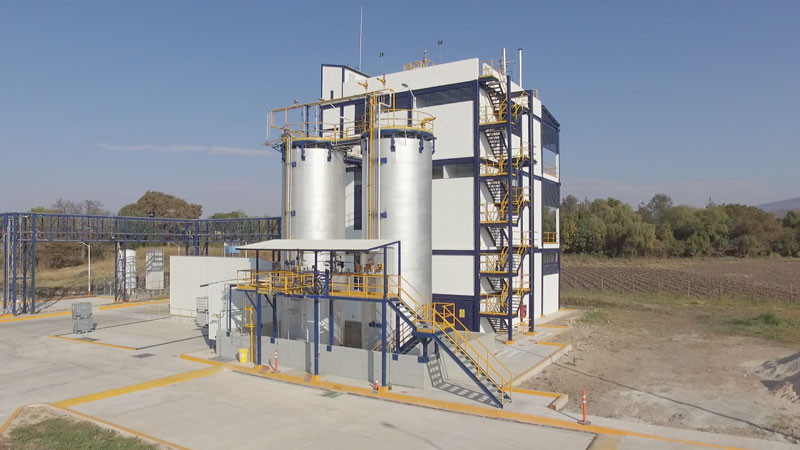
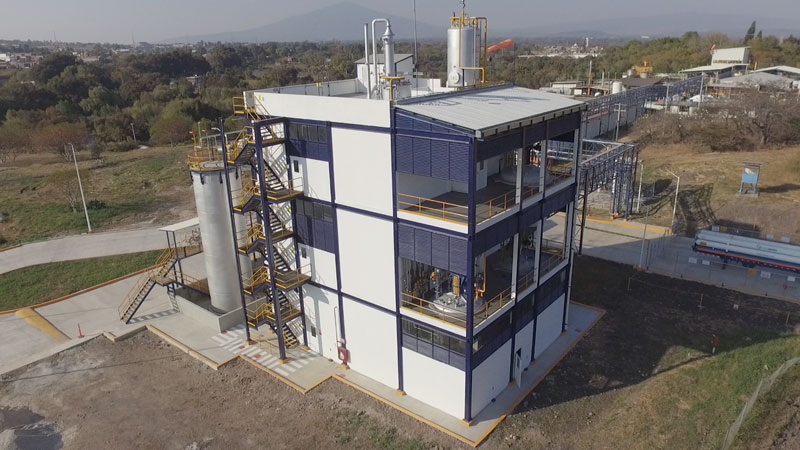
From its new plant in Mexico, Archroma offers regional textile manufacturers an Indigo Denisol® supply source close to its final market.
TW Special Report
Switzerland-based Archroma — a manufacturer of dyes and specialty chemicals for sustainable solutions — started operations at its new plant in Mexico last January. The plant’s main production is Denisol® Indigo pre-reduced liquid used in the textile industry.
Located in Salvatierra, Guanajuato, this is the third Archroma plant in Mexico that provides service to textile manufacturers in the country as well as other Latin American markets; and it is the only indigo plant available in the region. For local manufacturers, the fact that there is now a plant in Mexico is a competitive advantage since they have a supply source close to their final market.
Archroma launched Denisol Indigo liquid into production in 2015, in Jamshoro, Pakistan. There, the company has implemented a zero liquid discharge operation to preserve the water in the area, in accordance with the company’s approach to sustainability and natural resource preservation.
Archroma continuously challenges the status quo in the deep belief that it can make the industry more sustainable.
In line with this mission, the company is following a clear agenda — convert denim dyes in the Latin American region and around the world to Denisol Indigo liquid instead of indigo powder in the dyeing process, which will lead to massive reductions in the use of indigo dye itself, as well as sodium hydrosulfite and caustic soda.
An estimated 65 percent of the denim industry still uses indigo powder and Archroma’s denim specialists are focusing on transforming this into liquid pre-reduced indigo, and as a result being able to reduce the impact on the environment.
Archroma has become a specialist in ecologically advanced denim fashion colors and designs with its unique offerings. Solution systems and technologies are available to denim manufacturers and brands featuring Denisol Indigo liquid. Denisol is used in Archroma’s
CLASSIC INDIGO FLOW system. Its Diresul® Smartdenim Blue, a blue liquid sulfur dye designed to imitate a neutral greenish blue color, features in Archroma’s INDIGO REFLECTION. Both Denisol and Diresul feature in CLASSIC UNDERTONES, a sulfur bottoming system that brings a new layer of color creativity to indigo denim.
“With the growing consumer awareness and the demand for ecological and sustainable fashion, textile manufacturers are exploring new clean ways to produce and dye denim,” said John Jansen, Archroma commercial president for the Americas. “This is where Archroma can add value with innovative solutions, as well as color systems, and creative and avant-garde denim effects. With our indigo plant in Guanajuato, Mexico, we are providing our customers through the American continent a supply source of indigo, closer to their final market allowing them to accelerate delivery times in an industry where the speed of updates is critical.”
Although Archroma has not shared information about the investment in the Guanajuato, Mexico, plant, the company shows interest in the country where it seems it will continue investing in the medium- and long-term because Mexico is one of the main denim manufacturers in Latin America with production of approximately 300 million fabric meters per year. For this reason, Archroma sees great potential for the dye supply for the denim treatment which also will contribute to a decline in imports from China.
In addition, the Mexican market is very important for Archroma’s textile operations, representing between 25 and 30 percent of the income from its Americas region.
Denisol Indigo is a pre-reduced indigo solution at a 30-percent concentration. The company reports it is easy to use, and allows high reproducibility and deep shades while reducing impact on wastewater compared to indigo powder.
It is compliant with major official eco-standards and requirements from retailers, brands and leading fashion companies and helps to produce fabrics suitable for current eco-labeling.
Some of the reported advantages of Denisol liquid compared to indigo powder are:
Regarding technical advantages, Indigo Denisol Liquid offers:
For all these advantages and for being a sustainable solution, Denisol Indigo pre-reduced liquid has received the Cradle to Cradle Products Innovation Institute’s Gold Level Material Health Certificate.
Pretreatment is indeed a key step in textile production and the diversity of fibers and quality variations are major challenges in consistently obtaining a perfectly prepared fabric ready for subsequent processing steps.
Archroma’s portfolio offers wide possibilities in dyeing effects and colors, from the traditional to innovative, while maintaining high standards of quality and sustainability. Its products are designed to address the specific dyeing requirements of all types of effects.
Denim is one of the textiles of greatest interest to the company, and Archroma has made a number of contributions to the denim industry with cutting-edge dyeing technologies and products that bring together creativity, performance and sustainability — as is illustrated by its Denisol Indigo pre-reduced liquid.
Using Archroma auxiliaries for indigo dyeing, customers can improve the consistency and the workability of the dyeing process, which will result in a high level of quality, according to the company. Customers also can achieve a uniform, level dyeing appearance, as well as reduced staining on indigo dyeing machinery, according to the company.
With its production at the Guanajuato plant, Archroma confirms its commitment to the success of the textile manufacturers in the region by offering them a higher-performance solution that reduces costs and at the same time allows manufacturers to have a lesser impact on the environment.
The company’s focus remains on making the textile industry a sustainable activity, both economically and ecologically.
July/August 2020
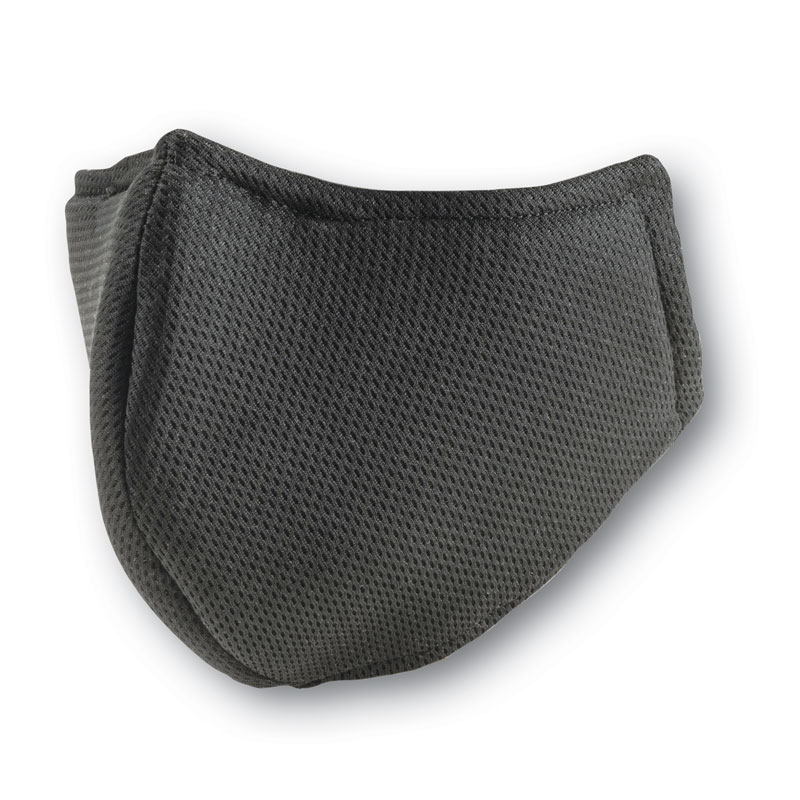 University study showed face mask made using ProCool® and Zorb 3D fabrics from AKAS was highly effective in blocking transmission of virus-like particles.
By Rachael S. Davis,Executive Editor
When it comes to face mask design, there are many attributes that are important. The mask must be large enough and fit well, it must provide adequate filtration, and it must be breathable and comfortable against the skin. Fabric treatments to protect from bacteria and viruses also may be considered.
AKAS Textiles and Laminations — a family-owned high-performance fabric company based in Bensalem, Pa. —took all of these design attributes into consideration when it shared suggestions with customers about how to select AKAS fabrics for the inner, middle filtration and outer layers of a face mask. The company also made some prototype masks that it donated to a local hospital and shared with people in its community.
The company was surprised to recently discover that a study — “Effectiveness of Common Fabrics to Block Aqueous Aerosols of Virus-Like Nanoparticles” — performed at Northeastern University in the Department of Chemical Engineering and published in the peer-reviewed scientific journal ACS Nano, found a mask made using AKAS fabrics offered the best filtration properties in an aqueous media under positive pressure of 20 kiloPascals simulating a sneeze or cough. The study examined some 70 masks made using common fabric combinations and in different mask styles, including the N95 respirator mask, to determine each mask’s ability to block the transmission of virus-like particles.
The AKAS mask tested features inner and outer layers of ProCool® Performance Fabric and a middle filtration layer of Zorb® 3D Stay Dry Dimple fabric. According to the study, the combination of these two fabrics tested 72-percent more effective than the N95 respirator.
The ProCool variant featured in the mask is a two-sided inter-knitted fabric with one-way wicking properties. The Zorb 3D Stay Dry Dimple fabric is an engineered design featuring a wicking layer on top of a dense cellulosic core.
For the face mask applications, AKAS also created a new Zorb 3D variant withthe addition of an antimicrobial Silvadur™ treatment. AKAS has applied for patents for the ProCool and Zorb fabrics as well as its mask design.
Archana Sharma, CEO of AKAS and affiliated company Wazoodle, said: “I looked at our entire fabric range before honing in on this combination. Before that, I studied the construction, materials and efficiencies of cloth masks, surgical masks and N95s in detail. I thought if we could harness fabric properties — hydrophobic fibers with hydrophilic, knit structures that formed multiple barriers, and a convoluted maze to stop, trap and hold aqueous aerosols, we might have something that worked. And by adding an antimicrobial we could expect the trapped microbes to be continuously destroyed, preventing build up.”
Sharma notes the company made prototypes and tested them in-house for breathability and design, but made no claims because there was no official test data. AKAS was unaware of the Northeastern study and only learned its mask — shared by a local hospital — had been tested when the results were published.
“I was delighted that our U.S.-based fabrics were determined to be the best combination of fabrics tested in the study,” Sharma said. “The results validated our theory and expectations.”
The prototype mask is washable, as well as comfortable despite its bulk, according to Sharma. The company plans to engineer a lighter version in the future. AKAS still does not make any claims about its prototypes, but believes it is on the right path and hopes to offer wholesale quantities of masks soon.
For more information aboutAKAS fabrics for face mask production including ProCool® Performance Fabric and Zorb® 3D Stay Dry Dimple fabric, contact President Sidharth Sharma +215-244-2589; info@akasllc.com.
July/August 2020
PVH Corp., New York City, has named Martijn Hagman CEO for Tommy Hilfiger Global and PVH Europe. He replaced Daniel Grieder who has retired.

Ernesto Maurer was elected president of the European Committee of Textile Machinery Manufacturers (CEMATEX) for a four-year term. He is president of the Swiss Textile Machinery Association, and has served as first vice president of CEMATEX for the past four years. In addition, the CEMATEX general assembly elected Swedish Textile Machinery Association (TMAS) President Mikael Äremann first vice president; and the Belgium Textile Machinery Association (Symatex) President Charles Beauduin second vice president.
Hudson, N.C.-based Outdura®, a division of Austria-based The Sattler Group, has hired Teresa Buelin to fill the role of business development and marketing manager. She will focus on building brand awareness as well as overseeing marketing initiatives for Outdura.
Germany-based Heytex has appointed Fabian Kampsen commercial director. He will lead
the global sales and marketing team.
England-based Global Inkjet Systems has named Steve Jeffels CFO.
HanesBrands’ board of directors has named Stephen B. Bratspies CEO and board member. He replaces Gerald W. Evans Jr. who is retiring after 37 years with the Winston-Salem, N.C.-based company.
 Loepfe Brothers Ltd., Switzerland, recently named Silvano Auciello head of a newly combined sales and customer support setup; Guido Eiland now is responsible for leading a joint project management, applications and marketing team; and Sylvie Hunziker has added responsibility for driving the digital landscape and processes within Loepfe in addition to her role as lead of the production department.
The Washington-based National Council of Textile Organizations (NCTO) selected Lauren Biggs as the recipient of the 2020 Paul T. O’Day Scholarship Award. She is the daughter of Sheila Price and Unifi Inc. employee Alexander Graham Biggs III. Biggs will attend the University of South Carolina in the Computer Science program this fall.
J.Jill Inc., Quincy, Mass., has appointed Shelley Milano to its board of directors.
MycoWorks, a San Francisco-based biomaterials company, recently added Chief Manufacturing Officer Doug Hardesty, Chief of Product Mike Todd and Advisor John Diener to its team.

Kevin Bailey, executive vice president and group president, APAC — Asia Pacific region — for Denver-based VF Corp. also will take on leadership of the company’s emerging brands platform. Bailey will manage the Altra®, Eagle Creek® JanSport® and Smartwool® brands
in the Americas Region.
St. Louis-based Evolution St. Louis has created its board of managers. The board comprises: Gary Wassner, CEO, Hilldun Corp. and founding member and chairman of Interluxe Holdings LLC; Barbara Archer, managing director and partner at Hightower Wealth and Advisors St. Louis; John Kalishman, strategy and marketing consultant, founder and president of Harcourt Group, and executive at Insituform Technologies Inc.; John Elmuccio, COO and cofounder of Evolution St. Louis; and John Lewis, CEO and co-founder of Evolution St. Louis.
Scott Schinlever has rejoined Electronics for Imaging (EFI), Fremont, Calif., as COO for EFI’s global inkjet business. He is responsible for all equipment, ink and service solutions in EFI’s Display Graphics, Textiles, Packaging and Building Materials portfolio.
Ireland-based implantable medical device company Aran Biomedical has named Todd Blair vice president of sales and business development (U.S.). Blair’s primary focus is on orthopaedic, general surgery and vascular business activities in the United States.

Minneapolis-based Cargill has named Hank Gray U.S. origination manager for cotton within Cargill’s Agricultural Supply Chain business. He will focus on the company’s farmer-facing strategy in the cotton sector.
Jörg Westphal was named managing director at Germany-based BST eltromat. He is responsible for service, sales and marketing; and will manage the business with Dr. Jürgen Dillmann.
July/August 2020
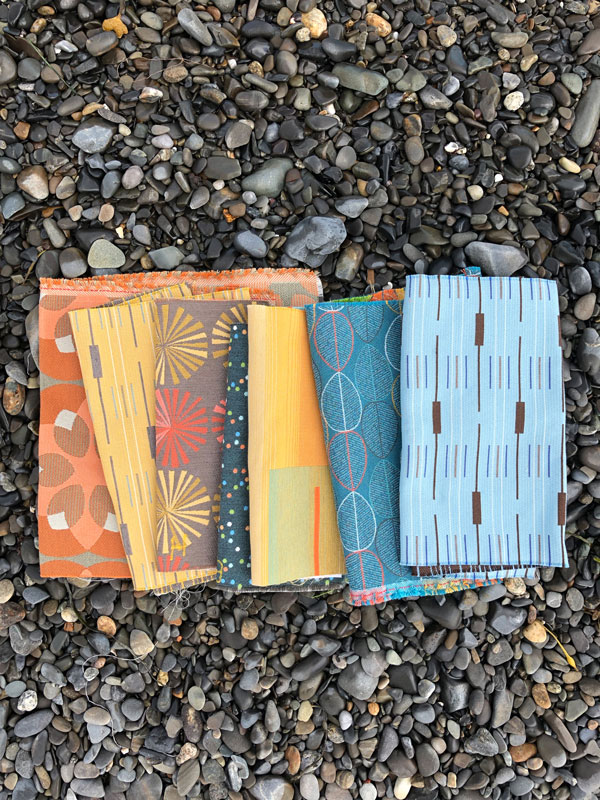
Sunbrella, Burlington, N.C., has introduced Sunbrella Assure, a fluorine-free, durable, water-repellent and stain resistant textile for sustainable indoor and outdoor applications. Sunbrella Assure is made using a proprietary biobased formula.
Precision Textiles, Totowa, N.J., reports it has sold more than 10 million yards of medical grade fabrics — an amount that will be used to produce 5 million hospital gowns.
The Sanitized TecCenter — the in-house microbiology laboratory of Switzerland-based Sanitized AG — has been certified by the International Antimicrobial Council (IAC) as an “IAC Certified Laboratory.”
France-based Carbios has begun production of an industrial demonstration plant for enzymatic polyethylene terephthalate recycling. The facility is the final step towards commercializing its PET recycling technology.
Fashion brand Esprit has selected EarthColors® dyes from Switzerland-based Archroma for its “I Am Sustainable” capsule collection.
Seoul-based Hyosung introduced creora® 3D Max at the virtual Kingpins24 event. The fiber is designed for dual performance — such as ultra- stretch and recovery over time — in denim products.
England-based inkjet company Xaar Plc is celebrating its 30th anniversary.
Sweden-based Södra has received its certification for the Recycled Claim Standard (RCS), which means its OnceMore™ pulp carries the promise it contains recycled cotton derived from textiles that otherwise would have entered the waste stream.
Italy-based Carvico S.p.A. recently added Norway — a fabric made using ECONYL® regenerated yarn — to its family of stretch, eco-sustainable performance fabrics.
July/August 2020