Laser Finishing For Textile Materials

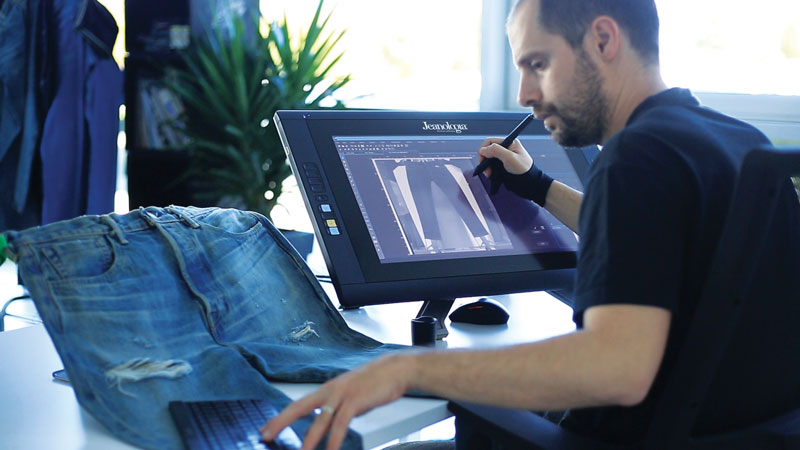
Jeanologia’s patented eMark integrated software simplifies design and enhances productivity, according to the company.

Laser systems for textile finishing and embellishment offer versatile and eco-friendly finishing options

By Dr. Traci A.M. Lamar

At ITMA 2019, most laser finishing system concepts introduced focused on design capability, productivity and a systems approach to sustainability, particularly in denim processing. Lasers also have the capacity to produce an extensive range of finishing effects that would otherwise require application of multiple chemical and mechanical finishing processes using several different pieces of equipment, making these systems versatile and eco-friendly.

Though these lasers for finishing also commonly have cutting capability, they excel in rapid and flexible distressing and embellishing offering fast and precise engraving and marking effects. Particularly suited to laser treatment of textiles are carbon dioxide (CO2) lasers. CO2 lasers use a mixture of gases such as CO2, nitrogen, hydrogen and helium in a mirrored tube. When excited by an electrical current, the gas produces thermal energy which is reflected by the mirrors and intensified producing a beam of laser light from one end of the tube. The laser beam must be directed to the textile surface for laser treatment to occur. To move the laser beam around the material at the speed required to achieve finishing effects, a galvo mechanism is typically used. Galvo systems use motorized, high speed mirrors to direct the laser beam onto the material surface. Because only the motorized mirror is moving during processing, the laser can be directed over the material being treated at very high speeds with great precision. Because the laser head does not physically move, galvo lasers are very fast and efficient systems for distressing and finishing textiles. Such systems are able to cut and enhance single layer fabrics, as well as age and distress products.

At ITMA, systems were shown both for enhancing finished products and for treating fabrics prior to assembly. Finished product treatments, especially jeans, were the predominant focus of demonstrations. Textile laser systems are increasingly important to the denim industry where they can be integral in sustainable production systems for fabrics and products. Laser application in denim finishing is particularly attractive from a production system perspective because lasers can recreate the combined effect of several other chemical and mechanical processes in one single operation.

A Variety Of Capabilities

Aside from variations in laser power, which is expressed in watts, internal capabilities of the laser mechanism itself are quite similar across most textile laser systems. Key differentiators from one textile laser system to the next include the software interface and capabilities, the effectiveness of the system over time, and the required production capacity. At the most recent ITMA, laser finishing concepts introduced focused on design capability, productivity and a systems approach to sustainability particularly in denim processing. One exception to this is VAV Technology, which showcased an innovation related to the laser tube itself. Companies based in Italy, Spain, and Turkey were well represented at ITMA 2019 in the field of laser marking and engraving. A few Chinese firms also were showcasing laser capabilities although the main focus of their exhibits was laser cutting rather than finishing.

Laser Systems From Italy

OT-Las S.r.l. introduced its ReJeans concept at ITMA 2019 emphasizing it as a versatile concept supporting creativity and design flexibility. The concept utilizes its CX-T system, which can laser treat textiles in a continuous or stepwise process and offers flexibility for customized products — an approach that was demonstrated during the show feeding denim into the laser treatment booth from a roll where garment parts were laser treated for finishing effects and cut out for assembly in one combined process. To highlight the creative potential of the ReJeans concept, OT-Las featured products from Italy-based Ideal Blue, a design and manufacturing company that utilizes OT-Las treatment for denim in its ethical manufacturing process. A diverse array of unique products was shown with details including elaborate repeating textile designs, tonal photographic effects, and novel textures achieved using lasers. OT-Las also offers a roll-to-roll laser treatment system for creating continuous effects on roll goods.
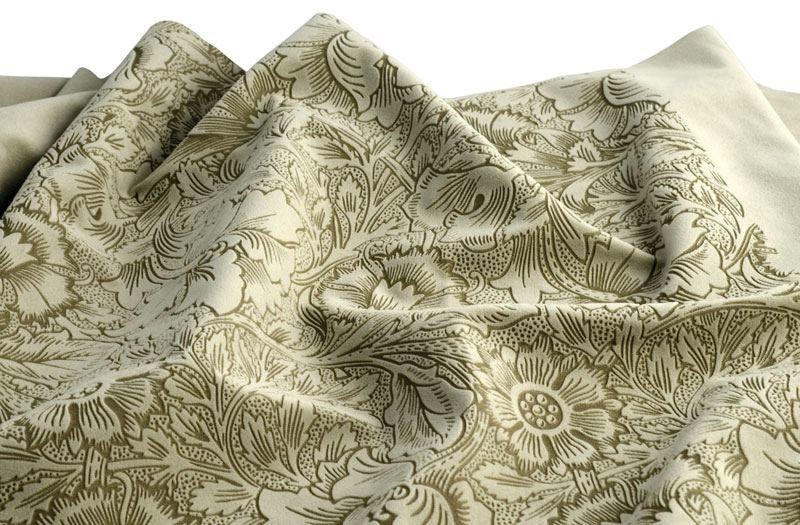
SEI’s Matrix Textile laser system may be used to decorate man-made materials as well as denim.

Sei S.p.A., also known as Sei Laser, showcased its Matrix Textile laser system and its potential as a disruptive technology in denim processing. The modular Matrix Textile system can be used for high productivity roll-to-roll and roll-to-garment part processing, allowing manufacturers to mark for assembly, cut garment parts and finish with laser effects in one step. The flexibility provides an opportunity to optimize production flow in manufacturing. The Matrix Textile system targets faster turnaround and production, reducing it to a few days in a well-planned production and finishing system. During ITMA 2019 presentations, Sei Laser highlighted the eco-friendly nature of the laser processing because it uses no water and no chemicals, as well as its ability to optimize fabric utilization and thereby reduce fabric consumption. Of particular interest in terms of material utilization and efficiency, Sei showed how the brand marking, care label, size information, and style number can be directly applied to the inside of the waistband. In addition, the cut parts were labeled for assembly with some instruction. Unlike cutting garment parts with blades that inherently includes some limitations in shape, the Matrix Textile laser has no limitations on cut shapes. The approach advanced by Sei Laser offers an appealing solution for a micro-factory environment where flexibility and versatility are key to an effective production system. The Icaro Textile software developed for the laser can process any vector or raster image specifically for adding the laser surface effects including importing a wide range of image file types. Sei Laser also offers the Flexi Denim system for garment processing.
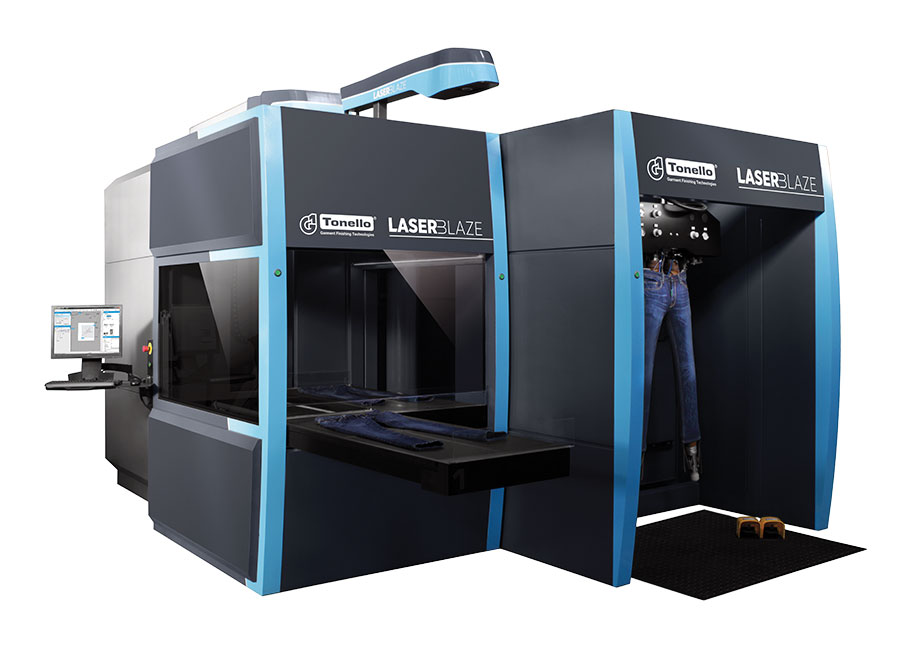
Tonello’s Laser Blaze TM offers three
different power options.

Tonello S.r.l. also offers unique design capability in its system with an online shop for laser designs — the first in the world, according to the company — with downloadable options available 24/7 as well as custom laser design service. In addition to the new laser software touted as user-friendly and responsive, Tonello’s mannequin laser systems allow 360° treatment for authentic laser effects mimicking actual wear and crossing seamlines. This approach is in contrast to flat-folded products that are laser treated on a table one side at a time, which does not allow the decorative effects to continue around the garment. Three variations of Tonello’s Laser Blaze are available — T, TM and C — offering a fixed or double sliding table, mannequin, table and mannequin, or conveyor loading. The system includes a design library of laser designs to get new users started.

At ITMA, Tonello featured a flat table Laser Blaze featuring a laser head that could be positioned in either of two locations to support two loading tables side-by-side.

Laser Systems From Spain

Jeanologia S.L. offers lasers in a variety of configurations targeted to differing levels of production from its Flexi Lab flat booth system for prototyping and small-scale production, to the Twin Pro mannequin system that employs two laser heads for simultaneous treatment of both legs of a garment. Jeanologia laser components included a mannequin-type laser that can treat jeans on a form, and a flat-bed-type system capable of handling varied products such as jackets and T-shirts. Jeanologia’s eMark software drives the lasers and offers enhanced design capabilities and tools for novel effects including light scraper, light PP spray and light drill to easily mimic manual and chemical finishing processes. At ITMA, Jeanologia showed its laser equipment as part of a fully conceived finishing system for denim products that also included ozone finishing equipment and a water recycling unit. According to the company, the system can provide a dramatic decrease in water consumption during denim processing, and is connected via digital technology making it flexible and providing the opportunity for a customizable, customer-responsive production system.
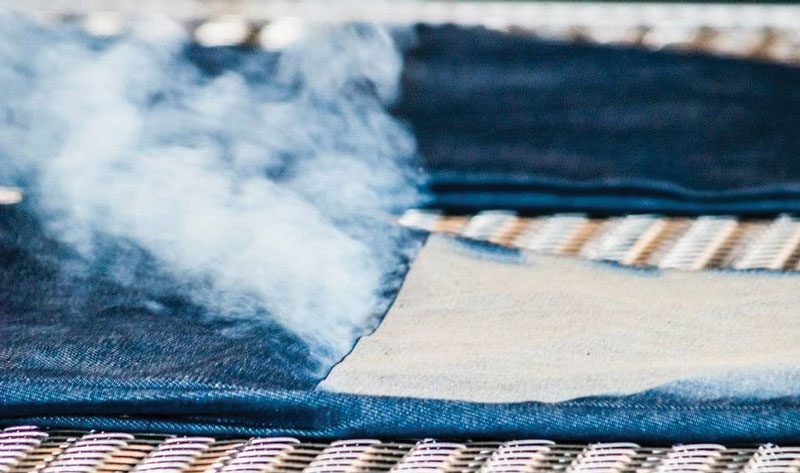
Machines from Iberlaser can impart distressing effects as well as all over repeating textile designs.

Iberlaser incorporates a variety of productivity features across its laser models reflecting several approaches. One system features two laser heads each with its own belt feed allowing constant operation of the laser and continuous loading of products to be processed. Its most advanced laser system uses only one laser tube that can move, allowing laser treatment on a flat table with two automatic loading belts as well as a mannequin in one unit. Sample products, including jeans and T-shirts, featured all-over repeating textile designs that pushed beyond the most often seen distressing .

Macsa ID S.A. offers three laser system alternatives — a mannequin, a flat system, and a smaller scale laser for customizing products. The mannequin system features side-scrolling loading for continuous loading and processing; the flat table offers double conveyor loading for enhanced productivity; and the third system provides a 30 centimeter (cm) by 30 cm bed for smaller scale product customization. The company reports its technology reduces water and energy use, optimizes denim distressing using no chemicals, and offers productivity of up to 200 pieces per hour. The denim lasering has no effect on fiber strength, but rather only sublimates the indigo dye, according to the company.
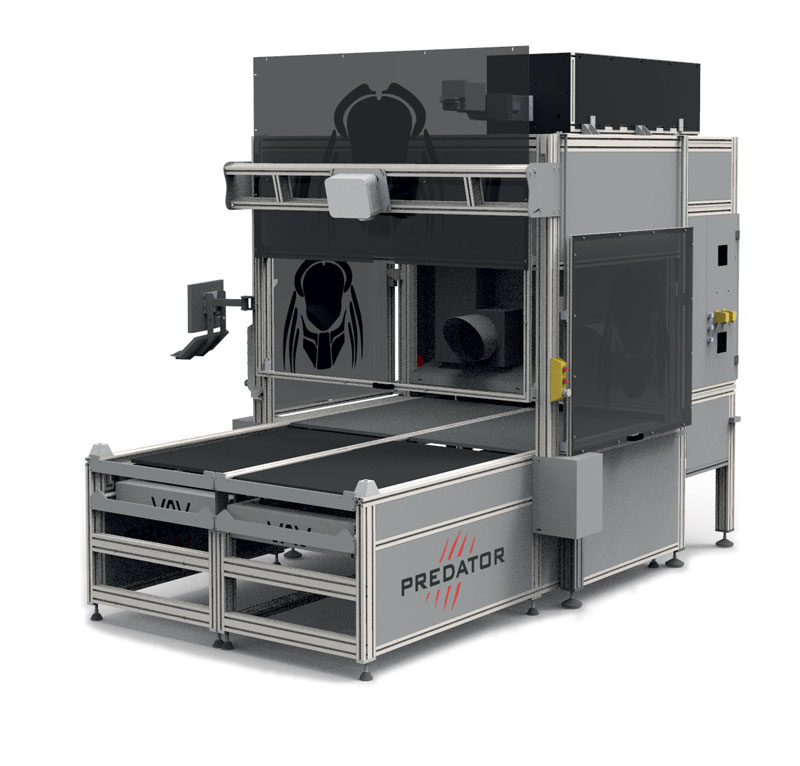
VAV Technology’s Predator series machines feature
the unique Never-
Ending Power Laser Tube technology.

Other Laser Systems

Germany-based VAV Technology GmbH, with facilities in Turkey, has a comprehensive focus on denim finishing technology. The company has taken a novel approach with the Predator laser machine series included in its finishing line by designing it to run with its NEP — Never-Ending Power Laser Tube. A canister provides the gas mixture needed to produce the laser beam. Consequently, the gas mix in the laser tube on the machine is renewed constantly and never loses its quality. In conventional laser tubes, gas is contained in the laser tube and over time it depletes causing the laser tube to lose power and require replacement. The Predator’s gas replaceable canister not only continuously renews the gas in the laser tube, but can also be easily changed periodically to maintain constant laser power over time. The machine series includes several flat bed systems and a mannequin system. One machine shown at ITMA 2019 featured a system of four sliding tables, arranged in pairs side-by-side, feeding a flat laser. As the laser treatment finished, the table inside the machine dropped and began to slide forward and out of the machine while the loaded table slid above it into the laser booth. The computerized interface allowed the operator to observe what was happening on each of the four tables at any given time, whether a product was processing, waiting, preparing or unloading. VAV Technology includes its laser as a component of its “No Hand Touch” total system of eco-friendly finishing equipment. The company recommends an ozone treatment process to brighten products as needed following laser processing.
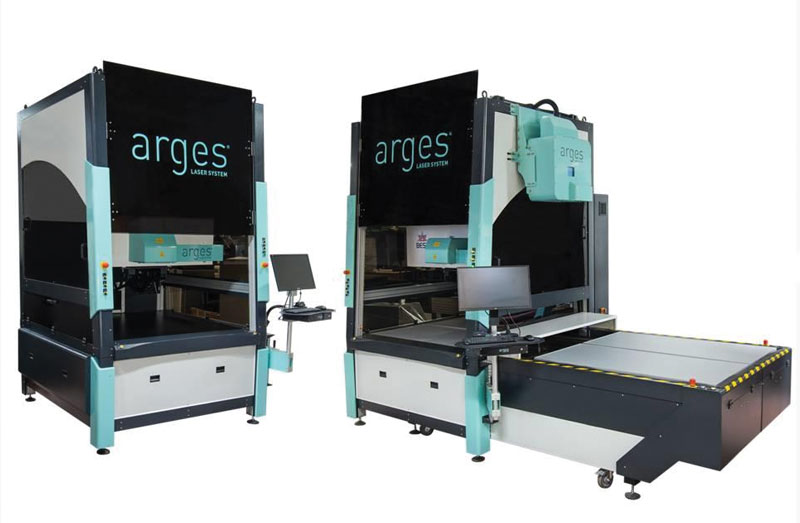
Denim Marking Machines from Arges Laser System feature
a 3D+ Optical System that can rapidly change an automatically focused beam diameter using specialized software.

The textile laser configurations from Arges Laser System, Turkey, are flat table systems with for enhanced processing speeds. The system offers four moveable tables for loading, unloading, and laser treating continuously with two operators working side-by-side. A projection screen shows the engraving location on each product as it is loaded for treatment. Notable features include its 3D+ Optical System developed for better design transitions, thinner lines and greyscale; and the Arcon software that drives the laser, which is capable of processing a wide range of file types. Arges Laser technology also is eco-friendly and efficient in terms of power utilization and therefore a good fit with sustainable finishing systems. The company also offers an ozone washing system as a complement to the laser in a more sustainable processing system.

Laser Systems From China

At ITMA 2019, Han’s Yueming Laser showed a small scale laser with a bed that can easily adjust to dramatically raise and lower the laser platform. This adjustability allows the focal length of the laser beam — the distance where the beam actually focuses — to engrave with high accuracy and efficiency, and the machine can accommodate materials diverse in thickness and shape. The laser is envisioned for quick and easy embellishments or other customizations on finished products, and its small size allows the laser to be used in a environment such as a shopping center or mall. Though the laser treatment surface is small, the adjustable laser allows the bed to move up and down for significant variation. Customized products on display included a shoe and a volleyball.

CK Laser offers a variety of laser technologies including ones that feature laser engraving ability. The systems range in size and utilize a flat bed rather than a mannequin. They also feature optical placement guides that project onto the loading surface to ensure that operators can properly position the materials before the laser treatment.

Wuhan Golden Laser Co. Ltd. and Gbos Laser Inc. both showcased their laser cutting systems at the last ITMA. Golden Laser does have some laser engraving systems available including machines targeted to the footwear industry and to textile material processing. Among the offerings is a roll to roll engraving machine for textile roll goods. Likewise, Gbos laser has a variety of systems available with capabilities including cutting small pieces for lingerie and engraving for denim. The company highlighted systems that recognized visually what to cut and where. These cutting systems were very small and accurate, for items the size of a garment label. The laser systems recognize color differences and can cut specifically to an outline or a pattern based on the placement of a design on a textile surface.

Sustainable Production

Sustainability in relation to denim production was a notable overall theme at ITMA 2019. One of the greatest advantages of laser finishing for denim and denim products, aside from its sustainability aspects, is the laser’s ability to produce an extensive range of effects that would otherwise require application of multiple chemical and mechanical finishing processes using several different pieces of equipment. This capability makes laser treatment an attractive option for firms targeting customized and small run production, and micro-factory environments where versatility is key. When supported by a robust, design-focused integrated software programs, lasers become a powerful tool in creating innovative products for niche and exclusive markets. Laser firms are starting to explore laser applications to materials beyond denim, including pile fabrics and knit goods. The roll-to-roll machine configurations offered by some laser manufacturers, is poised to impact the production and finishing of textile materials themselves in the future, as well as product categories beyond denim.


Editor’s Note: Dr. Traci A.M. Lamar is an assistant professor in Textile and Apparel Technology and Management at North Carolina State University, Raleigh, N.C.


July/August 2020
Yarn, Fabric Manufacturers Critical In COVID Fight

By Jim Phillips, Yarn Market Editor

If there is one thing the COVID-19 pandemic has revealed about the U.S. industrial complex, it is that there a continuing need for a robust and responsive textile industry.

Such is the conclusion derived from multiple analysts and consultants about the impact the industry has had on the fight to control with worst global virus outbreak since 1918. At the beginning of the epidemic in the United States, there was insufficient personal protective equipment (PPE) gear to equip the front-line medical professionals and emergency workers who were dealing up close with the virus and were at risk of infection.

Yarn spinners and fabricators quickly stepped up to help alleviate the shortage. For example, Parkdale is producing materials for reusable isolation gowns and face masks for medical workers and first responders. Unifi, is supplying yarns and fibers to more than 100 companies that are producing the masks, gowns, and other personal protective equipment needed by first responders, medical personnel and military. American & Efird, is offering restricted substances list (RSL)-approved, critical personal protective equipment sewing threads for a multitude of products, including disposable surgical products, surgical masks, scrubs, hospital sheets and towels, reusable medical gowns, clean-room garments, and protective coverall suits.

As COVID Surges, Economy Suffers

As of mid-July, however, premature reopenings in some states, gatherings in resort areas without appropriate social distancing, and the puzzling reluctance of some people to wear face coverings have resulted in a surge of infections that has negated much of the valiant efforts of medical professionals and their industrial suppliers to halt the spread of the virus.

Indeed, the record-breaking new outbreaks have the potential to overwhelm the U.S. economy – at least for the short term.

However, government-mandated lockdowns are not the primary drivers of a sagging economy. Consulting firm Deloitte has cited a recent study by economists at the University of Chicago that found only 7 percent of the change in consumer mobility in the United States over the past few months can be explained by lockdowns. Instead, Deloitte reports, it is fear of the virus that prompts most Americans to stay away from social interaction.

“In other words, most people would avoid restaurants and theatres even if they were open,” Deloitte reports. “Using high-frequency mobility data, the [Chicago] researchers compared the experiences of consumers in locations with severe lockdowns to those in locations with no or limited lockdowns. They found there wasn’t a big difference between the two.”

As many states have reacted to curtail the latest outbreaks, the expectation is that activities that require human-to-human contact will decrease even further, leading to even further negative impact to the economy.

Already, the effect the coronavirus epidemic as had on industry in general has been nearly catastrophic. Entertainment, retail, fine dining and many more have suffered greatly, with many well-known and long-lasting brands in danger of closing doors forever.

Manufacturing is not fairing much better. A recent study by the International Textile Manufacturers Federation reveals that total orders in North America were down almost 50 percent in May and 40 percent in June.

To help offset some of these losses, two U.S. Senators, Thom Tillis (R-N.C.) and Mark Warner (D-Va.), recently sent a letter to Senate Majority Leader Mitch McConnell (R-Ky.) and Minority Leader Chuck Schumer (D-N.Y.) urging the next round of COVID-19 assistance adequately address the magnitude of the losses felt throughout the cotton supply chain by cotton farmers, textile mills, and the cotton merchandising segment (See “Senators Urge Senate Leaders To Include Cotton, Textile Industry Assistance In Next COVID-19 Relief Package,” TW News, this issue).

“When Congress considers additional relief efforts in response to COVID-19, we believe any package should ensure USDA’s next round of agricultural assistance will adequately address the magnitude of the losses felt throughout the cotton supply chain by cotton farmers and include critical relief for textile mills and the cotton merchandising segment, all of which are facing unprecedented economic losses,” the Senators emphasized.

July/August 2020

Sun Chemical Acquires Sensient Imaging Technologies

Sun Chemical and its parent company DIC Corp. announced they have completed the acquisition of Sensient Imaging Technologies as well as certain other assets related to the production of ink. The purchase allows Sun Chemical and DIC to expand their inkjet capabilities with complementary technologies, and bolsters the companies’ commitment to sustainability by expanding their offering of inks for textile and dye sublimination printing — a more sustainable production method.

“We are delighted to welcome the employees of Sensient Imaging Technologies to the Sun Chemical family and we are excited about the prospects of combining our offerings in digital technology, capability, products and services to the valued customers and distribution and technology partners of the Sensient inks business and Sun Chemical,” said Peter Saunders, global director – Digital Business, Sun Chemical.

July/August 2020

Zimmer Supplies Foam Coating Line To ATI

Applied Technology International Ltd. (ATI), Exton, Pa., recently took delivery of a multi-function foam coating line from Zimmer Austria. ATI will use the equipment to manufacture its Fabrifoam® products, which are used in a variety of devices for compression and support therapy, as well as many other medical applications.

The Zimmer coating line applies stable foam and other materials to highly engineered fabrics. The line installed at ATI features the Knife Coating — knife-over-roll — application system, an unwinding station, T-COAT-MK coating head, Magnoknife MK application device, foam feeder, Compact HC four-section dryer, and exit line with double rewinding station.

“With the installation of the new Zimmer Austria production line, we will be able to increase production capabilities and volume output, allowing for improved pricing capabilities and economies of scale,” said Charlene Buckley, vice president of Fabrifoam Products. “The line will enable the creation of new innovative products, targeting a broader customer base. ATI is pleased to have partnered with Zimmer Austria on this project which affords us the opportunity to expand our business while helping to improve the health and lives of thousands.”

July/August 2020

HanesBrands Introduces Consumer Face Masks

HanesBrands, Winston-Salem, N.C., has introduced a collection of consumer face masks under its Hanes and Champion brands.

The masks are made using a variety of materials — cotton, nylon and polyester — and are available online, in retail stores and in company outlet stores. The introductions come on the heels of HanesBrands fulfilling its production agreement with the U.S. government for all-cotton face coverings and medical gowns.

“We are proud of the commitment of our employees and our ability to quickly pivot to large-scale production of face coverings and face masks to meet important needs during the COVID-19 pandemic,” said Michael E. Faircloth, group president, global operations, American casualwear and e-commerce. “In just three months, we were able to go from never having produced face masks to making more than 450 million government face coverings, designing and developing branded programs of high-quality comfortable nonmedical face masks for consumers, and safely and responsibly reopening operations to support our core innerwear and activewear businesses.”

July/August 2020

Beverly Knits Receives Brother Donation

Beverly Knits, Gastonia, N.C., recently received a donation of industrial sewing machines from Brother International Corp., which includes five Brother S7250A-403 single needle lockstitch industrial machines. Creative Ticking, Beverly Knits’ cut-and-sew division, will use the machines to increase its face mask production efforts.

“Brother remains committed to aiding our communities during these challenging times,” said Don Cummins, president, Brother International Corp. USA. “Given the severe and growing shortage of personal protective equipment, Brother is proud to donate our products to support these stalwart manufacturers with their efforts in making masks
for our frontline workers.”

“Continued support and collaboration within the textile industry is key to flattening the COVID-19 curve,” said Ron Sytz, CEO of Beverly Knits. “We appreciate this generous donation from Brother that will help the industry advance the cause at a more rapid pace.”

July/August 2020

Denisol® Indigo For Latin America

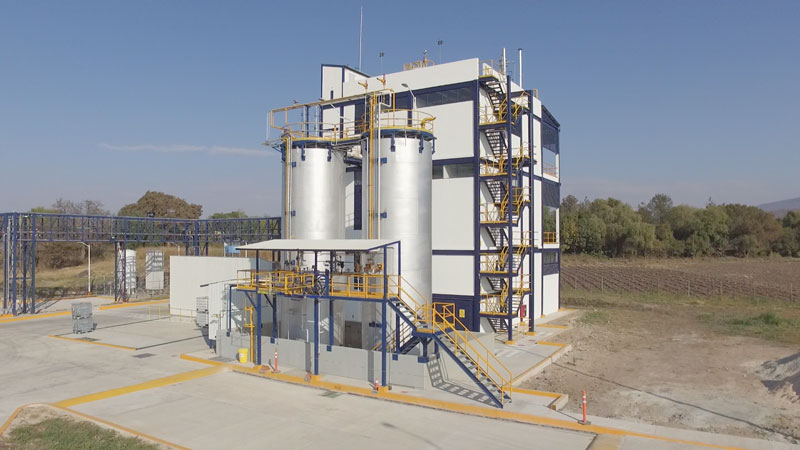
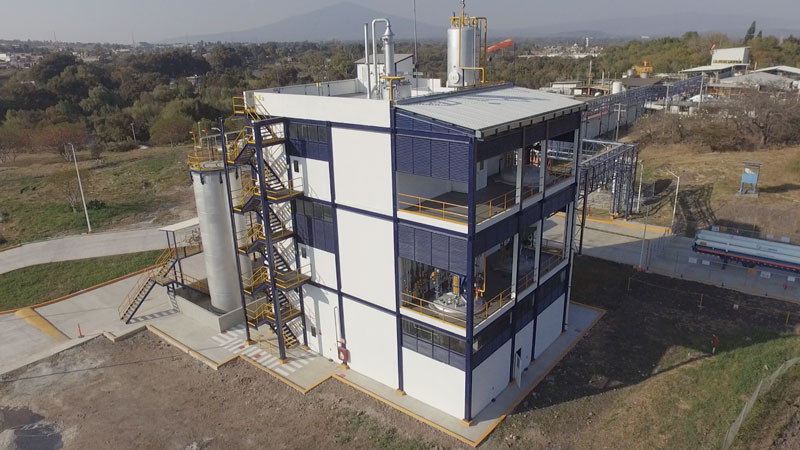
Located in Salvatierra, Guanajuato, this is the third Archroma plant in Mexico.

From its new plant in Mexico, Archroma offers regional textile manufacturers an Indigo Denisol® supply source close  to its final market.

TW Special Report

Switzerland-based Archroma — a manufacturer of dyes and specialty chemicals for sustainable solutions — started operations at its new plant in Mexico last January. The plant’s main production is Denisol® Indigo pre-reduced liquid used in the textile industry.

Located in Salvatierra, Guanajuato, this is the third Archroma plant in Mexico that provides service to textile manufacturers in the country as well as other Latin American markets; and it is the only indigo plant available in the region. For local manufacturers, the fact that there is now a plant in Mexico is a competitive advantage since they have a supply source close to their final market.

Archroma launched Denisol Indigo liquid into production in 2015, in Jamshoro, Pakistan. There, the company has implemented a zero liquid discharge operation to preserve the water in the area, in accordance with the company’s approach to sustainability and natural resource preservation.

Archroma continuously challenges the status quo in the deep belief that it can make the industry more sustainable.

In line with this mission, the company is following a clear agenda — convert denim dyes in the Latin American region and around the world to Denisol Indigo liquid instead of indigo powder in the dyeing process, which will lead to massive reductions in the use of indigo dye itself, as well as sodium hydrosulfite and caustic soda.

An estimated 65 percent of the denim industry still uses indigo powder and Archroma’s denim specialists are focusing on transforming this into liquid pre-reduced indigo, and as a result being able to reduce the impact on the environment.

Archroma has become a specialist in ecologically advanced denim fashion colors and designs with its unique offerings. Solution systems and technologies are available to denim manufacturers and brands featuring Denisol Indigo liquid. Denisol is used in Archroma’s

CLASSIC INDIGO FLOW system. Its Diresul® Smartdenim Blue, a blue liquid sulfur dye designed to imitate a neutral greenish blue color, features in Archroma’s INDIGO REFLECTION. Both Denisol and Diresul feature in CLASSIC UNDERTONES, a sulfur bottoming system that brings a new layer of color creativity to indigo denim.

“With the growing consumer awareness and the demand for ecological and sustainable fashion, textile manufacturers are exploring new clean ways to produce and dye denim,” said John Jansen, Archroma commercial president for the Americas. “This is where Archroma can add value with innovative solutions, as well as color systems, and creative and avant-garde denim effects. With our indigo plant in Guanajuato, Mexico, we are providing our customers through the American continent a supply source of indigo, closer to their final market allowing them to accelerate delivery times in an industry where the speed of updates is critical.”

Although Archroma has not shared information about the investment in the Guanajuato, Mexico, plant, the company shows interest in the country where it seems it will continue investing in the medium- and long-term because Mexico is one of the main denim manufacturers in Latin America with production of approximately 300 million fabric meters per year. For this reason, Archroma sees great potential for the dye supply for the denim treatment which also will contribute to a decline in imports from China.

In addition, the Mexican market is very important for Archroma’s textile operations, representing between 25 and 30 percent of the income from its Americas region.

The plant’s main production is Denisol® Indigo Liquid used in the denim industry.

About Indigo Denisol® Pre-Reduced Liquid

Denisol Indigo is a pre-reduced indigo solution at a 30-percent concentration. The company reports it is easy to use, and allows high reproducibility and deep shades while reducing impact on wastewater compared to indigo powder.

It is compliant with major official eco-standards and requirements from retailers, brands and leading fashion companies and helps to produce fabrics suitable for current eco-labeling.

Some of the reported advantages of Denisol liquid compared to indigo powder are:

  • Chemical consumption: Stock vat preparation is not needed, therefore less sodium hydrosulfite and sodium hydroxide are used.
  • Sustainability: Reduced impact on wastewater treatment plant including chemical oxygen demand, biological oxygen demand, sulfates and sulfites, and total dissolved solids.
  • Easy handling: Automated dosing allows for a simpler handling process.

Regarding technical advantages, Indigo Denisol Liquid offers:

  • Increase in productivity with less indigo required to achieve the same depth of shade;
  • Better shade consistency and reproducibility, and higher color yield achievable; and
  • Improved rubbing fastness on dark tones.

For all these advantages and for being a sustainable solution, Denisol Indigo pre-reduced liquid has received the Cradle to Cradle Products Innovation Institute’s Gold Level Material Health Certificate.

Innovation In Dyeing

Pretreatment is indeed a key step in textile production and the diversity of fibers and quality variations are major challenges in consistently obtaining a perfectly prepared fabric ready for subsequent processing steps.

Archroma’s portfolio offers wide possibilities in dyeing effects and colors, from the traditional to innovative, while maintaining high standards of quality and sustainability. Its products are designed to address the specific dyeing requirements of all types of effects.

Denim is one of the textiles of greatest interest to the company, and Archroma has made a number of contributions to the denim industry with cutting-edge dyeing technologies and products that bring together creativity, performance and sustainability — as is illustrated by its Denisol Indigo pre-reduced liquid.

Using Archroma auxiliaries for indigo dyeing, customers can improve the consistency and the workability of the dyeing process, which will result in a high level of quality, according to the company. Customers also can achieve a uniform, level dyeing appearance, as well as reduced staining on indigo dyeing machinery, according to the company.

With its production at the Guanajuato plant, Archroma confirms its commitment to the success of the textile manufacturers in the region by offering them a higher-performance solution that reduces costs and at the same time allows manufacturers to have a lesser impact on the environment.

The company’s focus remains on making the textile industry a sustainable activity, both economically and ecologically.

July/August 2020

Quality Fabric Of The Month: Effective Combination

University study showed face mask made using ProCool® and Zorb 3D fabrics from AKAS was highly effective in blocking transmission of virus-like particles.

By Rachael S. Davis,Executive Editor

When it comes to face mask design, there are many attributes that are important. The mask must be large enough and fit well, it must provide adequate filtration, and it must be breathable and comfortable against the skin. Fabric treatments to protect from bacteria and viruses also may be considered.

AKAS Textiles and Laminations — a family-owned high-performance fabric company based in Bensalem, Pa. —took all of these design attributes into consideration when it shared suggestions with customers about how to select AKAS fabrics for the inner, middle filtration and outer layers of a face mask. The company also made some prototype masks that it donated to a local hospital and shared with people in its community.

The company was surprised to recently discover that a study — “Effectiveness of Common Fabrics to Block Aqueous Aerosols of Virus-Like Nanoparticles” — performed at Northeastern University in the Department of Chemical Engineering and published in the peer-reviewed scientific journal ACS Nano, found a mask made using AKAS fabrics offered the best filtration properties in an aqueous media under positive pressure of 20 kiloPascals simulating a sneeze or cough. The study examined some 70 masks made using common fabric combinations and in different mask styles, including the N95 respirator mask, to determine each mask’s ability to block the transmission of virus-like particles.

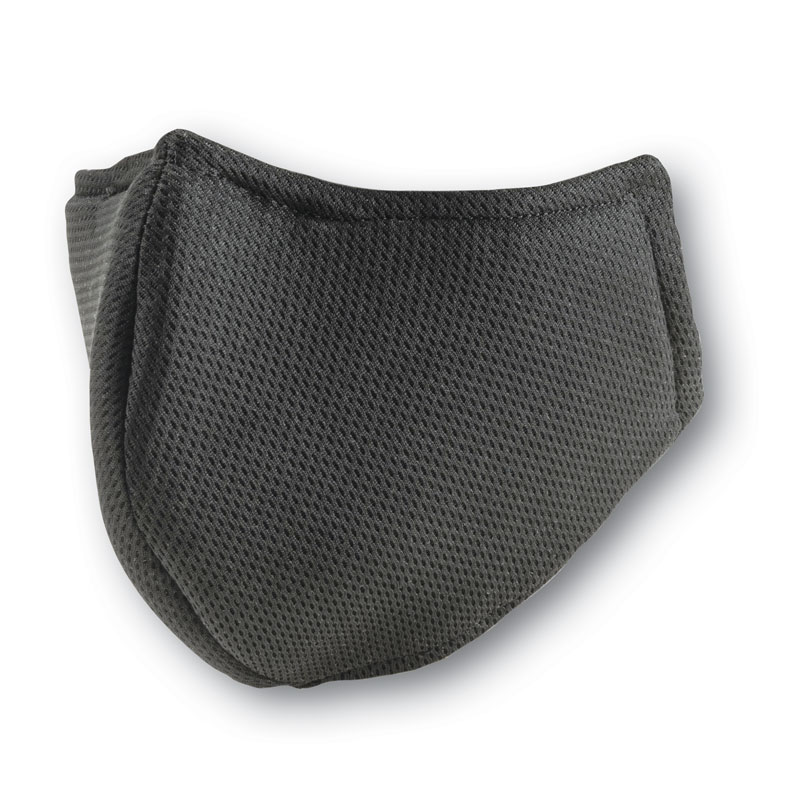
The AKAS mask tested features inner and outer layers of ProCool® Performance Fabric and a middle filtration layer of Zorb® 3D Stay Dry Dimple fabric. According to the study, the combination of these two fabrics tested 72-percent more effective than the N95 respirator.

The ProCool variant featured in the mask is a two-sided inter-knitted fabric with one-way wicking properties. The Zorb 3D Stay Dry Dimple fabric is an engineered design featuring a wicking layer on top of a dense cellulosic core.

For the face mask applications, AKAS also created a new Zorb 3D variant withthe addition of an antimicrobial Silvadur™ treatment. AKAS has applied for patents for the ProCool and Zorb fabrics as well as its mask design.

Archana Sharma, CEO of AKAS and affiliated company Wazoodle, said: “I looked at our entire fabric range before honing in on this combination. Before that, I studied the construction, materials and efficiencies of cloth masks, surgical masks and N95s in detail. I thought if we could harness fabric properties — hydrophobic fibers with hydrophilic, knit structures that formed multiple barriers, and a convoluted maze to stop, trap and hold aqueous aerosols, we might have something that worked. And by adding an antimicrobial we could expect the trapped microbes to be continuously destroyed, preventing build up.”

Sharma notes the company made prototypes and tested them in-house for breathability and design, but made no claims because there was no official test data. AKAS was unaware of the Northeastern study and only learned its mask — shared by a local hospital — had been tested when the results were published.

“I was delighted that our U.S.-based fabrics were determined to be the best combination of fabrics tested in the study,” Sharma said. “The results validated our theory and expectations.”

The prototype mask is washable, as well as comfortable despite its bulk, according to Sharma. The company plans to engineer a lighter version in the future. AKAS still does not make any claims about its prototypes, but believes it is on the right path and hopes to offer wholesale quantities of masks soon.


For more information aboutAKAS fabrics for face mask production including ProCool® Performance Fabric and Zorb® 3D Stay Dry Dimple fabric, contact President Sidharth Sharma +215-244-2589; info@akasllc.com.


July/August 2020

July/August 2020

PVH Corp., New York City, has named Martijn Hagman CEO for Tommy Hilfiger Global and PVH Europe. He replaced Daniel Grieder who has retired.

Ernesto A. Maurer

Ernesto Maurer was elected president of the European Committee of Textile Machinery Manufacturers (CEMATEX) for a four-year term. He is president of the Swiss Textile Machinery Association, and has served as first vice president of CEMATEX for the past four years. In addition, the CEMATEX general assembly elected Swedish Textile Machinery Association (TMAS) President Mikael Äremann first vice president; and the Belgium Textile Machinery Association (Symatex) President Charles Beauduin second vice president.

Hudson, N.C.-based Outdura®, a division of Austria-based The Sattler Group, has hired Teresa Buelin to fill the role of business development and marketing manager. She will focus on building brand awareness as well as overseeing marketing initiatives for Outdura.

Germany-based Heytex has appointed Fabian Kampsen commercial director. He will lead
the global sales and marketing team.

England-based Global Inkjet Systems has named Steve Jeffels CFO.

HanesBrands’ board of directors has named Stephen B. Bratspies CEO and board member. He replaces Gerald W. Evans Jr. who is retiring after 37 years with the Winston-Salem, N.C.-based company.

Loepfe Brothers Ltd., Switzerland, recently named Silvano Auciello head of a newly combined sales and customer support setup; Guido Eiland now is responsible for leading a joint project management, applications and marketing team; and Sylvie Hunziker has added responsibility for driving the digital landscape and processes within Loepfe in addition to her role as lead of the production department.

The Washington-based National Council of Textile Organizations (NCTO) selected Lauren Biggs as the recipient of the 2020 Paul T. O’Day Scholarship Award. She is the daughter of Sheila Price and Unifi Inc. employee Alexander Graham Biggs III. Biggs will attend the University of South Carolina in the Computer Science program this fall.

J.Jill Inc., Quincy, Mass., has appointed Shelley Milano to its board of directors.

MycoWorks, a San Francisco-based biomaterials company, recently added Chief Manufacturing Officer Doug Hardesty, Chief of Product Mike Todd and Advisor John Diener to its team.

Bailey

Kevin Bailey, executive vice president and group president, APAC — Asia Pacific region — for Denver-based VF Corp. also will take on leadership of the company’s emerging brands platform. Bailey will manage the Altra®, Eagle Creek® JanSport® and Smartwool® brands
in the Americas Region.

St. Louis-based Evolution St. Louis has created its board of managers. The board comprises: Gary Wassner, CEO, Hilldun Corp. and founding member and chairman of Interluxe Holdings LLC; Barbara Archer, managing director and partner at Hightower Wealth and Advisors St. Louis; John Kalishman, strategy and marketing consultant, founder and president of Harcourt Group, and executive at Insituform Technologies Inc.; John Elmuccio, COO and cofounder of Evolution St. Louis; and John Lewis, CEO and co-founder of Evolution St. Louis.

Scott Schinlever has rejoined Electronics for Imaging (EFI), Fremont, Calif., as COO for EFI’s global inkjet business. He is responsible for all equipment, ink and service solutions in EFI’s Display Graphics, Textiles, Packaging and Building Materials portfolio.

Ireland-based implantable medical device company Aran Biomedical has named Todd Blair vice president of sales and business development (U.S.). Blair’s primary focus is on orthopaedic, general surgery and vascular business activities in the United States.

Gray

Minneapolis-based Cargill has named Hank Gray U.S. origination manager for cotton within Cargill’s Agricultural Supply Chain business. He will focus on the company’s farmer-facing strategy in the cotton sector.

Jörg Westphal was named managing director at Germany-based BST eltromat. He is responsible for service, sales and marketing; and will manage the business with Dr. Jürgen Dillmann.

July/August 2020

Sponsors