Carbios to Move Facilities to a Michelin Site in Clermont-Ferrand, France

CLERMONT-FERRAND, France — September 28, 2020 — Carbios, a company pioneering new bio-industrial solutions to reinvent the lifecycle of plastic and textile polymers, announced today the regrouping of its teams on a single site belonging to Michelin. They will be located near Carbios’ Clermont-Ferrand, France, headquarters.

The facilities made available to Carbios will accommodate all of the company’s activities, currently spread over several locations. In particular, they will include the development laboratory, the pilot facility and demonstration plant of Carbios’ enzymatic recycling technology for PET plastics and fibers. This move will support Carbios’ corporate and operational synergies to advance project development and ensure technological and economic optimization.

This strategic decision reinforces Carbios’ ambitions to position itself as the world leader in biological technologies for the end of life of plastics and synthetic fibers. The quality of the new infrastructure will enable Carbios to improve the risk profile associated with the industrial demonstration phase while controlling costs and deadlines. The operational teams, now grouped on the same site, will benefit from an optimal environment to successfully industrialize Carbios’ technology. Carbios’ demonstration plant, initially planned in Saint-Fons (Rhône, France) and now integrated on the new site, will be operational in September 2021 versus June 20211. This decision supports Carbios’ ambition to grant its first enzymatic recycling technology license by 2023 and provide a better integration of the company’s current and future partners.

This move underlines Michelin’s support for Carbios’ technological solutions, following its participation in the Carbios’ recent, successful capital increase.

Jean-Claude Lumaret, Carbios’ CEO, noted: “This is a real opportunity for Carbios to reinforce the cooperation between its teams and promote the consistency of all its activities in an innovative environment. This collaboration, with a world-renowned company such as Michelin, highlights the attractiveness of our technology and allows Carbios to benefit from a unique and rich ecosystem to continue its industrialization phase.”

Posted September 29, 2020

Source: Carbios
DuraSorb® Monofilament Mesh Earns CE Mark Approval

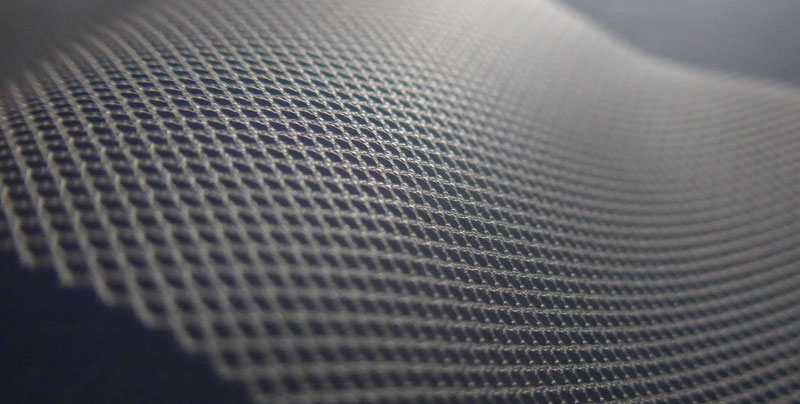
CHICAGO — September 29, 2020 — Surgical Innovation Associates (SIA), an early growth-stage medical technology company, announced today it secured CE Mark approval for its flagship absorbable mesh, DuraSorb®. The product provides mechanical support and scaffolding during the early months of wound healing and scar formation, followed by gradual absorption, to leave the patient free of foreign material by one year.1,2,3

DuraSorb received a CE mark for reconstructive and aesthetic indications including abdominal hernia prophylaxis, breast tissue support, and prosthetic breast support. This technology adds tremendous value in European hospital systems, where surgeons sometimes try to avoid permanent mesh products, and human- or animal-based biologic meshes are scarce due to safety concerns and high costs. No mesh product, DuraSorb or otherwise, currently has approval from the United States Food and Drug Administration (FDA) for any breast procedure.

“It is important that we expand access to our products for plastic and reconstructive surgeons and their patients beyond our own borders here in the US,” said Dr. Alexei Mlodinow, president and CEO of SIA. “We are excited to work with one of several potential partners across the pond to introduce DuraSorb® in Europe and, in the future, other markets.”

Designed by surgeons, textile experts, and polymer scientists, DuraSorb is a next-generation product in a growing category of bioabsorbable materials that provide an important alternative to biologic meshes or permanent synthetic meshes. The product received initial 510(k) clearance from the US FDA for soft tissue support in late 2018, and was first used clinically within a post-market registry in 2019. US commercial efforts began earlier this year.

SIA’s quality management system was also certified under ISO 13485:2016, following on-site evaluation by an international body that governs the quality of medical device manufacturing – LNE/G-MED. These certificates confirm the company’s focus on customer needs as well as its commitment to the highest standards of product quality and international regulatory compliance.

“The ISO certification and CE Mark represent significant milestones in our transition from a US-based R&D organization to a global commercial one,” said Todd Cruikshank, COO of SIA. “This is an important demonstration that SIA has the necessary infrastructure and controls to design, produce and distribute high quality medical devices for a global patient population.”

References:

  1. Clinical data on file. Study 19-002: Real-World Application of Durasorb™ Monofilament Mesh: An Open-Label Registry Study of Soft Tissue Support in General and Plastic Surgery.
  2. Mlodinow A.S., Kuzycz M., Hasse M., Cruikshank T., Wiegel S.W., & Vazquez R. (October, 2018). Proof-of-Concept Use of Novel Biosynthetic Scaffold in a Porcine Model of Abdominal Wall Repair Oral Presentation presented at: American College of Surgeons Congress 2018; Boston, MA, USA.
  3. Mlodinow AS, Kuzycz M, Hasse M, Cruikshank T, Wiegel SW, Ellis MF, & Kim JYS. (May, 2019). Biomechanical and Histologic Evaluation of a Novel Absorbable Mesh in a Porcine Model of Abdominal Wall Repair. Poster presented at: Plastic Surgery Research Council 2019; Baltimore, MD, USA.

Posted September 29, 2020

Source: Surgical Innovation Associates (SIA)

Kontoor Brands Aims To Transform Apparel Production For Good

GREENSBORO, N.C. — September 29, 2020 — Kontoor Brands Inc., a global lifestyle apparel company with a portfolio led by Wrangler® and Lee®, today announced its first set of global sustainability goals and shared its inaugural report on sustainability impacts. The company aspires to transform the industry by taking a holistic approach to apparel and denim production, building off early successes pioneered by its brands.

“Denim is known as being tough, durable and long-lasting. But the production process historically has been resource-intensive. We’re facing this challenge head-on by scrutinizing every aspect of the denim lifecycle and investing as needed to develop more sustainable processes,” said Scott Baxter, president and CEO, Kontoor Brands. “With a little over one year behind us as a publicly traded company, we are proud of our initial steps in a long-term commitment to maximize value and innovate for a healthier future.”

Kontoor’s global sustainability strategy focuses on three pillars with specific measurable goals, aligned with the United Nations Sustainable Development Goals, to track progress and ensure accountability.

Planet: Wrangler and Lee have a longstanding commitment to environmental stewardship and compliance. One example is Indigood™ foam dye which eliminates water from the denim dyeing process. Kontoor has helped bring this revolutionary process to market and is exploring new emerging technologies that further reduce water use in the denim production process. Through this effort, among others, Kontoor sets goals to:

  • Save 10 billion liters of water by 2025;
  • Power 100 percent of owned and operated facilities with renewable energy by 2025; and
  • Establish a science-based climate target by 2022.

Product: Kontoor strives to use sustainable suppliers, materials and operations for the millions of products it produces each year. The company has focused on sustainable cotton sourcing practices by prioritizing regenerative agriculture principles that have the potential to drive three times the amount of carbon into soils over conventional practices. Wrangler has invested in farmer training to promote these principles through the use of cover crops, complex rotation and conservation tillage. Through its global product strategy, Kontoor sets goals to:

  • Source 100-percent sustainable raw materials, including forest-derived materials and animal-derived materials by 2023, cotton by 2025 and synthetics by 2030; and
  • Use 100-percent preferred chemistry by 2023.

People: Kontoor is committed to being active and engaged members of the communities where it operates and to collaborating with the company’s suppliers for safe, secure workplaces for every person in its supply chain. In addition to Kontoor’s Inclusion & Diversity strategy, which outlines specific goals and detailed action plans, the company sets goals, as it relates to worker well-being, to:

  • Work only with factories that support a worker well-being or community development initiative by 2025.

“Kontoor Brands is focused on driving meaningful improvements across the apparel production process, which can only be achieved through collaborations for greater transparency,” said Roian Atwood, senior director, Global Sustainable Business. “We have an opportunity to address some of our industry’s most pressing global issues and are committed to being a good corporate citizen as we operate in the world.”

In addition to announcing these new goals, Kontoor released its first sustainability report today, summarizing the company’s global impacts during the 2019 calendar year. Through this reporting effort, Kontoor took a holistic approach to stakeholder engagement and materiality assessment, leveraging a digital listening tool in addition to engaging in one-on-one interviews, roundtable discussions and other forums in an effort to ensure multiple perspectives from diverse stakeholders.

“We aspire to be a global leader in sustainability, helping pave the way for the future of the industry through innovation and action. We will regularly report on our progress toward our goals and our overall environmental impacts,” Baxter added. “Even as we navigate the uncertainty related to the global pandemic, we are firmly committed to sustainable business practices and operating with the highest standards of ethics and transparency.”

Posted September 29, 2020

Source: Kontoor Brands, Inc.

SHOWA, Choctaw-Kaul Announce Manufacturing & Distribution Partnership To Expand U.S. PPE Glove Supply

MENLO, Ga. — September 29, 2020 — SHOWA®, a U.S. manufacturer of nitrile, single-use PPE gloves, and Choctaw-Kaul today announced a strategic partnership to meet accelerating U.S. demand for Personal Protective Equipment (PPE) gloves that are critical to protecting American frontline workers and citizens during the coronavirus pandemic.

The U.S. remains highly vulnerable to COVID-19 PPE demand shocks. Not only are less than half of all PPE (gloves, masks, respirators, etc.) manufactured in North America, but more than 95 percent of PPE gloves are currently made in Asia (predominantly China, Malaysia, Indonesia and Thailand) — which means the U.S. is vulnerable to foreign supply chain disruptions. Meeting domestic demand for PPE gloves requires partners with the manufacturing and distribution resources — along with a proven track record of delivering high-quality, affordable equipment to commercial and government customers.

SHOWA is currently the only U.S. manufacturer of the nitrile, single-use PPE gloves that front-line industrial, service, transportation, healthcare and government workers rely on. In late 2019, SHOWA invested significantly in its Fayette, Alabama glove manufacturing facility, and now has the production capacity to meet a 5-year Nitrile glove supply need — today. Choctaw-Kaul is a Native American owned manufacturer and distributer of gloves, personal protective equipment, safety equipment and supplies, and power tools. The organization has more than 100 years of manufacturing and distribution experience across the globe.

“The combination of SHOWA’s manufacturing capabilities and Choctaw-Kaul’s extensive US distribution network will help ensure that the highest quality PPE gloves quickly get to organizations and individuals who need them most,” said Richard Heppell, COO Americas, Oceania & EMEA, SHOWA. “Domestically sourced PPE for U.S. frontline workers would reduce reliance on unpredictable and often unreliable overseas supply sources, in turn protecting people and lives through the pandemic and beyond.”

Kenny Tubby, president, Choctaw-Kaul, added: “Our mission has always been to lead our industry in providing safe work environments by supplying quality products and services at a competitive price point, and today’s announced partnership with SHOWA greatly advances that mission. Two industry leaders are coming together to manufacture and distribute American-made products that improve the health and safety of Americans.”

Posted September 29, 2020

Source: SHOWA

University of Georgia Study Finds Neck Gaiters As Good As Masks in Reducing Droplet Spread

ATHENS, Ga. — September 29, 2020 — University of Georgia researchers have demonstrated that neck gaiters can provide a level of protection equivalent to masks when used as a face-covering.

Researchers from the UGA College of Family and Consumer Sciences and the Franklin College of Arts and Sciences sought to test the effectiveness of various face masks and gaiters in reducing the disbursement of respiratory droplets during speech.

The gaiters were compared to no mask at all, as well as to multiple two-layer, washable, breathable cloth masks (as recommended by the Centers for Disease Control and Prevention to help prevent the spread of COVID-19).

Materials tested consisted of the following:

  • Four of the top-selling, two-layer face masks offered on Amazon.com
    • To qualify, masks had to receive no less than 2,000 consumer reviews with an average rating in excess of 4.
    • Masks were made of various materials including cotton and spandex.
  • Five of the top-selling, single-layer gaiters offered on Amazon.com
    • To qualify, gaiters had to receive no less than 4,000 consumer reviews with an average rating in excess of 4.
    • Gaiters were made of various materials including polyester, spandex and nylon.
  • Three multi-layer gaiters offered on Mission.com
    • Gaiters were 2 and 3 layers, made of polyester and spandex.

Study results were as follows:

  • Single-layer gaiters provided a 77 percent average reduction in respiratory droplets compared to wearing no face covering at all.
  • Two-layer masks provided an 81 percent average reduction in respiratory droplets compared to wearing no face covering at all.
  • Multi-layer gaiters provided a 96% average reduction in respiratory droplets compared to wearing no face covering at all.
  • The results are consistent with results from a recent Virginia Tech study which showed layered neck gaiters provided similar performance to the cloth masks when tested on mannequins.

The UGA study mirrored the protocol recently developed by Duke University and published by Science Advances: “Low-cost measurement of facemask efficacy for filtering expelled droplets during speech,” with additional enhancements for more accurate results.

Subjects spoke “Stay Healthy People” five times into each of the materials for consistency, and droplets were monitored over a 40-second period. A computer algorithm calculated the number of remaining respiratory droplets over time to determine the efficacy of each material’s ability to reduce respiratory droplets from the baseline of “no mask.” Each material was tested three times to increase accuracy and statistical significance.

Results were calculated using the droplet levels at both the 30-second and 40-second marks. Enhancements to the original study were also put in place. Instead of using a HEPA-filter, UGA scientists used a class 1000 clean room as well as a 3D printed box to dramatically diminish existing particles in the air, thereby reducing the amount of “noise” or unwanted particles from appearing in the results. MISSION, a leading provider of textile accessories, provided the funding necessary to conduct the study.

Leading the study was Suraj Sharma, professor of Polymer, Fiber and Textiles Sciences in the FACS Department of Textiles, Merchandising and Interiors, with his master’s student Mazbah Uddin, and Ph.D. student Anuradhi Liyanapathiranage.

Co-Lead on the study was Tho Nguyen, associate professor in the Franklin College of Arts and Sciences, with his Ph.D. students Hoang Luong and Minh Pham.

“Per CDC guidelines, using face covers to prevent the spread of COVID-19 is of the utmost importance,” Sharma said. “However, recent media reports have questioned the effectiveness of gaiters as face covers. We hope this study will provide valuable evidence and insight to help answer those questions. In sum, the level of protection provided by a face covering appears to be substantially driven by the number and quality of layers of material and not whether it’s in the form of a gaiter or a mask.”

Posted September 29, 2020

Source: University of Georgia

Helly Hansen Reaches Next Level Of Responsible Waterproof/Breathable Technology With New LIFA INFINITY PRO™

OSLO, Norway — September 29, 2020 — A driver of innovative technology and design, Helly Hansen continues to work to push the boundaries of professional grade gear. Founded in 1877, the Norwegian-based brand has never stopped looking forward, drawing on the extensive knowledge of their heritage and working with professionals to achieve the cutting edge of technical outdoor gear. This season, Helly Hansen is launching LIFA INFINITY PRO™, the brand’s most innovative and sustainable waterproof/breathable technology to date.

Challenging the industry norm, LIFA INFINITY PRO™ is a technology that pushes the envelope in apparel design. Through advanced textile engineering, it’s made without any added chemical treatments, making it truly unique and highly innovative.

Using LIFA® technology, a proprietary Helly Hansen fiber that’s lightweight and hydrophobic, LIFA INFINITY PRO features a fully waterproof/breathable LIFA INFINITY™ membrane and professional grade durable water repellent performance, achieved without the use of chemicals. Combining the new membrane with 100-percent LIFA hydrophobic face fabric, LIFA INFINITY PRO is groundbreaking, meeting the extreme waterproofness and breathability of HELLY TECH® Professional construction. With everlasting water repellent protection that never needs to be reproofed with chemical treatment, the technology delivers long-lasting, responsible and superior professional grade performance.

“We worked with nearly a dozen ski professionals to develop a new technology with the highest level of waterproof/breathable performance that’s also responsibly made,” said Philip Tavell, Category anaging director for Ski, Helly Hansen. “Drawing on the knowledge and expertise of a 140-plus year heritage, LIFA INFINITY PRO is our most innovative and sustainable waterproof/breathable technology to date, and we’re excited to launch it this season.”

The new LIFA INFINITY PRO technology will be featured in the Elevation Infinity Shell Jacket, part of the ULLR collection designed for freeride skiers, and the Odin Mountain Infinity Shell Jacket, part of the Odin collection, built for backcountry ski touring.

Posted September 29, 2020

Source: Helly Hansen

Cortland Biomedical Closes 2020 Fiscal Year With Continued Investments For Increasing Medical Textile Innovation

CORTLAND, N.Y. — September 29, 2020 — During a year marked by unprecedented global challenges, Cortland Biomedical remained steadfast in its commitment to advance the possibilities for less invasive surgical procedures through the development of advanced medical textile constructions. The full-service medical textiles product development partner — which provides access to a full- spectrum of engineering, design and manufacturing capabilities — started the year by unveiling plans for a state-of-the-art facility strategically designed by textile engineers. Despite the devastating impact the COVID-19 pandemic has had, both locally and around the world, Cortland Biomedical remains on-track to complete the transition to the new facility in Q1 of FY2021 and has continued to expand its textile manufacturing capabilities through the addition of knitting, weaving, and high-carrier count braiding capabilities, in addition to its existing braiding capabilities.

Historically there has been a lack of communication between the medical and textile fields and a reluctance by textile manufacturers to disrupt the status quo. Cortland Biomedical is seeking to drive a shift in the industry by supporting practices conducive to true innovation. It’s not just smaller fibers and thinner fabrics that are driving biomedical textile innovation. Cortland Biomedical has revisited the fundamentals of textile technology with design concepts that incorporate new methods of changing fabric density, pattern, and fiber orientation, resulting in products that get closer to biomimicry than ever before. The company hosted a customer appreciation event in Anaheim during MD&M West in February, and has since continued to evolve its businesses practices to maximize engagement and collaboration with customers while adhering to COVID-safe procedures.

“In the face of fear and uncertainty, it’s more imperative than ever to continue to support the development of next-generation medical devices that can improve and even save lives,” said John Greco, vice president, sales, Cortland Biomedical. “We’re proud of our team for being able to maintain operations and provide timely responses while adapting to the personal and professional challenges created by the pandemic. Textiles are imperative for enabling lower profile, more biocompatible devices and it is important to all of us at Cortland to continue to meet the needs of our customers across the medical device community and ultimately the end-user patients despite these trying times.”

The company has a long history of biomedical fabric development and offers a full range of services to create biomedical textiles for applications, including but not limited to orthopedics, cardiovascular, general surgery, sports medicine and robotic surgery. In FY2020, it expanded its textile post-processing capabilities with the addition of scouring, annealing, and laser cutting, as well as enhanced its analytical and biological laboratory capabilities. Cortland Biomedical ensures that the products it develops meet the design criteria established up-front by its customer by applying the expertise of its seasoned design and engineering team. It has continued to invest in engineering and sales to support its strong new product development pipeline across various market segments.

Posted September 29, 2020

Source: Cortland Biomedical

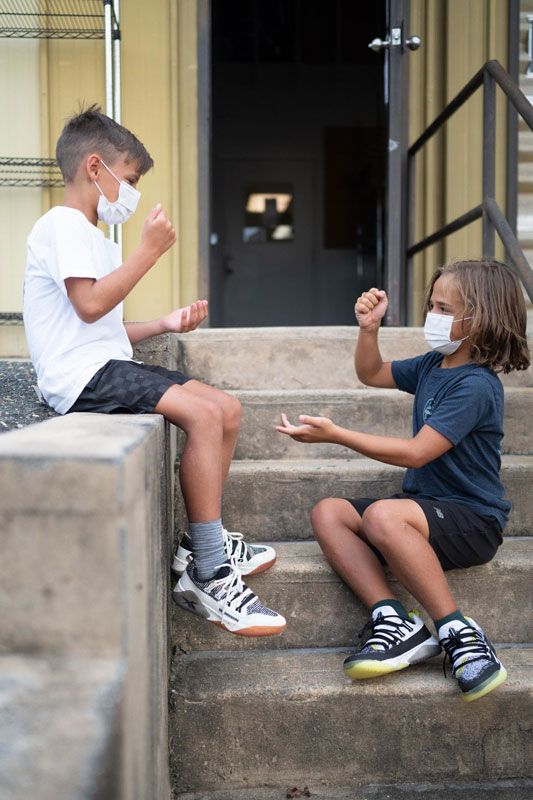
United Sewing Automation Announces Production Of U.S.-Sourced And Manufactured Children And Youth Sized PPE Face Masks

MOUNT AIRY, N.C. — September 29, 2020 — United Sewing Automation Inc. (USA) has announced the production of children and youth-sized disposable personal protective equipment (PPE) face masks in its new automated manufacturing facility in Mount Airy, N.C. The new sized face masks are made from all USA-sourced materials.

Since the onset of the Coronavirus pandemic, America’s reliance on imported PPE has caused supply chain issues. In addition, the United States has been flooded with cheap, inferior-quality face masks imported from China that do not provide the protection needed to fight the spread of the COVID-19 virus. In response, USA’s ownership team invested in automated equipment to manufacture American-made, medical grade masks that provide proper protection for Americans. Now, the same protection afforded to surgeons and front-line healthcare workers is available to children and youth.

Made from high-quality, U.S.-sourced materials, USA’s kid sized face masks feature a three-ply design with a built-in adjustable nose bridge and ear loop straps made of nylon and elastic cord to provide a better fit than traditional disposable masks. USA’s medical grade face masks are tested for protection against bacterial and other airborne particulates, liquid barrier protection, and breathability, and are rated as the best Class 1 for Flammability. USA’s FDA-registered manufacturing facility is located in Mt. Airy, N.C. The new face masks measure 5.75″ long by 3.75″ high compared to the adult size of 6.875″ long by 3.75″ high, providing a more protective fit for kids.

“Due to the significant shortage of personal protective equipment caused by the COVID-19 pandemic, we decided to do our part to help fill this void by manufacturing medical grade face masks at our facility in Mount Airy,” said Ben Webb, USA’s CEO. “Demand for our face masks has been amazing and many of our customers have asked us for a kids or youth-sized option. So, we looked at options and brought in new automated production equipment that allows us to produce these new sizes very efficiently. We believe that America’s children deserve the same high quality face mask protection afforded to adults; as such, our masks are not available for export until this pandemic is over.”

USA’s ownership team has many years of experience in the textile and apparel industry and had the vision in 2017 to bring apparel manufacturing back to Mount Airy, N.C. through automation. USA recently installed high-tech Ultrasonic welding machines and automated production equipment capable of producing 1,000,000+ face masks per week.

“We will continue to work until the demand is met,” Webb continued. “Our goal is to provide a mask for every face in America every time one is needed. We are all in this together.”

Posted September 29, 2020

Source: United Sewing Automation Inc.

Fruit of the Loom Releases 2019 Sustainability Report, Launches “Fruitful Futures” Global Sustainability Plan

BOWLING GREEN, Ky. — September 29, 2020 — Fruit of the Loom Inc., a Berkshire Hathaway subsidiary, released its first annual global sustainability report and announced Fruitful Futures, the company’s new global sustainability plan. Fruitful Futures outlines Fruit of the Loom Inc.’s commitment to reduce the environmental impact of its global supply chain with science-based targets, as well as a plan to enhance the lives and communities of its global workforce. The complete report can be viewed on www.FOTLinc.com.

“We are incredibly proud to publish our 2019 sustainability report and to announce Fruitful Futures, our comprehensive sustainability plan, uniting our global employees under shared goals that further our commitments to our customers and consumers,” said Melissa Burgess Taylor, chairman & CEO, Fruit of the Loom Inc.

Fruitful Futures connects Fruit of the Loom’s portfolio of iconic brands, which include Fruit of the Loom®, Russell Athletic®, Spalding® and Vanity Fair®, and its employees in purposeful work across three main pillars:

  • People-Centric: enriching lives for people and communities.
  • Planet-Conscious: reducing the environmental impact of our operations and products.
  • Product Authenticity: sourcing sustainably from transparent supply chains.

The plan aligns with five UN Sustainable Development Goals: Gender Equality, Clean Water and Sanitation, Affordable and Clean Energy, Decent Work and Economic Growth, and Responsible Consumption and Production.

Highlights of the 2019 sustainability report include:

Fostering Inclusive Culture: Fruit of the Loom’s leadership team is 37-percent female and 39-percent of managers are female. In addition to continuing our efforts on gender equality, our goal is to finalize a comprehensive Diversity and Inclusion strategy in 2020.

Reducing Greenhouse Gases: The company saw a 59-percent reduction in greenhouse gas emissions (2018 from a 2012 baseline in North and Central America) and has a commitment to set targets aligned with the Science Based Targets initiative and achieve 100-percent renewable electricity by 2030.

Sourcing Sustainable Raw Materials: 89 percent of the cotton used by Fruit of the Loom is grown in the United States through Cotton LEADS, a program to advance sustainable agriculture practices in cotton production. The company has set goals to source 100 percent of cotton sustainably by 2025, and to increase sourcing of recycled polyester, nylon, and packaging.

“At Fruit of the Loom Inc., we have a rich 100-year history of providing the essential goods people all over the world need to flourish and thrive,” Taylor said. “We are committed to enriching our consumers’ lives. Fruitful Futures is our plan to make our world more fruitful for generations to come.”

Posted September 29, 2020

Source: Fruit of the Loom Inc.

Eastman Makes The Promise Of Sustainability A Reality With Naia™ Renew

KINGSPORT, Tenn. — September 29, 2020 — Eastman, the producer of sustainably sourced Naia™ cellulosic fiber, introduces its new Naia Renew portfolio, sourced from 60-percent wood pulp and 40-percent recycled waste plastics*. Naia Renew cellulosic fiber is traceable with certified biodegradability that captures the value of hard-to-recycle materials that would otherwise be destined for landfills. It can be produced at scale to deliver sustainability without compromise to the fashion world.

“Naia Renew enables a circular economy for the fashion industry and helps brands meet their eco-conscious goals,” said Ruth Farrell, global marketing director of textiles for Eastman. “We’re transforming what a fabric can be and do to meet the sustainability demands of our customers and to create a world where brands and consumers can be in fashion without compromising on quality and performance.”

Available as both a filament yarn and a staple fiber, Naia Renew offers clear advantages over other materials. Naia Renew filament features a silky hand, rich luster and fluid drape and is used to create fashionable womenswear garments, while Naia Renew staple fiber is inherently soft and quick drying, with reduced pilling properties, making it ideal for everyday casual wear.

Fully circular, Naia Renew is produced with a low carbon footprint in a closed-loop process where solvents are safely recycled back into the system for reuse. The fiber is made from wood pulp sourced from certified forests, and the recycled plastics feedstock is generated via Eastman’s patented carbon renewal technology (CRT). CRT is an integrated, molecular recycling technology that breaks down waste plastics, such as post-consumer carpet fiber and plastic packaging materials into basic molecular building blocks for the manufacture of new products including fibers — a truly circular solution creating value from waste.

Naia is actively collaborating across the value chain for Naia Renew and will have announcements regarding brand partnerships soon.

“Our vision is to make sustainable fashion accessible for everyone,” Farrell added. “We all need to play our parts to help fix the future and work together to protect our planet’s precious resources for the next generations. With Naia Renew, you can take an active role in conserving resources and fostering innovation, while demonstrating a passion for sustainability that resonates with consumers worldwide.”

* Naia™ Renew recycled content is achieved by allocation of recycled plastics through mass balance accounting.

Posted September 29, 2020

Source: Eastman

Sponsors