Luxembourg-based Orion Engineered Carbons S.A. will expand capacity of carbon black at its Sweden-based Norcarb Engineered Carbons AB plant. The expansion is in response to growing demand from the fiber, adhesives and sealants, and wire and cables markets.
“The expansion of capacity in Malmö is one more step in Orion’s rapid realignment of our portfolio toward higher value added specialty and technical rubber applications,” said Jack Clem, CEO, Orion.
“Products from Malmö will primarily support our customers in Europe, the Middle East and Asia-Pacific. This action is a reflection of the high confidence of our customers in Orion’s products and technical support capabilities.
Figure 1. IACMI core technology areas tie to cross-cutting areas and institute metrics
Improved advanced composites manufacturing technologies developed by IACMI aid the integration of innovative practices and methods in manufacturing.
Dr. Uday Vaidya
Transitioning the United States into a clean energy economy will require the widespread adoption of transformative technologies that save energy and reduce emissions. Regulatory actions such as Corporate Average Fuel Economy (CAFE) aim to increase fuel economy standards for automobiles significantly by 2025. Fiber-reinforced polymer composites are a key enabler of energy efficiency gains and emissions reductions. High strength-to-weight ratios, exceptional durability and directional properties are some of the key benefits that make composite materials a valued choice for high-performance products across multiple markets and industries.
The Institute for Advanced Composites Manufacturing Innovation (IACMI), Knoxville, Tenn., is accelerating the transition of advanced composites manufacturing technologies into the marketplace to facilitate the integration of innovative methodologies and practices across supply chains. The low-cost, energy-efficient production of advanced fiber-reinforced polymer composites in vehicles, wind turbines, and compressed gas storage applications is expected to revitalize U.S. manufacturing and innovation and yield substantial economic and environmental benefits. IACMI contributes to this vision through high-value research, development and demonstration programs that reduce technical risk for manufacturers while training the next-generation composites workforce.
IACMI’s Scope
IACMI has several focus areas with advanced composites:
Materials and Processes;
Modeling and Simulation;
Compressed Gas Storage;
Wind Technologies, and
Vehicles.
Composite Materials and Processes (M&P) technology focuses on material intermediates such as pellets, tapes, fabrics, low-cost carbon fibers (LCCF), recycling of carbon and glass fibers, nondestructive evaluation (NDE), materials characterization, novel manufacturing methods, and more efficient precursors and conversion processes. The M&P area is led out of Oak Ridge National Laboratory and the University of Tennessee, with partnerships from Vanderbilt University and University of Kentucky.
Modeling and Simulation (M&S) technology enables digital product definition through the use of modeling and simulation tools as a foundational methodology for designing, manufacturing, and sustaining composite products; education and training of the next-generation workforce in design tools and methodologies; and exploring multi-physics phenomena for manufacturing polymer composite materials and structures into simulation tools. The M&S technology is led out of Purdue University, Indiana.
Compressed Gas Storage (CGS) technology is advancing conformal tank designs, braided composite preform designs, and methods that enable reductions in safety factors to reduce the amount of carbon fiber required in tank designs. Composite materials help meet the growing demand for compressed natural gas (CNG) vessels and eventually hydrogen storage tanks — as a low-emissions alternative to gasoline and diesel. The CGS area is led out of University of Dayton Research Institute (UDRI), Ohio.
Wind Turbine technology explores thermoplastic resins, segmented wind turbine designs, automation to reduce cost and labor content, and joinable pultruded wind turbine components. Today’s composite wind turbines-ordinarily made with thermosetting resins are time-consuming to produce, economically challenging to recycle, and increasingly difficult to transport as blade lengths grow in size to capture more energy. The wind technology is led out of National Renewable Energy Laboratory (NREL), Golden, Colo.
Vehicle Technology seeks to reduce manufacturing costs and improve recyclability through innovative design concepts, low-cost tooling, robust modeling and simulation tools, effective joining technologies, and reliable defect detection methods. Rising fuel economy standards which aim to reduce emissions and improve energy security are compelling automakers to seek vehicle mass reduction opportunities through the integration of lightweight materials. The vehicles area is led out of the Corktown facility in Detroit and Michigan State University, East Lansing, Detroit.
Key Subtopics
IACMI’s technical activities are organized by key subtopics that cut across the above five Technology Areas (See Figure 1). These subtopics capture the full range of enabling technologies needed to maximize progress against 5- and 10-year IACMI technical targets of cost, energy, and waste reduction for composites manufacturing technologies.
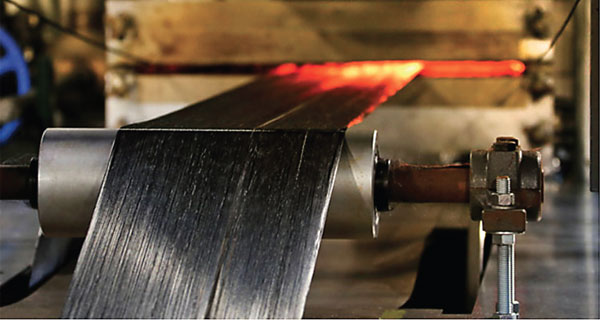
Figure 2. Low-cost carbon fiber, wide tow fiber — 450-650 tow count — produced at the Carbon Fiber Technology Facility, Oak Ridge National Laboratory
Advances in carbon fiber technologies via alternative precursors, efficient processes, and interface engineering are critical to cost reduction at improved performance. Alternative precursors such as textile grade polyacrylonitrile (PAN) and processing approaches are being adopted to engineer carbon fiber materials that yield superior final part properties at reduced production energy levels. Recent advances at the Oak Ridge National Laboratory have enabled a low-cost carbon fiber (LCCF) at properties and cost metrics for automotive, wind and CGS (See Figure 2).
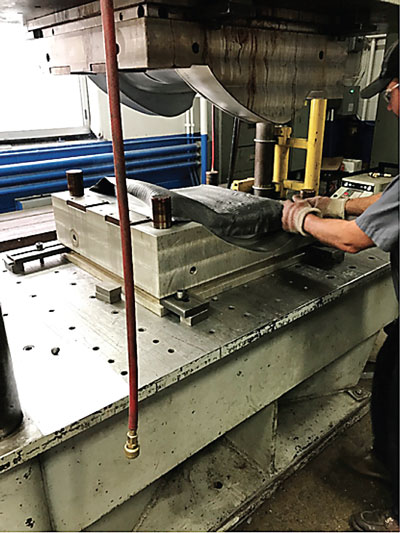
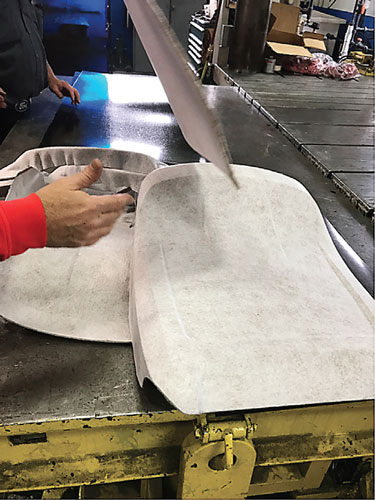
Figure 3. Seat back rest tool for molding sheet molding compound, long fiber thermoplastics and fiber preforms. Image courtesy of the University of Tennessee, IACMI Materials and Processing technology area
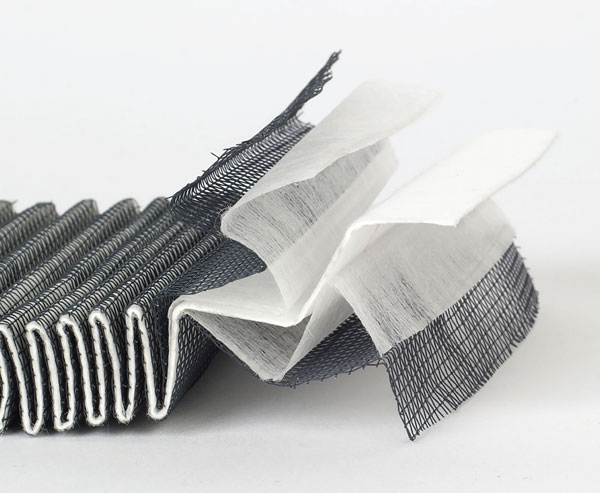
Innovative reinforcements, resins, additives and intermediates are enabling fast cycle times, reduced scrap, integrated features and reduction of embodied energy. Integrated fabrics, braids, preforms and pre-pregs are used in rapid fabrication of door inner, floor, seat back rest, roof, trunk and under the hood auto components, wind turbine blades and composite tanks (See Figure 3). Advanced manufacturing techniques such as injection overmolding, stampable preforms, locally stitched preforms, high-pressure resin transfer molding are some examples that reduce composites manufacturing costs and energy consumption and improve component performance and recyclability. Figure 4 illustrates a locally reinforced preform to provide directional properties. IACMI has partnership with the Long Island, N.Y.-based Composites Prototyping Center (CPC), for prototyping and fabrication.
Composite recycling is of growing interest to the composites community. The next-generation technologies feature novel and increasingly complex combinations and formulations of fiber-reinforced composites, but these are difficult to recycle using current practices. Since recycled chopped carbon fiber costs 70-percent less to produce and uses up to 98-percent less energy to manufacture compared to virgin carbon fiber, recycling technologies are creating new markets from the estimated 29 million pounds of composite scrap sent to landfills annually. Advances in recycling technologies including pyrolysis, solvolysis, mechanical shredding and cement kiln incineration are enabling recycle, reuse, and remanufacture of products. IACMI has strategic partnerships in the recycling technologies with the American Composites Manufacturer’s Association (ACMA) and Composites Recycling Technology Center (CRTC), Port Angeles, Washington.
Figure 4. Laystitch preform for compressed gas storage application. Image courtesy of the University of Dayton Research Institute, IACMI technology area for CGS
Additive technologies in composites manufacturing offer a high-rate, low-cost alternative to traditional tool-making approaches, and shows promise as an effective processing method for printing composite structures from reclaimed structural fibers. Additive approaches have the potential to significantly reduce composite tool-making lead times and increase the recovery and reuse of structural carbon fibers.
Advanced thermoplastic resins into current production processes: Thermoplastics have shorter cycle times and are more suitable for recycling. Increasing the use of thermoplastics for requires a variety of activities, including developing of novel in situ polymerization methods to improve thermoplastic fatigue performance, and establishing design-for-recyclability methods.
Design, Prototyping, and Validation (DPV) are integral steps to turning conceptual designs into high-performance components and verifying that these components meet their intended product requirements. These product development steps rely on a robust understanding of material limits, processing capabilities, principles of mechanical design, and best manufacturing practices to optimize the safety, reliability, and performance of a system.
IACMI is advancing innovative vehicle design concepts by addressing activities such as facilitating round-robin studies that compare composites joint and interface designs for various assembly methods, establishing design optimization approaches for manufacturability and recyclability, validating composite crash simulation models, and creating techno-economic analyses of automotive composite parts to provide manufacturers with design, prototyping, and validation examples.
Modeling and simulation tools for automotive applications require a range of activities including assessing variability in end-to-end simulated manufacturing processes, conducting accelerated tests and validating models with experimental data, incorporating composite joint designs in crashworthiness models, and sharing key materials properties to inform simulation efforts. The integration of these efforts in IACMI is enabling to reduce product development time.
Industry Outlook
Commercializing technologies for low-cost, energy efficient manufacturing of advanced fiber reinforced polymer composites for vehicles, wind turbines, and CGS applications will unleash significant economic and
environmental benefits and help to revitalize U.S. manufacturing and innovation. IACMI-The Composites Institute is playing a pivotal role in shaping future competitiveness and job growth in the United States, and the technical activities needed to accelerate progress toward this vision.
Editor’s Note: Dr. Uday Vaidya is the UT/ORNL governor’s chair in Advanced Composites Manufacturing, University of Tennessee, Knoxville, and chief technology officer at the Institute for Advanced Composites Manufacturing Innovation (IACMI), Knoxville.
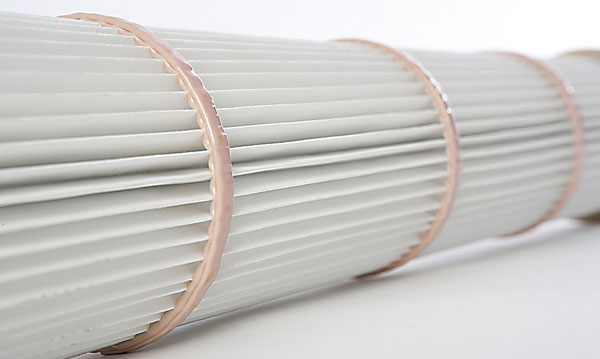
Nonwoven fabric produced by Cerex Advanced Fabrics Inc. is used as a pleat separator in pleated filter media.
The filtration market is comprised of some 20 varied market segments all offering opportunities for technical textile producers.
By Edward C. Gregor
Technical textiles play a major and profitable role in filtration media. A wide variety of fibers, dref yarns, nonwoven fabrics, multifilament and monofilament woven fabrics, and in some cases blends or combinations of more than one of the above, are used in filtration applications. Within this article, dollar amounts are for North America specific to fiber, textile and nonwoven filtration media within the overall the market of nearly $2 billion. Filtration media fulfills a large number of specific uses as well as an overwhelming number of smaller niches that when combined, provides for overall growth at a rate higher than many developed counties gross domestic product (GDP) growth rate.
Growth is driven by many factors, often led by legislative actions and laws from global, national, state, regional and local governments and agencies for a cleaner environment. Bottom line, legislation has been filtration’s best friend. No less important, filtration is used widely to ensure product quality of many manufactured products from chemicals to pharmaceuticals and many other manufactured goods.
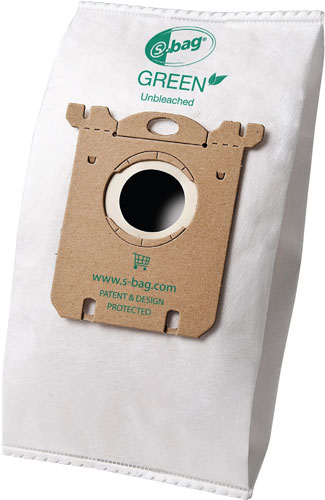
Ingeo™ fiber from NatureWorks LLC is featured in the Green Electrolux s-bag™ vacuum cleaner bag.
Nonwoven Fabrics
Nonwoven filtration fabrics are one of the largest market segments in the nonwovens industry and arguably one of the most profitable. “The filtration industry is seeing a fair amount of consolidation, at all levels with considerable M&A activity over the last several years,” said Brad Kalil, director of Market Research And Statistics, with the Cary, N.C.-based Association of the Nonwoven Fabrics Industry (INDA).
This segment utilizes man-made polymer and inorganic fibers to produce the filters. Polyester and polypropylene dominate; with nylon, fiberglass, meta-aramids, fluoropolymers and polyphenylene sulfide (PPS) and other polymers also used because of their special properties. In addition to these fibers, a sustainable, renewable polymer produced by Minnetonka, Minn.-based NatureWorks LLC is beginning to find its way into the filtration market. “Renewable Ingeo™ PLA [polylactic acid] fibers are used in increasing volumes where disposable filters are found such as spunbond and meltblown fabrics in vacuum cleaner bags as well as a broad range of performance applications, including coffee and teabag filters,” reported Robert Green, global business director, Fibers & Nonwovens, NatureWorks. “Other nonwovens, like PLA nanofibers, exhibit exceptional processing consistency, a range of charge capabilities, and better nonwoven structure development offering lower pressure drop.”
The four most widely used nonwoven man-made fabrics are:
needlefelts produced from staple fibers;
wetlaid produced from short-cut fibers;
spunbond; and
meltblown fabrics.
In the latter two formats, fibers are formed in-situ directly from a polymer melt creating nonwoven fabrics without the use of preexisting fibers. Airlaid nonwovens are formed from short fibers and/or wood pulp. Although not a true nonwoven, Dref spun “yarns” are a specialty media type that bypasses the roll goods format. The bulky Dref yarns are directly wrapped around a center core of a cartridge tube to form what is known as string wound cartridges. “We have produced yarns for string wound cartridges for over 25 years, an important fiber medium for a large number of users,” said Gilbert Patrick, president, Kings Mountain, N.C.-based Patrick Yarns, a large dref yarn supplier.
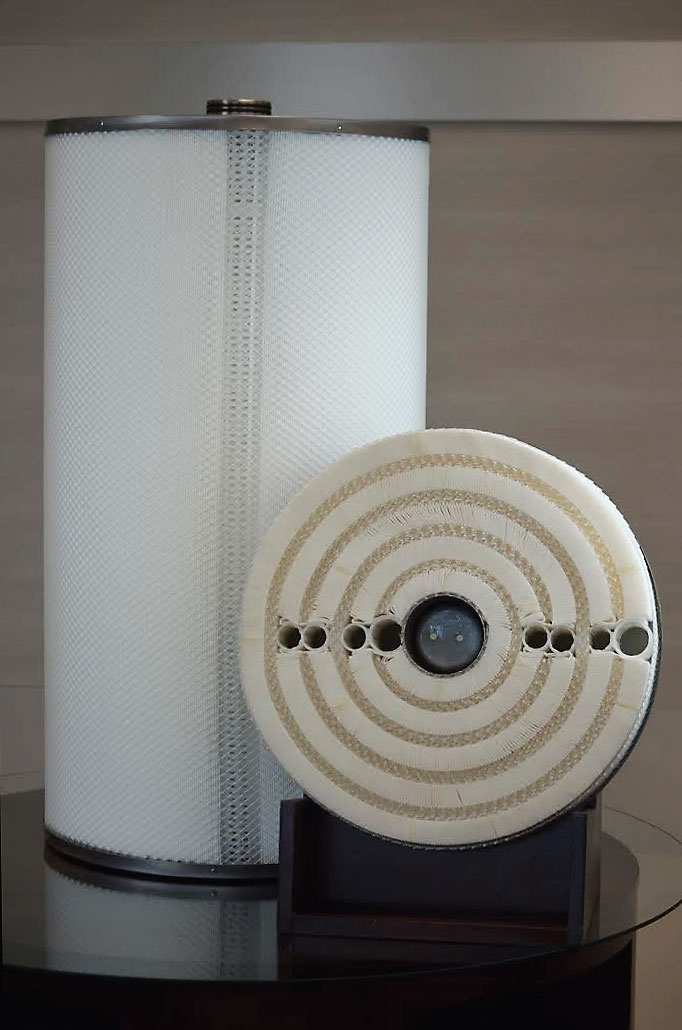
Platinum cartridge manufactured by Filtration Technology Corp. showing the cross section of the filter
The most-used nonwovens in terms of sales revenue are needlefelt fabrics typically formed made using polyester, but sometimes polypropylene and other polymeric fibers including meta-aramids and PPS. Heavy nonwoven fabrics in the 14 to 22 ounce per square yard (oz/yd2) range are used in baghouse filters to capture particulate emitted within coal-fired power plants and multiple contaminates in industrial facilities before escaping into the atmosphere or a work environment. Liquid fabric bags made from needlefelts often are in the 8 oz/yd2 range, and remove particulate from liquid streams and many times serve as prefilters in a wide variety of industries including chemical processing and metal working processes.
Spunbond fabrics are much lighter in weight and come in the 0.5 to 4 oz/yd2 range. Generally, these nonwovens are made using polyester, polypropylene and nylon; and are found in many common applications including pleat support separators for microporous membrane cartridges, coolant systems, and swimming pool and spa filters. Spunbonds are available from many suppliers including Cranbury, N.J.-based Avanti, Evansville, Ind.-based Berry Plastics and Cerex Advanced Fabrics Inc., Cantonment, Fla.
“Cerex Advanced Fabrics’ spunbond nylon fabrics provide filter producers with a thinner, stronger and more uniform backing substrate that can withstand high temperatures, system pulsations and resistance to chemical attack,” said Jim Walker, president and CEO, Cerex. “Nylon allows filter designs with more pleats providing more filter surface area, which reduces pressure drop and increases dust holding capacity, as well as provides excellent durability for today’s longer service intervals.”
A string wound cartridge in a clear plastic housing
Meltblown fabrics are produced in quite large volumes as roll stock, and are found in both air and several liquid filtration products because of their high dirt hold capacity. Over the past 25 years, meltblown liquid cartridges — also known as spray spun cartridges — where fibers are deposited on a rotating mandrel akin to a lathe and finished into 3-inch-diameter by 10-inches long cartridges in a single-step process have become more common place. Meltblown cartridges bypass the use of roll goods and tend to be lower cost because of their efficient manufacturing process.
Houston-based Filtration Technology Corp. (FTC) produces Platinum filters capable of holding extremely large quantities of contaminate using nonwoven fabrics. “FTC supplies liquid filters in many configurations, but none compare to our Platinum Series filters, which can retain up to several hundred pounds of contaminant,” said Chris Wallace, vice president, FTC. “The unique pleat pattern in our patented Platinum technology maximizes the media surface area in a pressure vessel resulting in lower flux rates and higher contaminant loading capacity per filter cartridge. The Platinum technology provides our customers with longer on line life which translates to lower direct filtration costs, lower maintenance costs and minimal down time. Another feature of this technology is the flexibility to offer the technology to a broad range of applications and markets, since we can use any nonwoven or wetlaid fabric in this unique pleat pattern.”
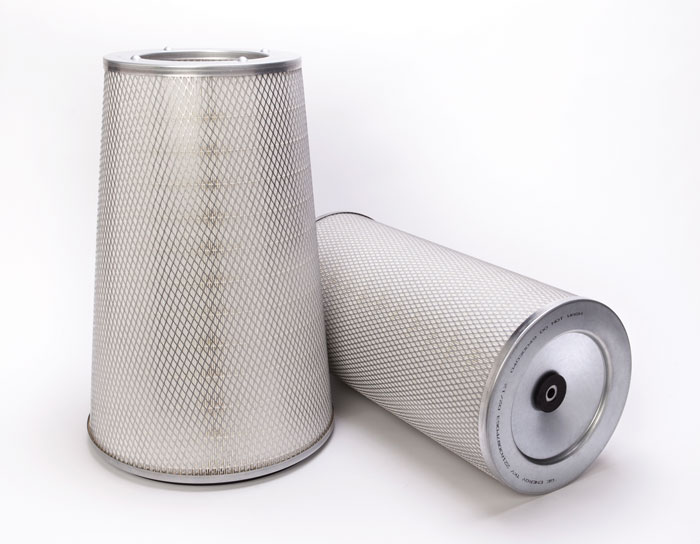
A pleated dust collection cartridge produced by Clarcor Inc.
Nanofiber Nonwovens
One of the newest technologies trending in filtration media is nanofiber nonwovens. Fine fibers in the nano size range are added in weights ranging from 1 to 2 grams per square yard to the surface of heavy wetlaid and spunbonded nonwovens. Pleated filters are intended to collect fine particles on the upstream surface of the composite media. To date, this technology largely has been limited to air filtration in dust collection cartridges or engine air-intake filters for use in automobiles and trucks. “A large and highly-diversified filtration product supplier like Clarcor uses virtually every imaginable fabric, especially synthetic and/or cellulosic blended nonwovens, in a wide range of products from power generation to transportation, oil and gas, residential air, along with water and sewage treatment and many others,” said Leonard Castellano, chief engineer at Franklin, Tenn.-based Clarcor’s Innovation Center. “There is hardly an industry we touch that doesn’t use textiles, nonwovens, from microfiber to nanofiber constructions in one form or another.” Interestingly, Parker Filtration recently made a bid to acquire Clarcor — Clarcor earlier this year became the new owner of FibeRio Technologies, a producer of nanofiber equipment.
Wetlaid Nonwovens
Wetlaid filtration media are made on standard paper-making equipment. The process typically uses short-cut man-made, fiberglass and/or cellulosic fibers, including blends found in the lubricant, oil and engine air-intake filter markets common in auto and truck vehicles. HEPA/ULPA air and many laboratory use filters made from wetlaid micro and macro fiberglass media, as do hydraulic filters, which often are combined with a spunbond nonwoven carrier fabric.
Wetlaid polyester and polyester binder fibers are used as support — backing — fabrics for membranes in reverse osmosis (RO), nanofiltration and ultrafiltration (UF) processes and spiral-wrap module designs. Leading substrate suppliers include Japan-based AWA Paper and Alpharetta, Ga.-based Neenah Paper. Membrane supports are highly specialized and must withstand high system pressure, lie perfectly flat across the fabric width and have no standing fibers that may penetrate a coated membrane thereby covering the substrate’s surface.
A gas turbine filter featuring nanofibers manufactured by Clarcor Inc.
Precision Woven Monofilament Fabrics
Monofilament fabrics primarily are constructed using polyester or nylon with other polymers used in smaller volumes. Yarns range in diameter from a fine 20 microns to a coarse 1,000 microns, depending upon the application. Fabric costs are related to the yarn size and number of yarns per square foot. Fabrics tend to be used in surface filters, and are able to screen or sieve particulate of a defined size. Applications include medical filters used in open heart surgery, automotive transmission filters, air conditioning and fuel injection filters, filters used as sifting screens in flour and wheat processing, as well as heavy fabrics used as sludge dewatering belts. In North America, the market size is nearing $80 million and is close $200 million worldwide. Leading global fabric suppliers for monofilament filter fabrics include Switzerland-based Sefar AG and Italy-based Saati S.p.A.
Wire Cloth
The textile industry does not normally consider wire cloth and other metal media textile in the traditional sense, but this product is closely related to traditional textiles and is used as an alternative filtration media, especially in applications were precision woven monofilament fabrics are used. Precision wire cloth is woven primarily by Europe-based vendors including Switzerland-based G. Bopp & Co. AG and Germany-based Haver & Boecker OHG. Non-precision constructions tend to come from Asia. Asian-sourced wire cloth often is used where liquid flow pressures are high enough to require media rigidity, encapsulating a non-rigid nonwoven and/or wetlaid fabric in a sandwich construction. North American production is relatively modest and mostly focuses on specialty weaves made using high-alloy metals. Wire cloth commonly is used in polymer filtration to produce textile fibers, thin films, aerospace filters and is widely used in sieving and sifting. In North America, the roll goods market size totals $100 million.
Multifilament Fabrics
By and large, multifilament man-made filtration fabrics are not particularly common beyond modest volume in plate and frame applications, or as blends of multifilament and monofilament yarns from Germany-based C. Cramer GmbH & Co. KG, Sefar, Dodenhoff Industrial Textiles Inc., Westlake, Ohio, to name a few manufacturers.
Woven And Nonwoven Glass Fabrics
Woven glass fabrics are found in high-temperature end-uses, primarily in baghouse constructions. Notable North American woven fabric producers include Greensboro, N.C.-based BGF Industries Inc., Anderson, S.C.-based JPS Composite Materials and Filtration Specialties Co., Abilene, Texas. Wetlaid glass producers include Manchester, Conn.-based Lydall Inc., East Walpole, Mass.-based Hollingsworth & Vose and France-based Bernard Dumas. Applications include HEPA/UPLA, coalescing, laboratory and hydraulic filter media. The combined global filtration media market for woven and wetlaid glass fabrics are positioned at more than $300 million.
Knit Fabrics
Raschel, circular-knit and tricot knitted fabrics are used in filter media, although consumed in very limited volumes. However, certain warp knits are widely featured in spiral-wrap modules used in UF/NF and RO, and constructed of bicomponent yarns, heat bonded to stabilize the fabric, while acting as spacer mesh to permit liquid flow — flux — to the module’s center core. Volume is large, growing in excess of ten percent each year. Users include Midland, Mich.-based The Dow Chemical Co., Wilmington, Mass.-based Koch Membrane Systems Inc. and Hydranautics, Oceanside, Calif.
Market Trends
All forms of filtration media typically are growing at a 2 to 5 percent compound annual growth rate above the GDP in many developed countries. Legislative mandates, mentioned earlier, account for a good share of this growth. Expanding use of new technologies — such as nanofibers in dust collection cartridges and engine air-intake filters, as well as tricot spacer fabrics featuring bicomponent yarns used in RO/UF spiral-wrapped modules — also contribute to the growth of the segment. There are plenty of unmet industry needs including the desire for more extended life media filters and improved fiber distribution in nonwovens to name just two needs. At the end of the day, as was stated in a recent American Filtration & Separations Society “Point of View” document, “There is hardly a pollution, contamination, or environmental problem that cannot be prevented or remediated through the use of filtration and separations technologies.”
Noteworthy industry characteristics:
There are approximately 20 major filtration market segments using many types of air/liquid filtration media, including aerospace, transportation — automotive, trucking and off-the-road vehicle filters — chemical processing, food and beverage, laboratory, which is larger than most industry people realize, medical, pharmaceutical, semiconductor, polymer filtration, oil and gas, power generation and other markets.
Filtration is still largely a razor blade market with lots of single use filters, but there’s an emerging trend toward reusable and extended life media filters, as well as enclosed systems with reusable or in-situ cleanable media to change the paradigm.
Media supplied in liquid filtration applications offer more niches and opportunities for arguably higher profitability than air filtration, although the volume of textile and nonwoven fabric media used in air filtration — for example, HVAC — overall is at least twice the volume of liquid filtration media.
Product cycles last many years and often decades, even though the industry is always willing to embrace competitive new media constructions which disrupt existing technology.
There is considerable upstream product development with customers. To maximize growth, media companies develop close relationships with filter/system producers.
The industry welcomes innovative ideas, polymers and filtration media to meet ever increasing needs in the market segments. For example, textile and nonwoven filtration media possessing a narrower pore-size distribution, higher flow rates and/or greater dirt-holding capacity than incumbent constructions are always sure bets to gain customer attention.
Editor’s note: Ed Gregor is owner of Edward C. Gregor & Associates LLC and can be reached at 803-431-7427 or ecg@egregor.com
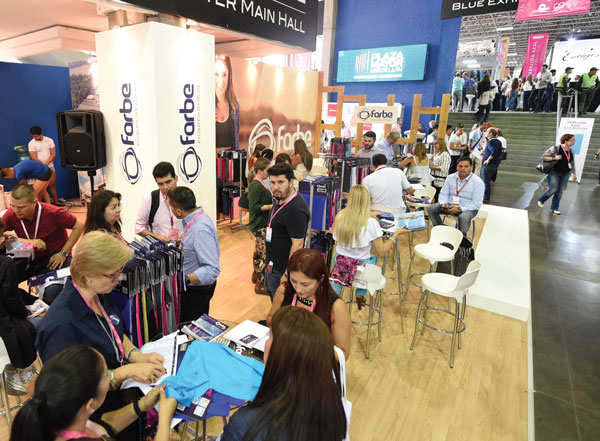
Colombiatex de las Américas reports a satisfactory show in 2017.
By Dr. Virgilio L. González, Latin America Correspondent, Textiles Panamericanos
With its slogan of “A New Game,” and approximately $326 million in business expectations, the recently-held Colombiatex de las Américas 2017 closed satisfactorily after three days. Approximately 21,924 people attended the 2017 show — 5.5-percent more than the previous year.
The commercial interests of companies from countries including the United States, Ecuador, Mexico, Peru, Guatemala and Costa Rica was measured. Some 41 percent expect investment in buying textiles, 23 percent in machinery, 10 percent in raw materials, 7 percent in chemical products, 7 percent in threads and yarns, and 12 percent in other categories.
The show hosted 510 exhibitors, mainly from Colombia, India, Brazil, Spain and Italy. Exhibitors showcased machinery, raw materials, fabrics, and finished garments among other products.
Show organizers report 1,928 international buyers attended the show — 9-percent more than in the previous year. Of those attendees, 27 percent were attracted by the important initiative of Pro Colombia.
Colombiatex de las Américas 2017 was successful thanks to the work of some 2,900 people — 72 direct employees and 2,828 people working indirectly to organize the event.
The show was opened by Daniel Arango, vice minister of Trade, Industry and Tourism of Colombia; Luis Pérez Gutiérrez, governor of the Department of Antioquia; Federico Gutiérrez, mayor of Medellín; Felipe Jaramillo, President of ProColombia; and Carlos Eduardo Botero Hoyos, executive director, INEXMODA. The Colombian President Juan Manuel Santos sent a written message expressing the importance of the Colombian textile industry, appreciation of the new opportunities, and stating that the work between the government and industry helps to grow this important industrial sector.
During the press conference, the executives pledged:
To continue the fight against smuggling and unfair competition.
To take advantage of free trade agreements (FTAs) with other countries including establishing FTAs with Costa Rica, India and Aruba, in addition to the traditional markets.
To transform knowledge and technology by means of modern machinery.
To bridge the gap between industry and universities.
Remove tax barriers.
Connect established companies with smaller ones, in order to attract international markets.
Luis Pérez Gutiérrez also spoke about a new project to develop the Gulf of Urabá through the construction of a highway from Medellín to the gulf. With this action, the port in the Pacific Ocean will be able to handle raw materials more efficiently and export Colombian goods to different markets.
International buyers appreciated the quality and prices of goods on display at Colombiatex 2017. The largest delegation of buyers came from Ecuador, with 178 buyers at the show. Interviewed companies from the United States reported they were interested in raw materials and new ventures hoping to take advantage of the FTA with Colombia.
In-Sattva®, Chicago, came to buy underwear and ladies clothing in several styles. The vicinity of Colombia to North America facilitates on time deliveries and this enables the company to take advantage of the FTA.
Minneapolis-based Target Corp., a first time attendee at Colombiatex, was reportedly interested complete package for casual and feminine clothing. The company was considered a buyers VIP and came with exclusive agendas to meet national companies.
Brendan Pape, president, Brist Manufacturing, Bellingham, Wash., commented on the high quality of Colombian production, together with hospitality and attention — both important factors when establishing business relationships.
CHICAGO — March 21, 2017 — Textile designer, teacher, author and illustrator Franklin Habit will join the Association for Library Collections & Technical Services (ALCTS), a division of the American Library Association, to pass on his knowledge of textile preservation during Preservation Week®, April 23-29, 2017, a time when librarians and library workers share expertise on how to preserve family heirlooms and treasures.
Habit’s varied experience in the fiber world includes two popular books (It Itches and I Dream of Yarn) and contributions of writing and design to Vogue Knitting, Yarn Market News, Interweave Knits, Interweave Crochet, PieceWork and Twist Collective, as well as regular columns and cartoons for Knitty.com, PLY Magazine, Lion Brand Yarns and his popular “Fridays with Franklin” feature for Skacel Collection. Many of his independently published designs are available via Ravelry.com.
Habit first became well known as the writer of The Panopticon, one of the most popular knitting blogs on the Internet, which attracted readers worldwide to his mix of essays, cartoons, and the adventures of Dolores the Sheep.
“I am thrilled to have this opportunity to contribute and gain additional knowledge of textile preservation,” said Habit. “There is no greater honor than to work alongside expert librarians and library workers who are transforming lives through education and lifelong learning. As an enthusiastic preservation-novice who is tasked with safeguarding multigenerational family treasures, I’m looking forward to sharing my experiences with the public as I work to preserve fabrics and patterns from the late 19th and early 20th centuries.”
As Preservation Week Honorary Chair Habit will appear in Preservation Week artwork and will chronicle preservation efforts through various social media channels. You can follow Habit online with @franklinhabit on Twitter, @franklin.habit on Instagram, or through his Facebook page for tips and resources
This year’s Preservation Week® theme is textile preservation, and participating libraries will celebrate by offering special programs and services to connect library users with preservation tools, promote the importance of preservation and strive to enhance knowledge of preservation issues among the general public. Institutions around the world will be using the hashtag #preswk to talk about their preservation programs and services.
Figure 1. The team’s first prototype on the sample loom at the Springs Weaving Laboratory run by the Zeis Textiles Extension.
A recent NCSU Senior Design project paired a team of students with Patagonia to develop a new woven fabric for the fly fishing wader market.
By Jesse Noble
All students pursuing a degree in Textile Engineering or Textile Technology within the College of Textiles at North Carolina State University (NCSU) pass through the rigors of Senior Design before graduation. This is a year-long program structured as a two-semester course sequence that encompasses a project sponsored by an industrial company or government agency looking to improve a product, process or test method. This is a team project that typically includes three to four members with topics that range dramatically within the textile industry.
During the 2015-16 academic year, one team embarked on a journey to research, prototype and create a new woven layer for the fly fishing wader market sponsored by Patagonia Inc., Ventura, Calif. The team also developed a fabric testing method that better simulates field conditions for fly fishing waders. The project began with the following definition:
“Currently, fabrics used in submersion and wading products are not only stiff, dense and heavy, but they also have poor breathability, causing discomfort for the wearer. Throughout the lifetime of these types of products, they tend to fail due to the separation of layers, ultimately caused by bonds becoming weak between layers. Three other main areas of failure are the attachment of booties, seams failing and the occurrence of punctures. The primary goal of this project is to create a test method for fabrics that will determine whether the fabric will stay waterproof through use. The development of a prototype fabric will follow benchmarking current innovative technology as well as Patagonia’s given resources. Supplementary goals include testing how durable the fabric is to surface wear, puncture resistance, interlayer adhesion, and, if used, the fabrics resistance to hydrolysis of any coating or adhesives on the fabric. This prototype fabric will be developed with Patagonia’s mission statement of ‘Build the best product, cause no unnecessary harm, and use business to inspire and implement solutions to the environmental crisis’ in mind.”
Getting Started
The first thing the team had to understand was how a puncture happens in a fabric. To start, the students researched similar products that stop punctures such as dog bite sleeves and bulletproof vests. As the team gained knowledge of these products, they understood the mechanisms responsible for resisting a puncture. The students also began to notice a common layering approach in the construction to prevent punctures. As such, they were hesitant to use the traditional five-layer construction found in a typical wader: knit fabric on the inner layer; waterproof membrane; woven layer; waterproof membrane; and a final woven layer on the outer surface. The team began exploring how the effect of more layers or altogether new woven layer constructions could be used to provide improved puncture resistance without adding weight to the waders. At the same time, they also were conducting research on the test methods relevant to the project.
Ideation
The next phase of the project was ideation, where the team generated actual concepts for the solutions they envisioned during the research. This included combinations of out-of-the-box ideas as well as more practical ideas. As the scope began to narrow, the team explored new or creative ways to change the weave construction, yarn construction and fiber materials. The students also did not forget about the other phase of the project — to develop a more suitable puncture test method. Here the ideation focused on how a strategy for simulating a realistic wader puncture could be developed. By rating all of the ideas based on the criteria established early on in the project, the team was able to narrow its focus to a specific woven fabric construction and a new test method that could be used to accurately analyze puncture.
Prototyping
To develop the new woven fabric, the students worked extensively with the Springs Weaving Laboratory at NCSU’s College of Textiles run by the Zeis Textiles Extension program. Luckily the lab was right next door to the Senior Design lab and the team was able to work closely with the lab manager, William Barefoot, to create 20-inch by 72-inch samples of the woven construction for testing and proof of concept (See Figure 1).
In order to examine the design concept, the team defined a Design of Experiment for the woven fabric with construction and denier as the two variables. After the first round of prototyping was complete, the students were able to reflect and improve and foresee any implications with the sample weaving process and the construction design. In the second prototype, the team was able to weave exactly what it wanted, resulting in huge gains in the material properties with only a small addition of weight.
Figure 2. A custom puncture test apparatus developed by the team.
Testing
In parallel to the prototyping, the team constructed and modified the testing design. Using the machine shop in the College of Textiles, the students built a custom apparatus that enabled the fabric to be held in a consistent way while being punctured (See Figure 2). They further conducted a statistical analysis to validate this testing strategy. The biggest impact of this newly developed test method is that it enables textile engineers to observe how lighter fabrics with fewer layers, lower denier and a specific weave design will respond to multiple types of puncture.
After creating the new test method, the team tested each prototype for puncture resistance, tear strength and abrasion. After discussing the results with the sponsor and using information from research and field testing, the students believed the test method produced an appropriate evaluation of the fabric prototype’s durability out in the field.
Results
While the team cannot share the specific weave design of the fabric developed, they report they managed with the new design to demonstrate significant improvement in the puncture resistance. One design demonstrated that with only a 7-percent increase in weight, puncture resistance increased by more than 70 percent when compared to the heavyweight benchmark product. Another prototype design decreased the weight by nearly 6 percent compared to the heavyweight control, while increasing puncture resistance by more than 60 percent.
After reviewing the data along with the strengths and weaknesses of each prototype, the students suggested to Patagonia several paths forward in fabric design.
Overall, the team created two woven fabrics that, according to a literature review, had not previously been fabricated. Moreover, the strategic use of the engineering design process allowed the students to show how these designs outperform the current standard woven fabrics that are used in waders through only minimal additions to cost and/or weight. Finally, the team created a new test method to give textile engineers a better idea of how fabrics will behave in the field — or stream, as the case may be.
For more information on this project, please contact the Patagonia sponsor: Matt Dwyer, Matt.Dwyer@patagonia. com; and Ben Galphin, Ben.Galphin@ patagonia.com. For more information on the NCSU Senior Design Capstone Program, please contact the program directors: Jesse S. Jur, jsjur@ncsu.edu; and Russell E. Gorga, regorga@ncsu.edu.
Editor’s note: Jesse Noble is a 2016 North Carolina State University (NCSU) graduate in Textile Engineering and was a member of the team that created the new fly fishing wader fabric.
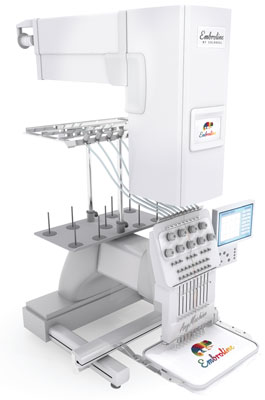
Embroline, from Coloreel, allows instant coloring of thread during embroidering.
Sweden-based Coloreel recently introduced a thread coloring attachment called Embroline that allows instant coloring of a textile thread while it is in production. Developed for the embroidery industry, Embroline can be used with most embroidery machines without requiring modifications and offers design creation without limitations on the number of colors. According to the company, color changes can be quick or gradual to produce a smooth color changes or colored effects. “This opens up an entirely new world for designers, embroidery manufacturers and apparel customers” says Joakim Staberg, founder of Coloreel and the inventor of the technology.
The technology makes it no longer necessary to keep a large stock of embroidery colors on hand, and waste is minimal. In addition, fewer thread cuts during the embroidery process result in a higher quality embroidery
“With Embroline, the embroidery manufacturers only color exactly the amount of thread they need for each order,” said Staberg. “Thus, no thread waste and no dye disposed into wastewater.”
Testing Machines Inc. (TMI), Newcastle, Del., has introduced a new generation of thickness testers geared to testing very thin materials such as textiles, nonwovens, plastic films, and paper, among other items. The 49-86 and 49-87 models feature advanced diagnostics and reporting functions; a resolution of 0.5 microns; GRAPHMASTER™ software option, which permits data collection, plotting and analysis; and the ability to save up to 100 readings during a continuous measurement, among other features.
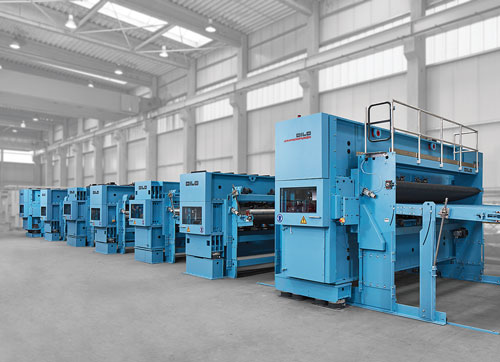
Since 2015, Germany-based DiloGroup has sold 10 complete high-capacity needling lines to Huafon Microfiber Co. Ltd, a producer of man-made leather from islands-in-the-sea fiber. The machines are installed in Huafon’s new plant in Qidong, Jiangsu Province, China.
The 10 lines feature DiloTemafa high-capacity blending systems, Dilo- Spinnbau card feeding systems with Twinflow, high-capacity carding machines, high-speed crosslappers with special air-guide systems as well as needlelooms with Hyperpunch technology from DiloMachines. All of the lines feature the CV1 system to ensure product uniformity.
Six lines are already in operation at Huafon, two lines soon will be operational and the remaining two lines will be shipped sometime during the first half of 2017.
Huafon Microfiber will install a total of 10 high-capacity needling lines from DiloGroup.
Germany-based Textilwerke Todtnau Bernauer KG, a manufacturer of technical textiles including BERATEX® fabric used in tire manufacturing, recently moved the heat-setting process in-house after many years of working with commission finishers. The company selected a heat-setting line from Germany-based Brückner Trockentechnik GmbH & Co. KG and now has final fabric finishing integrated into its own process.
Brückner reports the alternating arrangement of thermo zones in the line ensure temperature accuracy across the length and width of the dryer — a feature that was important to Textilwerke Todtnau to ensure the necessary properties in the finished product. Brückner worked with the customer to develop a line that met all its technical requirements.