WASHINGTON — June 25, 2020 — Field to Market: The Alliance for Sustainable Agriculture and the U.S. Cotton Trust Protocol announced a new agreement today that formalizes a partnership between the two organizations to document and accelerate sustainable outcomes for U.S. cotton production. The new partnership strengthens the ability of cotton growers and the value chain to drive continuous improvement, combining two of the industry’s leading sustainability assessment frameworks.
“Field to Market is pleased to join forces with the U.S. Cotton Trust Protocol to enable the industry to meet its sustainability goals and credibly communicate results,” said Rod Snyder, president of Field to Market. “Through this collaboration, Field to Market is committed to scaling access to our sustainability tools and analytics and enabling growers and the broader cotton value chain to measure environmental outcomes while identifying opportunities for improvement.”
In a memorandum of understanding signed this week, Field to Market and the U.S. Cotton Trust Protocol have committed to:
Scale grower access to sustainability measurement by enabling farmers enrolled in the U.S. Cotton Trust Protocol to utilize metrics from Field to Market’s FieldprintÒ Platform, allowing growers to analyze the connection between agronomic practices and sustainability outcomes;
Track U.S. cotton’s sustainability journey through continued publication of Field to Market’s National Indicators Report, which will communicate progress against the industry’s established environmental targets; and
Foster an increased level of collaboration by participating in each other’s meetings and work sessions.
Together, Field to Market and the U.S. Cotton Trust Protocol will assess progress against the U.S. cotton industry’s established environmental targets. By 2025, the industry aims to achieve targeted reductions in soil loss, water use, greenhouse gas emissions, and energy use, alongside increased land use efficiency and soil carbon. The Trust Protocol completed a successful project pilot in 2019, and has begun fully implementing its programs in 2020, with a goal to enroll at least 500 producers by December 2020.
“Sustainability is a growing priority for the U.S. cotton value chain, from consumers, brands, retailers to textile manufacturers,” said Ken Burton, executive director of the U.S. Cotton Trust Protocol. “The U.S. Cotton Trust Protocol looks forward to collaborating with Field to Market to scale our collective sustainability impact, meet our industry targets and strengthen the sustainability of U.S. Cotton.”
ZURICH, Switzerland — June 25, 2020 — Ernesto Maurer has been appointed as the new President of Cematex, the European Committee of Textile Machinery Manufacturers. His four-year term of office will cover three major events in the pivotal ITMA series of textile technology exhibitions scheduled for Europe and Asia.
Maurer was elected at the Cematex General Assembly, on June 12. He has been president of the Swiss Textile Machinery Association since 2015, serving during the same period as a member of the Cematex Board of Directors and its 1st vice president for the past four years.
Also elected at the General Assembly were 1st Vice-President Mikael Äremann (TMAS, Sweden) and 2nd Vice-President Charles Beauduin (Symatex, Belgium).
Cematex is the official representative body for Europe’s national textile machinery associations and has been in charge of organizing the ITMA exhibitions, since inaugural show in 1951, and subsequent editions in both Europe, Asia and China.
Over the next four years, Maurer will lead Cematex through a challenging period globally, taking in three major events. ITMA Asia + CITME will be held in Shanghai from June 12-16, 2021 — postponed from October 2020 because of Covid-19. This will be followed in 2022 by the next ITMA Asia + CITME in the same city, and then by ITMA 2023 in Milan, June 8-14.
Said Maurer: “The Post-Covid-19 period will have a tremendous impact on the textile industry of today and tomorrow. Cematex is determined to maintain its leadership role for exhibitions, carrying the ITMA brand to partners worldwide today and in the future, including a focus on increasingly-digital opportunities.”
Posted June 25, 2020
Source: CEMATEX – The European Committee Of Textile Machinery Manufacturers
CARVICO, Italy— June 25, 2020 — Carvico presents Norway, its brand new product recently added to its family of stretch, eco-sustainable performance fabrics marketed by the company headquartered in the district of Bergamo.
Made of ECONYL®, a 100-percent regenerated yarn from pre- and post-consumer waste materials such as ghost fishing nets, carpet fluff and tulle. Norway is soft and brushed and thus extremely pleasant to the touch and comfy on the skin. Its breathability and thermal insulation power make this fabric ideal for winter sportswear.
Norway ensures the right thermal Exchange between the body and the environment; also, it is fast drying and prevents moisture from staying on the skin. Moreover, its innovative anti-bacteria treatment prevents bacteria generating bad smell from spreading and causing itches.
Hyper-resistant, Norway is designed to be long lasting, pilling and abrasions resistant.
Ideal for winter sports, especially those practiced at high altitude, Norway protects the body from cold and UV rays (UPF 50+).
COMPOSITION: 84-percent recycled polyamide/16-percent EA; WIDTH cm 165; WEIGHT g / m² 220; PIECE LENGTH m 50
FAIRFAX, Va. — June 25, 2020 — PRINTING United, originally scheduled to take place at the Georgia World Congress Center in Atlanta on October 21-23, 2020, will now move to a powerful online experience this fall due to constraints surrounding the COVID-19 pandemic. The health and safety of all attending and involved with the show remains paramount. The decision to terminate the in-person expo comes after extensive conversations, up-to-the-minute surveys, and projections that the team has been navigating since the onset of the pandemic. Details regarding the new online event experience are forthcoming.
PRINTING United has met continuously with experts from the Georgia World Congress Center, the city of Atlanta, Johns Hopkins Center for Health Security specializing in mass gatherings, and local authorities on guidance and recommendations on best practices as related to all aspects of the event. Past attendee and exhibitor feedback highly suggested a willingness for companies to travel and participate in this year’s show up until very recently, when the state of re-opening projections and trends in COVID-19 began to shift.
“The decision to cancel this event did not come easily and we have waited as long as possible before costs and logistical implications to our exhibitors and attendees became irreversible,” says Ford Bowers, President and CEO, PRINTING United Alliance. “Many factors are unfortunately out of our control, including travel restrictions and federal, state, and local governmental regulations, as well as the potential for another spike in COVID-19 occurrences. These factors, and the attendant uncertainties around them, have made it nearly impossible to responsibly hold the event.”
PRINTING United Alliance Chief Economist Andy Paparozzi says that, according to the consensus of economists surveyed by The Wall Street Journal, they expect the American economy to grow robustly in 2021 — by its fastest pace in nearly 40 years. That will give the printing industry a big boost, flipping the mindset from cost reduction and survival to capital investment and growth.
“We have been humbled by the volume of exhibitors and partners who have wholeheartedly expressed the desire and need for PRINTING United to take place in order for their businesses to continue the progression out of this disruption, especially after such a successful PRINTING United showcase in 2019,” says Mark J. Subers, president, PRINTING United. “While we realize this is not the same as our cornerstone of being together under one roof, we feel it is the most responsible and beneficial move for all our constituents at this time. We remain committed to bringing the industry an experience like nothing anyone has previously seen before.”
REMSCHEID, Germany — June 25, 2020 — The China-based industrial yarn manufacturer Zhejiang Kingsway High-Tech Fiber Co., Ltd. is expanding its production capacities by a further 40,000 tons per annum with five Oerlikon Barmag lines. Kingsway is already successfully manufacturing special high-quality yarns, exclusively deploying Oerlikon Barmag industrial yarn systems.
The 21 new spinning positions will be used to manufacture a broad product range: in addition to super-low-shrinkage (SLS) and high-tenacity (HT) yarn, the business also plans to produce automotive yarns for seat belts and airbags. This flexibility is made possible as a result of the Oerlikon Barmag systems’ configuration. The new systems are expected to commence manufacturing next year.
Industrial yarns for greater safety
As a quality-conscious industrial yarn producer, Kingsway has been manufacturing its sophisticated, high-end yarns on Oerlikon Barmag filament yarn systems since 2015. Alex Yang Yu Long, CEO of Kingsway, is proud of relying on engineering artistry from Remscheid: “As expected, the yarns are first-class in terms of quality. Our products are used in safety equipment, sometimes in situations where lives depend on them. Therefore, there can be no compromises. To this end, we select our partners with the utmost care.”
As the U.S. economy attempts to ramp back up, administrators, executives and workers are all learning — often the hard way — how to coexist with COVID-19.
“Some early models predicted a significant decrease in the number of cases beginning in June,” said one analyst. “That hasn’t happened yet, of course. And a big part of the reason is that we have not yet come to grips with the fact that this might be a long-term problem, at least until a reliable vaccine is ready for mass distribution.
“It is unfortunate that some people — both in and out of government and business — aren’t taking this threat seriously enough,” she continued. “Some states that opened up early — perhaps too early — are now seeing record numbers of coronavirus cases. That may be attributed to the current administration’s assertion that more testing is naturally going to produce more infections, or it may be because people aren’t being careful enough. And that’s unfortunate, if it is the latter, since the tools are available to both reopen the economy and slow the spread of the virus.”
She cited spinners and fabricators as critical industries in the fight against COVID-19. Her assertion is supported by news coming from governments, communities and the industry. For example, Parkdale has won a $500-plus million contract for 60 million reusable isolation gowns for medical workers and first responders. Parkdale also has a face-mask contract valued at $11.3 million for 7.5 million masks.
A Parkdale subsidiary U.S. Cotton, a manufacturer of cotton swabs, has joined in an effort with the Food & Drug Administration (FDA), the Gates Foundation, UnitedHealth Group and Quantigen to ramp up production of spun synthetic swabs to help the country’s frontline health care workers administering tests for the COVID-19 disease.
U.S. Cotton has developed a fully man-made, polyester-based Q-tip-type swab that can be used in coronavirus diagnostic testing, according to a recent release. The U.S. Food and Drug Administration just announced that these synthetic swabs — with a design similar to Q-tips — could be used to test patients for the coronavirus.
As previously cited, face masks are a key component in slowing the spread of COVID-19. A recent study by the Chemical Engineering Department of Northeastern University in Burlington, Mass., and Lahey Hospital and Medical Center, also in Burlington, revealed that the top performing face mask was manufactured by Pennsylvania-based AKAS Textiles. The study tested more than 70 different common fabric combinations and masks, including the N95 respirator, for their ability to block the transmission of virus-like nanoparticles.
The mask with the best filtration was made of layers of AKAS ProCool® Performance Fabrics combined with Zorb® 3D Stay Dry Dimple fabric. The combination of these fabrics tested 72 percent more effective than the N95 respirator.
ProCool Performance Fabrics are two-sided fabrics which are inter-knitted to provide filtration. The special wicking fibers in it help in managing the moisture. Zorb 3D Stay Dry Dimple is made with surface layers of wicking Stay Dry fibers with an innermost core of dense cellulosic fibers, which work as the filter.
Sustainability Efforts Continue
Sustainability has been a key topic in manufacturing circles over the past few years — as companies turn from generating tons of toxic waste to finding ways to recycle and replenish Earth’s diminishing natural resources. Yarn spinners, once reviled as among the most egregious of polluters, are now at the forefront of helping create a cleaner, healthier, sustainable planet. Cases in point include two recent developments from established sustainability leaders.
Meridian Specialty Yarn Group Inc. (MSYG) is now offering polyester yarns processed with CiCLO® technology, which allows polyester fibers to break down in landfills and the ocean at rates comparable to natural fibers. Further, the yarns have the necessary properties to meet PPE standards in protecting health care and front-line workers in the fight against COVID-19.
MSYG is currently introducing yarns with CiCLO technology to hosiery markets, initially for performance and hiking socks. Yarns with CiCLO technology are also available to manufacturers of medical PPE for use making medical gowns, lab coats, medical setting curtains and other medical textiles typically made from polyester.
Meridian’s new yarns with CiCLO technology can be treated with antimicrobials proven effective at reducing exposure to viral infections and have the same beauty, wearability, durability, functionality and performance characteristics consumers expect from polyester. At the same time, when thrown away, CiCLO yarns reduce the persistence of synthetic textile accumulation in landfills and synthetic fiber fragments in the ocean.
The yarn is being processed in the United States in MSYG’s new dyehouse in Valdese, N.C.
ITW-owned Texwipe®, based in Kernersville, N.C., has introduced REVOLVE™, a complete line of cleanroom consumable products made from upcycled polyester. Using REPREVE®, a recycled fiber made from plastic bottles and created by Unifi Inc., REVOLVE is a new, environmentally conscious line of products. REVOLVE encompasses a full product line including cleanroom wipers that are sterile and non-sterile, dry and pre-wetted with 70-percent IPA/30-percent deionized water in various size configurations. In addition, a new, patent-pending mop cover and string mop for the cleanroom and critical clean market space will be offered. Each product label will indicate the number of post-consumer bottles used to make the contents of the bag.
Fibers and textiles made of cellulose-chitin Origin: DITF
TW Special Report
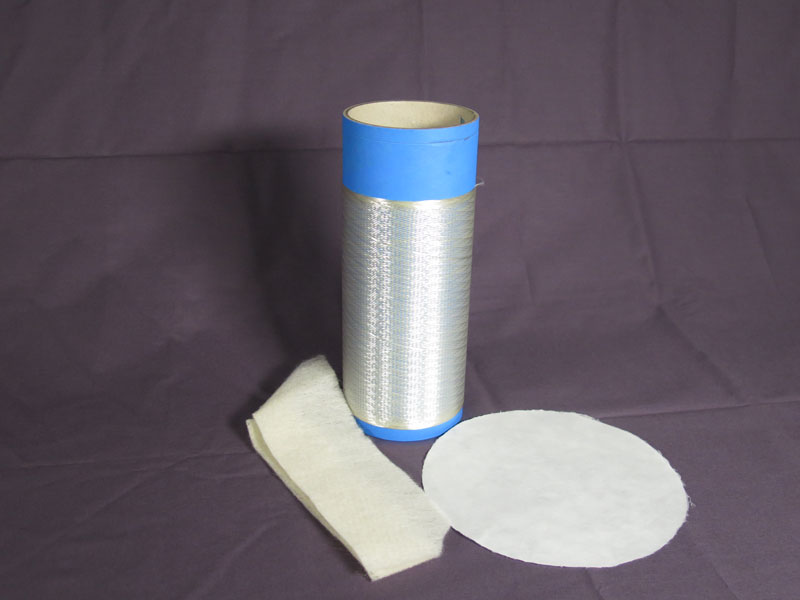
When mentioning chitin, many people first think of insects or crustaceans. However, the sugar, which is widely used in animal shells in nature, could soon be used in medicine, for example in wound dressing materials. This can be realized by a new method developed by researchers at the German Institutes of Textile and Fiber Research (DITF).
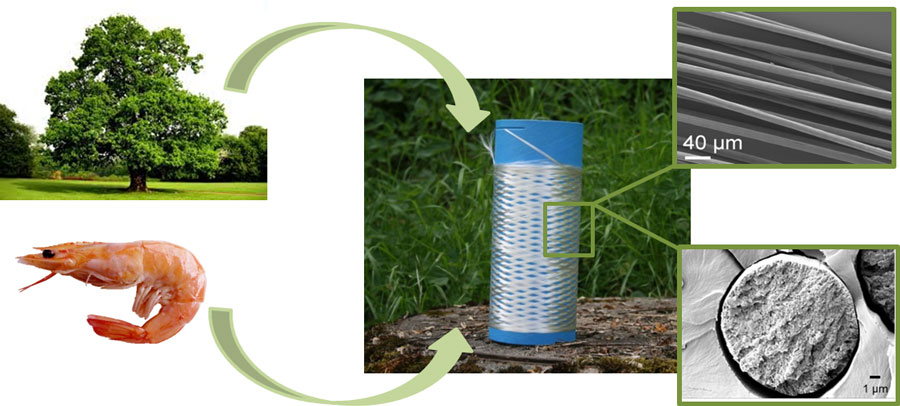
Whether crab or beetle: the carapace of many insects and crustaceans consists mainly of the polysaccharide chitin, which makes their shells and wings flexible. Although chitin is abundant and inexpensive in nature, it has so far played any role as a renewable raw material for the textile industry. This is about to change. Researchers at the German Institutes of Textile and Fiber Research (DITF) have developed an innovative method that enables the excellent combination of chitin as a biopolymer with naturally occurring cellulose. The chitin is extracted from crab shells, of which there is more than enough. “We first remove the proteins and minerals from the crustacean before we produce fibers from them,” explains scientist Dr. Antje Ota, who is a researcher at the DITF’s Biopolymer Materials Competence Centre and is a major contributor to the project.
Novel Combination Of Cellulose And Chitin
The production process of the new fiber is based on the application of ionic liquids. They prepare the sparingly soluble chitin in an environmentally friendly way for bonding with cellulose. “We have chosen our ionic liquid solvent in that way that it is equally suitable for processing of cellulose and chitin. For the first time, it is possible to process these raw materials into fibers in a single process step,” explained DITF scientist Ota.
The way from natural resource to fiber Origin: DITF
Speed Up The Healing Process
Ionic liquids (ILs) are salts that are already liquid at temperatures below 100 degrees centigrade and can dissolve many polymers, including the long-chain polysaccharides of chitin. In the DITF process, the chitin content of the biodegradable fibers reached up to 50 percent. A further advantage: the water retention capacity increased by 20 to 60 percent compared to pure cellulose fibers. “We expect the completely novel cellulose-chitin blended fiber to have great economic potential, e.g. for wound dressings in medicine that accelerate the healing process,” Ota said. The high air permeability of the new nonwoven is one of the main reasons for this.
The environment also benefits from the new production processes. The environmentally friendly production of the fibers is carried out without additives, and the solvent is almost completely recovered. Not only for the raw material itself, but also for its processing, the DITF researchers are thus orienting themselves towards the circular economy.
After cellulose, chitin is the second most common biopolymer worldwide. In contrast to bioplastics made from agricultural plants, this means that questions of raw material competition do not arise for the time being — unless other industries also acquire a taste for crab shells, for which the DITF have found a high-quality potential use in medical applications.
The DITF’s chitin research was funded by the Federal Ministry of Economics and Energy and the Ministry of Economics, Labour and Housing in Baden-Württemberg.
As part of the Zuse community, a well-known German research-community, the DITF also carries out practical research. The Cellulose Chitin Project is an example of application-oriented research that supports Germany as an industrial location.
The path from raw material to finished towel is a long one in this large, complex system.
PC-based automation enables rapid development and configuration of manufacturing systems for terrycloth towels.
By Stefan Ziegler
Texpa Maschinenbau GmbH & Co. KG in Saal an der Saale, Germany, specializes in transfer sewing lines for home textiles as well as in plaiting machines. To best adapt these machines to the customer’s requirements, the mid-sized company emphasized modularity as much as possible in its wide-ranging systems, which produce home textiles like bedsheets, pillowcases, drapes and towels.
“Our broad process expertise, consistent equipment modularity and in-house production depth down to highly complex components like sewing tools enable us to deliver machines with extremely short lead times,” said Heiko Hillenbrand, manager of electronics engineering at Texpa. “The time from order receipt to delivery can be as short as three months.”
All machines designed by the company feature maximum flexibility with regard to product sizes and quick product changeovers. Texpa’s new manufacturing system for terrycloth towels exemplifies the importance of the open, flexible and compact PC-based technologies from Germany-based Beckhoff Automation for these applications.
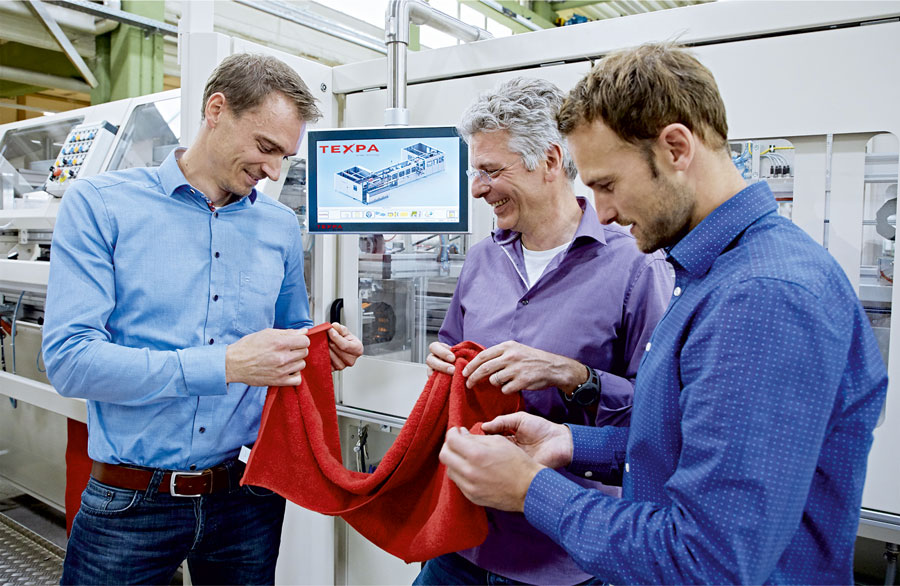
Christian Rott, CTO, and Heiko Hillenbrand, manager of Electronics Engineering from Texpa (right and center), explain the special requirements of terrycloth processing to Mirko Ammersbach (left) from the Beckhoff sales office in Marktheidenfeld, Germany.
PC-based Control Enables Flexible System Configuration
The new transfer sewing line for terrycloth towels offers even more streamlined setup changeover capabilities and increases the user’s ability to select from various straightening systems with the push of a button. Customers configure their machines from a modular toolbox based on individual requirements regarding the seam size or a suitable label dispenser, for example. In this context, PC-based control and the EtherCAT industrial Ethernet system are extremely important, according to Hillenbrand.
“The PC- and EtherCAT-based control and drive technology from Beckhoff has given us the ability to accommodate a wide range of customer requirements on short notice,” he explained. “It’s the only technology that gives us the necessary flexibility. With conventional programmable logic controller (PLC) hardware and the corresponding program modules, this would have been impossible to achieve in a financially feasible manner. With TwinCAT software, on the other hand, all we need to do is enable the respective module in the control program.”
The transfer sewing line, which is roughly 40 feet (12 meters) long and 23 feet (7 meters) wide, can produce towels ranging from 12 by 12 inches to sauna towels as large as 6 by 6 feet from large reels of continuous fabric material. The machine uses operator input via a visualization system to adjust itself automatically. The maximum output rate for the smallest size is 1,800 towels per hour.
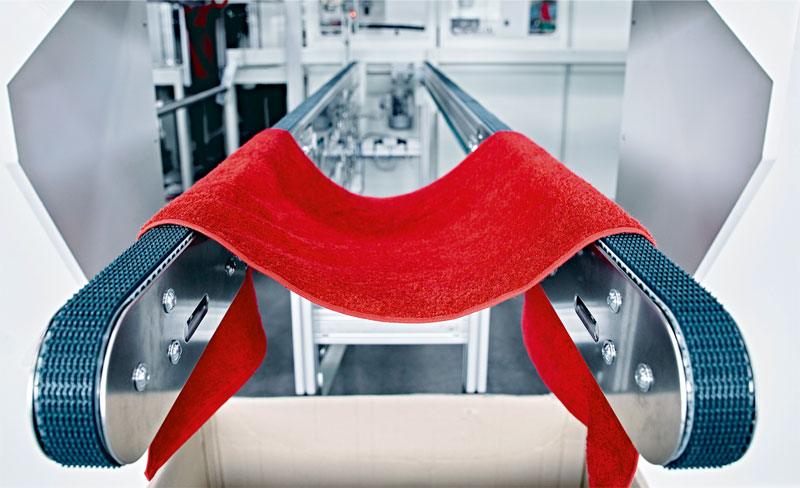
At the start of the process, the continuous terrycloth fabric is fed into a straightening and cutting station. This equipment ensures the fabric is inserted straight, which is particularly important with terrycloth in order to guarantee a flawless hem. Next, the material is cut to size and transferred to a conveyor. After this, up to four tagging stations sew on up to eight different tags, strings or hangers. At the subsequent hemming station, the towels are hemmed and transferred to the “thread hacker.”
“The thread hacker cuts the warp threads,” Hillenbrand explained. “This is where we deployed for the first time eXtreme Fast Control (XFC) technology and the distributed clocks in EtherCAT in order to compensate for the latency times that occur when switching the pneumatic valves on the two cutting wheels. In this way, we can achieve much more precision, i.e. the necessary thread length, at all transport speeds.”
Christian Rott, CTO of Texpa, adds: “The entire system uses 17 XFC EtherCAT I/O terminals, specifically the EL1252 and EL2262. We benefit especially from the EtherCAT timestamp functionality, with which the signal curves can be coordinated across the system via the distributed clocks function.”
The modular terminal system from Beckhoff, which integrates all necessary functions from I/O to safety to motion control, provides everything the user needs for a system with decentralized control and drive technology.
A Powerful And Open Control Platform
The main reason Texpa switched to PC-based control in 2005 was the engineering team’s desire to use a single control hardware for all machine tasks after their previous hardware PLC had been discontinued. Integrating functions such as human-machine interface (HMI) and machine control, for example, in a single device eliminated the need for a separate PLC. The resulting cost advantages were immense, according to Hillenbrand. In addition, the EtherCAT-based communication structure eliminated the need for costly fieldbus masters and simplified data transmission considerably.
Starting in 2007, the company also transferred the motion functions, which were previously integrated in the drive controllers, to the system’s control software by means of TwinCAT NC PTP. “Using TwinCAT NC PTP and centralizing the automation technology has shortened commissioning times significantly,” Hillenbrand said. “If you add the capabilities of the modern modular program structure, the total optimization factor was between twofold and threefold.”
The limited performance of the hardware PLC was another aspect, according to Hillenbrand. “We increasingly reached the limits of the old system, which led to more decentralization,” he said. “At the end, we had to install five or more controllers in one machine, which required a huge communication effort. With its outstanding performance, PC-based control allowed us to make system control more centralized and much more efficient.”
Hillenbrand also values the openness of PC-based control, especially the easy integration of IO-Link into EtherCAT networks. “We often use IO-Link to collect the previously analog sensor signals digitally, which requires much less wiring than before. The numerous valve clusters and the overall system modularity are other areas that benefit from PC-based control. We deploy the EL6224 IO-Link master terminal from Beckhoff, which can be easily parameterized via the EtherCAT master,” he adds.
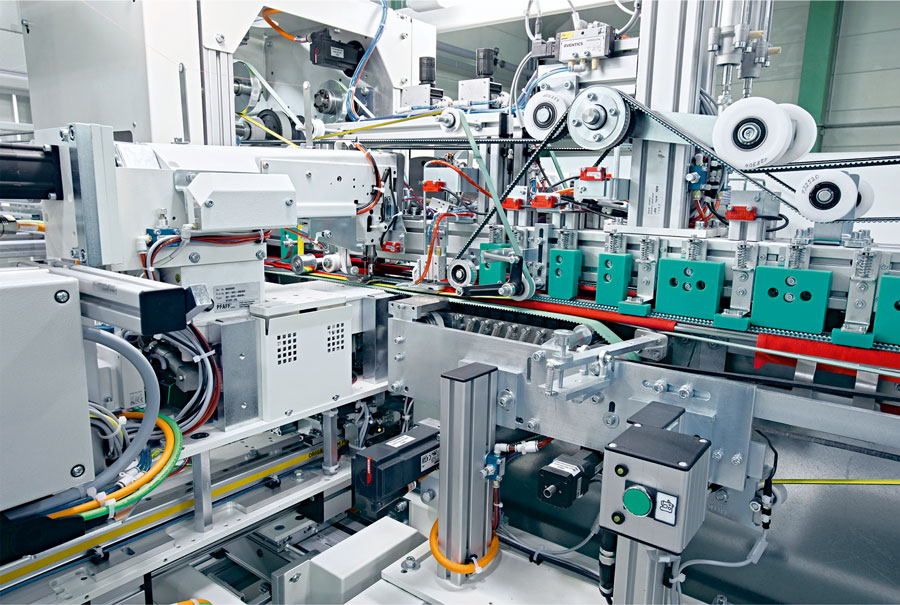
The hemming station illustrates the high level of process complexity in towel production.
Ultra-Compact Controller And One-Cable Technology Shrink Footprint
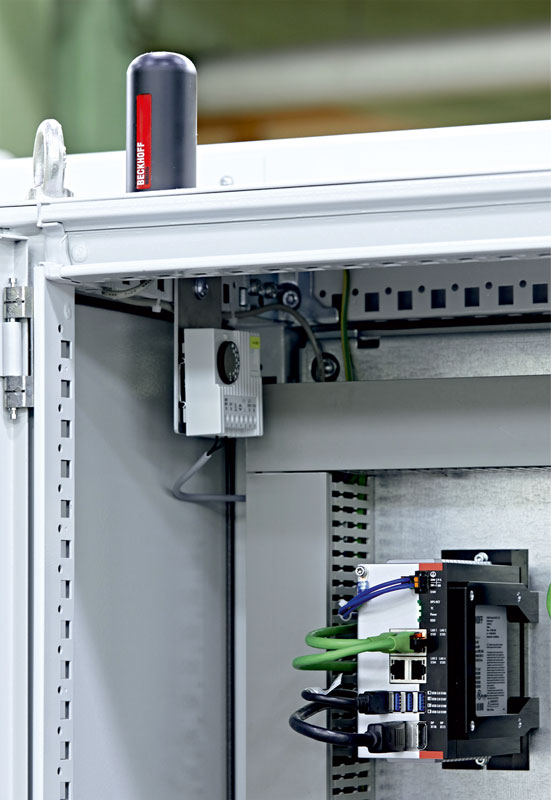
Due to the high complexity and extensive modularity of the manufacturing systems, Texpa always pays special attention to the required electrical cabinet footprint. Fortunately, PC-based control from Beckhoff offers many opportunities to minimize this space. Hillenbrand points to the new C6030 ultra-compact Industrial PC as an example: “The C6030 delivers great computing power in an extremely compact format. It takes up much less space than the C6640 and C6650 cabinet IPCs we previously used. Another advantage is the fact that it can fit into existing spaces with great flexibility, for example in extremely flat cabinets. Despite its small size, it still features sufficient interfaces for applications such as providing end users with operating data in connection with Industrie 4.0 concepts.”
With up to 53 NC axes in a single manufacturing system, the drive technology must be equally compact. With One-Cable Technology (OCT), Beckhoff drives require less wiring, produce fewer chances for error and take up less space because of their smaller power supply chains. Texpa deploys them in smaller processing stations and for the tag handling. “We use both EL7041 stepper motor terminals and EL7221 servomotor terminals, the latter in combination with AM8100 OCT servomotors,” Hillenbrand says. “This drive technology in terminal block format reduces space requirements further, minimizes power losses and supports the decentralization of drive technology via easy placement of switching cabinets.”
With the ultra-compact C6030 Industrial PC (bottom) and the IP66-compliant CU8210-M001 cabinet dome (top), Texpa employs state-of-the-art PC-based control technology.
Wireless Connectivity And Protected Power Supply
Texpa keeps benefiting from the continuous expansion of the Beckhoff product portfolio in other aspects of its transfer sewing lines as well. The latest example is the CU8210-M001 cabinet dome for industrial Wi-Fi and mobile communication components such as the CU8210-D00x USB 2.0 sticks. With the cabinet dome, which complies with the IP66 standard, a USB port for wireless connections can be fed out of the control cabinet while still being securely protected.
“We always want to be able to maintain our systems remotely. Normally, we do this over the customer’s intranet, but this means that we must depend on their network administration,” Hillenbrand explained. “When time is of the essence — for example, when a machine has shut down — access might not be possible if the network configuration has changed. With the new cabinet dome and a machine USB stick, on the other hand, we can always access the system without having to go through the customer’s intranet.”
Texpa will also use the new CU81xx series of uninterruptible power supplies (UPS) in the future, according to Hillenbrand: “We prefer the capacitive CU8110 UPS because it does not require maintenance. What’s especially interesting in this context is the UPS-OCT one-cable solution, which employs a 24V DC cable for both the power supply and the communication, which makes the wiring much easier.”
Editor’s Note: Stefan Ziegler is in marketing communications with Germany-based Beckhoff Automation
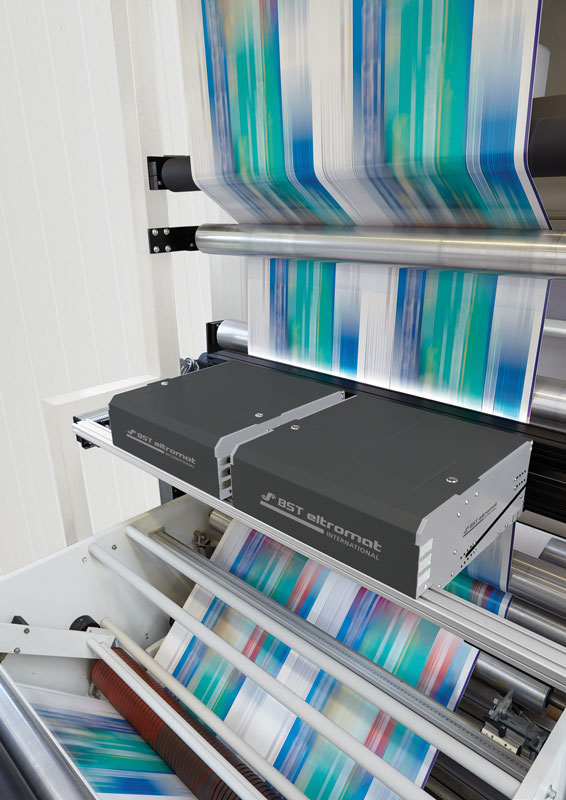
With iPQ-Check, the module of the iPQ Center for 100 percent inspection, increasing quality assurance requirements, for example for materials produced from recyclates, can be covered.
By Dr. Michael Dattner
Germany-based BST eltromat’s quality assurance systems support the efforts of web-processing industries to promote sustainability in a number of ways. In the film and packaging sector in particular, the circular economy has been an increasingly important topic for several years now. This sector is experiencing a radical change that presents new challenges, also for quality assurance systems. As a globally leading manufacturer of these systems, BST eltromat is also at the forefront of helping to shape the transformation process toward a circular economy.
Web guiding, register control, web monitoring, 100-percent inspection and color measurement — quality assurance systems are minimizing material and energy consumption as well as waste, particularly in the manufacture of flexible packaging. The systems are simple and safe to operate and they shorten the setup processes and guarantee a constant level of production quality. And, for the purposes of Industry 4.0, they allow for cross-process integration with upstream and downstream production steps. Manufacturers thus enable different areas to share process data between their machines and solutions. This integration opens up additional, previously unknown options for increasing efficiency in web-processing industries — and thus increasing sustainability.
With all of this, quality assurance in the film and packaging industry leads to improved environmental footprints in production processes and products along the entire value chain. But other web-processing industries are also benefiting from the improved sustainability made possible by BST eltromat’s quality assurance systems. Examples include the nonwoven, battery and tire industries.
Legislative Decisions Are Propelling Change
In recent history, the improved sustainability of industrial production processes has been one of the main topics at nearly all of these industries’ exhibitions and conventions. Manufacturers of film and flexible packaging in particular have been under enormous pressure to substantially increase the environmental sustainability of their products. Across Europe, the EU Commission’s “A European Strategy for Plastics in a Circular Economy” from early 2018 and the “Directive (EU) 2018/852 Amending Directive 94/62/EC on Packaging and Packaging Waste” have been setting the agenda: packaging should be 100-percent recyclable, reusable or biodegradable. In Germany, this has resulted in the German Packaging Act (VerpackG) that came into force at the beginning of 2019.
There is also pressure coming from the branded goods industry. It is giving manufacturers of flexible packaging until 2025 to deliver novel packaging solutions that are 100-percent recyclable, reusable or biodegradable. At the plastics exhibition K 2019 in Düsseldorf, functional monopolymer materials were first presented as a replacement for multipolymer composite materials that generally have been used for flexible packaging up to now. In addition, major efforts are underway to manufacture packaging from recycled plastics. The special challenge in the development and manufacture of new packaging materials is that not only do they have to hold up to the performance and visual quality of the previous materials, but they must allow for the same level of efficiency in their production.
New Requirements For Quality Assurance
The new materials, including recyclates, have special characteristics that impose new quality assurance requirements — for example, on web guiding or on surface and print inspection. BST eltromat meets these requirements in part with adjusted web guiding systems, sensors and inspection systems. For example, when manufacturing new kinds of packaging materials, it may be necessary to collect experiences and process expertise in order to adjust the coatings on the web guiding rollers.
Another example are the Digimarc barcodes that are being used increasingly in the field of manufacturing packaging. In contrast to the previous one- and two-dimensional barcodes, the Digimarcs are components of the packaging design and thus are not immediately discernable to the human eye. They are usually integrated into the artwork on the packaging in several places. Digimarcs can be read from practically any angle and at the highest machine speeds. They also make it possible to automatically sort plastic packaging from recycling companies’ sorting units and send it directly to the recycling stage.
Digimarcs also create new challenges for quality assurance. BST eltromat is tackling these challenges with its iPQ-View for digital web monitoring and iPQ-Check for 100% inspection. Both solutions are modules of BST eltromat’s iPQ-Center, which includes four seamlessly integrated high-end modules for quality control and management in web printing, and whose functionality covers virtually all of the market’s current requirements.
Additionally, innovative sensor technology can contribute to minimizing material consumption in the manufacture of flexible packaging. BST eltromat will soon be presenting possibilities for how web guiding can save even more material than before, even at high machine speeds. BST eltromat is known on the global market for facing new challenges and working together with its customers to develop new solutions for individual requirements. Regardless of the direction in which new packaging materials develop, the company will continue providing flexible support to the market with its solutions.
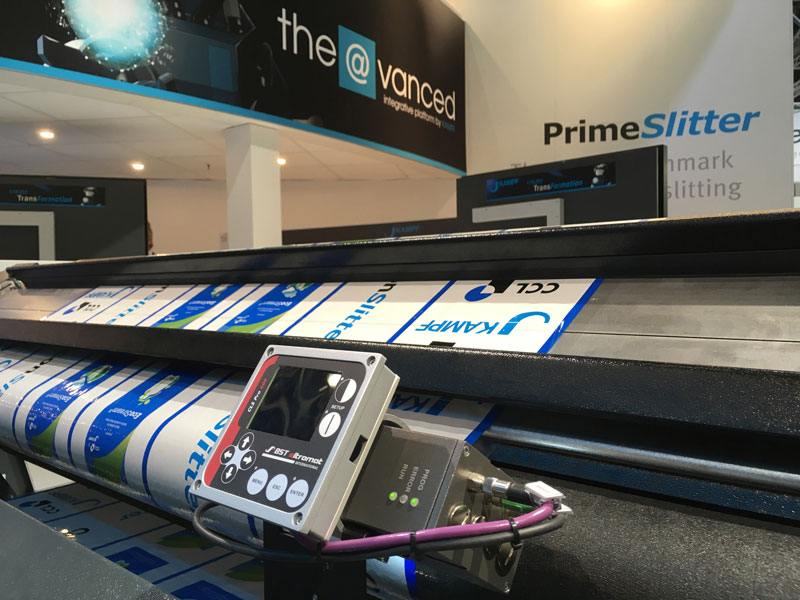
A concrete example of how integrated processes support more sustainability in packaging production is shown by the interaction of the CLS PRO 600 digital line and contrast sensor from BST eltromat with a ConSlitter-Typ slitting machine and the integrated platform the@vanced from Kampf Schneid- und Wickeltechnik. This integration eliminates sources of error and thus avoids waste.
Industry 4.0: The Key To Increased Sustainability Across Processes
The integration of the different process steps in the manufacture and further processing of flexible materials — from film extrusion to printing and packaging — presents various options for increasing sustainability. BST eltromat aspires to provide its customers with every possible option when networking its quality assurance systems. To this end, the company collaborates in working groups including the VDMA’s OPC UA (Open Platform Communications Unified Architecture). This interface aims to standardize the networking of the different production systems.
At exhibitions and other events during 2019, Industry 4.0 was an important topic for BST eltromat. For example, at the VDMA’s Circular Economy Forum at the K 2019, in its presentation “Quality Assurance Customized for Products Made of Recyclates” during the session on “Recyclates in Products,” the company showed how integrated processes support the manufacture of innovative plastic materials.
In 2017, BST eltromat helped to found the Converting 4.0 network, initiated by the company KAMPF Schneid- und Wickeltechnik. At the K 2019, the two companies used a simulation to show the interaction of a CLS PRO 600 digital line and contrast sensor from BST eltromat with a ConSlitter-type slitting machine and Kampf Schneid- und Wickeltechnik’s the@vanced integrated platform. The integration allows the sensor technology and the motor-driven knife axle of the slitter to be set up automatically, which simplifies the cutting process and significantly shortens the setup times. Furthermore, it eliminates sources of error, thus preventing waste, which clearly shows how integrated processes support more sustainability in packaging production.
Artificial Intelligence In Error Classification
In mid-November 2019, BST eltromat took part in the fourth gathering of the Converting 4.0 network at Windmöller & Hölscher (W&H) in Lengerich. The event dealt with data communication across process boundaries. BST eltromat highlighted how bringing together quality data leads to greater efficiency and security as well as more convenience and sustainability, provided the information is available in synchronized form. For example, artificial intelligence can significantly benefit process analyses in terms of error classification. Currently, members of the Converting 4.0 network are developing scenarios that describe how more added value can be generated by taking additional process and material data into account. Here, too, the future promises to be exciting.
Industry 4.0 can contribute to increased sustainability in the manufacture of flexible packaging in many other ways. For example, in the framework of its cooperation with SeeOne Vision Technology, a manufacturer of surface inspection systems based in Florence, Italy, BST eltromat is linking information from film extrusion with quality data from the printing process. SeeOne’s systems detect surface defects in different materials such as films, metallized films, paper or cardboard, and use artificial intelligence to classify them as holes or inclusions, or as foreign matter such as insects or dirt. The findings gained from surface inspection can be used in various ways to optimize production processes.
If the quality protocoll feed into BST eltromat’s iPQ-Workflow, for instance, it becomes possible to interpret defects across process boundaries. One example of this: In film extrusion, if quality assurance detects anomalies in a specific linear meter of the film, this is recorded in the quality log. If undesired results appear in the same section of film later during the printing process, the cause can be identified as relating to the film extrusion process.
Additionally, BST eltromat is working with partners from the industry on possibilities for further minimizing waste in web printing.
Editors’ Note: Dr. Michael Dattner is an innovation manager at BST eltromat International, Germany.