Consortium Develops First Textile Palm Fibers And Reinforcements

CAIRO — July 31, 2020 — A consortium of five Egyptian researchers have developed the world’s first high performance fibers and reinforcements extracted from the byproducts of pruning of date palms, such as frond and fruit stalks. PalmFil fiber is not only sustainable, but also economical in manufacturing, compatible with textile and composite processing and offers the properties needed for lightweight cars of the future.

“In the 1980’s the shift from natural fibers to man-made fibers was mainly to bridge the gap between the increasing demand for textile fibers and the limited supply of natural fibers,” said Dr. Mohamad Midani, partner, PalmFil Consortium. “In order to reverse this shift, there is a need to explore more sources of natural fibers and increase the biodiversity of fiber crops. This is actually what we did, there are more than 140 million date palms mostly concentrated in the Middle East and North Africa, generating yearly more than 4.8 million tons (dry wt.) byproducts of pruning regarded as agriculture waste. This represented a burden on palm growers, and was the main cause of fire accidents and infestation by dangerous insects. Those byproducts could otherwise be transformed into 1.3 million tons/year natural textile fibers, ranking third after cotton and jute.”

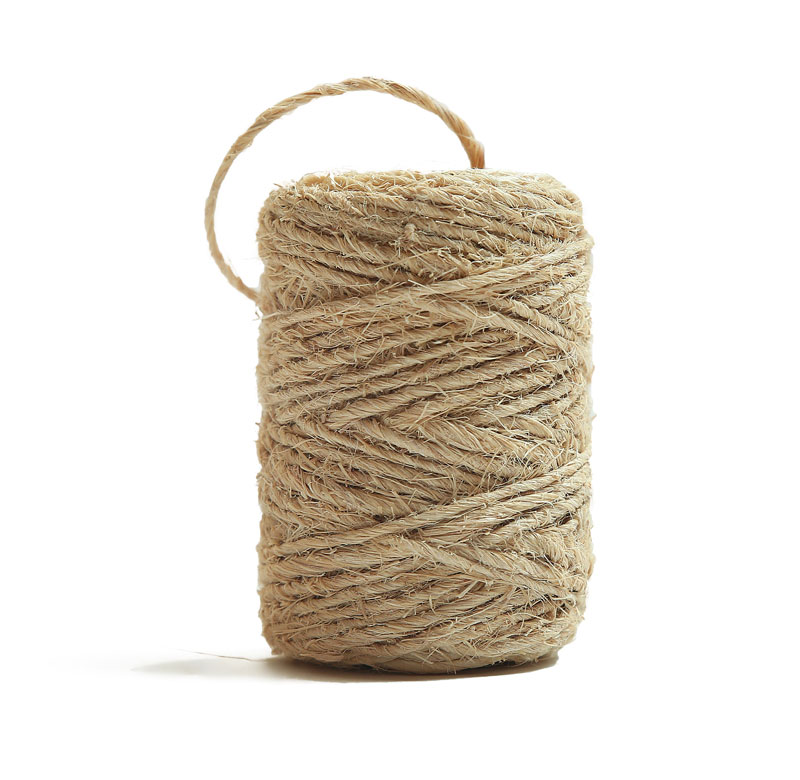
There has been several previous attempts to extract fibers from date palm byproducts through crushing and grinding, resulting in a biomass rather than textile fibers. PalmFil consortium succeeded in extracting the first long textile fiber from such byproducts and converted it into fiber tow, chopped fiber, spun yarn/ roving, nonwoven mat, woven fabric, and unidirectional tape. The new fiber represent a sustainable material base for a wide spectrum of industries. Ranging from natural reinforcements for composites in automotive and sporting goods, plaster reinforcements in construction, burlap sacks for packaging, ropes, and twines, non-wood papers, and other consumer products.

“Date palm byproducts have been used for centuries in the Middle East and it is a heritage related material,” said Dilip Tambyrajah, secretary general, International Natural Fiber Organization. “It is culturally embedded in Middle Easterns but possibly forgotten in modernity. Recent R&D conducted by PalmFil consortium demonstrates the potential of date palm fiber; its use in the modern context and in industrial settings. Revival of the fiber sector in the Middle East will need dedication and national commitment. The use of date palm fiber is not the issue. The use of most natural materials like the date palm fiber contribute towards maintaining biodiversity, provide employment and income and enable sustainable development in general. However, the key to its revival will be the national will and support to encourage the development of a reliable supply chain that can service the various production sectors that could use the fiber.”

“It has been a long five years marathon of self-supported research, relying completely on our personal funding and driven by a strong believe on the impact of such innovation on the sustainable development of rural communities and their livelihoods,” said Dr. Ahmed Hassanin, partner, PalmFil Consortium. “We wanted to rediscover this underutilized resource, and prove to the whole world that we could economically extract textile fibers from it, without abiding to the agenda of any funding institution.”

The new date palm fiber is obtained from renewable bioresources and it does not cause deforestation or compete with food production. It is 100-percent biodegradable and compostable and has specific tensile strength 5 times higher than structural steel, and equal to those of flax, hemp and sisal. Its vibration damping and acoustical insulation is higher than those of glass and carbon and with thermal insulation higher than carbon.  Moreover, it can be easily blended with other long fibers such as flax, sisal, and abaca, or it could be chopped and blended with hemp, kenaf, and jute.
“We did a comprehensive research to optimize the extraction process and we did a thorough characterization of the new fiber,” said Lobna Elseify, partner, PalmFil Consortium. “The research results were very well received by the scientific community and featured in research and review articles in some of the most prestigious scientific journals in the field, such as, Industrial Crops and Products (Elsevier) and Cellulose (Springer). The new fiber was also well accepted by the industrial community in Egypt, and it has been processed on a full industrial scale spinning line at the Egyptian Industrial Center of Flax. We are currently establishing connections with the leading automotive manufacturers in Europe, and we are conducting a dedicated research on date palm fiber composites in automotive.”

PalmFil technology contributes to the circular bioeconomy following a closed loop cycle from cradle to cradle. Moreover, the extraction technology could be applied to byproducts of other palm species such as oil palm, sugar palm, doum palm as well as other agriculture byproducts such as broomcorn.

PalmFil consortium have more than 50 years of combined experience in fiber science, textile technology and composite engineering. They are currently seeking partnership to further develop, scale-up, and commercialize PalmFil technology. It has recently launched a website to commercially announce its innovation, and it will present more about the new material in an upcoming live webinar that will be announced soon.

Posted August 4, 2020

Source: PalmFil

Lydall Breaks Ground On New Filtration Center Of Excellence 

MANCHESTER, Conn. – July 31, 2020 – Lydall, Inc. — a U.S. manufacturer of value-added engineered materials and specialty filtration solutions that create a cleaner, safer and quieter world — hosted a groundbreaking ceremony on Friday, July 24, to celebrate a major expansion of its production facility in Rochester, N.H. The ceremony marked the beginning of construction on Lydall’s Filtration Center of Excellence, where the company will develop new, high-performing and environmentally sustainable media for air and liquid filtration. The new facility will also house two new production lines that will enable Lydall to dramatically increase production of fine fiber meltblown filtration media for N95 respirators, surgical masks and air filtration systems. U.S. Senator Jeanne Shaheen, Mayor Caroline McCarley and Will Arvelo, director of State of New Hampshire Division of Economic Development, were also in attendance.

“This celebration represents a turning point for our company and solidifies our position as the leading provider of specialty filtration solutions in both the U.S. and the world,” said Sara A. Greenstein, president and CEO of Lydall. “To address the immediate need for personal protective equipment, or PPE, and to support the wider need for improved air quality beyond COVID-19, Lydall is fully prepared to deploy our deep manufacturing experience and longstanding heritage in innovation to deliver the products that will keep people and places safe.’”

Each of the elected officials who attended the event spoke about the great importance of the products Lydall makes and the company’s role in the fight against COVID-19:

  • Senator Shaheen: “The quick work to begin building these production lines really affirms why we – as a nation – need to prioritize local manufacturing of personal protective equipment (PPE) and other key products needed to fight this virus. This contract comes at a critical time as COVID-19 cases continue to increase across the country and will help Lydall produce 1.7 billion N95 masks per year to provide essential PPE to frontline workers. Thank you to all of the Lydall employees who are coming to work every day – putting the health of others before their own – so those on the frontlines can do their jobs safely.”
  • Mayor McCarley: “New Hampshire is a close-knit community. You are making an incredible contribution, not only for the city of Rochester and the state of New Hampshire, but also for the United States and the world.”
  • Will Arvelo: “What you do for frontline workers, and for all of us, is critically important. What you’re building here will showcase the city of Rochester and the state of New Hampshire. When business and government leaders come together, we create great things for the world.”

By May 2021, when both new production lines are fully operational, Lydall will increase its capacity of fine fiber meltblown filtration media to support the domestic production of 1.7 billion N95 respirators or 6.5 billion surgical masks per year. Lydall’s specialty meltblown media is also a key component for MERV-, HEPA- and ULPA-grade filters used to improve air quality in hospitals, airplanes, restaurants, office buildings and other public spaces. To serve the European market, Lydall also manufactures meltblown filtration media at its facility in Saint Rivalain, France.

Lydall’s investment in the expanded facility and new production lines is supported by a $13.5M commitment from the U.S. federal government. This commitment is a product of the ongoing collaboration between the Department of Defense and the Department of Health and Human Services, led by the Department’s Joint Acquisition Task Force and funded through the Coronavirus Aid, Relief, and Economic Security (CARES) Act.

Posted August 4, 2020

Source: Lydall

Inner Mettle Addresses Microbial Threats With Introduction Of IM ViroBac Fabric

LONDON — August 4, 2020 — Inner Mettle (IM), an innovator in the field of materials serving the sustainability and well-being of the environment and humanity, is launching its latest product — IM ViroBac fabric, proven to reduce microbial threats on touch within 30 minutes.
IM ViroBac fabric has been developed to reduce the risk of viral and bacterial transmission via surface contact applicable to a multitude of situations in a commercial environment, such as public transport, medical facilities and hospitality.
“High touch surfaces, such as seats, bedding, curtains, could all play a more protective role, rather than a source of contamination, by reducing the amount of risk on touch,” highlighted the Executive Director of Inner Mettle (IM), Inam Saleem.
Thanks to its versatility, the soft fabric can be used to produce consumer products, much in need during the current, and future crises, referring to gloves and masks, Saleem added.
Coronavirus efficacy 
In order to confirm the viral efficacy of Inner Mettle’s ViroBac technology, the company recently commissioned an independent EPA and FDA regulated  laboratory, to put its IM ViroBac  fabric through rigorous testing against a strain of the hu man coronavirus family.
“We wanted to provide our partners with continued confidence in the efficacy of our technology, and are proud to announce the results revealing its efficacy guarding against the Human Coronavirus (229E), with a reduction of 97.5 percent within 30 minutes,” Saleem said.
“Viruses are different from bacteria as they require living host cells in order to survive, whereas bacteria and mould can thrive independently. As a result of this difference, viruses are much more difficult to test against, especially for solid surface testing. Specialist equipment is needed, and the methods utilise living cells in order to test the viruses,” he added.
Inner Mettle stresses not to confuse the human Coronavirus (229E strain) with SARS-CoV-2 (COVID-19), which is not available for public testing as this point in the pandemic, as the Center for Disease Control and Prevention (CDC) has categorised the virus at a biohazard level 3 and above.
Inner Mettle’s Vision 
Inner Mettle’s ambition doesn’t stop at the current crisis, but is rather developing products with a view to the future to address upcoming global challenges.
“It has been testing times for everyone around the globe, and we have been working around the clock to find ways to assist and contribute to the current challenge. Touch contamination remains a primary mode of transmission, having a comprehensive approach to contain pathogens, especially in an urban environment, is going to be a priority moving forward,” Saleem said, emphasising that public and private sector collaboration would help speed up innovation to combat, both, current and future, challenges.
According to a 2019 United Nations news release, a report released by the UN Ad hoc Interagency Coordinating Group on Antimicrobial Resistance, warned that if no action was taken, drug-resistant diseases could cause 10 million deaths each year by 2050, and damage to the economy as catastrophic  as the 2008-2009 global financial crisis. By 2030, antimicrobial resistance could force up to 24 million people into extreme poverty.
“Antimicrobial resistance is one of the greatest threats we face as a global community. This report reflects the depth and scope of the response needed to curb its rise and protect a century of progress in health,” said Amina Mohammed, UN Deputy Secretary-General and Co-Chair of the IACG.
“It rightly emphasises that there is no time to wait, and I urge all stakeholders to act on its recommendations, and work urgently to protect our people and planet, and secure a sustainable future for all,” she added.
The report highlighted that strengthening infection prevention, and control, in health c are facilities, farms, schools, as well as the community at large, using available tools , were central to minimizing disease transmission, as well as the emergence and transmission of antimicrobial resistance in humans, animals, plants, food and the environment.
It furthermore called upon all stakeholders, including government, civil society, and the private sector to collaborate to achieve, what it termed a ‘sustained One Health’ response to antimicrobial resistance.
Inner Mettle believes that its IM ViroBac  technology is well placed to contribute to the UN’s vision.
“We are working on other solutions, including an adhesive film that could assist with similar surface protection, as we see with the ViroBac fabric,” Saleem added.
Posted August 4, 2020
Source: Inner Mettle

H.B. Fuller Launches All-In-One Elastic Attachment Adhesive Solution With Full-Care® 8220

SAINT PAUL, Minn. — August 4, 2020 — H.B. Fuller has launched the latest generation of elastic attachment adhesives with Full-Care® 8220 to better serve the nonwoven hygiene industry, which is increasingly using elastic materials. This all-in-one elastic attachment adhesive demonstrates best-in-class creep and sheer strength performance across all key adult and baby diaper applications. The new solution addresses, for instance, leakage and blowouts identified as the number one consumer pain point, according to the company latest study.

The market trends for training pants, adult incontinence products, and alternative product designs with stretch features are driving the increase in elastic usage. According to Euromonitor International Outlook, global demand for training pants is expected to grow at 9 percent CAGR, significantly outpacing the growth of open diapers in the next five years, while improved product designs and fit drive elastics usage for the product category is expected grow at 5 percent CAGR 2019-2023. Also, various elastic features, such as doubled cuffs and stretchable cores, in alternative product designs aim at improving fit and preventing core sagginess after insult. As an all-in-one elastic attachment adhesive, Full-Care 8220 can be used for these applications.

When tested against the industry standard elastic adhesive, Full-Care 8220 demonstrated:

  • Excellent creep resistance at the lowest industry coat weights;
  • Robust sheer strength for high-stress tear, tab and insert attachment applications;
  • Reliable curved elastic attachment performance on curved application for improved article fit;
  • Potential for savings, with up to 25 percent add-on reduction on key industry substrates;
  • Excellent processability across various machine types, allowing for higher productivity and minimized downtime for hygiene manufacturers.

Also, when tested in a third-party lab against other leading adhesive suppliers in an elastic adhesive benchmarking study conducted by a North America adult incontinence product manufacturer, Full-Care 8220 outperformed four leading competitive elastic adhesive products, delivering zero creep. Learn more about this new adhesive here.

Posted August 4, 2020

Source: H.B. Fuller

SDL Atlas Introduces Innovative New Fabric Fixture For Testing Stretch Fabrics

ROCK, S.C. — August 4, 2020 — SDL Atlas has developed a new fixture for testing stretchy fabrics on their MMT®: Moisture Management Tester. The new Stretch Fabric Fixture will offer more accurate testing for how a fabric will behave while in use by the end customer.

Previously when fabrics were tested, they were laid flat. This positioning may not portray a complete picture of performance for some types of fabrics, particularly those with stretch properties like those used for athletic clothing and underwear.

The Stretch Fabric Fixture is comprised of 3 pieces that will prepare a fabric sample in a stretched position for testing. The percentage of stretch can be easily adjusted to the test’s requirements using the scale on the fixture’s handle. Samples can be stretched up to 50%. Once the percentage of stretch is set, the sample is clamped into place with a Clamping Ring, removed from the fixture and placed directly onto the MMT’s test area for moisture management testing.

The MMT Stretch Fabric Fixture is now available for world-wide delivery.

Committed to providing customers confidence in standard based testing, SDL Atlas has offices and experts in the United States, United Kingdom, Hong Kong and China, plus agents serving over 100 countries, SDL Atlas is ready to support its customers with instruments, test materials, and services anywhere in the world.

Posted August 4, 2020

Source: SDL Atlas

Inkcups Introduces Vivid White: The Brightest Digital White Ink On The Market

DANVERS, Mass. — August 4, 2020 — Inkcups has announced the release of the brightest white ink available on the UV inkjet market: Vivid White.

The newest addition to Inkcups’ highly regarded S1 UV Ink Series, Vivid White reproduces the brightest whites available in the industry. Based on decades of experience and after thorough and rigorous testing, Inkcups created a formula for the ideal ink that can print a vivid white on dark substrates. Vivid White can also act as an opaque white background for multi-colored graphics to enhance the colors of artwork and make them appear more vibrant. This benefit ensures color matching is consistent across all products — the more opaque white will allow the true colors to show on dark substrates.

Like all S1 UV Ink series colors, Vivid White has exceptional adhesion capabilities and meets the same rigorous adhesion and compliance standards as others in the product range. One exceptional attribute is that Vivid White is a pour-over for printers using the company’s S1 ink, which eliminates the need for customers to flush their machines when switching to this white ink. It can also be used in other printers where improved white opacity is needed.

Vivid White is ideally suited for a variety of substrates including stainless steel, coated metals, plastic and more. It can also print on a wide selection of flat and cylindrical objects. Applications include drinkware, injection molded housings, promotional items, electronics and more.

“For high-quality graphics, a bright white makes all the difference. We have been working for a few years to find the ideal pigment combination to provide the brilliant white opacity in combination with easy jettability. Our new Vivid White really makes a visible difference and after extensive testing we believe it is the brightest white in the market,” said Ben Adner, CEO of Inkcups.

The ink is fully compatible with the wide range of Inkcups digital printers.

Vivid White digital ink is engineered and manufactured in the U.S. and available for order now.

Posted August 4, 2020

Source: Inkcups

Kaman Recognized By Sikorsky As “Elite Supplier”

BLOOMFIELD, Conn. — August 4, 2020 — Kaman Corporation is proud to announce that Kaman Composite – Vermont, Inc. (“Kaman Composites Vermont” or “KCV”), has recently been named the Rotary and Mission Systems Elite Supplier by Sikorsky Aircraft Corporation, a Lockheed Martin company. The award comes after a partnership with Sikorsky on the design and development of their MH-60R radome program.

“The program provided us with a unique opportunity to partner with an industry leader on their radome design,” said Alexander Gamble, General Manager at Kaman Composite –Vermont, Inc. “We were able to take a customer need, leverage our expertise to design, conduct in-house testing and analysis, and take the program into full production, while maintaining stellar performance.”

Kaman Composite Vermont started working with Lockheed / Sikorsky on the program in 2002 and KCV continues the production of the MMR Radome with over 200 delivered. Kaman has expanded their design services and established the Radome Center of Excellence at the Vermont facility which employs a full staff of design engineers and technicians.

“Our composites businesses continue to deliver the complex composite structures that meet the highest standards of its Aerospace customers. This award additionally demonstrates the exemplary relationship the KCV team has developed with Sikorsky,” stated Mark Withrow, President & General Manager – U.S. Composites.

Posted August 4, 2020

Source: Kaman’s Corporation

Duvaltex Launches Full Range Of Innovative Medical Textiles To Protect American Healthcare Personnel And Patients

Duvaltex’s Guilford, Maine, facility is ramping up production to offer high-quality Level 1 and Level 2 gowns and antimicrobial scrub textiles to frontline healthcare workers and patients in the United States. (CNW Group/Duvaltex)

GUILFORD, Maine — August 4, 2020 — Duvaltex, a North American supplier in the development and production of medical and technical textiles, is ramping up production to offer its full range of high-quality Level 1 and Level 2 gowns and antimicrobial scrub textiles to front-line healthcare workers and their patients in the United States. Made from durable, breathable and soft touch engineered fabrics, Duvaltex’s textiles meet the most stringent quality specifications to provide optimal protection against the transfer of microorganisms, body fluids, and particulate matter.

“Our U.S. teams, based in Maine and Michigan, have been developing and manufacturing medical textiles and products for the healthcare industry for more than 20 years and are ready to meet the increasing demand for personal protective equipment,” said Alain Duval, Chief Executive Officer of Duvaltex. “We are especially proud of the durability of our textiles, which can be washed and reused over 100 times. Each lot is tested to meet the highest quality and traceability standards and ensure they are defect-free.”

Duvaltex’s engineered Level 1 and 2 reusable fabrics are woven to make medical and hospital gowns as well as laboratory and protective clothing, with and without antistatic performance capabilities. The antistatic technology incorporated in the medical fabric construction reduces the build-up of static charges, ensuring a cleaner and safer work environment.

As a recognized leader in specialty textile innovation, Duvaltex has developed advanced technical fabrics designed to meet the needs of frontline healthcare workers. Its antimicrobial scrub fabric is used to make scrub shirts, tops, tunics, jackets, pants and uniforms, and can be washed and reused multiple times. The company also offers cubicle curtain fabric for healthcare environments that can be seen from both sides. All Duvaltex fabrics meet U.S. Food and Drug Administration (FDA), American Society of Testing Materials International (ASTM), American National Standards Institute (ANSI) and the Association for the Advancement of Medical Instrumentation (AAMI) quality standards.

Since the beginning of the COVID-19 pandemic, Duvaltex has mobilized its North American manufacturing facilities to produce millions of yards of medical textiles in record time to meet major government contracts for personal protective equipment (PPE) and support healthcare institutions. Employees at the company’s facilities and offices in Guilford, ME, Grand Rapids, MI, New York, NY, and Elkin, NC, as well as companies in its U.S. supply chain, have played a key role in this major effort alongside Duvaltex teams located in Canada.

As part of its ongoing efforts to protect people and limit the spread of viruses, such as COVID-19, Duvaltex recently launched a highly innovative, non-medical protective face mask. The company made substantial investments in new 3D knitting equipment at its Grand Rapids facility to provide it with the capacity to produce millions of the X7 mask. It is available in bulk quantities for large businesses as well as the retail, hospitality, and service sectors, or individually through a dedicated e-commerce platform at knit.duvaltex.com.

Posted August 4, 2020

Source: Duvaltex

Teijin And Kinoshita Fishing Net Develop World’s First Fishing Net Made With UHMWPE Film

TOKYO, Japan — August 4, 2020 — Teijin Limited and Kinoshita Fishing Net Mfg. Co., Ltd. jointly announced today that they have developed the world’s first high-performance knotless fishing net made with an ultra-high molecular weight polyethylene (UHMWPE) film. Kinoshita Fishing Net will begin selling MX-4 made with Teijin’s Endumax® UHMWPE film in early August and is targeting annual sales of 50 tons by 2025, including Endumax® fishing nets for purse seine net fishing and later for traps, fish farms and trawling.

Teijin continues to discover new industrial applications for Endumax®, such as ropes, bulletproof wear and lightweight containers for air cargo, as well as fishing nets, and expects to develop additional applications going forward.

MX-4 combines Teijin’s advanced Endumax® film and Kinoshita Fishing Net’s manufacturing technology implemented with world-leading net-knitting machines for knotless netting, made by crossing threads with each other for extra strength and abrasion resistance. In addition to Muketsu knotless netting made with twisted threads, Kinoshita Fishing Net also boasts the world’s only machines for making braided knotless nets, sold under the BM brand for purse seines, traps and fish farms.

Endumax® is a 60μm-thick film offering high strength, high modulus and resistance to impact, abrasion, chemicals and sunlight. Advanced technologies are normally required to mass produce fish nets made with film, but Kinoshita Fishing Net’s proprietary technology enables Endumax® that has been cut to just several millimeters in width to be knit into highly functional MX-4 fishing net.

MX-4 is especially suitable for purse-seine nets for skipjack, tuna, horse mackerel and mackerel, which are used in harsh environments where durability and fast drainage are crucial. MX-4 does not shrink easily and is resistant to breakage due to abrasion even after hundreds of castings, so it can be used safely for long periods. It also improves work efficiency and cost efficiency by reducing needs for net reconditioning and tailoring. In addition, it reduces the frequency of net disposal and is more marine friendly. Furthermore, when MX-4 is pulled up from the sea, it immediately sheds water and becomes lighter, making it easier to work. It also stays clean.

Various types of fishing nets are used commercially depending on the fishing method, fish species and marine environment. In the case of purse-seine net fishing, where nets can become heavily loaded, over time the nets can shrink considerably, lose shape, become less efficient in enclosing fish, and require frequent repair or replacement.

Teijin aims to be a company that supports the society of the future by creating new value based on the changing times, providing solutions to realize a more prosperous and sustainable world.

Kinoshita Fishing Net’s philosophy is be an essential enterprise that develops unique solutions by working directly with customers to understand their situations, requirements, goals and prospects. Going forward, the company will expand MX-4 applications for purse seine net fishing, and later for fish farms, traps and trawling, as a socially responsible enterprise that places top priority on evolving with distinction and sustainability.

Posted August 4, 2020

Source: Teijin Group

Groundbreaking Ceremony At KARL MAYER’s STOLL Business Unit

OBERTSHAUSEN, Germany— August 4, 2020 — STOLL, a new business unit of the KARL MAYER Group, will be moving with its premises from the site at Stollweg in Reutlingen to the Reutlingen-Betzingen industrial estate, where it will continue its activities under the new owner, as planned. Already in 2004, Stoll relocated its production to the location in the Mark West industrial area. During two project stages, a development center is first being built, and later a customer center will follow, in order to accommodate the other Business Units.

Official start of the construction for the development center was on July 26, 2019. The building with bright and modern offices and meeting rooms for roughly 70 employees is expected to be completed by autumn 2020.

The July 29, 2020, saw the opening of the second project stage, with the aim to erect the customer center up to autumn 2021. The symbolic groundbreaking ceremony was attended by Daniel Hebisch, shareholder and member of the executive board of isin+co GmbH & Co. KG, and Cemal Isin, managing partner of isin+co GmbH & Co. KG, Uli Kälber, managing director of Rommel SF-Bau GmbH & Co. KG as well as the following gentlemen from Karl Mayer Textilmaschinenfabrik GmbH: Andreas Schellhammer, president of the Stoll business unit, Erhard Vöhringer, senior sales/service manager, Jörg Wilhelm, senior operations manager, and Frank Wittel, vice chairman of the Works Council.

The project is carried out by Rommel SF-Bau GmbH & Co. KG as general contractor. The architects come from ISIN + Co. GmbH & Co. KG. They designed a functional building complex which will be housing the reception, offices for a workforce of about 100 persons and conference rooms. Moreover, an associated industrial building will provide enough space for showrooms, machine floor areas, project rooms and for the company’s own training center. The usable floor space covers approx. 5,350 m².

With its construction project and relocation, Stoll makes important decisions for the future. By combining development, production and administration at a single location, it is possible to ensure shorter distances, leaner processes and faster innovations. In this way, the Stoll technology that has been successful for more than 145 years, will be leading into a new age.

Posted August 4, 2020

Source: KARL MAYER Verwaltungsgesellschaft mbH

Sponsors