 Rough water challenges even the best run ships and crews. High winds, cross currents and unseen obstacles can suddenly test even the strongest vessel.
This year’s textile events have felt a lot like that — U.S. mills and brands navigating their own rough seas. From the macro shocks of war, high energy prices and the lingering effects of COVID 19, textile manufacturers are universally challenged.
Undercurrents of nearshoring decisions, trade policy shifts and global price pressures are testing even well-managed companies, while leaps in technology and regulatory changes unexpectedly hit their path forward.
All in all, this isn’t really new water for U.S. textiles.
There is a deep history of offshoring, plant closures and strong companies facing unexpected shocks or final blows. But the industry also has a history of resilience and a remarkable instinct for finding a new path forward.
Both Techtextil Frankfurt and Techtextil North America echoed these challenges —and opportunities — this year.
As reported in this issue’s coverage of the Frankfurt show, “The overall situation reflects the current global uncertainty. Companies are cautious with investments and eager to cut costs,” said Matthias Schemken, managing director of Trützschler Nonwovens. “This is exactly where practical, efficient solutions become important.”
Beyond that practicality was a desire to look past the headwinds for a path forward; both shows shared the same tone — acknowledging the current situation while trying to see past it to the opportunities ahead.
Whether it was NASA’s discussion of a need for textiles in the Artemis program, or hemp fiber making new strides, there was —and still is — positive change to be embraced.
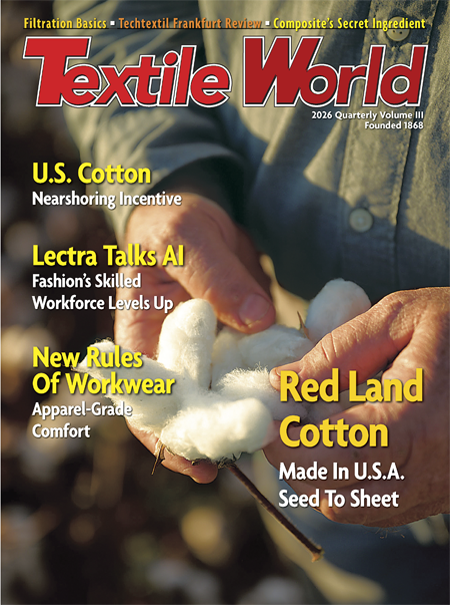
The Red Land Cotton cover story is a great example of looking at one’s strengths and fearlessly pushing forward for the company’s gain — and, in Red Land’s case, for the security of family and farm.
The nay-sayers can’t be discounted — and there are plenty of them. But navigating through rough waters has never been for the faint of heart.
An interesting detail of the Red Land Cotton story is easy to overlook. Red Land Cotton built a U.S.-based textile supply chain to take their Alabama cotton all the way through domestic manufacturing, to deliver heirloom sheets to consumers:
“We all got in the same room at Techtextil in Atlanta, in 2016, and by October of that year we had our first product to sell,” recalled Brakefield.
“Parkdale was there. Jim Hopkins [Hamrick Mills] was there. Brewster Yates was there. You know, so all of a sudden, they’re in this big room full of textile people and realize, hey, here’s our supply chain right here,” said Miller.
Anna Yeager Brakefield is a founder of Red Land Cotton and Jack Miller is the textile veteran instrumental in Red Land’s ability to navigate the U.S. textile industry.
But it goes to show that “being there” matters. Showing up, looking for opportunity, solving problems — U.S. textiles has weathered many a storm, and rough water or not, will continue to stay the course.
James M. Borneman
jborneman@TextileWorld.com
2026 Quarterly Issue III