Conveners Of The Textile Industry Jointly Support A Digital Platform To Enhance Scaleup Of Circular Economy

CAMPBELL HALL, N.Y. — January 26, 2022 — Industry organizations, working on related circularity projects, are aligning efforts to create the infrastructure to enable the recycling of post-consumer textile waste. Through their own projects and together through pre-competitive industry-wide collaboration, Accelerating Circularity, Fashion for Good, Global Fashion Agenda’s Circular Fashion Partnership, Reverse Resources, SMART, and WRAP are supporting the scaling of digital solutions to create the infrastructure for textile recycling. Reverse Resources is launching one such platform for collectors, sorters, and pre-processors – its goal is to facilitate textile-to-textile recycling.

We are calling on the industry to support this effort.

The Reverse Resources platform will now be able to house information on collectors, sorters, pre-processors, locations, services, and volumes.  The tool is designed to be open access allowing circular system actors to find required services. Reverse Resource’s initial digital platform made significant headway in the post-industrial textile waste industry – linking recyclers with manufacturer’s information to increase the transparency of availability of post-industrial materials – thus leading to greater circularity.  The expanded digital platform will develop information on the availability and access to post-consumer materials for all industry actors.

“Reverse Resources is a tracking and trading platform for textile and post-consumer waste, providing 360-degree transparency of the waste flows. We match the supply and demand, break down market barriers, shorten supply chains, thereby increasing value along the way,” said Ann Runnel, founder and CEO of Reverse Resources. “Our mission is to help to bring down the cost of recycling to support the scale-up of the circular economy. The more industry members that participate, the more we can create economies of scale”

Over the past two years, Global Fashion Agenda worked closely with Reverse Resources to engage global brands, manufacturers in Bangladesh, and recyclers to develop the platform for post-industrial textile waste.

“A key unlock to circular fashion systems is increasing transparency and traceability of waste feedstocks and matchmaking waste types, to recycling solutions,” said Federica Marchionni, CEO, Global Fashion Agenda.

“This is one of the first of many open-sourced digital tools we hope to see in the market that will allow the industry to move forward on its circularity goals,” said Karla Magruder, founder and president of Accelerating Circularity. “The industry needs the information that will be housed in the platform, on what services and materials are available when it comes to post-consumer textiles available for textile-to-textile recycling.”

“To achieve circularity, we need to collectively develop innovative business models, which require new digital systems, infrastructure, and collaborations,” noted Katrin Ley, manager director, Fashion for Good. “We are all aligned on the same objective to drive progress so working together to facilitate that through collaborative technology platforms makes sense.”

“WRAP is pleased to support the development of this platform via our connections with the UK textile reuse & recycling sector. Digital platforms will create the transparency needed for more circular textile industry,” shared Cat Salvidge, Sustainable Textiles Sector specialist, WRAP  “Circularity is key to WRAP’s new voluntary agreement for a more sustainable textiles industry, Textiles 2030, so this collaboration comes at a great time”.

The platform is being piloted with several large collectors, sorters, and pre-processors who have been participating in the Accelerating Circularity Project Europe, Global Fashion Agenda’s Circular Fashion Partnership in Bangladesh, and Fashion for Good’s Sorting for Circularity India Project. Ultimately the goal of the platform is to more effectively and economically allow for the recycling of the estimated 17 million tons in the USA [1]and 5 million tons in Europe[2] of post-consumer waste that goes to landfills annually.

Join us for a webinar  February 9, 2022 to learn more:

08:00 AM Eastern Time (US and Canada) / 14:00 Central European Time (CET)

Register in advance for this meeting: https://us02web.zoom.us/meeting/register/tZwkce2vrj8sHNL2LsAyluMYNN7cnqsGyLOK

After registering, you will receive a confirmation email containing information about joining the meeting.

To learn more about Reverse Resources visit www.reverseresources.net

[1] https://www.epa.gov/facts-and-figures-about-materials-waste-and-recycling/textiles-material-specific-data#TextilesTableandGraph

[2] https://publications.jrcec.europa.eu/repository/handle/JRC125110k p.8

Posted: January 28, 2022

Source: Accelerating Circularity
NCTO: Independent Study Highlights Benefits Of U.S.-CAFTA-DR Agreement And Devastating Impact Of Weakening Agreement’s Rules

WASHINGTON — January 26, 2022 — The National Council of Textile Organizations (NCTO), representing the full spectrum of U.S. textiles from fiber through finished products, issued a statement today on the release of an independent study examining the valuable economic and societal impact of the U.S.-Dominican Republic-Central America Free Trade Agreement (CAFTA-DR), and the significant adverse impact of proposals aimed at weakening the agreement’s rules of origin.

The economic study conducted by Werner International highlights the importance of maintaining the current rules of origin in the agreement, which supports more than one million jobs in the U.S. and the region and $12.5 billion in two-way trade and has fostered significant and impactful investments in manufacturing and apparel production. The study also finds various proposals aimed at weakening the agreement’s carefully negotiated and longstanding textile rules of origin would severely harm the region and U.S. and result in massive job, investment, and export losses.

“The Werner report comes at a pivotal time, as the global supply chain crisis and concerns over forced labor in Xinjiang have sparked a shift in sourcing out of Asia and a renewed focus on nearshoring and onshoring jobs back to the Americas. As outlined in this report, the U.S-CAFTA-DR agreement is a critically important and deeply economically impactful agreement that has fostered a co-production chain for textiles and apparel supporting over one million jobs in the region and the U.S,” said NCTO President and CEO Kim Glas. “This is due to a key element of the agreement called the ‘yarn forward rule of origin,’ a unique investment-based rule that ties lucrative duty-free access to the U.S. market to investment in yarn, fabric, and cut-and-sew production in the region and the U.S.”

Glas added: “We appreciate the broad bipartisan support, including from the administration, for maintaining the essential yarn forward rule of origin and ensuring those rules are not eroded through harmful changes. This common support for preserving the provision is vital to the bipartisan efforts focused on ushering in a new era of American manufacturing prowess and economic prosperity. Conversely, the report found that weakening the rules by adding ‘flexibilities’ such as cumulation and short supply changes would exacerbate the migration crisis by devastating our industries and further tether us to our counterparts in Asia, including China.”

Jan Urlings, vice chairman of Werner International, stated: “In our examination of the economic and societal impact of the U.S.-CAFTA-DR agreement, we found the current benefits of the agreement support a strong and vertically integrated co-production chain that has contributed significantly to investment and economic stability in the region and the United States. A major aspect of our report examined how various proposals aimed at weakening the rules of origin would impact the region and the U.S. The data overwhelmingly demonstrates that the current co-production chain would be undermined by subsidized Asian/Chinese fabrics and yarns whether directly or indirectly through a third party, would devastate direct and indirect textile employment and investment in the U.S., the region and the entire Western Hemisphere.  It would also exacerbate enforcement issues associated with Xinjiang cotton produced with forced labor.”

The study goes on to find that if brands and retailers made a commitment to double exports from CAFTA-DR to the U.S under the current rules, it would result in an additional 180,000 U.S. textile jobs, 2.17 million new jobs in the CAFTA-DR region, and conservatively $6 billion in new investments in the U.S. and region.

Rep. Bill Pascrell (D-NJ), Textile Caucus co-chair, stated: “Imports from China and other countries that use forced labor and other predatory trade practices have crippled our manufacturing industries and destroyed millions of U.S. jobs. The manufacturing of cotton products and other goods from Xinjiang have tainted our supply chains and helped perpetuate the Chinese Communist Party’s continued human rights atrocities. As global supply chains are recalibrating to nearshore and onshore textile and apparel production chains under the rules of origin in our Hemispheric trade agreements, we must strongly reject efforts to erode those essential rules that support textile and apparel jobs in the U.S. We must not allow China backdoor access to these critical markets, which will further hurt our own industries and reward China and other countries with direct and indirect preferential tariff access.”

Rep. Patrick McHenry (R-NC), Textile Caucus co-chair, stated: “The global supply chain crisis triggered by the coronavirus pandemic has exposed our severe overreliance on China.  This report showcases that onshoring and nearshoring of this critical production chain is critical for the U.S. textile industry and workers in the CAFTA-DR region.  The US-CAFTA-DR trade agreement has spurred hundreds of millions of dollars of investment because of the strong rules of origin that support this co-production chain.  Any erosion of these rules would harm American producers and exacerbate the immigration crisis.  As supply chains are pivoting, we must seize on the opportunity for growth in good paying jobs in both the U.S. and the region and end our overreliance on China.”

Key Findings from Werner report:

I. Adverse consequences to adding flexibilities to/weakening the yarn forward rule:

  • Destroys U.S. and Western Hemisphere textile employment, with a total projected loss of more than 307,000 U.S. textile and cotton farming jobs and a loss of 250,000 jobs in Central America’s primary textile industry.
  • Devastates U.S. cotton farmers, currently employing 115,000 people in 18 states. Projected sales drop of 30% for U.S. and Western Hemisphere cotton growers.
  • Provides direct and indirect backdoor access to Chinese textile inputs, further perpetuating Xinjiang forced labor.
  • Chills future investment and destabilizes current investment in region. Over $1 billion in capital investments have been made in CAFTA-DR countries since 2005, which have helped create a vertical regional production chain. Weakened rules place major future and long-term U.S. investments at risk.
  • Severely undermines defense procurement under the Berry Amendment and the domestic warm industrial base supplying mission critical items to U.S. armed forces. More than two-thirds of the U.S. textile and apparel industry would be wiped out, destabilizing the domestic textile military industrial base and its ability to meet surge production in times of military mobilization.
  • Cripples efforts to construct a viable domestic/nearshoring supply chain for personal protective equipment (PPE).
  • Exacerbates the flow of immigration, undermining the administration’s intended goal of spurring economic development in the region to address the root causes of outward migration.
  • Exponentially increases greenhouse carbon emissions through transpacific shipping and Asian coal-fired energy.

II. Proactive steps to help improve the competitive position of CAFTA-DR region:

  • Better coordination among lending agencies of the federal government, such as the U.S. Agency for International Development, Inter-American Development Bank, and Export-Import Bank, to ensure targeted, strategic investment in this sector and competitive low or zero interest financing and loan guarantees.
  • Support for a comprehensive infrastructure plan with targeted, high-impact investments and competitive loans to upgrade regional power grids, roads, and local ports would pay immediate dividends.
  • Provide incentives to the Western Hemisphere co-production chain for carbon emission reductions and sustainable products.
  • Ensure trade stability in the region by maintaining maximum pressure on China, including enforcing the U.S. ban on cotton and cotton products made with forced labor in Xinjiang.
  • Refrain from changing cumulation and short supply process, which would lead to a surge of third-country yarns and fabrics and displace hundreds of thousands of jobs in the region and U.S.
  • Oppose granting duty-free access and other benefits through an expansion of the Generalized System of Preferences (GSP) program to apparel and textiles and negotiating free trade agreements with major Asian suppliers.
  • Close the de minimis loophole for imports from China that allow goods valued at $800 or less to enter duty free if imported by one person on one day.

Posted: January 28, 2022

Source: The National Council of Textile Organizations (NCTO)

IFAI: Tent Industry Back Together At Tent Expo

ROSEVILLE, Minn. — January 27, 2022 — Over 550 tent and rental professionals gathered in Daytona Beach, Fla., last week for the IFAI Tent Expo.

Members of the Tent Rental Division and other industry professionals took the opportunity to meet in person for the first time in two years, driving near-record attendance at this year’s event.

Tent Expo offers a chance to connect in-person that can’t be replicated by virtual events, said Josh Kohn, CEO and co-founder, SOHO Event Rentals, Fairhope, Ala.

“It’s so good, the relationships, the networking, getting to meet face to face with people, it really builds those relationships,” Kohn said. “To be here on the floor with the tents and manufacturers, to be able to ask questions … really speeds up the conversation versus just looking at a PDF or online at something.”

More than 50 exhibitors were on hand to share the latest innovations in tents, equipment, flooring, furniture, accessories and more.

“I’ve learned so much from all the manufacturers,” said Steven Eisenstein, president of Classic Tents & Events, Norcross, Ga. “I’ve learned the right tents, to buy. I got the TentOx from coming to this event many years ago. Coming to Tent Expo helps us learn how we can be more efficient with our labor, do more and save money. It’s coming to these events that you learn about all the different pieces of equipment and what they can do.”

The three-day Tent Expo kicked off with the annual golf tournament and a private, behind-the-scenes tour of the Daytona International Speedway, followed by two days of education, networking and product demos.

Indy Car racer James Hinchcliffe delivered the keynote address, telling the story of his struggles to become a professional driver, and his comeback from a life-threatening injury he suffered while practicing for the 2015 Indianapolis 500.

Two tent industry leaders were also honored with the Bruce W. Wodetzki Award. The award is named for the first chairman of IFAI’s Tent Rental Division and recognizes professionals who continue his legacy of impacting the growth, direction and success of the industry. This year’s honorees were Jim Reyen, business director at Eureka! Tents, and George Smith, president and CEO of Mahaffey Fabric Structures.

Education topics at this year’s Tent Expo included advice on diversifying your business and hiring, as well as tips on ballasting, an update on codes and standards and more.

“The biggest thing is the access to the knowledge,” Kohn said. “We’re a young company. We’re first generation, so we didn’t have all that knowledge passed down. To be able to go in and access all this information, particularly the safety information … this world didn’t exist to me before I started coming to Tent Expo and joined IFAI.”

Save the date for Tent Conference 2023

Mark your calendar now. The 2023 Tent Conference will be January 11-13 in Savannah, Ga.

Posted: January 28, 2022

Source: Industrial Fabrics Association International (IFAI)

What Really Happens To Unwanted Clothes?

How HELPSY, the Largest Clothing Collector on the East Coast, Works 

By Laura Johanson

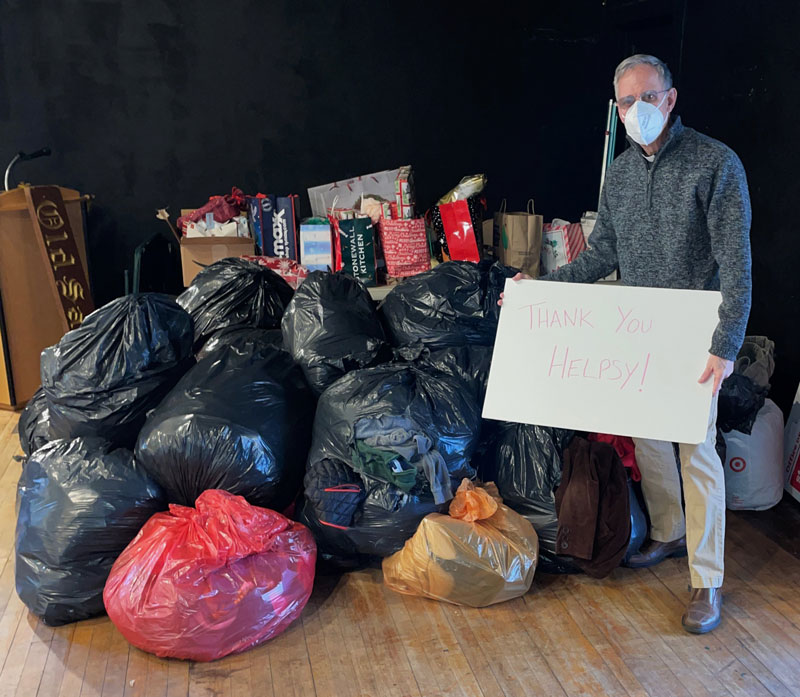
What really happens to the clothes that are put into a HELPSY clothing collection bin, left curbside for a municipal partner pickup, or handed over during a clothing drive?  It is a misconception that these items are given directly to the needy. HELPSY™ does provide clothing, coats and, on occasion, garment transportation to shelters, churches, and other relief organizations and partners with others to raise funds.  The company’s ultimate objective, however, is not charity, but to preserve the environment. Textile waste is one of the fastest growing waste streams in the United States. By extending the useful life of clothing, HELPSY strives to keep unwanted textiles from becoming trash.

The Misconception

Reverend Nathan Ives, from St. Peter’s/San Pedro Church in Salem, Mass., understands the common misunderstanding associated with clothing collection. “As a former volunteer with the Red Cross, I’ve seen first-hand generous, but misguided people clean out their closets to offer piles of clothing after a natural disaster,” Father Nathan said.  “The reality is, these well-intentioned donations result in a mountain of clothes that can’t be processed,” he said. St. Peter’s Church hosts a HELPSY clothing collection bin and earns a monthly rental check which is then used to fund community outreach programs. “I don’t know how HELPSY manages all that goes into collection, sorting and storage while still offering us a portion.  This income goes toward our rental assistance programs, food assistance, and even to offer a laundromat-love gift card so someone in need can clean their own clothes,” he said.

The church is not only a bin host but is also a recipient of donated coats through HELPSY.  During the months of November, December and January, St. Peter’s Church switches gears, and offers a shopping event to the community offering FREE warm winter coats provided to them by HELPSY.  “HELPSY has really gone out of its way to make this event possible again this year. We are expecting hundreds of coats to be delivered for our event,” Father Nathan said.  “We have just enough storage to keep the coats left over until the next event.  We would never have been able to collect and store these many coats without HELPSY.”

Clothing Surplus — The Challenge

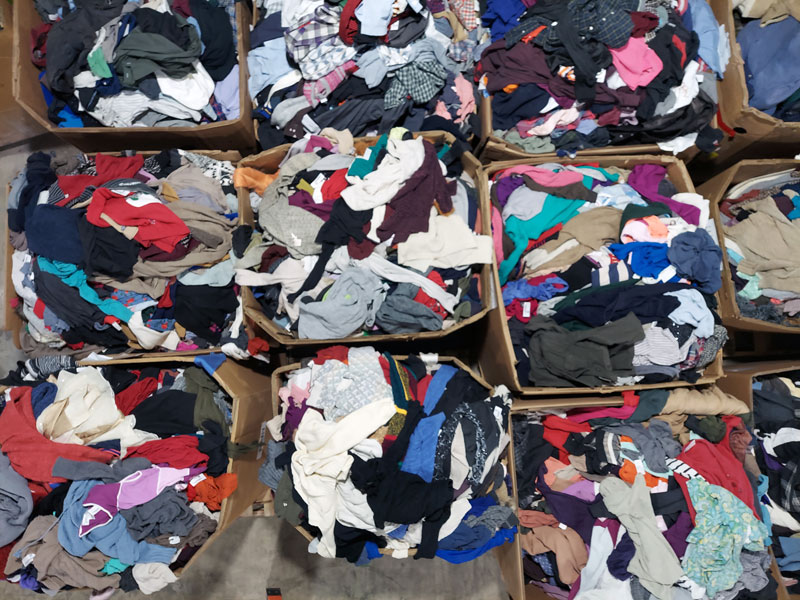
While some organizations work toward meeting the need for emergency clothing or warm coats, there is still an abundance of unneeded and unwanted clothing ending up in landfills.  One reason for this is the changing clothing industry.  According to the EPA, since the beginning of the millennium, the amount of clothing manufactured has more than doubled from approximately 6 million tons in 2000 to 16 million tons in 2020. The business of creating trendy items at low cost, known as “fast fashion,” creates greater profits for the fashion industry and instant gratification to consumers.  Unfortunately, this trend also leads to a shorter shelf life for clothing items and adds to the general disposable mentality that creates a surplus of outdated, worn, torn, or otherwise unwanted clothing items.

“The average person throws away more than 100 pounds of clothing every year,” said Dan Green, co-founder and CEO of HELPSY.  “Only 15 percent of textiles are currently reused or recycled, while 95 percent of what winds up in landfills can be. HELPSY is working to change this lopsidedness. Recycling or otherwise reusing clothing can help save natural resources such as water and fuel and help to reduce toxins from pesticides,” he said.

While preservation of the environment is a noble mission, recycling is also an industry.  HELPSY strives to balance profit and purpose… to use business as a force of good™.  These efforts have earned them a Certified B Corp designation. HELPSY has also earned a Real Leaders Impact Award for 2020 and 2021 ranking as one of the top 150 impact companies solving business problems in socially constructive ways.

Through a combination of clothing drives, municipal partner curbside pickups, partnerships with thrift stores and clothing collection bins, HELPSY diverts nearly 30 million pounds of textiles from landfills every year. Working with organizations and various groups to collect these unwanted clothing and other items, HELPSY has also helped to raise more than $10 million for non-profits and other organizations while helping the environment.

“Recycled clothing aids in reducing waste in landfills, which is of great help to the environment,” said Fred Vineyard, State Commander, AMVETS Department of New Jersey.  “However, AMVETS is most grateful for the funding received through our collaboration with HELPSY.  It allows AMVETS to provide our services and to fulfill our mission,” he adds. In New Jersey, 548 AMVETS dedicated clothing collection bins in 226 different locations are serviced by HELPSY. The funds raised through these collection bins go to support AMVETS programs.

“At Helpsy we create win-win-wins,” said Dave Milliner, co-founder and COO of HELPSY. “The clothes you give away create jobs, save municipalities money that then gets passed to taxpayers and we help the environment.”

What Happens to the Clothes?

Of the textiles that HELPSY collects, 95-percent are salvageable. Broken down further, 75 percent is reusable; and 20 percent is recyclable. Items collected are first sorted by HELPSY partners and divided into grades. The higher grades are resold to thrift partners in North America and other secondhand markets around the world. The lower grades go to industrial use or things like rags, stuffing, and insulation.

One such thrift partner is PossAbilities, a chain of thrift boutiques in Flemington and Phillipsburg, N.J.  Danielle Crouse, area manager, takes pride in offering the local community quality and affordable secondhand merchandise. “Once our clothing and accessories are sorted and processed, they are neatly displayed by size in their appropriate department for easy browsing. This helps customers visualize the endless possibilities in giving fashion a new life.” HELPSY works with PossAbilities to manage their unwanted inventory items not sold in their boutique. These items are sorted and sent to both domestic and international resale markets. The remaining textiles, unfit to be re-worn, will be recycled, and turned into wiper cloths and fiberfill for furniture.

“While the situation is dire, there has been a shift in the perception of used clothing,” said Alex Husted, CFO and co-founder of HELPSY.  “In 2020 there was a 27-percent increase in the sale of used clothing, coupled with a decrease in fast fashion manufacturing. Americans are on a trend toward more sustainable clothing,” he added.

HELPSY’s environmental mission is to radically change the way people think about clothing reuse and recycling. In the process of serving this mission, it has created jobs, saved municipalities millions of dollars in disposal fees and has reduced the enormous environmental burden of the second most polluting industry in the world. Considering those numbers, recycling clothes makes sense both environmentally and financially. For additional information about HELPSY or to join in our environmental preservation efforts, contact info@helpsy.co.


Editor’s Note: Laura Johanson is marketing/public relations manager for Helpsy™, White Plains, N.Y.


January 28, 2022

Building Trust In Recycled Fibers

TW Special Report

With the launch of the 2025 Recycled Polyester Challenge, manufacturers are urged to increase their use of recycled polyester (rPET) in textiles and clothing. In this article, Eric Wang, Global Softlines Technical Innovation Manager at SGS asks what are the challenges surrounding recycling fibers?

The 2025 Recycled Polyester Challenge aims to build on the momentum generated by the Textile Exchange’s 2017 Recycled Polyester Commitment. Brands are encouraged to use 80-100% rPET, with the ultimate goal that a critical mass will be achieved, and 90% of all polyester will be recycled by 2030.1 This rPET initiative is just one of many that are currently being promoted to reduce greenhouse gas (GHG) emissions and the apparel industry’s reliance on primary resources.

Textile fibers have traditionally been difficult to recycle. It is estimated the average US consumer generates 37kg of textile waste each year.2 Globally, it is estimated 92 million tonnes of textile waste is created annually, and this figure is expected to increase to roughly 134 million tonnes by 2030.3 At the same time, the industry uses an estimated 98 million tonnes of raw materials every year, and this is expected to reach 300 million tonnes by 2050.4

Drivers For Change

The problem isn’t necessarily the amount of discarded clothes, it is what happens to them. To quote the US futurist Alex Steffen, “There is no such thing as garbage, just useful stuff in the wrong place.”

Consumers are increasingly demanding more sustainable products, and that includes apparel. For manufacturers there is a positive. A UK study found that 43 percent of consumers were willing to pay more for sustainable clothing. Ninety percent also said they were willing to buy a product that stated it was “upcycled” or “100-percent recyclable.” This should be considered in combination with the fact that 62 percent of consumers said they would stop using a brand if it was found to be “detrimental” to the environment.5

Industry is already responding. Sustainability is now a pledge being made by many high street retailers. One leading brand has pledged to ensure all cotton, linen and polyester used in their products is either organic, sustainable or recycled by 2025. Another has set a science-based target to reduce its GHG emissions and pledged to use 100-percent recycled or sustainable materials by 2030.

These changes are also being driven by governments. For example, the European Union (EU) is looking to create a circular economy based on the maxim: use, reuse, remake and then recycle.6 Approaching consumer products, and the materials they are made of in this way will significantly reduce the industry’s impact on the environment.

Garbage should no longer be seen as waste. It is a resource that we should be exploiting, and that includes the fibers used in textiles and clothing.

What Are Recycled Fibers?

ISO 14021 defines recycled materials as reprocessed from reclaimed materials by means of a manufacturing process and then made into a final product or component for incorporation into a product. Commonly recycled fibers include polyester, nylon, cotton, wool and down.

The textile industry is currently lagging behind other industries when it comes to recycling. Globally, just 12 percent of textiles are recycled. This compares to paper, glass and plastic PET bottle recycling rates in the United States of 66 percent, 27 percent and 29 percent. Indeed, most rPET used in clothing comes from bottles and not old clothing.7

Part of the problem is that garments are made from multiple materials, which makes them difficult to recycle. For example, a t-shirt that is labeled 100-percent cotton will still have other components, such as labels and sewing threads, which may be made from polyester. Cotton jeans often contain elastane alongside other non-cotton components such as zips, dyes, buttons and labels, for example. It is this combination of materials that makes recycling difficult.8

Material to material recycling is slow, labor intensive and requires skilled workers. In 2020, it was estimated that the United States recycled 13 percent of footwear and the European Union recycled 50 percent of textiles in this way. Globally, the figure is significantly less.9 There is hope however, and these figures are improving. Across the world the industry is increasingly using recycled materials, but we are still a long way from achieving the target of zero landfill.

This pressure to change is however creating opportunities for brands and manufacturers.

Consumer assurance

Consumers are looking for sustainability but, when they read a recycled material declaration, they want to have confidence in it.

The Textile Exchange has developed a range of voluntary standards to help the industry verify sustainability claims.10 Recycled Claim Standard (RCS) and Global Recycled Standard (GRS) are internationally recognized standards that set the requirements for third-party certification of recycled input and chain of custody. The shared goal of these standards is to increase the use of recycled materials.11

RCS and GRS labeled products must contain independently verified materials that meet the ISO definition for recycled. Both standards also require a clear chain of custody between the recycler and manufacturer. GRS differs because it also includes provisions relating to social responsibility, environmental management and chemical restrictions. There are also differences in the levels of recycled material that the finished product must contain — RCS, from 5 to 100 percent; and GRS, from 20 to 100 percent. However, if a company wishes to display the GRS logo, then its product must contain a minimum of 50-percent recycled content.12

With consumers demanding more sustainable products, RCS and GRS provide the assurances they want to see when making purchasing decisions.

SGS Solution

SGS is a Textile Exchange approved third-party certifier for both GRS and RCS. We assist manufacturers, retailers and buyers to ensure their products and processes meet recognized standards for recycling. In complex markets, the ability to demonstrate the use of recycled fibers provides brands a competitive advantage among discerning consumers.


References

1 https://textileexchange.org/2025-recycled-polyester-challenge/
2 https://truecostmovie.com/learn-more/environmental-impact/
3 https://www.bbc.com/future/article/20200710-why-clothes-are-so-hard-to-recycle
4 https://www.ellenmacarthurfoundation.org/assets/downloads/publications/A-New-Textiles-Economy_Full-Report_Updated_1-12-17.pdf
5 https://www.drapersonline.com/news/consumers-demand-sustainable-products
6 https://ec.europa.eu/environment/circular-economy/
7 https://www.bbc.com/future/article/20200710-why-clothes-are-so-hard-to-recycle
8 https://www.bbc.com/future/article/20200710-why-clothes-are-so-hard-to-recycle
9 https://www.thebalancesmb.com/the-basics-of-recycling-clothing-and-other-textiles-2877780
10 https://textileexchange.org/standards/
11 https://textileexchange.org/standards/recycled-claim-standard-global-recycled-standard/
12 https://textileexchange.org/wp-content/uploads/2020/10/TE-301-V1.1-Standards-Claims-Policy.pdf


January 28, 2022

What’s Trendy With Lingerie Lace: An Interview With Lace Expert Neil Thorpe

TW Special Report

The Corona pandemic is still keeping us on tenterhooks, but the world will returning to normal and consumption. However, a change in customer attitudes is to be expected in the process. Forecasts speak of mindful, social consumption and enjoyment behavior, a return to what is really important.

Does the more conscious behavior of buyers have an influence on the lace business? How is demand changing, and what general trends can be expected?

Ulrike Schlenker from the corporate communications department at Germany-based KARL MAYER group asked lace expert Neil Thorpe these and other questions about the future of lace. The managing director and founder of Neil Thorpe Lace Design & Draughting along with his team have been developing and drawing lace patterns since 1986, serving a renowned clientele based around the world and with diverse setups.

Schlenker: The fashion industry is usually always one step ahead. What season are you preparing right now and what is more important: lingerie or apparel lace?

Thorpe: We are currently focusing on developing patterns for the spring/summer 2023 season. For some of our customers who are market leaders, we are already working on designs for the following season, i.e. for fall/winter 2023/24. The focus is clearly on lingerie lace. Around 80% of demand comes from this sector, with only 20% coming from apparel lace.

Schlenker: Many markets are benefiting from catch-up shopping effects in the wake of the abating Corona pandemic. Consumers’ lingerie closets are also filling up again. Are there any trends in demand for lace lingerie, for example in terms of design?

Thorpe: In the post-Corona era, there is a strong focus on the twin themes of comfort and sustainability. This shows up more in a shift in thinking than in a trend but it has a big impact on the kind of designs and drawings that are demanded by our customers. Consumers want garments that look and feel soft and environmentally conscious. That’s why we’re working more on designs with a natural cotton look and drawings that are straightforward to make with more ethically accepted yarns like modal.

Schlenker: Is the increasing demand for clothing with a sustainable look also reflected in the color design?

Thorpe: As in every season, the colors our customers choose for their patterns depend largely on their target markets. Nevertheless, as in all areas of the industry, a natural look is required. Fabrics should look as natural as possible. The color scheme plays an important role in this. Beige, white and cream in particular indicate minimal use of dyes and, therefore, give the impression of an environmentally conscious garment.

Schlenker: Yarns are just as important as colors in lace design. Which yarn materials will play a role in the coming collections? Are bourdon corduroy designs back in fashion?

Thorpe: Lighter yarns are in vogue, bourdon corduroy designs are less in demand. Due to the aforementioned desire for more environmentally conscious and natural patterns, lighter lurex yarns have fallen a bit out of favor as they are perceived as somewhat plastic. Yarn selection is of vital importance for the future of the lingerie industry. We need a wider selection of sustainable yarns here. That’s why we are very pleased to be working with customers who are leading the way in yarn development and producing brand new, super soft, environmentally certified fibers. The cooperation offers us, as the creators of the drawings, a unique opportunity to find the optimal lapping techniques for smooth processing of the latest yarns on the lace machine.

Schlenker: Which styles are implemented with these yarns? Are classic lace designs or abstract, geometric designs more popular?

Thorpe: Among young consumers there was and still is some demand for small geometric patterns. In general, however, the trends for the next season are going more towards floral patterns. This became very clear during our visit to the last Interfilière. The desire for less waste and more durable fashion has increased the demand for timeless aesthetics like florals. Of course, the challenge for us is to create classic designs that still excite the modern consumer. For refreshing patterns, we keep the flowers small or medium in size and experiment with sophisticated edge designs and new techniques.

Schlenker: Where is the trend heading in terms of fineness? Will fine lace be in?

Thorpe: Our customers have recently opted for some heavier patterns, as crochet and pinhole embroidery patterns are very popular and allow for a high percentage of cotton or similar yarns. However, the trend is definitely towards more delicate patterns. Lightweight yarns, especially in the ground, however, present a particular challenge in terms of environmental compatibility. Therefore, much depends on the development of new fibers and the adaptation of the lapping technique to these fibers when creating our drawings.

Schlenker: You work at the interface between the yarn and its processing on the machine, usually on a lace raschel machine. Do you have any wishes for KARL MAYER as the leading manufacturer of these machines in terms of the performance of its offerings? And do you have any wishes for the yarn manufacturers?

Thorpe: Regarding machine performance, we often get feedback from our customers that buyers see the offset pillar stitch for the stitch stop as a flaw in the fabric. We would welcome a new development that offers the proven function without the visual detriment. As for the yarn, a wider, more readily available supply of sustainable yarns is definitely needed to meet the demand for more conscious fashion. As pattern drafters, we would love to see the development of an improved lustrous yarn that, when combined with elastane, is not prone to slipping and looping, as is the case with lurex.


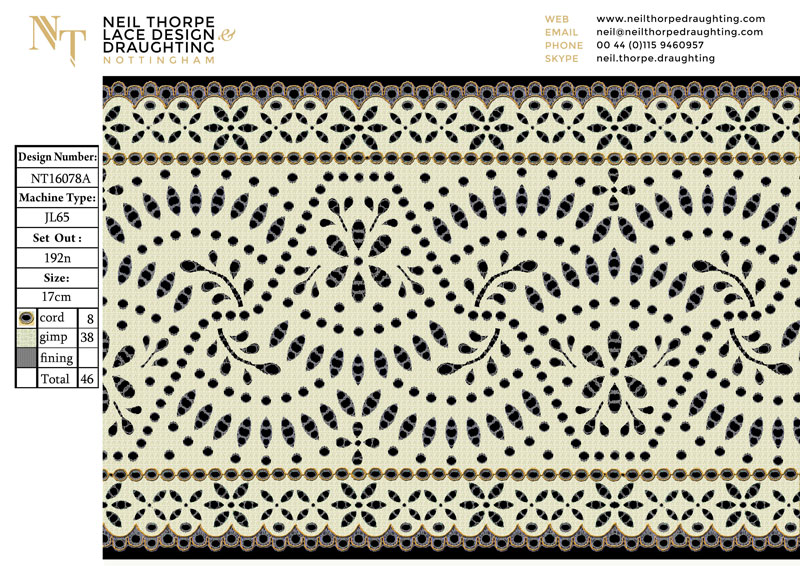
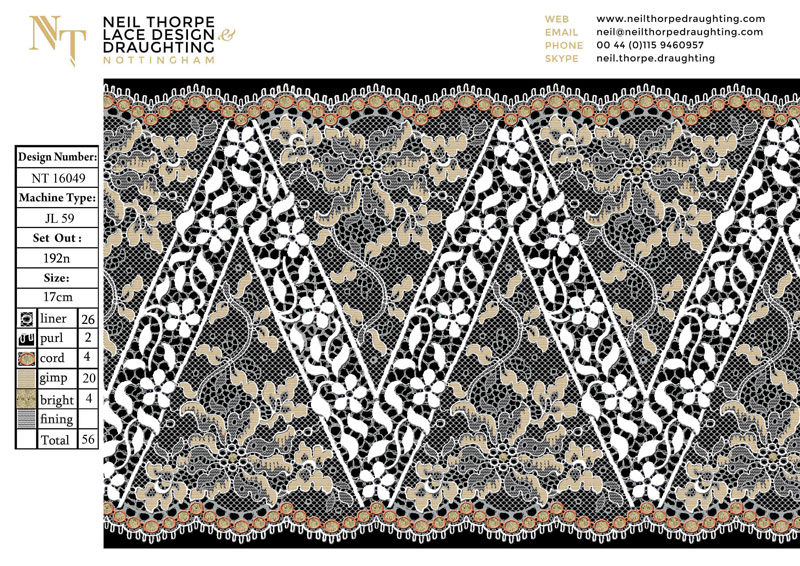
Fig.: Designs made by Neil Thorpe

January 28, 2022


Part Of The Change: Bergans Of Norway To Optimize Its Circular Consumption Program

Scandinavia-based outdoor brand Bergans of Norway is set to develop and implement a QR Code-based app, developed by Trimco Group, to manage the return and rental program for coveralls, an initiative meant to support the brand’s “Long live the product” project.

TW Special Report

With a focus to “lead and inspire towards a sustainable future”, Bergans of Norway is a brand driven by environmental responsibility. Bergans creates apparel and equipment inspired by nature and for use in the outdoors. Its aim is to develop durable clothing that can be used for years, thus reducing the carbon footprint.

The company’s latest project is a subscription-based option for kidswear, where parents can order and return specific snowsuits or coveralls for the season and re-order a different size when the child has grown out of it. Bergans takes the responsibility to receive, repair, clean and reimpregnate the returned garment, making it ready for reuse. The subscription is an initiative that is cost-efficient, removing the need to purchase a new snowsuit every season, a great educational tool, teaching the generations to come about the positive impact of reuse and recycling and is a great tool to prolong the life of a garment.

To ensure a seamless process, Bergans has assigned Trimco Group to develop a digital solution to optimize the outdoor brand’s efforts in this initiative. Thus, Trimco Group has designed a QR code app streamlined with a series of labels bearing the QR code, also provided by Trimco Group. The intuitive solution aims to help Bergans better manage the project’s inventory, making everything more efficient and accurate with just one scan.

Thanks to the solution proposed by Trimco, Bergans will be able to:

  • Quickly receive, send, and track items coming in for repairs or rental;
  • Always have an overview of the items’ status including repairs needed and location, for example;
  • Reduce or eliminate inaccuracy due to misplaced items;
  • Easily manage inventory; and
  • Gain knowledge on product use for future development.

Tonje Taraldsvik, project manager at Bergans of Norway, said: “We are excited to see this project come to life. Thanks to the help provided by Trimco Group, we will be able to optimize our efforts further and easily track the incoming flow of garments, check the status of a product, and trace it back to the consumer. It is no news that we are a brand with a positive environmental agenda, and we need our collaborators to understand and support that. Thanks to our previous collaborations with Trimco Group, we are confident that this will also be a success”.

The subscription initiative is fully sold-out for the upcoming season, and the QR code tracking system is set to go live in April 2022.

“Brands like Bergans of Norway inspire us to be at our best,” said Camilla Mjelde, sustainability director at Trimco Group. “Responsible consumption is one of the things on our agenda, and playing a role in Bergans initiative came as a natural thing for us. The QR-code based app is a tailor-made solution that will give Bergans full traceability reporting, facilitating their circular business model. We are proud to provide them with both a product like QR-labels that are responsibly sourced and a digital solution that will help them streamline the processes involved in this project.”

January 28, 2022

It’s Time To Walk The Talk — How Brands Can Lead From The Front In Sustainable Fashion

By Harold Weghorst

When brands talk about sustainability, they often cite that the primary objective is to “raise awareness”. By “raising awareness” brands can better engage customers, communicate their initiatives and better promote their sustainable products and ethos. But now it’s time to evolve the conversation. To remain competitive and more importantly, achieve greater sustainability results, brands should look to evolve their messaging from awareness to action.

Actioning sustainability goals and objectives is the only way forward to achieve the results needed to be truly eco-friendly. Consumers today will prioritize fashion brands that embed sustainability into their operations, set realistic ambitions, and make positive change. Brands that create sporadic and ineffectual campaigns, which function as an extension of greenwashing, will be left behind.

Sustainability Has A Domino Effect

Change starts with the brands and manufacturers at the beginning of the textile supply chain, and when they take action, their efforts create a domino effect that cascades through the supply chain onto the customer. Efforts to reduce carbon emissions and curb the reliance on fossil fuels don’t go unnoticed by consumers. In fact, the emergence of the “conscious consumer” has provided brands with the ability to reconcile the need to meet business objectives while doing good for the environment. This is evidenced by changing consumer habits.

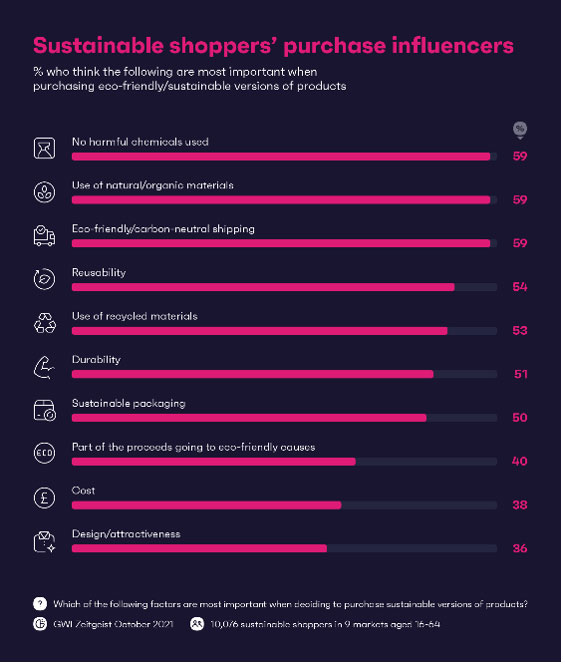
Source: GWI Zeitgeist October 2021

According to a survey conducted by Global Web Index, nearly two in three consumers who describe themselves as fashion-conscious would rather pay more for an eco-friendly product.* Sustainable shoppers are guided by a myriad of factors, but three factors are highlighted as the most important considerations when making a purchase decision — no harmful chemicals, use of natural/organic materials and eco-friendly/carbon-neutral shipping. The challenge for brands is how they justify an increased cost on their products as a result of catering to these factors. Only by being transparent about their manufacturing and communicating their sustainable value proposition to consumers can they differentiate. Consumers should be shown exactly how an increased cost for their garment, yields mutual benefits for their wardrobe and their planet.

Brands That Go Green, Make Green

Fast fashion is easy to produce, it provides an abundance of choice and can be made in mass quantities. Many brands often turn to man-made fibers like polyester to produce their garments. However, in order to really preserve our environment, the industry has a collective responsibility to adopt sustainability in all levels of the supply chain, from fiber, consumption, recycling and disposal.

To implement sustainability for brands, action is key. Half measures and reputational band-aids do little to alleviate the disastrous impact that fossil fuel reliant synthetic fibers have on both the environment and people[2]. Instead, brands and manufacturers must calibrate their revenue approach to include sustainable consumers with big pockets. They can do this by developing impactful campaigns, setting achievable sustainability goals and finding creative ways to involve their consumers beyond just selling clothing to them. This post-sale brand interaction and ongoing education to consumers is where sustainable brands can gain a competitive advantage and really perform in the market for the long run.

How We Do Campaigns: #MakeItFeelRight In Action

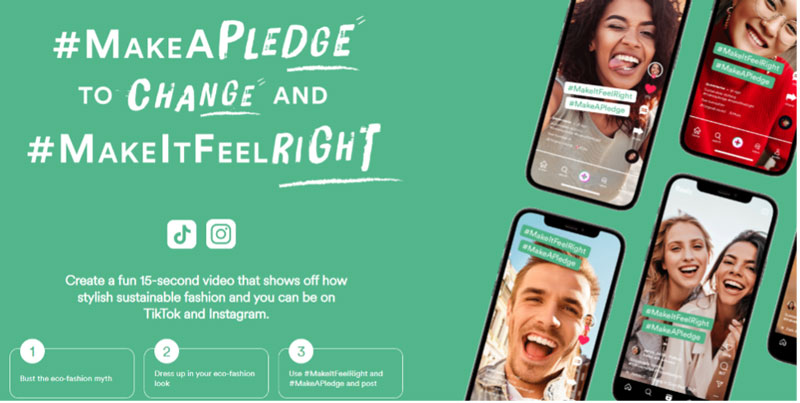
When Lenzing’s TENCEL™ brand’s #MakeItFeelRight campaign launched back in 2019, it did so with the firm objective to raise awareness around the negative environmental impacts caused by the fashion industry. Last year, the campaign sought to garner social media pledges from consumers who created fun and exciting posts that showed off their sustainable clothing. For the initiative, TENCEL™ partnered with One Tree Planted, an environmentally conscious NGO which planted a tree for every pledge generated.

Image courtesy of Lenzing

This effort to debunk the myth that sustainable fashion is not stylish generated more than 8,000 pledges, a huge contribution to global reforestation efforts.

Any brand that wants to uphold their sustainability commitment should inspire their supply chain partners to follow suit, transition awareness to real action and most importantly practice what they preach!

* GWI, Fashion for good: why sustainability is on trend https://blog.gwi.com/chart-of-the-week/sustainable-fashion/
** Changing Markets Foundation: Fossil Fashion Report https://changingmarkets.org/portfolio/fossil-fashion/


Editor’s Note: Harold Weghorst is global vice president, Marketing & Branding, Austria-based Lenzing AG


January 28, 2022


The Green Revolution: How Microfactories Can Change The Face Of Fashion

By Mark Sollman, Product Manager EMEA, Mimaki Europe

With the all-important COP26 Climate Change Conference having taken center stage in November, there is no time like the present for the fashion world to rally together in stepping up sustainability efforts and getting carbon emissions under control. Globally, the fashion industry is now estimated to account for around 10 percent of greenhouse gas emissions and 20 percent of wastewater*, making the pursuit of greener production methods more pertinent than ever before. Thankfully, we are seeing a new era of production enter the fashion arena, with the increasing emergence of technologically advanced, highly automated microfactories.

Along with reducing unnecessary waste through on-demand production, microfactories have a smaller ecological footprint than traditional garment production and require no water use during the production process, making it not only a faster solution, but a greener one too.

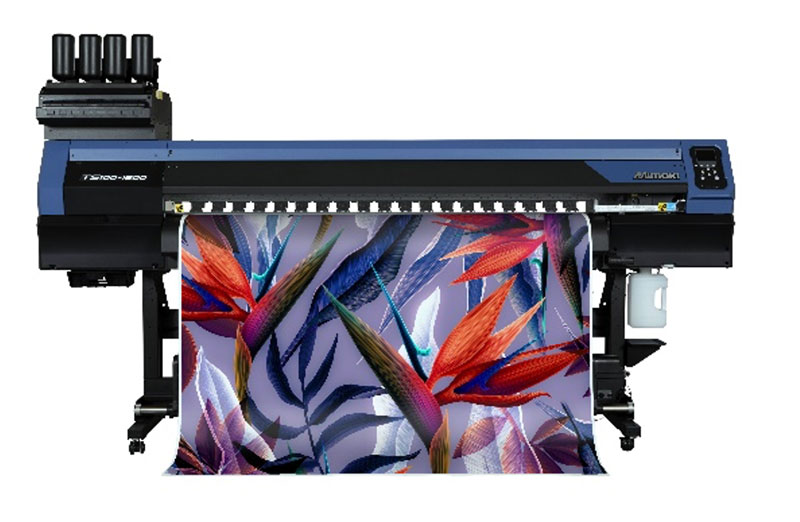
Last year’s FESPA saw Mimaki team up with fashion designer Carolina Guzman to bring her designs to life in real time at the show, setting up its own working microfactory live on-site to take her designs from screen to garment within just a day. Guzman’s designs were created using Mimaki’s TS100-1600 Sublimation Printer, before being transferred to textile, digitally cut and finally pieced together. Devised with a string of ethical and environmental objectives threaded throughout, the microfactory also exclusively utilised eco-friendly Greentex fabric, and any remaining material was donated to Sheltersuit: a wind- and waterproof coat that can be transformed into a sleeping bag, which is provided free of charge to homeless people and refugees.

Through working with a number of strategic partners — including transfer printing expert, Klieverik; paper solutions specialist, Neenah Coldenhove; and digital cutting equipment provider, Summa — Mimaki was able to produce a collection of unique, high-quality garments live on the stand during the tradeshow, demonstrating to visitors from more than 100 countries some of the key reasons that microfactories seem set to change the future of fashion…

Unparalleled speed and versatility

Where traditionally, apparel manufacturing has centered on a production chain model of sourcing materials and producing garments in bulk, microfactories are now enabling on-demand, on-location production, making it possible to create everything from unique, one-off pieces and samples right through to entire product lines – all at unprecedented speeds. This means greater flexibility and customization, enabling designers to modify or update designs and respond to market trends as they occur.

Simplified Supply Chains And Minimised Risk

The microfactory setup brings production in-house and on-demand, minimizing the cost of not only storing stock, but also of shipping it and responsibly disposing of unsold items. Where recent geopolitical events have highlighted the fragility of global supply chains, microfactories offer a unique independence from these systems, empowering garment manufacturers to future-proof their businesses, become less reliant on external systems and suppliers, and reduce the risk of disruptions.

A Boosted Bottom Line And A Greener Future

Facilitating savings in a whole line of resources, from physical storage and production space to time and energy, microfactories ultimately have the potential to significantly increase profitability for garment manufacturers, with the additional benefit of being easily scalable as production increases. Perhaps even more compelling, however, are the environmental considerations. Demonstrated on a small scale through Mimaki’s recent project, the environmental benefits inherent to microfactory production will have an even greater impact as it becomes more prolific and commonplace throughout the fashion world, with the potential to effect meaningful environmental change as adoption increases in the years to come. In short, watch this space!

*https://www.worldbank.org/en/news/feature/2019/09/23/costo-moda-medio-ambiente

January 27, 2022

Long Partnership for High Quality

Penn Textile Solutions GmbH in Paderborn, Germany

Penn Textile Solutions Relies On Process Control From Mahlo

TW Special Report

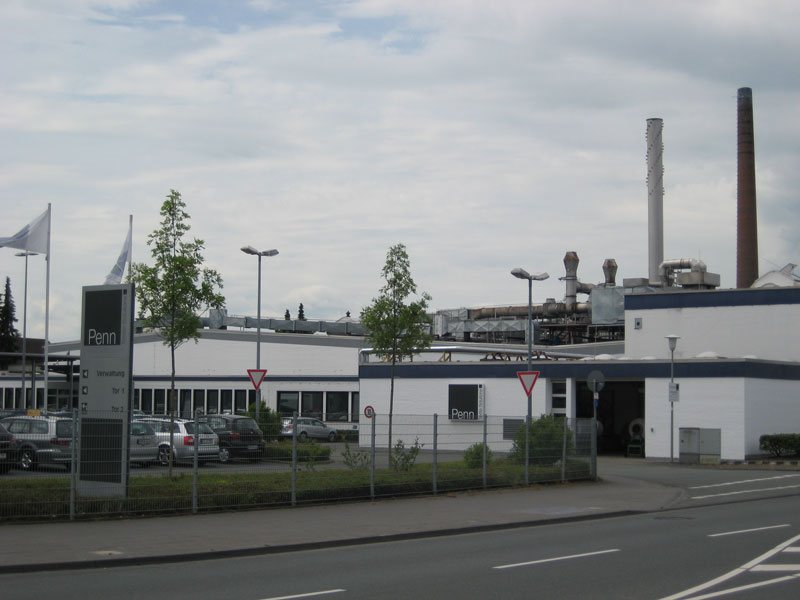
When you think of a textile production hotspot, Paderborn, Germany, may not be the first place that comes to mind. It should though! Because this is where Penn Textile Solutions GmbH has been based since 1959. The company is one of the world’s leading manufacturers of elastic fabrics for under-wear, corsetry, sportswear and swimwear, as well as highly functional textiles for technical applications. The fully integrated company with its own warping, circular knitting, warp knitting, dyeing and finishing facilities currently employs around 150 people.

“Over the past several years, one of the areas Penn has specialized in is the production of custom-fit, close-contour compression knits. These are increasingly being used in the sporting goods sector,” noted Operations Manager Franz Schütte. “Customers can expect a unique design with highly functional wearing comfort from our articles at the same time.” The production of these textiles requires the corresponding know-how as well as the appropriate production and process technology for the production of the surfaces as well as for the finishing and quality assurance. In order to continue to meet these high demands, Penn wanted to further optimize its tenter frame processes.

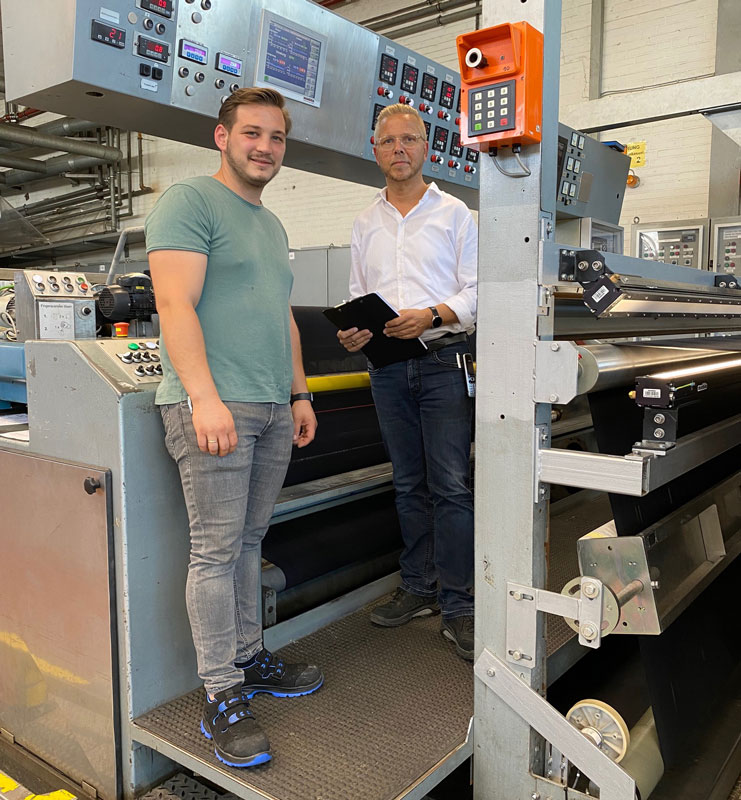
Tugsan Vural, deputy head of the equipment department (left) and plant manager Franz Schütte trust in Mahlo quality.

Many of the products are made from so-called compression knits, in which different constructions are integrated within one quality. Penn produces the compression knitted fabrics on special raschel looms. “The compression zones place accurately in the finished element. The balance of the agents plays an important role here.” In the subsequent finishing process, a textile surface with the required stretch behavior, the appropriate repeat lengths and basis weights should be created, particularly in the drying and fixing process. The measuring and control system in the tenter frame process must realize and guarantee these requirements over the entire length of the section. Not an easy task!

Penn Has Long Relied On Mahlo

To achieve its own high quality targets day after day, Penn has relied on the cooperation with Germany-based Mahlo GmbH + Co. KG, based in Bavaria, for years. The manufacturer of measuring, control and automation systems for web-shaped goods has decades of experience in the field of process control. “We have been using Mahlo systems for more than 30 years and have always been able to rely on excellent results,” says Schütte. Until the summer of 2020, the textile manufacturer had been using a basis weight measurement system in the tenter frame outlet with beta radiation and manual control. “When the krypton preparations had passed their half-life, we had to make a decision: Exchange or replace the system right away.”

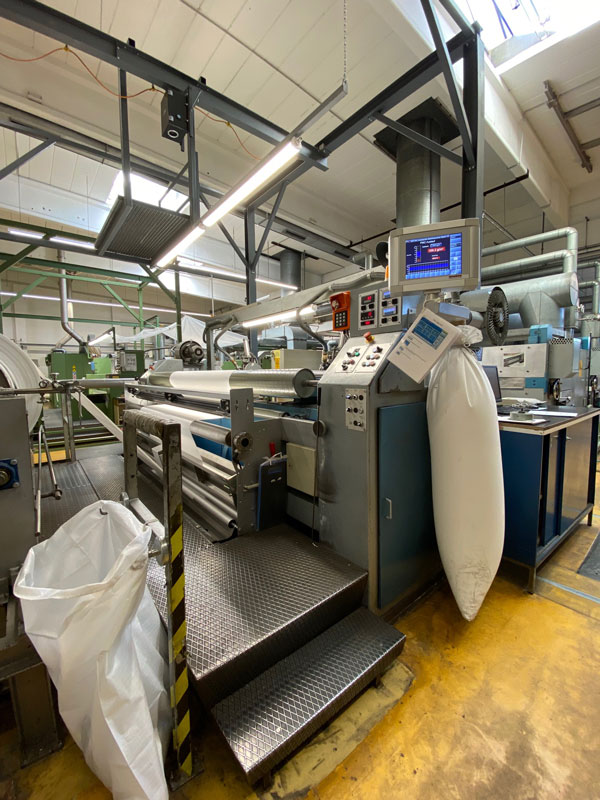
The Famacont PMC integrated in the production line

They sat down with Mahlo representatives and looked for the best solution. Since the systems had already reached a high operating age and the measurement was limited to the basis weight, a new concept was decided upon. “Mahlo made us the best price-performance offer.” The new system should be even more efficient and easier to operate for the special makes.

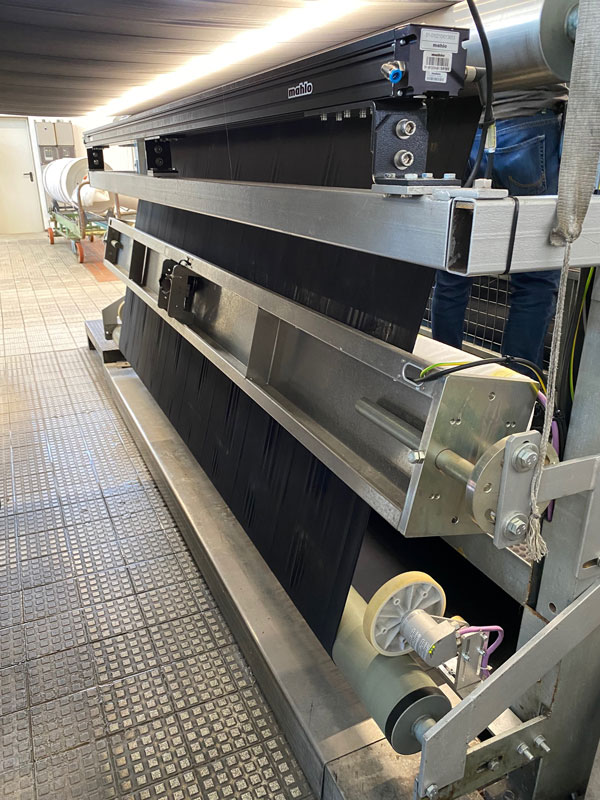
The compression zones of the functional fabric create corresponding distortions within the textile surface in its raw state, which have to be smoothed out in the fixing process. This work is now taken over by a process control system. The Mahlo Famacont PMC-15 with two measuring points automatically controls the leading of the stenter frame by continuously and contactlessly determining the mesh density. In addition, the Patcontrol PCS-20 process control system ensures that the dimensions of the different zones are recorded and also automatically controlled. “The previous beta-radiation facility was not able to collect this kind of data,” explained the Penn operations manager. Another important aspect for the textile manufacturer: the complete and costly radiation protection is no longer necessary with the new systems.

Thanks to the Patcontrol PCS process control system, the zone fabric is detected and also automatically controlled.

Despite very good experience with Mahlo in the past, every change naturally involves a risk. Penn did not have to rely on theoretical considerations, however, but carried out tests in advance with appropriate sample material in the Mahlo test laboratory. The results convinced the decision-makers. “In addition, appropriate internal considerations and external consultations provided us with the necessary certainty for the investment decision. The risk was therefore manageable,” Schütte said. The investment has already paid off. “The new measurement and control technology enables consistent compliance with our desired parameters.” Scrap in the form of manufacturing waste due to mismatched quality parameters has decreased by 5 percent. Due to the success of the production process, a further measuring station for thread density and basis weight was put into operation this summer.

January 27, 2022

Sponsors