Growth And Innovation Drive A Busy Year For TMAS

STOCKHOLM, Sweden — September 30, 2026 — As the global textile machinery industry prepares to meet at ITMA ASIA in Shanghai this November, Swedish textile technology companies are responding to a rapidly changing market with investment, innovation and new solutions.

Growing competition from Asia, geopolitical uncertainty, new regulations and the accelerating impact of AI and digitalisation are reshaping the industry. Against this backdrop, TMAS members have had a busy 2026, with new facilities, product launches and technologies addressing automation, productivity, recycling and more resource-efficient textile manufacturing.

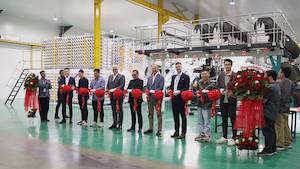
Following a record 2025 and a number of bolt-on acquisitions, ACG Kinna has inaugurated a 1,000-square-metre expansion at its headquarters in Skene in response to growing demand for its complete textile and finished product line automation services.

Imogo, a pioneer in industrial spray dyeing, has opened a new showroom, test centre and production hub in Kinnahult. Imogo introduced its first Dye-Max prototype in 2019 and completed its first industrial-scale installation in 2021. The new facility now enables brands and manufacturers to move from laboratory development to validated commercial production in one location.

The centre features Imogo’s patented spray application technology, combining the Mini-Max laboratory system with a fully operational industrial-scale Dye-Max line for fabrics up to 2.4 metres wide and a production capacity of approximately 3 tons per day. Using as little as 0.7 litres of dye liquor per kilogram of fabric, Dye-Max delivers major reductions in water, energy, chemicals and wastewater compared with conventional dyeing.

The latest TMAS member ReSpin will also see its technology installed at Sweden’s first industrial spinning mill for recycled textile fibres. The company has developed and patented RespinJenny, a mechanical recycling technology that transforms textile waste into fibres suitable for new yarn production.

New technologies

Alongside these investments, TMAS members have introduced a number of new technologies during 2026 addressing productivity, automation and more resource-efficient textile manufacturing.
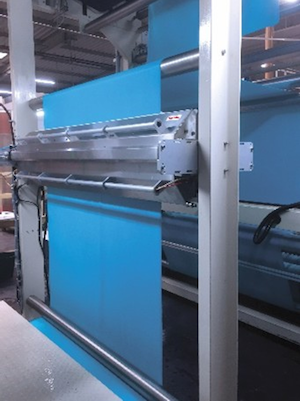
The BW Converting Baldwin TexCoat® G4 precision spray finishing system.

BW Converting’s established Baldwin TexCoat® G4 platform uses precision spray application technology to apply chemistry with pinpoint accuracy to one or both sides of the fabric. By replacing conventional bath-based methods with a non-contact spray process, the system reduces wet pick-up by up to 50%, significantly lowering water consumption and the energy needed for drying while supporting a more consistent finishing process.

BW Converting will also showcase Corona Pure, its proven surface treatment technology for improving adhesion and enhancing fabric performance. As mills move away from C6 fluorocarbon-based water repellents towards fluorocarbon-free C0 chemistries, Corona Pure improves fabric absorbency and helps these formulations deliver stronger water-repellent performance. It reflects the company’s continued focus on helping mills adapt to changing chemistry requirements while maintaining product quality.

Automatex has also developed the P12-PB Automatic Lock Stitch Quilting Unit, which doubles productivity compared with previous systems by delivering continuous programmable quilting with reduced manual intervention in the production of bedding and padded home textiles.

Eton Systems has meanwhile demonstrated its aUPS module for the rapid sorting of used garments. Based on the company’s established UPS material handling system and ETONingenious Factory 4.0 software, the system uses AI to grade individual garments by colour, size and style and, where possible, by manufacturer.

It can also identify damage, recommend possible repairs and calculate a potential resale price, providing an automated approach to sorting garments for reuse.

Looking ahead

The pace of activity will continue towards the end of the year, when TMAS members Vandewiele Sweden and Eltex showcase their latest technologies at ITMA Asia 2026 in Shanghai from November 20-24.

Eltex will present its latest ACT-MULTI system at ITMA Asia 2026.

Eltex will present its latest ACT-MULTI system, bringing individual yarn tension monitoring and automatic control to the heat-setting process to help manufacturers maintain consistent processing conditions across every yarn position.

Heat-setting is a critical stage in the production of synthetic and blended yarns, stabilising yarn structures and locking in twist and bulk to ensure predictable performance during subsequent weaving, knitting, tufting, dyeing and finishing processes.

At ITMA Asia 2026 Vandewiele Sweden will highlight its long-standing expertise in weft feeding and tension control.

In weaving and related processes, Vandewiele Sweden has long-standing expertise in weft feeding and tension control. By ensuring repeatable and predictable yarn delivery at increasingly high loom speeds, its technologies enable weaving mills to operate closer to their technical limits while maintaining consistent fabric quality.

The company’s continued development of data-ready weft feeders also reflects the growing digitalisation of textile manufacturing, embedding intelligence where it can deliver measurable operational benefits without adding unnecessary complexity to demanding production environments.

TMAS Secretary General Therese Premler-Andersson

“This has been a very positive year for TMAS members so far, with investment in new facilities, new technologies reaching the market and further progress in areas ranging from automation and digitalisation to more resource-efficient production,” says Therese Premler-Andersson, secretary general of TMAS, which as a member of Cematex, is closely involved with the ITMA exhibition platform for the international textile machinery industry. “These developments demonstrate the breadth of Swedish textile technology and the very practical way our members are responding to the changing requirements of manufacturers worldwide. We expect that momentum to continue throughout the remainder of 2026 and into next year.”

“There is no question that the competitive landscape is changing. AI, geopolitical uncertainty, regulation and increasing competition from China will all influence our industry in the years ahead. For Swedish textile technology companies, the answer will be to keep pushing innovation, specialist know-how and customer value.”

Posted: October 5, 2026

Source: The Swedish Textile Machinery Association (TMAS)

Long John Puts KARL MAYER’s RDJ 7/3 Into Operation And Strengthens Its Position As A Market Leader

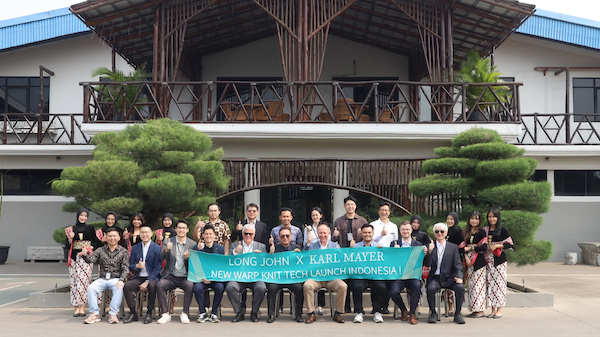
OBERTSHAUSEN, Germany — September 30, 2026 — KARL MAYER has just unveiled its new RDJ 7/3 Jacquard Double Needle Bar Raschel Machine in the international trade press, and the innovation is already causing a stir in the market: The Long John Group, a leading manufacturer of performance footwear fabrics and a long-standing partner of renowned brands, was the first customer to invest in the new machine and celebrated its official launch at its Indonesian plant on August 20.

Long John celebrates the commissioning of the new RDJ 7/3 from KARL MAYER

Guests at the event included representatives from well-known global brands in the athletic footwear sector and from KARL MAYER’s Management.

On site, guests experienced the RDJ 7/3’s enormous innovation potential firsthand. With its three wireless Jacquard bars and other clever technological features, the machine opens up entirely new possibilities for the development of footwear textiles. Complex patterns, precise functional zones, innovative structures, and expressive design effects can now be created with unprecedented flexibility and efficiency.

A key supplier to the global footwear industry

The Long John Group is one of Taiwan’s leading supplier of footwear fabrics and ranks among the largest and most experienced manufacturers in the industry in Asia.

Karl Josef Mayer, grandson of the founder of KARL MAYER, in conversation with Kevin Wen (back left), son of the founder and Chairman of Long John, Jeff Wen, about the latest textile innovations

The company was founded in 1983 by Jeff Wen and has continued to grow ever since. Today, Long John has facilities in Taiwan, China, Vietnam, and Indonesia, as well as a sales office in the United States.

Production is fully integrated and includes spinning, weaving, knitting, warp knitting, dyeing, and finishing. The production capacity is impressive: fabrics for more than 313 million pairs of shoes have already been produced on the Jacquard Double Needle Bar Raschel Machine.

The warp knitting division plays a key role in the company’s innovative strength. Here, open-designed stretch tricot fabrics for uppers and linings are produced, as well as high-performance spacer fabrics with plain or trendy Jacquard-patterned mesh surfaces, which are used in a variety of ways in modern athletic shoes.

Innovation Is Inevitable

Long John Group products are characterized by high quality, innovation, and a keen sense of trends, and are manufactured using high-tech machinery and state-of-the-art processes.

To bring new design concepts to life, the company has now expanded its machinery fleet to include the RDJ 7/3 from KARL MAYER. The new technology enables:

  • Hole designs with nearly perfect and significantly larger rounds
  • Precisely integrated patterns and functional zones with unprecedented design freedom
  • Custom-designed jacquard patterns with striking two-tone effects and creative color combinations
  • Three-dimensional surfaces and eye-catching embossing directly in the fabric

A Partnership Driven by a Pioneering Spirit

The collaboration between KARL MAYER and Long John has a long history

The collaboration between KARL MAYER and Long John has a long history: As early as 2012, the footwear fabric manufacturer made its first investment in a KARL MAYER Double Needle Bar Raschel Machine with Jacquard in the RDPJ-series. In the years that followed, the company was among the pioneering customers to be the first to use newly developed machines.

The RDJ 7/3 also made its industrial debut at Long John. With the commissioning of this machine, the company underscores its role as one of the most innovative players in the global footwear fabric industry.

Anyone who would like to see the RDJ 7/3 in action is invited to the Product Show at KARL MAYER (CHINA) in Changzhou on November 19, 20, 21, and 23, 2026, held in conjunction with ITMA ASIA.

Posted: October 5, 2026

Source: KARL MAYER  Verwaltungsgesellschaft SE

DNA Technical Fabrics Welcomes Doug McBurney As Vice President Of Operations

COLUMBUS, GA — September 29, 2026 — DNA Technical Fabrics is pleased to announce the addition of Doug McBurney as Vice President of Operations, bringing extensive textile industry experience and leadership to the DNA team.

Doug McBurney

Doug is a textile industry veteran whose career includes leadership roles with Milliken, Russell/Fruit of the Loom, Polartec, VELCRO, and MMI Textiles.

A native of the Southeast, he holds degrees from both Auburn University and Clemson University.

In his role, Doug is responsible for advancing DNA’s strategic objectives through operational excellence, customer satisfaction, workforce development, and innovation. Doug will work closely with all stakeholders to ensure DNA continues to deliver the quality, reliability, and responsiveness they expect while supporting the talented employees whose dedication and expertise drive the company’s success every day.

Posted: October 5, 2026

Source: DNA Technical Fabrics

Sukano Polymers Corp. And Poddar Pigments Ltd Partner To Set New Standards In Fiber Coloration

SCHINDELLEGI, Switzerland — September 22, 2026 — Sukano Polymers Corporation, a specialist in color and additive masterbatches for polyesters, biopolymers, and specialty resins, is excited to announce a strategic partnership with Poddar Pigments Limited, an ISO 9001:2015-certified masterbatch manufacturer specializing in solution dyed nylon, polyester BCF, and multifilament yarn and fiber applications.

Through this collaboration, Sukano becomes the exclusive techno-commercial partner for direct sales and distribution, including local stock, of Poddar’s single pigment dispersion (SPD) black, white, and color portfolio across the United States, Canada, and Latin America.

The partnership significantly expands Sukano’s offering for fiber applications, providing customers with access to a comprehensive range of SPD masterbatches specifically engineered for highly concentrated solution dyed fibers. Custom color developments and customer-specific formulations will continue to be developed and supplied directly by Sukano.

Delivering More Value to Fiber Manufacturers
The collaboration combines Poddar’s manufacturing expertise and advanced color technology with Sukano’s strong regional presence, technical know-how, and customer support network throughout the Americas.

With dedicated commercial and technical teams, Sukano will serve as the primary contact for customers, ensuring a seamless experience from product selection through implementation. Customers will benefit from an extensive portfolio of proven fiber color products, local stock, technical support, reliable supply, and streamlined customer service across the Americas.

The partnership is particularly focused on polyester, polyolefin, and nylon fiber applications, where lot-to-lot color consistency, high-accuracy color matching, purity, process stability, and product performance are critical.

Supported by advanced color development, in-house fiber sampling, and testing capabilties, customers benefit from reliable solutions that meet demanding visual and mechanical requirements while maximizing production efficiency, speed to market, and yield.

In their in-house technical center, Sukano conducts comprehensive testing for polymer and high-performance fibers, using state-of-the-art laboratory fiber extrusion equipment. Capabilities include yarn feasibility testing, sample production for different spinning processes, small-batch manufacturing, and the development of fibers for specialized applications. Precise color matching services further ensure optimal alignment with customer requests.

“This partnership strengthens our ability to offer customers a robust and reliable supply of high-quality single pigment dispersions and tailormade colors, backed by local technical support and exceptional service,” said Mark Fessler, CEO at Sukano Polymers Corporation “By combining our market and technical expertise with Poddar’s manufacturing excellence, we are creating a compelling value proposition for fiber producers across the Americas.”

“As India’s oldest and largest fiber masterbatch company, we have built decades of expertise in fiber coloration and processing to deliver the right solution for every customer,” said Gaurav Goenka, CEO of Poddar Pigments. “By partnering with Sukano, we combine technical excellence, expert support, and market ready capabilities in a reliable one-stop solution for even the most specialized and demanding fiber applications across the United States, Canada and Latin America.”

Shared Commitment to Innovation and the Environment
Both companies share a strong commitment to innovation and sustainability. While Sukano has pioneered technologies that maximize the use of environmentally responsible polymer solutions such as PET and biopolymers, Poddar has revolutionized the color business in India with innovative synthesized coloration technologies that provide an alternative to conventional, harmful fiber dyeing processes.

Sustainability extends beyond the products themselves and is also reflected in the operations of both companies. Poddar powers its production facility entirely with renewable solar energy through rooftop solar installations and a dedicated solar power plant. Sukano is also advancing its commitment to renewable energy through solar panel installations at its facilities in Switzerland and Malaysia, supporting progress towards net-zero emissions.

Posted: October 5, 2026

Source: Sukano

Premex Solutions Acquisition By Media One Accelerates Next Phase Of US Growth

MANCHESTER, UK / ATLANTA, GA — September 22, 2026 — Premex Solutions, the Georgia-based digital textile fabrics business, has been acquired by Media One, marking the next phase of its growth in the US market.

Premex was established to meet growing US demand for digitally printable textiles. It carries the product expertise, technical knowledge and textile heritage of its parent company, Premier Textiles Group, a Manchester-based, family-run business founded in 1981, serving customers across North West England and beyond.

A key part of Premex’s success has been its focus on innovation, with the business bringing new fabric developments to the US market. This combination of textile expertise, technical knowledge and commitment to innovation has helped establish Premex as a strong and respected supplier in the digital textile market.

Nick Smith, Director, Premier Textiles Group, said: “Premex has developed into an exciting business with real potential in the US market. This acquisition puts it in the best position to reach that potential, with an owner able to give it the focus, resource and investment it needs.

“Media One is exactly that owner. We’re excited to see what the business achieves as it enters this next chapter.”

Premex joins Media One’s existing portfolio alongside Fisher Textiles and Hyperflex Vinyls, bringing print-ready fabrics together with printing equipment, inks, finishing solutions and nationwide technical service under one roof. Premex customers will continue working with the same people and products, now backed by Media One’s wider capabilities.

Jake Feldman, Chief Executive Officer of Media One, said: “Premex has developed best-in-class print-ready and pre-treated fabrics, along with real technical depth in natural and specialty textiles that complements our own printing technology and service expertise.”
The acquisition also frees Premier Textiles Group to put its full resources and expertise into growing Premier Textiles and Premier Digital Textiles across its core UK and European markets.

Nick Smith added: “This is about focus, not a lack of opportunity. Premex’s US potential is real, and that’s exactly why it needs an owner who can give it full attention. We can then put ours into growing our core UK and European businesses.”

Ashok Kallumpram, Managing Director of Premier Textiles, said: “Premier Textiles has been my family’s business for more than four decades, and we are extremely proud of the reputation, relationships and textile expertise we have built over that time.

“Premex Solutions represents an important extension of that legacy into the US digital printing market, so finding the right long-term home for the business was very important to us.

“We believe Media One shares our commitment to customers, people and the textile industry, and has the capabilities and vision to build on that legacy for many years to come.”

Financial terms of the transaction were not disclosed.

Posted: October 5, 2026

Source: Media One Digital Imaging, LLC

Change Of Leadership At Rieter

WINTERTHUR, Switzerland — September 30, 2026 — Thomas Oetterli has decided to step down from his function as CEO, effective October 31, 2026, and hand over the Chairmanship of the Board of Directors.

“After the successful implementation of the Next Level performance program, the structural measures initiated to consolidate the sites and the acquisition of Barmag, the time has come to hand over responsibility to new hands,” explains Thomas Oetterli.

Thomas Oetterli

The eventual separation of the functions of CEO and Chairman of the Board of Directors was planned since Thomas Oetterli took office.

The Board of Directors thanks Thomas Oetterli for his great commitment and his important contributions to the strategic and operational development of Rieter. It is convinced that the measures initiated will strengthen the competitiveness of the Group and create a solid foundation to benefit from a future market recovery.

Daniel Lippuner will take over as CEO of Rieter on November 1, 2026. He combines broad international leadership experience with in-depth knowledge of the textile machinery and components industry. As former CEO of the Saurer Group and previously as Head of Oerlikon Textile Components, he led businesses along the value chain of spinning machines, yarn processing and textile components.

Daniel Lippuner

As Chairman of the Board and co-owner of Heberlein Technology, he also remained closely connected to the chemical fiber industry. His experience in transformation, technology and quality management, operational leadership and Asian markets is particularly relevant for Rieter with its established short-staple fiber business and the newly acquired man-made fiber business.

Carl Illi will assume the role of Chairman of the Board until the next Annual General Meeting on April 14, 2027. Carl Illi has been a member of the Rieter Board of Directors since 2017 and is a recognized textile industry expert.

With the acquisition of Barmag in February 2026, Rieter has expanded its traditional business focused on short-staple fibers to include the attractive man-made fibers segment. The transaction strengthens the focus on the technology leadership of the Rieter Group, opens up additional growth opportunities and creates a broader basis for digital solutions in the textile industry.

Posted: September 30, 2026

Source: Rieter

Albany Engineered Composites Awarded $21.2 Million IBAS Contract To Advance Hypersonic And Solid Rocket Motor Thermal Protection Manufacturing

ROCHESTER, N.H. — September 29, 2026 — Albany Engineered Composites, a segment of Albany International Corp., announced today that its AEC Advanced Programs, Inc. business has received a new contract, with a total value of $21.2 million over the 30-month period of performance, through the U.S. government’s Industrial Base Analysis and Sustainment (IBAS) program for Strengthening America’s Manufacturing and Defense Industrial Base (SAMDIB).

The award, through the U.S. Army Contracting Command – Rock Island and Cornerstone Other Transaction Authority (OTA), supports the development of carbon-carbon composite thermal protection systems (TPS) for hypersonic vehicles and solid rocket motors (SRM). The effort focuses on advancing, scalable manufacturing capabilities for critical extreme-environment defense applications.

Albany will leverage its experience in advanced composite manufacturing, including 3D-woven, near-net-shape preforms and Resin Transfer Molding (RTM), together with carbon-carbon densification capabilities.

“Hypersonic systems and solid rocket motors place extraordinary demands on the material systems used and the manufacturing processes required to produce them,” said Chris Stone, president of Albany Engineered Composites. “This award brings together Albany’s advanced composite expertise and production-focused capabilities to address an important challenge for the U.S. defense industrial base: establishing the manufacturing capacity required to support next-generation hypersonic and solid rocket motor systems at scale.”

The program focuses on establishing a vertically integrated production facility for carbon-carbon composite manufacturing, creating critical domestic industrial base capacity for the continued development and scalable production of cost-effective thermal protection solutions for hypersonic weapons and SRMs.

“Production readiness is a critical element of both hypersonic and solid rocket motor missions,” said Brent Stevenson, vice president, emerging markets & technology at Albany Engineered Composites. “Albany’s proven experience in 3D-woven near-net-shape composite preforms and RTM provides a strong foundation for advancing scalable manufacturing solutions for these critical missions.”

The effort expands Albany’s capabilities for extreme-environment applications, combining advanced materials technology with manufacturing infrastructure and production engineering. The program includes engineering studies, facility planning, supplier selection, procurement and installation of key manufacturing equipment and development of the infrastructure required to support carbon-carbon composite thermal protection system production.

Advancing Hypersonic and Solid Rocket Motor Manufacturing at Scale

Hypersonic vehicles and solid rocket motors operate in some of the most demanding aerospace and defense environments. Their thermal protection systems must withstand extreme conditions while also meeting increasingly important cost objectives with scalable production.

Through this IBAS effort, Albany applies its advanced composite manufacturing expertise to help strengthen the U.S. industrial base and establish the vertically integrated infrastructure needed to support future hypersonic and SRM production. The award reinforces Albany’s commitment to advanced composite solutions for extreme environments and to expanding domestic manufacturing capabilities for critical aerospace and defense applications.

Posted: September 29, 2026

Source: Albany Engineered Composites

How A New Textile Fabric Could Triple Production In Strawberry Plants

RALEIGH, N.C.— September 29, 2026 — A new textile used to cover strawberry plants more than tripled strawberry yields in tunnel field tests, without negatively impacting plant health. The technology could also significantly reduce water and pesticide usage in strawberry fields.

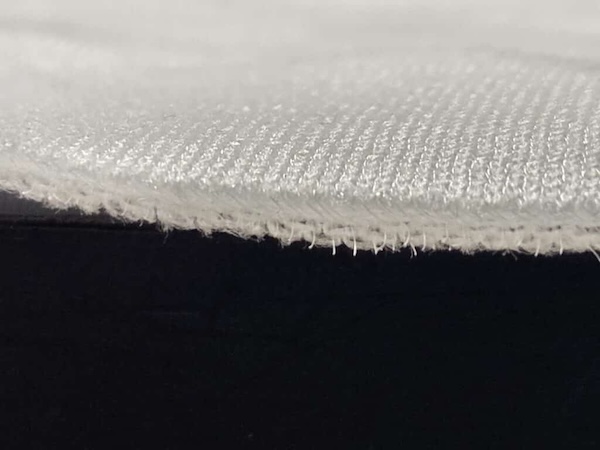
The cover, known as Plant Armor, is a carefully designed fabric that is draped over strawberry plants. The material’s three-dimensional structure prevents insects from reaching the plants beneath. But its multiple layers allow sunlight, rain and airflow to reach the plant.

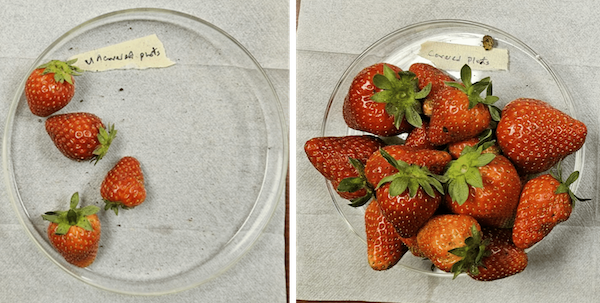
Strawberries grown with and without the Plant Armor textile cover. The new technology raised berry yields by as much as 3.56 times in tunnel field tests. Photo credit: Gabriel Olawuyi

Tunnel field tests found that Plant Armor increased strawberry yields by as much as 3.56 times, without negatively impacting relative humidity or light access.

“To produce fruit, plants need sunlight,” said Gabriel Olawuyi, a graduate research assistant at North Carolina State University and lead author of a paper on Plant Armor. “We expected that Plant Armor’s seemingly opaque fabric would lead to an increase in vegetative biomass at the expense of fruiting — because reduced sunlight would trigger a ‘shade-avoidance’ response, making the plant divert energy toward stem and leaf growth rather than fruit production. However, we found the fabric did not impede access to light at all, and fruit production increased significantly.”

Plant Armor also provided a consistent warming effect over the three seasons that the plant grows, which Olawuyi said helped the bushes reach the fruiting stage earlier than those without the cover.

“Plants require a certain amount of accumulated heat, calculated as ‘growing degree-days,’ to progress through developmental stages including fruiting. Our plant cover has proven to enhance these,” Olawuyi said. “The plants were in a condition whereby the warmth they need to go through each phenological stage to their production was given to them optimally, and they produced far more than the uncovered plants.”

Plant Armor Gen 2. The fabric’s 3-D structure makes it difficult for insects to reach plants beneath it, while still allowing light, rain and airflow to pass through. Photo credit: Loganathan Ponnusamy.

By deterring insects, Plant Armor could also reduce the need for traditional pesticides in agriculture, Olawuyi said.

Plant Armor was created as a spinoff of efforts to make military uniforms resistant to mosquito bites and more comfortable when wearing body armor – highlighting the importance of collaborative research, said co-author R. Michael Roe, William Neal Reynolds Distinguished Professor at NC State.

“The path to Plant Armor started with trying to make a cloth to go on a soldier’s chest to make body armor more comfortable,” said Roe. “Then, through trial and error, we arrive at a product which could triple the output of strawberry farms here in North Carolina.

“We couldn’t have predicted that when we started. Without all these people here doing research and following the science, we wouldn’t have arrived at this product.”

The paper, “Knitted 3-D, Porous Textile Cover to Enhance Strawberry Fruit Production and Prevent Insect Feeding,” is published in the journal, Agriculture. Co-authors include James Clothier, Matthew Bertone, Grayson Cave, Reuben Garshong, Andre West, Loganathan Ponnusamy and Clyde Sorenson of NC State University.

This project was supported by a grant from the North Carolina Agricultural Foundation (grant number AG00463770). The work was also supported by the Research Capacity Fund (HATCH), project award no. 02853, from the U.S. Department of Agriculture’s National Institute of Food and Agriculture. The Plant Armor Gen 2 fabric studied in this paper was patented by North Carolina State University (US Patent No. 11,582,968 B2; 21 February 2023) and is licensed for commercial development by the University. This work was a collaborative project between the NC State College of Natural Resources, Wilson College of Textiles and College of Agriculture and Life Sciences

Posted: September 29, 2026

Source: NC State University / Joey Pitchford

ELFA: CapEx Finance Index August 2026 — Demand Cools from Record High And Financial Conditions Improve

WASHINGTON, DC — September 29, 2026 — The latest CapEx Finance Index (CFI), released today by the Equipment Leasing & Finance Association (ELFA), showed that demand cooled in August after an extraordinary July but remained historically strong. Even after the decline, August was the second strongest month in the survey’s history, and the full-year forecast edged up to a new high. Financial conditions also improved, with the average loss rate falling to its lowest level in ten months. Fed rate hikes and elevated energy prices remain risks, but they are likely to have a minimal effect on equipment demand in 2026.

  • Total new business volume (NBV) among surveyed ELFA member companies was $11.8 billion on a seasonally adjusted basis.
  • Year-to-date NBV rose by 17.3% relative to the same period in 2025.
  • Year-over-year, NBV rose by 19.1% on a non-seasonally adjusted basis.

“Cooler demand in August was unsurprising given the strength of demand in July,” said James Cress, Acting President & CEO of ELFA. “July’s volume was nearly 25% above the previous all-time monthly high due to a surge in AI spending. August was still the second strongest month ever, further validating our forecast that 2026 will be, by far, the best year ever for new deal volumes. Credit quality improved as well, with the average loss rate falling to its lowest level in ten months and delinquencies holding near the low end of their two-year range. Higher borrowing costs from additional Fed hikes would put modest upward pressure on delinquencies and losses, but with credit quality this healthy, the industry would face some chop rather than a full-blown storm.”

Demand cooled from a record high but remained strong. Total NBV was $11.8 billion in August, a decrease of 17.3% from July’s all-time high of $14.3 billion. The total new volume series tracks the amount of new activity added by banks, independents, and captives in a given month. August was the second-highest month on record, 3.1% above the previous all-time high set in January 2026. Equipment deal volume is forecasted to reach $137.7 billion in 2026, the highest level recorded in any year since the survey began in 2006 and 14.4% above the previous record set in 2024.

Small ticket volume growth tracks broader economic conditions and is an important barometer of aggregate demand for equipment. Small ticket deals totaled $4.2 billion, down 34.5% from July’s record high. Even so, August was tied for the fifth-highest month on record and 10.9% above the average monthly pace over the 12 months ending in June, before the July spike. Year to date, small ticket deal activity is up 25.9% from the same period in 2025.

Activity at banks reached an all-time high of $6.0 billion, up 9.7% from July and surpassing the previous record set in March 2022. Activity at captives fell 37.2% to $3.6 billion, but that decline reflects the unwinding of July’s surge. Captive volume was still above its average monthly pace over the 12 months ending in June. Activity at independents was $2.2 billion, down 1.2% from July and slightly below its average over the same 12-month period.

Credit approval rate declined for a second month. The industry-wide average fell 2.0 percentage points to 75.4% in August, its lowest level since February 2025. The average small ticket approval rate fell 1.5 percentage points to 78.2%. The rates at captives and independents fell by 3.8 and 4.8 percentage points, respectively, while the rate at banks rose by 0.5 percentage points.

Delinquencies held steady, and losses fell. The overall delinquency rate held steady at 1.8% in August, near the low end of its two-year range and down 0.4 percentage points from a year earlier. The rate at banks fell by 0.09 percentage points, and the rate at captives fell to 1.9%, its lowest level since April 2019. The rate at independents edged up.

The overall loss rate decreased by 0.02 percentage points to 0.44%, its lowest level in ten months. The average loss rate for small ticket deals fell by 0.08 percentage points to 0.65%. The rate at banks fell to 0.28%, its lowest level since January 2023, and the rate at captives fell by 0.10 percentage points. The rate at independents ticked higher.

Industry Confidence

The Monthly Confidence Index tracks the sentiment of executives in the industry. The index in September was 62.4, unchanged from the previous month.

“Over the past quarter, many of our partners and customers have been impacted by various means of uncertainty, geopolitical developments and continued pressure to manage costs in a changing economic environment,” said Mike Janse, General Manager – U.S., DLL. “Amid these headwinds, businesses recognize the need to modernize equipment and invest in technology that drives productivity and resilience. Looking ahead, interest rate trends, regulatory developments and overall business confidence will play an important role in asset finance demand, but we expect our partners and customers to remain focused on strategic investments that support long-term performance.”

Technical Note

New business volume data are concurrently seasonally adjusted each month to capture the latest seasonal patterns. Data in previous months and years may change due to updated seasonal factors.

Posted: September 29, 2026

Source: The Equipment Leasing & Finance Association (ELFA)

blc TEXTILES Names Jonathan Simon Chief Executive Officer

NASHVILLE, TN — September 24, 2026 — blc TEXTILES, a supplier of textile products to commercial laundries, healthcare organizations, hospitality businesses, and textile service providers, today announced that Jon Simon has joined the company as Chief Executive Officer.

Simon joins blc one year after 1888 Mills, in partnership with Sapphire USA LLC, acquired a majority stake in blc TEXTILES and its Cambodian manufacturing subsidiary, Cambodian Textiles Worldwide (CTW). He will lead blc as it builds on that partnership, drawing on the group’s manufacturing in Pakistan, Bangladesh, and Cambodia to broaden its product offering and strengthen supply for its customers.

Simon spent 37 years building 1888 Mills, beginning with its predecessor companies, Eastern Imports and Shelnor Mills. He served as President beginning in 1989, became President and CEO in 2005, and led the company through 2020 before joining its board. Most recently, he was Executive Vice President of Global Growth & Strategy at Standard Textile.

“blc has built its reputation on consistent quality and on products that deliver value over their full life, not just on the day they’re purchased,” said Simon. “For a laundry, a hospital, or a hotel, the real cost of a textile is measured over hundreds of wash cycles. With blc’s own manufacturing in Cambodia and the strength of our partners at 1888 Mills and Sapphire, we can build on that reputation and bring it to more products and more customers.”

“Jon knows this business and these manufacturing operations as well as anyone. He’s the right leader to turn this partnership into results for blc’s customers. With years of industry expertise, Jon ensures that our focus remains exactly where it belongs: on our clients,” said Adil Rashid, Executive Chairman of blc TEXTILES and Cambodian Textiles Worldwide.

Simon holds a B.S. from Indiana University and completed the Advanced Management Program at the University of Chicago Booth School of Business.

Posted: September 29, 2026

Source: blc TEXTILES

Sponsors