Cotton Incorporated Advances “Plant Not Plastic” Message

©2025 Steve Makowski Studio LLC | http://stevemakowskistudio.com
Cary, N.C.-based Cotton Incorporated expanded its education efforts, helping the textile industry and consumers understand the benefits of natural fibers and cotton’s role in discussions about microplastics, sustainability, circularity and textile waste.

Cotton Incorporated reported that 41% of U.S. consumers are aware of microplastics pollution, compared with 17% in 2017. In addition, 59% said they are likely to seek clothing made with microplastic-free fibers. A recent industry survey found that 67% of textile professionals said their companies are taking, or plan to take, action to reduce microplastics pollution.

“Our research shows that consumers are paying closer attention to what products are made from and how those materials align with their values,” said Bev Sylvester, chief marketing officer at Cotton Incorporated. “Cotton comes from a plant, not plastic.”

Programming included educational videos, CottonWorks resources, webinars, digital communications, tradeshow activations and consumer education initiatives.


2026 Quarterly Issue III

Morito Scovill Americas Acquires Edward Segal Inc.

Clarkesville, Ga.-based Morito Scovill Americas has acquired Edward Segal Inc., a U.S. manufacturer of eyelet, grommet, rivet and snap-fastener attaching machines, as well as custom automated assembly systems.

Edward Segal will join Morito Scovill Americas while retaining its existing team and customer relationships. The acquisition expands Morito Scovill Americas’ manufacturing, sourcing and operational capabilities for apparel and specialty-market customers.

“This acquisition represents an important strategic step for Morito Scovill Americas,” said Shane McEntyre, chief sales officer. “Together, we will be even better positioned to serve our customers.”

Edward Segal President David Segal said: “Morito Scovill Americas’ investment in growth will allow us to stay true to the values that have defined Edward Segal Inc. for generations.”

Edward Segal is based in Thomaston, Conn.


2026 Quarterly Issue III

Nester Hosiery Awarded U.S. Military Sock Contracts

Mount Airy, N.C.-based Nester Hosiery has been awarded three-year contracts for the U.S. Army Cold Weather Sock Program and U.S. Marine Corps Intense Cold Weather Sock Program, following novation from Fox River.

Nester will serve as provider of record for the Army program and supply the Marine Corps program. The company manufactures high-performance Merino wool socks designed, engineered and produced in the United States.

The awards reinforce Nester’s position as a provider of Berry Amendment- compliant cold-weather and performance sock systems for the U.S. military.

“These two major awards reflect the trust placed in our team, our domestic manufacturing capabilities, and our long-standing commitment to delivering premium performance products to the warfighter,” said Kelly Nester, CEO.

The company’s military programs are supported by North Carolina manufacturing, advanced knitting technology and technical product-development expertise.


2026 Quarterly Issue III

EFI Reggiani And Danitech Announce Agreement For Mezzera Textile Finishing Machinery

Bergamo, Italy-based EFI Reggiani and Danitech Group have entered a multiyear licensing and manufacturing agreement covering Mezzera and Jaeggli textile finishing machinery.

Danitech gains global rights to manufacture, market, sell, install and service Mezzera machinery, including washing and bleaching lines, singeing machines, jiggers and Jaeggli yarn mercerizing lines. New equipment will be marketed as “Mezzera by Danitech.” EFI Reggiani will continue service and spare-parts support for the existing installed base, while Danitech will manage lifecycle support for new machines.

“Our selection of Danitech as global manufacturing partner for the Mezzera range reflects our commitment to safeguarding the brand’s longstanding reputation for quality and performance,” said Vincenzo Marino, vice president and general manager of textile at EFI Reggiani.

Danitech will use Italian and Chinese manufacturing capabilities and Greater China sales rights to expand its market reach, particularly in Asia.


2026 Quarterly Issue III

Novonesis Launches DeniBrite Denim Bleaching Platform

Copenhagen-based Novonesis has launched DeniBrite, an enzymatic biobleaching platform for denim formulators and laundries seeking bright, contemporary and vintage finishes while reducing reliance on conventional bleaching chemistries.

The platform combines DeniBrite Cold T for low-temperature bleaching and DeniBrite Vintage for aged finishes and gray-cast effects. Products are bluepass certified and available in ZDHC Level 3-compliant formulations.

“For decades, denim bleaching was about achieving the right look. Today, it is also about proving how that look was made,” said Hans Ole Klingenberg, vice president of Planetary Health Biosolutions at Novonesis.

A screening-level life cycle assessment found DeniBrite Cold T had approximately 40% lower global warming potential and used 28% less water than conventional sodium hypochlorite bleaching under modeled conditions.


2026 Quarterly Issue III

From Textile Waste To Spinnable Fiber: Why Classification Comes First

Controlled trials show that textile waste origin — not just fiber composition — can strongly influence fiber quality, carding performance and yarn outcomes in mechanical recycling.

Textile World Special Report

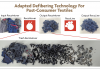
Figure 1: Tearing process for post-consumer textiles: input material, cleaning and opening stage, and the resulting fiber material after the tearing line. The figure illustrates that contaminant removal and fiber preservation already determine later process stability before carding even begins. Source: Presentation “From Torn Fiber to Yarn” / Recycling Atelier Augsburg

Researchers at Institut fuer Textiltechnik Augsburg gGmbH, in collaboration with Technische Hochschule Augsburg and Trützschler Group SE, recently reported on the role of material classification in mechanical textile recycling. Their work shows that textile waste origin can have a major impact on fiber quality, spinning preparation and final yarn performance, even when fiber composition remains the same. The report that follows highlights those findings and underscores why classification comes first in building an effective recycling route.

Introduction

Mechanical textile recycling is increasingly important in the transition toward a circular textile industry. A central question is under which conditions textiles and textile waste can be reprocessed into spinnable raw material and ultimately into high-quality yarn. Systematic material classification is essential for this purpose. It enables reliable assessment of heterogeneous waste streams, selection of appropriate recycling routes and adjustment of machine settings in spinning preparation.

In the approach presented here, textile recycling is treated as a continuous, interconnected system. Material classification, tearing, fiber assessment, carding, fiber preparation and yarn production are considered linked stages within a closed value chain rather than isolated steps. The objective is not only to recover fibers from waste, but to return them to new textile products at the highest possible quality. This framework allows material streams of different origins to be analyzed systematically and translated into reproducible process windows.

Why Different Textile Waste Streams Require Different Recycling Routes

Secondary raw materials differ not only in fiber composition but also in history, contamination, construction and mechanical condition. Distinguishing between waste types is therefore essential in mechanical recycling. A practical classification differentiates post-industrial, pre-consumer and post-consumer material streams, capturing fundamental differences without excessive complexity.

Post-industrial textiles, such as cutting waste or production residues, are generally well controlled. They originate from known processes, have defined fiber compositions and contain minimal foreign matter.

Pre-consumer materials, such as unsold goods, also have known compositions but may include seams, coatings, labels or other additional components.

Post-consumer textiles are the most challenging. Having been used, they may be soiled and contain both textile and non-textile components such as zippers, buttons, reinforcements or linings.

In this study, three material categories were examined under controlled conditions: worn workwear (65% cotton, 35% polyester) as post-consumer material; identical unused garments as pre-consumer material; and the same fabric supplied as yard goods as post-industrial material. This ensured identical fiber composition and textile construction across all categories.

A two-stage tearing system was employed in collaboration with Ommi S.r.l. (Prato, Italy). The RecoMover, equipped with coarser clothing, performs automated contaminant removal and initial opening. The downstream RecoLine, with progressively finer clothing and six workers, ensures gentle opening to the individual fiber level. Post-consumer and pre-consumer materials pass through two RecoMover drum units and four RecoLine drum units, whereas post-industrial materials are processed solely through six RecoLine drum units.

Fiber Quality: Visible And Hidden Differences

The quality of torn fiber material is critical for producing spinnable raw material. It is evaluated using fiber length distribution, mean fiber length L(n), short fiber content SFC(n), degree of opening, waste content, dust and nep levels. These parameters directly affect yarn strength, evenness and process stability.

Fiber length was measured using an AFIS Pro 2, while degree of opening and usable fiber proportion were assessed with a Shirley Trash Analyzer. Despite identical initial compositions (65% cotton, 35% polyester), notable differences were observed. Post-industrial fibers exhibited the lowest quality, with L(n) of 10.4 mm and SFC(n) of 67.5%. Pre-consumer material achieved L(n) of 14.2 mm and SFC(n) of 45.3%, while post-consumer material reached L(n) of 12.4 mm and SFC(n) of 55.0%.

NIR analysis confirmed no chemical differences apart from color and washing had no significant effect on fiber quality. The shorter fiber length in the post-industrial stream is therefore attributed to differences in the tearing process. Due to limited machine availability, identical configurations could not be applied; further trials are planned.

These results demonstrate that material classification must extend beyond fiber composition. Textile construction, garment features, pre-treatments, finishes and tearing parameters must also be systematically documented for reliable process control.

Spinning Preparation As A Quality-Defining Step

After fiber opening, spinning preparation determines whether heterogeneous recycled fibers can form stable card slivers and yarn. The card plays a central role by opening, cleaning, individualizing and aligning fibers, thereby influencing sliver evenness, nep formation and short fiber content.

Experiments were conducted using a TC 11 card (Trützschler Group SE) at the ITA Augsburg Recycling Atelier to examine the effects of material type and process parameters on sliver and yarn quality. The study addressed three questions: the influence of material type on carding behavior, the effect of carding on process and yarn stability and the relationship between fiber and yarn quality.

A mixed-level full-factorial design was applied. The material blend consisted of 70% virgin cotton and 30% recycled material, producing an Nm 34 ring-spun yarn. Variables included material-related factors and machine settings in pre-carding and main carding zones, such as the number and spacing of carding elements and cylinder speed.

This design allowed clear distinction between material effects, process effects and their interactions. Such differentiation is critical for industrial practice, as settings that perform well for one material stream may result in increased neps, poor evenness or instability in another.

Material Effects Dominate Carding Behavior

Statistical analysis showed that material type is the dominant factor affecting spinning preparation. Pareto analysis identified it as a significant influence on carding behavior, particularly for fiber-related parameters. Highly significant effects were observed for L(n) and SFC(n), with additional significant impacts on total nep count and yarn neps.

Relevant interactions between material and process parameters were also identified. Recycled materials respond differently to identical machine settings; parameters such as carding element configuration and cylinder speed have material-dependent effects.

Figure 2: Material type emerges as the dominant factor for carding behaviour and is therefore a central variable in process optimisation.
A = Material; B = Number of Twintops; C = Distance of Twintops; D = Cylinder Speed
Source: presentation “From Torn Fiber to Yarn” / Recycling Atelier Augsburg.

Consequently, a universal card setting is inadequate for recycled fibers. Material classification must precede process optimization. Only after characterizing a material in terms of origin, composition, fiber quality and processing behavior can suitable parameters be defined. While process adjustments can partially compensate for material differences, they remain dependent on the material itself. In practice, this requires adaptive parameter windows tailored to each material class.

Yarn Quality: Compensation In Spinning

Despite clear differences in fiber and sliver quality, yarn parameters did not always reflect these differences to the same extent. Variations in yarn evenness (CVm) were less pronounced, indicating that spinning processes can compensate for certain inconsistencies through blending, fiber guidance and twist.

However, this does not diminish the importance of fiber and sliver quality. Critical differences must be detected early, before they manifest as instability, increased waste, restricted process windows or yarn defects. Yarn quality parameters alone may not reveal underlying risks.

Based on eight key parameters —including L(n), SFC(n), total nep count, card sliver CVm, yarn CVm, thin and thick places, and yarn neps — a ranking of material performance was established. Pre-consumer materials performed best, followed by post-industrial and post-consumer materials. These results confirm that material homogeneity and low contamination improve processing conditions, while more challenging streams can be partly compensated through appropriate process control.

From Classification To Predictive Process Control

Material classification is not merely a sorting step but a process-defining factor. It determines the appropriate tearing route, cleaning stages and carding parameters. In mechanical fiber-to-fiber recycling, it is the foundation for reproducible quality.

Industrial implementation requires three key measures. First, material streams must be described in detail, including origin, construction, color, finishing, garment features, contamination and expected mechanical behavior. Second, material characterization must directly inform process control, influencing tearing, cleaning and carding decisions. Third, systematic data documentation is required to establish reliable process windows and predictive models.

With highly variable input materials, conventional machine optimization is insufficient. Applying uniform parameter sets inevitably leads to quality fluctuations. Predictive process control must therefore start with the material, integrating classification, characterization and process routing into a unified system.

Conclusion

The study demonstrates that the origin and classification of textile secondary raw materials strongly influence mechanical recycling, fiber quality and carding behavior. Material type and history affect fiber length, short fiber content, degree of opening and contamination, which in turn determine spinning preparation performance and required machine settings.

While process adjustments can partially compensate for material variability, effective control depends on systematic material characterization. Material classification must therefore be integrated into process development as the basis for adaptive carding strategies, stable processing windows and high-quality recycling.

High-quality mechanical recycling does not begin at the machine but with understanding the material. Only when both visible and hidden material properties are identified and translated into process control can recycled fibers become a reliable raw material for new yarns.


What This Means For Spinners

For spinners committed to a more circular textile industry, this report makes one point clear: recycled fiber performance starts with understanding the material origin. Post-industrial, pre-consumer and post-consumer inputs may share the same nominal fiber blend, but they can behave very differently in processing.

For spinning operations, that means recycled inputs cannot be handled with a single standard setting. Material origin, construction and condition all affect fiber quality, carding performance and yarn results.

Spinners most likely to succeed with higher recycled content will be those that classify incoming material carefully, track key fiber characteristics and match each stream to the right process route and machine settings.

Textile World Editors


Editor’s Note: Acknowledgements. This report was submitted by Dr. Lukas Lechthaler, Expert R&D Technology, Trützschler Spinning, and authored by Bettina Cherdron, Amon Krichel and Mesut Cetin of Institut fuer Textiltechnik Augsburg gGmbH and Technische Hochschule Augsburg; Prof. Stefan Schlichter of Technische Hochschule Augsburg; and Lukas Lechthaler and Luisa Verbocket of Trützschler Group SE.


2026 Quarterly Issue III

Techtextil And Texprocess 2026 Bring Innovation To Frankfurt

The Techtextil Forum featured “High-Performance Textiles for Space,” presented by Jane Gensler of NASA Headquarters and Wendy Gao of NASA’s Johnson Space Center. Photos courtesy of Messe Frankfurt/Pietro Sutera
Despite a challenging market, co-located Frankfurt events delivered the expertise to turn ambitious ideas into real-world solutions.

Textile World Special Report

For those who have attended Techtextil and Texprocess in the past, the shows hold the promise of connecting with like-minded textile individuals who are driven by innovation, collaboration and the goal to take textiles to a new realm of form and function. In May, event organizer Messe Frankfurt Exhibition GmbH welcomed more than 36,000 visitors to Techtextil and Texprocess 2026 at the Messe Frankfurt fairgrounds, featuring 1,700 exhibitors.

The organizer characterized the event, saying: “In a challenging market, Techtextil and Texprocess provided the global industry with a stable meeting place.”

With participants from 112 countries represented at the exhibition grounds, the organizer reported that the top 10 visitor countries were Germany, Italy, France, Türkiye, the Netherlands, Spain, Belgium, the United Kingdom, Poland and Switzerland. The organizer reported growth in international attendance, underscoring the global reach of the Frankfurt shows.

Techtextil featured 1,500 exhibitors from 52 countries.

Innovation In A Challenging Market

Energy costs, geopolitical conflict and trade uncertainty were undercurrents of the May event.

Messe Frankfurt Executive Board Member Detlef Braun commented: “Volatile market developments are driving lasting changes in business models. Connectivity, flexibility and speed are key success factors in this environment. At Techtextil and Texprocess, relevant partners come together to rapidly translate ideas into applications.”

Global challenges leading up to the May 2026 event may have dampened turnout but were often overcome on the show floor — new ideas, innovations and cutting-edge companies were not in short supply.

On The Show Floor

Trützschler Nonwovens GmbH, Dülmen, Germany, acknowledged the lower turnout but was not surprised based on pre-show discussions with its clients.

“The overall situation reflects the current global uncertainty. Companies are cautious with investments and eager to cut costs,” said Matthias Schemken, managing director of Trützschler Nonwovens. “This is exactly where practical, efficient solutions become important.”

“We are seeing a clear trend toward refurbishments and retrofits,” explained Robert Koert, director of service at Trützschler Nonwovens. “Customers want to restore and exceed original performance levels.”

A Pavilion At Home

VDMA Textile Machinery had a strong presence with more than 50 exhibiting companies and seven companies at the VDMA group stand.

“The fact that Techtextil is held in Frankfurt, where our headquarters are based, has a very practical advantage for us: we can meet with our member companies face to face, practically on our doorstep. This saves both us and the companies a great deal of time,” VDMA said in a statement.”

The association also celebrated the 60th anniversary of the Walter Reiners Foundation, highlighting six decades of commitment to young engineers. VDMA representatives noted: “The event reflected on past award winners and their careers before introducing the 2026 recipients. Five graduates received awards for their bachelor’s and master’s theses, presented by Foundation chairman Peter D. Dornier.”

Innovation Awards

The presentation of the Techtextil and Texprocess Innovation Awards 2026 was a great source for discovering trends and standout members of the industry.

The organizers reported that “across 10 categories, 17 international winners were being recognized for pioneering research, innovative products and materials, as well as new processes and technologies. These innovations provide solutions far beyond the textile industry — including sectors such as automotive, aerospace, medical, architecture, construction and robotics.”

Techtextil and Texprocess 2026 welcomed to Frankfurt Germany more than 36,000 visitors and featured 1,700 exhibitors.

Show Floor Forums

The show floor forums were a highlight of the event, featuring what seemed like an endless progression of interesting presentations.

Sabine Scharrer, director of brand management technical textiles and textile processing at Messe Frankfurt and show director of Techtextil and Texprocess, commented: “The NASA presentation was undoubtedly one of the highlights of the trade fairs and attracted a diverse audience, ranging from textile engineers and material scientists to manufacturers, researchers, students and technology providers.

“We were particularly pleased to welcome Jane Gensler, Crew Health and Performance Domain Lead at NASA Headquarters, and Wendy Gao, Textile Material Lead at NASA’s Johnson Space Center.

“Their presentation demonstrated how critical advanced textiles are — from fire protection and thermal management to abrasion resistance, wearable technologies, and future habitat concepts. The clear message: many of the challenges of future Moon and Mars missions are, in fact, material and textile challenges.

“This resonated strongly with our audience because it highlighted the growing importance of technical textiles in highly demanding applications. The level of engagement was remarkable,” said Scharrer.

“The forum was packed, and many attendees stayed afterwards to continue discussions, meet the speakers in person, and take photos. At the same time, NASA made it clear that solving these challenges will require close collaboration between industry, research institutions, and technology providers.”

This post-presentation interaction was commonplace at both the Techtextil and Texprocess forums. The forums were a strong draw but also represented the real spirit behind Techtextil.

“The [NASA] session illustrated how material innovation developed for extreme environments can create opportunities beyond space exploration,” Scharrer added. “This reflects exactly what Techtextil and Texprocess stand for: bringing together the expertise needed to turn ambitious ideas into real-world solutions.”


2026 Quarterly Issue III

High Performance Rotor Spinning at Nazar Tekstil

Nazlı Ceylan Balcı Kurtul, vice chairwoman of the board at Nazar Tekstil, is satisfied with the performance of the R 70.

Rieter’s R 70 fully automatic rotor spinning machine combines quality, productivity and energy efficiency.

Textile World Special Report

Rotor spinning is a key technology for efficient yarn production with consistent quality and high output. With the fully automatic rotor spinning machine R 70, Rieter offers an advanced solution that combines excellent yarn quality, high productivity and energy efficiency. Successfully implemented at Nazar Tekstil in Türkiye, the machine demonstrates its capabilities in daily production.

Nazar Tekstil, a family-owned spinning mill in Türkiye, focuses on producing high-quality compact and rotor yarns with a daily capacity of up to 100 tons. By investing in the Rieter R 70, the company has further strengthened its production performance and quality consistency. Nazlı Ceylan Balcı Kurtul, vice chairwoman of the board at Nazar Textile, confirms the results: “We are extremely satisfied with the performance of the R 70.”

With the R 70, Nazar achieves very stable yarn-quality values. “This predictability is critical for meeting the expectations of our customers in the weaving and knitting sector,” emphasizes Nazlı Ceylan Balcı Kurtul. The mill produces yarn with a tenacity that is consistently 0.5 to 1 Rkm higher than the market average.

High Productivity At Maximum Rotor Speeds

The R 70 enables Nazar to operate at rotor speeds of up to 150,000 rpm in the production of Ne 30 cotton weaving yarn. These performance levels are made possible by high yarn quality and consistent package winding. Fibers from pre-processing stages can be used without compromising performance, which supports Nazar’s zero-waste principle.

Outstanding Yarn Quality And Tenacity

Efficient And Reliable Operation

Designed for fully automatic operation, the R 70 ensures high efficiency with minimal manual intervention. Rotor cleaning takes place without interrupting production, as automatic compressed-air cleaning occurs during each piecing. The R 70 is also characterized by low energy consumption thanks to modern rotor drives and optimized vacuum systems. This helps Nazar Textile to optimize operating costs and improve sustainability.


2026 Quarterly Issue III

Red Land Cotton: From Seed To Sheet

For Anna Yeager Brakefield, every thread still traces back to the soil that started it all.
One family’s cotton crop now powers a Made in U.S.A. bedding brand from farm-to-home.

By James M. Borneman, Editor In Chief

Textiles are a mystery. Most people never consider how the basic products lining our closets, filling every room of our house, and touching our lives daily actually get made.

The process of transforming fiber into yarn, yarn into fabric — bleaching, dyeing, possibly printing — then cutting and sewing into finished goods is invisible, overlooked and never part of the conversation.

Ideas and concepts for new products, when they originate outside the circle of textile insiders, rarely break through that unseen curtain.

Red Land Cotton’s story is about how that barrier was broken by nothing more than the sheer force of will of a cotton farmer from Alabama and his daughter, who had a talent of her own.

There are consumers today searching for the comfort and quality of years gone by. Imagine bed linens that bring home that feeling of something more — maybe reminiscent of a stay at a grandparents’ house or a country bed-and-breakfast.

It sounds like a flowery marketing story, but if you can deliver on that promise and tell the authentic story of quality bedding made in the United States that starts with cotton seed planted in farmland in Alabama, you may just make it work.

That story starts not with marketing but with a farmer.

Mark Yeager didn’t set out to tell a story. He took over the family farm in 1983. Always looking to improve his business and the well-being of his family, in 1994 he took the next step and built his own cotton gin.

Just as farming cotton takes specialized skill and knowledge, ginning has its own complexities. It takes a crop from the field, cleans it, grades it and creates bales ready for market. In the process, Yeager gained more control over his crop and his seed, extending his business and the security of his family.

Inspiration

An idea struck in 2015 when Mark’s sister commented on one of his Instagram posts. She reacted to Mark’s photo of his cotton, saying she was proud of him but “… would love some sheets made out of [his] good North Alabama cotton.”

Mark, always looking to improve the security of his family and 3,000-acre cotton farm, thought it was a great idea: “Sheets use a lot of cotton.”

But not just sheets — heirloom sheets. Yeager brought his idea to his church group and asked for help finding an example of the bed linens his grandparents would have used. And from a friend, the sample was in hand.

In 2016, Mark Yeager and his daughter, Anna Yeager Brakefield, founded Red Land Cotton, focusing on creating premium cotton heirloom bedsheets.

More Than A Daughter

From the outside, you may see a TV commercial for Red Land Cotton and wonder: How can the story be true? Is this some slick marketing company conjuring up an image just to sell me something? Did an Alabama cotton farmer really do this on his own?

The quick answer: You’d have to actually meet the Yeagers to understand.

Mark has his own talents — an entrepreneurial spirit second to none, fiercely focused on America’s ability to make quality products starting in American soil, direct to consumer.

But Anna Yeager Brakefield, Mark’s daughter, has a story all her own.

After graduating from Auburn University with a degree in graphic design, she moved to New York to work in marketing, then continued her career in Nashville.

There she married Nick Brakefield, whom she’d met at Auburn while he studied pharmacy.

Mark Yeager built a farm, a gin and a brand, but out here, waist-deep in cotton, nothing has changed. It still starts and ends with his own two hands.

Getting Started

Yeager and Brakefield had done their homework. They had an early conversation with friends at Cotton Incorporated and showed them the sample of heirloom sheeting.

Cary, N.C.-based Cotton Incorporated is a nonprofit research and marketing company established in 1970. It functions as the primary engine behind U.S. cotton, funded by growers and importers to strengthen every link of the supply chain, from the field to the retail shelf.

“And after we got the green light on if we could make this, then it became, ‘How could we make it?’” said Brakefield.

From the very start, one thing was essential. “It was very important that it be made in the United States,” said Brakefield. “And over the course of doing this for 10 years, it has become even more evident that it is so important that the success of the American farmer is so directly related to the success of the textile industry in the United States — it goes hand in hand.

“So that’s why we wanted to build a supply chain out here — and connected with Jack Miller.”

Yeager Gin Co. stands between field and fabric, where Mark’s cotton crop becomes Red Land Cotton.

Pulling Back The Curtain

Jack Miller has spent a lifetime in textiles. Growing up in South Carolina, he was at home with summer jobs at Alice Manufacturing Co. After graduating from Clemson University with a degree in administrative management in 1982, Spartanburg, S.C.-based Milliken & Company was a natural fit. Miller later returned to Alice Manufacturing, where he moved through a progression of responsibilities and eventually oversaw the day to day operations of four greige textile plants, along with other duties as time went on.

Miller lived his career in the wake of major changes in the industry — plant closings, consolidations — and watched links in the textile supply chain slowly being disassembled.

In 2009, Miller went out on his own, spending time in knitting, then forming SustainTex LLC, headquartered in Greenville, South Carolina.

“Organics — organic cotton — was getting bigger and bigger by the day,” said Miller. “I was obsessed with sustainability — recycled polyester had just come out.

“So our objective [at SustainTex] was to use that same domestic supply chain I knew and develop those fabrics here in the States.

“Pricing was always an issue — it’s a very small market for people who really care about that ‘Made in U.S.A.’ and that transparent supply chain.

“I was converting on my own — the classic 50-year-old textile guy with some relationships — converting cottons and things for guys that I worked with before … and it got me through.”

Connecting With Red Land

“When Red Land came in,” said Miller, “Alice was still open. And Mark called Apryll Smith at Alice and said something along the lines of, ‘We want to start making sheets. Can y’all help us?’ And Apryll said, ‘Call Jack Miller. He knows everything about sheets’ — and then Mark called me, and I still owe Apryll several beers!”

Vickie Armstrong spreads fabric that will soon become Red Land Cotton sheets.
This is when Yeager and Brakefield’s authenticity and drive became the tipping point.

Miller had received calls like this many times and had always taken them seriously — but he has also seen reality play out when a new idea doesn’t cross the finish line.

Regarding their initial contact, Miller remarked, “You could tell that this was not going to be a hobby.

“You’ve got a cotton farmer. You’ve got a brilliant marketing person — both got guts. They’ve got money. They needed some clown to help them pull that together.”

Having seen projects driven by interests outside the textile industry before, Miller knew what to look for, and he saw it in Yeager and Brakefield. Red Land Cotton had the passion for the project — without a doubt — and that passion was coupled with the financial resources essential to get the project off the ground.

“It was perfect. Perfect timing for me, wherein I could help them build the supply chain that I’d already done — I’d already worked on twice before.

“I’d seen the supply chains built before, and I knew all the players. So it was a really good fit for me personally. I was extremely fortunate to get to help.”

Things progressed quickly for Red Land, with Yeager and Brakefield intent on making the plan come together.

“They just got in the car — they drove up here [Greenville, S.C.] and we hit the tour,” said Miller. “Because remember — the thing is — from Greenville you can hit a weaver, spinning and finishing, in a day or two.”

The tour was an eye opener for Red Land. “We got hooked up with Jack, and at that point, it started the winding road of the players,” said Brakefield.

The tour included spinning at Parkdale Mills and weaving at Hamrick Mills.

Assembling The Chain

“We met with Parkdale, and we went and visited that plant and talked to them about doing our spinning,” said Brakefield.

More than just a spinner, Gastonia, N.C.-based Parkdale Mills is known as the world’s largest independent yarn spinner, consuming roughly 60% of all cotton used domestically each year. Founded in 1916 and, under the leadership of Chairman and CEO Anderson Warlick, Parkdale remains privately held, supplying yarn to major home furnishings and apparel brands.

Miller later added, “Parkdale has been a phenomenal partner — phenomenally cooperative and helpful with Red Land.”

Yeager and Brakefield also visited weaving at Hamrick Mills.

In Moulton, Audrey Zirbel guides a seam into place, turning woven cloth into sheets.
Gaffney, S.C.-based Hamrick Mills was founded in 1900 and produces high-quality greige woven fabrics in 100% cotton and poly/cotton blends. Cameron Hamrick serves as president of the family-owned company started by his great-great grandfather. Under his direction, Hamrick Mills focuses on supplying domestically made woven fabrics for customers in the home furnishings, apparel and industrial markets.

For finishing, Miller suggested Yates Bleachery. Though the plant has now closed, Miller commented, “I’ve worked with Brewster Yates my whole life, so I consider Yates a friend.”

Yates Bleachery was founded in 1920 by Arthur Edward Yates near the base of Lookout Mountain in Flintstone, Ga., and remained under family ownership for more than 100 years, most recently led by third-generation owner Brewster L. Yates Sr.

“He’s a good man and that plant is closed now, but all those folks became good relationships.

“Mark, Anna and Brewster Yates still have a great relationship.”

In building the relationships, both Brakefield and Miller spoke of attending the 2016 Techtextil North America show in Atlanta.

Techtextil North America 2016, held May 3-5 at the Georgia World Congress Center in Atlanta, Ga., brought together just under 10,000 visitors and hundreds of exhibitors across technical textiles, nonwovens, sewn products and equipment. Co-located with Texprocess Americas, the show floor and symposium sessions highlighted new materials, advanced manufacturing technologies and reshoring-focused supply chain discussions — the backdrop against which Red Land Cotton and Jack Miller met Parkdale Mills, Hamrick Mills and Yates Bleachery, beginning to stitch together their domestic supply chain.

“Parkdale was there. Jim Hopkins [Hamrick Mills] was there. Brewster Yates was there. You know, so all of a sudden, they’re in this big room full of textile people and realize, hey, here’s our supply chain right here,” said Miller.

“We all got in the same room at Techtextil in Atlanta, in 2016, and by October of that year we had our first product to sell,” recalled Brakefield.

Scaling Up

Miller also commented that part of the challenges were the run sizes and fragility of the supply chain. He knew that mills like Parkdale, Hamrick and Yates Bleachery are built for large commercial orders, so a new, unproven brand asking for a one-off first run is inherently a hard sell.

Hamrick’s Jim Hopkins, director of sales and marketing at Hamrick Mills, recalls, “I said, you know, I feel confident that this is going to work and it’s going to be a nice fabric and you’re going to like it.

“I said, but we can’t just do a little bit. And she [Anna Brakefield] said, ‘You know, I feel really good about this. I don’t think we have a problem giving you a good-sized order to get this off the ground and get it started.’ And so that’s when the order came through May 6 for 20,000 yards.

“I was amazed,” said Hopkins. “Yeah, but we had to get the yarn made. So we needed this fabric to weigh right at a pound of yarn a yard.

“We needed 20,000 pounds of yarn to get it started. And Parkdale — they got the Yeagers’ cotton in; they spun the yarn, put the warp packages together and the filling packages. They sent it to us and we were weaving by August.”

Timing matters here because Yeager and Brakefield had a plan. And that plan meant Red Land Cotton heirloom sheets would be ready to ship to meet the Christmas rush.

From Sheeting To Sheets

With sheeting fabric on the way, Red Land needed to move fast. The heirloom sample was from the 1920s and needed to be sewn and ready for Christmas. Red Land Cotton’s first vendor fell through and the company needed to act quickly.

At the Red Land Cotton warehouse, Melinda Mason’s careful fold is the last touch before those heirloom pieces leave home.
“Goodness, so our first cut and sew, we sourced out of New Jersey. We were set to use another vendor, but I cannot remember exactly what happened and why we were unable to use him, so we had to find somebody who could do the designs I had chosen — that I was pre-selling, mind you — I already sold,” said Brakefield.

“I was selling this design with this stitching on it. And I needed to find somebody who could do that stitch.

“I found a lady who had sewn for some reputable home brands, but, I mean, literally, it was in her garage,” said Brakefield. “Essentially, it was her and three other ladies in North Bergen, New Jersey, but it wasn’t sustainable — it was too small.

“It just so happened that in our hometown, there was a group of ladies who had a cut and sew, and they were doing apparel — and there was an article in our local paper, talking about what we were doing, and they reached out to us about making shirts out of our fabric or something like that,” said Brakefield.

“We told them, we didn’t need shirts but we needed sheets — could they make sheets?

“And they started making our sheets. And every week we would go and get our inventory from the cut and sew in our hometown, drive five minutes back to my dad’s gin office, where I was doing the pick, pack and ship — and fulfilling orders on a weekly basis like that.”

Growing Quickly And Keeping Up

“We were able to grow with them for quite some time, and we hit a real growth spurt in 2019 and 2020. We realized we had to get more cut and sew production going, so we decided to start our own cut and sew plant in Tylertown, Mississippi,” said Brakefield.

“And you would probably ask yourself, ‘Why Tylertown, Mississippi?’

“Well, my dad did a lot of Googling — a lot of research — and that area has a ton of textile history.

“And there was a cut and sew manufacturing building that was up for rent. I mean, literally, the place had the cutting tables there, had machines there — just sitting. We worked with the town, we sourced a manager and got our cut and sew up and running in October, roughly, of 2020.”

Miller corroborated, saying, “Mark and I were on the phone one day and he says, ‘We’re going to Tylertown, Mississippi. They got a plant down there. We may open up a cut and sew.’ I’m like, ‘Wow, I’ll meet you down there.’ You know, again — it’s just, if they want to do something, they do it. They don’t overthink it. They just do it. It’s been very successful for them.”

The Finish Line

For Red Land Cotton, there never seems to be a finish line. The company seemingly did the impossible, from concept to Christmas, in a very short time.

“There was growth every year, but the real takeoff was in 2019, 2020. The bar graph is pretty steep,” said Brakefield.

Elizabeth, Katharine, George, Nick and Anna Brakefield; Mark and Cassandra; Joe and Caitlyn; and Mark, Samantha, Henry and Avery Yeager are three generations rooted in this field, working together to turn what they grow into Red Land Cotton and long-term value close to home.

“We had to grow to meet the requirements to be desirable as manufacturing partners — so that they would even pay attention to us or so that we could get product when we needed it. We had to have higher orders. So that was a real motivating factor …”

Brakefield still wonders about Red Land’s trajectory. “I mean, how we did it was kind of — placed the purchase order and said we’re going to figure it out.”

Ten Years Later

In July 2026, the TV lit up with a segment on Fox Broadcasting’s “Fox & Friends” morning show. Host Ainsley Earhardt was on location on the plant floor of Hamrick Mills in Gaffney, S.C. With her, Mark Yeager and Anna Yeager Brakefield were giving an inside look at Red Land Cotton sheets being made.

The segment captured what Red Land had said all along. Brakefield’s words were clear: “The beautiful thing about making a product in America is the way everybody came together to make this happen.”

When asked what was the best part, Brakefield answered, “When we ask our customers why they are purchasing from Red Land Cotton, it’s because it’s made in America.”

Earhardt also received a tour of Hamrick’s weaving operation with Cameron Hamrick explaining the basic steps of the process — even letting Earhardt start a weaving machine, saying, “I don’t know what customer will be fortunate enough to have Ainsley Earhardt make their fabric, but here she is making it!”

It was noteworthy TV to see Hamrick’s clean, modern weaving operation on display for the public to see — great for Red Land and great for U.S. textiles.

Relying On What You Know

Mark Yeager, a family-focused farmer and entrepreneur always trying to increase the value of what he grows, is straightforward in his value to Red Land Cotton. But how did Anna Brakefield add value?

“There is no telling the amount of benefit all the experience I collected over the first five years of my time outside of college that really benefited what Red Land Cotton is today,” said Brakefield.

“Just getting to work for really big brands and seeing how they handled their marketing. You know, I was able to do work for American Express, for BMW — I worked on the launch of Jay Z’s cologne — it’s just, there’s nothing that could replace that type of experience,” said Brakefield.

“For our senior thesis [at Auburn] we had to come up with a company. We had to write a business plan and then do all the branding, all the marketing, all the materials for it,” said Brakefield.

“And when I sat down to do Red Land Cotton, I pulled out that template and redid the whole thing — my whole senior thesis — but just for Red Land Cotton. You know, that’s a real testament to my education. I love Auburn. The fact that I can pull out my senior project and apply it to my business, I think, is really cool.”

Jack Miller summed it up nicely when asked how Red Land Cotton happened: “Everybody believed in them.”


2026 Quarterly Issue III

Nuyarn Powers Ultra-light Trail Running

Nuyarn_spinning_athleisure
Unknown Runner’s debut Courser Collection is designed to breathe well, dry quickly and support next-to-skin comfort.
Unknown Runner hits the trail with Nuyarn™ Technologies’ patented spinning process.

Nuyarn® Technologies recently announced a partnership with Unknown Runner, a developer of purpose-built merino performance apparel for trail runners. Flagstaff, Ariz.-based Unknown Runner was founded by trail-running partners Katie and Alex Mette, and is a performance apparel brand focused on merino garments for long-distance trail use.

The company’s approach centers on applying wool’s natural comfort and odor-management properties to technical running products while addressing the lightweight, breathability and durability requirements of high-output activity.

Unknown Runner’s debut Courser Collection features an ultralight performance-merino system designed for hot, variable conditions and powered by Nuyarn technology, according to the company.

Built for high-output runs and everyday adventure, the 115-gsm merino-blend fabric combines an open-knit structure with 63% merino wool, 29% polyester and 8% nylon. According to Unknown Runner, the fabric is designed to provide natural temperature regulation, moisture management, odor resistance and next-to-skin comfort.

Nuyarn’s proprietary drafting technology wraps merino around a nylon filament to create a wool yarn that, according to the company, is lighter in weight, manages moisture more effectively and offers greater long-term durability. Combined with the fabric’s open-knit construction and polyester content, the resulting ultralight fabric is designed to breathe well, dry quickly and maintain performance through repeated use in demanding conditions.

Photos courtesy of Unknown Runner
Developed by New Zealand-based TMC Ltd., Nuyarn® differs from conventional ring-spun and core-spun yarn systems by eliminating the twist typically used to bind staple fibers. Instead, the company says its patented process drafts merino fibers along a high-performance filament, creating two-ply yarns with greater loft and aeration.

Nuyarn reports that retaining more of wool’s natural crimp and volume supports lightweight fabric constructions while maintaining warmth, stretch and resilience. The company says the construction positions merino at the yarn surface to support next-to-skin comfort and natural odor management, while the filament contributes strength and recovery.

The technology has found use in technical outdoor, activewear and base-layer applications, where reduced fabric weight, fast dry times and repeat-wear durability are important performance considerations.

“We are excited to see Unknown Runner utilize Nuyarn to push the boundaries of performance apparel in the trail running space,” said Monica Ebert, vice president of sales for Nuyarn. “Our technology is designed to unlock the natural potential of wool and in a high-intensity sport like trail running, the benefits of five-times faster dry times and eight-times more durability are game-changers for the athlete.”

“We’re always searching for the highest-performing merino fabrics and Nuyarn’s ability to innovate around performance made them the ideal partner for Unknown Runner,” said Alex Mette, founder of Unknown Runner.


For more information, visit nuyarn.com


2026 Quarterly Issue III

Sponsors