Vietnam’s Market Evolution Creates New Sourcing Opportunities At VIATT 2027

HO CHI MINH CITY — October 15, 2026 — As Vietnam’s textile industry continues to upgrade and scale, new opportunities are emerging for suppliers of advanced raw materials, design-led fabrics, production technologies, and sustainability solutions. The Vietnam International Trade Fair for Apparel, Textiles and Textile Technologies (VIATT) will return February 24 – 26, 2027, presenting a cross-sector platform – spanning apparel, home and technical categories – for overseas companies to connect with manufacturers, brands, sourcing offices, retailers, and industry buyers from Vietnam, ASEAN, and beyond.

Vietnam’s textile and garment sector is moving beyond its traditional focus on cut-make-trim (CMT), with more manufacturers developing higher value-added production capabilities including OEM and ODM. Driven by industry upgrading priorities, changing trade conditions, external buyer requirements, and rising expectations around traceability and environmental performance, domestic producers are placing greater emphasis on efficiency, technology upgrades, digital transformation, and higher standards.

These shifts are creating demand for overseas products, technologies and expertise across the textile value chain, from fashionable fabrics and functional materials to garment machinery and finishing technologies. Reflecting this market evolution, VIATT 2027 will spotlight opportunities across three major product sectors: Apparel Fabrics & Fashion, Home & Contract Textiles, and Technical Textiles & Technologies.

Apparel Fabrics & Fashion: supporting Vietnam’s emerging style status

Vietnam’s fashion landscape is gaining international visibility, supported by local craftsmanship, rapid social media marketing, and celebrity endorsements. Contemporary Vietnamese labels such as Fanci Club, La Lune, and Cong Tri have dressed international stars, contributing to Vietnam’s emergence as a rising fashion hub[1]. This growing profile is strengthening demand for quality, fashionable, and performance-led fabrics.

VIATT 2027’s Apparel Fabrics & Fashion zone will feature fashion fabrics, fibres, yarns, accessories, prints, trims, functional materials, and garment manufacturing solutions, with product opportunities ranging from performance textiles to high-end shirting and suiting. The zone will also feature the new Fashion Manufacturing Hub, alongside dedicated international showcases, including the European Zone, presenting quality, sustainable, and technology-led products for buyers seeking specialist materials and advanced textile solutions. A variety of fashion shows, display areas, and workshops are set to further enhance product visibility and sourcing efficiency.

Home & Contract Textiles: harnessing local urbanisation and hospitality growth

The Vietnam home textile market size stood at around USD 747 million in 2025, and is forecast to expand to over USD 970 million by 2030[2], underscoring sustained growth momentum across both residential and commercial demand segments. The outlook is further supported by Vietnam’s booming tourism industry – the country is expected to add over 46,000 new hotel rooms between 2026 and 2029[3], following one of the highest mid-to-luxury growth rates in the region over the past decade.

The fair’s dedicated Home & Contract Textiles zone will bring together suppliers and buyers from the retail, interiors, property, and hospitality sectors. Key product categories include bedding, towels, upholstery fabrics, curtains, wallcoverings, decorative fabrics, bed and bath linens, and durable interior textiles for residential and commercial projects.

As demand expands across residential, commercial, and hospitality channels, the zone will offer an important sourcing interface between local buyers and international suppliers. Past editions have welcomed home textile exhibitors from China, Germany, India, Japan, Korea, Portugal, Thailand, and Vietnam, underlining VIATT’s role as a key regional sourcing platform.

Technical Textiles & Technologies: meeting upgrade and performance needs

As Vietnam’s textile and garment industry moves into higher value-added production, demand is also growing for technical textiles, functional fabrics, machinery, finishing technologies, and advanced production solutions. Manufacturers remain focused on improving output and compliance with international sourcing requirements.

High-potential application areas include protective textiles and sportswear, as well as medical and industrial nonwovens. The global nonwoven fabric market is projected to grow from USD 61 billion in 2025 to exceed USD 86 billion by 2031[4], providing significant import and technology opportunities to serve Vietnam’s currently limited domestic production capabilities.

VIATT 2027’s Technical Textiles & Technologies zone -is set to provide a platform for products and machinery spanning the entire technical and industrial spectrum. Within this category, the returning Textile Chemicals & Dyes Zone will present chemical and dyeing solutions, colouration systems, treatment processes, and material enhancement solutions that support performance, sustainability, and production efficiency.

International showcases, sustainability, and buyer engagement

Reflecting VIATT’s international buyer reach, the 2026 edition welcomed over 17,000 visits from 54 represented markets, with the top 10 visitor countries and regions including China, Hong Kong, India, Japan, Korea, Myanmar, Taiwan, Thailand, the US, and Vietnam.

Complementing this international visitor profile, exhibitor participation will be further strengthened through dedicated country and region pavilions, including the returning China, Germany, India, Japan, Korea, Taiwan, and Thailand Pavilions. Spanning all three major sectors, these pavilions will provide platforms for suppliers from across the wider textile industry. Backed by recognised national and regional identities, these pavilions will support product discovery and cross-border business exchange for buyers seeking quality, innovation-led solutions. Complemented by dedicated product zones, the sector-integrated Trend Forum, and a comprehensive fringe programme, VIATT will also facilitate market insight and business dialogue across the textile value chain.

Meanwhile, sustainability will remain a key theme through the fair’s Texpertise Econogy initiatives. The Econogy Hub will showcase sustainable products, certifications, and solutions; the Econogy Finder will increase visibility for verified sustainable exhibitors through the online directory and physical visitor guide; and Econogy Talks will host various seminars and panel discussions focused on responsible sourcing and production.

The Vietnam International Trade Fair for Apparel, Textiles and Textile Technologies (VIATT) is organised by Messe Frankfurt (HK) Ltd and the Vietnam Trade Promotion Agency (VIETRADE). For more details on this fair, please visit www.viatt.com.vn

Posted: October 17, 2026

Source: Messe Frankfurt (HK) Ltd

Bally Ribbon Mills to Exhibit Advanced Textile Solutions at Advanced Textiles Expo 2026

BALLY, Pa. — October 15, 2026 — Bally Ribbon Mills (BRM), a designer, developer, and manufacturer of highly specialized engineered woven fabrics, will exhibit at Advanced Textiles Expo 2026, November 3–5 in Orlando, Florida. At Booth #805, BRM will showcase advanced narrow fabrics, webbings, high-performance materials, and custom textile designs for demanding applications.

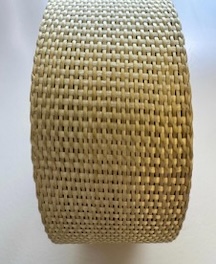
Bally Ribbon Mills - narrow fabric photoBRM develops standard and custom textile solutions using a range of high-performance fibers, including Zylon®, Vectran®, Kevlar® 29, Nomex®, Kevlar® EXO™, Spectra®, Dyneema®, and Teflon™. The company’s precision weaving capabilities support application-specific designs for markets requiring durable, high-performance textile components.

BRM’s woven materials also support next-generation exploration initiatives. Bally Ribbon Mills provided high-strength specialty tapes and webbing utilized in the parachute and landing systems that successfully deployed the Curiosity and Perseverance rovers on the Martian surface. The company is also developing materials for future Moon and deep-space missions.

Fire-side Chat: Designing and Manufacturing Advanced Medical Textiles

During ATA, Ted Fetterman, BRM vice president of sales and marketing, will lead a fire-side chat, “Designing and Manufacturing Advanced Medical Textiles,” on Tuesday, November 3, from 2:00–2:30 p.m. on the show floor. With more than 50 years of medical textile experience, Fetterman will discuss BRM’s work in the medical device market, lessons learned, and factors shaping the future of medical textiles.

Advanced Textiles Expo attendees are invited to visit Booth #805 to learn how BRM combines advanced materials with precision weaving to create custom textile solutions.

Posted: October 17, 2026

Source Bally Ribbon Mills (BRM)

Moisture Matters: The Critical Role Of Continuous Moisture Monitoring In Manufacturing

By Sarah Hammond, MoistTech

I

n modern manufacturing environments, precision isn’t optional—it’s essential. And moisture content is one underestimated variable that can make or break a production line. Whether it’s food, pharmaceuticals, paper, or plastics, even slight fluctuations in moisture levels can lead to inconsistency, reduced shelf life, material degradation, or costly rework. The solution? Implementing continuous, in-line moisture monitoring systems that offer real-time data insights and more precise process control.

As industry expectations rise and product quality standards become more stringent, moisture measurement is no longer a step reserved for lab testing. Instead, it has become an integral part of the production line, helping manufacturers safeguard product quality, boost efficiency, and meet compliance targets.

Why Moisture Monitoring Matters

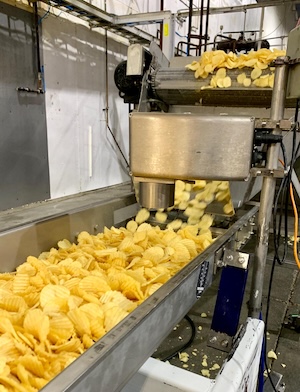
MoistTech - potato chip measurement _4_ _2_
Unchecked moisture threatens product quality, consumer safety, and brand reputation. MoistTech’s IR3000-F

Moisture plays a key role in determining a product’s texture, weight, stability, shelf life, and even chemical composition. Left unchecked, moisture can compromise product quality, consumer safety, and, as a result, brand reputation. In industries where moisture levels can trigger microbial growth or accelerate spoilage, the stakes are particularly high.

Traditional moisture management methods, such as batch sampling and off-line lab testing, introduce critical delays to the production process. These approaches provide only intermittent, retrospective data that may not accurately reflect the full scope of process variability. As a result, deviations in moisture content may go undetected until well after affected products have progressed through multiple stages of production, leading to costly rework, scrap, or even recalls. On the other hand, to avoid this outcome, manufacturers can tend to overcompensate when moisture levels are detected in the lab, scrapping product that may not have been impacted by the moisture variability.

In contrast, continuous moisture monitoring offers immediate, real-time data that empowers operators to make precise, on-the-fly adjustments. By identifying and correcting moisture variations as they occur, manufacturers can isolate and address only the impacted portion of a production run. This targeted response dramatically reduces material waste and ensures that overall quality standards are consistently met.

Additionally, real-time monitoring minimizes energy consumption by helping to optimize drying times and temperatures. Instead of running dryers longer “just in case,” facilities can fine-tune their processes with confidence, conserving both energy and resources. By eliminating unnecessary production steps and reducing time-to-market, continuous moisture monitoring shifts moisture management from a reactive quality assurance measure to a proactive, strategic tool that drives efficiency across the board.

The Hidden Costs of Poor Moisture Management

When moisture management is reactive instead of proactive, the consequences ripple across operations. High energy usage during drying, rework due to off-spec batches, supply chain bottlenecks caused by spoilage or delays, and lost product from moisture-induced defects all contribute to ballooning operational costs.

In some cases, seemingly minor moisture fluctuations can have outsized effects. For example, a 1% increase in moisture content in a pelletized product can raise the amperage load on equipment, reducing throughput or causing a complete equipment shutdown. In high-volume production environments, these deviations compound quickly, impacting both the bottom line and customer satisfaction.

Industry Focus: Food Manufacturing

In food manufacturing, moisture levels directly affect texture, taste, safety, and shelf life. Too much moisture promotes microbial growth, mold formation, and premature spoilage. Too little, and products become dry, brittle, or nutritionally compromised. Additionally, moisture inconsistencies can lead to product clumping, affect batch uniformity, and interfere with critical processes like drying and curing. These issues not only harm product quality but can also trigger compliance failures in regulated markets.

Continuous moisture monitoring allows food processors to stabilize conditions in real time, maintaining tight control over product quality and reducing recall risk. By managing moisture proactively, companies also reduce energy costs associated with drying and extend shelf life, ensuring products reach consumers in optimal condition.

Industry Focus: Pharmaceuticals

Pharmaceutical manufacturing demands a level of consistency and traceability that leaves no room for guesswork. Here, moisture isn’t just a quality issue—it’s a regulatory one. Variations in moisture content can alter the chemical stability of active ingredients, compromise the efficacy of medications, or affect tablet disintegration and dissolution times.

Regulatory agencies like the FDA require strict documentation and verification of moisture levels, especially in oral solid dose manufacturing. Real-time monitoring helps pharmaceutical producers meet these standards while minimizing material waste, rework, and downtime. Beyond this, integrated data-logging and automated controls reduce human error and ensure that each batch, regardless of production site, adheres to the same moisture specifications—helping manufacturers meet Good Manufacturing Practices (GMP) and pass audits with confidence.

Common Misconceptions Around Moisture Monitoring

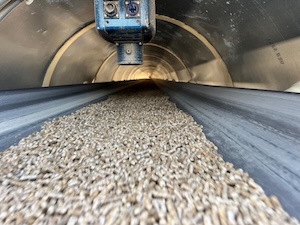
MoistTech - finished pellet belt 112 _2_
MoistTech’s IR3000 Series Moisture Sensors

A major misconception in the manufacturing world is the belief that all moisture sensors are created equal. While many companies have adopted near-infrared (NIR) technology to track moisture levels, they often overlook the significant performance differences between sensor models, particularly when it comes to long-term accuracy. Older or less sophisticated sensors tend to suffer from calibration drift over time. Much like an analog clock that gradually loses precision, these sensors slowly deviate from their original baseline, delivering increasingly unreliable data as time goes on.

To address this, manufacturers must schedule regular recalibration visits from service technicians, an added layer of maintenance that can interrupt production, increasing labor costs. Even brief periods of inaccurate moisture readings can lead to substandard product quality, inefficient drying processes, or equipment wear. That’s why advanced continuous moisture monitoring systems that resist calibration drift offer such a distinct operational advantage. These systems are engineered for stability and reliability, maintaining accurate performance over years of operation without the need for consistent recalibration. This not only reduces the burden on maintenance teams but also ensures that real-time data can be trusted when making critical process decisions.

Real-Time Consistency, Site to Site

For companies operating multiple facilities, maintaining product consistency across production sites is a constant challenge. Moisture variability between raw material batches, environmental conditions, or processing parameters can easily introduce inconsistencies that undermine brand integrity. With continuous in-line moisture monitoring, manufacturers can standardize moisture levels across sites. By automating adjustments based on real-time data, operators can ensure uniform product quality, reduce waste, and shorten drying cycles regardless of location.

One provider that has helped manufacturers across industries take control of their moisture management is MoistTech. Their NIR-based sensors are known for providing accurate, non-contact moisture readings in real time, without the calibration drift that plagues many other systems. MoistTech sensors are designed to operate continuously for years without recalibration, making them a reliable option for manufacturers seeking long-term process control with minimal maintenance. With a wide array of industry applications, from food and pharmaceuticals to biomass, paper, and bulk solids, their technology has become a trusted solution for organizations looking to boost product quality and reduce costs.

Case Studies: Real-World Impact of Continuous Moisture Monitoring

Manufacturers across a range of industries are seeing measurable improvements in quality control, efficiency, and ROI after integrating continuous moisture monitoring systems into their production lines. Below are a few standout examples.

A commercial flatbread producer, saw up to 1% product loss due to out-of-spec moisture before installing MoistTech’s system. After implementation, they reported nearly a 200% ROI within the first year, attributing this gain to reduced waste and improved production efficiency. Their sensors were integrated into both the line and the lab for more precise control.

A premier snack company operating in a highly moisture-sensitive baking environment, attributed an 8% year-over-year reduction in product waste to better moisture control, even within a complex baking process. While moisture isn’t the only variable, it’s a critical one, and their feedback was clear: “The ROI is exponential.”

One pellet company implemented MoistTech’s moisture sensors directly into their automated drying process, allowing real-time moisture readings to drive PLC-controlled dryer adjustments. This upgrade not only minimized operator error but also significantly reduced aborted material. According to their team, automating the dryer with real-time data has made a dramatic difference: “An accurate and reliable meter definitely pays for itself… I would estimate 100% ROI in less than six months.”

Another manufacturer of composite decking, had long struggled with reject material caused by moisture spikes in raw wood flour. After installing MoistTech’s IR3000 sensors across multiple locations, moisture issues “are no longer talked about”—a clear indicator that consistent moisture levels are now the norm. This improvement has not only reduced product rejects but also stabilized daily production outcomes.

These case studies highlight the wide applicability of real-time moisture monitoring, from biomass to baking, and reinforce a central truth: precise, consistent moisture control is a competitive advantage.

Making Moisture Detection Work for You

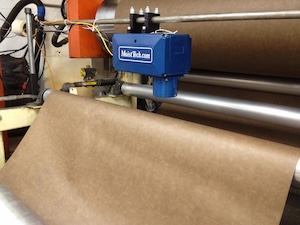
MoistTech - Kraft Paper _2_
MoistTech’s continuous moisture monitoring offers one of the most actionable, cost-effective upgrades for your production

In an era where manufacturing efficiency and quality assurance are inseparable, continuous moisture monitoring offers one of the most actionable, cost-effective upgrades for your production line. Whether you’re trying to extend shelf life in a food product, ensure regulatory compliance in pharmaceuticals, or simply reduce drying costs, managing moisture in real time gives your operation the agility it needs to stay competitive.

The path forward is clear: move from batch testing to continuous monitoring. Equip your facilities with the tools to detect small changes before they become big problems. When moisture is monitored consistently, quality becomes predictable—and that predictability builds trust, performance, and profitability.


Editor’s Note: Sarah Hammond is the marketing manager at Sarasota, Florida-based, MoistTech Corp.

In 1975 John Fordham and Roger Carlson founded Moisture Systems and continued with the improvement process of moisture detection. Eventually forming MoistTech in 2006. The Sarasota Florida-based manufacturer sought to overcome common industry issues such as waste, low-efficiency, and inconsistency, going on to pioneer the industry’s first patented method of non-contact, non-destructive moisture analysis and detection. 

Today the company’s near-infrared (NIR) equipment provides reliable moisture measurement and controls that manufacturers can trust to enhance efficiency. On-line and at-line sensors for real-time process control. MoistTech’s solutions valued by a range of clients across disciplines: adhesives, biomass, chemicals, coatings, food, minerals, renewable energy, textiles, and wood products.

For more information, visit https://www.moisttech.com/


October 17, 2026

Greybull Stewardship Acquires Mid-West Textile

Greybull Stewardship logoJACKSON, Wyoming — October 15, 2026 — Greybull Stewardship (“Greybull”), a private investment firm that partners with scalable, smaller businesses to help them grow, today announced the acquisition of Mid-West Textile, a  used textile collection and recycling company. Financial terms were not disclosed.

Founded in 1982, Mid-West Textile has been in the used textile industry for more than forty years, specializing in the collection, sorting, and grading of used clothing and textiles to help extend the useful life of reusable materials and divert textiles from the waste stream. One of the largest textile recyclers in the United States, the company offers comprehensive services for thrift retail stores, fiber reclamation operators, and industrial wiping cloth suppliers, while operating multiple Thrift Town retail stores in Texas and New Mexico.

This investment underscores Greybull’s conviction in the long-term potential of the textile recycling industry. Leveraging its experience working with companies in the sector, Greybull plans to provide Mid-West Textile with capital and operational support as the business continues to grow. “As consumers, businesses and communities increasingly look for ways to reduce waste and extend the life of existing materials, we see a significant opportunity to continue to partner with established businesses that provide the infrastructure and expertise needed to collect, process, and give textiles a second life,” said Mason Myers, Founder and CEO of Greybull Stewardship. “Mid-West Textile has built a leading business around extending the life of used textiles and clothing, and we are excited to support the company in its next phase of growth, including expanding its Thrift Town retail stores in the years ahead.”

Greybull Stewardship

Greybull Stewardship is a private investment firm supporting established, small businesses on their way to scalable and sustainable success. With decades of operational experience and financial acumen, their team of multi-disciplinary operators provides a suite of tailored resources and strategic guidance extending beyond just capital. Greybull proudly cultivates partnerships with motivated entrepreneurs to realize their full potential and confidently navigate the complexities of expansion. Founded in 2010, Greybull is headquartered in Jackson, Wyoming, with team members located throughout the U.S. to effectively support the firm’s investments. To learn more about Greybull, visit www.greybullstewardship.com.

Mid-West Textile

Mid-West Textile is a used textile collection and recycling company headquartered in El Paso, Texas, focused on expanding the useful life of clothing and textiles. One of the largest textile recyclers in the U.S., Mid-West Textile collects, sorts and processes used clothing and housewares for wholesale and thrift retail end markets, and helps reduce post-consumer waste while creating new supply chains for organizations. To learn more, visit www.mid-westtextile.com.

Posted: October 16, 2026

Source: Greybull Stewardship

EU And Mercosur Textile Industries Launch New Textile And Apparel Dialogue

FORTALEZA, Brazil — October 15, 2026 — The European Apparel and Textile Confederation (EURATEX), Associação Brasileira da Indústria Têxtil e de Confecção (ABIT )-(Brazilian Textile and Apparel Industry Association) and La Federación de Industrias Textile Argentine (FITA)-(the Federation of Argentine Textile Industries) have launched the EU–Mercosur Textile and Apparel Dialogue (TAD), a new industry platform aimed at strengthening cooperation between the European and Mercosur textile and apparel sectors.

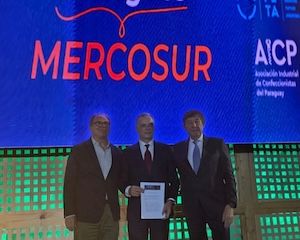
EURATEX - TAD mercosurThe Dialogue will support the effective and balanced implementation of the EU–Mercosur Free Trade Agreement, with a focus on reciprocal market access, competitive and resilient value chains, and sustainable growth.

EU–Mercosur trade in textiles and clothing was worth nearly €700 million in 2025, with European exports to Mercosur reaching €495 million and imports from the region €199 million. These figures already point to a significant industrial and commercial relationship. The new agreement offers an opportunity to deepen this further by improving market access, facilitating trade and encouraging new investment and cooperation across the textile and apparel value chain.

The Dialogue will provide companies and industry representatives with a structured forum to discuss trade flows, investment, rules of origin and practical barriers to trade, including customs procedures and regulatory issues. The partners will also cooperate on sustainability, circularity, traceability, enforcement, and fair competition.

Mario Jorge Machado, President of EURATEX, said:

Mario Jorge Machado

“The EU–Mercosur agreement opens a new chapter for our industries. Through this Dialogue, we want to make sure that these opportunities translate into real business cooperation, stronger value chains, and fair and reciprocal market access. By working together, our industries can identify practical solutions, encourage investment and build a more competitive and sustainable textile and apparel sector.”

The Dialogue will bring together senior industry representatives and meet twice a year, alternating between virtual and in-person meetings. Its chairmanship will rotate annually between EURATEX, ABIT and FITA.

The mandate establishing the Dialogue was signed in Fortaleza by Mario Jorge Machado, President of EURATEX; Fernando Valente Pimentel, President Emeritus of ABIT and Luis Tendlarz, President of FITA.

Posted: October 16, 2026

Source The European Apparel and Textile Confederation (EURATEX)

Data And Skills, Not Algorithms, Hold Back AI In Textiles, Finds New ITMF And ITA White Paper

ITMF RWTH joint logoZÜRICH, Switzerland / AACHEN, Germany — October 15, 2026 — The International Textile Manufacturers Federation (ITMF) and the Institut für Textiltechnik of RWTH Aachen University (ITA) today published “AI in the Textile Value Chain: A Strategic Guide to Artificial Intelligence for the Global Textile Industry”.

The white paper finds that the main barriers to AI adoption in the textile and apparel industry are poor data integration, skills shortages and gaps in governance, not the technology itself. It argues that the industry’s progress will depend on coordinated, industry-wide capability-building.

The paper draws on the ITMF & ITA webinar series AI in the Textile Value Chain (2024–2026). Across ten sessions, more than 20 experts from companies, research institutes and policy bodies spoke in the series. The paper also draws on a World Café discussion with practitioners at the ITMF Conference 2025 in Yogyakarta, Indonesia.

According to the authors, AI is becoming relevant because of structural pressures rather than technological hype. These pressures include demographic decline, persistent skills shortages, volatile markets, and rising demands for quality, traceability and sustainability. Decades of digitalization have left the sector with abundant data but fragmented systems. As a result, the paper describes the industry as “not under-digitalized, but digitally fragmented.”

Key findings include:

  • AI is already delivering measurable value in well-defined applications. Examples include computer-vision fabric and yarn inspection, predictive maintenance, energy optimization and demand forecasting. In one example cited from a nonwovens line, causal AI reduced scrap by 10%.
  • Data and skills are more limiting than algorithms. Participants warned that AI does not fix poor data but amplifies its flaws. Many companies hold far less usable, structured data than they believe.
  • AI is moving from decision support to action. Agentic systems are starting to coordinate multi-step processes such as sourcing. Causal AI is beginning to adjust production settings directly, in both cases under human supervision. The realistic horizon for end-to-end AI workflows is estimated at two to three years.
  • Trust is the decisive currency. Industry participants named clear conditions for AI use: control over sensitive data, strong cybersecurity, transparency about system limits, and preserved human accountability.

The paper recommends that companies invest in people before scaling technology and treat data as shared infrastructure. It also advises proceeding incrementally, starting with bounded use cases. It highlights a strong role for industry associations and pre-competitive collaboration, particularly for SMEs. Examples include shared data standards, data spaces that keep ownership with the data originator, and sector-specific tools such as a controlled “Textile GPT.”

“AI is not a shortcut around the structural challenges our industry faces, but it can help companies manage complexity and make the most of scarce expertise. Understanding where AI genuinely helps is a learning process. That is why exchange through associations like ITMF matters so much.” said Olivier Zieschank, Director, ITMF.

“Companies need a dedicated task force to embed data integration into their day-to-day and strategic technical and business processes. Partnering with external experts on a transparent assessment — a data or automation waste walk — and on effective implementation is not only decisive to future success, but essential to survive!”, said Prof. Thomas Gries, Director, Institut für Textiltechnik ITA, RWTH Aachen University.

The white paper is available at

doi.org/10.18154/RWTH-2026-09336 or

https://publications.rwth-aachen.de/record/1042375

Recordings of the ITMF & ITA webinar series are available to ITMF members at

https://www.itmf.org/virtual-forum

Posted: October 16, 2026

Source: The International Textile Manufacturers Federation (ITMF) and the Institut für Textiltechnik of RWTH Aachen University (ITA)

Cotton Incorporated Convenes Textile Industry Leaders To Advance Dialogue On Sustainability, Innovation And The Future Of Cotton

CARY, N.C. — October 16, 2026 — Cotton Incorporated recently convened leaders and stakeholders from across the textile and apparel value chain for an industry summit held Sept. 28 – 30 in San Diego, California, focused on some of the most pressing challenges and emerging opportunities shaping the future of cotton and the broader textile industry.

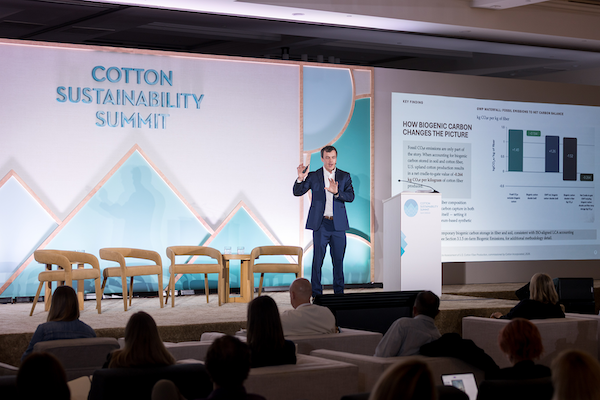
Jesse Daystar, PhD., vice president and chief sustainability officer for Cotton Incorporated, presents LCA data as a credible resource to help inform sourcing decisions, support regulatory compliance and identify opportunities for meaningful improvement at the Cotton Sustainability Summit.Image courtesy of Cotton Incorporated.
Jesse Daystar, PhD., vice president and chief sustainability officer for Cotton Incorporated, presents LCA data as a credible resource to help inform sourcing decisions, support regulatory compliance and identify opportunities for meaningful improvement at the Cotton Sustainability Summit.
Image courtesy of Cotton Incorporated.

The event brought together perspectives spanning agriculture, textile sourcing, sustainability, scientific research and environmental innovation, creating a forum for meaningful dialogue around the evolving demands facing brands, retailers, manufacturers and cotton producers.

Discussions explored several key areas influencing the industry’s future, including:

  • Sustainability data and measurement: Advancing credible, science-based approaches to understanding and communicating environmental impact across the cotton supply chain
  • Regenerative agriculture and climate resilience: Exploring research, agricultural innovation and opportunities to strengthen environmental outcomes while supporting cotton growers
  • Evolving regulatory frameworks: Examining how emerging textile regulations, traceability expectations and circularity initiatives are influencing sourcing and material decisions
  • Microplastics and material innovation: Considering the growing importance of fiber choice, plastic pollution research and the role of natural fibers in addressing environmental challenges
  • Industry collaboration: Identifying opportunities to connect research, practical solutions and industry needs to support long-term progress

“Bringing together diverse perspectives from across the textile value chain is essential to addressing the challenges and opportunities facing our industry,” said William Kimbrell, president and CEO of Cotton Incorporated. “Our focus is on connecting science, research and industry expertise to support informed decisions, advance innovation and strengthen cotton’s role in the future of textiles.”

As the textile and apparel industry navigates increasing expectations around environmental performance, transparency and responsible sourcing, Cotton Incorporated continues to support science-based research, innovation and collaboration that help strengthen cotton’s competitiveness and expand opportunities for the natural fiber.

The summit reinforced the importance of continued dialogue across the value chain and the role of research and shared knowledge in helping the industry address complex challenges and advance practical solutions.

Posted: October 16, 2026

Source: Cotton Incorporated

North And Central American Polyester Filament Yarn Producers Launch Yarnproof™ To Strengthen Regional Trade Compliance And Supply Chain Integrity

yarnproof-logo-dark-fibretraceGREENSBORO, N.C. — October 13, 2026 — Unifi, Inc., together with polyester filament yarn manufacturers across North and Central America, today announced the launch of YarnProof™, an industry-wide initiative designed to provide immediate, physical verification of polyester filament yarn origin throughout the supply chain.

YarnProof, powered by FibreTrace® technology, embeds an invisible and permanent tracer into polyester filament yarn during extrusion. The tracer remains with the material throughout its lifecycle and can be immediately detected using a proprietary FibreTrace handheld scanner at designated points across the supply chain, including yarn, fabric, and finished goods.

By linking physical verification to origin claims, YarnProof supports compliance with the yarn-forward requirements of the CAFTA-DR and USMCA trade agreements. Working alongside existing documentation and certification systems, YarnProof adds a layer of verifiable evidence that strengthens trade integrity, protects compliant supply chains, and supports regional manufacturing.

“Supply chain integrity is a top priority for our brand,” said Nick Pence, Senior Director of Material Supply at Under Armour. “As we continue to rely on yarn manufacturers in the region to fulfill our brand’s strategic goals, we are encouraged by the proactive steps the industry is taking to enhance transparency and reliability throughout the supply chain, and to provide physical evidence to support sourcing history.”

As concerns over non-compliant trade continue to grow, trade regulators like U.S. Customs and Border Protection have emphasized the importance of private-sector solutions that help strengthen supply chain traceability and support enforcement efforts.

“Traditional methods of fraud detection, such as document review and site visits remain important,” said Kim Glas, President & CEO of the National Council of Textile Organizations (NCTO). “With the launch of YarnProof, the region gains a new tool for substantiating origin claims, giving brands greater confidence in their sourcing decisions while creating additional opportunities for North and Central American manufacturing.”

North and Central American polyester filament manufacturers have united behind YarnProof to help decrease the reputational risk faced by brands and retailers, address growing scrutiny of supply chain claims, reduce exposure to non-compliant trade, and strengthen confidence in regional sourcing programs. These manufacturers are Aquafil O’Mara, Inc., CS America, Inc., CS Central America, S.A. de C.V., Nan Ya Plastics Corporation, America, Premiere Fibers, LLC, Sans Americas, Skytex México, S.A. de C.V., Tecnología Textil Avanzada S.A., Textufil S.A. de C.V., Unifi Manufacturing, Inc., and United Textiles of America.

“Strong regional manufacturing depends on trust, transparency, and consistent enforcement of trade requirements,” states Allen Jacoby President of Technical Textiles at Milliken & Company. “The ability to verify material origin through immediate physical evidence strengthens compliance, improves transparency, and builds confidence across the supply chain.”

As brands, retailers, and regulators place greater scrutiny on sourcing claims, YarnProof provides a new level of accountability for regional supply chains. By connecting physical evidence directly to material origin, the initiative helps protect compliant manufacturers, strengthen trust in regional production, and support the long-term competitiveness of North and Central American manufacturing.

For more information on YarnProof, please visit www.yarnproof.com

Posted: October 13, 2026

Source: Unifi, Inc. 

Polartec® Introduces The Next Generation Of Polartec Alpha™ Active Insulation

SPARTANBURG, S.C. — October 13, 2026 — Polartec®, a Milliken & Company brand and global supplier of innovative performance textiles, introduces the next generation of Polartec Alpha™ active insulation, featuring a new patent-pending construction engineered to deliver greater durability and design versatility while preserving the breathability and dynamic thermoregulation that has made Alpha a benchmark for active insulation.

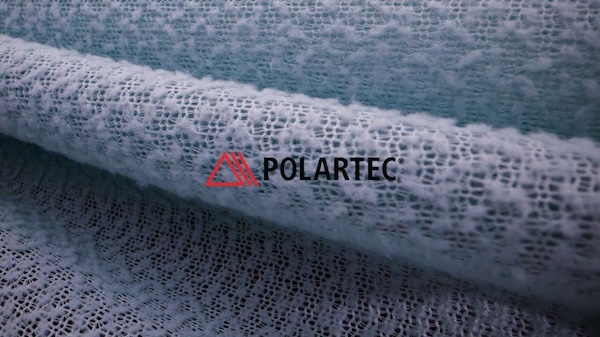
polartec-nex-gen-alpha-1Polartec Alpha™ was born from an unusually complex performance challenge: create insulation for highly active military users who move rapidly between periods of intense exertion and lower activity in cold environments. Traditional insulation could provide warmth, but often at the expense of breathability and moisture management as activity increased.

Polartec Alpha™ approached the problem differently. Its open, highly breathable construction was engineered to balance insulation with airflow, helping manage excess heat and moisture as exertion and environmental conditions change. That combination helped establish Polartec Alpha™ within military and special operations communities around the world and ultimately helped create an entirely new category of active insulation.

Over the following decade, the same performance principle moved into outdoor, endurance and lifestyle apparel. Polartec Alpha™ became known for its combination of lightweight warmth, exceptional breathability, fast drying, and packability – forever changing how designers approached insulation for people in motion.

Now, Polartec is advancing the platform once again.

At the center of the next generation is a patent-pending construction engineered to improve the structural integrity of the fabric while maintaining the open architecture fundamental to Polartec Alpha™ performance. The result is improved resistance to snagging and shedding without compromising the airflow, compressibility, lightweight warmth and thermoregulation that define the platform.

This engineering advancement also expands what designers can do with Polartec Alpha™.

Originally developed as an insulation layer within a multilayer garment system, Polartec Alpha™ has increasingly moved beyond that architecture. Performance and lifestyle brands are using the fabric more visibly, and in some applications, as a standalone layer. Polartec® responded by re-engineering the platform around these evolving applications. Now available in a broader range of constructions, weights and textures, the next generation of Polartec Alpha™ gives designers greater freedom to tune aesthetics, hand feel and performance for different activities, climates and end uses.

The development reflects more than four years of collaboration, prototyping and testing with leading performance brands. The engineering objective was ambition: increase durability and design flexibility while keeping everything that makes Polartec Alpha™ standout. The new Polartec® patent-pending construction achieves that balance, creating a stronger and more versatile platform while retaining the fundamental performance physics behind Polartec Alpha™.

This evolution is already translating into broad market adoption. More than eleven brands are preparing to launch products featuring the next generation of Polartec® Alpha™ in coming months, spanning outdoor, endurance and performance apparel. The breadth of its adoption reflects both the versatility of the new platform and the growing demand for insulation systems designed around changing levels of activity rather than static warmth alone.

Patagonia, whose relationship with Polartec stretches back to the early development of synthetic fleece, will introduce an exclusive style using the new Polartec Alpha™ in November. Additional products featuring next-generation Polartec Alpha™ and Polartec Alpha™ with Wool are expected from Ornot, Purple Mountain Observatory, Senchi Designs, Farpointe, Goldwin and other performance brands for Fall/Winter 2026.

“The evolution of Polartec Alpha™ is a great example of what happens when we listen closely to our partners and observe how a technology is actually being used,” said Karen Beattie, Director of Product Management at Polartec. “Our challenge was to make Alpha more durable and versatile without sacrificing the structure responsible for its performance. The patent-pending construction allows us to preserve what people value about Alpha while giving designers a stronger and more adaptable platform for what comes next.”

Ramesh Kesh

Ramesh Kesh, Senior Vice President for Innovation of Milliken & Company and Business Manager at Polartec, added: “Alpha began by solving an extreme problem: how do you keep someone warm without trapping the heat and moisture generated when they are working hard? That challenge is as relevant on a mountain, a trail or a daily commute as it is in military environments. Human performance is dynamic. Intensity changes. Conditions change. Alpha was designed to respond. With more than eleven brands already preparing products around the new platform, it’s clear that the market is moving beyond insulation defined simply by how warm it is. The future is about managing warmth dynamically as people move through changing activity levels and conditions. We are not changing the principle behind Alpha. We are using new engineering to extend what it can do.”

Posted: October 13, 2026

Source: Polartec®, a Milliken & Company brand

INDA Opens Registration For IDEA®27, The Premier Global Event For Nonwovens And Engineered Fabrics

CARY, N.C. — October 13, 2026 — INDA, the Association of the Nonwoven Fabrics Industry, has opened registration for IDEA®27, the premier global event for the nonwovens and engineered fabrics industry, taking place March 23-25, 2027, at the Kansas City Convention Center in Kansas City, Missouri. Participants can register for IDEA27 at https://events.american-tradeshow.com/IDEA27.

Expected to bring together more than 4,000 industry professionals and 400 exhibitors from across the nonwovens value chain, IDEA27 will provide three days of business development, sourcing, innovation and industry connection. Exhibitors will showcase the latest materials, technologies, equipment and solutions serving markets including hygiene, medical, filtration, automotive, geotextiles, building and construction, and home furnishings.

“IDEA is where the global nonwovens industry comes together to discover what’s next, strengthen business relationships and turn new ideas into opportunities,” said Ben Muller, executive director of INDA. “IDEA27 will bring together the people, technologies and expertise that drive our industry forward, and we look forward to welcoming the global nonwovens community to Kansas City.”

INDA Members Receive Show Floor Pass at No Charge

INDA recognizes the economic pressures and market uncertainty our industry is facing and its impact on our members’ ability to convene and connect. To facilitate members building relationships, sourcing solutions, identifying new opportunities, and moving business forward, INDA Members can receive an IDEA®27 show floor pass at no charge in 2027.

RISE® Technology Conference Joins IDEA27

For the first time since its inception, the RISE® Technology Conference will be held in conjunction with IDEA27, expanding the event’s technical content and providing professionals with greater access to emerging technologies and innovations that have the potential to influence future products and processes.

The combination of RISE and IDEA27 will create a comprehensive experience connecting forward-looking technical content with commercial technologies, market developments and business opportunities across the show floor.

The reformatted RISE program will highlight innovation across the full spectrum of development, including fundamental and corporate research, upstream innovation and performance-driven applications. Designed to be broadly applicable across markets, the program will provide actionable technical insights for professionals throughout the global nonwovens value chain.

Details on the RISE conference program will be announced in the coming months and available on the IDEA27 website.

IDEA27 Professional Development

IDEA27 will begin Monday, March 22, with six professional development courses designed to build technical knowledge and address key nonwoven market applications.

Course offerings will include an introduction to nonwoven manufacturing as well as specialized education focused on the technical design and performance of baby and adult care absorbent systems, wet wipes and period products. A one-day filter media course also will be offered featuring technical content.

Additional course details will be announced this fall at ideashow.org.

IDEA Achievement Awards

INDA and Nonwovens Industry magazine will once again collaborate to present the IDEA Achievement Awards, recognizing outstanding innovations, technical advancements and achievements across the nonwovens and engineered materials industry.

Industry professionals are invited to submit their companies’ most innovative products, materials, equipment and sustainability advancements or nominate innovations on behalf of their clients. Finalists will receive global industry recognition, with winners announced during IDEA27.

Nominations will be accepted through Nov. 8, 2026, on the Nonwovens Industry website: https://www.nonwovens-industry.com/vote-now-for-the-2027-idea-achievement-awards/

Exhibiting, Sponsorships and More Information

For information about exhibiting or sponsorship opportunities at IDEA27, contact Dan Noonan at sales@inda.org. For complete event details, visit ideashow.org. To register for IDEA27, visit https://events.american-tradeshow.com/IDEA27.

Posted: October 13, 2026

Source: INDA, the Association of the Nonwoven Fabrics Industry

Sponsors