Ian Maclean MBE Appointed As Chairman, Campaign For Wool

LONDON / BRADFORD, UK — October 6, 2026 — The Campaign for Wool is pleased to announce the appointment of Ian Maclean MBE (Member of the Most Excellent Order of the British Empire) as its new Chairman. Ian succeeds the late Peter Ackroyd MBE, who sadly, and unexpectedly, passed away in July 2026 after serving as Chairman since January 2025. Peter’s contribution as Chairman and to the global textile industry for over 50 years was greatly valued, and his untimely passing was deeply felt.

Campaign for Wool - IAN_MACLEAN_CHAIRMAN CFW_Colour_MID_Credit Katie Bishop
Ian Maclean MBE
Photo: Katie Bishop

The appointment is announced during Wool Month in October, when the Campaign for Wool will once again bring together farmers, manufacturers, designers, brands, retailers and consumers through a programme of events and activities celebrating wool and its many applications across fashion, interiors and artisan products.

Wool Month provides the perfect opportunity, as autumn begins, to bring to the fore the many benefits of this remarkable natural fibre. It is a time to highlight the growing number of brands and companies choosing wool as a renewable, sustainable and versatile fibre, while placing greater emphasis on traceability, responsible land management, animal welfare, recycling and circularity.

Collectively, we all have a role to play in supporting the health of our biosphere and protecting natural resources for future generations. Wool, with its inherent qualities and potential for responsible production and circular use, has an important part to play in that journey.

Ian Maclean has been a long-standing supporter of the Campaign for Wool and has played an active role in the wider UK wool and textile industry throughout his career. As Chairman of his family-owned knitwear company, John Smedley Ltd, Ian brings considerable experience from the manufacturing and retail sectors. He is also the grantee of two Royal Warrants held by the company. His appointment follows the unanimous endorsement of the Campaign’s Funders’ Board, which recognises Ian’s longstanding commitment to wool and his extensive experience across manufacturing, fashion and textiles, the wide use of different wool types from the Commonwealth including Merino and British wools, iconic collaborations, global commercial retail channels both in-store and on-line.

Ian was President of the Sandringham Association of Royal Warrant Holders in 2025 (Patron, His Majesty The King) and served as Chair of The Queen Elizabeth Scholarship Trust (QEST) from 2022 to 2025. He has served as a Director on the Board of the UK fashion and textiles trade association (UKFT) for the past 12 years and is Chair of the Textile Committee for The Clothworkers’ Company. In 2020, Ian was awarded an MBE for his company’s response to the Covid-19 pandemic and for services to the UK textile industry.

Ian’s appointment follows the passing of Peter Ackroyd, whose contribution to the Campaign for Wool and the international wool industry spanned many decades. The appointment ensures continuity of governance for the Campaign and provides a strong foundation for its ongoing work and future development.

His Majesty King Charles III, Patron of the Campaign for Wool first conceived his International Campaign in 2008, when he was HRH The Prince of Wales in support of farmers and wool’s natural benefits. The Campaign was formally launched to consumers in 2010 with a purpose to raise awareness of the unique and sustainable properties of wool as a natural fibre and to promote its many uses across fashion, interiors and other areas of everyday life, as well as supporting the farmers and woolgrowers across the Commonwealth where the leading wool growing sectors exist in Australia, New Zealand, South Africa and of course closer to home in the British Isles.

Commenting on his appointment, Ian Maclean MBE said: “It is a great honour to be appointed Chairman of the Campaign for Wool. As a long-standing supporter of the Campaign since its inception, I have seen first-hand the importance of His Majesty’s vision in bringing together the many different parts of the wool community. Wool has such an important role to play in the future of textiles, with its natural, renewable and biodegradable qualities making it increasingly relevant as we seek more sustainable materials and more responsible ways of producing and consuming. I look forward to working with our partners and supporters around the world to build on the strong foundations laid by those who have led the Campaign before me, and to continue championing wool for future generations.”

Posted: October 6, 2026

Source: The Campaign for Wool

Thermore® Partners With Patagonia On New Heyes Peak Collection

MILAN, Italy — October 6, 2026 — Thermore, a global supplier of thermal insulation for apparel, announces a new partnership with Patagonia, bringing Thermore® EVOdown® insulation to the Heyes Peak collection , new this year and spanning five men’s and women’s styles, including a jacket, parka, hoody, and 3-in-1 parka.

Designed for mixed-weather adaptability, the Heyes Peak collection delivers just-right warmth for daily wear across transitional seasons. Each style features a layer-friendly lining and Thermore® EVOdown® insulation for reliable, breathable warmth and softness without the bulk. The collection’s anchor piece, the Heyes Peak Jacket, pairs 80 gr/m2 EVOdown®

with a durable shell built from NetPlus® 100% postconsumer recycled nylon ripstop – made from recycled fishing nets – to help reduce ocean plastic pollution. Styles across the collection are made in a Fair Trade Certified™ factory.

Thermore® EVOdown® is an insulation made with fibers 100% recycled from PET bottles, engineered to bring the soft hand feel and loft of down with the reliability and easy care of a synthetic fill. It offers consistent warmth wear after wear making it a natural fit for a collection built for changing conditions. Thermore® EVOdown® is OEKO-TEX® STANDARD 100, Global Recycled Standard (GRS), and bluesign certified.

“We’re thrilled to partner with Patagonia on the Heyes Peak collection,” said Laura Beachy, Senior Vice President of Global Marketing and Communications, Thermore .”This launch reflects exactly what we set out to do at Thermore: prove that high-performance insulation and genuine environmental responsibility aren’t a trade-off. Thermore® EVOdown® gives Patagonia a fill that meets their sustainability standards across five styles without asking them to compromise on warmth or comfort, and that’s the kind of partnership we’re proud to stand behind.”

“This is an exciting collaboration for our team,” said Joe DiGirolamo, Director of Sales, Thermore . “Patagonia is a brand that holds itself, and its supply chain, to a high bar on sustainability, so being chosen as their insulation partner across a five-style men’s and women’s collection says a lot about where Thermore stands in this space. We’re confident retailers and consumers alike will respond to a lineup that delivers on performance and on its environmental promises.”

The Heyes Peak Jacket’s shell fabric is a 1.2-oz, 20-denier NetPlus® ripstop, finished with a DWR treatment made without intentionally added PFAS – pairing recycled insulation with a recycled, PFAS-conscious shell for a collection built with sustainability at every layer.

“The best materials are the ones that help us meet our customers’ needs while reducing our impact,” said Mark Little, Senior Business Unit Director, Patagonia – Lifestyle Essentials + Graphics. “Thermore® EVOdown® gave us an opportunity to deliver dependable warmth, softness, and durability in the Heyes Peak collection while incorporating North Star materials throughout the system. That’s the kind of innovation we’re excited to bring to market.”

With this partnership, Thermore continues its commitment to delivering innovative insulation solutions that never compromise on performance, quality, or respect for the planet.

Posted: October 6, 2026

Source: Thermore

Manufacturing PMI® At 54.5%; September 2026 ISM® Manufacturing PMI® Report

TEMPE, Ariz. — October 1, 2026 — Economic activity in the manufacturing sector expanded in September for the ninth consecutive month, say the nation’s supply executives in the latest ISM® Manufacturing PMI® Report.

The report was issued today by Susan Spence, MBA, Chair of the Institute for Supply Management® (ISM®) Manufacturing Business Survey Committee.

“The Manufacturing PMI® registered 54.5 percent in September, 0.1 percentage point below the August figure of 54.6 percent. The overall economy continued in expansion for the 23rd month in a row. (A Manufacturing PMI® above 47.5 percent, over a period of time, generally indicates an expansion of the overall economy.) The New Orders Index expanded for the ninth consecutive month after four straight readings in contraction, registering 55.3 percent, up 1.6 percentage points compared to August’s figure of 53.7 percent. The September reading of the Production Index (56.7 percent) is 1.6 percentage points lower than the 58.3 percent recorded in August. The Prices Index remained in expansion (or ‘increasing’ territory), registering 77.9 percent, a notable increase of 6.8 percentage points compared to August’s reading of 71.1 percent. The Backlog of Orders Index registered 56.4 percent, up 4.6 percentage points compared to the 51.8 percent recorded in August. The Employment Index reading of 52.7 percent is up 1.5 percentage points from August’s figure of 51.2 percent,” says Spence.

“The Supplier Deliveries Index indicated slowing performance for the 10th month in a row after one month in ‘faster’ territory. The reading of 59 percent is down 0.3 percentage point from its August reading of 59.3 percent. (Supplier Deliveries is the only ISM® PMI® Reports index that is inversed; a reading of above 50 percent indicates slower deliveries, which is typical as the economy improves and customer demand increases.)

“The Inventories Index registered 48.6 percent, down 2 percentage points compared to August’s reading of 50.6 percent. The Customers’ Inventories Index reading of 41.6 percent is 1.2 percentage points lower compared to the 42.8 percent recorded in August.

“The New Export Orders Index lost 2.3 percentage points in September for a reading of 50.9 percent versus 53.2 percent in August. The Imports Index registered 51 percent, a decrease of 1.5 percentage points compared to August’s reading of 52.5 percent.”

Spence continues, “In September, U.S. manufacturing activity remained in expansion territory. Of the five subindexes that make up the PMI®, only New Orders and Employment grew faster than the previous month. In September, 40 percent of the comments were positive and 60 percent negative, with a 1-to-1.6 ratio of positive to negative sentiment. Among negative comments, pricing volatility was mentioned in 46 percent, tariffs 34 percent, the Iran war 30 percent and increasing lead times 21 percent; most comments mentioned multiple factors.

“In September, three of four demand indicators (the New Orders, Backlog of Orders and New Export Orders indexes) remained in expansion, and the Customers’ Inventories Index remained in ‘too low’ territory, contracting at a faster rate. A ‘too low’ status for the Customers’ Inventories Index is usually considered positive for future production.

“Regarding output, the Production Index expanded for the 11th month in a row, with the positive-to-negative comment ratio dropping again in September (1.6 positive comments for every negative one, compared to a 2.2-to-1 ratio in August and 3.3-to-1 in July). The Employment Index remained in expansion and gained 1.5 percentage points. The positive-to-negative comments ratio on Employment was 1.5-to-1 in September.

“Finally, inputs (defined as supplier deliveries, inventories, prices and imports) were mixed, with the Supplier Deliveries Index decreasing 0.3 percentage point, the Inventories Index declining another 2 percentage points and returning to contraction, and the Prices Index increasing 6.8 percentage points, returning to its level at the start of the Iran War. The Imports Index lost 1.5 percentage points, to 51 percent versus 52.5 percent in August.

“Looking at the manufacturing economy, 2 percent of the sector’s gross domestic product (GDP) contracted in September, compared to 22 percent in August, and 2 percent of manufacturing GDP was in strong contraction (defined as a composite PMI® of 45 percent or lower), the same as in August. The share of sector GDP with a PMI® at or below 45 percent is a good metric to gauge overall manufacturing weakness. Of the six largest manufacturing industries, five (Computer & Electronic Products, Food, Beverage & Tobacco Products, Transportation Equipment, Machinery; and Chemical Products) expanded in September.”

The 12 manufacturing industries reporting growth in September — listed in order — are: Electrical Equipment, Appliances & Components; Nonmetallic Mineral Products; Primary Metals; Plastics & Rubber Products; Computer & Electronic Products; Fabricated Metal Products; Furniture & Related Products; Food, Beverage & Tobacco Products; Transportation Equipment; Machinery; Miscellaneous Manufacturing; and Chemical Products. The two industries reporting a contraction in September are: Printing & Related Support Activities; and Textile Mills.

WHAT RESPONDENTS ARE SAYING

  • “Better performance was driven primarily by temporary market effects, including (1) geopolitical uncertainties, (2) customers bringing forward purchases, (3) delayed raw material price increases and (4) reduced competitor capacity. However, these factors do not signal sustained recovery: Structural challenges facing the chemical industry remain, including overcapacity, persistent pricing pressures and protectionist trade policies.” [Chemical Products]
  • “Supply chain performance has improved compared to prior years, with lead times largely normalized. Cost pressures persist in select raw materials, transportation and labor categories, requiring continued focus on supplier management and cost control. We remain cautiously optimistic about business conditions over the next several quarters.” [Chemical Products]
  • “The U.S. tariff schedule is providing challenges. Finding alternate sources of supply outside of China, local pushback on data centers in the U.S. and continuing material/component shortages are affecting business.” [Computer & Electronic Products]
  • “Manufacturing activity remains stable, with a continued focus on cost optimization, supplier negotiations and supply base consolidation. We are actively evaluating alternative sources in several categories to improve supply resilience and reduce costs. While material availability has generally improved compared to prior periods, qualification requirements and supplier capacity constraints continue to influence sourcing decisions for certain critical materials and components. Capital and operational spending remain focused on productivity, efficiency and transformation initiatives.” [Computer & Electronic Products]
  • “Orders have doubled yet again, and delivery times have also doubled, in the semiconductor, electronics and government sectors, with remaining sectors flat to down. Coupled with supply chain lead times and pricing pressures, the factory backlog has nearly doubled. Canada tariffs have impacted cross-border costs and left our supply chain team scrambling — those supply chains took years to develop and nurture — hurting the very lead times government buyers are concerned about.” [Machinery]
  • “Order levels remain strong and elevated; we have orders through year-end at above forecast levels. Our biggest challenge continues to be a severe shortage of workers, limiting our production output to meet demand. The second challenge is general availability of steel; the market is getting worse, and more production delays are expected as we gap out of needed material.” [Fabricated Metal Products]
  • “Raw metals continue to be challenging, especially with the uncertain nature of tariffs being on and off again. New tariffs against Canada have drastically increased costs for capital expenses as well as assemblies.” [Electrical Equipment, Appliances & Components]
  • “Fuel costs are still affecting transportation costs and the overall cost of goods. Beef costs remain high, with no relief in sight.” [Food, Beverage & Tobacco Products]
  • “Higher interest rates slow down the growth of new construction projects; we also have to face up to the higher cost of components from overseas due to tariffs and freight rates. Due to booming demand of AI and data centers, domestic steel capacity has been stretched and pushed. Higher steel costs each month increase our raw-material and finished-goods costs.” [Machinery]
  • “Every month, we are faced with new headwinds created by this administration. This month, it is the trade war with Canada, which every day is getting worse — causing prices to go up and uncertainty that creates massive disruption. Buying continues to get pushed out indefinitely as customers don’t want to spend on capital expenditures until there is more certainty of costs and demand. The only thing that is predictable is the chaos that is created by these trade policies.” [Transportation Equipment]
MANUFACTURING AT A GLANCE

September 2026

Index Series
Index

Sep

Series
Index

Aug

Percentage

Point

Change

Direction Rate of
Change
Trend*
(Months)
Manufacturing PMI® 54.5 54.6 -0.1 Growing Slower 9
New Orders 55.3 53.7 +1.6 Growing Faster 9
Production 56.7 58.3 -1.6 Growing Slower 11
Employment 52.7 51.2 +1.5 Growing Faster 3
Supplier Deliveries 59.0 59.3 -0.3 Slowing Slower 10
Inventories 48.6 50.6 -2.0 Contracting From
Growing
1
Customers’ Inventories 41.6 42.8 -1.2 Too Low Faster 24
Prices 77.9 71.1 +6.8 Increasing Faster 24
Backlog of Orders 56.4 51.8 +4.6 Growing Faster 9
New Export Orders 50.9 53.2 -2.3 Growing Slower 3
Imports 51.0 52.5 -1.5 Growing Slower 8
OVERALL ECONOMY Growing Slower 23
Manufacturing Sector Growing Slower 9

ISM® Manufacturing PMI® Report data is seasonally adjusted for the New Orders, Production, Employment and Inventories indexes.
*Number of months moving in current direction.

COMMODITIES REPORTED UP/DOWN IN PRICE AND IN SHORT SUPPLY

Commodities Up in Price
Aluminum (34); Brass Products; Copper (15); Copper Products (2); Corrugated Products (6); Diesel Fuel (2); Electrical Components (4); Electronic Components (9); Freight (7); Fuel (7); Memory Components (7); Nickel; Oil Based Products (6); Packaging Materials; Plastic Based Products (6); Printed Circuit Boards (3); Resins (8); Semiconductors (4); Soybean Meal; Steel (11); Steel — Hot Rolled (9); Steel — Stainless (8); Steel Products (10); and Zinc.

Commodities Down in Price
None.

Commodities in Short Supply
Aluminum Products; Copper (3); Dynamic Random Access Memory (DRAM); Electrical Components (15); Electronic Components (19); Memory (9); Printed Circuit Boards (3); Steel (3); Steel — Hot Rolled; Steel Products; and Tungsten Products (3).
Note: The number of consecutive months the commodity is listed is indicated after each item.

SEPTEMBER 2026 MANUFACTURING INDEX SUMMARIES

Manufacturing PMI®
The U.S. manufacturing sector expanded in September for the ninth straight month following a 10-month period of contraction, registering 54.5 percent, a decrease of 0.1 percentage point compared to August. Of the five subindexes that directly factor into the Manufacturing PMI® — the New Orders, Production, Employment, Supplier Deliveries and Inventories indexes — all but Inventories were in expansion territory, one fewer than in August. Of the six largest manufacturing industries, five (Computer & Electronic Products; Food, Beverage & Tobacco Products; Transportation Equipment; Machinery; and Chemical Products) expanded in September. A reading above 50 percent indicates that the manufacturing sector is generally expanding; below 50 percent indicates that it is generally contracting.

A Manufacturing PMI® above 47.5 percent, over a period of time, generally indicates an expansion of the overall economy. Therefore, the September Manufacturing PMI® indicates the overall economy grew for the 23rd straight month. “The past relationship between the Manufacturing PMI® and the overall economy indicates that September reading (54.5 percent) corresponds to a 2.4-percent increase in real gross domestic product (GDP) on an annualized basis,” says Spence.

THE LAST 12 MONTHS

Month Manufacturing
PMI®
Month Manufacturing
PMI®
Sep 2026 54.5 Mar 2026 52.7
Aug 2026 54.6 Feb 2026 52.4
Jul 2026 55.6 Jan 2026 52.6
Jun 2026 53.3 Dec 2025 47.9
May 2026 54.0 Nov 2025 48.0
Apr 2026 52.7 Oct 2025 48.8
Average for 12 months – 52.3

High – 55.6

Low – 47.9

New Orders
ISM®‘s New Orders Index expanded in September with a reading of 55.3 percent, an increase of 1.6 percentage points compared to August’s reading of 53.7 percent. “Of the six largest manufacturing industries, five (Computer & Electronic Products; Chemical Products; Transportation Equipment; Food, Beverage & Tobacco Products; and Machinery) reported increased new orders. Demand sentiment dropped again in September, with 1.7 positive comments for every negative comment; that ratio was 2-to-1 in August and 3.5-to-1 in July,” says Spence. A New Orders Index above 51.9 percent, over time, is generally consistent with an increase in the Census Bureau’s series on manufacturing orders (in constant 2000 dollars).

The 10 manufacturing industries that reported growth in new orders in September, in order, are: Nonmetallic Mineral Products; Electrical Equipment, Appliances & Components; Computer & Electronic Products; Plastics & Rubber Products; Chemical Products; Primary Metals; Fabricated Metal Products; Transportation Equipment; Food, Beverage & Tobacco Products; and Machinery. The four industries reporting a decline in new orders in September are: Printing & Related Support Activities; Textile Mills; Miscellaneous Manufacturing; and Wood Products.

New Orders %Higher %Same %Lower Net Index
Sep 2026 23.4 61.1 15.5 +7.9 55.3
Aug 2026 19.0 65.4 15.6 +3.4 53.7
Jul 2026 25.6 60.2 14.2 +11.4 56.7
Jun 2026 22.3 64.3 13.4 +8.9 56.0

Production
The Production Index expanded in September for the 11th month in a row, registering 56.7 percent, a 1.6-percentage point decrease compared to August’s reading of 58.3 percent. “Of the six largest manufacturing industries, five (Petroleum & Coal Products; Food, Beverage & Tobacco Products; Transportation Equipment; Computer & Electronic Products; and Chemical Products) reported increased production. Panelists had a 1.6-to-1 ratio of positive to negative comments regarding output, down from August’s 2.2-to-1 ratio,” says Spence. An index above 52 percent, over time, is generally consistent with an increase in the Federal Reserve Board’s Industrial Production figures.

The 10 industries reporting growth in production during the month of September — listed in order — are: Nonmetallic Mineral Products; Petroleum & Coal Products; Electrical Equipment, Appliances & Components; Food, Beverage & Tobacco Products; Plastics & Rubber Products; Primary Metals; Transportation Equipment; Computer & Electronic Products; Chemical Products; and Miscellaneous Manufacturing. The three industries that reported a decrease in production in September are: Printing & Related Support Activities; Paper Products; and Textile Mills.

Production %Higher %Same %Lower Net Index
Sep 2026 25.4 62.7 11.9 +13.5 56.7
Aug 2026 25.1 62.9 12.0 +13.1 58.3
Jul 2026 25.1 64.5 10.4 +14.7 58.5
Jun 2026 19.0 68.0 13.0 +6.0 52.2

Employment
ISM®‘s Employment Index registered 52.7 percent in September, 1.5 percentage points higher than August’s reading of 51.2 percent. “Of the six big manufacturing industries, two (Computer & Electronic Products; and Transportation Equipment) reported higher levels of employment in September. The panelist comment ratio of hiring to managing/reducing head counts was 1.5-to-1,” says Spence. An Employment Index above 50.3 percent, over time, is generally consistent with an increase in the Bureau of Labor Statistics (BLS) data on manufacturing employment.

Of the 18 manufacturing industries, eight reported employment growth in September, in the following order: Electrical Equipment, Appliances & Components; Primary Metals; Wood Products; Computer & Electronic Products; Miscellaneous Manufacturing; Plastics & Rubber Products; Transportation Equipment; and Fabricated Metal Products. The six industries reporting a decrease in employment in September — listed in order — are: Textile Mills; Printing & Related Support Activities; Petroleum & Coal Products; Paper Products; Food, Beverage & Tobacco Products; and Chemical Products.

Employment %Higher %Same %Lower Net Index
Sep 2026 15.3 70.2 14.5 +0.8 52.7
Aug 2026 11.8 76.7 11.5 +0.3 51.2
Jul 2026 16.3 70.4 13.3 +3.0 52.8
Jun 2026 16.2 70.0 13.8 +2.4 49.7

Supplier Deliveries†
Delivery performance of suppliers to manufacturing organizations was slower in September for the 10th consecutive month. “The Supplier Deliveries Index registered 59 percent, 0.3 percentage point lower than August’s reading of 59.3 percent. Of the six big industries, five (Computer & Electronic Products; Machinery; Food, Beverage & Tobacco Products; Transportation Equipment; and Chemical Products) reported slower supplier deliveries,” says Spence. A reading below 50 percent indicates faster deliveries, while a reading above 50 percent indicates slower deliveries.

The 12 manufacturing industries reporting slower supplier deliveries in September, in order, are: Paper Products; Primary Metals; Computer & Electronic Products; Fabricated Metal Products; Machinery; Electrical Equipment, Appliances & Components; Furniture & Related Products; Nonmetallic Mineral Products; Plastics & Rubber Products; Food, Beverage & Tobacco Products; Transportation Equipment; and Chemical Products. Two industries (Wood Products; and Miscellaneous Manufacturing) reported that supplier deliveries were faster in September.

Supplier Deliveries %Slower %Same %Faster Net Index
Sep 2026 21.4 75.2 3.4 +18.0 59.0
Aug 2026 21.9 74.7 3.4 +18.5 59.3
Jul 2026 21.3 75.2 3.5 +17.8 58.9
Jun 2026 18.1 78.5 3.4 +14.7 57.4

Inventories
The Inventories Index registered 48.6 percent in September, down 2 percentage points compared to the reading of 50.6 percent in August. “Of the six big industries, three (Food, Beverage & Tobacco Products; Transportation Equipment; and Machinery) expanded inventories in September,” says Spence. An Inventories Index greater than 44.5 percent, over time, is generally consistent with expansion in the Bureau of Economic Analysis (BEA) figures on overall manufacturing inventories (in chained 2000 dollars).

Of 18 manufacturing industries, the nine reporting higher inventories in September — in the following order — are: Textile Mills; Furniture & Related Products; Electrical Equipment, Appliances & Components; Plastics & Rubber Products; Food, Beverage & Tobacco Products; Fabricated Metal Products; Transportation Equipment; Machinery; and Miscellaneous Manufacturing. The five industries reporting lower inventories in September are: Printing & Related Support Activities; Chemical Products; Computer & Electronic Products; Primary Metals; and Wood Products.

Inventories %Higher %Same %Lower Net Index
Sep 2026 11.4 75.6 13.0 -1.6 48.6
Aug 2026 14.7 73.6 11.7 +3.0 50.6
Jul 2026 11.0 78.5 10.5 +0.5 51.2
Jun 2026 15.4 70.4 14.2 +1.2 51.4

Customers’ Inventories†
ISM®‘s Customers’ Inventories Index remained in “too low” territory in September, with a reading of 41.6 percent, a decrease of 1.2 percentage points compared to the 42.8 percent reported in August. (For more information about the Customers’ Inventories Index, see the “Data and Method of Presentation” section below.)

The two industries that reported that customers’ inventories were too high in September are: Nonmetallic Mineral Products; and Miscellaneous Manufacturing. The 11 industries reporting customers’ inventories as too low in September, in order, are: Primary Metals; Computer & Electronic Products; Food, Beverage & Tobacco Products; Electrical Equipment, Appliances & Components; Fabricated Metal Products; Paper Products; Transportation Equipment; Plastics & Rubber Products; Chemical Products; Machinery; and Wood Products.

Customers’
Inventories
%
Reporting
%Too
High
%About
Right
%Too
Low
Net Index
Sep 2026 74 5.9 71.3 22.8 -16.9 41.6
Aug 2026 75 7.3 70.9 21.8 -14.5 42.8
Jul 2026 74 6.8 67.7 25.5 -18.7 40.7
Jun 2026 78 7.5 69.5 23.0 -15.5 42.3

Prices†
The ISM® Prices Index registered 77.9 percent in September, 6.8 percentage points higher than the 71.1 percent reported in August and close to its level (78.3 percent in March) at the beginning of the Iran war; this reading also indicates that raw materials prices increased for the 24th straight month. Each of the six largest manufacturing industries — Petroleum & Coal Products; Machinery; Food, Beverage & Tobacco Products; Computer & Electronic Products; Chemical Products; and Transportation Equipment, in that order — reported price increases in September. “The Prices Index reading is still being driven by (1) increases in steel and aluminum prices that impact the entire value chain, (2) tariffs applied to many imported goods and (3) increases in petroleum-based products as a result of the Middle East conflict. Higher prices were reported by 58.6 percent of respondents in September, up 12.4 percentage points from August’s 46.2 percent,” says Spence. A Prices Index above 52.8 percent, over time, is generally consistent with an increase in the Bureau of Labor Statistics (BLS) Producer Price Index for Intermediate Materials.

In September, the 16 industries that reported paying increased prices for raw materials, in order, are: Petroleum & Coal Products; Textile Mills; Wood Products; Fabricated Metal Products; Primary Metals; Nonmetallic Mineral Products; Electrical Equipment, Appliances & Components; Plastics & Rubber Products; Machinery; Food, Beverage & Tobacco Products; Miscellaneous Manufacturing; Computer & Electronic Products; Furniture & Related Products; Chemical Products; Transportation Equipment; and Paper Products. No industries reported paying decreased prices for raw materials in September.

Prices %Higher %Same %Lower Net Index
Sep 2026 58.6 38.6 2.8 +55.8 77.9
Aug 2026 46.2 49.8 4.0 +42.2 71.1
Jul 2026 50.2 41.7 8.1 +42.1 71.1
Jun 2026 55.1 35.7 9.2 +45.9 73.0

Backlog of Orders†
ISM®‘s Backlog of Orders Index registered 56.4 percent in September, an increase of 4.6 percentage points compared to the August reading of 51.8 percent. Of the six largest manufacturing industries, four (Computer & Electronic Products; Transportation Equipment; Food, Beverage & Tobacco Products; and Machinery) reported expansion in order backlogs in September.

The 10 industries reporting higher backlogs in September — listed in order — are: Computer & Electronic Products; Fabricated Metal Products; Wood Products; Nonmetallic Mineral Products; Electrical Equipment, Appliances & Components; Transportation Equipment; Primary Metals; Food, Beverage & Tobacco Products; Machinery; and Plastics & Rubber Products. The three industries reporting lower backlogs in September are: Textile Mills; Miscellaneous Manufacturing; and Chemical Products.

Backlog of
Orders
%
Reporting
%Higher %Same %Lower Net Index
Sep 2026 90 23.4 66.0 10.6 +12.8 56.4
Aug 2026 91 19.7 64.2 16.1 +3.6 51.8
Jul 2026 91 23.5 62.9 13.6 +9.9 55.0
Jun 2026 88 20.4 60.2 19.4 +1.0 50.5

New Export Orders†
ISM®‘s New Export Orders Index remained in expansion territory in August, registering 50.9 percent, down 2.3 percentage points from August’s reading of 53.2 percent. “Among panelists’ comments, the positive-to-negative sentiment ratio was 1.2-to-1,” says Spence.

Of the 18 manufacturing industries, the four that reported growth in new export orders in September are: Transportation Equipment; Computer & Electronic Products; Food, Beverage & Tobacco Products; and Electrical Equipment, Appliances & Components. The eight industries that reported a decrease in new export orders in September — in the following order — are: Wood Products; Textile Mills; Fabricated Metal Products; Plastics & Rubber Products; Primary Metals; Miscellaneous Manufacturing; Machinery; and Paper Products. Six industries reported no change in exports.

New Export
Orders
%
Reporting
%Higher %Same %Lower Net Index
Sep 2026 73 12.8 76.2 11.0 +1.8 50.9
Aug 2026 75 12.0 82.4 5.6 +6.4 53.2
Jul 2026 74 14.8 76.4 8.8 +6.0 53.0
Jun 2026 71 10.9 75.2 13.9 -3.0 48.5

Imports†
ISM®‘s Imports Index registered 51 percent in September, a 1.5-percentage point decrease compared to August’s reading of 52.5 percent.

The four industries reporting higher imports in September are: Electrical Equipment, Appliances & Components; Transportation Equipment; Plastics & Rubber Products; and Computer & Electronic Products. The seven industries that reported lower volumes in September — in the following order — are: Textile Mills; Wood Products; Paper Products; Machinery; Fabricated Metal Products; Miscellaneous Manufacturing; and Chemical Products. Seven industries reported no change in imports in September compared to August.

Imports %
Reporting
%Higher %Same %Lower Net Index
Sep 2026 84 13.1 75.7 11.2 +1.9 51.0
Aug 2026 85 10.1 84.7 5.2 +4.9 52.5
Jul 2026 85 16.0 79.4 4.6 +11.4 55.7
Jun 2026 86 12.5 80.7 6.8 +5.7 52.9

†The Supplier Deliveries, Customers’ Inventories, Prices, Backlog of Orders, New Export Orders, and Imports indexes do not meet the accepted criteria for seasonal adjustments.

Buying Policy
The average commitment lead time for Capital Expenditures in September was 176 days, five days more than in August. The average lead time in September for Production Materials was 84 days, the same as in August. The average lead time for Maintenance, Repair and Operating (MRO) Supplies was 49 days, one day more than in August.

Percent Reporting
Capital
Expenditures
Hand-to-
Mouth
30 Days 60 Days 90 Days 6 Months 1 Year+ Average
Days
Sep 2026 17 2 9 14 29 29 176
Aug 2026 18 3 8 13 31 27 171
Jul 2026 16 3 7 13 36 25 172
Jun 2026 16 5 7 15 30 27 171


Percent Reporting
Production
Materials
Hand-to-
Mouth
30 Days 60 Days 90 Days 6 Months 1 Year+ Average
Days
Sep 2026 11 24 23 23 15 4 84
Aug 2026 10 24 26 23 12 5 84
Jul 2026 8 23 25 26 13 5 87
Jun 2026 8 23 28 26 10 5 84


Percent Reporting
MRO Supplies Hand-to-
Mouth
30 Days 60 Days 90 Days 6 Months 1 Year+ Average
Days
Sep 2026 28 34 19 13 4 2 49
Aug 2026 29 37 18 9 5 2 48
Jul 2026 26 38 18 11 5 2 50
Jun 2026 28 35 17 13 6 1 48


Posted: October 5, 2026

Source: Institute for Supply Management

Parkdale Mills Acquires CiCLO® Technology

GASTONIA, N.C. — October 1, 2026 — Parkdale, Incorporated, a leading textile and consumer products manufacturer, announced that its subsidiary, Parkdale Advanced Materials, Inc., has acquired full ownership of CiCLO® technology. The acquisition expands Parkdale’s polymer and fiber portfolio and its capacity to advance next-generation solutions across textile and related markets.

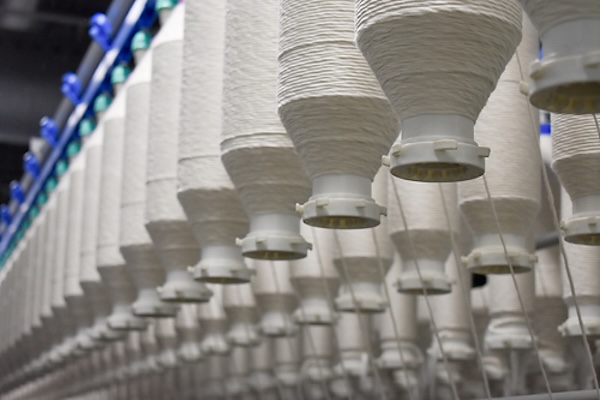
Parkdale_CiCLO_Acquisition_Yarn_Manufacturing -  Parkdale Mills’ yarn manufacturing capabilities support the continued growth of CiCLO® technology.
Parkdale Mills’ yarn manufacturing capabilities support the continued growth of CiCLO® technology.

Parkdale Advanced Materials develops and commercializes innovative textile technologies that deliver responsible manufacturing solutions and address environmental challenges. CiCLO technology aligns with that focus as a biodegradable textile ingredient designed to reduce microplastic fiber persistence in the environment.

The acquisition will build on CiCLO technology’s established presence in apparel, home and hospitality textiles. Parkdale will expand its adoption into adjacent markets, including nonwovens for industrial and hygiene products, geotextiles, filtration, insulation, furnishings and other materials that rely on synthetic fibers.

With more than a century of textile operational excellence and an extensive manufacturing presence across the Western Hemisphere, Parkdale provides the scale and foundation to support that growth. Parkdale’s yarn manufacturing infrastructure, technical expertise, and R&D capabilities give Parkdale Advanced Materials a platform to advance new technologies and products from concept development to commercial scale.

“We are committed to investing in technologies that create value for our customers and address meaningful challenges for our industry and the environment,” said Davis Warlick, chief operating officer of Parkdale. “We believe CiCLO fibers have the potential to address microplastic fiber persistence at meaningful scale. Our focus now is to continue investing in the technology, develop new applications with our customers, open new markets and broaden adoption so it can deliver greater impact.”

Microplastic fiber pollution is a growing environmental concern across the textile industry. Synthetic textiles can shed microplastic fibers during manufacturing, use and care, and end-of-life when products fall outside collection and recovery systems. Because conventional polyester and nylon are engineered for durability, these fibers can persist in the environment for centuries.

CiCLO technology addresses this challenge at the fiber level. The patented technology is integrated into polyester and nylon during fiber manufacturing, creating pathways within the fiber that enable naturally occurring microorganisms to mineralize the polymer in biologically active environments.

The technology has been extensively tested using internationally recognized ASTM and ISO standardized methods across seawater, soil, wastewater sludge, and biologically active landfill conditions. It is designed to maintain manufacturing efficiency, dyeability, durability, and recyclability.

CiCLO polymers integrate into a wide range of synthetic fiber applications, including virgin, recycled, bio-based and textile-to-textile feedstocks, natural-fiber blends, and other compatible textile technologies.

“Our opportunity now is to take CiCLO technology further,” said Cheryl Smyre, vice president of Parkdale Advanced Materials. “That means expanding adoption among the brands and supply chain partners already using the technology while advancing next-generation applications for markets where synthetic fibers are essential. Microplastic pollution is agnostic to the source. To drive meaningful, lasting change, we must extend the reach of CiCLO polymers beyond traditional textile applications and accelerate innovation across industries.”

CiCLO® Technology

CiCLO® technology is a patented textile ingredient designed to reduce the persistence of microplastic fibers from synthetic textiles in the environment. Integrated into polyester and nylon during fiber manufacturing, CiCLO technology is commercially available through a global network of certified fiber, yarn and fabric manufacturers serving home, hospitality, apparel, workwear and nonwoven markets.

Products made with CiCLO fibers are available from global brands and retailers including Target, Walmart, Costco, Black Diamond, Stella McCartney, IHG Hotels, Billabong, Hanes, McDonald’s and others. CiCLO technology has received multiple industry and sustainability honors, including the Behind the Seams Award for Outstanding Supplier Partnership and the World Sustainability Awards. For more information, visit ciclotechnology.com

Parkdale

Founded in 1916 and headquartered in Gastonia, North Carolina, Parkdale is a diversified manufacturing company with leading businesses in textiles, advanced materials and cotton-based health and beauty products. Its operating companies include Parkdale Mills, Parkdale Advanced Materials, and U.S. Cotton.

Posted: October 5, 2026

Source: Parkdale

VDMA Textile Machinery Announces New Executive Board

FRANKFURT, Germany — September 30, 2026 — At the general meeting of VDMA Textile Machinery held in Hanover at the end of September, Dr Janpeter Horn, Managing Director of A. Herzog Maschinenfabrik, was re-elected as Chairman of the trade association. Regina Brückner, managing partner of Brückner Trockentechnik, and Verena Thies, managing partner of Thies Textilmaschinen, will once again serve as vice-chairs for the next four years.

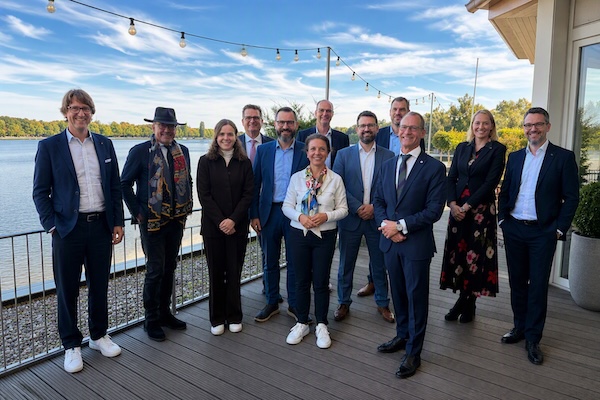
VDMA - Newly elected Executive Board of VDMA Textile Machinery
Newly elected Executive Board of VDMA Textile Machinery

The general meeting of the VDMA Textile Machinery Association took place in the trade fair city of Hanover, one year ahead of the leading trade fair, ITMA. The event’s theme, “The world is moving forward – where is Europe?”, outlined the industry’s current landscape: increasing competition from Asia, coupled with challenging business conditions in Europe, has led to significant declines in order intake and turnover in recent years.

Although the turnover forecast for 2026 had to be revised downwards to -14 per cent (nominal), order intake appears to be stabilising.

“The discussions and workshops at our General Assembly clearly demonstrated that our industry is in the midst of profound change. The challenges are considerable, yet we possess the innovative strength, the expertise and the technological leadership to actively shape these changes. Together, we will work to support our customers even more effectively throughout the entire lifecycle of their machinery and equipment, to capitalise on the opportunities offered by artificial intelligence, and to strengthen the competitiveness of the European textile machinery industry in the long term. ITMA 2027 in Hanover will be an important milestone in showcasing our industry’s capabilities to the world,” explained Dr Janpeter Horn.

Dr Harald Weber, Managing Director of VDMA Textile Machinery, added: “I look forward to working with the newly elected Executive Board. The board’s wealth of experience, high level of technical expertise and broad positioning reflect the diversity and innovative strength of our sector. Together, we will actively drive forward the key future issues facing the European textile machinery manufacturing sector and provide important impetus for the competitiveness of our industry.”

The Executive Board for the term of office from 2026 to 2030 comprises:

  • Dr Janpeter Horn, A. Herzog Maschinenfabrik GmbH & Co. KG, Oldenburg (Chair)
  • Regina Brückner, BRÜCKNER Trockentechnik GmbH & Co. KG, Leonberg (Deputy Chair)
  • Verena Thies, THIES GmbH & Co. KG, Coesfeld (Deputy Chair)
  • Riccarda Dilo, Oskar Dilo Maschinenfabrik KG, Eberbach
  • Peter D. Dornier, Lindauer DORNIER GmbH, Lindau
  • Volker Gingter, A. Monforts Textilmaschinen, Mönchengladbach
  • Andreas Lukas, ANDRITZ Küsters GmbH, Krefeld
  • Dr Jörg Morgner, Temafa Maschinenfabrik GmbH, Bergisch Gladbach
  • Benjamin Reiners, Reiners + Fürst GmbH & Co. KG, Mönchengladbach
  • Markus Settegast, Groz-Beckert KG, Albstadt
  • Alexander Stampfer, Trützschler Group SE, Mönchengladbach
  • Georg Stausberg, Barmag GmbH & Co. KG, Remscheid

Posted: October 5, 2026

Source: VDMA

Growth And Innovation Drive A Busy Year For TMAS

STOCKHOLM, Sweden — September 30, 2026 — As the global textile machinery industry prepares to meet at ITMA ASIA in Shanghai this November, Swedish textile technology companies are responding to a rapidly changing market with investment, innovation and new solutions.

Growing competition from Asia, geopolitical uncertainty, new regulations and the accelerating impact of AI and digitalisation are reshaping the industry. Against this backdrop, TMAS members have had a busy 2026, with new facilities, product launches and technologies addressing automation, productivity, recycling and more resource-efficient textile manufacturing.

Following a record 2025 and a number of bolt-on acquisitions, ACG Kinna has inaugurated a 1,000-square-metre expansion at its headquarters in Skene in response to growing demand for its complete textile and finished product line automation services.

Imogo, a pioneer in industrial spray dyeing, has opened a new showroom, test centre and production hub in Kinnahult. Imogo introduced its first Dye-Max prototype in 2019 and completed its first industrial-scale installation in 2021. The new facility now enables brands and manufacturers to move from laboratory development to validated commercial production in one location.

The centre features Imogo’s patented spray application technology, combining the Mini-Max laboratory system with a fully operational industrial-scale Dye-Max line for fabrics up to 2.4 metres wide and a production capacity of approximately 3 tons per day. Using as little as 0.7 litres of dye liquor per kilogram of fabric, Dye-Max delivers major reductions in water, energy, chemicals and wastewater compared with conventional dyeing.

The latest TMAS member ReSpin will also see its technology installed at Sweden’s first industrial spinning mill for recycled textile fibres. The company has developed and patented RespinJenny, a mechanical recycling technology that transforms textile waste into fibres suitable for new yarn production.

New technologies

Alongside these investments, TMAS members have introduced a number of new technologies during 2026 addressing productivity, automation and more resource-efficient textile manufacturing.

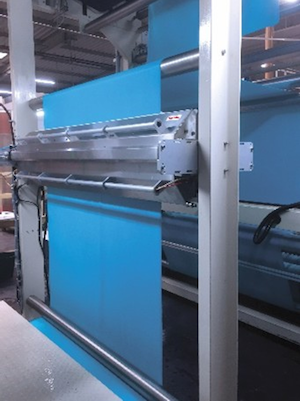
The BW Converting Baldwin TexCoat® G4 precision spray finishing system.

BW Converting’s established Baldwin TexCoat® G4 platform uses precision spray application technology to apply chemistry with pinpoint accuracy to one or both sides of the fabric. By replacing conventional bath-based methods with a non-contact spray process, the system reduces wet pick-up by up to 50%, significantly lowering water consumption and the energy needed for drying while supporting a more consistent finishing process.

BW Converting will also showcase Corona Pure, its proven surface treatment technology for improving adhesion and enhancing fabric performance. As mills move away from C6 fluorocarbon-based water repellents towards fluorocarbon-free C0 chemistries, Corona Pure improves fabric absorbency and helps these formulations deliver stronger water-repellent performance. It reflects the company’s continued focus on helping mills adapt to changing chemistry requirements while maintaining product quality.

Automatex has also developed the P12-PB Automatic Lock Stitch Quilting Unit, which doubles productivity compared with previous systems by delivering continuous programmable quilting with reduced manual intervention in the production of bedding and padded home textiles.

Eton Systems has meanwhile demonstrated its aUPS module for the rapid sorting of used garments. Based on the company’s established UPS material handling system and ETONingenious Factory 4.0 software, the system uses AI to grade individual garments by colour, size and style and, where possible, by manufacturer.

It can also identify damage, recommend possible repairs and calculate a potential resale price, providing an automated approach to sorting garments for reuse.

Looking ahead

The pace of activity will continue towards the end of the year, when TMAS members Vandewiele Sweden and Eltex showcase their latest technologies at ITMA Asia 2026 in Shanghai from November 20-24.

Eltex will present its latest ACT-MULTI system at ITMA Asia 2026.

Eltex will present its latest ACT-MULTI system, bringing individual yarn tension monitoring and automatic control to the heat-setting process to help manufacturers maintain consistent processing conditions across every yarn position.

Heat-setting is a critical stage in the production of synthetic and blended yarns, stabilising yarn structures and locking in twist and bulk to ensure predictable performance during subsequent weaving, knitting, tufting, dyeing and finishing processes.

At ITMA Asia 2026 Vandewiele Sweden will highlight its long-standing expertise in weft feeding and tension control.

In weaving and related processes, Vandewiele Sweden has long-standing expertise in weft feeding and tension control. By ensuring repeatable and predictable yarn delivery at increasingly high loom speeds, its technologies enable weaving mills to operate closer to their technical limits while maintaining consistent fabric quality.

The company’s continued development of data-ready weft feeders also reflects the growing digitalisation of textile manufacturing, embedding intelligence where it can deliver measurable operational benefits without adding unnecessary complexity to demanding production environments.

TMAS Secretary General Therese Premler-Andersson

“This has been a very positive year for TMAS members so far, with investment in new facilities, new technologies reaching the market and further progress in areas ranging from automation and digitalisation to more resource-efficient production,” says Therese Premler-Andersson, secretary general of TMAS, which as a member of Cematex, is closely involved with the ITMA exhibition platform for the international textile machinery industry. “These developments demonstrate the breadth of Swedish textile technology and the very practical way our members are responding to the changing requirements of manufacturers worldwide. We expect that momentum to continue throughout the remainder of 2026 and into next year.”

“There is no question that the competitive landscape is changing. AI, geopolitical uncertainty, regulation and increasing competition from China will all influence our industry in the years ahead. For Swedish textile technology companies, the answer will be to keep pushing innovation, specialist know-how and customer value.”

Posted: October 5, 2026

Source: The Swedish Textile Machinery Association (TMAS)

Long John Puts KARL MAYER’s RDJ 7/3 Into Operation And Strengthens Its Position As A Market Leader

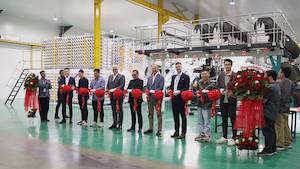
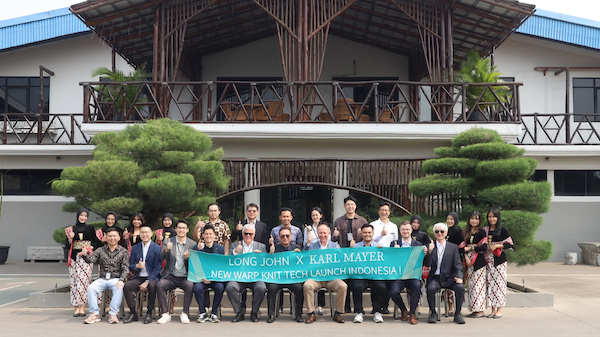
OBERTSHAUSEN, Germany — September 30, 2026 — KARL MAYER has just unveiled its new RDJ 7/3 Jacquard Double Needle Bar Raschel Machine in the international trade press, and the innovation is already causing a stir in the market: The Long John Group, a leading manufacturer of performance footwear fabrics and a long-standing partner of renowned brands, was the first customer to invest in the new machine and celebrated its official launch at its Indonesian plant on August 20.

Long John celebrates the commissioning of the new RDJ 7/3 from KARL MAYER

Guests at the event included representatives from well-known global brands in the athletic footwear sector and from KARL MAYER’s Management.

On site, guests experienced the RDJ 7/3’s enormous innovation potential firsthand. With its three wireless Jacquard bars and other clever technological features, the machine opens up entirely new possibilities for the development of footwear textiles. Complex patterns, precise functional zones, innovative structures, and expressive design effects can now be created with unprecedented flexibility and efficiency.

A key supplier to the global footwear industry

The Long John Group is one of Taiwan’s leading supplier of footwear fabrics and ranks among the largest and most experienced manufacturers in the industry in Asia.

Karl Josef Mayer, grandson of the founder of KARL MAYER, in conversation with Kevin Wen (back left), son of the founder and Chairman of Long John, Jeff Wen, about the latest textile innovations

The company was founded in 1983 by Jeff Wen and has continued to grow ever since. Today, Long John has facilities in Taiwan, China, Vietnam, and Indonesia, as well as a sales office in the United States.

Production is fully integrated and includes spinning, weaving, knitting, warp knitting, dyeing, and finishing. The production capacity is impressive: fabrics for more than 313 million pairs of shoes have already been produced on the Jacquard Double Needle Bar Raschel Machine.

The warp knitting division plays a key role in the company’s innovative strength. Here, open-designed stretch tricot fabrics for uppers and linings are produced, as well as high-performance spacer fabrics with plain or trendy Jacquard-patterned mesh surfaces, which are used in a variety of ways in modern athletic shoes.

Innovation Is Inevitable

Long John Group products are characterized by high quality, innovation, and a keen sense of trends, and are manufactured using high-tech machinery and state-of-the-art processes.

To bring new design concepts to life, the company has now expanded its machinery fleet to include the RDJ 7/3 from KARL MAYER. The new technology enables:

  • Hole designs with nearly perfect and significantly larger rounds
  • Precisely integrated patterns and functional zones with unprecedented design freedom
  • Custom-designed jacquard patterns with striking two-tone effects and creative color combinations
  • Three-dimensional surfaces and eye-catching embossing directly in the fabric

A Partnership Driven by a Pioneering Spirit

The collaboration between KARL MAYER and Long John has a long history

The collaboration between KARL MAYER and Long John has a long history: As early as 2012, the footwear fabric manufacturer made its first investment in a KARL MAYER Double Needle Bar Raschel Machine with Jacquard in the RDPJ-series. In the years that followed, the company was among the pioneering customers to be the first to use newly developed machines.

The RDJ 7/3 also made its industrial debut at Long John. With the commissioning of this machine, the company underscores its role as one of the most innovative players in the global footwear fabric industry.

Anyone who would like to see the RDJ 7/3 in action is invited to the Product Show at KARL MAYER (CHINA) in Changzhou on November 19, 20, 21, and 23, 2026, held in conjunction with ITMA ASIA.

Posted: October 5, 2026

Source: KARL MAYER  Verwaltungsgesellschaft SE

DNA Technical Fabrics Welcomes Doug McBurney As Vice President Of Operations

COLUMBUS, GA — September 29, 2026 — DNA Technical Fabrics is pleased to announce the addition of Doug McBurney as Vice President of Operations, bringing extensive textile industry experience and leadership to the DNA team.

Doug McBurney

Doug is a textile industry veteran whose career includes leadership roles with Milliken, Russell/Fruit of the Loom, Polartec, VELCRO, and MMI Textiles.

A native of the Southeast, he holds degrees from both Auburn University and Clemson University.

In his role, Doug is responsible for advancing DNA’s strategic objectives through operational excellence, customer satisfaction, workforce development, and innovation. Doug will work closely with all stakeholders to ensure DNA continues to deliver the quality, reliability, and responsiveness they expect while supporting the talented employees whose dedication and expertise drive the company’s success every day.

Posted: October 5, 2026

Source: DNA Technical Fabrics

Sukano Polymers Corp. And Poddar Pigments Ltd Partner To Set New Standards In Fiber Coloration

SCHINDELLEGI, Switzerland — September 22, 2026 — Sukano Polymers Corporation, a specialist in color and additive masterbatches for polyesters, biopolymers, and specialty resins, is excited to announce a strategic partnership with Poddar Pigments Limited, an ISO 9001:2015-certified masterbatch manufacturer specializing in solution dyed nylon, polyester BCF, and multifilament yarn and fiber applications.

Through this collaboration, Sukano becomes the exclusive techno-commercial partner for direct sales and distribution, including local stock, of Poddar’s single pigment dispersion (SPD) black, white, and color portfolio across the United States, Canada, and Latin America.

The partnership significantly expands Sukano’s offering for fiber applications, providing customers with access to a comprehensive range of SPD masterbatches specifically engineered for highly concentrated solution dyed fibers. Custom color developments and customer-specific formulations will continue to be developed and supplied directly by Sukano.

Delivering More Value to Fiber Manufacturers
The collaboration combines Poddar’s manufacturing expertise and advanced color technology with Sukano’s strong regional presence, technical know-how, and customer support network throughout the Americas.

With dedicated commercial and technical teams, Sukano will serve as the primary contact for customers, ensuring a seamless experience from product selection through implementation. Customers will benefit from an extensive portfolio of proven fiber color products, local stock, technical support, reliable supply, and streamlined customer service across the Americas.

The partnership is particularly focused on polyester, polyolefin, and nylon fiber applications, where lot-to-lot color consistency, high-accuracy color matching, purity, process stability, and product performance are critical.

Supported by advanced color development, in-house fiber sampling, and testing capabilties, customers benefit from reliable solutions that meet demanding visual and mechanical requirements while maximizing production efficiency, speed to market, and yield.

In their in-house technical center, Sukano conducts comprehensive testing for polymer and high-performance fibers, using state-of-the-art laboratory fiber extrusion equipment. Capabilities include yarn feasibility testing, sample production for different spinning processes, small-batch manufacturing, and the development of fibers for specialized applications. Precise color matching services further ensure optimal alignment with customer requests.

“This partnership strengthens our ability to offer customers a robust and reliable supply of high-quality single pigment dispersions and tailormade colors, backed by local technical support and exceptional service,” said Mark Fessler, CEO at Sukano Polymers Corporation “By combining our market and technical expertise with Poddar’s manufacturing excellence, we are creating a compelling value proposition for fiber producers across the Americas.”

“As India’s oldest and largest fiber masterbatch company, we have built decades of expertise in fiber coloration and processing to deliver the right solution for every customer,” said Gaurav Goenka, CEO of Poddar Pigments. “By partnering with Sukano, we combine technical excellence, expert support, and market ready capabilities in a reliable one-stop solution for even the most specialized and demanding fiber applications across the United States, Canada and Latin America.”

Shared Commitment to Innovation and the Environment
Both companies share a strong commitment to innovation and sustainability. While Sukano has pioneered technologies that maximize the use of environmentally responsible polymer solutions such as PET and biopolymers, Poddar has revolutionized the color business in India with innovative synthesized coloration technologies that provide an alternative to conventional, harmful fiber dyeing processes.

Sustainability extends beyond the products themselves and is also reflected in the operations of both companies. Poddar powers its production facility entirely with renewable solar energy through rooftop solar installations and a dedicated solar power plant. Sukano is also advancing its commitment to renewable energy through solar panel installations at its facilities in Switzerland and Malaysia, supporting progress towards net-zero emissions.

Posted: October 5, 2026

Source: Sukano

Premex Solutions Acquisition By Media One Accelerates Next Phase Of US Growth

MANCHESTER, UK / ATLANTA, GA — September 22, 2026 — Premex Solutions, the Georgia-based digital textile fabrics business, has been acquired by Media One, marking the next phase of its growth in the US market.

Premex was established to meet growing US demand for digitally printable textiles. It carries the product expertise, technical knowledge and textile heritage of its parent company, Premier Textiles Group, a Manchester-based, family-run business founded in 1981, serving customers across North West England and beyond.

A key part of Premex’s success has been its focus on innovation, with the business bringing new fabric developments to the US market. This combination of textile expertise, technical knowledge and commitment to innovation has helped establish Premex as a strong and respected supplier in the digital textile market.

Nick Smith, Director, Premier Textiles Group, said: “Premex has developed into an exciting business with real potential in the US market. This acquisition puts it in the best position to reach that potential, with an owner able to give it the focus, resource and investment it needs.

“Media One is exactly that owner. We’re excited to see what the business achieves as it enters this next chapter.”

Premex joins Media One’s existing portfolio alongside Fisher Textiles and Hyperflex Vinyls, bringing print-ready fabrics together with printing equipment, inks, finishing solutions and nationwide technical service under one roof. Premex customers will continue working with the same people and products, now backed by Media One’s wider capabilities.

Jake Feldman, Chief Executive Officer of Media One, said: “Premex has developed best-in-class print-ready and pre-treated fabrics, along with real technical depth in natural and specialty textiles that complements our own printing technology and service expertise.”
The acquisition also frees Premier Textiles Group to put its full resources and expertise into growing Premier Textiles and Premier Digital Textiles across its core UK and European markets.

Nick Smith added: “This is about focus, not a lack of opportunity. Premex’s US potential is real, and that’s exactly why it needs an owner who can give it full attention. We can then put ours into growing our core UK and European businesses.”

Ashok Kallumpram, Managing Director of Premier Textiles, said: “Premier Textiles has been my family’s business for more than four decades, and we are extremely proud of the reputation, relationships and textile expertise we have built over that time.

“Premex Solutions represents an important extension of that legacy into the US digital printing market, so finding the right long-term home for the business was very important to us.

“We believe Media One shares our commitment to customers, people and the textile industry, and has the capabilities and vision to build on that legacy for many years to come.”

Financial terms of the transaction were not disclosed.

Posted: October 5, 2026

Source: Media One Digital Imaging, LLC

Sponsors