Hexcel To Showcase Advanced Composite Innovations For Aerospace, Defense And Space At CAMX 2026

STAMFORD, Conn. — September 21, 2026 — Hexcel Corporation a global supplier of advanced composites technology, will showcase new materials, qualification milestones and manufacturing innovations at the Composites and Advanced Materials Expo (CAMX) 2026, Sept. 22-24 in Atlanta. Visitors to Hexcel’s Booth P4 will learn how the company is helping customers accelerate the development and production of next-generation aircraft, strengthen defense and space capabilities, and benefit from the advantages of Hexcel’s vertically integrated composites supply chain.

“CAMX provides an important opportunity to engage with customers, partners and industry leaders as the composites industry prepares for the next generation of aerospace platforms,” said Lyndon Smith, President, Americas & Global Fibers, Hexcel. “Whether supporting future commercial aircraft, advancing defense and space applications, or helping customers scale production through vertically integrated solutions, Hexcel is focused on delivering the materials, manufacturing expertise and innovation required to help our customers succeed.”

Among the innovations being highlighted at CAMX is Hexcel’s successful qualification of HexWeb® HRH-10® aerospace honeycomb through the National Center for Advanced Materials Performance (NCAMP). The qualification establishes the aerospace industry’s first publicly available NCAMP database for honeycomb core materials, providing engineers with trusted design data intended to streamline structural design, reduce qualification costs and accelerate adoption of advanced composite structures. Hexcel’s HRH-10 honeycomb was selected as the baseline material for the industry effort to establish a common qualification framework for aerospace honeycomb core materials.

Hexcel will also feature its newly expanded U.S. manufacturing capability for HexPly® M901, a fast-curing prepreg system now produced at the company’s Salt Lake City facility. Designed to address growing demand for faster and more scalable composite manufacturing, M901 supports cure cycles as short as four to five minutes and is suited for applications including unmanned systems, defense platforms, automotive structures, medical devices and industrial composites.

In addition, Hexcel will introduce its enhanced HexWeb® Vented Flex-Core® aluminum honeycomb, developed to help manufacturers simplify production of highly contoured composite structures used in demanding aerospace applications. The new material combines high formability, robust mechanical performance and integrated venting capability, making it particularly well suited for next-generation space launch systems and other advanced aerospace structures.

In addition to showcasing its latest technologies and materials, Hexcel experts will share perspectives on some of the industry’s most pressing challenges during two featured CAMX sessions:

  • Imad Atallah, Vice President, Commercial Growth and Fibers, Matrix & Reinforcements Product Management, Hexcel, will participate in the panel discussion, “How to Quickly Industrialize New Composite and Raw Materials,” on the CAMX Innovation Stage on Wednesday, September 23, at 9:30 a.m.
  • Michael Gleason, Director of Product Management, Matrix & Composite Materials, Hexcel, will present “Who Will Build the Next Generation of Aerospace? Why Vertical Integration Matters More Than Ever” at the CAMX Theater on Wednesday, September 23 at 3:30 p.m.

Visitors are encouraged to stop by Booth P4 to meet with Hexcel technical experts and learn more about the company’s latest composite materials, manufacturing innovations and solutions for aerospace, defense, space and industrial applications. Throughout CAMX, Hexcel will share product announcements, event coverage and additional updates on its website and across its social media channels.

Posted: September 21, 2026

Source: Hexcel Corporation

The LYCRA Company Appoints Hua Du As Chief Executive Officer

WILMINGTON, Del. — September 15, 2026 — The LYCRA Company, a global developer of fiber and technology solutions for the apparel and personal care industries, announced today that Hua Du has been appointed chief executive officer, effective September 14, as the company enters its next chapter following the successful completion of its financial restructuring.

The LYCRA Company Appoints Hua Du as Chief Executive Officer. With 30 years of leadership experience in the specialty chemical and biotechnology industries, Du is well positioned to lead the company into its next chapter.

Du succeeds Dean Williams, who served as interim chief executive officer and will continue in his role as chief financial officer.

Du brings 30 years of leadership experience in the specialty chemical and biotech-based industries, driving transformational growth across global businesses. Du most recently served as CEO of Grobest Group, a private equity-backed animal nutrition business, where he led a comprehensive operational turnaround culminating in the company’s sale. Earlier in his career, he held senior leadership roles at Rhodia (later acquired by Solvay) and managed electronic materials businesses across Asia for Rohm and Haas, later acquired by Dow Chemical.

“We are pleased to welcome Hua as The LYCRA Company’s next CEO,” said Bruce Rubin, executive chairman of the company’s board of directors. “With his extensive technical expertise, operational leadership, and global customer focus, we are confident that Hua has the experience and vision to help shape a successful future for the business. On behalf of the board, I would like to thank Dean Williams for his leadership as interim CEO during this period of transition.”

“The LYCRA Company is built on a legacy of innovation, operational excellence, globally trusted brands, and deep expertise in fiber and materials science,” said Du. “I am honored to join this exceptional organization as we unlock new opportunities for innovation and growth.”

Posted: September 21, 2026

Source: The LYCRA Company

FTC Approves Renoa, The First New Apparel Fiber Classification In Nearly 25 Years, Made In The U.S. From Regenerated Textile Waste

NEW YORK — September 15, 2026 — Next-generation fiber producer, Everbloom, announces that the U.S. Federal Trade Commission (FTC) has approved renoa, a first-of-its-kind regenerated fiber, marking the first new apparel fiber classification approved by the agency in almost 25 years, the last being the approval of PLA in 2002. The approval establishes renoa as its own fiber category and paves the way for textile products containing renoa to be labeled and sold in the United States.

Developed in Everbloom’s New York City lab, renoa is the world’s first fiber regenerated from keratin-rich textile offcuts and waste, including down. Made in the United States with domestic resources, renoa transforms these materials into a novel fiber engineered for luxury aesthetics, consistency, and scale. It delivers the premium hand feel, breathability, and softness associated with cashmere and wool while enhancing durability and longevity without compromising performance.

This FTC approval marks a historic milestone and signals significant innovation for the textile industry. While hundreds of new fabrics and textile blends have entered the market, creating a new FTC-recognized apparel fiber category requires demonstrating that the material is fundamentally distinct from existing fibers through a rigorous regulatory review. Beyond the regulatory milestone, renoa is also the world’s first fiber developed using a proprietary artificial intelligence platform.

The milestone comes at a time when much of the U.S. fashion industry’s manufacturing base has shifted overseas. According to the American Apparel & Footwear Association, about 97% of clothes and shoes sold in the U.S. are imported, with much of the production concentrated in Asia.

“Renoa is the result of years of work by our material and computer scientists, chemical engineers and fashion designers to craft a circular fiber that combines the best of biology and human ingenuity to optimize hand-feel and performance while dropping seamlessly into existing industrial infrastructure,” said Simardev Gulati, Co-Founder and CEO of Everbloom. “The global fiber market is more than a $1 trillion industry and has run on the same fossil-based chemistry for half a century, while most of the manufacturing base has moved to Asia. By combining our proprietary AI platform, Braid.AI, with advanced manufacturing, we’ve created an entirely new category of fiber and a real chance to rebuild America’s textile base around it.”

Powering renoa is Braid.AI, Everbloom’s proprietary artificial intelligence platform that combines predictive modeling with thermoplastic protein engineering to optimize the transformation of keratin-rich proteins into high-performance fibers. By forecasting key fiber characteristics, including softness, strength, texture, and dyeability, before production begins, Braid.AI dramatically accelerates material development while bringing greater stability, scalability, and precision to manufacturing.

Because keratin-rich textile waste naturally varies in composition, creating a consistent, scalable fiber has historically been one of the industry’s biggest technical challenges. Braid.AI predicts how each protein stream will behave during production, enabling Everbloom to optimize production parameters before manufacturing begins. The result is a faster, more precise development process that reduces what once required two months of laboratory testing to just two weeks.

Those AI-driven insights are then translated into Everbloom’s patented production process, which begins by purifying and refining keratin-rich textile waste into its purest protein form. Through advanced engineering, those proteins are structurally enhanced and transformed into high-performance fibers compatible with existing yarn-spinning infrastructure and textile supply chains. The result is a new category of apparel fiber that combines the desirable qualities of luxury natural materials with the consistency and scalability required for modern manufacturing, while enabling machine-washable cashmere and wool blends that bring easy care to luxury apparel.

The need for new material solutions is increasingly urgent, as the fashion industry accounts for roughly 10% of global greenhouse gas emissions and generates more than 20 billion pounds of keratin-rich textile waste each year. By transforming that underutilized waste into high-performance fibers, renoa offers brands an alternative to resource-intensive raw materials.

Independent assessments by Boundless Impact Research & Analytics show that renoa uses more than 99% less water than silk production, 50% less than cashmere production, and 30% less than wool production. Renoa also generates up to 92% fewer greenhouse gas emissions than bio-recycled polyester, silk, cashmere, and wool. By transforming existing waste into a high-performance fiber, renoa reduces reliance on grazing land and animal farming, helping protect fragile ecosystems and lessen the environmental burden associated with conventional luxury-fiber production.

The approval follows Everbloom’s 2025 launch and a funding round led by Hoxton Ventures, with participation from SOSV, Breakthrough Energy, Endgame Capital, Clocktower Ventures, and its latest investor, the Partnership Fund for New York City. With FTC approval secured, the company will continue to scale production and expand partnerships with mills, manufacturers, and global fashion brands seeking next-generation material solutions.

“New York City is home to one of the world’s most iconic fashion industries, and Everbloom is using technology to fundamentally reshape how that industry operates,” said Maria Gotsch, President & CEO of the Partnership Fund for New York City. “By transforming a common agricultural byproduct into high-performance fibers that rival wool, silk, and cashmere, they’ve found an elegant solution to a real environmental challenge. We’re proud to be a part of Everbloom’s seed round and to support the next generation of sustainable materials innovation in New York City.”

As of today, brands can now begin labeling and commercializing products containing renoa in the U.S. market. Several commercial programs featuring renoa are already underway, with additional brand and manufacturing partnerships expected to be announced in the coming months as commercial production scales.

For more information, visit everbloom.bio/renoa.

Posted: September 21, 2026

Source: Everbloom Bio

N.C. State: The W. Duke Kimbrell Flex Factory Ready To Foster Entrepreneurship

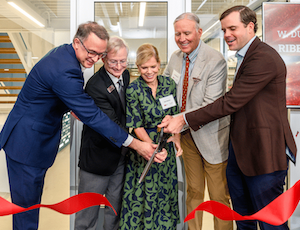
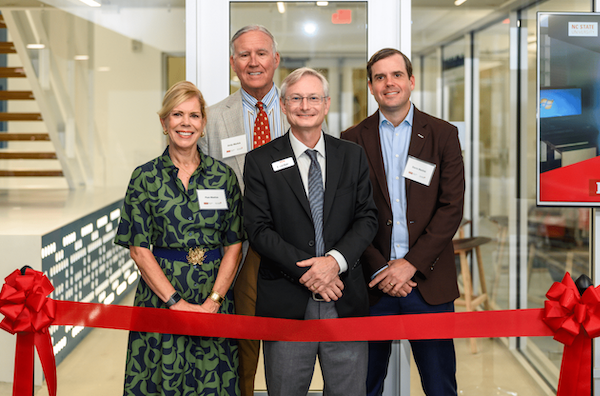
RALEIGH, N.C. — September 21, 2026 — The W. Duke Kimbrell Flex Factory officially opened on Sept. 11 following a ribbon-cutting ceremony to commemorate the occasion.

The world-class center for advancing textile innovation and fostering entrepreneurship is named in honor of the late W. Duke Kimbrell ’49, a pioneering textile leader of the 20th century.

In 1949, Kimbrell became one of the 314 students of the then School of Textiles at NC State. Within 12 years of graduating, he became the CEO of Parkdale, the largest consumer of cotton fibers and yarn manufacturers in the world. In the 1980s, Kimbrell took ownership of the company.

Students, staff and faculty from the Wilson College of Textiles welcomed donors and distinguished guests to celebrate the official opening of the Flex Factory, with the state-of-the-art machinery now being fully operational. The factory offers 17,000 square feet for research and collaboration in a space formerly occupied by the Wilson College Senior Design Lab.

The renovated space continues to house the Senior Design capstone program for textile engineering and textile technology students and adds a new makerspace where students can bring ideas to reality. The Flex Factory also houses a new prototype lab where industry partners and entrepreneurs can create novel textile products.

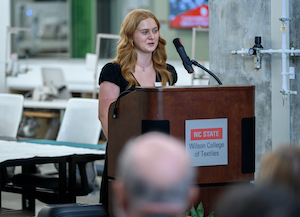
According to Brownley King, a W. Duke Kimbrell Centennial Scholar and textile technology student, spaces like this that connect the academic experience to the real world make the Wilson College student experience unique.

“There is truly no place quite like the Wilson College. Since coming to NC State, I have experienced the textile industry in ways that I could never do anywhere else,” said King.

The opening of this space will directly impact students just like King, who shared her excitement for participating in the Senior Design experience next academic year right here in the new Flex Factory.

Melissa Sharp, interim director of Zeis Textiles Extension, said this will be a place where companies, researchers, entrepreneurs and students can come not simply to imagine what is next, but to make it.

The Flex Factory is designed to be adaptable to allow for a wide range of textile applications. From eco-friendly materials and smart fabrics, to advanced manufacturing techniques, the mission is to create sustainable and practical products.

Unique to this space will be the access to high-tech classrooms and collaborative work zones. The ultimate goal is to bridge the gap between academic research and commercial manufacturing.

The opening of the Flex Factory marks the first major renovation project to the college in over three decades. The woven history of the textile industry and the inspiration that will give students and researchers ways to turn their ideas into reality is the thing to celebrate, according to Michael Ward, executive director of the NC Textile Foundation.

“Today is a wonderful example of what can happen when visionary leaders, generous supporters, university partners, students, alumni and friends come together around a shared belief in what is possible,” said Ward.

During the ceremony, Prakash Chand Kochhar Dean Hinks paid tribute to the life and leadership of Duke Kimbrell, crediting him as an incredible motivator with an unmatched work ethic.

“I believe that Wilson College’s commitment to supporting entrepreneurial thinkers and doers will mean we will be having more “Duke Kimbrells” entering our doors in the future,” said Prakash Chand Kochhar Dean Hinks.

This new space will establish the work of entrepreneurs and researchers to feel supported in their projects by making the state-of-the-art textile equipment available to them when they need it. Whether it be in the studios and labs for ongoing research, or technical service with corporate partners the new space will be dedicated to textile workers, according to Dean Hinks.

Dean Hinks also announced an approved proposal plan for a phase 2 of the W. Duke Kimbrell Flex Factory, in support of The Textiles Futures Institute (FutureTEX). FutureTEX is a 10-year Department of War initiative aimed at modernizing textile manufacturing in the United States to support the defense industry currently led by NC State.

While FutureTEX headquarters will ultimately be located on Gaston College’s Kimbrell Campus, FutureTEX will forever have a node in the Wilson College. With investments like the W. Duke Kimbrell Flex Factory and FutureTEX, Dean Hinks said North Carolina will be the “obvious location” to build new textile-based businesses and advanced manufacturing capacity.

“Today, we are cutting a ribbon on a remarkable new space. But more importantly, we are opening the door to what comes next for the textile industry,” said Sharp.

Posted: September 21, 2026

Source: NC STATE- Wilson College of Textiles

HeiQ And Archroma Win ITMF International Collaboration Award 2026

SCHLIEREN, Switzerland/ PRATTELN, Switzerland — September 21, 2026 — HeiQ and Archroma are proud to announce that their strategic partnership has been awarded the ITMF International Collaboration Award 2026, recognizing outstanding cooperation that advances innovation, sustainability, and competitiveness across the global textile industry.

The award acknowledges the success of the HeiQ-Archroma collaboration in bringing next-generation antimicrobial and odor-control technologies to textile manufacturers, brands, and retailers worldwide through a unique combination of innovation, technical expertise, and global market reach.

The partnership combines Archroma’s worldwide commercial and technical platform with HeiQ’s expertise in creating high-performance and sustainable material technologies. Together, the companies have established a model for scaling innovation globally, enabling textile mills and brands to access advanced functional technologies more efficiently and effectively than ever before.

“Our collaboration demonstrates what can be achieved when two organizations with complementary strengths unite around a shared purpose,” said Raquel Vaz Vieira, Executive Vice President, HeiQ Advanced Materials. “This award is not only a recognition of what has been achieved so far, but also an encouragement to continue pushing the boundaries of sustainable textile innovation. We thank ITMF for this honor and our customers, partners, and teams across both organizations whose commitment made this collaboration a success.”

Dhirendra Gautam, Vice President, Marketing at Archroma, said: “This recognition from ITMF validates our belief that innovation has greater impact when it is made accessible at scale. Together with HeiQ, we are advancing meaningful transformation for brands and mills worldwide as they adopt more sustainable, high-performance textile technologies.”

Since forming their co-marketing and global distribution partnership, HeiQ and Archroma have focused on making planet-conscious odor-control and antimicrobial solutions broadly available across the textile value chain. The collaboration provides mills with simplified implementation, global technical support, compliance-ready solutions, and access to technologies that support durability, freshness, and responsible manufacturing.

Among the technologies benefiting from the collaboration is HeiQ Mint, a bio-based, non-biocidal odor-control technology that captures odor molecules and releases them during laundering, helping garments remain fresher for longer while reducing washing frequency. The technology contributes to lower water, energy, and detergent consumption while enhancing wearer comfort and garment longevity.

The International Textile Manufacturers Federation (ITMF) is an international forum for the world’s textile industries, founded in 1904 and dedicated to keeping the world-wide membership informed through surveys, studies and publications.

© 2026 Archroma

Posted: September 21, 2026

Source: Archroma

Monforts ATC: Turning New Ideas Into Industrial Reality

MÖNCHENGLADBACH, Germany — September 21, 2026 — The Monforts Advanced Technology Centre (ATC), initially opened in 2013 and subsequently expanded, continues to be an invaluable resource to customers from around the world in achieving new standards in fabric finishing.

Covering an area of 1,200 square metres, the Monforts ATC at the company’s headquarters in Mönchengladbach houses two full MONTEX finishing lines, engineered to accommodate an extremely diverse range of processes, in addition to a THERMEX range for the continuous dyeing of denim and other woven fabrics, a full colour kitchen and a number of lab-scale systems for smaller batch trials.

“The ATC allows our customers to test their own textiles and technical fabrics on Monforts dyeing and finishing machines under fully confidential, real production conditions,” says the company’s Marketing Manager Nicole Croonenbroek. “Using the results from these trials, we are also able to make recommendations for improving many fabric finishes.”

Technical textiles

A highly-controlled and contained environment was a key consideration when constructing the special MONTEX line for technical textiles at the ATC.

Monforts Textile Technologist Saskia Bollhöfer.

“Technical textiles are extremely diverse in their end-use applications and manufacturers can be called upon to quickly produce a succession of materials with widely differing properties and performance applications – often within a single shift,” explains Monforts Textile Technologist Saskia Bollhöfer.

“These range from substrates for digitally-printed soft signage to carbon fabrics for today’s high-performance composites, and from filter media which must perform in extreme temperatures to flame retardant barrier fabrics.

“These very different materials all require expert coating and finishing for maximum efficiency and the technology to allow for ultimate flexibility and the ability to switch quickly from one fabric formula to the next, without compromising on the economical use of energy or raw materials.”

Advanced functions

The technical textiles line incorporates a Montex four-chamber, horizontal chain stenter and is fitted with an explosion-proof coating application chamber in order to allow treatment to be carried out with organic solvents and other volatile materials.

Special features on the line relate to further advanced functions – the ability to treat materials not only at temperatures of up to 320°C, but also to be able to treat the top and bottom faces of certain materials at different temperatures within a single pass through the machine. There are many applications where employing two separate temperature treatments is beneficial, such as floorcoverings – where the textile face fabric is treated at one temperature and the rubber backing at another – as well as PVC flooring employing chemical foams or materials like black-out roller blinds with heavy backings.

At the same time, in the pharmaceutical industry there is a wide range of different applications for organic solvents such as anti-septic treatments which have to be treated very carefully and applied at very specific temperatures in order not to destroy their efficacy.

Most recently, a Baldwin TexCoat™ G4 digital spray unit has been successfully integrated into this line and is further available for full customer trials, especially for making full use of the latest advanced sustainable finishing chemistries supplied by industry leader Archroma.

BW Converting’s Baldwin TexCoat G4 enables softeners, antimicrobials, durable water repellents, flame retardants and many other water-based chemicals to be precisely applied to textile surfaces, and in combination with industry-leading MONTEX stenters can reduce water, chemistry and energy consumption by up to 50% compared to traditional pad application processes.

“The new TexCoat installation is making an important contribution to what we can achieve and we are excited to be working together with Archroma and BW Converting to bring further transformative change to the dyeing and finishing space,” says Saskia Bollhöfer.

Knitwear

MONTEX stenters provide smooth treatment at very low and precisely controlled tension during all stages of knitted fabric handling.

The second production line at the ATC has been engineered with the state-of-the art production of conventional knitwear in mind and is based around a MONTEX stenter with vertical chain return.

“Knitted fabrics need delicate handling as they often have a higher degree of elasticity compared to more rigid woven materials,” says Nicole Croonenbroek. “Our MONTEX stenters provide smooth treatment at very low and precisely controlled tension during all stages of knitted fabric handling, as well as very gentle and even thermal treatment. The MONTEX is extremely flexible in terms of the different fabric qualities it can accommodate and also provides significant benefits in terms of energy consumption.”

The line is also equipped with the company’s Eco Applicator system which eliminates the need for a conventional wet-on-wet padder, instead employing trough and roller techniques to precisely apply the required amount of liquid/coating to the fabric.

Compared with a padder system, where the initial moisture content of the fabric entering the stenter is 60%, with the Eco Applicator it is reduced to 40% and the system also has the shortest fabric path from the coating unit into the stenter.

The Eco Applicator’s versatility also allows mills to apply finishes to just one side of the fabric, or both, and even to apply separate finishes to each side, or to specific areas of a fabric, for endless possibilities, whether treating wovens, denim or delicate knits.

THERMEX

The THERMEX line at the Monforts ATC has recently been equipped with the Monforts Universal Energy Tower.

Almost 1,000 Monforts THERMEX hotflue dyeing systems are now operational in the key manufacturing countries, with more than 150 of them already reaping the benefits of the Econtrol® process.

With Econtrol®, reactive dyestuffs are fixed into the fabric in a one-step dyeing and drying process with a controlled combination of steam and air. The entire pad-dry process takes just two-to-three minutes at a temperature of between 120-130°C and a relative humidity volume of 25-30%.

The THERMEX line at the Monforts ATC has recently been equipped with the Monforts Universal Energy Tower, a stand-alone module which enables the heat from the exhaust air flow of thermal processes to be recovered, resulting in energy savings of up to 25%, depending on the exhaust air volume and operating temperature.

“The current focus of the industry is very much on cleaner processes in order to meet the commitments on sustainability made by the major fashion brands and with further regulations already in the pipeline,” says Nicole Croonenbroek. “This is calling for new investments that enable a significant reduction in resource consumption to be achieved, but that are easy to integrate into existing production systems. THERMEX lines running Econtrol fit the bill perfectly.”

From trials to production

The value of the ATC ultimately lies in its ability to bring together the accumulated process knowledge of Monforts with full-scale production technology, allowing customers to move beyond laboratory evaluation and establish exactly how new fabrics, finishes and processes will perform under industrial conditions.

Trials can be used to determine optimum machine settings, temperatures, dwell times and application parameters, as well as to assess the implications for energy, water and chemical consumption. This provides manufacturers with reliable production data before introducing a new process at their own mills or committing to further investment.

The centre is also increasingly important as textile manufacturers respond to demands for lower resource consumption, new finishing chemistries and increasingly specialised fabric performance. By working alongside Monforts technologists, customers can investigate new approaches while drawing on extensive experience across conventional apparel fabrics, technical textiles, coating and dyeing and thermal finishing.

“The ATC draws on all of the know-how of our company in respect of fabric processing,” concludes Saskia Bollhöfer. “It gives customers the opportunity to work with our specialists and our latest technologies to establish solutions that are not only technically achievable, but practical and economically viable in production.

“Whether the objective is to improve an existing process, develop an entirely new product or evaluate the potential of a new technology, we can work with customers from the initial trials through to the optimum production parameters. This is what makes the ATC such an important resource for turning new ideas into industrial reality.”

To learn more, please visit: www.monforts.de/en/techcenter

Posted: September 21, 2026

Source: A. Monforts Textilmaschinen GmbH & Co. KG

The Wilson College of Textiles: Remembering Dr. Andre West

RALEIGH, NC — September 17, 2026 — The Wilson College of Textiles is mourning the loss of professor and former director of Zeis Textiles Extension, Andre West. A beloved colleague, mentor and friend whose creativity, generosity and entrepreneurial spirit left an enduring mark on the college and the people who knew him.
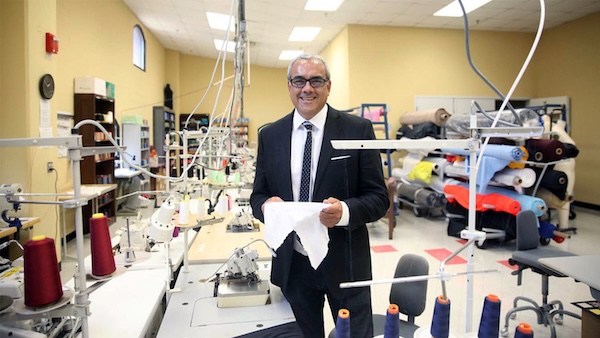
Throughout his career, West had a gift for seeing possibility — in ideas and, most importantly in people. He was known for bringing ideas to life and for creating opportunities for students and colleagues to step forward, take risks and receive recognition for their own work.

A Career in Textiles

West earned his B.S. in textile design from the University of Huddersfield in England. In 2009, he earned his Master of Fine Arts in visual arts from Miami International University of Art and Design followed by his Doctorate in Education in 2012.

For over 40 years, West worked in the textiles industry through fashion trend forecasting, fashion and textile design, manufacturing and retailing. He began his career in London, England as a trend forecaster and designer before moving to Florida. There, he had various professional experiences with places like the Art Institute of Fort Lauderdale, Fort Lauderdale Fashion Week and the Knit Design Group, Inc.

His career eventually brought him to NC State in 2013 as an assistant professor in the Department of Textile and Apparel, Technology and Management, advancing to associate professor in 2019 and then full professor in 2024. In 2019, he was named director of the Zeis Textiles Extension (ZTE).

Across those roles, West built a legacy that extended far beyond his own accomplishments. West built a legacy of service not only across the Wilson College and NC State communities, but also worldwide. He will be remembered by faculty and students as a champion for others’ success.

Research and Student Support

West’s research focused primarily on integrating technology into the textile and apparel industry.

He worked across disciplines, through apparel and fashion design, textile electronics, technical knit design and more. West also led several fashion shows when he was a professor, impacting and leading the creative minds of future designers and creators.

Ritika Shamdasani ’23, said West created an environment where students feel supported in every aspect of their academic growth.

He supported students outside of the classroom as well. By taking a holistic approach to his work, he established the Greater Good Textile Group, a student-led organization dedicated to sustainability and advocating for the ethical treatment of textile industry workers. He also helped form the Latinos Unidos en Textiles student organization and acted as the group’s faculty advisor.

West received several awards during his tenure, including international recognition for collaborating with researchers from the College of Agriculture and Life Sciences (CALS) and the Entomology Department through the design and production of mosquito-resistent clothing with no harmful chemicals. The award he was most proud of, though, was the Textile Leader of the Year award he received in 2018, because he was nominated by the students.

He also focused on researching and developing sustainable materials. West explored the use of hemp as an alternative fiber for military and commercial clothing to lessen the impact of textiles on fast fashion and global warming.

West held multiple patents across his body of work, led several companies and developed commercially successful products.

Legacy at NC State

Under West’s leadership, the college made incredible progress in the growth and development of programs, research and entrepreneurship. One of the most visible pieces of West’s legacy can be found today in the W. Duke Kimbrell Flex Factory, which grew out of  West’s idea to create a prototype lab for ZTE. That early concept helped lay the groundwork for the newly opened Flex Factory, whose planning, design and expansion West helped champion..

Through fostering innovation and to showcase the emerging talents of Wilson students, West oversaw the development of the annual Wells Fargo Pitch to the Pack Textile Entrepreneur Pitch Event. This mission connects textile entrepreneurs with the funding they need to turn their bold ideas into a real business.

Adaline Griffin, a Centennial Scholar, was West’s mentee in the college’s inaugural Pitch to the Pack entrepreneurial competition in 2024. Griffin said West pushed her to be better, do better and think better.

Under West’s leadership, the organizational restructuring of ZTE was successful while also optimizing revenue streams to drive long-term financial sustainability. During the COVID-19 pandemic, West pivoted the manufacturing operations swiftly and repurposed machinery for the rapid production of critical personal protective equipment (PPE).

Amongst West’s multiple accomplishments and impacts on the college, he also secured highly competitive federal and international funding. Some highlights include prestigious grants from USAID, which succeeded in training more than 1000 people in northern Honduras to prepare them for jobs in the textile industry, the National Science Foundation (NSF Engines), where he led multiple projects focused on hemp and textile to textile circularity and the Department of Defense (DOD), developing products and building a manufacturing ecosystem to support military needs.

Remembered by Colleagues

Jeff Joines, associate dean for academic programs said West was one of the sincerest, kindest, most caring humans you will ever meet.

“He embodied the entrepreneurial spirit. He always had a million great ideas and, unlike others, made most of them happen. He just wanted to make people better and never cared about needing credit, just getting the idea to fruition. I will miss my friend and the many discussions we had about life, students, sports, and, of course, our bets on the Ryder Cup,” said Joines.

Prakash Chand Kochhar said West was a true friend and wonderful colleague and will be deeply missed by the entire Wilson College community. West’s mentorship, generosity of time, encouragement and kindness will be cherished by undergraduate and graduate students and alumni.

“Andre was a tireless advocate for students regardless of their major and was one of the most collaborative colleagues who had the rare ability to combine fashion design with textile engineering and technology to create new innovations, patents and companies,” said Dean Hinks.

Melissa Sharp, interim director of Zeis Textiles Extension, said West was a “truly special human” and he “left an incredible legacy in the college, both physical and cultural, and in the students he mentored over his career.”

Sharp said West was an incredible mentor, and was the right balance of giving people the space to succeed and the right push when they needed it. West always had the energy of doing the hard work to bring new ideas to life, according to Sharp. Sharp spoke of his incredible career, leading up to his time and leadership at NC State with ZTE where she said West reshaped the program “significantly.”

“The pandemic hit just nine months into his tenure as director. He not only spent huge amounts of time making masks and facilitating others to help as well, but he also started to think about how to keep ZTE afloat at a time when businesses were turned on their heads and employees were mostly remote. So he started bringing grants into our unit and changed ZTE’s grant work from almost zero to now more than $1M per year.”

Sharp said West taught her about what servant leadership looked like, and was her ‘partner in crime’ for six years, becoming a dear friend and part of her family.

“I benefitted enormously through his mentorship and championship of me and the work I have led, and I watched him delight in doing this for his students and others in the college too. He genuinely cared about his students’ success and well being, going out of his way to make sure they were supported both academically and personally. I will miss his creative optimism, energy and friendship tremendously,” said Sharp.

West’s legacy can be seen throughout Wilson College in the facilities and programs he helped build, the research and partnerships he helped launch and the ideas he brought to life. But for the students, colleagues and friends who knew him, his most enduring legacy may be found in the people he believed in, encouraged and helped succeed.

West spent his career creating possibilities for others. The Wilson College community will continue to feel the impact of those possibilities for generations to come.

Posted: September 19, 2026

Source: NC STATE- Wilson College of Textiles

Spinnova Signs Letter Of Intent Regarding Potential Acquisition Of Tearfil And Related EUR 1.5 Million Bridge Loan Financing

JYVÄSKYLÄ, Finland — September 17, 2026 — Spinnova Plc (“Spinnova” or the “company”), a materials technology company producing textile fibre from wood pulp and waste streams, has signed a non-binding letter of intent with Tearfil – Indústria Têxtil, S.A. (“Tearfil”) and its shareholders concerning a potential acquisition by Spinnova of all shares in Tearfil. Tearfil is a Portuguese yarn spinning company and a key development partner in Spinnova’s ecosystem.

The contemplated transaction would strengthen Spinnova’s position in the textile value chain by securing dedicated yarn development and spinning capabilities for SPINNOVA® fibre. The potential acquisition is intended to shorten development cycles, provide greater control over the conversion of SPINNOVA® fibre into customer-ready yarns and textile applications, and accelerate commercialisation with brand and supply chain partners.

“Tearfil has been an important partner for Spinnova, playing a key role in advancing SPINNOVA® fibre toward commercial applications,” said Janne Poranen, CEO of Spinnova. “Bringing these capabilities into Spinnova would strengthen our ability to support broader adoption of SPINNOVA® fibre and advance the commercial scaling of our technology”.

The letter of intent sets out the parties’ current understanding of the framework for the potential acquisition, including an initial purchase valuation of EUR 500,000 paid in cash and Spinnova’s shares for all shares in Tearfil. Except for certain provisions expressly stated to be binding, the letter of intent is non-binding and does not create an obligation for Spinnova to proceed with or complete the acquisition. The intended timeframe for completion of the potential acquisition is during Q1 2027.

Under the letter of intent, Spinnova contemplates providing Tearfil with EUR 1.5 million in bridge loan financing for the duration of Tearfil’s process for a special revitalisation proceeding (Processo Especial de Revitalização, “PER”) to restructure Tearfil’s current debts. PER is a Portuguese court-supervised restructuring process intended to enable a company in financial difficulty, but not yet insolvent, to negotiate and approve a recovery plan with its creditors while continuing its business operations.

The bridge loan arrangement remains subject to the parties executing definitive loan documentation and the fulfilment of applicable conditions. Spinnova expects to finalise the loan arrangement in the coming weeks and will inform the market accordingly. The loan would have an interest rate of 12-month EURIBOR + 2% and mature one year after payment. The loan agreement would also include early repayment triggers if Spinnova decides not to proceed with the acquisition. The bridge loan would be intended to support Tearfil’s working capital and ordinary-course operational needs during the PER process, subject to Spinnova’s approval. The loan is intended to benefit from available priority, protection and recoverability under applicable Portuguese insolvency and restructuring laws and from guarantees granted in favour of Spinnova.

Tearfil – Indústria Têxtil, S.A

The table presents Tearfil’s key financial figures as of 31 December 2024 and 2025. The liabilities presented in the table are expected to be addressed in the PER process described above, the outcome of which will depend on the negotiation of a recovery plan with creditors and approval by the competent Portuguese court.

EUR thousand 2025 2024
Turnover 8,572 12,941
Result -3,274 -448
Total fixed assets 6,625 3,493
Total equity 2,426 2,195
Total short-term liabilities 7,909 8,632
Total long-term liabilities 5,003 3,781

Completion of the contemplated acquisition remains subject to key conditions, including satisfactory due diligence, approval by Spinnova’s Board of Directors, final approval of Tearfil’s PER restructuring plan, agreement on definitive transaction documents, and other customary transaction protections satisfactory to Spinnova.

Posted: September 19, 2026

Source: Spinnova PLC

Polartec® And Vibram®  Bring Comfort And Performance To The New Crocs’ Tembo II RO

SPARTANBURG, S.C. — September 17, 2026 — Polartec®, a Milliken & Company brand and creator of the world’s first synthetic fleece, and Vibram®, a global leader in high-performance rubber soles, are two of the world’s leading ingredient brands for technical innovation and performance.

Together, they have teamed up with Crocs to launch the new Tembo II RO, a fall/winter-ready shoe designed for everyday exploration. The new model builds on the Tembo silhouette by combining Crocs’ unmistakable design language and its iconic Crocs Comfort™ construction with a Vibram® rubber outsole and a fleece bootie powered by Polartec® Micro Series. The result is a warmer, more rugged take on the Tembo, with a slimmer profile that brings the silhouette closer to that of a traditional sneaker.

By bringing Polartec’s proven Micro Series fleece technology into the new silhouette, Crocs ensures lightweight warmth and soft comfort in colder weather without compromising the distinctive look and feel of the Tembo.

The Vibram® rubber outsole delivers excellent grip and durability, with Vibram® XS TREK EVO providing a versatile technical compound engineered for stability, comfort, and reliable multi-surface traction in a range of conditions. Furthermore, the Polartec® bootie can be removed for easy cleaning and secured back into place with a nylon ladder system. The result is a winter-ready evolution that takes the archival silhouette into new territory while maintaining the comfort and versatility Crocs is known for.

Behind Crocs’ innovative approach to off-road footwear is its trust in Vibram to create a custom outsole designed for premium traction and durability, and in Polartec to deliver proven fleece performance that extends well beyond traditional apparel. Together, Crocs, Polartec and Vibram bring three distinct areas of expertise to the Tembo II RO: an iconic and unconventional design, trusted warmth and breathability, and dependable grip underfoot. The combination nets a versatile product designed to deliver all-day comfort and performance both inside and out.

The partnership also reflects an opportunity to extend the role of the Crocs and Vibram alliance beyond traditional outdoor applications. Building on the performance and versatility of the current product portfolio, the two brands see potential to serve additional environments, including the hospitality business, where comfort, durability, easy cleaning and reliable traction are increasingly important.

“Crocs has always approached design in its own unmistakable way, and that makes this partnership particularly exciting for Polartec,” said Karen Beattie, Director of Product Management at Polartec. “The Tembo II RO shows how trusted fleece performance can take on a completely different role when it is placed in the hands of a creative partner. We’re proud that Crocs chose Polartec® Micro Series to bring warmth and comfort to this new silhouette.”

©2024 Polartec, LLC. Polartec® is a registered trademark of MMI-IPCO, LLC.

Posted: September 19, 2026

Source: Polartec®, a Milliken & Company Brand

As A Bolder Era Of Design Takes Hold, Pantone Adds 224 Vibrant Shades To The Pantone Matching System™

CARLSTADT, N.J. — September 16, 2026 — Pantone LLC, the global authority on color and provider of professional color tools for designers, today introduced 224 new colors to the Pantone Matching System™ (PMS), expanding the library to nearly 9000 colors. The additions arrive at a turning point in design; as stark minimalism gives way to bold, unapologetic self-expression, the new colors answer a creative community hungry for more range, more saturation, and more feeling to bring to their designs.

The shift is already visible across the landscape. Designers and consumers alike are embracing emotion-driven color, bold pattern, and personality, a movement reflected in surging interest in maximalism and in the rise of joyful, mood-boosting color across fashion, interiors, product, and graphic design. Today’s interpretation of maximalism and the feeling of “more” is intentional. Rather than a chaotic mix of colors, designers are carefully curating every color for the feeling and world it creates for their audience. As a result, color consistency and accuracy has never been more important to properly display that intention.

Built to serve graphic and product designers, brands, printers, converters, and ink manufacturers, the new colors are engineered for real-world production. Available in both coated and uncoated paper stock, they deliver the stability, consistency, and reproducibility that allow a color to travel accurately from the screen to a shelf, bridging physical and digital mediums so teams can specify with confidence across today’s product and packaging needs and ensuring the final product is as intended. Reflecting these evolving design trends, the additions help designers stay ahead of the curve while producing more relevant, reproducible options for today’s modern workflows and consumer trends.

To develop the collection, the Pantone Color Institute™ and Pantone’s group of color scientists worked together to leverage their respective cultural forecasting and technical color science expertise to identify, curate and integrate the new colors into the PMS. The resulting additions complement the current system with more range while simultaneously tapping into the future of trend and color.

The 224 new colors are available now across the iconic Pantone Formula Guide, Color Bridge, and Solid Chips Set, with the new colors also offered as a supplement for the Pantone Formula Guide, Color Bridge and Solid Chips Pages for a limited time so existing customers can refresh their collections. The range is also available digitally through Pantone Connect and the Pantone Connect Extension for Adobe Creative Cloud, supporting faster exploration, sharing, and specifying directly within designers’ existing workflows.

A Fuller Spectrum of Dynamic Color

The new colors were curated to further deepen every family in the system. The reds are augmented with full-bodied, pink-infused tones that add potency and strength, while the pinks range from tender, romantic rose to the playful and capricious. New oranges spring from three different worlds: the vibrant and floral, the organic and fruity, and the earth-inspired; and the yellows move from earthy and musky to peppery and citrusy, a flavorful, culinary range made to tempt the senses.

On the cooler and deeper end, the new greens are fresh, functional, and restorative, reflecting a desire for harmony with the natural world; the blues expand into the pure, expansive, and meditative, bridging nature and technological innovation; and the purples answer a growing appetite for glamour, from muted and dusky to moody and magnetic. Grounding the collection, new browns, taupes, and neutrals feel natural and honest, while chameleon-like grays lend a quiet, versatile power that supports and contrasts in equal measure.

Four Palettes to Inspire

Beyond the individual colors, Pantone has translated their trend research into four ready-made palettes that show how the new shades come together. Each is a starting point designed to direct and inspire, showcasing how this bold color trend is manifesting into distinct color stories.

  • Desire for Pleasure: Sickly sweet colors as a playful indulgence, evoking flavors of ripe fruit and spun sugar. A pair of playful pinks is elevated by the freshness of aquatic blue and pistachio green, each hue enhancing the other’s charm to create a dream-like, uplifting experience. (PANTONE 6288 C, PANTONE 6261 C, PANTONE 6206 C, PANTONE 6375 C, PANTONE 6414 C)
  • Desire for Exquisite: Inspired by opulent blooms and ripened fruits, a sophisticated palette of saturated color that celebrates the elaborate and the elegant. Chocolate and grape are energized and warmed by a nurturing peach and a pair of hot hues—a deep red and a vibrant orange—creating a rich contrast of light and dark. (PANTONE 6259 C, PANTONE 6322 C, PANTONE 6441 C, PANTONE 6294 C, PANTONE 6268 C)
  • Oxygenating: A vibrant palette drawn from nature’s most brilliant hues—golden amber, neon citrus green, and lush botanical greens. Rooted in organic materials and living ecosystems, these colors embody energy, oxygenation, and transformation, reflecting the restorative power of the natural world. (PANTONE 6406 C, PANTONE 6427 C, PANTONE 6225 C, PANTONE 6421 C, PANTONE 6402 C)
  • Beyond Boundaries: A family of color that has escaped the rules—buoyant aqua, powdery lavender, magical purple, lime green, and creamy beige. At once nostalgic and forward-looking, playful and scientific, these retro-yet-futuristic hues give designers free rein for creativity and fun. (PANTONE 6373 C, PANTONE 6309 C, PANTONE 6327 C, PANTONE 6423 C, PANTONE 6428 C)

“Designers and brands are embracing color as a form of confidence and bold expression, focusing on the way it makes their audiences feel. The new colors expand the expressive range of the entire system, adding to this trend of bold feeling and excitement. We hope this serves as a tool of inspiration and helps designers find even more range in the Pantone Matching System to bring their ideas to life,” said Cindy Cooperman, General Manager & Vice President, Pantone.

Real-World Workflows with Draplin Design Co.

That combination of expression and precision is exactly what drew renowned graphic designer Aaron Draplin of Draplin Design Co. to being the first designer to put the new palettes to work. Oregon-based Draplin, whose work spans brands and artists from Nike, Hot Wheels, and Patagonia to Pearl Jam, Tenacious D, and Chris Stapleton, has built a career on his bold, fearless use of color.

“It’s great to step out of your comfort zone. I’m still trying new things every day, chasing new techniques, typefaces and, lately, exploring new colors in my work,“ says Aaron. “Working with Pantone’s new colors really pushed me to flip the script and discover combinations that I just hadn’t arrived at on my own. And once you let go, everything loosens up and that’s where the fun begins—I’m roaming around in fresh, new territory and loving it!”

For more information, to see how Draplin integrates the new colors into his workflow or see the behind-the-scenes journey from first inspiration to finished, reproducible work, visit Pantone online at pantone.com.

Posted: September 19, 2026

Source: Pantone LLC

Sponsors