Fashion For Good Launches The Cotton Reloop Matrix Project To Unlock Commercial Scale For Recycled Cotton

AMSTERDAM — October 6, 2026 — Fashion for Good today announces the launch of the Cotton Reloop Matrix Project, a cross-industry initiative that will map and physically validate the quality of commercially available recycled cotton yarns against brand specifications, giving the industry a data-backed overview of how quality, price, and recycled content intersect.

The project is convened with Fashion for Good partners Arvind, BESTSELLER, C&A, Interloop, Reformation, Shahi, and ecosystem partner Uster.
Fashion for Good - Cotton Reloop Matrix Project imageCotton accounts for 19% of global fibre production and a core part of the material mix. Although alternative recycling pathways exist to utilise cotton-rich textile waste feedstock, they do not make a cotton output. Therefore, mechanical recycling is a crucial pathway to utilise waste and create recycled cotton yarns and fabrics.

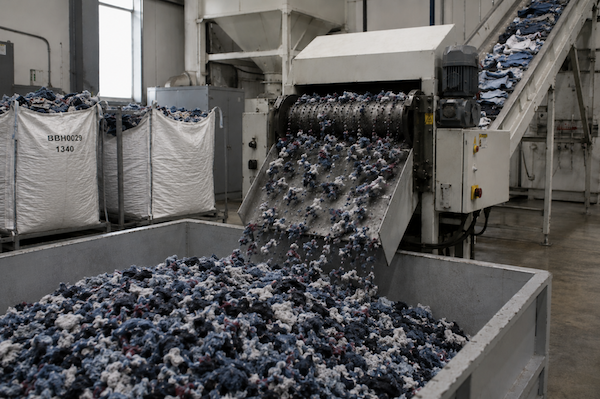
Through the mechanical recycling process, textile waste is shredded and re-opened into loose fibres that can be respun into yarn. However, shredding shortens and weakens the fibres, so only 45 to 50% of the input survives as usable material. The rest is lost as short fibres and processing waste, and because the surviving fibres are shorter than virgin cotton, spinners can only blend a limited share back into new yarn. In practice, that caps most yarns at around 10% recycled content: any higher and the fabric isn’t durable enough for commercial use. While recyclers have available capacities, integrating a meaningful percentage of recycled cotton remains complex for brands navigating trade-offs around quality and price.

Testing happens in isolation, with recyclers and brands working from separate data sets, and no shared reference comparison to close the gap between them. Alongside this, brands often evaluate recycled blends against 100% virgin cotton standards, which makes for a challenging comparison for recycled cotton. To help unlock greater market adoption, the industry must shift its focus from virgin parity to fit for purpose, matching the realistic performance profile of recycled fibres to appropriate product applications while utilising targeted quality augmentation pathways where higher performance is required.

“Recycled cotton has been talked about as a scale-ready solution for years, but the industry has been working from fragmented data and siloed testing,” said Katrin Ley, Managing Director at Fashion for Good. “This project is about closing that gap with hard evidence. By plotting real recycler capabilities against real brand quality targets, and by co-developing the operational standards to support them, we can move recycled cotton from a case-by-case experiment to a category the industry can actually plan around.”

“Recycled cotton isn’t new to us: it’s a fiber we’ve worked with for years. What’s been limiting is the ability to scale to higher blend percentages without compromising fabric quality or hand-feel. What this project offers is a shared reference point where brands and recyclers work from the same evidence. We hope this opens the door to greater scalability and uptake over time”. Nikki Player, Senior Director of Raw Materials at Reformation

The Cotton Reloop Matrix project is convened with a coalition spanning the cotton value chain: innovation partners BESTSELLER, C&A, Interloop and Reformation; advisory partners Arvind and Shahi; and ecosystem partner Uster, whose spinning and yarn-testing expertise underpins the physical validation phase.

The Cotton Reloop Matrix project works in two parallel tracks: 

  • First, Fashion for Good maps what recyclers can produce today against what brands need, across knit and woven categories. The result is a Quality Matrix that shows, at a glance, where recycled cotton is ready for commercial use and where targeted innovation can extend its reach.
  • Second, the project moves from the map to the mill. Selected recyclers, in collaboration with our partners, will produce 10 demonstrator fabrics and run 5 quality augmentation trials in real production conditions, generating a Trade-off Analysis that shows how recycled content, price and quality shape one another.

Best practices from these trials will be captured in a universal, open-source spinning Standard Operating Procedure (SOP), designed to support consistent manufacturing across global supply chains. The project closes with the Roadmap for Cotton Circularity, an industry-facing report setting out the data infrastructure needed to scale recycled cotton adoption across product categories and regions.

Posted: October 9, 2026

Source: Fashion for Good

Teijin Expands PFAS-Free High-performance Resin Lineup

TOKYO — September 28, 2026 — Teijin Limited today announced new grades of SOLFIGA®, its family of polyphenylene sulfide (PPS) compounds, which offer excellent sliding properties without intentionally added per- and polyfluoroalkyl substances (PFAS). The new grades are also designed to help customers balance wear and friction performances with regulatory compliance.

Teijin Limited - SOLFIGA® PPS compound pellets
SOLFIGA® PPS compound pellets

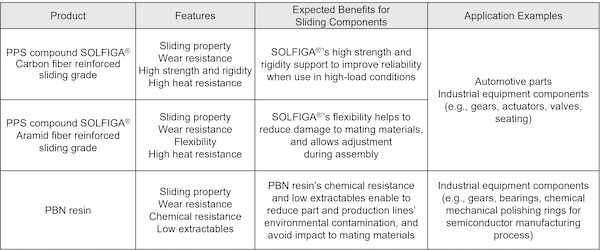
Teijin already supplies polybutylene naphthalate (PBN) resin with good sliding properties as its PFAS-Free product. By expanding PFAS-Free high-performance resin lineup, Teijin will further enhance its ability to meet increasingly diverse customer needs.

As with existing SOLFIGA® lineup, the PFAS-Free SOLFIGA® grades incorporate carbon fiber and aramid fiber as reinforcement. The carbon fiber-reinforced SOLFIGA® sliding grade provides high strength and rigidity for components used under high-load conditions.

Teijin Limited - Gears using SOLFIGA® PPS compound (prototype)
Gears using SOLFIGA® PPS compound (prototype)

The aramid fiber-reinforced SOLFIGA® sliding grade reduces coefficient of friction (CoF)—one indicator of sliding performance—by approximately 70 percent compared with conventional products that do not use sliding agents. Its flexibility can help reduce damage to mating materials while allowing easier adjustment during assembly. Both types of SOLFIGA® sliding compounds offer high wear resistance for longer service life. Like Teijin’s PBN resin, they are less likely to scratch metal components such as aluminum.

Also, Teijin can formulate them to produce sliding parts for a wide range of conditions by varying the amount of high-performance fibers. Applications for these new grades include components for automobiles, industrial machinery, electrical and electronic equipment, and other wear and friction applications.

PFAS-Free high-performance resins with sliding properties

Traditionally, manufacturers have used materials containing PFAS, such as fluoropolymer resins, to achieve good sliding properties and wear performance. However, PFAS chemicals persist in the environment for long periods, so countries around the world are moving to strengthen PFAS regulations. In recent years there has been growing demand for materials that achieve sliding and wear performance without intentionally added PFAS.

Teijin Limited - PFAS-Free high-performance resins with sliding properties
PFAS-Free high-performance resins with sliding properties

Based on customer challenges, Teijin aims to help reduce environmental impact and contribute to the realization of a sustainable society by creating solutions that integrate internal and external technologies, products, and services.

Posted: October 9, 2026

Source: Teijin Group

TRSA And Association Laboratory Expand Partnership To Provide Industry Research And Business Intelligence

WASHINGTON, D.C. — October 5, 2026 — TRSA is deepening its relationship with Association Laboratory Inc. to expand the organization’s ability to conduct, analyze and share research that supports its members and helps strengthen the linen, uniform and facility services industry.

The expanded relationship will build on TRSA’s existing research and turn industry data and analysis into actionable business intelligence, thought leadership and information that supports industry growth. By improving its research capabilities and how findings are communicated, TRSA will help members gain valuable insights into the trends, challenges and opportunities shaping their businesses and the broader industry.

“Research is an important investment for our members, and we want to make sure we’re maximizing its full value,” said Joseph Ricci, president and CEO of TRSA. “Deepening our relationship with Association Laboratory will enhance how we conduct and analyze research, but just as importantly, how we put that information to work. Our goal is to provide meaningful insights members can use to better understand the forces shaping our industry and identify opportunities for future growth.”

“The commercial laundry, textile and facility services industry plays an important role in communities across the country, and to support better decision-making, there is a need to develop a better understanding of the trends and forces shaping the industry,” said Dean West, president of Association Laboratory. “We are excited to continue our engagement with TRSA and support its work on behalf of this valuable industry.”

As part of the expanded relationship, TRSA and Association Laboratory will identify opportunities for research that can provide timely and actionable insights. Areas of focus may include:

  • Trends and business conditions affecting the industry, how those conditions are evolving, and how companies can adapt to support future growth.
  • Environmental scanning and emerging issues that could have long-term implications for the industry and help anticipate and prepare for change.
  • Ensuring research findings are shared with members and the broader industry to turn data into insights, stories and information that can inform decision-making.

Posted: October 9, 2026

Source: TRSA, The Association For Linen, Uniform, And Facility Services

BrilliA Expands Into Southeast Asian Specialty Retail With Acquisition Of Majority Interest In Malaysian Lingerie Brand Neubodi

BrilliA logoSINGAPORE — October 5, 2026 — BrilliA Incorporated, a one-stop service and solution provider for ladies’ intimate apparel brands worldwide, today announced that it has acquired a majority equity interest in Neubodi Holdings Sdn. Bhd. (“Neubodi”), an established Malaysian lingerie brand and specialty retailer, effective August 1, 2026. The acquisition marks BrilliA’s strategic expansion into branded specialty retail in Southeast Asia and broadens the Company’s business beyond its existing B2B supply and design operations.

BrilliA - Neubodi 04Founded in 2008, Neubodi is known for its proprietary holistic bra fitting approach and broad size range of 72 bra sizes, spanning cup sizes A to I and band sizes 65 to 100. The company operates 11 retail stores across the Klang Valley, Penang and Johor, including locations in major retail destinations such as Mid Valley Megamall, 1 Utama, Sunway Pyramid, and IOI City Mall, alongside e-commerce and social media channels.

Through its combination of specialist fitting expertise, physical retail locations and digital consumer engagement, Neubodi provides BrilliA with an established platform for serving end consumers directly and developing its branded retail capabilities.

Tan See See, co-founder of Neubodi with more than 15 years of experience in the intimate apparel industry, will continue to serve as Chief Executive Officer of Neubodi. Ooi Kit Joyce will also continue as part of the senior management team.

Strategic Rationale

“Neubodi represents an important milestone in BrilliA’s evolution from a B2B intimate apparel supply and design provider into a more diversified business with a growing presence in branded consumer retail,” said Kendrew Hartanto, Chief Executive Officer of BrilliA. “Neubodi has built a differentiated position in the Malaysian lingerie market through its specialist fitting expertise, established retail network and direct relationships with consumers. We believe these capabilities provide a strong foundation for BrilliA to expand its branded retail platform in Southeast Asia.”

“By combining Neubodi’s retail and consumer capabilities with BrilliA’s global sourcing, design and supply chain expertise, we see opportunities to support the brand’s continued growth, improve operating leverage and develop additional distribution opportunities for our intimate apparel portfolio. We are excited to welcome the Neubodi team to BrilliA and look forward to building on the brand’s strong foundation.”

The Company expects the acquisition to complement its existing operations and support the development of a broader intimate apparel platform. The acquisition advances BrilliA’s strategy in several areas:

  • Expansion into branded B2C retail: establishes a direct consumer-facing platform and expands BrilliA’s presence beyond its traditional B2B supply and design model.
  • Specialty retail capabilities: adds an established retail operating platform, including physical stores, e-commerce and social-commerce channels.
  • Potential value chain benefits: creates opportunities to leverage BrilliA’s existing sourcing, design and supply chain capabilities.
  • Portfolio distribution opportunities: provides an additional potential channel for BrilliA’s intimate apparel portfolio, including DIANA, through Neubodi’s retail network.

Neubodi Financial Outlook

Based on Neubodi management’s budget for the financial year ending December 31, 2026, Neubodi is targeting net sales of approximately US$3 million, with an expected net profit margin of approximately 10% to 12%. The timing and extent of any financial or operational benefits will depend on market conditions, execution and the Company’s ability to integrate and grow the business. These targets represent management expectations and are not guarantees of future results.

Market Opportunity

According to market research published by IMARC Group, the Malaysia lingerie market was valued at approximately US$287 million in 2025 and is projected to reach over US$500 million by 2034, representing a compound annual growth rate (CAGR) of approximately 6.3% from 2026 to 2034. This market outlook provides context for Neubodi’s existing specialty retail platform and BrilliA’s expansion into branded consumer retail in Malaysia.

Posted: October 9, 2026

Source: BrilliA Incorporated

Syre Appoints Tim King As CEO

STOCKHOLM, Sweden — October 7, 2026 — Syre, the textile impact company on a mission to scale textile-to-textile recycling, today announces the appointment of Tim King as its new Chief Executive Officer. Tim King, currently Syre’s Chief Operating Officer, will with his deep experience of Syre’s industrial development, operational leadership, and strategic priorities, lead the company through its next phase of advancement.

Syre - Tim King
Tim King

Founded in 2023, Syre has established a strong business platform with the industry’s largest commercial agreements, leading industrial partnerships, and a committed investor base. Next step is all about building on that momentum.

“We have built a strong foundation, and our focus is to continue turning that into an industrial reality” says Tim King, new CEO of Syre. “I am excited to take on this responsibility and privileged to be working with an exceptional team, supportive customers, and leading partners. Syre’s mission is important for the planet, and we are committed to navigating a challenging market to make circularity a reality at scale”.

Tim King has been leading Syre’s industrial development and the execution of strategy since joining Syre in its early days. Prior to joining Syre he has extensive leadership experience across multiple companies, industries, and geographies including McKinsey & Company, VP Operations at Polygon, VP Production at SF Studios, and Director for a Gates Foundation development project.

“Tim has been instrumental in building Syre’s capabilities and preparing the company for the next phase of its development,” says Susanna Campbell, Chair of the Board of Syre. “The Board has after a thorough process appointed him to lead Syre moving ahead, because we believe his experience, understanding of the business, and operational leadership are the right fit for what we need to achieve.”

Syre’s mission remains unchanged, and as the company continues to advance it will work with its customers and partners to develop a competitive, scalable, and capital-efficient pathway to production of circular polyester. The full leadership remains in place, and resources and capabilities will be increasingly focused on the priorities required for what is next. After more than three years as CEO, Dennis Nobelius has decided to leave Syre to pursue new opportunities in another industry.

“Dennis has been an important part of Syre’s journey from start-up to industrial scale-up – building the team, partnerships, and foundation for the company’s next phase. We thank him for everything he has contributed to Syre and wish him all the best for what comes next” says Susanna Campbell, Chair of the Board of Syre.

Posted: October 8, 2026

Source: Syre

ReHubs Enters New Phase Of Leadership With CEO Béatrice Moureaux

BRUSSELS — October 5, 2026 — ReHubs has appointed Béatrice Moureaux as Chief Executive Officer, marking a new chapter for the European alliance as it continues to strengthen its work to scale textile-to-textile recycling across Europe.

Béatrice Moureaux

Béatrice has served as Board Advisor to ReHubs since December 2025, working closely with its Board, team and members on the organisation’s strategy and projects. She brings more than 25 years of experience across technical textiles, advanced fibres, nonwovens and circular innovation.

Her appointment comes at a challenging time for Europe’s textile circularity transition. Despite advances in technology and growing policy ambition, the conditions needed to scale textile-to-textile recycling remain difficult. Recyclers need greater certainty of demand to invest in capacity, while brands need reliable and competitive supplies of recycled fibres to commit to greater volumes.

ReHubs’ strategy is focused on breaking this supply-demand deadlock. As a membership-based organisation, ReHubs brings together leading organisations from across the textile value chain to strengthen collaboration, improve the conditions for investment and support the development of a viable textile-to-textile recycling industry in Europe.

Commenting on her appointment, Béatrice Moureaux, CEO of ReHubs, shares: 

“I’m proud to take on the role of CEO at such an important moment for ReHubs and our industry. The road ahead will be challenging, and breaking the supply-demand deadlock to scale textile-to-textile recycling in Europe will require an openness to collaboration across the value chain and the right conditions for investment. ReHubs has a strong community of organisations committed to making this transition happen, and I look forward to continuing to work with and support our members as we take this next step together.”

Kasper Damsø, NewRetex and Co-Chair of ReHubs, shares:  

“We have technologies today that can improve how textiles are sorted and recycled, but technology alone will not create a circular system. All steps along the value chain need to develop together. ReHubs has an important role in connecting these different parts and helping turn individual solutions into a functioning ecosystem. Béatrice understands both the technical realities and the importance of bringing people together, and I look forward to working with her as we take ReHubs forward.”

ReHubs’ recent report with Boston Consulting Group has put a particular focus on the economics of textile-to-textile recycling and the conditions required to attract investment and build capacity in Europe. This includes working with its members to better understand where targeted interventions can help create a viable market for recycled textiles.

Véronique Allaire Spitzer, Refashion and Co-Chair of ReHubs, shares: 

“Europe is at a turning point for textile circularity. EPR is a powerful lever to translate ambition into action, but its success depends on practical solutions and close collaboration across the value chain. As a pioneer PRO in the sector for over 15 years, Refashion knows the importance of bringing stakeholders together to build a truly circular textile industry. ReHubs can play this role at European level. Béatrice knows the organisation and its members well, and I am delighted to see her lead ReHubs into its next chapter.”

Béatrice takes over from Robert van de Kerkhof, who has served as interim CEO. During his tenure, ReHubs strengthened its focus on the structural and economic barriers to scaling textile-to-textile recycling and increased its engagement across the European textile circularity ecosystem.

Robert will continue to support ReHubs as Chairman of the Board and will work closely with Béatrice through the transition.

Robert van de Kerkhof, PEPPER-i2 and Chairman of ReHubs, said: 

“The last few years have made one thing very clear, that scaling textile-to-textile recycling is not something any technology or organisation can achieve alone. ReHubs has helped put some of the most difficult questions around economics, investment and scale firmly on the industry agenda. Béatrice brings deep industry expertise and leadership to ReHubs. I have great confidence in her, and I look forward to supporting her and the ReHubs team as they build on what we have started and take the organisation forward.”

Posted: October 8, 2026

Source: ReHubs

Closer To Customers: Trützschler Card Clothing Expands Service Network In Peru, Colombia And Ecuador

Trützschler Card Clothing logoNEUBULACH, Germany — October 1, 2026 — Faster support, shorter lead times and local technical expertise: customers in Peru, Colombia, and Ecuador now have direct access to Trützschler Card Clothing’s (TCC) comprehensive card clothing services. To further enhance customer support and ensure rapid on-site assistance, TCC has expanded its regional service network across all three countries.

Trützschler Card Clothing ServiceNetwork - From left to right: Yohan Danilo Avendaño, Rodolfo Quichiz (Tejidos Jorgito), Héctor Montenegro (Redimtex), and Abraham Cárdenas (Tejidos Jorgito) at the TRÜTZSCHLER service station at Tejidos Jorgito.
From left to right: Yohan Danilo Avendaño, Rodolfo Quichiz (Tejidos Jorgito), Héctor Montenegro (Redimtex), and Abraham Cárdenas (Tejidos Jorgito) at the TRÜTZSCHLER service station at Tejidos Jorgito.

The expansion reflects Trützschler’ s commitment to the Andean region for the textile and nonwovens industries. Peru is home to one of South America’s most established spinning sectors, built on its renowned Pima and Tangüis cotton production. In Colombia and Ecuador, spinning and nonwovens manufacturers continue to invest in quality and productivity improvements. By strengthening its local presence in the region, TCC can respond more quickly to customer needs.

Professional card clothing service plays a key role in maintaining consistently high carding performance: precise mounting, optimized machine settings and expert troubleshooting help mills maximize clothing lifetime, ensure stable product quality and maintain efficient production. To provide this support directly where it is needed, TCC has established workshop partnerships with long-standing customers in each of the three countries.

These local service centers offer a comprehensive range of services, including:

  • Card clothing mounting and installation at customer sites
  • Services for flat tops and licker-in wires
  • Specification and machine setting support for Trützschler and non-Trützschler cards
  • Troubleshooting and technical consulting
  • Consulting and wire services for nonwoven cards of all major brands

These services help customers maintain card performance and maximize clothing lifetime, while providing direct access to local technical support in Spanish.

Combining local Presence with global expertise

All regional service activities are supported by the Trützschler Card Clothing headquarters in Germany, where extensive spinning and carding know-how is available to support local teams and customers alike. “Our goal is to make our expertise available as close as possible to our customers’ operations,” says Thomas Streicher, Regional Sales Manager for Latin America. “With the expanded service network, we can provide faster support while maintaining the high service standards Trützschler Card Clothing is known for.”

Partnership with Tejidos Jorgito in Peru

In Peru, the largest of the three markets, TCC has established a partnership with Tejidos Jorgito. The company provides workshop facilities that serve as a local service hub for the region, enabling TCC specialists to deliver card clothing services and technical support directly to customers in Peru and neighboring markets. Tejidos Jorgito itself operates 15 state-of-the-art TC 19i cards alongside several other Trützschler carding machines and benefits directly from the local availability of professional service and technical support. Tejidos Jorgito employs around 700 highly skilled professionals across its open-end, ring-spinning, and vortex-spinning operations, producing premium-quality yarns ranging from Ne 6/1 to Ne 50/1. Its products serve both the domestic market and export markets, reaching countries such as Bolivia, Paraguay, the Dominican Republic, Chile, and the United States.

In Quito, Ecuador, and Medellín, Colombia, two of the most important textile hubs in the region, Trützschler has established similar partnerships to provide local service and technical support to customers throughout the Andean region.

Strengthening customer proximity in the Andean region

With its expanded service network in Peru, Colombia, and Ecuador, Trützschler Card Clothing continues to invest in customer proximity, helping mills maintain reliable carding performance through professional service and technical expertise.

The new regional service structure enables closer collaboration with customers and quicker implementation of optimization measures. It helps mills achieve sustainable improvements in quality, efficiency, and operational performance across the Andean region.

Posted: October 8, 2026

Source: Trützschler Card Clothing GmbH

BTU-TECH Introduces BTU-GMAX, Delivering Premium Multiaxial Production Flexibility At An Entry-Level Investment Range

BTU-Tech-LogoISTANBUL — September 29, 2026 — BTU-TECH has announced the launch of BTU-GMAX, a next-generation multiaxial production line developed to deliver the flexibility of advanced multiaxial platforms at an investment level comparable to conventional entry-level machines.

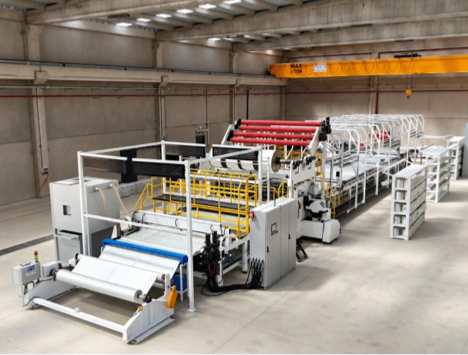
With its fully programmable 0°–180° weft-angle capability, BTU-GMAX enables manufacturers to produce a wide range of multiaxial fabric architectures, mainly glass, aramid, carbon fabrics for composite industries, on a single platform. Operators can select new production angles directly from the interface without lengthy mechanical adjustments.

BTU-TECH PictureOne of the system’s key innovations is its ability to calculate weft paths directly on the industrial motion controller in real time. New production parameters can be applied within seconds without external computer software, CAM table generation, or a machine restart. This significantly reduces setup times and increases machine availability.

BTU-GMAX uses a heavy-duty trigger-belt-driven carrier architecture instead of conventional rack-driven systems. The design reduces wear and noise, improves positional accuracy, prevents jump-offs at high speed, and simplifies maintenance.

Built on BTU-TECH’s proprietary PC-free automation platform, the system combines real-time weft-curve calculation, automatic carrier synchronization at every production start, and electronic collision prevention. Integrated laser safety barriers dynamically monitor operator positioning, while Industry 4.0 connectivity allows production data and machine parameters to be transferred to ERP systems and factory networks via industrial communication protocols.

BTU-TECH Managing Partner Burçin Pak commented:

“Manufacturers have traditionally faced a choice between basic entry-level machines with limited flexibility and premium platforms requiring significantly higher investment. We developed BTU-GMAX to eliminate this compromise. Our goal was to combine premium production flexibility, advanced automation and ease of operation with an investment level comparable to entry-level alternatives.”

Developed entirely by BTU-TECH, BTU-GMAX brings together the company’s proprietary software, automation, motion-control, and mechanical-engineering technologies in a single production platform. After power-up, the machine boots, initializes, and self-calibrates in less than 10 seconds.

BTU-GMAX supports 380–480 VAC, 110–240 VAC, and 50–60 Hz power systems. Its electrical and hardware architecture has been designed in accordance with international CE compliance requirements, supporting straightforward deployment worldwide.

Optional add-ons—including a glass-fiber roving chopper, the BTU-TECH All-in-One Winder and a hook- pin break-detection system—allow the line to be configured for different production requirements.

Posted: October 8, 2026

Source: BTU-TECH

Teijin Frontier And Asahi Kasei Advance Complete Business Integration And Launch TA Frontier Co., Ltd.

TOKYO — October 1, 2026 — Teijin Frontier Co., Ltd., and Asahi Kasei Advance Co., Ltd., completed the integration of their business operations effective today, and have launched the new entity as TA Frontier Co., Ltd.

This integration combines the customer bases and business platforms that the two companies have developed, with the goals of building greater competitiveness, responding more effectively to rapidly changing market conditions and achieving sustainable growth.

TA Frontier, the new integrated company, embraces a corporate philosophy of “Creating new value that contribute to a healthy environment and a prosperous future.” It will provide solutions from textiles and apparel to industrial materials, construction materials and resin products that help address challenges in daily life and business across a wide range of industries.

“Through this business integration, we have taken a new step forward as TA Frontier Co., Ltd,” stated Susumu Kamata, President and Chief Executive Officer of TA Frontier. “By bringing together the experience, technologies and expertise cultivated by both companies, we will deliver products and services with even greater added value to address the diverse challenges faced by our customers. We will strive to become an attractive company that continues to earn the trust of our customers and society by responding to their changing needs and taking on the challenge of creating new value.”

Company Overview

Company Name TA Frontier Co., Ltd.
Representative President and Chief Executive Officer: Susumu Kamata
Head Office Location Nakanoshima Festival Tower West, 2-4, Nakanoshima 3-chome, Kita-ku, Osaka 530-8605, Japan
Principal Business Activities Manufacture, processing, sale and import/export of polyester and other yarns and staple fibers, textiles, apparel, automotive materials, chemicals, construction and interior materials, industrial materials and consumer products, etc.
Capital JPY 2.0 billion
Shareholders and Shareholding Ratios Teijin Limited, 80%; Asahi Kasei Corporation, 20%
Number of Employees Non-consolidated: 1,373 employees

(consolidated: 6,281 employees)

Website https://tafrontier-grp.com/english/

Posted: October 8, 2026

Source: Teijin Group

Chloris Strengthens Commercial Readiness Of Claessen Blue™ Through An Integrated Verification Framework

Chloris Colors logoWEST JORDAN, Utah — September 23, 2026 — Chloris is strengthening the commercial readiness of its flagship bio-based dye, Claessen Blue™, through a growing international verification framework covering bio-based origin, traceability, responsible chemical management and textile application.

Rather than treating individual certifications as standalone credentials, Chloris has organized them around the key questions brands, mills and manufacturers need to address when evaluating a new material.

Bio-based Origin — USDA BioPreferred® and OK biobased provide independent verification of bio-based carbon content, supporting clear and credible renewable-material claims.

Traceability — ISCC PLUS extends verification into renewable feedstocks and chain-of-custody traceability, connecting material sourcing with industrial production.

Chemical Safety — ZDHC MRSL Level 3 and OEKO-TEX® support chemical management and textile chemical safety requirements relevant to global sourcing and manufacturing.

Application Approval — GOTS Approved Input supports the use of Claessen Blue™ within GOTS-certified textile processing, subject to applicable requirements.

In parallel, Chloris uses Life Cycle Assessment (LCA) as a separate layer of quantitative environmental evidence.

While certification verifies attributes, processes and compliance pathways, LCA evaluates environmental performance within defined life-cycle boundaries. This provides brands and supply-chain partners with measurable evidence across relevant environmental indicators and helps translate sustainability from a material claim into data that can inform sourcing and ESG decisions.

Together, these elements create an increasingly integrated evidence framework around Claessen Blue™ — from renewable origin and traceability to chemical management, textile application and quantified environmental performance.

Produced through microbial fermentation using renewable feedstocks, Claessen Blue™ has been developed with three priorities in parallel: sustainability, product performance and commercial scalability.

For brands, mills and manufacturers seeking lower-impact color solutions, the objective is straightforward: make bio-based color not only innovative, but increasingly verifiable, usable and ready to scale.

Posted: October 8, 2026

Source: Chloris Colors

Sponsors