Material-Tech Startup BRCĒ From Michigan State Takes Home Grand Prize At Rice Business Plan Competition

HOUSTON — April 14, 2026 — BRCĒ is a material-tech startup replacing failure-prone textiles with polymer composites engineered for strength, fire resistance and intrinsic stability. Its patented Lattice-Grip technology enables directional grip and controlled tension at the yarn level, eliminating slippage and performance loss under extreme conditions. The recent “Shark Tank” participant won over judges during the Rice Business Plan Competition (RBPC) and walked away with 11 prizes totaling $611,500.

BRCĒ, a material-tech startup from Michigan State University, won 11 prizes at the annual Rice Business Plan Competition in Houston, Texas.

In his winning remarks, BRCĒ’s co-founder and CEO Madhav Aggarwal credited watching a fellow Michigan State University alum win the 2024 RBPC as the spark for his own entrepreneurial journey. After seeing that, the team began competing in smaller competitions to sharpen their pitch and build momentum with the goal of ultimately making it to the “Super Bowl of Student Entrepreneurship” at Rice.

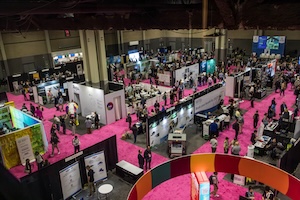
This year’s RBPC saw 42 startups compete for more than $1.3 million in investment and nondilutive cash prizes and an additional $110,000 in in-kind value April 9-11 at Rice University and in Houston’s Ion District. The RBPC is the world’s largest and richest intercollegiate graduate student startup competition, hosted annually by the Rice Alliance for Technology and Entrepreneurship and presented by Rice Business. The event serves as a global stage for emerging ventures from leading universities — this year’s invited startups represented 39 universities from four countries.

The 26th annual competition brought together more than 300 angel investors, venture capitalists, corporate leaders and entrepreneurial ecosystem partners, creating an unmatched environment for investment, mentorship and connection. Teams pitched their cutting-edge solutions in categories, including energy, cleantech and sustainability; life sciences and health care; hard tech; digital enterprise; and consumer products. Read more about the competing startups.

“The Rice Business Plan Competition has grown into far more than a competition — it’s a proving ground for founders and a catalyst for real company formation, as well as a catalyst for building the Houston entrepreneurial ecosystem,” said Brad Burke, associate vice president of Rice Innovation and executive director of Rice Alliance. The 2026 competition marks Burke’s final RBPC, capping nearly 25 years of leadership and impact on the global startup ecosystem.

“The level of talent and ambition we see each year continues to raise the bar,” said Catherine Santamaria, director of the RBPC. “What makes RBPC truly special is the depth of engagement from our judges and partners, who provide meaningful feedback and connections that help founders move their companies forward.”

The student entrepreneurs gain real-world experience pitching their startups, enhancing their business strategy and learning what it takes to launch and scale successfully. The competition always includes an elevator pitch competition, practice round, semifinals and wildcard and final rounds. Between pitches, RBPC teams enjoyed networking and mentorship opportunities, gaining applicable knowledge for their startups. In addition to competing for investments, cash and in-kind prizes, these graduate students gain invaluable advice from investors on how to secure funding, raise awareness and launch a successful venture. To learn more about the 2026 RBPC, visit rbpc.rice.edu.

Based on the judges’ overall scores, the seven finalists were:

  • BRCĒ, Michigan State University — first place and the $200,000 Goose Capital Investment Grand Prize with a total of $611,500 in prizes.
  • Legion Platforms, Arizona State University — second place and the $100,000 Investment Prize sponsored by Jon Finger, Finger Interests; David Anderson, the Anderson Family Fund at the Greater Houston Community Foundation; and Nancy Chang, with a total of $535,500 in prizes.
    • Legion Platforms is building accessible 3D online games designed to run seamlessly on low-powered devices and slow internet connections. Powered by its proprietary game engine, users can instantly access games via browser or mobile without downloads.
  • Imagine Devices, University of Texas at Austin — third place and the $50,000 Investment Prize sponsored by Jon Finger, Finger Interests; David Anderson, the Anderson Family Fund at the Greater Houston Community Foundation; and Nancy Chang, with a total of $111,000 in prizes.
    • Imagine Devices is developing Trinity Tube, a multifunctional nasogastric feeding tube. By consolidating multiple devices into a single integrated solution, Trinity Tube enhances respiratory monitoring, reduces device burden and supports safer, more efficient care for premature infants in the NICU.
  • Altaris MedTech, University of Arkansas — fourth place and the $5,000 cash prize sponsored by Norton Rose Fulbright with a total of $16,000 in prizes.
    • Altaris MedTech is improving pediatric diagnostics. The first product, Strep-Detect, replaces traditional throat swabs with a spray-based method that causes infections to fluoresce under blue light.
  • Routora, University of Notre Dame and University of Texas at Austin — fifth place and the $5,000 cash prize sponsored by Chevron Technology Ventures with a total of $15,500 in prizes.
    • Routora is an AI-powered platform transforming how cities and small businesses manage inspection operations. Its software automates scheduling, assignment and route optimization, replacing inefficient manual planning tools.
  • DialySafe, Rice University — sixth place and the $5,000 cash prize sponsored by ExxonMobil with a total of $15,500 in prizes.
    • DialySafe is an AI-powered remote patient monitoring platform designed to detect peritonitis in home dialysis patients earlier and more accurately. Its proprietary magnetic induction spectroscopy sensor clips onto existing tubing to identify infection biomarkers without fluid contact.
  • Arrow Analytics, Texas A&M University — seventh place and the $5,000 cash prize sponsored by Shell Ventures with a total of $16,000 in prizes.
    • Arrow Analytics is improving air travel efficiency with an autonomous baggage tracking, counting and sizing platform. Using depth cameras and spatial AI at airport gates, the system helps airlines reduce boarding delays, optimize cabin storage and enhance the passenger experience.

Additional significant prizes and the winning teams are:

  • $200,000 Goose Capital Investment Prize — Legion Platforms, Arizona State University
  • $100,000 The OWL Investment Prize — BRCĒ, Michigan State University
  • $100,000 The OWL Investment Prize — Legion Platforms, Arizona State University
  • $100,000 Houston Angel Network Investment Prize — BRCĒ, Michigan State University
  • $100,000 The Indus Entrepreneurs (TiE) Texas Angels Investment Prize — Legion Platforms, Arizona State University
  • $75,000 The Indus Entrepreneurs (TiE) Texas Angels Investment Prize — BRCĒ, Michigan State University
  • $50,000 nCourage Investment Network’s Courageous Women Entrepreneur Investment Prize — BRCĒ, Michigan State University
  • $25,000 New Climate Ventures Sustainable Investment Prize — BRCĒ, Michigan State University
  • $25,000 Pearland EDC Spirit of Entrepreneurship Cash Prize — Imagine Devices, University of Texas at Austin
  • $25,000 Pearland EDC Spirit of Entrepreneurship Cash Prize — Legion Platforms, Arizona State University
  • $25,000 Southwest National Pediatric Device Consortium Pediatric Device Cash Prize — BiliRoo, University of Michigan
  • $25,000 Amentum and WRX Companies Rising Stars Space Technology and Commercial Aerospace Cash Prize — BeamFeed, City University of New York
  • $25,000 The Eagle Investors Investment Prize — Imagine Devices, University of Texas at Austin
  • $20,000 Aramco Innovator Cash Prize — BRCĒ, Michigan State University
  • $20,000 Aramco Innovator Cash Prize — Grapheon, University of Pittsburgh
  • TMC Innovation Healthcare Accelerator Bootcamp Invitation Prize — NerView Surgical, McMaster University

A total of $75,000 in in-kind legal services were awarded to all finalists with the Baker Botts Prize. The grand prize winner receives a chief financial officer consulting prize worth $40,000. The full list of winners and prizes can be found at rbpc.rice.edu.

Posted: April 14, 2026

Source: Rice University

Techtextil Frankfurt: NILIT Introduces Breakthrough Performance Fabrics Specially Engineered For Workwear

FRANKFURT, Germany— April 14, 2026 — Workwear today must be expertly crafted not only to last a long time but also to enhance the wearer’s comfort, performance, appearance, and well-being. With deep roots in athleticwear, outerwear, and fashion apparel, NILIT brings all these aspects together in a full range of technical fabrics and garment concepts designed specifically for the workwear market. These remarkable fabrics, created by the best mills, will be on display at Techtextil Frankfurt.

SENSIL’s high-performance fabrics for workwear enhance worker productivity, mental and physical comfort, and overall well-being.

“The workwear market requires well-designed, multi-functional apparel that not only handles the demands of the workplace but supports the wearer with technical features that contribute to productivity, mental and physical comfort, and overall wellness,” says Sagee Aran, NILIT’s Chief Commercial Officer.

Marketed under NILIT’s SENSIL® brand, the new fabric collection features innovative technologies that provide thermal and moisture management, odor control, muscle support, and abrasion and tear resistance. In addition, SENSIL® products are all responsibly manufactured and offer sustainability benefits to improve circularity in compliance with emerging regulations in countries around the world.

“While NILIT has always served the workwear market, we are now leveraging our proven expertise in athleticwear and fashion apparel into new workwear concepts that truly stand out for excellent performance, aesthetics, and durability,” continues Aran.

The new workwear fabrics and garment concepts will be on display in NILIT’s booth as well as presented by mill partners at Techtextil including Concordia, Getzner, Edelweiss, Alto Milanese, FOV, IBQ, and Sofileta. The new fabrics are ideal for workwear designed for applications such as corporate uniforming, hospitality, food service, construction, manufacturing, agriculture, first responders, and military.

Posted: April 14, 2026

Source: NILIT

LYCRA® VintageFX Fiber Officially Launches At Kingpins Amsterdam

WILMINGTON, Del. — April 14, 2026 — The LYCRA Company, a global supplier of fiber and technology solutions for the apparel industry, today announced the global launch of LYCRA® VintageFX fiber at Kingpins Amsterdam, April 15-16. This next-generation fiber delivers the authentic look of vintage denim in modern silhouettes while providing the comfort, fit and shape retention that consumers expect from stretch denim.

LYCRA® VintageFX fiber officially launches at Kingpins Amsterdam, April 15–16. The LYCRA Company’s latest innovation delivers the authentic look of heritage denim in modern silhouettes while providing the comfort, fit, and shape retention that consumers expect from stretch denim.

Designed for denim and woven fabrics, LYCRA® VintageFX fiber sets a new performance benchmark, enabling brands and mills to recreate rigid, heritage-inspired looks without sacrificing recovery, durability, or wearer comfort. This innovation responds to the industry’s shift toward away-from-the-body silhouettes and looser fits—including wide-leg, flares, boyfriend, and mom jeans—where maintaining fit and stability remains a challenge, particularly in the waist, hips and crotch.

“After previewing LYCRA® VintageFX fiber at Kingpins Amsterdam last year, we’re excited to officially introduce it to the global denim community,” said Ebru Ozaydin, product category director – denim and ready-to-wear at The LYCRA Company. “For brands and garment makers, its dual-core yarn construction, low growth, and high recovery open new design possibilities. These features enable compact, less bulky fabrics with an authentic vintage appearance, but without the instability of traditional low-stretch constructions.”

A New Standard in Comfort Stretch Denim

Engineered with a proprietary and patent-pending fabric application, LYCRA® VintageFX fiber works in tandem with LYCRA® fiber in a dual-core structure. During finishing, this fiber shrinks under heat, controlling elastic extension, protecting the fiber core, and delivering enhanced shape retention to reduce bagging and sagging. Additional technical benefits include:

  • Low growth and good recovery, even after industrial wash and bleach processes
  • Compact fabric construction for better drape and less bulk
  • Authentic vintage denim aesthetics with soft compression and a gentle-to-the-skin feel
  • Reduced seam slippage for improved garment quality and longer wear life

The result is a fabric solution that supports modern comfort stretch denim, balancing heritage-inspired looks with the needs of contemporary lifestyles. Apparel made with this fiber also qualifies for LYCRA XTRA LIFE® fiber branding at the point of sale, reinforcing garment durability.

Value for Brands and Retailers

“LYCRA® VintageFX fiber enables brands and retailers to deliver a strong consumer value proposition, filling a critical market gap while elevating collections,” said Arnaud Ruffin, vice president, brands and retail at The LYCRA Company. “This product shows how our commitment to textile innovation supports the value chain with unique, performance-driven solutions.”

LYCRA® VintageFX fiber has passed The LYCRA Company’s rigorous testing protocols, ensuring consistent performance, durability, and quality. Brands and mills can also access co-creation opportunities at LYCRA® Labs, where they can tap into deep technical expertise and collaborative innovation to bring distinctive stretch solutions to market.

Show visitors can also experience sample fabrics and garments made with Renewable LYCRA® fiber, which is made from 70 percent plant-based resources. This spandex supports efforts to reduce the environmental impact of apparel, offering a more sustainable option for denim. LYCRA® ADAPTIV fiber, which offers a second-skin fit and enables size-inclusive denim, will also be on display.

Kingpins’ guests are invited to visit The LYCRA Company’s representatives at stand B10 at the SugarFactory in Amsterdam. To schedule a meeting at the show or learn more about LYCRA® VintageFX fiber, visit: https://www.lycra.com/en/business/events/kingpins-amsterdam

Posted: April 14, 2026

Source: The LYCRA Company

iNTERSPARE Presents Latest Developments And Upgrade Solutions For Technical Textile Finishing At Techtextil

REINBEK, Germany — April 14, 2026 — iNTERSPARE Textilmaschinen GmbH will present its latest solutions for technical textile finishing at Techtextil 2026 in Frankfurt (VDMA joint stand, Hall 12 / Stand C55A). The focus will be on further developments within the Krantz, Artos and Babcock (BTM) product lines, in particular the Krantz K30 stenter as well as the reintroduction of the Artos Vari-Flex foulard. The presentation will be complemented by modular solutions for upgrading existing installations and new approaches in automation and digitalization.

iNTERSPARE Managing Director Dirk Polchow in front of a Krantz Syncro shrink dryer ready for delivery

A key focus lies on adapting existing machinery to current requirements in terms of efficiency, process stability and regulatory compliance.

“The modernization of existing machinery is one of our central topics at Techtextil 2026,” says Managing Director Dirk Polchow. “This includes all forms of EMU – expansion, modernization and upgrading – with a particular emphasis on automation, control and drive technology. Increasing digitalization is creating new requirements, for example through the EU’s Cyber Resilience Act. Techtextil provides an ideal platform to discuss these topics together with our customers.”

Technical textile finishing: increasing demands on processes and materials

Technical textiles are evolving dynamically, driven by new material concepts, rising functional requirements and increasing pressure for sustainability. One current trend is the growing use of natural fibers. At the same time, functional finishes based on chemical treatments are gaining importance, for example to provide UV protection, thermal insulation or insect protection in workwear and protective clothing. These developments increase the demands on drying processes, which must be both gentle and highly precise while maintaining energy efficiency. This is where the Krantz K30 stenter comes into play.

Krantz K30 stenter: efficiency and process stability by design

The K30 stenter is designed to meet the complex requirements of technical textile finishing, particularly with regard to fabric handle, abrasion resistance and durability. Key features include high throughput with reduced energy consumption, consistent product quality, minimized downtime and low maintenance requirements.

The Econ-Air airflow system (Babcock patent), in combination with Star-Jet or Convey-Air nozzles, ensures uniform distribution of air and temperature across the entire fabric width. This enables reproducible drying processes and stable results in subsequent processing steps. Another advantage is the proven Krantz chain system with its robust cast design, ensuring low wear and smooth operation. This reduces downtime and enables low-tension fabric transport even at high production speeds.

“Our engineering solutions show their strengths particularly with demanding materials,” says Polchow. “Techtextil offers the opportunity to discuss specific requirements with partners along the entire textile value chain and to develop solutions together.”

EMU: focus on upgrading existing installations

iNTERSPARE offers modular solutions to ensure the long-term, economical operation of existing installations by adapting them to new requirements. The focus is on measures for expansion, modernization and upgrading (EMU), particularly in control and automation systems. Typical retrofit measures include replacing existing Siemens S5 systems with globally available VIPA controllers, which remain programmable in Step 7 and compatible with Siemens tools. At the same time, “Masterdrive” frequency converters are replaced with durable Lenze modules, and industrial PCs are substituted with robust Siemens Comfort Panels using SD card technology. Adjustments are also possible in heating systems, for example switching between thermal oil and gas heating based on existing design data.

“EMU measures are economically viable in many cases,” Polchow emphasizes. “Rising energy costs and improved machine availability significantly reduce payback periods.”

Artos Vari-Flex: flexible solution for dyeing and finishing

With the Vari-Flex, iNTERSPARE is reintroducing a proven dyeing foulard from the Artos product line. The machine is designed for a wide range of applications in the dyeing and finishing of woven and knitted fabrics and offers high flexibility and process stability.

A precisely engineered pneumatic system allows a wide range of settings for liquor application and ensures uniform dyeing results. At the same time, deviations from upstream processes can be compensated. The compact design and stainless-steel construction ensure long service life. The Vari-Flex is low-maintenance, easy to operate and can be seamlessly integrated into existing stenter lines.

“Many of our customers value the performance of Artos technology,” says Polchow. “With the Artos Vari-Flex, we are responding directly to this demand.”

International demand for Krantz technology

In recent years, iNTERSPARE has further strengthened its position as a manufacturer of textile finishing machinery. Recent projects include a major order from India for four 8-field Krantz K30 stenters and three Krantz Syncro shrink dryers, followed by additional orders from Asia.

iNTERSPARE Textilmaschinen will exhibit at the VDMA joint stand in Hall 12 / Stand C55A and looks forward to welcoming visitors.

Posted: April 14, 2026

Source: iNTERSPARE Textilmaschinen GmbH

Archroma Showcases Innovations Delivering Performance Without Compromise At Techtextil 2026

PRATTELN, Switzerland — April 14, 2026 — Archroma, a supplier of specialty chemicals, is bringing a full suite of advanced solutions to Techtextil 2026 to help technical textile manufacturers achieve cutting-edge functionality with optimized productivity and enhanced sustainability.

The leading international trade fair for technical textiles and nonwovens, Techtextil 2026 is being held in Frankfurt, Germany from April 21 to 24. Underscoring the important contribution of chemicals and dyes to the sector, these will be presented in Hall 9.0, where Archroma will showcase breakthrough product innovations for every major technical textile segment.

“Mills and brands across the fast-growing technical textiles market are being squeezed between rising performance requirements, stringent sustainability commitments and tightening regulations. Archroma’s innovations tackle multiple challenges at the same time, so you can achieve premium functionality without compromise,” Dhirendra Gautam, Vice President Commercial, Archroma, said.

Visitors to Techtextil will be able to explore a range of Archroma technologies for technical textile segments including:

  • Outdoor and Active Wear: The outdoor and active wear market demands that sustainability, durability and comfort coexist – and, increasingly, that these attributes are verifiable. Archroma’s portfolio for this segment covers every requirement. At Techtextil 2026, it will present: PHOBOTEX® NTR-50 LIQ for non-PFAS durable water repellency with a partially bio-based profile; water-based LANASET® XKS acid inks and NOVACRON® ADVANCE reactive inks for outstanding coloristic performance on natural fibers, polyamide and blends; and TERASIL® XKS disperse inks for high-speed printing on polyester fabrics.
  • Workwear and Uniforms: Protective workwear must stay comfortable and perform well under the toughest conditions, while maintaining its integrity through multiple washes. NYLOFIXAN® PA LIQ C delivers outstanding fastness without phenolic compounds for polyamide fabrics and blends. SILIGEN® D2W LIQ C is the industry’s first truly durable hydrophilic silicone softener for cellulosic and cotton-lycra blended knits, that helps in extending the fabrics’ elasticity during its use. AVITERA® GENERATION NEXT and PHOBOTEX® R-ACE bring resource-saving dyeing and robust non-PFAS water repellency respectively. For military  camouflage applications, Archroma’s updated TOUGH CAMO concept is a water-based, Oeko-Tex (Class II) compliant* pigment printing system that meets exacting requirements for infrared reflectivity combined with high rubbing and light fastness at wash durability levels comparable to traditional vat-printed fiber blends. It includes ready-to-use HELIZARIN® ULTRA-FAST PLUS PA paste for high-speed pigment printing.
  • Nonwovens: For many nonwovens applications (filtration, building, automotive, apparel and furniture), mechanical properties, durability and regulatory compliance must be achieved together. Archroma’s APPRETAN® family of formaldehyde-free* binders eliminates the long-standing compromise of achieving superior performance levels without formaldehyde release during processing and use-life. APPRETAN® FFX6750 LIQ delivers high-performance bonding, APPRETAN® FFX6270 LIQ is designed for applications where soft handfeel is a priority, and APPRETAN® FFX1540 LIQ & APPRETAN® FFX1670 LIQ provide maximum hydrophobicity and durability in severe environments.
  • Automotive and Transportation: Automotive buyers demand interiors that provide comfort, durability and aesthetic appeal, but safety and compliance can never be compromised. An example is Archroma’s FADEX® HLF-S which features high sublimation-fast UV absorber that meets these demands and supports the move to sustainable manufacturing.

Sustainable performance finishes

Brands and mills navigating PFAS restrictions, tightening sustainability standards and growing consumer scrutiny need solutions they can prove, not just claim. Archroma’s High IQ® lastingrepel program provides independent assurance that qualifying treatments meet common performance standards while delivering robust, durable water repellency. Archroma’s licensed brand assurance program allows enrolled mill and brand partners to utilize hangtags that differentiate defined platforms designed for optimum durability from platforms that can be washed without the need of a tumbler drying.

Archroma is expanding its range of sustainable solutions further. In a new partnership with HeiQ, Archroma is combining its global reach and application expertise with HeiQ’s innovative antimicrobial and non-biocidal odor-control technologies – including silver-based HeiQ Pure™, metal-free silane-quat based HeiQ Life™ AD/AE and plant-based HeiQ Fresh™ platforms. These solutions deliver evidence-backed protection against malodors and finished fabrics retain their breathability and softness through repeated washing.

A complete system from sizing to finishing

Underpinning every segment at Techtextil is Archroma’s SUPER SYSTEMS+ platform — powerful end-to-end systems combining fiber-specific processing solutions and intelligent effects. Drawing on the industry’s broadest product portfolio, SUPER SYSTEMS+ guides mills and brands from sizing to finishing, delivering measurable resource savings, cleaner chemistries that eliminate harmful or regulated substances, and durable functional effects.

Meet the Archroma team at Techtextil 2026

The leading international trade fair for technical textiles and nonwovens, Techtextil is held biannually in Frankfurt. Attracting more than 35,000 visitors from 94 countries in 2024, the event is expanding in key future sectors this year and celebrating the synchronicities that happen when the entire cross-industry value chain comes together.

Visit Archroma at Booth D41 in Hall 9.0 at Messe Frankfurt for Techtextil from April 21 to 24, 2026.

Posted: April 14, 2026

Source: Archroma

Textiles Recycling Expo USA Arrives In Just Two Weeks As North America’s First Dedicated Textile Recycling Event

CHARLOTTE, N.C. — April 14, 2026 — With just two weeks to go, anticipation is building for the launch of Textiles Recycling Expo USA, the first dedicated exhibition and conference focused entirely on textile recycling in North America, taking place on April 29–30, 2026 at the Charlotte Convention Center.

Registration is free and available here: https://events.amiplastics.com/textiles-recycling-expo-usa

This landmark event will bring together 95+ exhibitors and 50+ expert speakers from across the global textile value chain, showcasing the technologies, strategies, and innovations driving the future of textile circularity.

Across two packed days, visitors can expect:

  • A large-scale exhibition featuring the latest textile recycling technologies and solutions
  • A high-level conference program addressing regulation, innovation, and industry challenges
  • Direct access to global decision-makers across brands, recyclers, policymakers, and technology providers
  • Practical insight into scalable approaches to reducing textile waste and advancing circularity

As the final countdown begins, the Expo represents a major milestone for the industry. With registration completely free, now is the time for professionals across the textile, recycling, waste, apparel, footwear, and sustainability sectors to secure their place and take part in this first-of-its-kind gathering.

This is a unique opportunity to see the sector’s most important conversations, technologies, and partnerships come together under one roof – and to be part of shaping what comes next.

Event Details: 
Textiles Recycling Expo USA
April 29–30, 2026
Charlotte Convention Center, North Carolina

Register for free: https://events.amiplastics.com/textiles-recycling-expo-usa

Posted: April 14, 2026

Source: AMI – Applied Market Information Ltd.

Santini And Polartec Introduce The New Aero Race Jersey Featuring Polartec® Power Dry™ With Recycled Carbon: Turning Carbon Emission Into Aerodynamic Performance

SPARTANBURG, S.C. — April 14, 2026 — Santini Cycling and Polartec, a Milliken & Company brand, announce the launch of the new AERO RACE jersey, a high-performance cycling garment that combines advanced aerodynamic engineering with next-generation textile innovation. Developed through a close collaboration between the two brands, the jersey represents a new approach to performance cycling clothes where sustainability and speed evolve together.

Santini will be the leading brand in 2026 to adopt the new Polartec® Power Dry™ with Recycled Carbon technology, becoming the only cycling brand in Europe and North America to use it.  This further underscores the distinctive value of the partnership between Polartec and Santini.

At the core of the AERO RACE Jersey is Polartec® Power Dry™ with Recycled Carbon, an innovative fabric created through a carbon capture process that converts industrial CO₂ emissions into high-performance recycled polyester yarns. This next-generation technology marks a new frontier in material innovation, reducing environmental impact while maintaining elite performance.

Polartec® Power Dry™ with Recycled Carbon reflects a revolutionary carbon capture process that intercepts industrial CO2 emissions before their release into the atmosphere and converts them into recycled polyester fibers, which are then used to knit the innovative Polartec® fabric. Engineered at 128 g/m² and optimized for efficiency, Polartec® Power Dry™ with Recycled Carbon features yarns made with 91% recycled carbon content, reinforcing Polartec’s commitment to responsible material innovation without compromising technical excellence and overall performance. As a result, it ensures optimal breathability and thermoregulation during high-output activities, while significantly reducing environmental impact and helping support a future economy where greenhouse gases are transformed into new garments.

By transforming greenhouse gases into a technical fabric that enhances both performance and environmental progress, Polartec and Santini have reduced the carbon footprint of the new AERO RACE jersey by up to 66% compared to equivalent garments made from virgin polyester*, without sacrificing the comfort, durability, and technical precision demanded by enthusiasts.

The AERO RACE jersey is the first commercial application of this fabric technology.

Tested and refined in a wind tunnel, the AERO RACE jersey is built to maximize aerodynamic efficiency. Its construction features strategically placed rear panels that create a second-skin fit, adapting seamlessly to the rider’s body to reduce drag. The sleeves play a key role; thanks to a specialized striped structure, they are designed to optimize airflow through Vortex Generation. This technology enhances the vortex effect, reducing aerodynamic drag for unprecedented performance.

Breathability and thermoregulation are ensured by the lightweight (128 g/m²) Polartec® Power Dry™ fabric, which efficiently manages moisture during intense efforts. The jersey is completed with a full elastic hem with silicone grip for stability, raw-cut sleeves for enhanced comfort, and three rear pockets designed for practicality during rides.

“For decades, Polartec has demonstrated that innovation and responsibility are shared objectives and Polartec® Power Dry™ with Recycled Carbon is yet another step in this direction,” said Ramesh Kesh, SVP, Polartec and Apparel Innovation. “Our ability to transform captured carbon into performance-driven Polartec® fabrics shows how we can reimagine materials to reduce impact while empowering athletes to perform without distraction.”

“The Santini AERO RACE jersey represents what’s possible when advanced material science meets real-world performance demands,” said Karen Beattie, Director of Product Management at Polartec. “Polartec® Power Dry™ with Recycled Carbon has enabled us to engineer a process that turns captured carbon into a cutting-edge fabric that performs at the highest level to support both the athletes and the planet.”

“We started by looking at how cycling is evolving and what that means for the products we create,” added Fergus Niland, Creative Director at Santini. “Working with Polartec, we have been able to push boundaries and create a high-performance, recycled carbon material that actually works on the bike. The AERO RACE jersey reflects our joint determination to do just that. It has been tested by professionals, built for cyclists and designed to deliver on performance, comfort, and a new standard of responsibility.”

Available in three colorways and featuring a unisex fit, the AERO RACE jersey is designed to meet the needs of a wide range of riders, from competitive athletes to performance-focused enthusiasts.

*Calculation based on a comparison of CO2 savings from captured carbon polyester fiber to virgin polyester fiber. Jersey construction is based on a fabric weight 128g/m2, at 175cm wide, and a yield of 1.75yards per. The recycled carbon yarn is 91% of the content by weight.

Posted: April 14, 2026

Source: Polartec®, a Milliken & Company brand / Santini Cycling

Innovation As The Answer: Techtextil And Texprocess (Frankfurt) Honour Solutions To Global Challenges With The 2026 Innovation Awards

FRANKFURT AM MAIN, Germany — April 14, 2026 — The winners of the Techtextil and Texprocess Innovation Awards 2026 have been announced. Across ten categories, 17 international winners are being recognized for pioneering research, innovative products and materials, as well as new processes and technologies.

These innovations provide solutions far beyond the textile industry – including sectors such as automotive, aerospace, medical, architecture, construction and robotics.

The awards ceremony takes place on 21 April at Techtextil and Texprocess in Frankfurt. From 21 to 24 April, there is a winners’ exhibition as well as guided tours.

The textile industry and many of its application sectors face unprecedented challenges – the winners of the Techtextil and Texprocess Innovation Awards 2026 provide solutions: How do textile innovations open up new, smart and sustainable applications for aircraft, cars, humanoid robots, surgical sutures and buildings? How can synthetic textiles become circular? How is AI revolutionising the textile value chain? How can dependence on PFAS and fossil-based chemicals be reduced and textile production further automated? The 17 winners of the Techtextil and Texprocess Innovation Awards 2026 provide answers to these and other key questions about the future. They were selected by two renowned expert juries. Their in-depth expertise ensures a reliable evaluation and highlights innovations with particular potential for future growth and transformation.

“We are thrilled by the extraordinary breadth of ideas. They demonstrate that textile innovations are driving forces across numerous industries. At the same time, these new developments are strengthening the future viability of the textile industry. The winners are more international than ever, which confirms the global relevance of our leading trade fairs,” says Sabine Scharrer, Director Brand Management Technical Textiles & Textile Processing at Messe Frankfurt.

Techtextil Innovation Award 2026

Two winners in the ‘New Concept’ category

Northern Lights instead of chemicals: finishing textiles without PFAS

Per- and polyfluoroalkyl substances (PFAS) give technical and outdoor textiles water-, oil- and stain-repellent properties. However, these so-called ‘forever chemicals’ are facing regulatory pressure worldwide due to their environmental and health risks – ranging from EU-wide restrictions to national bans. “EC0Tex” demonstrates that the textile industry is working intensively on PFAS-free finishing alternatives. With the new process, both inelastic and highly elastic yarns can be finished to be permanently water-repellent and quick-drying without the use of PFAS or fresh water. For this, the Swiss yarn manufacturer Bäumlin & Ernst receives a Techtextil Innovation Award 2026 in the “New Concept” category. The patented EC0Tex process is based on a plasma system developed by the project partner Empa (Swiss Federal Laboratories for Materials Science and Technology). It uses dry plasma – a reactive gas that physically resembles the aurora – to coat every single filament of a yarn with an ultra-thin organosilicon layer. This makes the yarns water-repellent and quick-drying – and, at the end of their life cycle, they break down into silicon dioxide, i.e. sand. “EC0Tex demonstrates that a nanometre-thin plasma coating is sufficient to achieve performance properties that were previously the preserve of PFAS,” says Bernd Schäfer, CEO of Bäumlin & Ernst. Over the next twelve months, the EC0Tex project partners Lothos and Seilfabrik Ullmann plan to launch the first PFAS-free swimming and water sports products. Schäfer says: “For us, the Techtextil Innovation Award is a milestone.”

Textile nanotubes for electric cars, humanoid robots and aircraft

Carbon nanotubes (CNTs) are microscopically small cylinders made of carbon atoms with remarkable properties: they are up to 100 times stronger than steel, electrically conductive and feather-light. Their potential is already being harnessed in lithium-ion batteries, electronics and sports equipment. The South Korean nanotechnology company aweXome Ray now aims to make CNTs usable in the textile industry. To this end, the company has developed a special direct spinning process. For the first time, it transforms CNTs – previously available mainly as powders or pastes – into scalable, textile-compatible continuous filaments and non-woven membranes. These can be processed with textile techniques such as twisting, braiding and laminating. For the innovation “axrial”, aweXome Ray is awarded a Techtextil Innovation Award 2026 in the “New Concept” category. “With axrial, we are bridging the gap between nanotechnology and the textile industry and transforming passive textiles into active electronic and thermal functional components,” says Managing Director Se Hoon Gihm. He founded aweXome Ray with two colleagues from a research laboratory at Seoul National University. Potential applications range from on-board electrical systems in electric cars, aircraft and humanoid robots, to EMI shielding, seat heating systems and smart textiles. Initial research collaborations with a major car manufacturer and an aerospace company are already underway. aweXome Ray plans a first mass-production facility up and running by 2028. Techtextil 2026 marks axrial’s official international debut.

Two winners in the ‘New Chemicals & Dyes’ category

Textile printing pastes from waste, not petroleum

CITEVE demonstrates how local waste from the industrial, food and agricultural sectors can be transformed into high-quality, sustainable textile printing pastes for fashion and home textiles. The Portuguese technological centre has developed bio-based (over 94 per cent) and water-based printing pastes as an alternative to petroleum-based formulations. For this work, CITEVE receives a Techtextil Innovation Award 2026 in the “New Chemicals & Dyes” category. The patent-pending pastes are designed to reduce reliance on fossil-based raw materials in textile printing. Instead of conventional petrochemicals, the formulations use binders and thickeners made from biopolymers such as collagen and chitosan, derived from food-industry by-products. The colour pigments are produced through fine mechanical grinding (micronisation) of waste materials such as vine prunings, pine bark and ash from biomass boilers. The resulting particles are smaller than 45 micrometres and are compatible with rotary screen printing, one of the world’s most widely used textile printing methods. “Our pastes are revolutionary because they enable sustainable textile printing by combining environmentally friendly formulations with industrial applicability,” says Augusta Silva, Innovation Manager for Textile Printing and Coating at CITEVE. “The Techtextil Innovation Award validates the excellence of our research.” CITEVE developed this in collaboration with the research centre CeNTI and the company Lameirinho Indústria Têxtil. The print quality achieved with these new textile printing pastes can be experienced at Techtextil, where CITEVE presents the bio-based pastes to an international professional audience for the first time, including examples of printed textile products.

Goodbye PFAS: Textile water repellency at molecular level thanks to agricultural waste

The search for alternatives to PFAS, the so-called ‘forever chemicals’, is one of the most pressing challenges facing the textile industry. In France, the government has already taken action: from January 2026, the sale of apparel containing PFAS will be gradually banned, with other textiles set to follow. An innovative answer to upcoming global bans is provided by the French deep-tech start-up H&B Materials, founded in 2025. For this, it receives a Techtextil Innovation Award 2026 in the “New Chemicals & Dyes” category: a PFAS-free water-repellent textile finish based on fatty acids derived from agricultural waste. The founders Hichem Ichou and Baptiste Andrin had the idea at the CEISAM Research Institute for Molecular Chemistry at Nantes University. “We asked ourselves: what if we could make textiles water-repellent at a molecular level, rather than using traditional coating methods?” explains Ichou. So they developed a patented grafting process: it anchors water-repellent groups of plant-based fatty acids directly to cellulose fibres at the molecular level using ‘mild’ chemistry – the water-repellent protection (lotus effect) thus becomes an integral part of the fibre structure. In spray tests – the industry benchmark for water repellency – this innovation reaches scores of 5 out of 5 on cotton and blended fabrics. Of interest to finishers and manufacturers of technical textiles: the process is compatible with finishing systems such as Foulard and Stenter (plug-and-play). Strengthened by the Techtextil Innovation Award, H&B Materials is planning a seed capital funding round for 2026 to establish an initial industrial pilot line.

Two winners in the ‘New Material’ category

When wood becomes knittable

Every year, 50 to 70 million tonnes of lignin are generated worldwide. The biopolymer, which acts as ‘nature’s glue’ to give plants and trees strength, is produced as a by-product of the paper and pulp industry – and to date, 98 to 99 per cent of it is burned. The German design studio spek Design demonstrates how this potential can be harnessed for sustainable textile materials: “FormLig – Knitted Wood” was developed in collaboration with the German Institutes of Textile and Fibre Research Denkendorf (DITF) and the companies Tecnaro and Buck. The new composite material combines yarns made from renewable raw materials such as cellulose with a lignin coating. It can be processed on knitting machines into flat or tubular knitted fabrics, which are then heated, shaped into individual forms and permanently set. The research group wins a Techtextil Innovation Award 2026 in the “New Material” category for its compostable and microplastic-free “knittable wood”. “FormLig is a material that is unique worldwide, and its potential applications are only just beginning,” says Patrick Sauter, Managing Director at spek Design, which also realises design projects for Mercedes-Benz. Potential applications range from packaging and furniture to forestry and horticulture, for example as a compostable tree guard. “For all project partners, the Techtextil Innovation Award is far more than just a symbolic achievement – it has strategic significance and can be a decisive door-opener, particularly when it comes to sustainable materials,” says Sauter.

Biopolyester combines high performance with biodegradability

In its search for sustainable alternatives to conventional polyester (PET), the textile industry faces a key challenge: how can biodegradability be combined with the performance standards of synthetic fibres and industrial scalability, whilst avoiding microplastics? This is precisely where the Dutch research and development company Senbis Polymer Innovations comes in: Senbis receives a Techtextil Innovation Award 2026 in the “New Material” category for a novel performance biopolyester that combines biodegradability with the properties of synthetic fibres. The award recognises the new product “Mariva”. According to Senbis, this bio-based high-performance polymer for the production of fibres and textiles has properties similar to those of PET and polyamide (PA). At the same time, it is chemically recyclable and biodegradable without producing microplastics. Mariva has been developed to be processed on conventional polyester polymerisation and melt spinning lines (drop-in solution). This enables industrial-scale production. Pilot trials show that Mariva can be spun on standard PET machinery. In April 2026, the Senbis team founded the start-up Mariva Materials and secured investors to develop the first commercial applications in sportswear, functional apparel, footwear, technical textiles and non-wovens. “We are breaking new ground,” says Kasper Nossent, CCO and co-founder of Mariva Materials. “With Mariva, we are creating a new polymer category for textiles for the first time, positioned between PA, PET and polylactic acid (PLA).” Mariva celebrates its exclusive world premiere at Techtextil 2026.

Two winners in the ‘New Product’ category

Bio-based car interiors: wood that behaves like fabric

Wood is rigid – or at least it used to be. The German company NUO manufactures wood-textile composites that combine the aesthetic appeal of wood with the flexibility of textiles. The “wood textiles” are already being used in the interiors of car brands such as Fiat and Renault. Until now, wood veneers – thin decorative sheets of wood – and textiles have been bonded using fossil-based adhesives. In collaboration with the German Institutes of Textile and Fibre Research Denkendorf (DITF), NUO has for the first time developed fully bio-based wood textiles that also meet the stricter sustainability requirements in the automotive industry. NUO receives a Techtextil Innovation Award 2026 in the “New Product” category for its new material, “NUO FlexHolz”. Veneers from sustainable forestry, such as walnut or oak, are bonded with a natural fibre fabric made from hemp. Instead of petroleum-based adhesives, a lignin-based film is used – a by-product of the paper and pulp industry that has so far mostly been burned. The flexibility is achieved through a special lasering process that engraves fine patterns into the wood surface (laser microsegmentation) without damaging the fabric underneath. “The combination of textile research and practical woodworking shows that sustainable materials have long since become more than a niche product,” says Rolf Loose-Leonhardt, Managing Director of NUO and its parent company Schorn & Groh, whose wood veneers feature in Apple Stores and the Elbphilharmonie in Hamburg. NUO FlexHolz is market-ready and, in addition to door panels and consoles in car interiors, could also be used in furniture and interior design. Visitors can experience what it feels like in the special area of the Techtextil Innovation Award in Hall 11.1.

AI-controlled facade: fibre-reinforced facade as a climate protection agent

The building sector is a sleeping giant when it comes to climate protection: According to the United Nations Environment Programme (UNEP), around 34 per cent of global CO2 emissions are attributable to the construction and operation of buildings. The Institute for Textile and Fiber Technologies (ITFT) at the University of Stuttgart demonstrates how this potential can be harnessed with “FlectoLine” – a flexible facade made of fibre-reinforced composite modules. These can be positioned in real time depending on the position of the sun, daylight and temperature, actively improving the energy efficiency of buildings. For this, the ITFT receives a Techtextil Innovation Award 2026 in the “New Product” category. Measurements carried out by the ITFT show: The ‘intelligent’ facade reduces the indoor temperature by up to 8 °C in summer and increases the time in the thermal comfort zone from 25 to 75 per cent – without requiring any additional heating or cooling energy. The system is controlled by AI: it calculates the optimal angle of the 1.5-metre-high FlectoLine modules based on weather data. Integrated photovoltaic cells also generate electricity. “Textiles are playing an increasingly important role in shading and the flexible adaptation of buildings to climatic conditions,” says Matthias Ridder, a research associate at the ITFT. The project also involves the Institute of Building Structures and Structural Design (itke) at the University of Stuttgart, as well as the companies HELLA Sonnen- und Wetterschutztechnik, Jehle Technik and Formfinder Software. An over two-metre-high model of the FlectoLine facade is on display in the Techtextil Innovation Award special area.

Winner in the category ‘New Production Technology, Digitalisation & AI Solutions’

Toxic-free gel spinning: UHMWPE fibres without hexane

Ultra-high-molecular-weight polyethylene (UHMWPE) is regarded as one of the most high-performance fibre materials for technical textiles due to its extreme strength: up to 15 times stronger than steel, it is used to manufacture surgical sutures, body armour, high-strength offshore ropes and cut-resistant gloves. However, production has so far had an environmental drawback: in the traditional gel spinning process, UHMWPE is mixed with oil to form a gel-like mass and processed into fine strands. The oil is then washed out again with toxic solvents such as hexane or dichloromethane. The consumption is enormous: around 100 kilograms of these solvents are required per kilogram of yarn. The British textile machinery manufacturer Fibre Extrusion Technology (FET) has now developed a sustainable gel spinning process for UHMWPE yarns that works without hexane or dichloromethane. Instead, it uses supercritical carbon dioxide (scCO2) – a non-toxic medium that is often a by-product of industrial processes and is already used in the textile industry for waterless dyeing. For this, FET receives the Techtextil Innovation Award 2026 in the category “New Production Technology, Digitalisation & AI Solutions”. According to FET, this marks the beginning of a “new era” in the clean, small-scale production of ultra-high-performance polymer fibres for medical devices, protective equipment and composites. “We are proud that the Techtextil Innovation Award recognises our intensive work. It shows that we are at the forefront of technological developments supporting the textiles of tomorrow,” says FET’s Managing Director, Richard Slack. The “FET-500” plant is in its first commercial phase since the end of 2025. Techtextil 2026 is the first textile trade fair worldwide at which FET presents the new system.

Two winners in the ‘New Recycled Materials & Recycling Technologies’ category

Endless textile recycling with AI and ‘plastic-eating’ enzymes

The world is producing more textile fibres than ever before: in 2024, fibre production reached a record high of around 132 million tonnes. Around 70 per cent are synthetic fibres, primarily polyester and nylon, which are rarely recycled at present. The Australian biotech company Samsara Eco aims to shift the industry away from the linear ‘take-make-waste’ model: it receives a Techtextil Innovation Award 2026 in the ‘New Recycled Materials & Recycling Technologies’ category for its enzyme-based recycling technology ‘EosEco’. The method uses AI-engineered ‘plastic-eating’ enzymes. These break down polyester, nylon 6 and the particularly resistant nylon 6,6 in such a way that new-quality fibres are produced. ‘Whether recycled once or a hundred times – our recycled materials are identical every time,’ says Paul Riley, founder and CEO of Samsara Eco. The backbone of the technology is AI: it ‘designs’ new enzymes, learns from obsolete variants and feeds into a growing enzyme library. In 2024, Lululemon launched its first products made from enzymatically recycled polyester and nylon 6,6. A ten-year contract with Samsara Eco covers around 20 per cent of the brand’s fibre portfolio. Other partners are Nilit and The Lycra Company – the latter with the aim of bringing elastane, the “recycling killer”, into the circular economy. “The Techtextil Innovation Award proves the potential of our technology to create an infinite circular economy for synthetic fibres and helps the textile industry finally move away from the linear ‘take-make-waste’ model,” says Riley.

Start-up cracks chemical recycling code

Less than one per cent of all textile waste worldwide is recycled in textile-to-textile loops. Mixed textiles in particular are often incinerated or disposed of in landfill. Chemical textile recycling holds promise for closed-loop systems – but faces an environmental hurdle: Hydrolysis, one of the most efficient processes for mixed textiles, generates around one tonne of chemical waste salt per tonne of polyester recovered. The reason: recovering the fibre components requires acid, which remains as salt sludge. The German start-up re.solution now replaces this acid step with electricity. This prevents salt waste during the production of circular polyester from mixed textile waste. For this world-first electrochemically assisted hydrolysis, re.solution is awarded a Techtextil Innovation Award 2026 in the “New Recycled Materials & Recycling Technologies” category. According to re.solution, the new process saves 94 per cent of chemicals and 74 per cent of water compared with similar chemical recycling processes. This reduces the carbon footprint by up to 90 per cent compared with the production of virgin polyester. “The Techtextil Innovation Award gives our young team credibility, visibility and a boost in an industry that is currently undergoing fundamental change,” says Amrei Becker, Managing Director and co-founder of re.solution. The start-up is a spin-off from the Institut für Textiltechnik (ITA) and the Aachener Verfahrenstechnik (AVT) of RWTH Aachen University. A semi-industrial plant with a capacity of over one tonne of textile waste per day is set to go into operation in mid-2026 and, according to Becker, is already attracting significant interest from textile collectors, sorters, fashion companies and manufacturers of technical textiles.

Texprocess Innovation Award 2026

Two winners in the category ‘Economic Quality (cost minimisation, time and process optimisation, automation)’

Automated singulation: flow gripper for the ‘supreme discipline’

While the automotive and semiconductor industries have long operated with fully automated production, automation in the textile industry often stops at the multi-layer stack: cut fabric layers – for example for jeans, car seat covers or airbags – are stacked and then manually separated for subsequent steps such as sewing, printing, pressing or laminating. This seemingly simple task of de-stacking is a real challenge for robots: Because textiles are not rigid but flexible, deformable and air-permeable, conventional robotic systems cannot grip them reliably. For a flow gripper that automatically separates fabric layers from a stack, the German company Robotextile receives a Texprocess Innovation Award 2026 in the “Economic Quality (cost minimisation, time and process optimisation, automation)” category. The retrofittable gripper uses air flows to autonomously pick up textiles such as knitted fabrics, non-wovens or woven fabrics and place them in the desired position for further processing. “Moving a piece of fabric automatically from A to B is nothing special,” says Michael Müller, Co-Managing Director of Robotextile. “But reliable automatic singulation is the ultimate challenge.” According to Müller, it is primarily nearshoring, labour shortages and declining robot prices that are driving automation in the textile industry. Robotextile’s automation technology has already been proven in practice: C&A used it to assemble jean pockets. The outdoor brand Vaude, as well as companies in the footwear, medical technology and airbag manufacturing sectors, are also among its users. Combined with a now patented roller mechanism, the gripper is unveiled for the first time at Texprocess.

Freeze gripping of textiles using ice and AI

There are various methods for the automated gripping of textiles, including vacuum, needle and clamping grippers. However, mechanical and pneumatic methods can reach their limits, as they can deform or even damage textiles. The Technical University of Applied Sciences Wildau therefore takes a different approach: freezing. TH Wildau receives a Texprocess Innovation Award 2026 for the “CryoTec” freezing gripper in the category “Economic Quality (cost minimisation, time and process optimisation, automation)”. The system makes use of the adhesive properties of ice: A small amount of water is sprayed onto the fabric, freezes slightly and enables the gripper to adhere evenly to create a full-surface, reversible adhesion. Jörg Reiff-Stephan, Professor of Automation Engineering at TH Wildau and Head of the Institute for Cyber-Physical Production Systems, explains it clearly: “If you touch the wall of a freezer compartment in a fridge, your hand sticks briefly – our gripper ‘sticks’ to the fabric in the same way, based on the same physical principle.” According to Reiff-Stephan, the technology is not fundamentally new. “For the first time, however, CryoTec focuses specifically on the textile material it is gripping.” In addition, the gripper uses an AI-supported control system developed in collaboration with the Institute of Textile Machinery and High Performance Material Technology (ITM) at Dresden University of Technology, as well as the companies IFQ and Automation Uhr. The AI evaluates spray volume, freezing time, temperature profiles and environmental conditions, and automatically adjusts the parameters. CryoTec is set to be rolled out in pilot plants in the near future and could be used in the production of trousers, car seats or panel filters. CryoTec is presented for the first time worldwide as an intelligent gripper at Texprocess 2026.

Winner in the ‘Innovation for Quality Improvement’ category

Fabric inspection: When AI learns to ‘read’ textiles

Visual inspection of textiles is a crucial step in quality management to identify material defects, colour deviations, soiling or structural faults. The Laboratory for Artificial Intelligence in Design (AiDLab) in Hong Kong demonstrates that AI can fundamentally transform the largely manual visual inspection carried out to date. The research laboratory receives the Texprocess Innovation Award 2026 in the category “Innovation for quality improvement” for its AI-powered inspection technology “WiseEye”. The solution uses integrated cameras and self-learning AI. It detects and assesses faults in various textile materials in real time. According to AiDLab, WiseEye achieves an accuracy of around 90 per cent at an inspection speed of 35 metres of fabric per minute. This makes it more accurate than manual visual inspection, which, according to AiDLab, achieves an accuracy of only around 50 to 70 per cent at a speed of around 10 metres per minute. Textile factories in China, Vietnam and Europe are already using WiseEye to inspect woven and knitted fabrics. The solution is also used in apparel production, for example for shirts, trousers, or underwear. Calvin Wong is Centre Director of AiDLab, professor of fashion and, according to a report by Stanford University, one of the world’s most cited researchers (top 1 per cent) in the field of AI and image processing. He explains: “Many textile companies believe that AI can immediately automate the manual inspection of fabrics. However, the introduction of AI in fabric inspection is not a one-off implementation – it is, at the very least, a medium-term learning process for the AI models.” At Texprocess 2026, AiDLab presents the latest version of WiseEye to the European public for the first time.

Winner in the category ‘Ecological Quality (Climate Protection, Energy Efficiency, Sustainability, Recycling, Circularity)’

Monomaterial design thanks to cellulose sewing thread

Even when textile products are made from biodegradable materials, there is a major drawback to their recyclability: Their seams are often made of synthetic fibres such as polyester or polyamide, which prevents them from being mono-material. New eco-design requirements, the Digital Product Passport and extended producer responsibility are further increasing the pressure to design textiles to be fully recyclable. To fill this gap, the thread manufacturer Amann has developed a biodegradable sewing and embroidery thread. For this achievement, the German company is awarded the Texprocess Innovation Award 2026 in the “Ecological Quality (climate protection, energy efficiency, sustainability, recycling, circularity)” category. The new yarn, called “AeoniQ Fil”, is the world’s first sewing and embroidery thread made from the wood pulp-based fibre “AeoniQ”. It is a microplastic-free and biodegradable material made from cellulose, which comes close to synthetic fibres in terms of tear resistance and elasticity. With this innovative yarn, Amann aims to make monomaterial designs for clothing and home textiles viable: “Homogeneous materials right down to the seam are a crucial step towards true circularity,” says Lea Fischer, Product Manager at Amann. “This simplifies recycling processes and end-of-life options.” According to Amann, the new sewing and embroidery thread is about twice as elastic as conventional cellulose-based threads. This results in stronger seams. AeoniQ Fil makes its official market debut at Texprocess.

Two winners in the ‘Digitalisation + AI’ category

Digitising the sample book: fabrics meet 3D and AI

In the apparel industry, sampling and fabric sourcing are key links between design development and mass production. At the same time, they are cost-intensive, time-consuming and generate significant CO2 emissions due to the global shipment of samples. In addition, there is a fundamental visualisation problem: It is difficult to reliably predict how fabrics will look on a finished product based on samples alone. To digitalise and make fabric sourcing more resource-efficient, the German technology company Vizoo has developed the product design tool “CAST”. For this, it receives a Texprocess Innovation Award 2026 in the “Digitalisation + AI” category. CAST combines a camera-light setup with 3D technology and AI. According to Vizoo, it is the first application to combine the digital fabric communication, their simulation on products and an easy-to-use interface: “Simply start the app, select a product, place the fabric on the scanning surface – and the material is projected onto the product,” explains Renate Eder, Managing Director of Vizoo, which describes itself as the global market leader in the digitalisation of fabrics. Integrated AI also generates photorealistic product images in seconds as an alternative to photo shoots. “Our aim is to enable digital material decisions across continents and significantly reduce the resources required for fabric samples that are physically shipped around the world,” says Eder. At Texprocess, visitors can experience CAST first-hand.

AI for automated T-shirt production

With an estimated two billion units produced each year, the T-shirt is one of the most widely manufactured garments in the world – and is still made almost entirely by hand. Against the backdrop of a shortage of skilled labour, requirements for digital traceability and the trend towards relocating production back to Europe, the textile industry is increasingly facing the question: can T-shirts be manufactured automatically in the future? The Portuguese technology centre CITEVE provides an answer with its robot-controlled T-shirt production cell. It combines AI-based gripping with automated sewing. For this, the institute receives a Texprocess Innovation Award 2026 in the “Digitalisation + AI” category. According to CITEVE, the key innovation is AI-powered grip point detection (computer vision pipeline). It identifies fabric pieces directly on the cutting table in real time and calculates the optimal grasp points based on shape, size and material. “Reliably grasping flexible fabric pieces is one of the most challenging unsolved problems in textile robotics,” explains Nelson Rodrigues, robotics team lead at CITEVE. “Our system tackles this problem head-on: if the fabric is gripped at the point calculated by the AI, it retains its shape.” To facilitate integration into existing production processes, CITEVE relies on conventional sewing machines upgraded with advanced technology. First pilot cells in the testing environment are achieving a cycle time of just under 35 seconds per T-shirt. A validation phase with knitwear manufacturers is planned. The project, coordinated by CITEVE, is jointly implemented with the research institutions CeNTI, CCG/ZGDV and INESC TEC, as well as the technology companies ESI Robotics and Mind. At Texprocess, they demonstrate the solution using the example of AI-assisted sewing of tote bags.

Awards ceremony, special exhibition and tours to the winning projects

Under the motto “Celebrating the Best”, the award ceremony for the Techtextil and Texprocess Innovation Awards take place on 21 April 2026 in Hall 9.1. From 21 to 24 April 2026, the winning projects of the Techtextil Innovation Award are on display in Hall 11.1. During guided tours on all days of the fair, the jury members lead visitors to the stands of the winners of the Texprocess Innovation Award. Visitors can experience the exhibits first-hand, learn about their applications and talk directly to the minds behind the innovations.

Background to the Techtextil and Texprocess Innovation Awards

Every two years, Techtextil and Texprocess present the Innovation Awards to recognise groundbreaking developments across the entire textile production process. Two expert juries of renowned experts from science and research select outstanding research findings, products, materials, solutions and technologies. The Innovation Awards are presented for the 18th time in 2026. They serve as a reliable early indicator of developments that will shape the global textile industry – and beyond. They promote cross-sectoral exchange between stakeholders from business, science and politics and support forward-looking collaborations. In doing so, they highlight textile innovations as drivers for numerous industries.

Posted: April 14, 2026

Source: Messe Frankfurt Exhibition GmbH

Bedsure Introduces Cooling Comforters Designed To Help Hot Sleepers Stay Cool And Sleep Better

NEW YORK — April 7, 2026 — Bedsure, an online home textile brand, announced the launch of two new cooling comforters designed to address a common sleep challenge: overheating at night.

Bedsure SleepEase Cooling Comforter Set & Bedsure CoolOxy Comforter 2.0

The Bedsure SleepEase Cooling Comforter Set and Bedsure CoolOxy Comforter 2.0 combine breathable construction, moisture-wicking materials, and airflow-focused design to address common sleep disruptions caused by heat and humidity.

A New Standard in Cooling Bedding

Unlike traditional cooling comforters that provide only a temporary cool-to-the-touch sensation, Bedsure’s latest designs focus on long-lasting temperature regulation, airflow, and moisture control, key factors for improving sleep quality and reducing overheating.

Bedsure SleepEase Cooling Comforter Set: Instant Cooling Meets All-Night Comfort

Engineered to keep sleepers cool from the moment they lie down throughout the night, the comforter features proprietary Rudolf HYDROCOOL moisture‑management paired with lightweight, breathable, high-tech CASTOR filling fiber that promotes deeper sleep and helps prevent overheating and nighttime sweating. With an impressive Q‑max cooling value of 0.425, well above the industry average, it delivers immediate cooling relief while helping regulate body temperature.

Key benefits include:

  • Advanced cooling technology for hot sleepers and night sweat reduction
  • Lightweight CASTOR fiber fill to enhance airflow and breathability
  • Sanitized odor-control technology for a fresher, cleaner sleep environment
  • Skin-friendly materials, ideal for sensitive skin
  • Stylish seersucker texture available in four modern colors

Perfect for warm climates, humid environments, and year-round use, SleepEase offers a balance of performance, comfort, and elevated design.

Bedsure CoolOxy Comforter 2.0: Breathable Design for Lasting Cooling

Building on customer feedback, the CoolOxy Comforter 2.0 introduces a smarter approach to cooling, prioritizing continuous airflow and moisture management over short-term cooling effects.

Key features include:

  • 7 cm zoned airflow system to release trapped heat
  • Micro-perforated jacquard fabric for enhanced ventilation
  • Breathable fill blend (31% TENCEL™ + microfiber) to wick away moisture
  • Lightweight construction inspired by performance sportswear

Designed to combat nighttime overheating, humidity, and poor airflow, CoolOxy 2.0 helps maintain a dry, comfortable sleep environment throughout the night.

With more consumers searching for cooling bedding, breathable comforters, and solutions for hot sleeping, Bedsure continues to innovate with products that address real sleep challenges. Both the SleepEase and CoolOxy Comforter 2.0 are ideal for anyone struggling with night sweats, heat retention, or disrupted sleep due to temperature.

Both newly launched cooling comforters are part of the “Bedsure New Arrivals” campaign on TikTok Shop. The campaign runs from April 8, 8:00 PM to April 15, 7:59 PM ET (Eastern Time), and consumers can explore and shop here:

https://www.tiktok.com/shop/store/bedsure/7495158396222015734?source=product_detail&enter_method=product_info_right_shop&first_entrance_tt_scene=share

Posted: April 13, 2026

Source: BEDSURE


Albany Engineered Composites Named One Of America’s Safest Companies

PORTSMOUTH, N.H. — April 6, 2026 — Albany Engineered Composites® (AEC), a segment of Albany International Corp. announced today it has been named one of America’s Safest Companies by EHS Today, recognizing world-class environmental, health and safety (EHS) performance across U.S. industry.

“Safety at AEC is not a program — it’s a mindset embedded in how we design processes, train our teams and operate every day,” said Ashley Dobbs, vice president, integrated operations and transformation at Albany Engineered Composites. “Being recognized as one of America’s Safest Companies reflects the commitment of our employees across every site who take ownership of protecting one another while delivering the advanced composite technologies our customers depend on.”

AEC supports high-rate production of advanced composite structures for commercial and military aircraft, turbine engines, space systems, hypersonic weapons, missiles and Advanced Air Mobility (AAM) platforms. Its selection reflects a safety culture built to scale alongside demanding aerospace production requirements.

The company also maintains ISO 14001 and ISO 45001 certifications, providing third-party validation of its integrated environmental, health and safety management systems. Together, these internationally recognized standards signal a mature approach to risk management, operational control and continuous improvement — critical enablers in aerospace manufacturing environments.

“This recognition reinforces safety and manufacturing excellence go hand in hand,” said Bryan Valdez, senior director of environmental, health and safety at Albany Engineered Composites. “AEC builds disciplined, repeatable systems protecting our people while enabling reliable delivery of complex composite hardware at production scale.”

Established in 2002, the America’s Safest Companies program honors more than 250 organizations nationwide, underscoring the selectivity of the award. Honorees demonstrate enterprise-wide leadership commitment to EHS, active employee engagement, innovative hazard prevention, comprehensive training, and injury and illness rates below industry averages.

Posted: April 13, 2026

Source: Albany Engineered Composites, Inc. (AEC) a segment of Albany International Corp.

Sponsors