PARIS LA DÉFENSE — September 28, 2026 — François Desné joins Arkema as Senior Vice President High Performance Polymers and Fluorogases and a member of the Group’s Executive Committee, effective 12 October 2026. He succeeds Laurent Tellier, who was appointed Arkema’s Chief Operating Officer (COO) last July.
François Desné
With nearly 30 years of international experience in the industry, François Desné has recognized expertise in transforming global industrial businesses, accelerating growth and strategic repositioning of companies toward more sustainable business models. His career has been built within leading companies in materials and chemicals.
François Desné had been Chief Executive Officer of the Steel Wire Solutions (SWS) and Bekaert Bridon Ropes Group (BBRG) divisions, and member of the Executive Committee of the Bekaert Group since 2022.
François Desné holds a Master’s degree in Physics from the Université of Paris-Cité (ex-Paris VII Denis Diderot), France, an MBA from the Wharton School, and a Master’s degree in International Business from the Lauder Institute at the University of Pennsylvania. He began his career within Rhodia in China and then in France, holding positions in quality management and application development (silicones). He subsequently joined BASF’s Coatings and Performance Chemicals divisions. Based in Germany and across the Asia-Pacific region (Japan, China, and Singapore), he held various positions in controlling, general management, and Senior Vice President roles across several businesses, including Coatings, Leather & Textile Chemicals, and Water, Oil Field & Mining Solutions. Before joining the Bekaert Group, François Desné served as Chief Executive Officer of the Engineered Foams business and was a member of the Executive Committee at Recticel.
Building on its unique set of expertise in materials science, Arkema offers a portfolio of first-class technologies to address ever-growing demand for new and more sustainable materials. With the ambition to become a world leader in Specialty Materials, the Group is structured into three complementary, resilient and highly innovative segments dedicated to Specialty Materials – Adhesive Solutions, Advanced Materials, and Coating Solutions – accounting for some 85% of Group sales in 2025, and a Primary Materials segment regrouping well-positioned large scale industrials activities. Arkema offers cutting-edge technological solutions to meet the challenges of, among other things, new energies, access to water, recycling, urbanization and mobility, and fosters a permanent dialogue with all its stakeholders. The Group reported sales of around €9.1 billion in 2025 and operates in some 55 countries with 20,700 employees worldwide.
ATLANTA, GA — September 22, 2026 — “For over two decades, Pirelli has been a valued presence in our state, and I’m thankful that our efforts to grow this partnership are paying off with even more jobs for hardworking Georgians,” said Governor Brian P. Kemp. “This historic investment will expand Pirelli’s footprint with roughly five times more positions than they currently employ across the region, and we wish them continued success here in the No. 1 state for business.”
Headquartered in Italy, Pirelli located its U.S. headquarters and manufacturing facility in Rome, Georgia, in 2002. Pirelli currently employs 234 Georgians through its manufacturing, innovation, and headquarters operations in the state.
“The U.S. is one of Pirelli’s most important markets and offers significant opportunities for growth,” said Claudio Zanardo, CEO of Pirelli North America. “The expansion of our Rome facility strengthens our ‘local for local’ strategy, increasing our manufacturing capacity in the U.S. while introducing the latest-generation technologies, such as the Cyber Tyre, and advanced robotics. This investment will allow us to better serve the needs of the local market, create new jobs, and further strengthen Pirelli’s presence in North America.”
Pirelli’s Georgia facility is located at 100 Pirelli Drive in Rome. The company plans to expand the factory in two phases: first adding latest-generation Pirelli robotics equipment, followed by the addition of a traditional manufacturing process which will require more hiring. Pirelli expects to begin the bulk of hiring in 2029, with the facility projected to be at full operations in 2033.
“While we always enjoy news of new business and industry coming to Floyd County, it is even more meaningful when an existing industry announces an expansion,” said Chairwoman Rhonda Wallace, Floyd County Commission. “Pirelli has been a tremendous community partner for more than 20 years, and their new investment and job creation is incredible news for the citizens of Floyd County. We are grateful for Pirelli’s continued partnership and commitment to our community.”
Senior Regional Project Manager Lori Dowdy represented the Georgia Department of Economic Development’s (GDEcD) Global Commerce team on this competitive project in partnership with the Rome-Floyd Development Authority, Georgia Quick Start, and Georgia Power.
“Pirelli’s expansion in Rome is a tremendous investment in northwest Georgia and a powerful example of what can happen when a company and a state build a relationship for the long term,” said GDEcD Commissioner Pat Wilson. “Pirelli was one of the early companies to help build Georgia’s automotive supply chain, and more than two decades later, they are continuing to believe in Georgia and invest in their future here. I have had the opportunity to visit Pirelli’s operations in Floyd County and Italy and see firsthand the innovation and advanced technology driving their vision for the future of mobility. This investment brings that future to Georgia, with advanced robotics, next-generation manufacturing, and technologies that are making the automobile increasingly connected and intelligent. Pirelli has been an important part of Georgia’s automotive story for more than 20 years, and we are proud to partner with them as they help write the next chapter.”
Strength where it counts. A military parachute system must perform flawlessly under extreme dynamic load — every single time. BRM’s next-generation Kevlar® EXO webbings deliver 29,500 lbs. tensile strength
hen policymakers debate defense readiness, the conversation gravitates toward the obvious: semiconductors, rare earth magnets, advanced optics. These are the materials that dominate headlines and drive legislation. What rarely makes the list is the category of engineered technical textiles that equip, protect, and in some cases save the lives of American warfighters every single day.
This isn’t a simple oversight. “Textile” conjures images of fabric bolts and sewing machines, not laboratories, computer-controlled looms, and aerospace certification standards. But the engineered woven fabrics used in military applications are sophisticated systems built from advanced synthetic polymers, designed to meet tolerances measured in fractions of an ounce per yard, and certified and qualified under strict specifications that take years to develop.
Two imperatives explain why this matters: availability and innovation. America needs reliable domestic access to these materials, and it needs manufacturers capable of continuously advancing them. Lose either, and military readiness pays the price.
What Technical Military Textiles Actually Are
The category is broader than most people realize. Parachute components, panel fabrics, seam reinforcements, harnesses, and risers. Armor carriers and soft ballistic panels. Cargo restraints for airdrop operations. Thermal protection systems for aerospace reentry vehicles. Structural composite preforms for aircraft components. These are not off-the-shelf components. They are precision-engineered systems, and the knowledge required to produce them correctly is neither obvious nor easily acquired.
The engineering begins at the fiber level. Where military webbing once relied on cotton or silk, today’s applications demand high-performance synthetics: nylon, Kevlar®, Nomex®, Vectran®, Zylon®, Spectra®, Dyneema® and next-generation materials like Kevlar® EXO. Each has a distinct mechanical profile, such as tensile strength, elongation, abrasion resistance, heat tolerance, chemical stability, and matching the right fiber to a given application requires deep material science expertise.
The Architecture of Performance: Why Weaving Technique Is as Critical as the Fiber
Choosing the right fiber is only half the engineering challenge. How that fiber is woven determines whether its properties translate into real-world performance. This is where the complexity of military textiles becomes most apparent.
BRM’s Multi-dimensional 3D continuous weaving method produces complex net-shape structures used in aerospace, satellite, and missile applications. The weaving architecture — not just the fiber — is what determines whether a component survives the mission. This is the engineering that separates a technical textile from a commodity product, and cannot be stood up overnight.
The most basic structures, including plain, twill, and satin weaves, each offer distinct trade-offs. Plain weaves are the strongest per interlacement and are used in high-load flat webbing for cargo systems and harnesses. Twill weaves add flexibility and more efficient tensile strength, making them well-suited to load-bearing equipment that must optimize strength to weight ratio and survive repeated stress.
Tubular weaves consist of a seamless, hollow structure and are preferred for parachute applications because they are more pliable, better at holding knots, and more resistant to abrasion than flat equivalents. Getting these trade-offs right for a specific military application is not a matter of catalog selection; it requires intimate knowledge of how yarn type, weave density, and loom tension interact under load.
Jacquard looms add another dimension by utilizing complicated, software controlled, weaving equipment. Fiber placement in complicated weave structures is necessary to provide shear strength and interlaminar shear resistance. Fiber load paths increase the strength and ultimately provide the most efficient design for the structure. The failure modes of these structures are improved or eliminated using novel and innovative weave designs.
How the yarns are interlaced within the structure dictate the final performance characteristics of the fabric. Innovations in fiber chemistry has provided our industry with many high-performance material options that have been used as alternatives to Cotton and silk since the invention of nylon, 1941. Weaving technology orients technical fibers such that the inherent
properties of the fibers are carried through to the end-use application. For example, if abrasion resistance is required due to dynamic loading of a parachute system, fibers with extremely low coefficient of fiction are used on the wear surface. These fibers may have low strength. Therefore, multiple fibers are included in the construction. The final end-use requirements dictate fiber and weave design inputs.
Then there is 3D weaving, the most technically demanding frontier in military and aerospace textile engineering. Where conventional looms work in two dimensions (length and width), 3D looms interlock yarns through the thickness of the material as well, creating a single integrated structure with no discrete layers. The performance significance is substantial.
No delamination. Layered 2D composites used in structural aerospace and armor applications are vulnerable to delamination, the separation of layers under impact or cyclic stress, which can cause catastrophic failure. 3D woven composites eliminate this failure mode because the structure is fully interconnected. For aircraft components, armor inserts, and aerospace reentry systems, this represents a fundamental improvement in reliability.
Lighter and stronger than metal. 3D woven composite structures can reduce component weight by up to 30% compared to equivalent metal parts. In aircraft this translates to an estimated $1 million in reduced fuel costs per pound saved over the aircraft’s operational lifetime.
Net-shape manufacturing. 3D weaving produces components close to their final shape directly on the loom, eliminating the time-consuming and expensive hand-layup and machining steps required for 2D laminated composites. For military procurement, this means faster production, lower cost, and reduced manufacturing variability.
Developing 3D weaving capability requires purpose-built loom technology, specialized design engineering, and years of iterative qualification work. It is not a process any company can enter quickly. We began developing these capabilities under a U.S. Air Force Research Laboratory contract in 1991 and have been advancing them continuously since.
Availability: The Supply Chain Risk That Doesn’t Make Headlines
Most of the U.S. commercial textile industry has been lost to offshore competition. In the last 2 years, 40 textile mills and supply chain producers have shuttered their doors. In the last 30 years we have watched our customers who manufactured in the United States, move their factories first to Mexico and then, fully to Asia. While we still supply to US companies with manufacturing operations in Mexico, that market is also more competitive. For what textile fabrication and cut & sew manufacturing is left in the US, US textile producers face competitive imports that are lower in price by over half. These are largely commodity products.
For the time being this fight is over. Tariffs certainly have an impact. Some positive but many negative. It will take years of applied tariffs to impact the US textile industry in a positive way. But technical military textiles are a different category entirely, and the stakes of losing that domestic capacity are severe.
Consider the consequences if the U.S. lacked domestic suppliers capable of manufacturing certified parachute webbing or Berry Amendment-compliant Kevlar® harness components at scale. The knowledge embedded in those products about fiber selection, loom programming, weave architecture, testing protocols, and certification records represents decades of accumulated development. It cannot be reconstructed in months. In a conflict or supply chain crisis requiring rapid production surge, there is no substitute.
World War II delivered this lesson at the worst possible moment. When Japan cut off America’s silk supply in December 1941, silk was the primary material in military parachutes. The subsequent successful pivot to nylon depended entirely on domestic manufacturers who already had the infrastructure, the loom technology, and the military relationships to make that transition work. (See sidebar.) The Berry Amendment exists so that lesson does not have to be relearned.
The amendment (10 U.S.C. § 4862) requires that the Department of Defense/War procure textiles that are domestically manufactured, fiber-forward: yarn itself must be U.S., sourced and produced. A complete chain-of-custody documentation, including affidavits, sourcing records, and lot traceability must flow from raw material through finished component. These documents are included with the shipments. “Made in America” is not sufficient, and neither is domestic weaving with imported yarn. Compliance is demanding and extensively documented, by design.
That documentation infrastructure is itself a strategic asset. Every production lot we supply is accompanied by test reports covering tensile strength, thickness, weight per yard, elongation, abrasion resistance, color fastness and more, alongside the yarn affidavits certifying domestic fiber origin. For aerospace-certified products, the quality management system generating those records must itself be certified, in our case, to both ISO 9001:2015 and AS9100D, the aerospace quality standard
When a tier-one defense contractor submits a finished system for military qualification, the documentation package from their textile supplier becomes part of the certification dossier. Incomplete records stall the entire approval process. Suppliers who cannot produce a complete, auditable paper trail cannot reliably serve the military market. In a surge scenario, that distinction becomes critical. Furthermore, if textiles and raw materials are not produced domestically, US
Defense strategy can be compromised by the trade practices and policies of partner and adversarial countries.
Innovation: The Nylon Moment Is Happening Again
Availability without innovation produces stagnation. Military advantage depends not just on domestic access to today’s materials, but on continuous development of tomorrow’s. Right now, two parallel developments, in the fiber and in the weave architecture, are advancing military textile performance at a pace not seen since the synthetic fiber revolution of the mid-twentieth century.
On the fiber side, DuPont’s Kevlar® EXO represents the most significant step forward in para-aramid technology in decades. Where nylon replaced silk by offering superior strength and domestic availability at a critical moment in 1941, Kevlar® EXO is now redefining what’s possible in the fiber category that has underpinned military parachute systems since the 1970s.
The performance data is concrete. Our current 1¾″ Kevlar® 29 riser webbing certified to PIA-T-87130 achieves an average tensile strength of 23,000 lbs. at 2.41 oz/yd. The Kevlar® EXO version reaches 29,500 lbs. at just 1.77 oz/yd. This represents a 28% strength increase at 27% less weight. Those numbers have direct operational consequences:
Greater payload capacity. A lighter parachute system means the same aircraft can carry more personnel, equipment, or cargo on a given mission. Or it can carry the same load farther on less fuel. Every pound saved in the parachute system is a pound available for mission-critical equipment.
Better packability. Lower-weight webbing with equivalent strength reduces the packed volume of the parachute assembly, allowing more compact storage on the aircraft and easier handling by the operator in the field.
Fuel efficiency across the fleet. Weight savings in individual components compound across a fleet. In military aviation, every pound shed from a recurring component reduces fuel consumption on every mission that component flies, resulting in savings measured in millions of dollars over an aircraft’s operational life.
Achieving these results required an iterative, multi-year development process in collaboration with DuPont and parachute system manufacturers: bench-top analysis, repeated loom trials, rigorous testing against PIA-T-87130 specifications, and qualification through a co-investment model that brought fiber developer, textile manufacturer, and end-user together around a shared technical objective. This is how advances in military materials actually happen: it is not through procurement alone, but through sustained R&D partnerships between companies with deep domain expertise.
That qualification burden applies equally to architectural innovations. A new 3D woven composite structure or a novel tubular webbing geometry may offer compelling performance advantages on paper, but it cannot enter a military system without passing the same exhaustive test regimen: tensile and elongation testing, abrasion and environmental exposure trials, dimensional stability verification, and compliance documentation keyed to the relevant mil-spec /PIA-spec standard or Aerospace/aircraft material specifications.
New architectures often require developing the test protocol itself alongside the product by working with certifying bodies to establish what the acceptance criteria should be before the product can be measured against them. Only manufacturers with established relationships across that ecosystem such as fiber developers, system integrators, military program offices, and standards bodies, can navigate that process efficiently. The institutional knowledge of how to bring a new material or weave architecture through qualification is, in itself, a form of capability that takes decades to build.
Kevlar® EXO is also already proven in military body armor, where its lighter weight extends the duration that warfighters can operate at full effectiveness without the fatigue penalty of heavier protection systems. Its potential across other military soft-goods applications, such as load-bearing harnesses, armor carriers, vehicle restraint systems, is now being actively explored.
What Defense Procurement Needs to Recognize
Technical textile supply is a long-lead capability. The expertise that makes a supplier valuable — material science depth, advanced weaving technology, certified quality systems, active fiber development partnerships, mil-spec product portfolios — takes decades to build and cannot be quickly replicated. When that expertise atrophies because contracts go to lower-cost alternatives, the capacity does not simply move. It disappears.
The supply chain resilience framework now applied to semiconductors and rare earth materials applies equally here. Maintaining domestic technical textile manufacturers, by supporting the R&D partnerships, the mil-spec certification work, the innovation pipeline from fiber developer through weaver to system integrator, is as much a national security decision as any other procurement policy.
Technical textiles protect warfighters, protect air assets, carry loads, absorb impact, and form the structural backbone of aerospace systems. They are engineered to tolerances that take years to master and are certified to standards that take years to earn. They are, in every meaningful sense, part of the arsenal. And the arsenal must be prepared before it is needed.
Editor’s Note: Ted Fetterman is the vice president of sales and marketing at BAlly, Pennsylvania-based Bally Ribbon Mills.
Bally Ribbon Mills (BRM) designs, develops, and manufactures highly specialized engineered woven webbing, tapes, specialty fabrics, woven preforms, and two dimensional and three dimensional structural fabrics. With more than 100 years of textile manufacturing experience, BRM has earned a reputation for meeting new advanced design challenges. Working in aerospace, defense, medical, safety, automotive, commercial, and industrial applications, BRM offers ingenuity, technical know-how, extensive weaving capabilities, and rigorous quality assurance systems.
NEW YORK, NY — September 22, 2026 — F. Schumacher & Co. (FS&CO), the storied American design house founded by Frederic Schumacher in 1889, is proud to announce the acquisition of the vast majority of the Vanoutryve archive. A renowned mill active in France and Belgium for more than 150 years, Vanoutryve not only was critical to the development of the European textile industry during the 19th and 20th centuries, but also had a direct connection to Frederic Schumacher, a Frenchman who worked as a textile agent for Vanoutryve in both France and the United States before launching his namesake company in New York City.
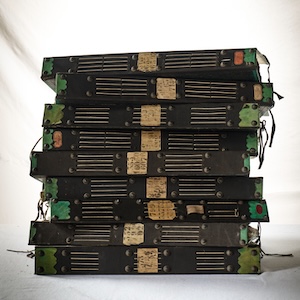
Swatch books after being cleaned and catalogued by Schumacher-1
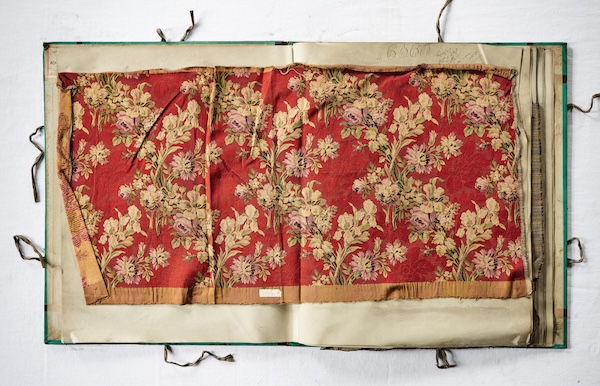
This impressive acquisition includes more than 75,000 textile samples along with original fabrics and drawings dating from approximately 1870 to 1960, substantially expanding FS&CO’s archival holdings and deepening its rich connection to French textile history.
Founded in Roubaix, France, in 1860 by Felix Vanoutryve, the mill quickly became one of Europe’s most important luxury textile weavers, at one time employing more than 4,500 workers and exporting as much as 60 percent of its production abroad. During the Art Nouveau and Art Deco periods, Vanoutryve’s textiles introduced the emerging French design motifs to the masses, and the mill also worked with some of the era’s leading style arbiters, including Paul Poiret, who was the first fashion designer to establish a lifestyle brand producing fabrics for the home. After Felix Vanoutryve’s death in 1912—the same year that Frederic Schumacher died—the mill remained family-owned until 2013 and eventually closed in 2019. Parrots Moderne, a fabric originally woven at Vanoutryve, is still in production at Schumacher today.
“Acquiring archival pieces directly connected to our company’s founder is a natural extension of our brand heritage,” says FS&CO President and CEO Timur Yumusaklar. “We have always and will always continue to work with the finest mills in the world, and we firmly believe that quality craftsmanship and great design can withstand the test of time. I’m honored to continue preserving and reimagining the artistry of these timeless pieces by introducing them to the U.S., just as Frederic Schumacher did 150 years ago.”
“When I first started going through the Vanoutryve archive in Europe,” recounts Dara Caponigro, the company’s Chief Creative Officer, “what struck me most was the mix of patterns that were produced within a specific time period, which reflected the broad range of aesthetics and varied appetite for design during that era, with modernist Art Deco designs existing right alongside traditional brocades.”
Vanoutryve textile sample
The collection—which spans everything from classic Persian motifs and traditional European florals to early-20th-century French designs and more—comprises fine silks and brocades alongside heavier, more deeply textured fabrics like tapestries and jacquards. More than 1,500 swatch books, along with assorted textiles and drawings, now reside in a climate-controlled facility where they are being conserved and catalogued. Schumacher’s in-house archival staff is leading the effort to document the collection for the long term, ensuring that this critical chapter of design history remains intact.
“Our company’s founder, Frederic Schumacher, began his textile journey at Vanoutryve,” says Kristen Robinson, FS&CO’s archivist, “and this acquisition adds not only to our understanding of Schumacher’s own story, but also to the history of manufacturing and textile design. For more than a century, Vanoutryve was one of the most revered weaving houses in France and Belgium, and now its impact will still be felt in homes around the world.”
As FS&CO continues to grow and expand on its role as an industry leader, Caponigro adds, “This important lesson in the decorative arts will provide inspiration and education for our internal teams, students, and interior designers around the world for many generations to come.”
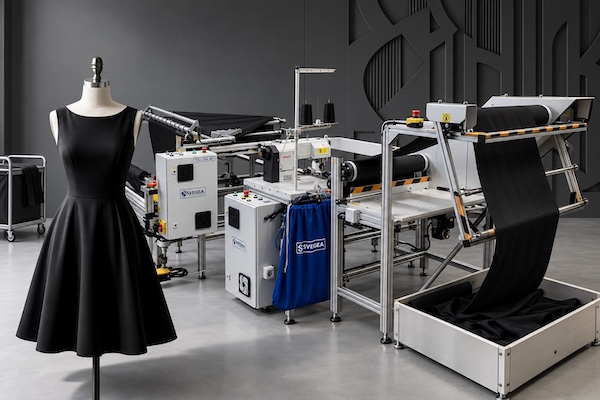
STOCKHOLM, Sweden — September 22, 2026 — The little black dress may be one of fashion’s simplest and most enduring garments, but achieving its characteristic clean lines depends on manufacturing precision of the kind supplied by Swedish textile machinery specialist and TMAS member Svegea.
Ever since Audrey Hepburn appeared in Givenchy’s celebrated creation in Breakfast at Tiffany’s, the LBD has become a wardrobe staple across generations. Its appeal lies partly in its apparent simplicity, but producing a dress that retains its shape, sits cleanly around the neckline and withstands repeated wear requires considerable attention to details that are largely invisible to the wearer.
Bias binding begins with Svegea’s Tube Sewing Unit, which joins open-width fabric to create a continuous tube.
One of those details is bias binding.
Bias binding is produced from strips of fabric cut diagonally across the material rather than along its straight grain. Cutting on the bias gives the strip greater flexibility, allowing it to follow curved necklines, armholes and other edges without puckering or distorting the garment.
It can be used to enclose raw edges, reinforce areas subjected to movement and provide a clean internal finish. While largely unnoticed by the wearer, accurately produced and applied binding can consequently make an important contribution to both the appearance and durability of a garment.
For a home sewer, bias strips can be cut and prepared manually but in industrial garment production, where thousands of identical pieces may be required, the challenge is quite different.
Consistency of width and cut becomes critical, while manufacturers must also control material use and maintain production speeds. It is here that TMAS member Svegea has established a specialist position with automated equipment for bias binding and other fabric cutting operations.
From roll to binding
Svegea’s system is designed to convert fabric rolls into continuously produced bias material in a series of automated operations.
The process begins with the company’s Tube Sewing Unit, which joins open-width fabric to create a continuous tube. This is subsequently handled by the Bias Cutter and Winder, opening and rewinding the material in preparation for accurate slitting.
The equipment can produce narrow strips down to 6mm as well as wider bindings required for heavier fabrics and more structural applications.
Automating these operations enables garment manufacturers to maintain consistent dimensions over long production runs while reducing the variations that can arise when material is prepared manually.
This consistency becomes particularly important where binding has to follow prominent curved areas of a garment. A neckline or armhole that does not sit correctly can immediately affect the appearance and fit of an otherwise well-made product.
The little black dress provides an obvious example. With few patterns or decorative elements to distract the eye, construction details and the quality of the finish become particularly important.
Beyond the LBD
The applications for industrial bias cutting extend considerably beyond dresses.
Bias binding is widely employed in blouses, childrenswear, activewear and other garments requiring flexible edge finishing, as well as in bags, accessories and home textile products.
Svegea has developed its machinery around these varied production requirements, with equipment for bias cutting complemented by collarette cutters for applications such as waistbands and roll slitters for handling larger fabric rolls.
The common requirement is repeatability. As garment production has become increasingly automated, processes that once depended heavily on manual skill have progressively been engineered to deliver consistent results at industrial volumes.
This is also representative of the highly specialised areas in which Swedish textile machinery companies continue to operate.
TMAS – the Swedish Textile Machinery Association – brings together manufacturers supplying technologies across textile and garment production, often addressing individual stages of manufacturing that remain largely invisible in the finished product.
Posted: September 28, 2026
Source: The Swedish Textile Machinery Association (TMAS)
NEW YORK — September 28, 2026 — unspun, the company behind OneWeave™ 3D weaving technology, today announced two additions to its leadership team: Deborah Palmer Keiser as Chief Operating Officer and Michael Rabin as Chief Commercial Officer.
Keiser brings more than three decades of operational and supply-chain leadership across some of the world’s most recognizable consumer brands, including Gap, Victoria’s Secret, Williams-Sonoma, AllSaints, Yeezy and Boardriders. At Williams-Sonoma, she helped establish the company’s brands in 16 countries. Later, as Global Chief Operating Officer of Boardriders, she oversaw end-to-end planning, sourcing, logistics and distribution, with a focus on supply-chain transformation and speed to market. At unspun, she will lead operations as the company moves OneWeave™ into commercial deployment.
Rabin brings 15 years of experience at the intersection of textile machinery, automation and apparel production. He has represented Morgan Tecnica as Sales Director of the Americas and President of its Americas business, working closely with manufacturers on cutting-room technology and production workflows. A regular industry speaker, he has advocated for more localized, on-demand manufacturing and the integration of technology across the production process. As Chief Commercial Officer, he will build unspun’s commercial organization and support the adoption of OneWeave™ by manufacturers and brands worldwide.
“Joining unspun is an exciting opportunity to help evolve how textiles and clothing are manufactured. For generations we have replicated and scaled the same methodologies exacerbating issues of waste across supply chains. OneWeave™ has the potential to fundamentally challenge our beliefs and practices around responsiveness, end-to-end cost, and systemic waste, and I’m thrilled to contribute my experience in scaling operations as the company moves this technology into commercial deployment,” said Deborah Palmer Keiser, COO
“After more than 30 years as a manufacturer and solution provider, I’ve never seen anything like what Unspun is doing with OneWeave™. It’s a genuinely differentiated technology tackling one of the apparel industry’s biggest challenges, with a clear path to commercial impact. I’m grateful and excited to be part of it, and to help bring OneWeave™ to brands and manufacturers around the world by building the partnerships that will take it to scale,” said Michael Rabin, CCO
The appointments strengthen unspun’s operational and commercial capabilities at a key stage in the company’s growth, bringing together apparel supply chain leadership and textile machinery expertise.
ZÜRICH, Switzerland — September 21, 2026 — The winners of The International Textile Manufacturers Federation (ITMF) Start-up Awards 2026 will present their business models at the upcoming ITMF & IAF Conference 2026 which will be held from 14 – 15 October 2026 in Fortaleza, Brazil and will be co-hosted by ABIT (Brazilian Textile & Apparel Industry Association).
The objectives of the ITMF Start-up Awards are to provide start-ups a platform to showcase their innovative ideas and to offer them the possibility to meet in-person with well established companies from the entire textile value chain.
The 5 winners of the ITMF Start-up Award 2026 are (in alphabetical order):
Matereal, Switzerland: www.matereal.co/
Business Concept: Charting the New Frontier – Biobased Polymers and AI for Textile Manufacturing
no.wasTee Soluções em Confecções Sustentáveis, Brazil: nowastee.com/
Business Concept: Zero-Waste Design for a Low-CO₂ Textile Industry
REMSCHEID, Germany— September 24, 2026 — Maintenance and service processes in chemical fiber spinning plants have a significant impact on product quality, equipment availability, and workplace safety.
With three new retrofittable solutions, Barmag helps producers make manual work processes more efficient, safer, and more reproducible.
Maintenance as a competitive advantage
The portfolio includes the automatic knife sharpening machine, the wiping robot for automated spinneret cleaning both in filament spinning and in the staple fiber process, and the electric Spinpack changer for motor-assisted replacement of spinning packages. Together, these solutions aim to standardize maintenance processes and sustainably improve the performance of existing production facilities.
Automated cleaning for stable processes
The automatic knife sharpening machine ensures consistently high cleaning quality for spinnerets and helps producers increase the performance of their spinning systems. Standardized grinding results reduce process fluctuations, increase cleaning efficiency, and extend the service life of key components.
Barmag’s automatic knife sharpening machine ensures consistently high-quality grinding results, thereby helping to reduce process fluctuations.
This leads to reduced maintenance requirements, higher equipment availability, and improved productivity. Customer experience shows increases in the full-bobbin rate of up to 12 percent, in take-up efficiency of up to 28 percent, and an extension of spinneret service life of up to 51 percent. At the same time, cleaning cycles can be reduced by up to 53 percent.
The wiping robot performs spinneret cleaning fully automatically both in filament spinning and in the staple fiber process. Its integrated rotating scraper blades are automatically resharpened in the parking station, ensuring consistently high-quality cleaning results over the long term.
Barmag’s wiping robot contributes to greater process stability with its fully automatic spinneret cleaning.
In addition to greater process stability, automated cleaning also contributes to an improved working environment: Silicon oil consumption is reduced, as is exposure to oil-containing aerosols in the production area.
Greater safety and ergonomics in maintenance
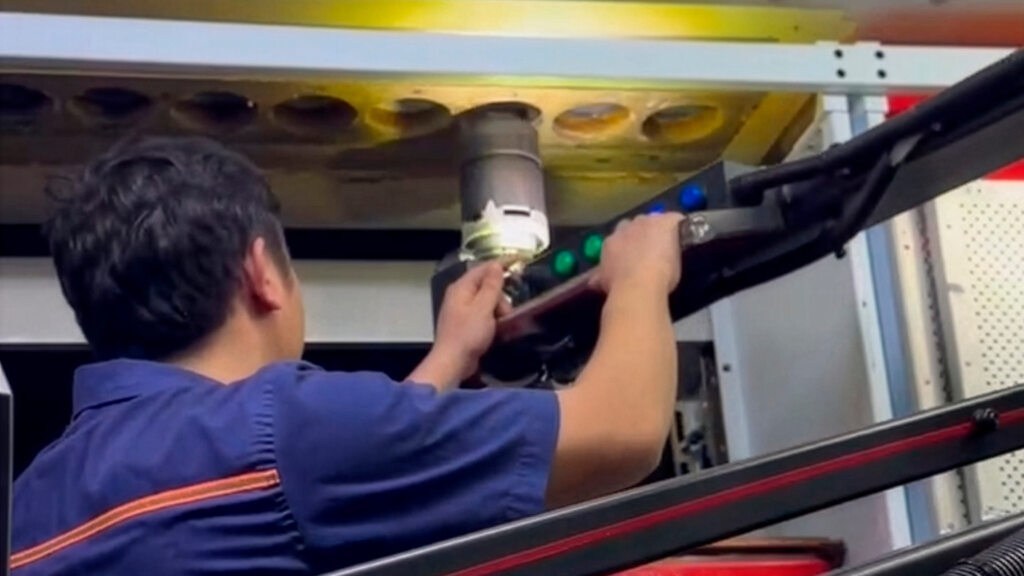
The electric Spinpack changer specifically addresses the issues of workplace safety and ergonomics.
The electric Spinpack changer assists operators in replacing heavy spindle nozzles, improves workplace safety, and reduces downtime for the spinning line.
The mobile, electrically powered system facilitates the replacement of heavy and hot spinnerets, reduces physical strain, and enables precise installation with a defined torque. This minimizes safety risks and shortens downtime.
Retrofit automation for existing systems
A common feature of all three solutions is their nearly universal retrofit capability. Operators can modernize their production facilities in a targeted manner without significant modifications to existing lines. This provides a cost-effective entry point into the automation of maintenance and service processes, with measurable benefits for quality, efficiency, and workplace safety.
“There is significant potential for optimization not only in the production process itself, but also in the supporting maintenance and service tasks. Automating these tasks helps make existing plants more productive, safer, and more cost-effective to operate,” explains Stefan Heesen, Senior Manager of Customer Services at Barmag.
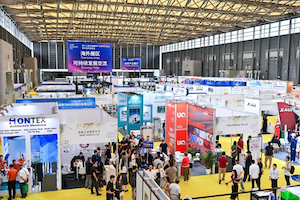
SHANGHAI — September 24, 2026 — Asia’s premier trade fair for technical textiles and nonwovens delivered a vibrant and productive edition this year, bringing together key players from around the world. Featuring over 300 exhibitors from 15 countries and regions across 32,000 sqm, the platform drew nearly 19,000 visits from an increasingly diverse international audience spanning 86 represented markets.
Industry players praised the fair’s effectiveness in facilitating targeted business connections across all product categories. (Photo: Messe Frankfurt)
As the industry continues to adjust to a complex economic climate, Cinte Techtextil China 2026 curated chances for high-growth sectors, including automotive, medical & protective and industrial, while fostering sustainability and innovation to drive long-term resilience. The fair bridged expertise from East and West through cutting-edge showcases and a targeted fringe programme, building a solid foundation for advancement and growth.
“Unlocking growth in today’s evolving market requires connecting with the right chances at the right time,” said Ms Wilmet Shea, General Manager of Messe Frankfurt (HK) Ltd. “We intentionally designed this edition to mirror actual demand, from featuring high-growth applications and trends to optimising global matchmaking. The positive momentum seen over the three days proved this strategy is paying off, and Cinte Techtextil China remains an essential engine for industry advancement and business expansion in Asia.”
Underscoring the fair’s expanding international reach, this edition welcomed a range of debut exhibitors, and suppliers from new exhibiting countries including Bangladesh, India, Singapore, Thailand, and Türkiye, adding to a strong lineup from across Asia, Europe and North America.
At the centre of this global showcase were the European and German Zones, featuring industry leaders such as Graf + Cie (Switzerland; Medtech, Geotech), Ibena (Germany; Protech), Mahlo (Germany; all applications), Monosuisse Group (Switzerland; Indutech, Mobiltech), and the Reifenhauser Group (Germany; all applications). Meanwhile, first-time participant Tepar Tekstil (Türkiye; Sporttech) displayed its high-performance DURAFIL™ fabric. Other major European players including A.CELLI (Italy), Andritz (France), Groz-Beckert (Germany), and Picanol (Belgium), presented advanced machinery, digital innovations, and sustainable nonwoven production solutions. Their comprehensive, cross-application offerings drew foot traffic and underscored the platform’s strong international appeal.
Product innovation was equally prominent across the broader international showcase. Nippon Paper Industries from Japan highlighted Cu-TOP, a paper textile material combining pulp technology with copper functionality, while US-based Wintriss Engineering demonstrated its Web Ranger online, AI-incorporated surface defect inspection system. Adding to the fair’s technical diversity were Korea’s JR Ltd with its deodorant fibre, alongside new participants Care Holdings (Singapore; Geotech, Buildtech), IMAE Industries (Japan; Indutech), and Texbond Nonwovens (India; Buildtech, Packtech), as well as exhibitors from the Textile Chemicals and Dyes Zone.
China’s expertise was also well represented, especially within the Mobiltech Zone, domestic pavilions, and by key exhibitors such as Shanghai Shenda and Tiandingfeng Nonwovens. To facilitate cross-border networking and market expertise, the fair’s Association Village included four organisations from India, Thailand and the UK. Members cited the platform as a highly effective channel for building international trade connections at the show.
Exhibitors’ feedback
“We showcased our latest nonwovens and knitting solutions at the fair – a crucial platform to connect directly with key players across the value chain in one of the most important textile markets. Exchanging insights across key growing sectors like Indutech, Medtech, Protech, and Mobiltech, plus joining the fringe events which complemented booth discussions, helped us better understand where the industry is heading, identify emerging customer needs and consider how to create value beyond our existing product portfolio.”
Mr Kabilen Sornum, Vice President, Asia Pacific, Marketing & Digital, Groz-Beckert East Asia, Singapore
“Exhibiting overseas for the first time, we chose this fair to connect with new customers and suppliers, and engagement far surpassed our expectations with non-stop visitor traffic. Buyers are mostly from Mainland China, as well as Korea and India. The exhibition has proved to be an excellent window to quickly grasp China’s demand patterns and effectively communicate our product strengths. This debut has provided valuable visibility and laid a solid foundation to expand our market presence and network moving forward.”
Mr Justin Lund, Overseas Sales Representative, IMAE Industries Ltd, Japan
“Our company’s PVC coated fabrics are widely used across the automotive, medical, and construction sectors. This edition has attracted significant interest from Middle Eastern clients, alongside prospective leads from Europe and the US, and a dominant Chinese buyer base. With a high concentration of upstream and downstream companies, the fair enables efficient exchange that boosts trade matchmaking.”
Ms Maggie Zhang, Sales Manager, Zhejiang Hontex New Materials Co Ltd, China
Expanded international reach and targeted delegations elevated global trade
Strong demand across core application areas drove an impressive overseas visitor turnout, anchored by key buyer delegation representatives from Bangladesh, Colombia, Cuba, Hong Kong, India, Mexico, Pakistan, Thailand, and beyond.
In addition, over 80 VIP buyers from 27 countries and regions and high-profile domestic buyers sourced at the fair, with some utilising its business matching services to focus on high-performance offerings for various end uses. Leading brands included:
Mobiltech: Changan Ford Automobile, Hyundai Motor, Nexform, NEXTEV, SAIC Volkswagen New Energy Vehicle Branch, ZF Asia Pacific Automotive Safety Systems (Shanghai)
Medtech: Hengan International Group, Kimberly-Clark (China), Meditec Japan, Unicharm, Winner Medical, Yunnan Baiyao Group Wuxi Pharmaceutical
Protech: Dumit (Shanghai) Protection Technology, Honeywell Safety Products (Shanghai), JUTEC Hitzeschutz und Isoliertechnik, LAKELAND (BEIJING) SAFETY PRODUCTS, SEES GLOBAL
Buildtech/Indutech: China Construction Third Engineering Bureau Shanghai, Deltamove Engineering, Nolan Group, Shanghai Building Decoration Engineering Group, Sinochem International
Sporttech: NIKE, Under Armour
Others: MayAir Technology (China), Vinda Paper (China)
Across all categories, sourcing reflected an industry-wide shift toward sustainability and high-level functional protection.
Visitors’ feedback
“I travelled here to source garment production equipment, fabrics, and accessories, while exploring medical product partnerships. I’ve collected several samples and detailed price quotes for further discussions. I’m particularly interested in the new nonwoven machinery on display – overall, the quality is high. The fair has provided concrete matchmaking for overseas buyers like us, enabling focused, highly efficient discussions tailored to our needs.”
Mr Jiraphat Punyachodtumrong, Procurement Manager, Silver Sport International Co Ltd, Thailand
“I focus on flame-retardant fibre breakthroughs for firefighting and industrial protection. Many exhibitors are making progress in technologies and high-temperature modification. I am truly impressed by the display zone dedicated to Industrial Textiles in the 15th Five-Year Plan. Cinte Techtextil China has incredibly diverse offerings and rich exchange opportunities – it is irreplaceable for staying on top of technology and market evolution, and every edition delivers new takeaways.”
Mr Xia Yanmao, Market Development Department Deputy Minister, Jiangsu Aoshen Hi-tech Material Co LTD, China
Value-added fringe programme offered crucial industry directions
The fair featured various high-calibre panels, conferences, guided tours, display areas and more to target crucial development sectors and trends. Key experts addressed pivotal shifts in nonwovens and technical textiles, including smart, sustainable solutions and innovations, equipping attendees with actionable market insights to navigate the evolving global supply chain. Major sessions, including the Asia International Hemp Federation and automotive textile panels, as well as the 2026 Nonwovens Industry High-Quality Development Conference, reported strong engagement and meaningful exchange.
At the nonwovens conference, Ms Li Guimei, Chairperson of the China Nonwovens & Industrial Textiles Association, outlined several critical nonwovens development drivers: technological innovation for high-end breakthroughs; green transformation; AI to cultivate new operating models; deeper application integration; and optimised industrial structures for high-value growth. These strategic pathways apply similarly to technical textiles – with some organisations notably looking to heritage materials for sustainable innovation.
“Industrial hemp has much to offer society, and is a key material for the future. Cinte Techtextil China is a good platform for us to communicate with the world, as it focuses on the technical side and sustainability. Our panel discussion audience responded very well and our display area received great feedback. These both gave us more exposure and drove diverse global traffic to our booth at the Association Village, a feature which facilitated international collaboration.”
Ms Sharon Deidre Leyson, Secretary-General, Asia International Hemp Federation, Thailand (moderator of Panel Discussion: Industrial Hemp Fibre – Building the Future of Sustainable Materials, exhibitor at the Association Village)
To access more feedback from the show’s participants, Visit:
The fair’s product categories cover 12 application areas, which comprehensively span a full range of potential uses in modern technical textiles and nonwovens. These categories also cover the entire industry, from upstream technology and raw materials providers to finished fabrics, chemicals and other solutions. This scope of product groups and application areas ensures that the fair is an effective business platform for the entire industry.
The next edition of Cinte Techtextil China will be held from 31 August to 2 September 2027.
The fair is organised by Messe Frankfurt (HK) Ltd; the Sub-Council of Textile Industry, CCPIT; and the China Nonwovens & Industrial Textiles Association (CNITA).
HUNTERSVILLE, N.C. — September 25, 2026 — Microban International, a global supplier of product protection technologies, has partnered with mountain sports specialist ORTOVOX to incorporate Microban odor-capture technology into its debut mountain bike collection, the Sequence Series.
ORTOVOX designed the Sequence Trail Line using 100% textile-to-textile recycled polyester, achieving a lightweight, fully synthetic construction built on a closed-loop recycling concept that turns used textiles into new apparel. Because synthetic fibers tend to trap sweat-induced odor molecules, odor neutralization became critical to the line’s success.
“Because this new collection features our first synthetic T-shirts made entirely without wool, finding a reliable, high-performance odor control solution was critical,” said Christian Morgenroth, senior product manager at ORTOVOX. “We selected Microban because its technology integrates seamlessly into our overall product concept, allowing riders to keep their gear fresher for longer.”
ORTOVOX integrated Microban’s Scentry Revive® odor-capture technology directly into the fabric during manufacturing. The technology improves the demanding singletrack and all-day riding experience by actively capturing and neutralizing odor molecules before they settle into the fabric, providing riders with lasting freshness for up to 50 home launderings.
Scentry Revive’s smart formulation delivers a host of advantages, including:
Product protection from persistent, sweat-induced odors that often cling to synthetic materials
Reduced need for frequent washing, helping to extend product lifespan
Enhanced user experience, especially in high-output activities
Eco Passport by Oeko-Tex® and bluesign® certifications, showcasing commitment to sustainability
Naturally occurring technology that does not require biocidal registration, making it ideal for sustainable fashion development projects
“At the core of our partnership with ORTOVOX is our mutual commitment to advancing innovation in mountain biking apparel,” said Shermon McMillan, president at Microban International. “We are proud to partner with ORTOVOX to give mountain bikers the freedom to worry less, explore more and rely on gear that lasts.”
This partnership directly supports ORTOVOX’s ProtACT sustainability strategy and brand values. By utilizing Scentry Revive to reduce the need for frequent washing, the Trail line enables a more sustainable consumer lifecycle and extends the lifespan of premium gear. For the ORTOVOX consumer, this means a superior experience where premium mountain performance meets environmental responsibility.
To learn more about Microban and ORTOVOX’s partnership, visit www.microban.com/ortovox.

 PARIS LA DÉFENSE — September 28, 2026 — François Desné joins Arkema as Senior Vice President High Performance Polymers and Fluorogases and a member of the Group’s Executive Committee, effective 12 October 2026. He succeeds Laurent Tellier, who was appointed Arkema’s Chief Operating Officer (COO) last July.