By James M. Borneman, Editor In Chief
Weinheim, Germany-based Freudenberg Group is a family-owned company operating in 60 countries, with more than 51,000 employees and 2025 sales of more than 11.7 billion euros, roughly $13.9 billion.
Freudenberg Group’s portfolio includes seals, filtration, technical textiles, specialty chemicals, medical products and cleaning technologies, among others. Freudenberg & Co. KG is Freudenberg Group’s strategic parent company and Freudenberg SE serves as the corporate parent overseeing business operations.
Freudenberg Performance Materials is Freudenberg Group’s specialist in nonwovens and technical textiles. The company reports that it operates 35 locations in 14 countries.
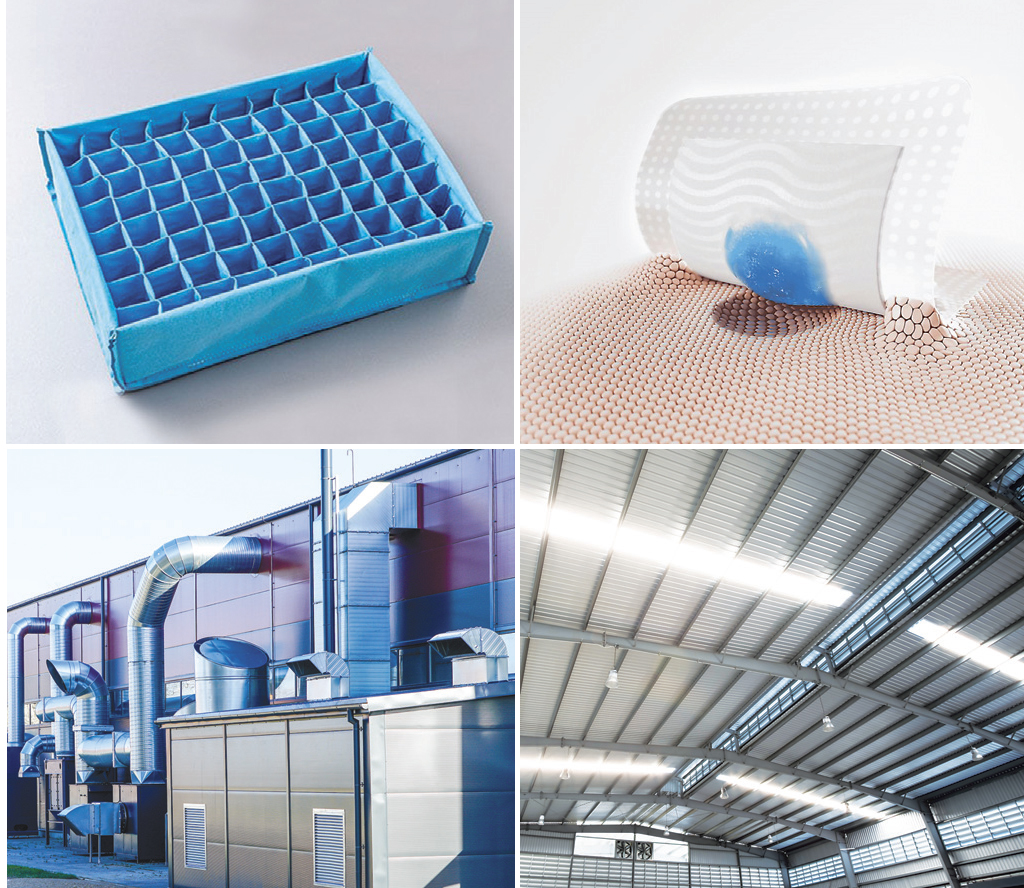
Widely known for Evolon, its proprietary microfilament textile platform used in technical and industrial applications, as well as other branded technical textile platforms such as Colback, Dripstop, Enka Solutions and Lutradur, Freudenberg Performance Materials develops and manufactures nonwovens and technical textiles for markets including apparel, automotive, building materials, energy, filtration, health care, footwear and specialty applications.
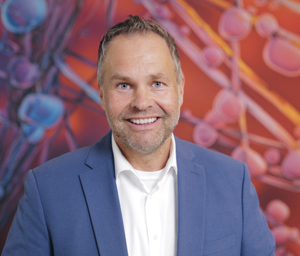
Dr. Andreas Raps was appointed CEO of Freudenberg Performance Materials on Jan. 1, 2024. He previously held several executive positions at Freudenberg Sealing Technologies, starting in 2004 and most recently as CEO of the global Special Sealing Division, which has 17 manufacturing sites worldwide.
From 2016 to 2024, Dr. Raps was CEO of EagleBurgmann, a joint venture between the EKK Group of Japan and the Freudenberg Group.
Before joining Freudenberg, Dr. Raps worked for management consulting firms in Boston, Munich and Zurich. He holds an MBA from the University of Passau and earned a PhD in business administration with a thesis on strategy implementation. Dr. Raps has also been a member of the Freudenberg SE Executive Council since 2020.
Recently, Dr. Raps sat down with the editors of Textile World to discuss his vision of Freudenberg Performance Materials’ many innovations, the management of a complex product portfolio and the company’s commitment to future-oriented, sustainable technical textiles.
Textile World: Dr Raps, Freudenberg Performance Materials’ size, complexity and international footprint must present significant demands, what do you perceive as the most challenging aspect?
Dr. Andreas Raps: The biggest challenge is finding the right balance between global consistency and local responsibility. At Freudenberg Performance Materials, we operate worldwide, but our customers and markets are very specific. That’s why we set clear global standards for aspects like quality, safety and performance, while empowering our regional teams to adapt solutions locally.
Secondly, collaboration is critical. We actively connect customers, R&D and Operations early on. Innovation doesn’t happen in isolation. Cross-functional teams and standardized development processes help us turn ideas into reliable solutions.
Finally, our Guiding Principles give us orientation. Principles like Customer Value, Innovation, Responsibility and Long-term Orientation are deeply rooted at Freudenberg and actively lived today. They help us stay stable, adaptable and trusted – by our customers and by our people.
TW: How do you prioritize opportunities across people, products and markets?
Dr. Raps: For us, it always starts with people. We invest strongly in developing our employees and in creating a culture where responsibility, collaboration and entrepreneurship are encouraged.
Our global talent management is very systematic because opportunities only become reality when people are empowered to act.
On the product side, close collaboration with customers is key. Innovation happens when we combine material science expertise with deep application and market understanding. International and cross-functional teamwork ensures that good ideas move quickly from concept to real impact.
In terms of markets, we continuously observe regional trends and emerging applications. Market responsibility is largely decentralized, which allows us to respond fast to local opportunities, while still leveraging the strength and scale of our global network.
TW: Many people speak about innovation, but how do you create and propagate a culture of innovation? How do you support it? What barriers impede it?
Leadership plays a central role. We lead based on trust, responsibility and clear direction. Cross-functional and cross-regional collaboration is actively supported and manufacturing expertise is an integral part of innovation, from the first idea all the way to industrial scale.
Of course, there are barriers. Our size and complexity can slow things down, so we work continuously on simplifying structures.
Risk aversion can also be an obstacle. We address this by encouraging learning, experimentation and — maybe most importantly — trust. And regarding silo thinking, ONE FPM helps us overcome it.
TW: How do you understand such a diverse product portfolio? How do you manage it and keep each product responsive, or even leading in its respective market segment?
Dr. Raps: We organize our portfolio around customer applications, not around internal technologies. That keeps us close to real market needs.
Every three years, we run a structured strategic planning process, including technology roadmaps. Each product area has clear ownership, a defined strategy and a clear customer value proposition.
Application expertise is crucial here. It keeps us connected to the realities of each segment. At the same time, our matrix organization and corporate functions ensure coordination and alignment across the company.
TW: With such a large footprint and capabilities, how do you drive synergies across products and processes within the company?
Dr. Raps: ONE FPM is the central enabler. Shared technology platforms allow us to reuse solutions and accelerate development.
Global manufacturing and process standards help ensure consistent quality and scalability. In addition, joint development projects across sites and structured knowledge transfer are part of our daily work.
Corporate functions support this coordination, but real synergies come from people collaborating openly across functions and regions.
TW: How do you stay on top of the future opportunities these products serve and beyond current markets?
Dr. Raps: Our sales teams continuously analyze how customer requirements, applications, and technologies are evolving. We look at new growth markets, strengthen local for local approaches, and advance circular economy concepts.
At the same time, we are very disciplined in focusing our resources on healthy and promising areas. This means avoiding tying up capacity in markets with declining demand, and freeing up investment for future-oriented solutions.
TW: The manufacture of nonwovens and technical textiles is an intensely technical business. How do developments, refinement of processes and innovation proliferate among Freudenberg’s divisions, sites and members?
Dr. Raps: International collaboration is part of our daily routine. Development expertise is bundled in global development teams, and production sites continuously share best practices under unified quality standards.
Dedicated process engineers run both local and global projects to improve our assets. This ensures that improvements and innovations are spread across the entire organization.
TW: Dr. Raps, how do you combine the company’s overarching goals with developing a product from concept to market?
Dr. Raps: Sustainability is a good example, and currently a challenging one.
That’s why we focus on applications where sustainability delivers a clear functional and economic benefit. One example is plant propagation systems.
Our nonwoven paper pots are designed to remain in the soil, eliminating removal and disposal steps. They are made from 100% bio-based PLA and wood pulp, without chemical binders, combining functionality, ease-of-use and environmental benefits.
TW: How do you balance internal process innovation with customerdriven innovation? Does innovation take many different paths?
Dr. Raps: We aim for a healthy and balanced innovation portfolio.
As said, we develop solutions that are clearly market driven, where we see a concrete customer need and strong long-term potential. At the same time, we are deliberately pursuing technology push approaches, which usually take more time and involve higher risks. They can also lead to strong differentiation.
 Our Evolon is a good example of that. It’s a unique microfilament textile that combines extremely fine fibers into a strong, breathable and versatile material for demanding industrial and consumer applications.
Both paths are important.
TW: As a global manufacturer, what challenges lay ahead and how do you strategically prepare for them?
Dr. Raps: Sustainability is a major challenge. Our goal is CO2 neutrality by 2045, which requires further development of our energy-intensive processes, reducing energy consumption and transitioning to green energy.
Digitalization and automation are another key area. We focus on replacing safety-critical and ergonomically-demanding tasks, scaling successful solutions globally.
For example, at our Emmen site in the Netherlands, automated guided vehicles and robotics now handle heavy, repetitive tasks. This improves safety, productivity and product quality, giving people more time for quality critical work.
Overall, we aim to actively shape the market, guided by a strong customer perspective and long-term orientation.
TW: The topic of AI seems to enter every conversation. How will AI impact Freudenberg Performance Materials?
Dr. Raps: I see AI as a strategic enabler. It can make processes more efficient, sharpen demand analysis and accelerate innovation. But AI must be implemented responsibly. People development is at the core. We qualify our employees to use new technologies effectively.
TW: How do you foster the company’s commitment to future-oriented, sustainable technical textiles?
Dr. Raps: Sustainability is deeply rooted in our values and history. Today, it is firmly embedded in our strategy and increasingly demanded by our customers. Dedicated structures like our sustainability governance ensure that this commitment is translated into concrete action across the organization.
Our goal is to enable our customers to meet their own sustainability responsibilities through high-performance materials.
2026 Quarterly Issue II