KINGSPORT, Tenn.— MARCH 23, 2026 — Eastman announced a new phase of its collaboration with SOS Mata Atlântica, a Brazilian environmental nongovernmental organization, to advance restoration efforts in Brazil’s Atlantic Forest. Under the newly signed agreement, SOS Mata Atlântica will plant 11,000 native tree seedlings.
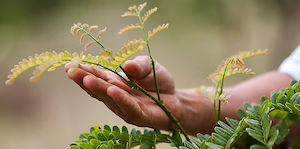 The seedlings will be planted during southeast Brazil’s rainy season (October to March) in areas within the Tietê river basin as well as the Paraíba do Sul river basin. This is the organization’s priority territory, where around 12 million people live. It plays a crucial role in water security, biodiversity and the well-being of local communities across the biome.
This initiative builds on Eastman’s 2022 collaboration with SOS Mata Atlântica and reflects the company’s continued commitment to responsible forestry and sustainable material solutions. The Tietê and Paraíba do Sul basins are among the most environmentally vulnerable in the Atlantic Forest, where decades of urban, industrial and agricultural pressure have reduced forest cover and degraded local ecosystems.
Restoration work will be carried out through SOS Mata Atlântica’s Forests of the Future program, which includes soil preparation, removing degrading factors that limit natural regeneration and planting a diverse mix of native species.
Each site will receive maintenance during the first two years and monitoring through year five to support long-term ecological recovery. These efforts will help reconnect forest fragments, strengthen ecological corridors and restore areas critical to water supply. The partnership will also contribute to economic activity within the restoration value chain.
“We’ve noticed that rural landowners who take part in the Forests of the Future program begin to look at this portion of their land — where the forest is growing — with a sense of responsibility and admiration,” said Ana Beatriz Liaffa, coordinator of the Forests of the Future program. “This is a major gain with strong potential for multiplication. Some of the trees planted during the first phase of the project in Bahia are already providing shade for the team caring for the site.”
The second phase is already being implemented in the interior of São Paulo and contributes significantly to stimulating the restoration economy in the territory. This engages nurseries and rural workers in expanding forest cover in the Atlantic Forest.
“The benefits go even further, as the municipality hosting the second phase has less than 10% of its territory covered by forests, making forest restoration crucial for the conservation of biodiversity and water resources,” Liaffa said.
The initiative is part of the UN’s Decade on Ecosystem Restoration, a call for all parties to join forces in restoring nature.
Responsible forestry and the protection of natural landscapes are foundational to Eastman’s sustainability strategy. These principles also guide the Eastman Naia™ brand, which provides commercially viable, lower-impact fiber solutions for the textile industry. Naia™ sustainability commitments focus on mitigating climate impact, advancing circularity and caring for society.
This forest area is considered ancient and endangered by Canopy, an award-winning NGO dedicated to protecting the world’s forests, species and climate. As partners of the CanopyStyle initiative, the Naia™ portfolio has been awarded a Dark Green Shirt in the Hot Button Report for four consecutive years. This recognition highlights the brand’s commitment to forest conservation, sourcing risk reduction and supply chain transparency.
All Naia™ fibers are produced using responsibly sourced wood pulp and a closed-loop manufacturing system that recovers and reuses solvents. This helps minimize water use, resource consumption and overall environmental impact. Within this portfolio, Naia™ Renew cellulosic fibers represents a further step in advancing circular design. The fibers are made using 40% certified recycled content* and 60% wood pulp from sustainably managed forests. This reinforces the brand’s work to broaden responsible material options and support wider access to sustainable textiles.
*Naia™ Renew recycled content is achieved by allocation of recycled waste material using a GRS-certified mass balance process.
Posted: March 23, 2026
Source: Eastman