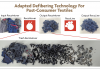
Circ® Expands Global Footprint By Partnering With Huafon To Build And Scale Textile-To-Textile Recycling In China

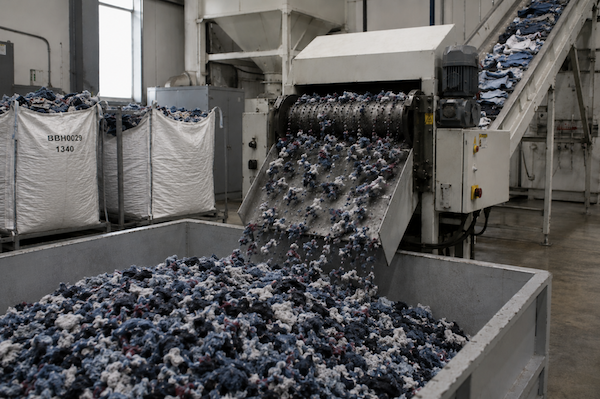
DANVILLE, V.A. — October 8, 2026 — Circ® and Huafon, a leading spandex producer in China, are partnering to build and scale a new multi-phase textile-to-textile recycling site in China, expanding Circ’s global pathway to industrial scale. The project will be located within Huafon’s industrial footprint and will use Circ’s technology to process polycotton textile waste and recycle both inputs, recovering recycled PTA, recycled MEG and recycled cellulosic pulp for use in new textiles. The site will be developed in phases, with Phase 1 designed for approximately 200 metric tons of textile waste per day and additional capacity planned.

The partnership brings together Circ’s polycotton recycling technology with Huafon’s manufacturing capabilities, infrastructure, and China market position. Huafon is also investing directly in the project alongside Circ and other selected investors. Huafon’s engineering, procurement, logistics, and commercial experience provide an efficient path to industrial deployment. Circ brings an established network of global brands, textile manufacturing partners, and downstream customers ready to adopt the materials the platform produces.

CIRC - Huafon image“China is at the center of global textile production, making it a critical location for scaling textile-to-textile recycling. Huafon brings the industrial capabilities, experience, and investment to move quickly and build a platform that can scale well beyond this first site,” said Peter Majeranowski, CEO of Circ.

Huafon is one of China’s leading chemical and advanced materials companies and one of the world’s largest spandex companies, with more than 30 years of experience in materials technology, innovation, and chemical manufacturing. Huafon has also demonstrated its ability to expand globally in advanced and sustainable materials through its acquisition of DuPont’s former Biomaterials business, now Covation Biomaterials, giving the group established operations in Newark, Delaware, and Kinston, North Carolina, and global customers and commercial relationships outside China.

“Circ has developed one of the most promising textile-to-textile recycling technologies we have seen, and Huafon is ready to help bring it to market. By combining Circ’s innovation with our industrial strength and investment, we can turn textile waste into high-quality materials at a scale the industry needs.” said Feifeng You, Vice President, Huafon Group, and Chairman, Huafon Microfibre Shanghai Tech Co. Ltd.

The project is closely aligned with China’s broader industrial priorities. The 15th Five-Year Plan emphasizes circular-economy development, stronger waste recovery and reuse systems, greater use of high-quality recycled materials, green manufacturing, and lower-carbon production. China’s broader materials strategy prioritizes areas including advanced polymers, high-performance fibers, and bio-based materials, creating additional alignment with Circ and Huafon’s ambitions in circular textile materials.

As capacity is developed, Circ and Huafon will engage brands, supply-chain partners, and downstream buyers. The broader opportunity includes additional phases of capacity, downstream commercial activity, and a long-term platform for circular textile production serving both China and global markets.

Posted: October 11, 2026

Source: Circ®

eVent Fabrics Partners With Rocky Mountain ATV On New MSR Xplorer ADV Riding Gear

KANSAS CITY, Mo.  — October 8, 2026 — eVent® Fabrics, a supplier of breathable waterproof, weatherproof, and windproof laminate technologies, is proud to announce its partnership with Rocky Mountain ATV, which has selected eVent’s high-performance alpineST 3-layer fabric for its new 2027 MSR Xplorer ADV Jacket and MSR Xplorer ADV Pants.

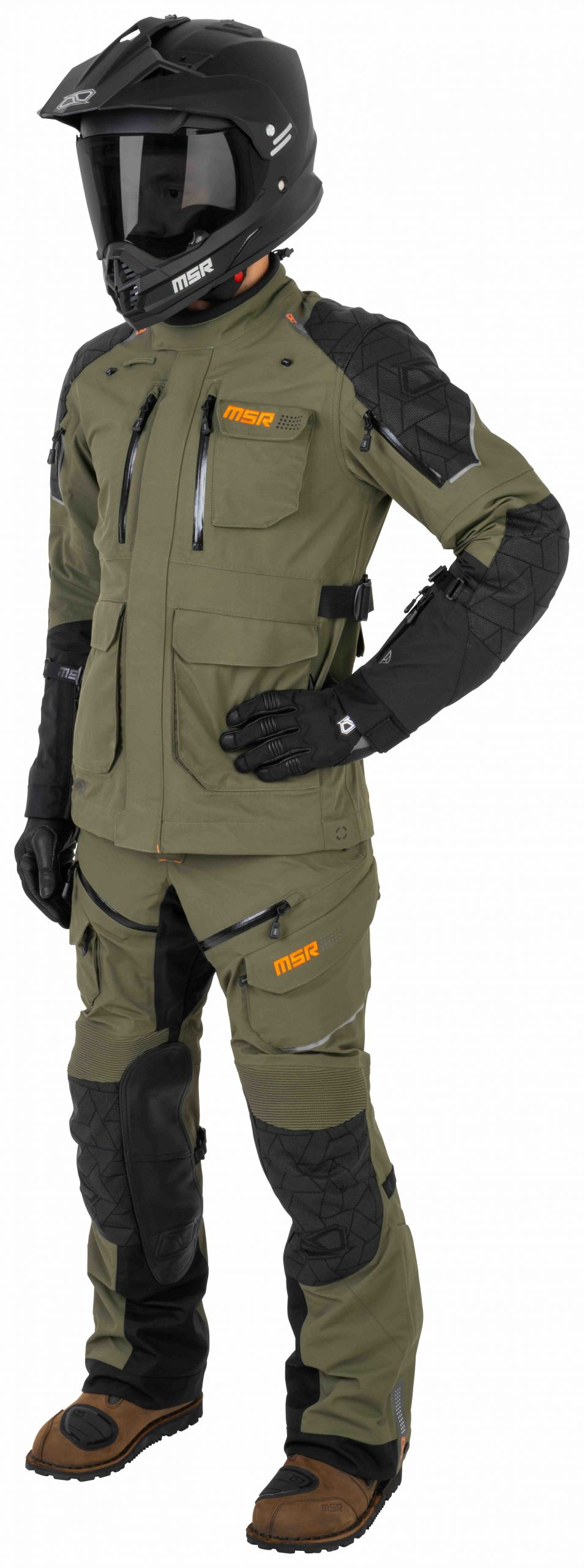
eVent® Fabrics - rmatv-lifestyleAdventure riding can put riders through a wide range of conditions in a single day, from heat and high exertion to rain, wind, and changing temperatures. The new MSR Xplorer ADV system is designed around those demands, combining waterproof, breathable protection with durable construction, integrated armor, and extensive ventilation.

“Adventure riding can subject apparel to some pretty unique demands,” said Chad Kelly, Vice President of eVent Fabrics. “You can go from a hot, exposed stretch of trail to rain, altitude, and colder conditions in the same ride. The MSR Xplorer ADV is designed around that reality, and alpineST gives a waterproof, breathable foundation that helps riders stay comfortable as conditions change.”

The MSR Xplorer ADV Jacket features an eVent alpineST 3-layer main body fabric with a C0 DWR finish for waterproof and breathable protection. SuperFabric overlays at the shoulders and elbows provide additional abrasion resistance, while removable D3O Level 1 shoulder, elbow, and back protectors adds impact protection. Four large zippered intake vents at the biceps and chest, two double-headed wrist and forearm vents, and two large rear exhaust vents allow riders to actively manage airflow as temperatures rise.

eVent® Fabrics - rocky-mountain-atv-on-modelThe MSR Xplorer ADV Pants use the same eVent alpineST 3-layer fabric and C0 DWR finish, with SuperFabric overlays at the knees and 500D Cordura® in high-wear areas. Removable D3O Level 1 knee and hip protectors provide additional protection, while two large zippered thigh intake vents and two rear exhaust vents help regulate airflow throughout the ride.

“When we looked to source materials for our MSR Xplorer ADV Jacket and Pants, eVent’s high-performance alpineST became the choice that made sense for us,” said Matt Rice, Powersports Product Director with Rocky Mountain ATV. “alpineST delivers the performance we demand from all of our products, with the added benefit of being PFAS-free. Removing PFAS from our products is a key strategy as regulations around their use continue to evolve.”

Designed to work together, the jacket and pants feature a zip-together connection to keep the system securely in place. Water-resistant YKK AquaGuard zippers, multiple storage options, reflective elements, and adjustable fit features round out a system designed for long days and changing conditions on the bike.

The 2027 MSR Xplorer ADV Jacket and MSR Xplorer ADV Pants are available through Rocky Mountain ATV/MC.

Posted: October 10, 2026

Source: eVent® Fabrics

TNO Launches polySCOUT: Dutch AI Company Designs New Polymers To Specification, In Weeks Instead Of Years

polyScout-dark-logoAMSTERDAM — October 9, 2026 — TNO today launches polySCOUT, an independent Dutch AI company that designs polymers to specification. Target properties and regulatory constraints go in; lab-validated candidate materials come out. Where the design and selection phase of a new polymer typically takes years, polySCOUT brings it down to weeks. The technology has been developed within TNO since 2022, and TNO becomes a shareholder in the new company. To mark the launch, the founders ring the gong at Euronext Amsterdam this morning.

Why now

Plastics are everywhere: 431 million tonnes were produced worldwide in 2024 (PlasticsEurope). Yet the molecules the industry relies on are largely a century old, and regulation is now changing faster than the chemistry. Since 20 July 2026, bisphenol A has been banned in food contact materials in the EU. The European microplastics restriction phases out synthetic polymer microparticles category by category through 2035. A broad PFAS restriction is in preparation. Every deadline means the same thing: a material has to go, and its replacement has to perform at least as well.”Forced substitution is a performance problem with a deadline,” says Michaël van der Jagt, co-founder and CEO of polySCOUT. “Conventional polymer development succeeds in five to ten percent of cases. Not because chemists lack skill, but because the search space is unimaginably large: more than 1060 possible polymer structures. We don’t make R&D faster. We make it start in the right place.”

How it works

polySCOUT turns the classical development process around. Instead of making a molecule and then measuring what it can do, the customer specifies what the material must do: for example a glass transition temperature above 105 degrees, clarity, dishwasher resistance and no bisphenol. polySCOUT’s AI models are trained on a proprietary, verified database with thousands of data points on polymer properties, built up over four years of research and manually checked back to the source. With it, the models search tens of thousands of possible copolymer combinations of industrially available, REACH-registered building blocks for materials that meet the specification, weighing safety, cost and end of life along the way. The most promising candidates are synthesised and measured in a high-throughput laboratory: 25 physical materials per week. The customer receives not a prediction, but a measured material. Because polySCOUT can select building blocks that are already REACH-registered and available at industrial scale, a candidate it finds is directly scalable. No exotic lab chemistry, but materials a producer can make in the near term.

Polymer-native, and deliberately not broad

In a year in which generalist AI materials companies in the United States and the United Kingdom raised hundreds of millions of dollars to search “all materials”, polySCOUT deliberately chooses depth. The company does one thing: polymers.

“A polymer is not a molecule but a distribution: chain length, sequence, branching, crystallinity,” says Milad Golkaram, technical co-founder of polySCOUT. “Models built for crystals or small molecules don’t see that. We built our platform for polymers from the ground up: a polymer-native representation, a proprietary verified database of polymer properties, and models trained on what polymers actually do. That is not a detail. That is an architectural difference.”

From TNO programme to company

polySCOUT started in 2022 as a TNO research programme under the banner “sustainable polymer design by machine learning”. Four years on, there is a verified database, validated predictive models and a working chain from data to physical material. polySCOUT B.V. takes over the technology under an exclusive licence from TNO; TNO becomes a shareholder. The company is currently in discussions with product manufacturers and material producers about its first design programmes, and this autumn opens a first external financing round to scale the platform and the team.

“The materials Europe will run on in 2050 are being designed now. Whoever masters that design process determines part of their own industrial future. With polySCOUT, we are putting Dutch knowledge to work to build that position,” says Tjark Tjin-A-Tsoi, CEO of TNO.

polySCOUT is led by three co-founders: Michaël van der Jagt (CEO), serial deeptech entrepreneur with more than twenty years of experience in polymer materials and international manufacturing; Ellen de Ruiter (CCO), chemical engineer and former McKinsey consultant in chemicals, plastics and sustainability strategy, who has shaped polySCOUT’s commercial development from within TNO since 2023; and Milad Golkaram (CSO), polymer scientist with a PhD from the University of Groningen, who was present at the inception of the polySCOUT programme at TNO. www.polyscout.ai

TNO

TNO is the independent, not-for-profit research organisation of the Netherlands, founded in 1932. TNO connects people and knowledge to create innovations that sustainably strengthen the competitiveness of industry and the wellbeing of society. With more than 4,000 employees, TNO conducts applied research in areas including energy, industry, health, digitalisation and security. Through TNO Ventures, TNO brings technology to market in spin-off companies; the portfolio now counts more than 40 companies. www.tno.nl

Posted: October 10, 2026

Source: TNO / polySCOUT

BRÜCKNER: Brazilian Market Leader Cedro Têxtil Focuses On Greater Efficiency, Sustainability, And Product Quality With Brückner

LEONBERG, Germany — October 9, 2026 — After more than 150 years of company history, Cedro Têxtil is once again embracing the challenges of a changing industry. Widely recognized as the largest manufacturer of workwear fabrics in Latin America, the Brazilian textile company continues to invest in the modernization of its production facilities.

Brückner - Pic3_Cedro_Team2 - The Team at Cedro Têxtil with Frank Bernhard (2nd from right), Brückner Agent in Brazil
The Team at Cedro Têxtil with Frank Bernhard (2nd from right), Brückner Agent in Brazil

A key milestone in this process was the decision to install a state-of-the-art Brückner stenter frame just over a year ago. For Cedro Têxtil, this investment represented far more than the purchase of new production equipment. The company was seeking a solution capable of meeting the highest quality standards, supporting its sustainability goals, and delivering long-term economic benefits.

Comprehensive Evaluation Leads to Brückner

The purchase was preceded by an extensive selection process. Over several years, Cedro Têxtil evaluated leading machinery manufacturers from Europe and Asia, visited production facilities and reference customers around the world, and compared a wide range of technologies. “The selection process went far beyond simply investing in a machine,” the company explains. “Productivity, maintenance costs, technical support, energy efficiency, spare parts availability, and local service in Brazil were all decisive factors for us.” What ultimately convinced the company was Brückner’s combination of cutting-edge technology, outstanding process reliability, and exceptional energy efficiency.

Higher Performance and Quality with Significantly Lower Operating Costs

Brückner - Pic1_Cedro_Stenter_SFP-4 - Brückner stenter SFP-4 at Cedro Têxtil
Brückner stenter SFP-4 at Cedro Têxtil

The new production line has not only met expectations but exceeded them. By implementing the Brückner stenter, Cedro Têxtil has sustainably reduced its natural gas consumption by more than 20 percent while significantly increasing production speeds. Another important advantage has emerged in the production of demanding super-stretch fabrics. The extremely uniform temperature distribution throughout the dryer ensures excellent dimensional stability, resulting in consistently high product quality. The productivity gains were so substantial that, following the commissioning of the new Brückner line, Cedro Têxtil was able to decommission three older existing stenter frames. This has significantly reduced operating costs and further optimized production processes.

Sustainability as a Core Business Strategy

Sustainability has been a central component of Cedro Têxtil’s corporate strategy for many years. The company participates in Brazil’s GHG Protocol Program and has successfully reduced its greenhouse gas emissions by an impressive 85 percent over recent years. The investment in energy-efficient technology strongly supports this commitment. At the same time, it strengthens the company’s competitiveness in a market where customers increasingly value sustainable manufacturing processes and responsible supply chains.

Quality for Demanding Applications Worldwide

Today, workwear fabrics account for approximately 65 percent of Cedro Têxtil’s production. The finished fabrics are used in industries including manufacturing, healthcare, military applications, and personal protective equipment (PPE). With an annual production capacity of more than 60 million linear meters of fabric, annual revenue of approximately BRL 1.2 billion, and a workforce of more than 2,600 employees, Cedro Têxtil ranks among the most important textile manufacturers on the continent.

A Long-Term Partnership in the Making

The successful commissioning of the first Brückner line may be only the beginning. As part of its ongoing modernization program, Cedro Têxtil plans to replace additional existing production lines with advanced Brückner technology in the future.

Patrick Melo Pinheiro, Industrial Director of Cedro Têxtil, summarizes the partnership:

Brückner - Pic2_Cedro_Team1 - Patrick Melo Pinheiro, right: Lucas Fontoura Goulart, Cedro Têxtil
Patrick Melo Pinheiro, right: Lucas Fontoura Goulart, Cedro Têxtil

“We are a company that continuously reinvents itself and has overcome countless challenges throughout its history. Whether currency fluctuations, world wars, or the recent pandemic, we have always viewed every challenge as an opportunity to become stronger. By investing in a Brückner production line, we have taken an important step towards a more sustainable future and significantly reduced our carbon footprint. With Brückner as our partner, we can further strengthen the highest quality standards in our market and expand our leading position in a highly competitive environment.”

Cedro Têxtil

Founded in 1872, Cedro Têxtil is one of Brazil’s oldest industrial companies. Its original charter was signed by Emperor Dom Pedro II. For more than 150 years, the company has been producing textiles and today operates a fully vertically integrated manufacturing process. Cedro Têxtil is certified according to international standards such as ISO 9001, ISO 14001, and OEKO-TEX®, and is actively committed to sustainable production practices.

Posted: October 9, 2026

Source: Brückner Textile Technologies GmbH & Co. KG

Fashion For Good Launches The Cotton Reloop Matrix Project To Unlock Commercial Scale For Recycled Cotton

AMSTERDAM — October 6, 2026 — Fashion for Good today announces the launch of the Cotton Reloop Matrix Project, a cross-industry initiative that will map and physically validate the quality of commercially available recycled cotton yarns against brand specifications, giving the industry a data-backed overview of how quality, price, and recycled content intersect.

The project is convened with Fashion for Good partners Arvind, BESTSELLER, C&A, Interloop, Reformation, Shahi, and ecosystem partner Uster.

Fashion for Good - Cotton Reloop Matrix Project imageCotton accounts for 19% of global fibre production and a core part of the material mix. Although alternative recycling pathways exist to utilise cotton-rich textile waste feedstock, they do not make a cotton output. Therefore, mechanical recycling is a crucial pathway to utilise waste and create recycled cotton yarns and fabrics.

Through the mechanical recycling process, textile waste is shredded and re-opened into loose fibres that can be respun into yarn. However, shredding shortens and weakens the fibres, so only 45 to 50% of the input survives as usable material. The rest is lost as short fibres and processing waste, and because the surviving fibres are shorter than virgin cotton, spinners can only blend a limited share back into new yarn. In practice, that caps most yarns at around 10% recycled content: any higher and the fabric isn’t durable enough for commercial use. While recyclers have available capacities, integrating a meaningful percentage of recycled cotton remains complex for brands navigating trade-offs around quality and price.

Testing happens in isolation, with recyclers and brands working from separate data sets, and no shared reference comparison to close the gap between them. Alongside this, brands often evaluate recycled blends against 100% virgin cotton standards, which makes for a challenging comparison for recycled cotton. To help unlock greater market adoption, the industry must shift its focus from virgin parity to fit for purpose, matching the realistic performance profile of recycled fibres to appropriate product applications while utilising targeted quality augmentation pathways where higher performance is required.

“Recycled cotton has been talked about as a scale-ready solution for years, but the industry has been working from fragmented data and siloed testing,” said Katrin Ley, Managing Director at Fashion for Good. “This project is about closing that gap with hard evidence. By plotting real recycler capabilities against real brand quality targets, and by co-developing the operational standards to support them, we can move recycled cotton from a case-by-case experiment to a category the industry can actually plan around.”

“Recycled cotton isn’t new to us: it’s a fiber we’ve worked with for years. What’s been limiting is the ability to scale to higher blend percentages without compromising fabric quality or hand-feel. What this project offers is a shared reference point where brands and recyclers work from the same evidence. We hope this opens the door to greater scalability and uptake over time”. Nikki Player, Senior Director of Raw Materials at Reformation

The Cotton Reloop Matrix project is convened with a coalition spanning the cotton value chain: innovation partners BESTSELLER, C&A, Interloop and Reformation; advisory partners Arvind and Shahi; and ecosystem partner Uster, whose spinning and yarn-testing expertise underpins the physical validation phase.

The Cotton Reloop Matrix project works in two parallel tracks: 

  • First, Fashion for Good maps what recyclers can produce today against what brands need, across knit and woven categories. The result is a Quality Matrix that shows, at a glance, where recycled cotton is ready for commercial use and where targeted innovation can extend its reach.
  • Second, the project moves from the map to the mill. Selected recyclers, in collaboration with our partners, will produce 10 demonstrator fabrics and run 5 quality augmentation trials in real production conditions, generating a Trade-off Analysis that shows how recycled content, price and quality shape one another.

Best practices from these trials will be captured in a universal, open-source spinning Standard Operating Procedure (SOP), designed to support consistent manufacturing across global supply chains. The project closes with the Roadmap for Cotton Circularity, an industry-facing report setting out the data infrastructure needed to scale recycled cotton adoption across product categories and regions.

Posted: October 9, 2026

Source: Fashion for Good

Teijin Expands PFAS-Free High-performance Resin Lineup

TOKYO — September 28, 2026 — Teijin Limited today announced new grades of SOLFIGA®, its family of polyphenylene sulfide (PPS) compounds, which offer excellent sliding properties without intentionally added per- and polyfluoroalkyl substances (PFAS). The new grades are also designed to help customers balance wear and friction performances with regulatory compliance.

Teijin Limited - SOLFIGA® PPS compound pellets
SOLFIGA® PPS compound pellets

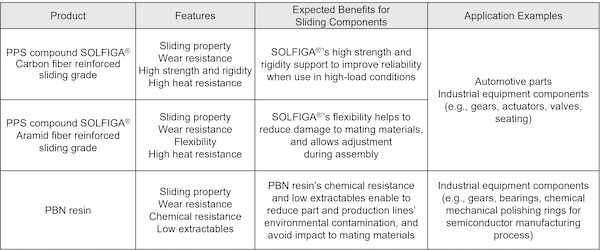
Teijin already supplies polybutylene naphthalate (PBN) resin with good sliding properties as its PFAS-Free product. By expanding PFAS-Free high-performance resin lineup, Teijin will further enhance its ability to meet increasingly diverse customer needs.

As with existing SOLFIGA® lineup, the PFAS-Free SOLFIGA® grades incorporate carbon fiber and aramid fiber as reinforcement. The carbon fiber-reinforced SOLFIGA® sliding grade provides high strength and rigidity for components used under high-load conditions.

Teijin Limited - Gears using SOLFIGA® PPS compound (prototype)
Gears using SOLFIGA® PPS compound (prototype)

The aramid fiber-reinforced SOLFIGA® sliding grade reduces coefficient of friction (CoF)—one indicator of sliding performance—by approximately 70 percent compared with conventional products that do not use sliding agents. Its flexibility can help reduce damage to mating materials while allowing easier adjustment during assembly. Both types of SOLFIGA® sliding compounds offer high wear resistance for longer service life. Like Teijin’s PBN resin, they are less likely to scratch metal components such as aluminum.

Also, Teijin can formulate them to produce sliding parts for a wide range of conditions by varying the amount of high-performance fibers. Applications for these new grades include components for automobiles, industrial machinery, electrical and electronic equipment, and other wear and friction applications.

PFAS-Free high-performance resins with sliding properties

Traditionally, manufacturers have used materials containing PFAS, such as fluoropolymer resins, to achieve good sliding properties and wear performance. However, PFAS chemicals persist in the environment for long periods, so countries around the world are moving to strengthen PFAS regulations. In recent years there has been growing demand for materials that achieve sliding and wear performance without intentionally added PFAS.

Teijin Limited - PFAS-Free high-performance resins with sliding properties
PFAS-Free high-performance resins with sliding properties

Based on customer challenges, Teijin aims to help reduce environmental impact and contribute to the realization of a sustainable society by creating solutions that integrate internal and external technologies, products, and services.

Posted: October 9, 2026

Source: Teijin Group

TRSA And Association Laboratory Expand Partnership To Provide Industry Research And Business Intelligence

WASHINGTON, D.C. — October 5, 2026 — TRSA is deepening its relationship with Association Laboratory Inc. to expand the organization’s ability to conduct, analyze and share research that supports its members and helps strengthen the linen, uniform and facility services industry.

The expanded relationship will build on TRSA’s existing research and turn industry data and analysis into actionable business intelligence, thought leadership and information that supports industry growth. By improving its research capabilities and how findings are communicated, TRSA will help members gain valuable insights into the trends, challenges and opportunities shaping their businesses and the broader industry.

“Research is an important investment for our members, and we want to make sure we’re maximizing its full value,” said Joseph Ricci, president and CEO of TRSA. “Deepening our relationship with Association Laboratory will enhance how we conduct and analyze research, but just as importantly, how we put that information to work. Our goal is to provide meaningful insights members can use to better understand the forces shaping our industry and identify opportunities for future growth.”

“The commercial laundry, textile and facility services industry plays an important role in communities across the country, and to support better decision-making, there is a need to develop a better understanding of the trends and forces shaping the industry,” said Dean West, president of Association Laboratory. “We are excited to continue our engagement with TRSA and support its work on behalf of this valuable industry.”

As part of the expanded relationship, TRSA and Association Laboratory will identify opportunities for research that can provide timely and actionable insights. Areas of focus may include:

  • Trends and business conditions affecting the industry, how those conditions are evolving, and how companies can adapt to support future growth.
  • Environmental scanning and emerging issues that could have long-term implications for the industry and help anticipate and prepare for change.
  • Ensuring research findings are shared with members and the broader industry to turn data into insights, stories and information that can inform decision-making.

Posted: October 9, 2026

Source: TRSA, The Association For Linen, Uniform, And Facility Services

BrilliA Expands Into Southeast Asian Specialty Retail With Acquisition Of Majority Interest In Malaysian Lingerie Brand Neubodi

BrilliA logoSINGAPORE — October 5, 2026 — BrilliA Incorporated, a one-stop service and solution provider for ladies’ intimate apparel brands worldwide, today announced that it has acquired a majority equity interest in Neubodi Holdings Sdn. Bhd. (“Neubodi”), an established Malaysian lingerie brand and specialty retailer, effective August 1, 2026. The acquisition marks BrilliA’s strategic expansion into branded specialty retail in Southeast Asia and broadens the Company’s business beyond its existing B2B supply and design operations.

BrilliA - Neubodi 04Founded in 2008, Neubodi is known for its proprietary holistic bra fitting approach and broad size range of 72 bra sizes, spanning cup sizes A to I and band sizes 65 to 100. The company operates 11 retail stores across the Klang Valley, Penang and Johor, including locations in major retail destinations such as Mid Valley Megamall, 1 Utama, Sunway Pyramid, and IOI City Mall, alongside e-commerce and social media channels.

Through its combination of specialist fitting expertise, physical retail locations and digital consumer engagement, Neubodi provides BrilliA with an established platform for serving end consumers directly and developing its branded retail capabilities.

Tan See See, co-founder of Neubodi with more than 15 years of experience in the intimate apparel industry, will continue to serve as Chief Executive Officer of Neubodi. Ooi Kit Joyce will also continue as part of the senior management team.

Strategic Rationale

“Neubodi represents an important milestone in BrilliA’s evolution from a B2B intimate apparel supply and design provider into a more diversified business with a growing presence in branded consumer retail,” said Kendrew Hartanto, Chief Executive Officer of BrilliA. “Neubodi has built a differentiated position in the Malaysian lingerie market through its specialist fitting expertise, established retail network and direct relationships with consumers. We believe these capabilities provide a strong foundation for BrilliA to expand its branded retail platform in Southeast Asia.”

“By combining Neubodi’s retail and consumer capabilities with BrilliA’s global sourcing, design and supply chain expertise, we see opportunities to support the brand’s continued growth, improve operating leverage and develop additional distribution opportunities for our intimate apparel portfolio. We are excited to welcome the Neubodi team to BrilliA and look forward to building on the brand’s strong foundation.”

The Company expects the acquisition to complement its existing operations and support the development of a broader intimate apparel platform. The acquisition advances BrilliA’s strategy in several areas:

  • Expansion into branded B2C retail: establishes a direct consumer-facing platform and expands BrilliA’s presence beyond its traditional B2B supply and design model.
  • Specialty retail capabilities: adds an established retail operating platform, including physical stores, e-commerce and social-commerce channels.
  • Potential value chain benefits: creates opportunities to leverage BrilliA’s existing sourcing, design and supply chain capabilities.
  • Portfolio distribution opportunities: provides an additional potential channel for BrilliA’s intimate apparel portfolio, including DIANA, through Neubodi’s retail network.

Neubodi Financial Outlook

Based on Neubodi management’s budget for the financial year ending December 31, 2026, Neubodi is targeting net sales of approximately US$3 million, with an expected net profit margin of approximately 10% to 12%. The timing and extent of any financial or operational benefits will depend on market conditions, execution and the Company’s ability to integrate and grow the business. These targets represent management expectations and are not guarantees of future results.

Market Opportunity

According to market research published by IMARC Group, the Malaysia lingerie market was valued at approximately US$287 million in 2025 and is projected to reach over US$500 million by 2034, representing a compound annual growth rate (CAGR) of approximately 6.3% from 2026 to 2034. This market outlook provides context for Neubodi’s existing specialty retail platform and BrilliA’s expansion into branded consumer retail in Malaysia.

Posted: October 9, 2026

Source: BrilliA Incorporated

Syre Appoints Tim King As CEO

STOCKHOLM, Sweden — October 7, 2026 — Syre, the textile impact company on a mission to scale textile-to-textile recycling, today announces the appointment of Tim King as its new Chief Executive Officer. Tim King, currently Syre’s Chief Operating Officer, will with his deep experience of Syre’s industrial development, operational leadership, and strategic priorities, lead the company through its next phase of advancement.

Syre - Tim King
Tim King

Founded in 2023, Syre has established a strong business platform with the industry’s largest commercial agreements, leading industrial partnerships, and a committed investor base. Next step is all about building on that momentum.

“We have built a strong foundation, and our focus is to continue turning that into an industrial reality” says Tim King, new CEO of Syre. “I am excited to take on this responsibility and privileged to be working with an exceptional team, supportive customers, and leading partners. Syre’s mission is important for the planet, and we are committed to navigating a challenging market to make circularity a reality at scale”.

Tim King has been leading Syre’s industrial development and the execution of strategy since joining Syre in its early days. Prior to joining Syre he has extensive leadership experience across multiple companies, industries, and geographies including McKinsey & Company, VP Operations at Polygon, VP Production at SF Studios, and Director for a Gates Foundation development project.

“Tim has been instrumental in building Syre’s capabilities and preparing the company for the next phase of its development,” says Susanna Campbell, Chair of the Board of Syre. “The Board has after a thorough process appointed him to lead Syre moving ahead, because we believe his experience, understanding of the business, and operational leadership are the right fit for what we need to achieve.”

Syre’s mission remains unchanged, and as the company continues to advance it will work with its customers and partners to develop a competitive, scalable, and capital-efficient pathway to production of circular polyester. The full leadership remains in place, and resources and capabilities will be increasingly focused on the priorities required for what is next. After more than three years as CEO, Dennis Nobelius has decided to leave Syre to pursue new opportunities in another industry.

“Dennis has been an important part of Syre’s journey from start-up to industrial scale-up – building the team, partnerships, and foundation for the company’s next phase. We thank him for everything he has contributed to Syre and wish him all the best for what comes next” says Susanna Campbell, Chair of the Board of Syre.

Posted: October 8, 2026

Source: Syre

ReHubs Enters New Phase Of Leadership With CEO Béatrice Moureaux

BRUSSELS — October 5, 2026 — ReHubs has appointed Béatrice Moureaux as Chief Executive Officer, marking a new chapter for the European alliance as it continues to strengthen its work to scale textile-to-textile recycling across Europe.

Béatrice Moureaux

Béatrice has served as Board Advisor to ReHubs since December 2025, working closely with its Board, team and members on the organisation’s strategy and projects. She brings more than 25 years of experience across technical textiles, advanced fibres, nonwovens and circular innovation.

Her appointment comes at a challenging time for Europe’s textile circularity transition. Despite advances in technology and growing policy ambition, the conditions needed to scale textile-to-textile recycling remain difficult. Recyclers need greater certainty of demand to invest in capacity, while brands need reliable and competitive supplies of recycled fibres to commit to greater volumes.

ReHubs’ strategy is focused on breaking this supply-demand deadlock. As a membership-based organisation, ReHubs brings together leading organisations from across the textile value chain to strengthen collaboration, improve the conditions for investment and support the development of a viable textile-to-textile recycling industry in Europe.

Commenting on her appointment, Béatrice Moureaux, CEO of ReHubs, shares: 

“I’m proud to take on the role of CEO at such an important moment for ReHubs and our industry. The road ahead will be challenging, and breaking the supply-demand deadlock to scale textile-to-textile recycling in Europe will require an openness to collaboration across the value chain and the right conditions for investment. ReHubs has a strong community of organisations committed to making this transition happen, and I look forward to continuing to work with and support our members as we take this next step together.”

Kasper Damsø, NewRetex and Co-Chair of ReHubs, shares:  

“We have technologies today that can improve how textiles are sorted and recycled, but technology alone will not create a circular system. All steps along the value chain need to develop together. ReHubs has an important role in connecting these different parts and helping turn individual solutions into a functioning ecosystem. Béatrice understands both the technical realities and the importance of bringing people together, and I look forward to working with her as we take ReHubs forward.”

ReHubs’ recent report with Boston Consulting Group has put a particular focus on the economics of textile-to-textile recycling and the conditions required to attract investment and build capacity in Europe. This includes working with its members to better understand where targeted interventions can help create a viable market for recycled textiles.

Véronique Allaire Spitzer, Refashion and Co-Chair of ReHubs, shares: 

“Europe is at a turning point for textile circularity. EPR is a powerful lever to translate ambition into action, but its success depends on practical solutions and close collaboration across the value chain. As a pioneer PRO in the sector for over 15 years, Refashion knows the importance of bringing stakeholders together to build a truly circular textile industry. ReHubs can play this role at European level. Béatrice knows the organisation and its members well, and I am delighted to see her lead ReHubs into its next chapter.”

Béatrice takes over from Robert van de Kerkhof, who has served as interim CEO. During his tenure, ReHubs strengthened its focus on the structural and economic barriers to scaling textile-to-textile recycling and increased its engagement across the European textile circularity ecosystem.

Robert will continue to support ReHubs as Chairman of the Board and will work closely with Béatrice through the transition.

Robert van de Kerkhof, PEPPER-i2 and Chairman of ReHubs, said: 

“The last few years have made one thing very clear, that scaling textile-to-textile recycling is not something any technology or organisation can achieve alone. ReHubs has helped put some of the most difficult questions around economics, investment and scale firmly on the industry agenda. Béatrice brings deep industry expertise and leadership to ReHubs. I have great confidence in her, and I look forward to supporting her and the ReHubs team as they build on what we have started and take the organisation forward.”

Posted: October 8, 2026

Source: ReHubs

Sponsors