R
ecent Wall Street volatility is raising new questions about consumer spending — on
apparel as well as other products — over the next three to six months.
TW
’s feeling is that fears have been overblown and stock investors have been way too
bearish about the near-term outlook. Reasons: An imposing array of still-strong business
indicators, including the continuing absence of inflationary pressures, Fed statements that
interest rates will remain low, little or no unemployment — almost anybody who has skills can find
a job — and still-rising real or inflation-adjusted pay levels. Add in basically high consumer
confidence, and all the above would seem to suggest that the recent 3- to 4-percent annual rate of
increase in consumer spending will persist.
Moreover, with sales of autos and other big-ticket items slowing down a bit, families should
have a little more available for purchases of apparel and related items. And that’s pretty much
what seems to be happening. Thus, factory shipments of both basic textiles and more highly
fabricated mill products actually rose in January — the latest month for which data are available.
Even more encouraging, the Institute of Supply Management’s March 1 report finds new orders for
both textiles and apparel inched up. Other things being equal, this grass-roots survey of
purchasing executives would seem to suggest the industry’s activity will hold up tolerably well
through spring. One final positive note: Textile inventories remain low, making it increasingly
likely that any new orders will quickly be translated into new production and shipments. True, when
the dust finally settles on 2007, textile activity might still be down a bit. But as of now,
TW
remains cautiously optimistic, holding onto our beginning-of-year forecast for only about
2-percent overall slippage.
Few Real Cost Concerns
clearly true in the case of fibers, as supplies remain more than ample. Cotton stocks, for example,
at the end of the 2006-07 year are projected to be near 8.8 million bales up substantially from the
previous years 8.3 million level. More significantly, the US Department of Agriculture puts this
years stocks-to-use ratio at 46 percent the highest such reading in 18 years.
Clearly, this is not the scenario for any significant near-term price advance. Best bet: Spot
cotton tags will hold in the upper 40 to lower 50-cents-per-pound range pretty much where they were
a year ago. And the picture for wool is pretty much the same, with prices expected to back and fill
around current levels. Nor do wage costs seem to be presenting any worries. As pointed out last
month, the very modest 2-percent increase in pay rates over the past year have been pretty much
offset by still-rising productivity to the extent that unit labor costs remain pretty much
unchanged. To be sure, some other costs most notably transportation and overhead have continued to
inch ahead. But increases here wont be nearly enough to make for any meaningful increase in overall
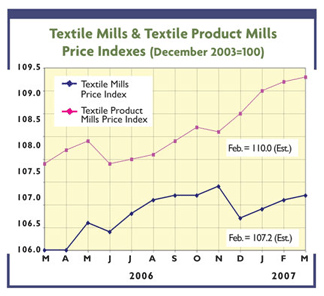
textile production costs. Finally, add in the fact that textile prices have been steady to slightly
firmer over recent months, and earlier fears of an industry-wide cost/price squeeze have all but
disappeared.
Profits Hold Their Own
bottom-line prognosis isn’t all that bad.
TW
’s forecasts call for another tolerably good year on both the earnings and profit margin
fronts. So do new projections by economic forecasting firm Global Insight. Economists at that
group, using their own definition of profits — revenues less material and labor costs — also see
industry earnings holding up. In the case of basic mill items, the Global Insight number is put at
$5 billion for 2007 — unchanged from this past year. Moreover, the firm’s analysts even see some
small gain for the following year. Their profit numbers for more highly fabricated textile products
are also upbeat. This year’s $10.9 billion estimate is only fractionally under that of 2006. And
even this small decline is expected to be recouped the following year. Finally, even the United
States’ hard-hit apparel industry should do okay. Indeed, Global Insight actually anticipates some
improvement for the current year, with the profits number moving up close to 9 percent from $10.6
billion in 2006 to $11.6 billion this year. In short, the multifaceted US textile/apparel complex
continues to do a lot better than many had anticipated.
April 10, 2007